Your project, whether an extension or a loft conversion, must meet UK Building Regulations from start to finish. You’ll navigate planning permission, site surveys, and practical drawings, with inspections at key stages and a final sign-off. Fire safety, moisture control, and energy efficiency aren’t optional—they shape every decision. You’ll also manage neighbors and costs, avoiding delays. Start by identifying what’ll trigger approvals, then prepare the basics you need to proceed—but there’s more to align before you can proceed with confidence.
What Building Regulations Cover Extensions and Loft Conversions
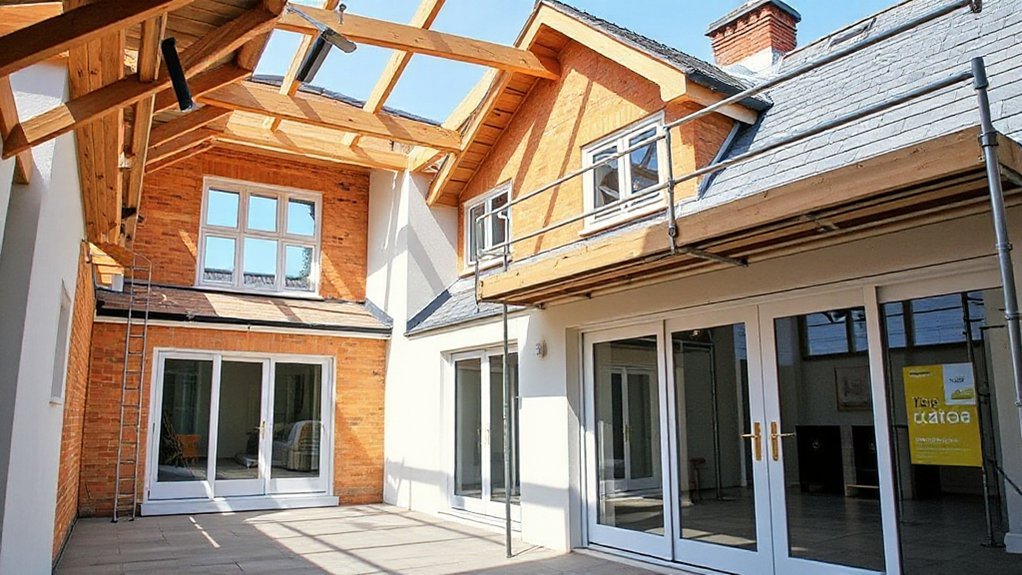
Building Regulations set the required standards for extensions and loft conversions to guarantee safety, energy efficiency, and accessibility. You’ll learn what the Regulations cover and how they apply to your project. The scope includes structural integrity, fire safety, damp proofing, ventilation, and drainage, ensuring that alterations meet minimum performance criteria. You must assess compliance for new build elements and for changes to existing parts that affect safety or energy use. Materials selection and insulation standards are central to performance; choose durable, compliant components that meet approved documents and product standards. Wiring, lighting, and controls also require proper sizing and placement. Documentation, inspections, and validation steps accompany construction, ensuring your extension or loft conversion remains compliant from plan review to completion.
Planning Permission vs. Building Regulations: What You Truly Need
Planning permission and Building Control aren’t interchangeable; you’ll need consent for certain changes, but not others, so understanding which process applies is essential. In practice, you’ll distinguish between planning permission (a planning stage) and Building Regulations approval (a technical, construction-focused check). We’ll unpack the basics of Planning vs Consent and the Building Control process to clarify what you truly need for your project.
Planning vs Consent
Understanding the UK approvals landscape can be confusing: planning permission and Building Regulations serve different purposes, and knowing which you need guarantee saves time and money. You’ll typically seek planning permission for the overall look, external size, and social impact of an extension or loft conversion, while Building Regulations ensure safety, structure, and energy efficiency. Consent isn’t interchangeable with planning; it’s about compliance, not design approval. If your project is permitted development, you may still require Building Regulations consent. Communicate clearly with your design team: align the planning submission with the architectural concept and anticipated materials. Prioritize Design aesthetics and Material selection early, affirming they meet both consent criteria and regulatory standards. In practice, separate approvals streamline process, reduce risk, and clarify responsibilities before construction begins.
Building Control Basics
How do you guarantee your project meets the right rules without overcomplicating the process? Building control basics align with your design intent, ensuring safety and compliance. You’ll typically engage a building control body or approved inspector to review plans and supervise work, separate from planning permission. While planning focuses on use and appearance, building regulations address structure, fire safety, insulation, and services. You’ll submit drawings, specifications, and method statements, then implement with continuous checks. Expect site visits, acceptable deviations, and timely approvals to avoid delays. Keep documentation organized to meet construction deadlines and streamline approvals. Consider materials early; choosing suitable Building materials influences compliance and performance. Coordinate trades to maintain progress, minimize rework, and satisfy regulatory expectations throughout progressive stages.
Your First Steps: What to Submit to Building Control
Before you begin work, you must determine which building control submissions apply to your project. You’ll typically submit notices or applications to your local authority, or an approved inspector, depending on your chosen route. Gather essential details about the scheme, including site address, anticipated use, and structural elements. Common submissions cover Building permits, proposed extensions, loft conversions, and any electrical or drainage alterations that affect safety and compliance. Your submission should demonstrate adherence to Construction standards, including fire safety, accessibility, insulation, and ventilation requirements. Organise a clear project summary, site plans, and any pre-existing conditions. Check deadlines, anticipated milestones, and fees, ensuring all documents are accurate and up-to-date to avoid delays or additional queries from the authority.
Preparing the Plan: Drawings, Scope, and Documentation
Preparing the plan starts with a clear set of drawings, scope, and documentation that define what you’re building and how it will meet regulations. You’ll align architectural plans with regulatory expectations, ensuring your concept translates into enforceable details. Focus on documenting intent, constraints, and responsibilities to prevent misinterpretations later.
- Compile scaled drawings showing floor layouts, elevations, sections, and key dimensions.
- Define scope and performance criteria, including structural, fire safety, access, and service requirements.
- Attach supporting documentation, such as material schedules, design aesthetics notes, and initial compliance checks.
Prioritize coherent design intent and consistent terminology. Consider Material choices early to inform detailing, integration, and future approvals, avoiding costly revisions. Maintain a concise narrative that accompanies drawings, clarifying decisions and anticipated outcomes.
Building Control Inspections: Daily Checks and Final Sign-Off
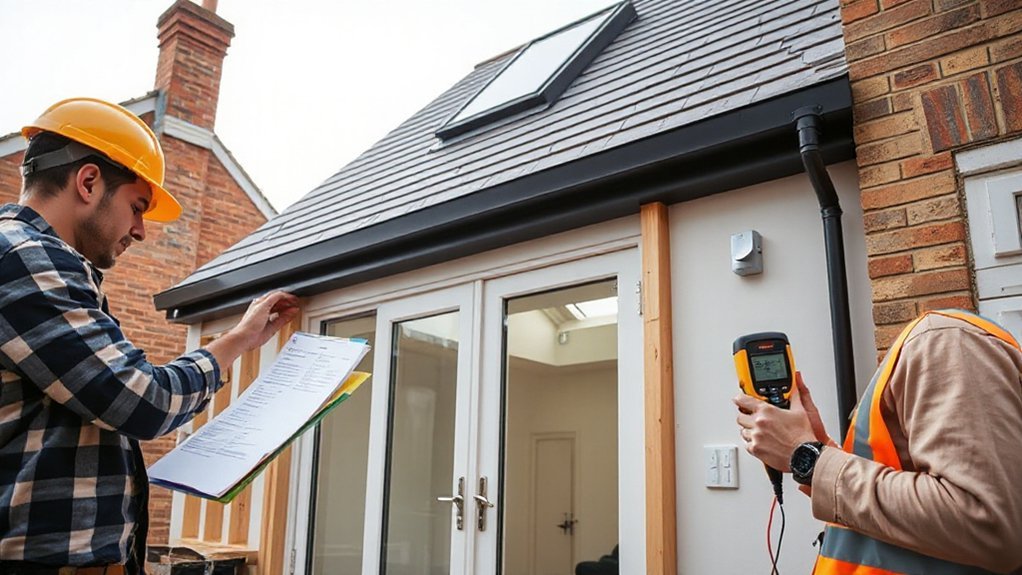
Building Control inspections require daily checks to verify ongoing compliance and to catch deviations early; you should establish a routine that confirms structural safety, fire safety measures, and access provisions as work progresses. You perform site visits to record workmanship, verify material selection, and guarantee adherence to approved drawings and specifications. Daily checks focus on workmanship quality, temporary works, and boundary protections, with immediate reporting of nonconformities to the clerk of works or building control officer. Final sign-off occurs once all conditions are satisfied, documentation is complete, and inspections pass. Maintain clear records of findings, corrective actions, and dates. Emphasize site safety throughout, and assure material selection aligns with project requirements and regulatory standards for a compliant extension or loft conversion.
Fire Safety and Energy Efficiency Essentials
How can you guarantee fire safety and energy efficiency are integral from the outset? You should design with clear egress and robust insulation, aligning measures to regulations. Critical steps ensure safety without sacrificing performance.
- Implement a compliant fire escape plan and clearly marked routes, integrating escape stairs or external ladders where necessary.
- Install interconnected smoke alarms with mains power and battery backup, testing annually and upgrading to addressable systems where feasible.
- Choose high-efficiency, low-heat-loss materials and sealing strategies to reduce energy demand while maintaining fire resistance ratings.
Fire safety and energy efficiency interlock through construction detailing, compartmentalisation, and ventilation management. Regular compliance checks and documentation prevent gaps between design intent and finished performance.
Party Walls and Neighbour Notifications
In the context of Party Walls and Neighbour Notifications, you must identify shared structures, determine ownership, and understand protection obligations under the Party Wall etc. Act. You assess party wall boundaries, confirm whether walls, floors, or ceilings are party structures, and note every affected section. You then establish who must serve notices and who should respond, ensuring neighbour notification is timely and properly documented. Your approach lowers dispute risk by clarifying rights and responsibilities before works begin. You record relevant details, including existing damage or risks, and plan for any necessary protective measures or access arrangements. You align your project timetable with statutory timelines, seek necessary consents, and maintain transparent communication with neighbours to safeguard compliance and project progress.
Practical Steps to Smooth Compliance With Local Authority Guidance
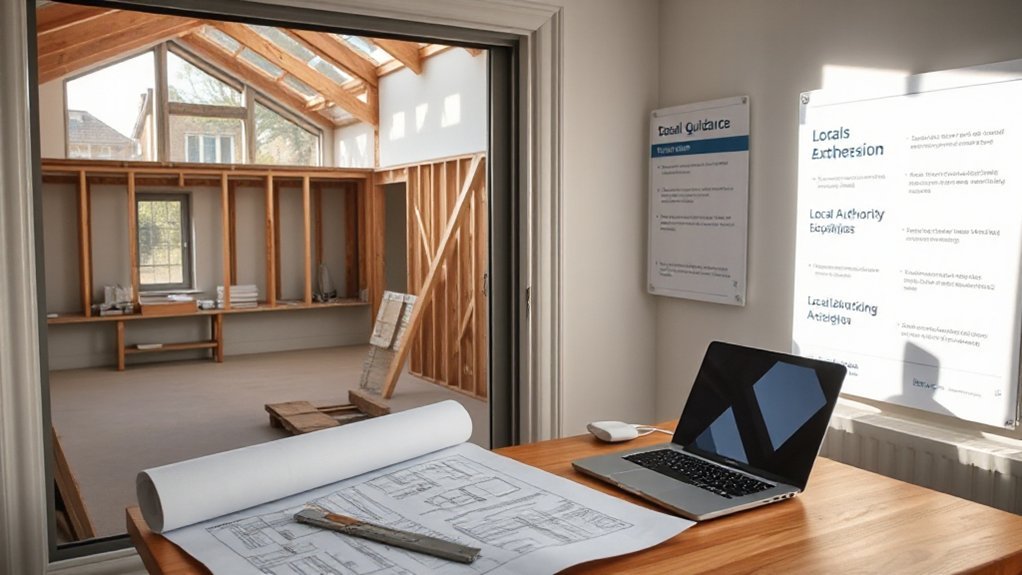
To streamline compliance with local authority guidance, start by mapping the regulatory requirements to your project scope and timeline, then translate them into concrete, actionable steps. You’ll establish documentation, submit early where possible, and align design choices with permitted developments and planning constraints. Prioritize historical building considerations and sustainable construction practices to minimize revisions and streamline approvals. Maintain clear records of consultations and amendment requests, and verify that energy, access, and safety standards are addressed in advance.
- Create a master checklist linking each regulation to a design decision.
- Schedule pre-application discussions and document outcomes for traceability.
- Implement an evidence pack demonstrating compliance with historical context and sustainability criteria.
Budget, Timelines, and Common Pitfalls You Can Fix Now
Budget constraints and tight timelines are common hurdles in UK building projects, but you can head them off by setting realistic costs, milestones, and buffers from the start. To manage budget effectively, engage rigorous cost planning: itemize tasks, estimate contingencies, and review quarterly against progress. Document approved variations to avoid escalation disputes. In parallel, establish a clear project timeline with critical paths, realistic lead times, and regular progress checks to keep stakeholders aligned. Selecting the right contractor matters most for adherence to schedule and budget; prioritize contractor selection based on track record, transparent pricing, and robust procurement of materials. Build a pre-construction checklist, confirm insurance and permits, and set a communication protocol to flag issues early. Finally, stage milestones for early issue resolution and avoid costly overruns.
Frequently Asked Questions
Do Extensions Always Require Building Regulations Approval if Planning Permission Isn’T Needed?
Extensions don’t automatically skip Building Regulations approval, even if planning permission isn’t needed. You must meet standards for safety and accessibility; historical compliance matters. Your building inspector will verify conformity, schedules, and necessary certificates to avoid later issues.
How Long Does It Typically Take for Building Regulations Approval for Loft Conversions?
Typically, you’ll see a Building permit approval timeline of 6 to 12 weeks for loft conversions, depending on complexity and authority. You’re advised to prepare robust plans and respond promptly to requests to avoid delays.
Are There Differences in Regulations Between England, Scotland, Wales, and Northern Ireland?
Regional differences exist: regulatory variations mean England, Scotland, Wales, and Northern Ireland apply different bodies, approvals, and standards. You should consult local authorities to confirm specific requirements for your loft conversion, as processes and exemptions vary by region.
What Costs Are Not Covered by Building Regulations Fees for Extensions?
Extensions fees don’t cover everything; cost exemptions may apply, and unregulated alterations aren’t included. You’ll still face surveys, planning permissions, and potential party-wall, specialist fees, and construction costs outside standard Building Regulations calculations.
Can Solar Panels or Green Features Affect Compliance or Approvals?
“Where there’s a will, there’s a way.” Solar impact can affect Brexit? No—kidding. In practice, solar panels or green features influence Green compliance and may adjust compliance routes, requiring approvals and documented energy performance; plan accordingly, and consult your building control officer.
Conclusion
You stand at the blueprint’s edge, where brick and breath meet. With Building Regulations as your sturdy scaffold, you preview a safe, efficient space rising above yesterday’s limits. Each approved drawing, every inspection, and the quiet notch of a neighbourly agreement channels sunlight through a well-ventilated loft and solid extension. Keep documentation tight, timelines honest, and costs clear, and your project will breathe with compliance—quietly confident, finally complete, and ready to welcome the next chapter.
About the Author