You might notice parquet laminate popping up just when you’re weighing flooring options, and that coincidence alone makes it worth a closer look. It remains a stylish, affordable choice that mimics traditional wood with modern durability, and its patterns—think herringbone and chevron—keep spaces feeling current. If you’re balancing aesthetics with maintenance and value, there’s more to think about regarding how this option fits your home and lifestyle, so let’s explore what’s driving its staying power.
Is Parquet Laminate Right For Your Home?
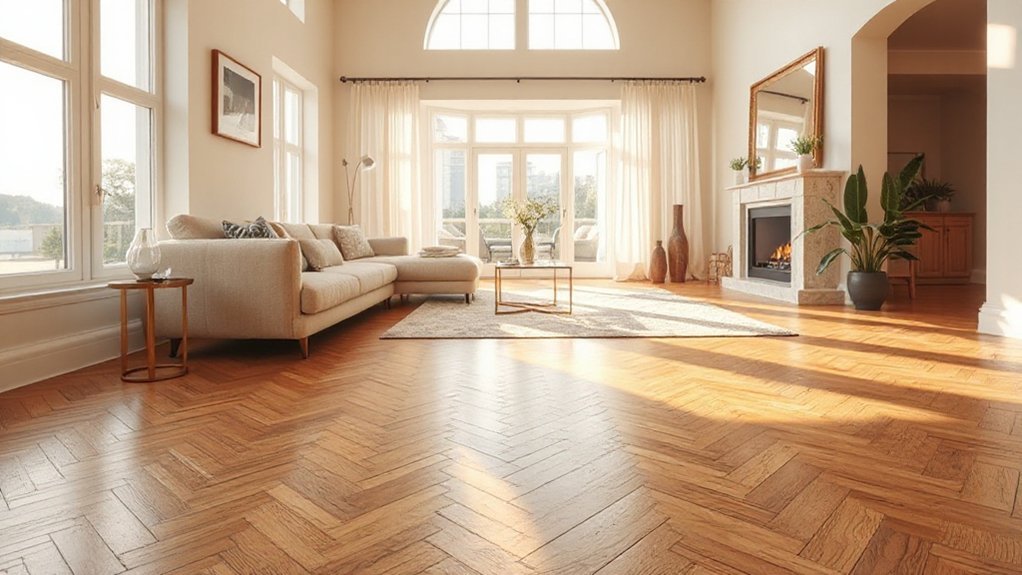
Parquet laminate can be a smart pick if you want the classic look of parquet without the higher cost or installation time of solid wood. You’ll find it suits living rooms, hallways, and busy family spaces where durability matters.
If you value a cohesive vibe, pair it with modern furnishings and bold textiles for contrast. It’s compatible with smart home setups, so you can schedule lighting and climate controls to highlight the flooring’s pattern.
Indoor plants breathe life into the space, while the floor’s pattern adds visual interest without clutter. Consider wear layers and gloss level to match traffic, pets, and kids.
If you crave warmth with easy upkeep and a contemporary edge, parquet laminate fits your home’s evolving style.
What Exactly Is Parquet Laminate?
If you’re picturing parquet’s classic pattern in a practical, affordable form, parquet laminate delivers that look with modern convenience. Parquet laminate combines a printed or embossed top layer that mimics wood grain with a high-density core and a protective wear layer, all in one resilient plank.
You’re not getting solid wood; you’re getting a stabilized alternative that’s easier to install and maintain. Historical context matters here: the style borrows from traditional mosaic and geometric layouts, adapted for budget-friendly production.
Manufacturing processes involve precise printing, layering, and lamination to reproduce textures and colors while boosting durability. The result is a floor that’s visually striking yet practical, suitable for busy homes.
You’ll enjoy consistent patterns, quick installation, and straightforward upkeep without sacrificing style.
Parquet Laminate vs Traditional Wood: Key Differences
Unlike solid wood, parquet laminate uses a printed or embossed surface over a durable core, making it more budget-friendly and easier to install while still delivering the classic mosaic look.
You’ll notice notable differences in appearance, durability, and installation tempo when comparing parquet laminate to traditional wood.
Color customization is more flexible with laminate, letting you dial in bold or subtle hues without refinishing, while traditional wood leans on stains and aging.
In terms of performance, parquet laminate often offers consistent uniformity and faster installation, but may require underlayment for moisture control.
Acoustic performance can vary; laminate generally feels quieter with a proper underlayment, though solid wood can better absorb sound under certain conditions.
Choose based on budget, maintenance preference, and the room’s use.
How to Decide If Parquet Laminate Fits Your Space
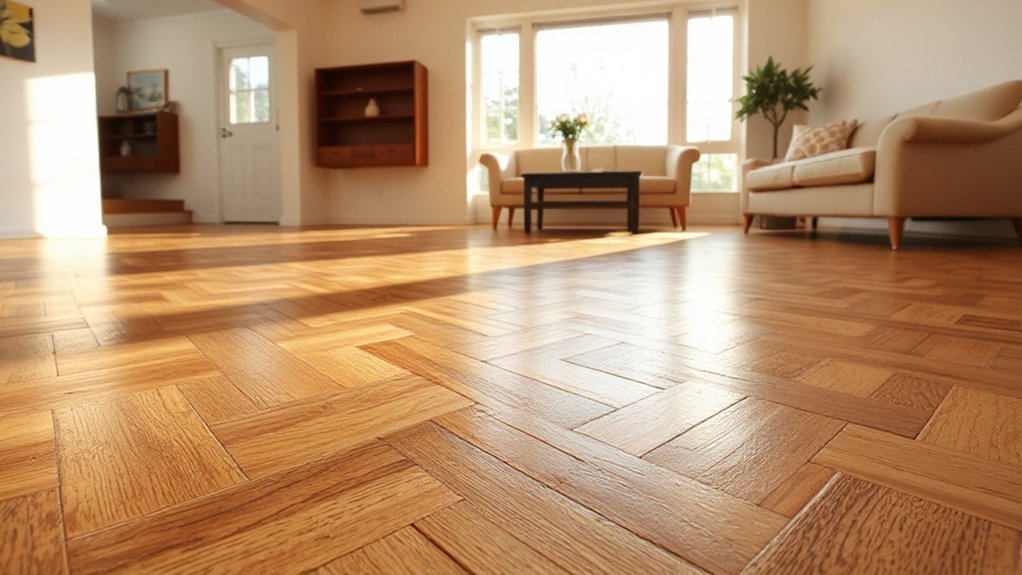
When deciding if parquet laminate fits your space, start by evaluating your room’s style, lighting, and traffic. You’ll want a floor that complements existing furniture and eye-catching features without overpowering them.
Consider furniture placement: parquet patterns can guide flow, so map scale—large rooms benefit from wider planks, while compact spaces may feel busy with intricate layouts.
Assess lighting effects: natural light brightens the wood’s warmth, artificial lighting can cast yellow or cool tones, influencing finish choice.
If you favor a cohesive look, match undertones to cabinetry and rugs.
For busy rooms or heavy foot traffic, choose durable wear layers and easier maintenance finishes.
In smaller spaces, lighter tones open up the area.
Balance personality with practicality to guarantee long-term satisfaction.
Aesthetic Wins: Herringbone, Chevron, and Other Patterns
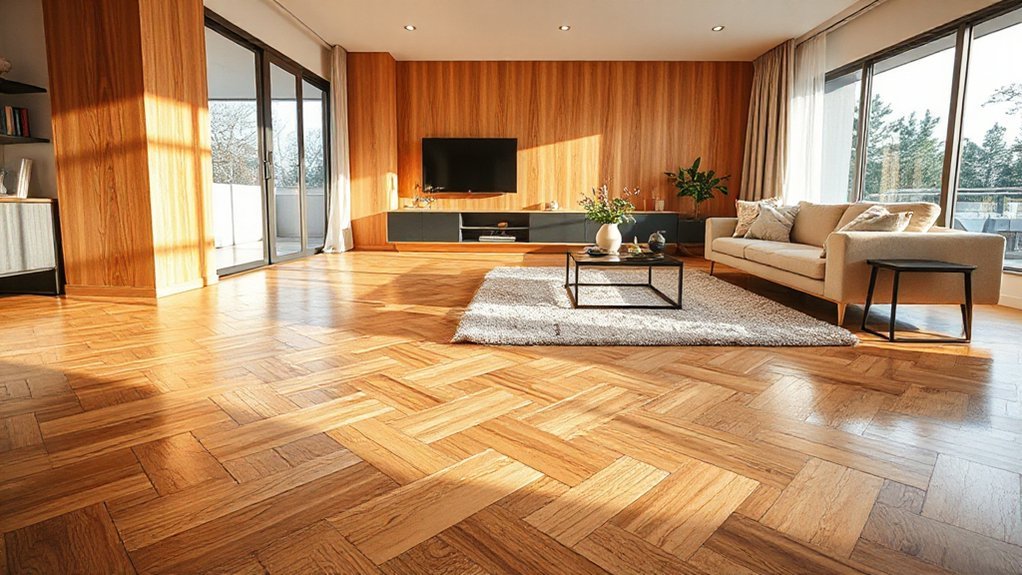
Herringbone catches the eye with its dynamic zigzag, delivering classic elegance and visual depth to any room.
Chevron stays on-trend with clean, V-shaped lines that read modern and polished, even in small spaces.
These patterns, plus other layouts, let you tailor texture, rhythm, and focal impact to your baseboard height and lighting.
Herringbone Visual Appeal
Herringbone, Chevron, and other patterns instantly elevate a space by adding movement and sophistication to parquet laminate floors. You’ll notice how the zigzag rhythm creates visual interest without overpowering the room, making small spaces feel more dynamic and larger rooms feel cohesive.
The herringbone layout can emphasize architectural lines, guiding your eye along walls and furniture for a polished look. Color blending helps the pattern integrate with varying light, from morning sun to evening lamp glow, while subtle tone shifts keep the floor from appearing flat.
Texture variety adds tactile appeal, whether through matte, glazed, or lightly grained finishes. In practice, you’ll enjoy versatile styling options that stay current without demanding frequent updates.
Chevron Pattern Trends
Chevron patterns are surging in popularity, redefining modern floors with crisp, directional lines that feel both bold and refined. You’ll notice how a chevron layout adds momentum and a polished rhythm without locking you into one era. It pairs well with Vintage charm and Modern accents, letting classic warmth meet contemporary edge.
- Creates a visual arrow that guides foot traffic smoothly
- Complements light-filled spaces for brighter ambience
- Balances busy patterns with solid-toned planks nearby
- Scales gracefully from small rooms to open-plan floors
- Adds architectural interest without overwhelming the decor
Choose sizing and spacing thoughtfully to avoid busy ceilings or walls. The result: a timeless, versatile floor that remains current through evolving design trends.
Durability and Maintenance for Parquet Laminate
For longevity, wipe spills promptly and use a microfiber pad rather than soaking the surface. Regular, light cleaning with a dry or damp mop keeps the pattern crisp without gilding the edges.
Use felt pads under furniture to prevent scratches and improve furniture compatibility with your layout. Protect high-traffic zones with area rugs, especially near entryways.
When refinishing isn’t an option, choose a compatible topcoat or sealant approved by the manufacturer to extend life. Plan color coordination across rooms; maintain consistency to preserve the parquet’s visual appeal.
Parquet Laminate on a Budget: Costs and Savings
You can stretch your budget with cost-effective materials that still mimic real parquet’s look. We’ll cover smart installation savings, from tool-friendly setup to choosing contractors wisely.
Plus, how long-term maintenance costs add up. Expect concise tips that balance upfront costs with durable, stylish results.
Cost-Effective Materials
Parquet laminate offers a budget-friendly path to the high-end look of real parquet without the hefty price tag, thanks to affordable core materials and efficient manufacturing. You leverage cost-saving choices tied to historical context and streamlined manufacturing processes, yielding durable visuals without overpaying.
- Core materials emphasize resin-impregnated layers for stability
- Printed photographic recreations capture realistic grain
- Lightweight backing reduces shipping and install effort
- Finish topcoats protect against wear and moisture
- Manufacturing efficiencies speed production and lower waste
Installation Savings Tips
Installation savings for parquet laminate start with simple, smart prep: choose click-lock planks that snap together without glue, and map a layout that minimizes waste and reduces cutting. You’ll cut costs by planning room transitions, door thresholds, and full planks first, then trimming only where necessary.
Shop during promotions for core materials and underlayment, and compare brands that offer built-in acoustic benefits to save on extra padding. Measure precisely and inventory boards to avoid returns.
Keep edges straight with a scrap test layout before committing tools. Vintage charm comes through in careful tone and alignment, so stay consistent with patterns and joints.
Subfloor prep matters, since a flat, clean base minimizes gaps and future repair. Acoustic benefits contribute to comfort, without adding complex installation steps.
Long-Term Maintenance Costs
- Prioritize thicker wear layers for longevity
- Seal gaps with routine re-sealing when needed
- Use area rugs in high-traffic zones
- Maintain humidity between 40–60%
- Schedule professional inspections after heavy seasons
Installation Realities: DIY or Pro?
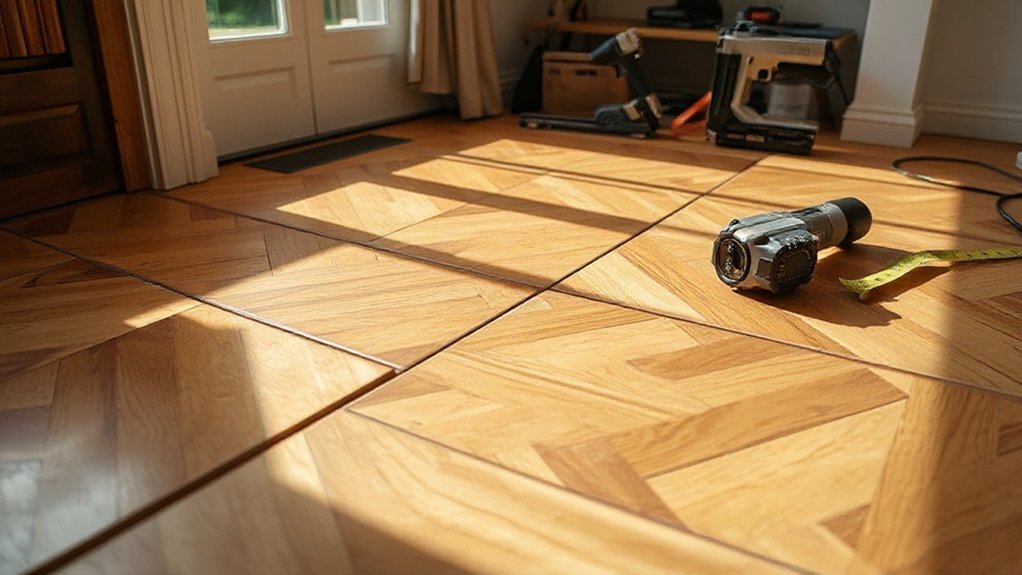
While DIY can save money and satisfy a hands-on streak, parquet laminate flooring installation often demands precise underlay preparation, tool setup, and pattern alignment that pros routinely optimize for speed and long-term durability.
You’ll weigh subfloor conditions, moisture checks, and expansion gaps just as a pro would, but with less margin for error. Expect careful acclimation of planks, careful tapping, and careful staggering to maintain a cohesive look.
Color psychology matters here: the way light plays off the grain can alter perceived room size, so plan pattern direction accordingly.
For many, flooring installation benefits include quicker timelines and fewer surprises when you hire a pro, especially in complex layouts.
Consider a hybrid approach: prep yourself, call in expertise for the final layout and install.
Finishes to Watch (2024–2026)
Parquet laminate finishes are evolving fast, and the 2024–2026 window spotlights durability, aesthetics, and sustainability in equal measure. You’ll notice finishes that resist moisture and wear better, while still preserving rich grain texture.
Look for coatings that boost outdoor durability for covered patios or sunrooms, and those that minimize color aging under sunlight. Acoustic properties matter too, with lighter, sound-damping layers improving room comfort.
You’ll also see eco-friendly binders and low-VOC formulations improving air quality without compromising performance.
- Moisture-resistant top coats
- UV-stable pigments
- Low-VOC binders
- Enhanced acoustic layers
- Renewably sourced substrates
Color Trends: Light, Medium, and Dark Parquet Looks
You’ll see how Light Parquet Palettes brighten a space, making rooms feel airy and modern.
Medium Tone contrasts shape ambiance, balancing warmth with clarity to suit varied lighting.
Dark Hardwood Intensity adds drama and depth, elevating sophistication without overwhelming the room.
Light Parquet Palettes
- Amplified light, deeper character
- Vintage charm with modern accents
- Subtle grain, timeless appeal
- Neutral base, bold accents
- Durable, easy maintenance
Medium Tone Versus Ambience
Medium-tone parquet balances warmth with versatility, anchoring spaces without overpowering them while still reading as inviting, photogenic backdrops for varying décor styles. You’ll notice it preserves contrast for furniture and textiles, while remaining adaptable to evolving color schemes.
In practice, medium tones support color psychology aims—creating inviting, balanced atmospheres without skewing toward either cool or warm extremes. They read as contemporary yet timeless, making rooms feel cohesive across different functions.
Acoustic properties benefit from the denser plank visuals, which can help dampen echo in living areas and open-plan spaces when paired with area rugs or soft furnishings.
Maintenance stays straightforward: wipe clean, avoid high-gloss finishes, and preserve the tone’s even appearance.
Dark Hardwood Intensity
- Defined focal points with minimal clutter
- High-contrast palettes for impact
- Neutral furniture to balance depth
- Reflective surfaces brighten ambiance
- Layered lighting enhances mood and clarity
Where Parquet Laminate Works Best in Home Layouts
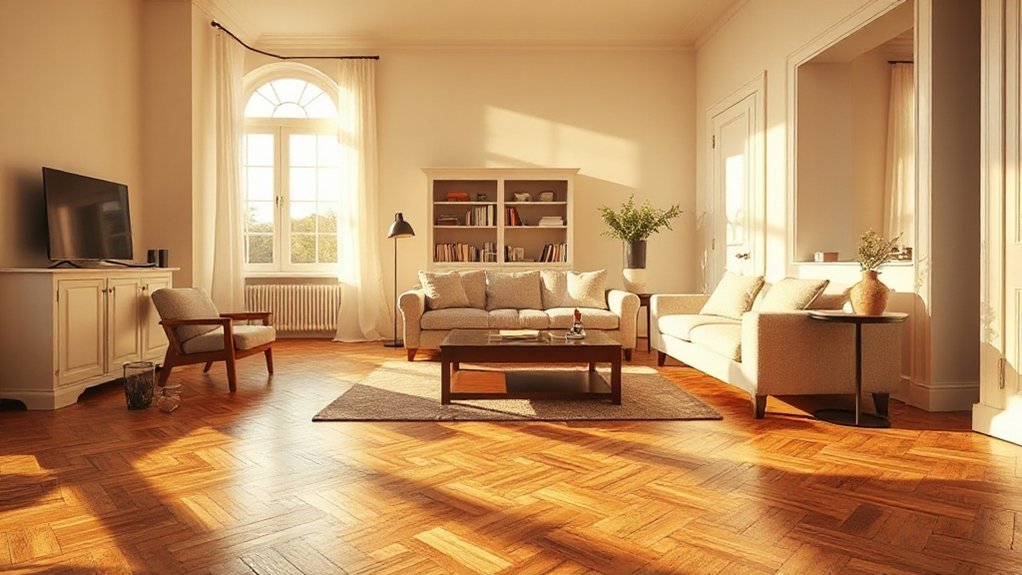
Parquet laminate shines in rooms with defined pathways and mixed-use layouts, where its geometric patterns add interest without overwhelming the space. You’ll find it works best in open living areas that segment zones—entry, seating, and dining—without harsh progressions.
In larger layouts, its rhythm guides movement and creates visual cohesion, especially when you repeat a consistent pattern or color tone. Pair it with mid-century, modern, or rustic pieces to reinforce the look.
For a luxury upgrade, choose a high-contrast or warm-toned veneer to emphasize the geometry. You’ll also notice it pairs well with natural textures like linen, stone, and leather, adding depth without clutter.
Rustic charm surfaces when you balance the floor with soft textiles and warm lighting.
Pet and Family-Friendliness: How It Holds Up
Parquet laminate stands up well to everyday life, thanks to its durable wear layer and forgiving surface. You’ll notice fewer scratches from pets and high-traffic areas, plus easier cleanup after spills.
For family moments, the surface stays comfortable underfoot and maintains a calmer aesthetic than many alternatives.
- Pet safety: scratch resistance reduces damage and reduces fur snagging
- Family comfort: warm, comfortable feel underfoot
- Stain tolerance: quick wipeups prevent lingering marks
- Maintenance: minimal cleaning, no waxing required
- Longevity: stability against dents with typical home use
With smart color options and consistent planks, it’s easy to pair with chaos-free, kid-friendly spaces. You’ll get style without sacrificing practicality, keeping pet safety and family comfort at the center of your decision.
Environmental Impact and Sustainability
Smart choices in materials and production keep parquet laminate sustainable, from responsibly sourced core layers to low-emission finishes. You’re empowered to look for certifications that verify reduced environmental footprints and responsible sourcing.
In practice, this means choosing products with recycled content where possible and opting for plants that minimize waste through efficient production lines. You’ll notice brands highlighting recycling initiatives, turning post-consumer scrap into usable panels and reducing landfill impact.
Eco friendly manufacturing practices, such as low-VOC adhesives and water-based finishes, further trim emissions during installation and use.
Durability also matters: longer life means fewer replacements and less overall impact.
Resale Value: Does Parquet Improve Your Home’s Appeal?
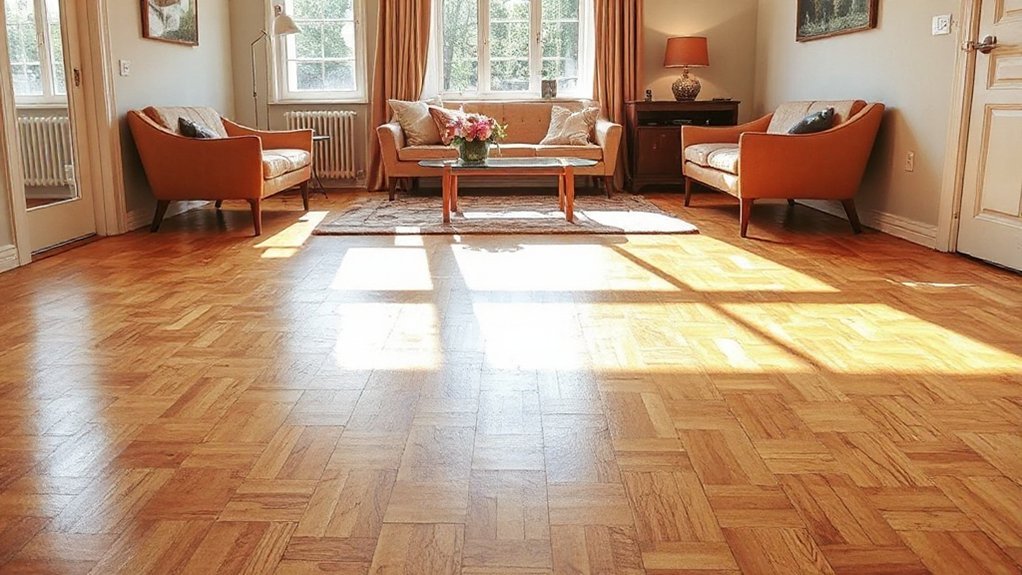
While parquet can elevate a space with warmth and visual interest, its resale value hinges on buyer perception and quality installation. You’ll boost appeal by ensuring consistent color, proper underlayment, and minimal visible seams, which signals longevity to buyers.
Parquet’s charm can date a room, so modern styling and neutral tones help it feel current rather than retro. If you’re marketing, pair the floor with cohesive design inspiration to show it’s adaptable in different layouts.
DIY tips: refinish edges carefully, replace damaged boards, and use color-matched finishes. To maximize value, keep routines simple and document maintenance.
Remember, resale is about perceived quality, not just material price. Focus on polish, condition, and proof of care to convert interest into a confident offer.
- DIY tips
- design inspiration
- color consistency
- maintenance records
- seamless installations
Parquet Laminate vs Other Floor Trends: A Quick Guide
If you’re comparing parquet laminate to today’s floor trends, you’ll notice a mix of classic warmth and modern versatility that keeps it relevant. In short, parquet laminate offers a textured, timeless look alongside easier maintenance and quicker installation than solid wood.
Compared with widespread vinyl and ceramic trends, it provides authentic character without heavy moisture concerns. Historical context helps you see why it endures: laminated planks mimic patterns found in historic floors while staying affordable.
The manufacturing process now emphasizes precise printing, durable wear layers, and acoustic underlayment options, boosting performance in busy spaces.
When you weigh options, parquet laminate stands out for mid-range price, upgradeable aesthetics, and compatibility with open-plan layouts, though you’ll want to take into account wear tolerance and moisture exposure in kitchens or baths.
How to Choose the Right Parquet Laminate for Your Space
To pick the right parquet laminate, start by matching color and tone to your space’s mood and existing furniture.
Consider wear layer and durability to fit how you live—high-traffic areas need thicker wear layers and sturdy finishes.
This quick check helps you balance style with longevity as trends evolve.
Color and Tone Options
When choosing parquet laminate, consider how color and tone affect space mood and practicality. You’ll lean on a clear color palette and appreciate tonal variation for depth without sacrificing readability.
- Match your wall color to avoid jarring contrasts
- Prefer lighter tones to brighten small or northern rooms
- Use mid-tones to hide minor imperfections
- Introduce contrast with darker borders or furniture
- Consider finishes that soften glare in bright settings
Color and tone choices influence perceived space size, warmth, and style. A cohesive color palette creates harmony, while deliberate tonal variation adds interest without shouting.
If you need flexibility, opt for neutral browns or ash grays that pair with evolving decor. Remember to test samples in natural and artificial light at different times of day to gauge true color.
Wear Layer and Durability
Durability hinges on the wear layer, the top sheet that protects parquet laminate from daily traffic and spills. You’ll want a thicker wear layer for busy hallways or households with kids and pets, because it resists scuffs and fading longer. Look for solid or protected wear layers that withstand heavy use without quick delamination.
Surface texture matters, too: a textured finish can disguise micro-scratches and help grip in wet areas, but it may show wear sooner than smoother options.
Installation challenges vary by product, so check whether your subfloor needs prep work or moisture barriers. Choose a balance between budget and longevity, and select a core that handles temperature changes.
With the right wear layer, you’ll enjoy durable parquet laminate that stays stylish over time.
Maintenance Hacks to Extend Lifespan
Parquet laminate floors can stay looking great longer if you tackle routine upkeep with small, consistent habits. To extend lifespan, you’ll fine-tune cleaning and protection around daily routines, staying aware of color psychology and flooring textures to guide dirt visibility and wear cues.
Keep traffic zones neat, and match mats to entry points to trap grit before it scratches the surface. Use plump, damp—not wet—musters of microfiber for mopping and wipe spills immediately.
- Vacuum or sweep regularly to reduce grit
- Wipe spills promptly with a soft cloth
- Place doormats at every entrance
- Use protective pads under furniture
- Schedule seasonal deep cleans and refinish checks
Frequently Asked Questions
What’s the Best Underlayment for Parquet Laminate?
The best underlayment for parquet laminate is a moisture-resistant foam or cork options; it minimizes installation challenges, cushions boards, and smooths subfloor irregularities, while keeping cost considerations reasonable and sound, preventing squeaks and improving insulation during installation.
Can Parquet Laminate Mimic Real Wood Textures Accurately?
Parquet laminate can mimic real wood textures well, especially with high-resolution prints and embossed surfaces. For example, you notice vintage appeal and texture authenticity in a living room. You’ll appreciate its depth, precision, and trend-aware versatility.
How Does Humidity Affect Parquet Laminate Stability?
Humidity fluctuations cause parquet laminate stability issues; you’ll see material expansion and gaps if you don’t control moisture. Maintain steady indoor humidity, use acclimation, and install with proper gaps to minimize movement and maintain a smooth, consistent surface.
Is Parquet Laminate Suitable for Radiant Floor Heating?
Yes, parquet laminate can work with heated flooring, but you’ll need a compatible underlayment and temperature limits. Monitor thermal expansion, avoid high heat, and guarantee even distribution to prevent gaps and warping over time.
Are There Allergy Concerns With Parquet Laminate Materials?
Yes, there can be allergy triggers with parquet laminate materials, but you can reduce risk by choosing low-emission, formaldehyde-free options and verifying material safety certifications; maintain good ventilation and cleaning to minimize triggers.
Conclusion
Parquet laminate remains a stylish, practical choice you can count on, with timeless patterns that elevate any space. If you’re worried about cost or upkeep, know that modern finishes resist wear and cleaning is simple. Still undecided? Imagine a chic herringbone or chevron floor that updates your home’s vibe today without breaking the bank tomorrow. You’ll get durability, eco options, and enduring appeal in one smart, trend-aware package. em-brace the look you love.
About the Author