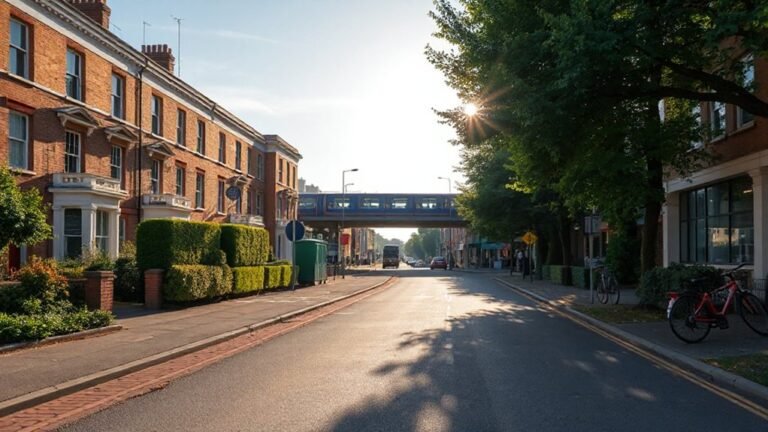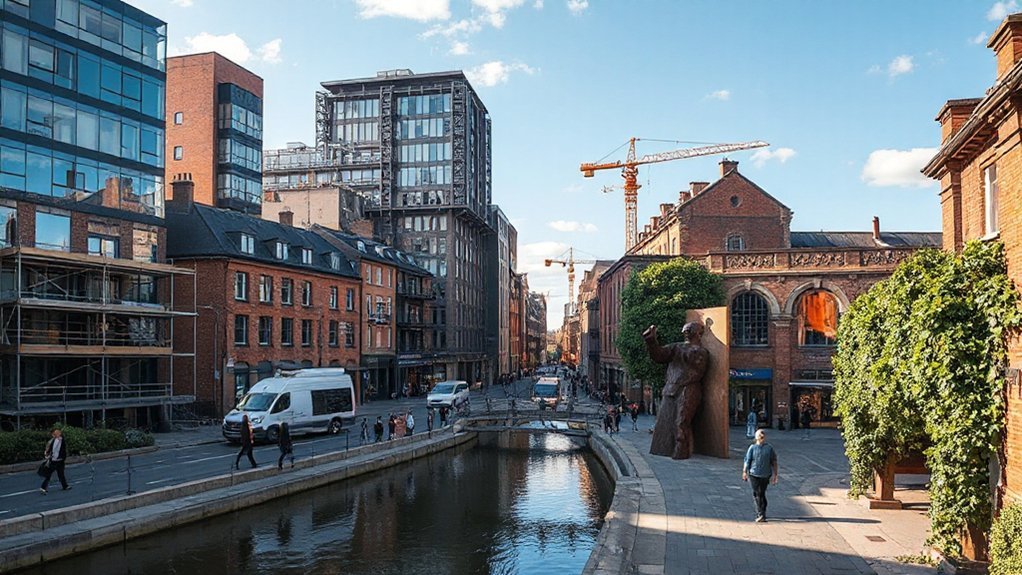
If you blink, you’ll miss Sheffield’s sudden transformation from factory towns to walkable hubs with mixed-use importance. You’re invited to map how core sites fuse culture, workspaces, and historic façades while outlying districts get fresh life through reuse and new amenities. The question remains: who benefits, who’s left behind, and what safeguards ensure resilient, inclusive growth as infrastructure and energy projects unfold? Keep paying attention to the plans shaping your neighborhood’s future.
How Sheffield’s Regeneration Story Began
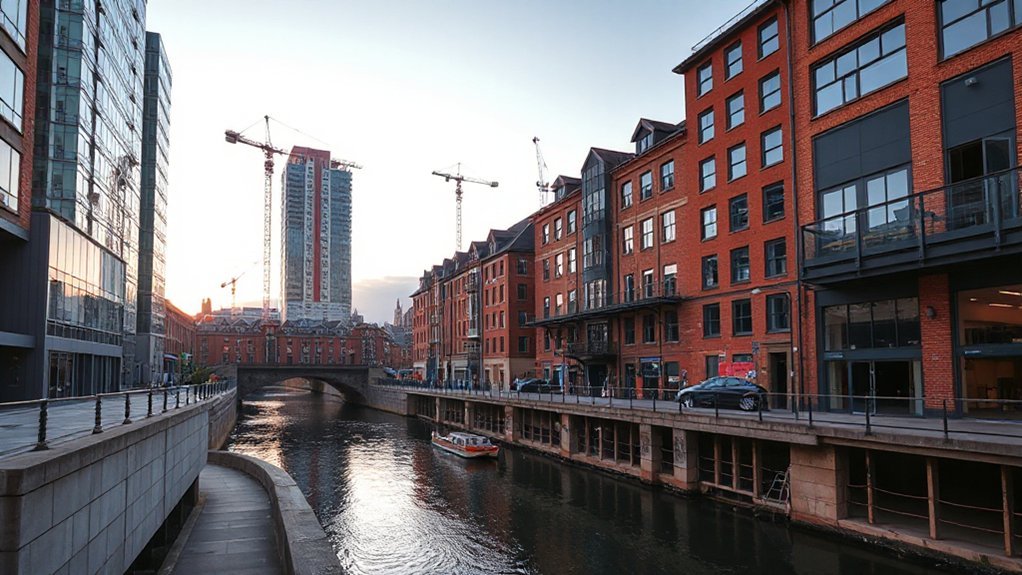
Sheffield’s regeneration story began with a clear realization: post-industrial decline wasn’t a temporary blip but a systemic challenge that demanded coordinated action.
You trace how early concerns about derelict factories, shrinking employment, and failing infrastructure spurred a cross‑sector response, aligning local government, business, and communities.
You assess the policy moves that transformed vacant spaces into opportunity: targeted investment, skills programs, and energy-efficient upgrades that signaled a longer-term strategy.
You examine how historical landmarks were leveraged to anchor pride while inviting new investment, and how local festivals helped knit communities back into public life, creating demand for services and sustained footfall.
You note the governance shifts, the funding mechanisms, and the metrics used to gauge impact, emphasizing learning and accountability in ongoing reforms.
City Centre: Mixed-Use Developments Shaping the Heart
City Centre has become the stage where mixed-use developments redefine daily life, weaving homes, offices, stores, and culture into a single, walkable grid. You’re watching how policy levers push density, permeability, and placemaking toward a coherent core.
Mixed-use schemes fuse ground-floor services with upper-floor residences, improving safety through activity and tenants’ collaboration with planners. Yet questions persist: how do we preserve accessibility while accelerating growth, and who bears the costs of infrastructure upgrades?
The answer hinges on transparent appraisal of grants, tax incentives, and zoning reforms that balance investment with public benefit. Historical architecture informs new silhouettes without dissolving memory, while art installations punctuate corridors, inviting civic dialogue.
If the centre sustains momentum, it becomes not just space, but a participatory urban organism.
Outlying Districts Reborn: Case Studies From the Urban Edge
Outlying districts are no longer afterthoughts; they’re proving to be engines of renewal at the urban edge. You’ll see a shift from neglect to calibrated investment, where small sites release bigger budgets through focused partnerships.
Investigations reveal how urban decay sits alongside opportunity, with targeted remediation making parcels ready for adaptive reuse rather than perpetual vacancy. In these cases, planners balance housing, jobs, and amenities, prioritizing connectivity to city cores while preserving distinct district identities.
Historical preservation informs modern rehab, guiding façade restoration and material reuse without stalling progress. Policy tools—land assembly, tax incentives, and streamlined approvals—accelerate projects that respect local character.
The result: measurable gains in street life, safety, and tax base, proving edge districts can lead regeneration rather than follow it.
From Dereliction to Live/Work Hubs: Transforming Neighbourhoods

Dereliction isn’t destiny: across neighbourhoods, investors and planners are stitching together live/work ecosystems that redefine vacant space as productive, flexible real estate. You’ll see strategies that convert empty storefronts and warehouses into studios, workshops, and co-working hubs, while safeguarding local character through Historical preservation.
Public incentives, zoning tweaks, and programmatic uses align into cohesive districts that attract talent, startups, and artists. Cultural festivals anchor these spaces, turning streets into stage, gallery, and marketplace—without erasing heritage.
The result is a policy-informed shift from vacancy to vibrancy, with measurable impacts on rents, job density, and pedestrian activity. You’re witnessing a model that prioritizes resilience, placemaking, and inclusive opportunity.
- Integrated use planning
- Heritage-conscious development
- Festival-led activation
- Data-driven performance metrics
Green Corridors: Linking Parks, Streets, and Communities
You’ll explore how Green Corridor Connectivity can knit parks, streets, and neighborhoods into a safer, more walkable network. Consider how enhanced access reshapes who can reach green spaces and how this drives community benefits and equity.
This prompts policy-focused questions about funding, maintenance, and measurable impacts on everyday mobility and wellbeing.
Green Corridor Connectivity
- Audit alignment between green spaces and transit plans
- Integrate urban farming plots into corridor designs
- Pilot renewable energy installations along routes
- Establish adaptive maintenance regimes and metrics
Community Access Benefits
The focus is on access equity, not just scenery, so you’ll map barriers—habitat fragmentation, inconsistent lighting, and uneven maintenance—that limit use by older people, caretakers, and low-income families.
Policy-minded scrutiny reveals how design choices affect safety, wayfinding, and perceived belonging, driving local engagement or withdrawal.
You’ll weigh investment phasing, community programming, and sheltered paths against displacement risks, asking who benefits most and who’s left out.
The goal: transparent, measurable gains in community access and sustained local engagement across Sheffield’s evolving green network.
Public Spaces Reimagined: Plazas, Play, and Pedestrian Priorities
Public spaces in Sheffield are being reimagined to prioritize people over cars, with plazas redesigned for spontaneous gatherings, playscapes for children, and pedestrian routes that weave through the heart of neighborhoods.
You’ll see policy-minded pilots evaluating how surface treatments, shading, and seating influence social time, safety, and business essentiality.
Public art conversations link mural programs to plaza life, while street festivals test ways to stage culture without clutter.
The question is whether these spaces sustain activity beyond events, and how maintenance rights are funded long-term.
- Evaluate plaza turnover hours and access for local groups
- Map kid-friendly playscapes alongside shaded seating corridors
- Tie public art into ongoing placemaking budgets
- Measure street festival spillover on nearby traders
Transport Upgrades: Faster Journeys Within Sheffield and Beyond
As Sheffield tightens the network that moves people, the focus shifts from widening sidewalks to speeding trips with purpose. You’ll evaluate how transport upgrades cut travel times, expand reliable bus and tram windows, and reduce congestion with smarter signaling and dedicated corridors.
The aim isn’t just faster commutes; it’s predictable, safe journeys that knit neighborhoods to jobs, schools, and clinics. You’ll compare phased corridors, park-and-ride choices, and last-mile options that keep the city functioning without lurching into overdesign.
Policy-minded questions arise: funding sources, accountability, and the resilience of plans to climate pressures. You’ll note how fashion trends and culinary scenes respond to accessibility, shaping visitor flows and local economies as transit becomes a strategic catalyst for broader regeneration.
Housing Ambition: Affordable Homes and Market-Led Schemes
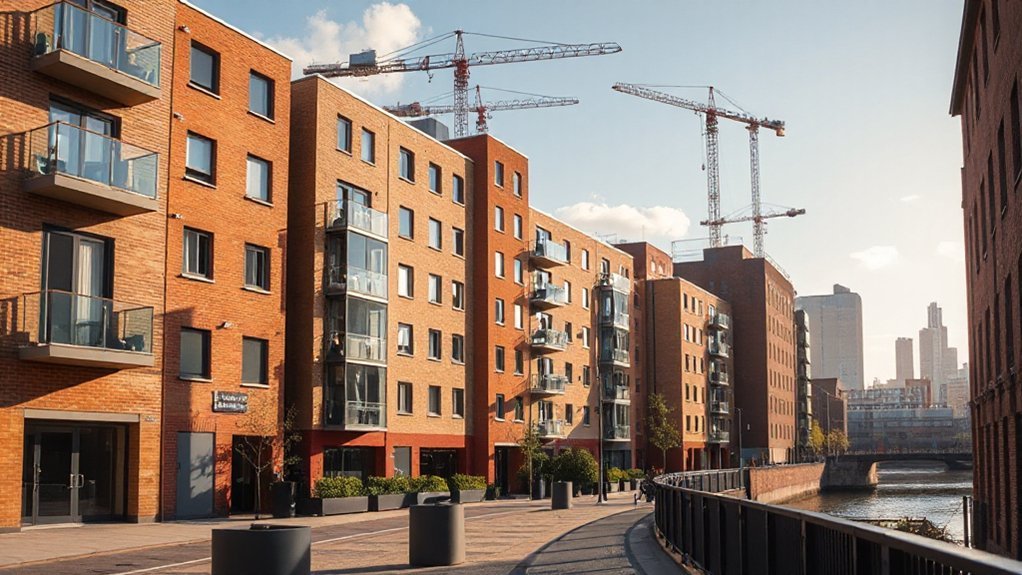
You’re examining how Sheffield will deliver affordable homes without stifling private investment, balancing social need with market viability. You’ll see a push for Affordable housing paired with Market schemes that attract private capital while safeguarding public goals.
The question—how to align delivery speed with quality—drives policy threads, funding mixes, and design standards. You assess delivery models, risk sharing, and governance, watching for transparency and resident voice.
1) Align funding envelopes with clear performance milestones to reduce stalled projects
2) Combine grants with loan guarantees to lower capital costs for developers
3) Require inclusive design and local workforce targets in all schemes
4) Establish robust monitoring on affordability tenure and long-term stewardship
Economic Diversification: Which Sectors Are Driving Growth
Economic diversification hinges on identifying sectors that combine resilience with high growth potential, then aligning policy, funding, and skills to accelerate them. You assess which industries in Sheffield can sustain shocks while delivering job-rich expansion, and you map where city hall can remove friction.
Tourism growth emerges as a strategic lever, tapping heritage routes, green spaces, and events to attract visitors and spending without overreliance on one cycle.
You also spotlight technological innovation as a force multiplier—hubs for fintech, software, and clean-tech become magnets for talent and investment, fueling adjacent sectors.
Your analysis weighs infrastructure, procurement, and talent pipelines, asking who benefits and how to measure impact.
The goal is a coherent, investable diversification plan that translates policy into measurable growth outcomes.
Cultural Catalysts: New Venues, Arts, and Community Identity
Cultural catalysts are reshaping Sheffield’s urban narrative by turning new venues, arts initiatives, and community identity into engines of place-based growth. You’ll assess how cultural festivals and art installations intersect with policy aims, funding, and neighborhood futures, tracing accountability methods for public-private partnerships.
You’ll question whether venues sustain local talent, attract diverse audiences, and drive inclusive economic activity, not just spectacle. You’ll compare delivery timelines, community engagement, and metrics that translate aesthetics into tangible upgrades for streets, safety, and housing footprints.
You’ll identify gaps between ambition and access, and propose governance tweaks to guarantee transparent stewardship, equitable distribution, and long-term resilience in the city’s cultural economy.
- Mapping funded venues versus grassroots spaces
- Audiences and accessibility benchmarks
- Evaluation of cultural festivals’ local impact
- Coordination with urban design and transport plans
The Role of Universities and Research Clusters
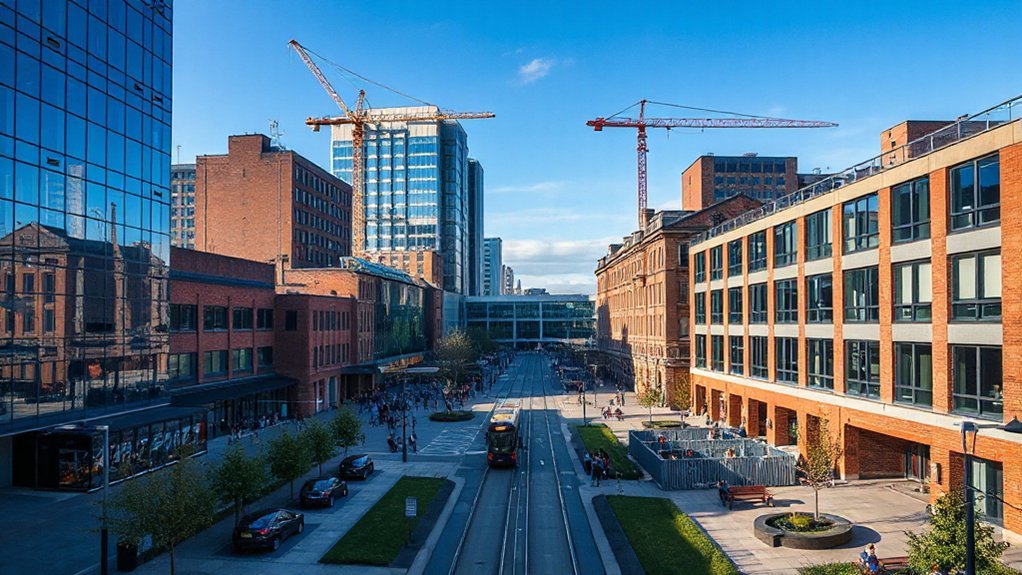
Universities drive regeneration by turning campuses into innovation engines that attract talent, capital, and partnerships. The economic ripple of research clusters shapes local business ecosystems, job creation, and urban productivity.
While institutional hubs become magnets for start-ups and external funding. You’ll see campus-industry collaboration hubs as critical testbeds for policy, standards, and scalable urban solutions in Sheffield’s regeneration agenda.
Universities Driving Regeneration
Universities sit at the heart of Sheffield’s regeneration strategy, not as passive beneficiaries but as active catalysts, linking research clusters to local industry, startups, and civic initiatives. You’ll see campuses map knowledge to tangible outcomes, shaping policy debates and funding priorities.
The aim is clear: translate tech innovation into local jobs, safer streets, and cleaner energy. Environmental sustainability threads through procurement, campus operations, and community partnerships, aligning research agendas with citywide carbon reduction goals.
You evaluate how universities leverage co-creation with SMEs to de-risk new ventures and accelerate scale-up. This is policy-minded scrutiny, demanding accountability for outcomes, not promises alone.
- Cross-sector collaboration benchmarks
- Funding alignment and impact metrics
- Spinout and talent pipelines
- Community benefit commitments
Research Clusters Economic Impact
Research clusters are engines of Sheffield’s economy, translating research funding into tangible local outcomes through focused collaboration with industry and SMEs. You tap into regional strengths, mapping where knowledge translates to jobs, productivity, and new services.
The economic impact hinges on targeted funding streams, strategic partnerships, and robust pathways from lab to market. You assess whether universities aren’t just idea factories but mobilisers of startup activity, scale-ups, and supply-chain development that elevate local firms.
You consider policy levers: procurement, innovation vouchers, and tax incentives that incentivise collaboration. You weigh evidence from pilot programs, cluster surveys, and regional dashboards to judge effectiveness.
You ask how inclusive growth is measured, and whether benefits diffuse beyond core districts to remain sustainable long-term.
Campus-Industry Collaboration Hubs
- Map collaboration metrics and funding flows
- Align IP policies with public-interest goals
- Prioritize industry-backed pilot programs
- Integrate workforce development with local needs
Yorkshire-Inspired Design: Embedding Local Character in New Builds
Yorkshire-inspired design isn’t about copying a postcard; it’s about embedding local character into new builds through materials, scale, and detailing that reflect the county’s distinct towns and landscapes.
You’re surveying how planners balance aesthetic identity with housing demand, asking whether innovative architecture can coexist with practical codes.
The investigation foregrounds materials that weather naturally, rooflines that reference historic vernacular, and street hierarchies that preserve legibility amid growth.
You’ll scrutinize policy levers—design codes, conservation area elevations, and community consultation—to guarantee character isn’t ornamental tokenism.
The aim is heritage preservation without stifling regeneration.
Critics push for measurable outcomes: energy performance, maintenance costs, and long-term adaptability.
If design respects place, Sheffield’s fabric strengthens, and new builds earn public trust rather than ire.
Infrastructure Investments: Utilities, Energy, and Sustainability
You’ll want to assess how Utilities Modernization Initiatives reshape service reliability, affordability, and resilience for Sheffield’s communities.
As you review Sustainable Energy Infrastructure, consider policy levers that accelerate grid upgrades, storage, and decarbonization while protecting vulnerable customers.
This discussion should map practical steps, funding routes, and accountability measures that tie infrastructure upgrades to broader urban regeneration goals.
Utilities Modernization Initiatives
Utilities modernization in Sheffield is reshaping how the city powers itself, cleans water, and manages waste, with a focus on resilience, efficiency, and long-term affordability.
You assess how utility upgrades, funding streams, and governance align with urban regeneration goals. You probe performance metrics, cost containment, and service reliability, separating hype from durable capability.
You identify gaps in aging networks, procurement bottlenecks, and cross-sector coordination, then map practical policy fixes that bolster infrastructure resilience while protecting vulnerable households.
- Audit current utility upgrades pipelines and grid segments for redundancy and fault tolerance.
- Align investment planning with water treatment, drainage, and waste-to-resource initiatives.
- Introduce performance-based contracts to incentivize reliability and cost control.
- Ensure transparent customer charging, pensioned subsidies, and long-term affordability.
Sustainable Energy Infrastructure
How can Sheffield accelerate sustainable energy infrastructure to support resilient growth across utilities, energy, and sustainability? You’re examining how investment choices facilitate reliable power, lower emissions, and smarter grids. The focus is on coordinating utility modernization with local demand, grid resilience, and private-public partnerships that de-risk projects.
Investigations point to streamlining permitting, aligning incentives for energy efficiency upgrades in public buildings, and expanding district heat and cooling where feasible. Prioritizing renewable resources integration reduces dependence on fossil peaks and stabilizes prices for households and businesses alike.
Policy-minded action should pursue transparent cost-benefit analyses, performance metrics, and community engagement to guarantee equitable access. The aim: scalable, adaptable infrastructure that sustains growth while advancing energy efficiency and renewable resources across Sheffield.
Community Voices: Residents Shaping Sheffield’s Plans
Community voices sit at the heart of Sheffield’s regeneration plans, because residents know the city’s problems and potential better than anyone else. You’ll find that by elevating local perspectives, planners uncover gaps between policy and lived experience, driving smarter decisions.
Through structured forums and rapid feedback loops, you gain accountability, not slogans. You assess proposals against real conditions, from transport bottlenecks to green space quality, ensuring outcomes match community needs.
- Map community priorities against project budgets and timelines.
- Validate assumptions with on-the-ground data, not just high-level analytics.
- Create accessible feedback channels to sustain ongoing dialogue.
- Translate resident insights into measurable policy metrics and safeguards.
Timelines and Practical Implications: What Residents Can Expect Next
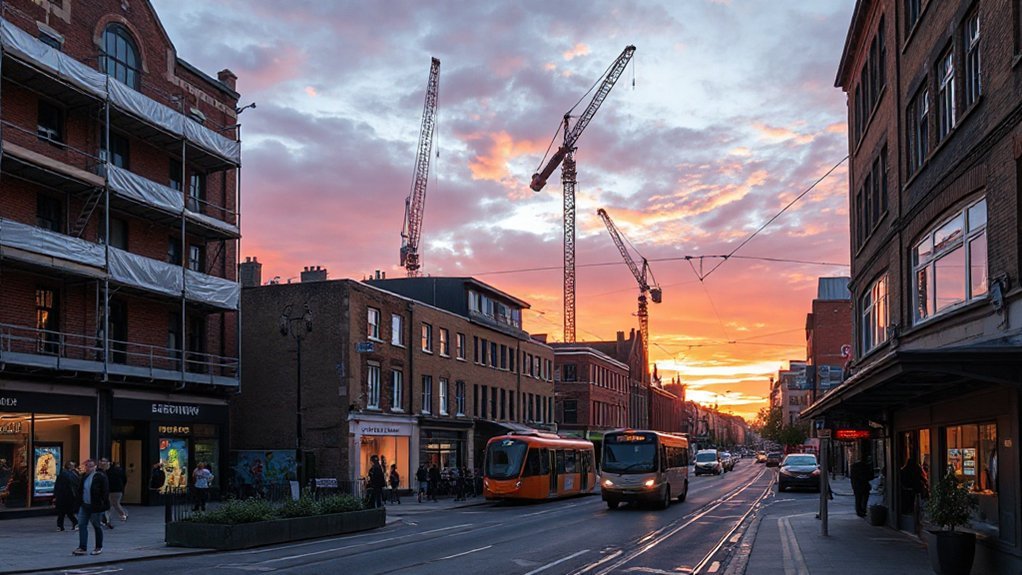
With residents’ insights shaping the priorities, you’ll soon see how timelines are mapped to real-world constraints and opportunities. In this phase, timelines aren’t abstract charts—they’re concrete commitments tied to funding cycles, procurement windows, and stakeholder coordination.
You’ll assess how urban planning milestones align with construction sequencing, permitting, and community feedback loops, making sure expectations reflect practical limits rather than idealized outcomes. The focus is on phased delivery, risk registers, and measurable milestones that residents can track.
Economic forecasting informs decisions about affordable housing, job creation, and public domain improvements, shaping when benefits materialize. Expect frequent updates that translate planning jargon into daily impacts, from street closures to service upgrades.
The aim is transparency, accountability, and a clear pathway from policy to palpable, lasting change.
Frequently Asked Questions
How Will Regeneration Impact Local Housing Costs for Residents?
Your housing costs may rise or stabilise, depending on plan safeguards, but affordable housing programs and strong community engagement protect affordability. You’ll scrutinise policies, ask for transparent pricing, and guarantee local residents shape regeneration to curb displacement.
What Safeguards Protect Existing Communities From Displacement Risks?
You’re protected by homelessness and displacement safeguards, with community engagement and cultural preservation guiding decisions; audits, caps, and resettlement plans make sure you’re informed, while transparent timelines ensure you’re not priced out as redevelopment proceeds.
When Will Shortlisted Projects Begin and Complete Timelines?
Shortlisted projects begin next year and complete within five to seven years. You’ll see milestones tracked publicly, with safeguards. Historical preservation and cultural revitalization guide timelines, ensuring adaptive reuse, transparent reporting, and community-informed decision-making throughout implementation.
How Will Transport Improvements Affect Daily Commuting Patterns?
Like a finely tuned engine, you’ll notice Public transit expanding routes and frequency, easing Traffic congestion; you’ll shift to bus and rail, cutting delays, prioritizing reliable corridors, and you’ll adapt your daily commute with smarter planning.
Which Funding Streams Support Small Businesses During Regeneration?
Funding sources for your small business include grants, loans, and subsidies, plus business support programs. You should investigate eligibility, apply promptly, and track reporting. This policy-minded approach helps you leverage opportunities while aligning with regeneration goals.
Conclusion
So, we’ve mapped the buzzwords: mixed uses, green links, local character, and you’ll hear a lot about “stakeholder” participation. Ironically, the plans promise more public space while you dodge construction cones on your daily commute. Yet the trajectory is tangible: energy projects, upgraded utilities, and Sheffield’s distinctive Yorkshire charm stitched into every new build. If residents stay engaged, this regeneration could finally reflect the city you live in—not just the one planners hoped to design. Stay vigilant, Sheffield.
About the Author