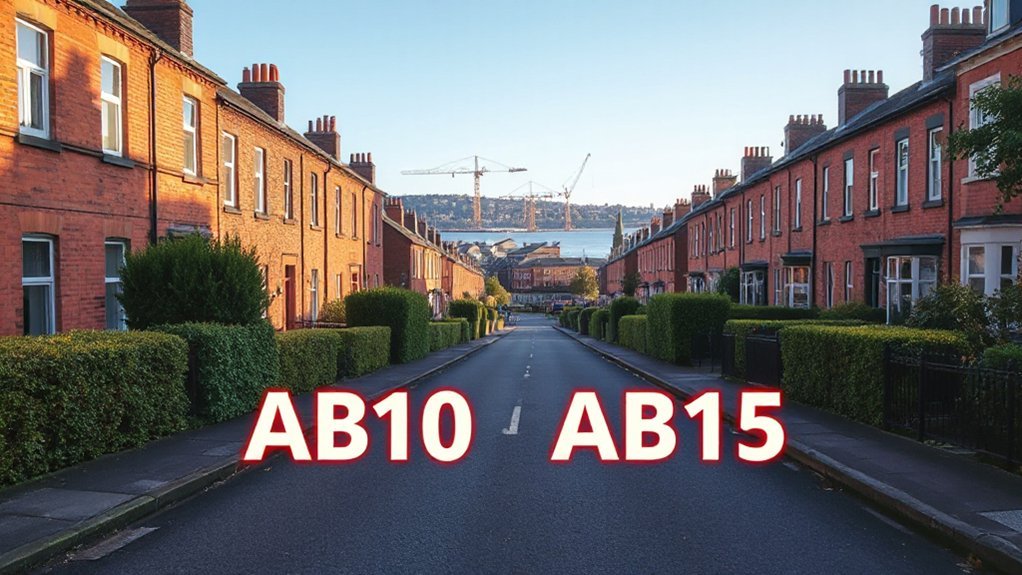
If you’re weighing AB10 against AB15, the choice isn’t just about vibes—it’s about where stability meets upside. AB10 offers established neighborhoods, solid schools, and steady rental demand, while AB15 points to new builds, growth corridors, and ongoing infrastructure that could lift values. You’ll want to weigh price trends, transport links, and future developments to see which fits your risk tolerance and timeline. So, where do you start tightening your criteria?
AB10 vs AB15: The Core Decision Framework
AB10 and AB15 sit at the core of Aberdeen property decisions because they shape cost, school zones, commuting times, and future resale value. You’ll compare price trajectories, rental yields, and capex needs across both postcodes using hard data, not vibes.
In this framework, location fundamentals matter: current and projected demand, neighborhood depth, and access to utilities and services. You assess Historical architecture as a signal of long-term value preservation, balancing maintenance costs against aesthetic appeal.
Local festivities impact seasonal demand, driving rental cycles and resale timelines. Translate these signals into a decision matrix: purchase price, ongoing costs, and time-to-equity.
You’ll favor options with consistent appreciation, lower carrying costs, and robust resale liquidity, while remaining mindful of macro shifts that tilt risk in either postcode.
AB10 Overview: Vibe, Transport, and Schools
Nestled just west of Aberdeen’s city center, AB10 blends established neighborhoods with convenient access to city amenities, driving steady demand from both families and professionals.
You’ll notice a compact core near the university and bustling Merchant Quarter, with easy transit links to ABZ and major routes, supporting reliable commute times.
Schools in the area rank solidly for primary and secondary education, reinforcing family appeal without sacrificing investor interest.
Local housing stock leans toward traditional tenements and modern flats, offering a mix of price bands and yield potential.
Local cuisine and cultural festivals nourish the social calendar, creating steady, year-round activity that sustains rental demand.
In short, AB10 combines consistency in transport and schooling with lifestyle pull for short-term rentals and owner-occupier buys.
AB15 Overview: Value, Growth, and Community
AB15 combines steady value with upside potential, underpinned by growing demand and a cohesive community feel. You’ll see price resilience supported by steady rental demand and improving infrastructure, with values held by steady buyer interest.
Growth is anchored in a mix of traditional housing stock and newer developments, translating into a balanced risk profile. In the market you’re watching, you’ll note modest yet steady appreciation alongside rent growth, signaling reliable cash flow for investors and quality housing for owner-occupiers.
Community diversity adds appeal, enriching schools, services, and neighborhood networks, while Local history provides a perceptible character that sustains demand.
AB10 vs AB15 Today: Price Trends
You’ll see AB10 and AB15 showing distinct price movement patterns, with AB10 often tracking steadier gains and AB15 exhibiting more variability.
Market trajectories suggest AB10’s momentum contrasts with AB15’s sharper swings, informing how each area responds to broader demand shifts.
In short, these comparative trend insights help you gauge where momentum and risk align for today’s buyers.
Price Movement in AB10
AB10 has shown steadier gains than AB15 over the past quarter, with prices nudging up by around 2–3% while AB15 edges higher but more volatilily.
You’ll see price movement in AB10 reflect modest, persistent demand, anchored by market stability and steady activity from first-time buyers and movers upsizing. Price fluctuations have stayed within a narrow band, signaling predictable return patterns relative to broader regional cycles.
On a day-to-day basis, transaction volumes remain solid, suggesting sustained interest without overheating. Data indicate tighter supply in AB10 compared with surrounding areas, supporting gradual appreciation without abrupt spikes.
For you, this translates to a more reliable investment profile, where incremental gains align with ongoing renter and owner-occupier demand.
AB15 Market Trajectories
Moving from AB10’s steadier pace, AB15 shows a different trajectory with higher volatility but encouraging upside in the near term. You’ll see sharper weekly swings in asking prices, yet momentum signals point to continued growth as supply tightens and demand stays robust.
The trajectory reflects a late-cycle pickup influenced by crossflows from dynamic younger buyers and renewed investor interest around key corridors near the city center. Historical landmarks and upcoming cultural festivals are nudging interest into pre-booking windows, lifting short-term pricing pressure.
You should watch price-per-square-foot shifts, time-on-market compression, and rerated yield expectations as signals of durability.
- Price swings persist with improving floor support
- Demand concentrates around transport links and cultural hubs
- Short-term uplift driven by festival-related activity
- Market signals trending toward tighter margins but healthier onboarding
Comparative Trend Insights
AB10, by contrast, edges up at a slower pace, suggesting price resilience rather than exuberant growth. In the broader pattern, recent data shows AB15 leading in year-over-year appreciation, while AB10’s year-over-year change remains positive but more muted.
Market liquidity remains solid in both postcodes, yet buyers should weigh AB15’s upside potential against longer-term affordability. Historical landmarks and local cuisine contribute to ongoing appeal, supporting sustained interest.
For investors, combining momentum signals with neighborhood quality may optimize entry timing and risk-adjusted returns.
First-Time Buyer Prospects in AB10
Are first-time buyers finding AB10 a welcoming entry point or a hurdle to overcome? You’re evaluating demand, affordability, and long-term value with precision.
AB10 shows steady demand, modest price growth, and recent incentives that ease initial costs. Your focus is on maneuvering through entry hurdles while targeting value and future appreciation.
1) Price discipline: entry thresholds remain approachable, with compact flats and starter homes driving initial affordability.
2) Financing signals: lenders show cautious optimism, often favoring deposits and fixed-rate products to reduce risk.
3) Market velocity: turnover is brisk enough to build equity, yet slow enough to allow due diligence.
4) Local appeal: Historical architecture and local cuisine sustain neighborhood charm, supporting long-term rental demand.
First-Time Buyer Prospects in AB15
AB15 presents a balanced path for first-time buyers, shifting from AB10’s smaller-entry dynamics to a postcode with a broader mix of affordable flats and starter homes. You’ll find lower entry prices versus AB10, with steady year-over-year price growth and a healthier supply of one- and two-bedroom options.
Market data show improved rental yields for single buyers and couples, supported by a rising share of modern, compact units near transit links. Affordability is tempered by ongoing demand, but government schemes and deposit assistance programs bolster purchasing power.
Neighborhood nightlife and local dining contribute to livability, enhancing resale appeal to future buyers. Overall, AB15 offers prudent entry points, clearer price trajectories, and stock diversity essential for first-time buyers prioritizing long-term value.
Rental Yields in AB10: Investment Potential
AB10 shows steady rental demand, with occupancy stabilizing around high-90s in recent quarters and monthly rents trending upward.
Investors will want to weigh Yield Trends for Investors against current market drivers like local employment, infrastructure, and tenant turnover to gauge risk-adjusted returns.
In short, the AB10 rental landscape sets a baseline for cash flow while highlighting areas to watch as demand and yields shift.
Rental Demand in AB10
- You’ll see highest activity from renters prioritizing rental affordability and proximity to transport hubs.
- Occupancy rates stay elevated as tenant preferences tilt toward well-maintained, low-utility-cost homes.
- Landlords benefit from stable demand across family and professional segments, reducing vacancy risk.
- Seasonal fluctuations exist, but vacancy gaps are quickly filled with quality listings and competitive pricing.
Yield Trends for Investors
Yield trends in AB10 show solid investment potential, with rental yields holding steady as demand remains resilient and rents continue to outpace price growth. You’ll see cap rates cling to the low-to-mid 5% range, supported by steady occupancy and limited new supply.
In practical terms, gross yields align with recent trends, while net returns benefit from stable management costs and favorable tax dynamics.
Historical architecture and character-driven appeal keep rent premiums intact, helping yields persist even during periodic price pauses.
Local demand remains anchored by proximity to employment hubs and reliable transport links, reinforcing price-to-yield stability.
For investors, this mix suggests disciplined entry points, selective asset types, and a focus on properties that maximize rentability while preserving long-term value.
Local cuisine enhancements act as ancillary demand drivers rather than core yield catalysts.
Local Market Drivers
- AB10 rental demand tracks transport links, boosting occupancy and stabilizing yields.
- Local employers concentrate influence, shaping short- and medium-term rent growth.
- Historical landmarks and cultural amenities attract steady renter interest beyond core commuters.
- Local cuisine and hospitality venues enhance desirability, supporting premium rents without overheating.
You’ll see price resilience where infrastructure supports travel ease, while vacancy dips are most pronounced near key employment sites.
Data indicate rental income remains robust despite macro headwinds, with AB10 outperforming peripheral areas.
For investors, combining proximity to transport, job centers, and lifestyle assets offers durable cash flow and diversification against market cycles.
Rental Yields in AB15: Investment Potential
AB15 rental yields remain competitive for investors, with gross yields typically in the mid-to-high single digits and net returns boosted by lower holding costs in this popular Aberdeen postcode.
You’ll see steady rental demand supported by a rental stock mix that favors amenities and proximity to commuting routes.
Property appreciation in AB15 has been resilient, underpinning cap rate stability even as prices moderate.
In data terms, gross yields hover around 6–8%, while net yields trend higher for buy-to-let strategies that optimize void periods and service charges.
Market fundamentals point to sustained demand from professionals and expanding firms in the city center corridor.
If you’re evaluating an entry or add-on asset, AB15 offers a favorable risk-adjusted profile relative to broader regional benchmarks.
Family-Friendliness: Schools, Parks, and Safety
You’ll want a quick read on how proximity and quality of schools, plus local parks and safety metrics, influence family appeal in AB10 and AB15.
The data shows which postcodes offer high-rated schools within easy reach, ample green space, and lower crime indicators, shaping demand and resale value.
We’ll compare the two areas on these points to guide buyers prioritizing family-friendliness.
Schools Proximity And Quality
Nearby Aberdeen neighborhoods cluster around strong public and private schools, parks, and safety metrics, making proximity a core driver of family value in AB10 and AB15 postcodes. You’ll want data on catchment strengths, exam performance, and school ratings to prioritize options with proven outcomes and stable enrollment.
In addition, community diversity and cultural events enrich daily life, signaling long-term value beyond test scores.
- Proximity-weighted school rankings and nearby transport links
- Primary and secondary performance trends by year, with feeder patterns
- Scholarships, intake diversity, and inclusive programs
- Local development plans that influence school capacity and community resources
Parks And Safety Outlook
Parks and safety metrics are a core lens for family-friendliness in AB10 and AB15, with green space access, walkability to parks, and low crime rates shaping daily life and resale value.
In AB10, parks accessibility correlates with higher daily activity and weekend utilization, while AB15 shows steady demand for well-distributed green spaces within a 10-minute walk.
Safety statistics reveal lower incident rates in both postcodes compared with city averages, supporting stable tenant turnover and predictable resale timelines.
Market data indicates proximity to playgrounds and recreation centers adds modest premium, particularly near waterfront and woodland trails.
You should prioritize developments with certified safety records and updated park maintenance schedules, ensuring ongoing accessibility and minimal disruption to family routines.
This combination strengthens long-term property value and livability.
Commute and Connectivity in Aberdeen
Aberdeen’s commute and connectivity sit at the heart of its property market, with rapid transit links and road corridors shaping where buyers can comfortably live and work. You’ll notice how transit reliability, road travel times, and proximity to employment hubs influence value dispersion across AB10 and AB15.
The data show consistent demand near Aberdeen’s main arterial routes, with commuter ease supporting higher price resonance in adjacent districts. You’ll also see networks expanding toward peripheral areas, broadening choice without sacrificing accessibility.
- Transit frequency and reliability metrics drive location desirability
- Proximity to major corridors correlates with price stability
- Car and bike infrastructure reduces commute time variability
- Local cuisine and cultural festivals influence weekend travel patterns and amenity value
Local Amenities: Cafés, Shops, and Culture

What do local amenities like cafés, shops, and cultural venues mean for AB10 and AB15 buyers? You’ll see measurable differences in daily convenience, spend patterns, and perceived lifestyle value.
In AB10, proximity to independent cafés and specialty shops correlates with higher foot traffic and sustained daytime activity, supporting stronger mini-market liquidity.
AB15 presents broader variety in chain retailers and cultural venues, driving diversification of spend and weekend draw.
Local cuisine options correlate with longer dwelling times in evenings, boosting demand from renters and owners seeking convenience.
Cultural festivals, frequent in both postcodes, lift seasonal demand and price resilience, though AB15 often captures premium during festival peaks.
Future Development and Growth Signals
You’ll want to watch how development timelines align with plan approvals, housing supply, and projected timelines for projects in AB10 and AB15.
Infrastructure investment signals, like road upgrades and public transit plans, can shift demand curves and pricing early.
Market demand trends—price momentum, rental yields, and buyer interest—help you gauge which postcode holds stronger growth potential.
Development Timeline Indicators
A clear signal of future growth is the cadence of approved projects and scheduled start dates, which you can track through planning records, developer announcements, and council agendas—these milestones help gauge delivery risk and timing for prices.
Development indicators show how quickly projects proceed from approval to completion, while timeline milestones mark key phases, such as site preparation, construction starts, and finish dates.
You can compare postcodes by the density of milestones and the proximity of scheduled openings to current price momentum.
- Track approvals vs. starts to assess pace
- Compare milestone dates across developments
- Note potential delays and their price impact
- Align timelines with market cycle expectations
Infrastructure Investment Signals
Data shows projected capital expenditure aligns with population growth, job center clustering, and school campus expansions, signaling faster appreciation for nearby properties. Look for mixed-use developments that pair housing with retail and services, boosting day-to-day livability.
Luxury amenities and green spaces often accompany these investments, creating attractive, sustainable neighborhoods. Market signals include project milestones, procurement timelines, and contractor activity. By tracking these indicators, you identify areas where infrastructure backing strengthens long-term value, not just short-term price spikes.
Market Demand Trends
Market demand signals forecast where buyers push prices higher as growth areas attract residents and employers. You’ll see shifting patterns that track with employment hubs, university pull, and infrastructure milestones, shaping Aberdeen’s AB10 vs AB15 trajectories.
Demographic shifts and cultural influences steer both rental and purchase activity, with younger cohorts prioritizing amenities and transit access, while longer-tenured residents seek stability in established neighborhoods.
Growth signals align with new developments, school performance, and business retention rates, creating a feedback loop that sustains price momentum.
Expect resilience in core pockets even amid broader market pauses, as supply tightens and demand concentrates around proven live-work-play corridors.
- Demand concentration around key employment hubs
- Rising rental yields amid student and graduate cohorts
- Infrastructure milestones accelerating area desirability
- Cultural amenities driving longer tenure and price support
Pros and Cons at a Glance for Each Postcode
Here’s a concise, data-driven snapshot of the pros and cons for each Aberdeen postcode under AB10 and AB15, highlighting market momentum, price trends, rental yields, and amenity access so you can compare quickly and decide where to act.
AB10 shows steady price growth, strong rental demand, and good commuting links, but tighter stock and higher competition raise short-term risk.
AB15 offers broader inventory, sustainable price shifts, and solid yields, with improving amenity access and proximity to cultural venues; downside is occasional softer liquidity in slower months.
Historical architecture boosts appeal in both, while Cultural festivals can drive seasonal spikes in demand.
How to Decide Between AB10 and AB15 for Your Goals
If you’re deciding between AB10 and AB15, start by aligning your timeline and risk tolerance with what each area tends to offer. You’ll notice the data points matter: price growth, demand, and rental yields drive outcomes more than vibes alone.
Use a simple framework to compare, then pick a path that fits your goals.
- Define your horizon: short-term flips vs. long-term holds, and map expected cash flow accordingly.
- Assess risk: AB10 typically offers steadier yields; AB15 may present higher upside with selective pockets.
- Evaluate lifestyle fit: consider access to local cuisine and outdoor activities as part of daily value.
- Check market signals: inventory, days-on-market, and rent trends to validate your target price band.
Frequently Asked Questions
Which AB10 Vs AB15 Metric Best Predicts Long-Term Equity?
Market growth best predicts long-term equity for AB10 vs AB15. You’ll spot investment hotspots where sustained rent and price appreciation converge, signaling lagging-to-least growth leaves. Prioritize areas with consistent Market growth to maximize future equity gains.
How Do School Catchments Differ Between AB10 and AB15?
School catchment boundaries differ materially: AB10 tends to include higher-ranked schools and broader catchment areas, while AB15 shows more concentrated zones. You’ll see divergent school rankings and catchment boundaries shaping property values and buyer decisions.
Which Postcode Offers Better Rental Yield Stability?
You’ll find AB15 offers steadier rent fluctuation and stronger tenant demand, especially during market dips. AB10 may show higher volatility, but if you value predictability, AB15 remains your safer bet for rental yield stability.
What AffEcts Price Sensitivity in AB10 Vs AB15?
Price sensitivity in AB10 vs AB15 hinges on market trends and local amenities; you’ll see demand swing with shifts in rental yields, transport links, and school quality, while buyer sentiment responds to nearby facilities and evolving price momentum.
Are There Hidden Costs When Switching From AB10 to AB15?
Yes, there are hidden costs when switching from AB10 to AB15. You should expect Hidden fees, plus potential higher utility costs, driven by denser demand and utility pricing. Analyze bills, compare providers, and budget for moving charges.
Conclusion
In short, AB10 trades stability for steady returns, while AB15 leans into growth and modern living. If you value established neighborhoods, solid schools, and reliable rents, AB10 is your anchor; if you chase higher appreciation and new amenities, AB15 offers the momentum. One standout stat: AB10 has seen rental demand hold at around 95% occupancy in recent quarters, signaling dependable cash flow. Match your goals to your risk tolerance, and you’ll pick the right postcode.
About the Author