Modernising a Victorian terrace in Bristol means blending brick-and-timber charm with high-performance, low-impact design to create flexible spaces that meet today’s standards without losing character. You’ll start with a fabric-first approach, prioritising continuous insulation and airtightness, while preserving original timber joinery, plasterwork, and sash windows. Open-plan layouts, layered lighting, and kitchen-dining hubs foster sociable everyday living. Outdoor courtyards echo period detailing, and sustainable, low-VOC finishes keep interiors healthy. If you keep exploring, you’ll uncover practical steps and timelines.
What a Victorian Terrace Can Offer Today in Bristol
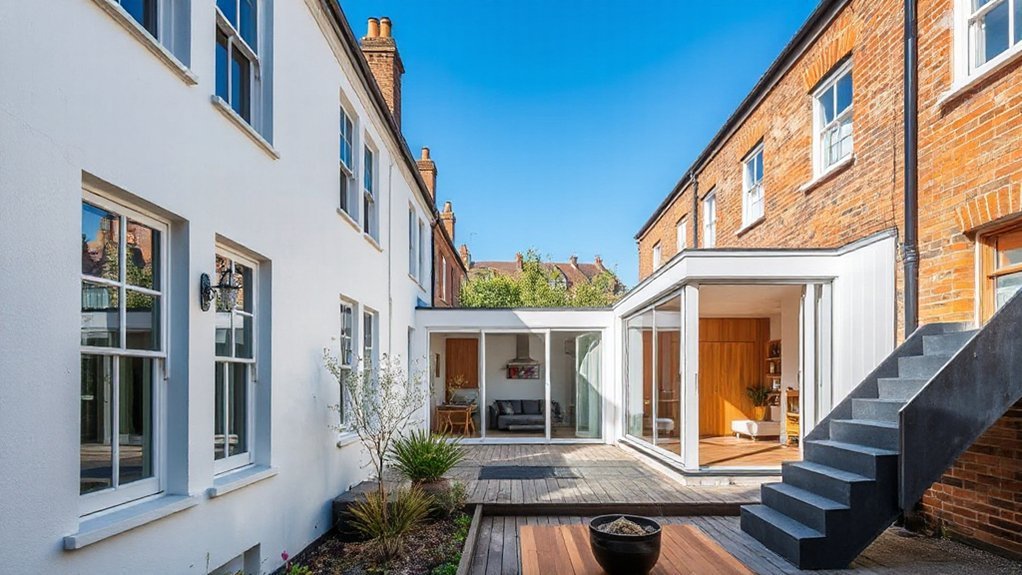
Victorian terraces in Bristol offer a robust framework for contemporary living, combining solid architectural grammar with adaptable layouts. You’ll discover that a Victorian terrace supplies durable structure, room-by-room functionality, and scalable enhancements, all compatible with modern technology and lifestyle needs.
The intrinsic “Victorian charm” emerges through proportion, detailed features, and refined materials, while retaining practical circulation patterns that support efficient daily use. You’ll leverage existing load-bearing lines to minimize invasive changes, preserving character while enabling thoughtful updates to insulation, services, and fixtures.
The Bristol history informs design decisions, guiding you toward sympathetic restorations and durable finishes that respect era-appropriate aesthetics. In fundamental terms, the footprint supports flexible uses, from home office zones to living spaces for growing families, without compromising integrity or clarity of purpose.
Set Your Design Goals for Brick-and-Timber Living
Set clear design goals for brick-and-timber living by aligning your aims with the building’s solid framework. You’ll balance historical preservation with modern function, defining priorities before selections.
Begin by mapping structural constraints, timber integrity, and brickwork conditions, then translate findings into measurable objectives: daylight, airflow, insulation, and load-bearing considerations.
Establish performance targets for thermal comfort, acoustic comfort, and air quality, ensuring compliance with local heritage guidelines.
From there, drive material selection that respects character while delivering durability and low maintenance. Specify aesthetic intent—texture, colour, and finish—without compromising structural safety.
Document decision criteria, approval milestones, and budget envelopes.
Finally, align procurement timelines with construction sequencing, coordinating trades to minimize disruption.
Your design goals should guide every later choice, preserving authenticity while enabling contemporary living. Historical preservation, Material selection.
Preserve Key Original Elements That Define Character
Preserve the key original elements that define the character of the terrace by identifying performance-critical features and detailing why they matter to both heritage value and daily living. You’ll assess timber joinery, plasterwork, internal stair geometry, sash windows, and decorative mouldings for structural integrity and aesthetic continuity.
Prioritize materials and profiles that convey historical authenticity while enabling gentle modern reinterpretation. Document original construction methods, align repairs with period techniques, and use compatible finishes to minimize visual disruption.
Maintain rhythm, proportion, and fenestration to preserve streetscape legibility and daylight quality. Integrate contemporary services with minimal intrusion, ensuring reversibility where possible.
Emphasize historical preservation objectives in planning reviews, and communicate a clear rationale to stakeholders, balancing stewardship with comfortable, practical living.
Fabric-First Principles: Insulation and Airtightness First
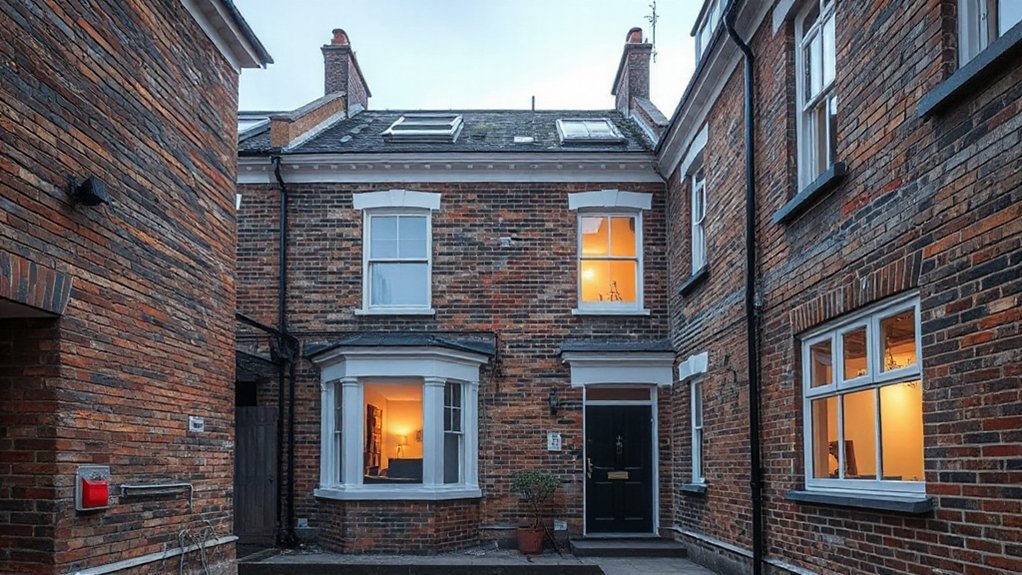
A fabric-first approach places insulation and airtightness at the core of modernisation, ensuring thermal performance is built in before finishes.
You’ll assess envelope continuity, thermal bridges, and moisture management to create a tight, well-insulated shell.
Start with clear targets for insulation values and an airtightness strategy to guide subsequent detailing and materials selection.
Insulation First Principles
How can you guarantee the building envelope delivers thermal performance before any other system? You start with insulation-first decisions that set the fabric’s thermal behavior, then verify performance through measured airtightness and thermal bridges.
You weigh historical context and Victorian architecture nuances to identify where fabric improvements yield meaningful gains without compromising heritage cues. Prioritise continuous insulation and joints that minimise heat loss, while preserving conventional detailing where possible.
You design to balance high-performance materials with breathable, long-term durability, ensuring a stable indoor climate and reduced energy demand. Build a robust, predictable envelope foundation that informs subsequent mechanical strategies and controls.
- Prioritise continuous insulation across all assemblies
- Minimise thermal bridging at junctions and penetrations
- Couple breathable, durable materials with air-tight layers
- Align fabric-first choices with heritage constraints and modern codes
Airtightness Strategy Basics
Airtightness is the backbone of a fabric-first approach: without a robust air barrier and meticulous detailing, insulation benefits degrade as drafts and moisture risks rise.
You implement an airtightness strategy by detailing continuous barriers at all junctions—wall-to-floor, wall-to-ceiling, and roof penetrations—while minimizing penetrations through key assemblies.
Prioritize capillary breaks, taped joints, and meticulous sealant selection to control air leakage without compromising drainage; test early with a simple blower door approach to identify weak points.
Align this with ventilation strategies to balance indoor air quality and energy performance, ensuring controlled air exchange without oversizing mechanical systems.
Document tolerances, quality-control checks, and on-site rectifications to maintain performance through weather cycles and occupancy changes.
Open-Plan Thinking That Keeps the House’s Soul
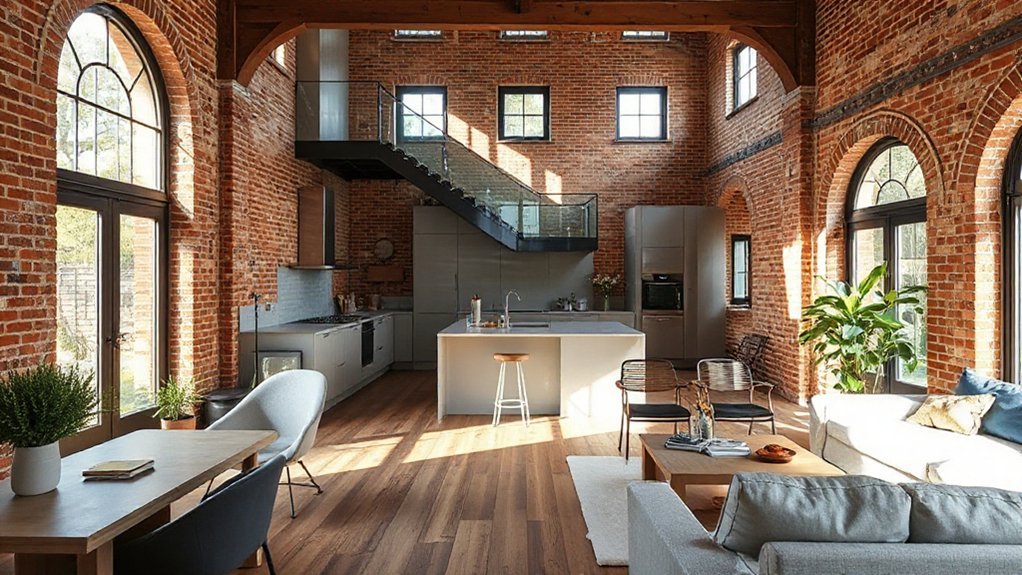
Open-plan layouts can redefine a Victorian terrace’s rhythm without erasing its soul, because thoughtful zoning and material honesty let each zone breathe while preserving a coherent, lived-in feel. You enable flow by delineating purpose through furniture, levels, and textures, not walls, ensuring spaces read as a single volume with distinct functions.
The approach foregrounds artistic expression within the home’s historic fabric while supporting community engagement through shared, flexible areas. You maintain acoustic cues and sightlines to preserve intimacy where needed and openness where desired.
Precision detailing, coupled with robust structural logic, safeguards ventilation, daylight, and thermal comfort. This mindset sustains the building’s character while delivering contemporary usability.
- Define zones with furniture and finishes, not barriers
- Align materials to evoke heritage while signaling modernity
- Integrate storage to sustain uncluttered openness
- Foster community spaces that invite participation and touchpoints
Lighting and Glazing Strategies for Small Bristol Homes
In small Bristol homes, lighting and glazing aren’t afterthoughts—they define space, mood, and energy efficiency. You optimise daylight with strategic window placement, aligning openings to the home’s axial rhythm and traffic flow.
Use narrow, tall glazing to draw the eye upward and enhance perceived ceiling height, while preserving privacy where needed. BIM-informed calculations help size skylights and roof windows to balance glare control with daylight autonomy, reducing reliance on artificial lighting between 9 am and 3 pm.
Choose high-performance glazing to minimise heat loss and solar gain mismatches, pairing with dialed-in shading devices that adapt through seasons. Guarantee consistent light levels by layering sources: ambient, task, and accent.
Prioritise natural light without compromising thermal comfort or security.
Flexible Zones: Work, Play, and Family Life
You’ll configure Flexible Work Zones that adapt to evolving tasks without eroding daily flow.
Consider Playful Family Areas that invite collaboration and downtime, while preserving quiet zones for focus.
Flexible Work Zones
How can you create flexible work zones that seamlessly blend productivity with home life in a Victorian terrace? You’ll implement dedicated zones with clear acoustics, lighting controls, and adaptable furnishings, enabling focus without isolating you from daily routines.
Use zone-dividing screens, quiet HVAC zoning, and concealed storage to sustain a tidy, distraction-free environment, while preserving the home’s character with garden privacy considerations and tasteful integration of vintage fixtures.
Prioritize adaptable surfaces, modular desks, and cable management to switch between work and family moments efficiently.
- Acoustic partitions that don’t overwhelm the space
- Height-adjustable desks with integrated storage
- Soft, task-focused lighting aligned to work zones
- Discreet, period-appropriate finishes that respect garden privacy and vintage fixtures
Playful Family Areas
A Victorian terrace can harmonize work routines with daily life by transforming flexible zones into activities that switch seamlessly between focus, play, and shared time. In this Playful Family Areas section, you configure spaces that foster lighthearted collaboration without compromising productivity.
Implement robust zones for creative play, clearly defined by adaptable furniture and resilient finishes that tolerate spills and movement. Prioritize garden privacy, integrating screen trees, trellises, or fencing to delimit exterior play from neighboring sightlines while preserving daylight.
Design for family storage with modular cabinetry, labeled bins, and concealed organizers to reduce clutter and sustain flow. Apply acoustic elements to soften interruptions during focused work, yet preserve a sense of togetherness.
Finally, guarantee circulation paths remain intuitive to prevent bottlenecks as activities alternate between quiet study and energetic games.
Seamless Daily Rhythms
- Flexible zones
- Task–social balance
- Acoustic and lighting coherence
- Privacy‑on‑demand
Kitchen-Dining Hubs That Invite Gatherings
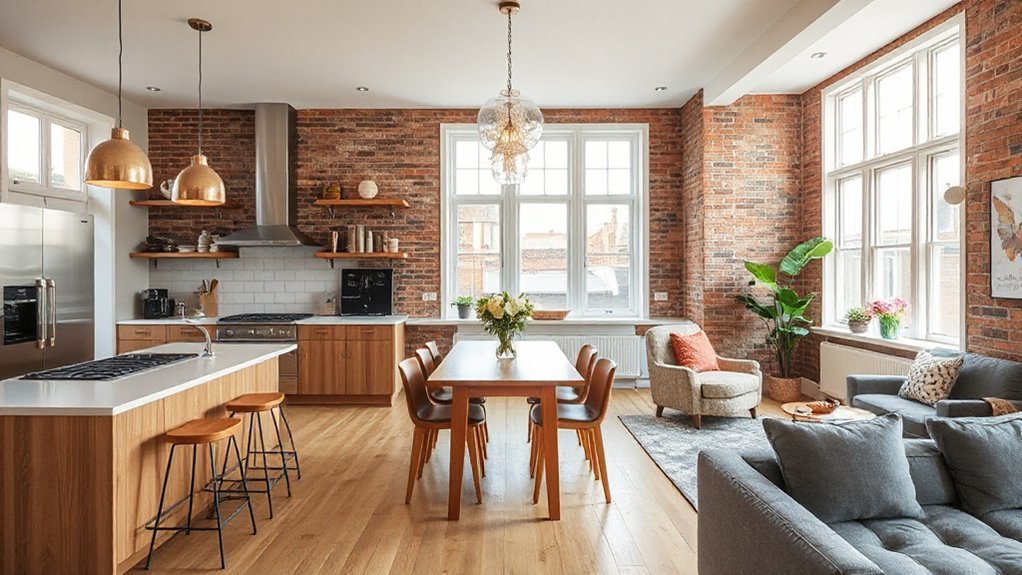
Creating kitchen-dining hubs that invite gatherings means designing a fluid, social center within the home where cooking, eating, and conversation occur without barriers. You consolidate zones with engineered joists, integrated appliances, and continuous worktops that reduce friction between prep and seating.
You coordinate lighting layers—task, ambient, and feature—so hosts can modulate mood without breaking flow. A central island anchors the plan, offering seating, storage, and a deliberate circulation path that preserves sightlines.
Materials mix Artisan craftsmanship with durable, easy-care finishes, ensuring longevity and tactile richness. Vintage aesthetics appear through brass hardware, warm wood tones, and restrained tiling, harmonizing with modern utilities.
You audit acoustics, ventilation, and accessibility, creating a climate for spontaneous gatherings while maintaining disciplined, efficient performance.
Compact Bathrooms That Feel Spacious
Compact bathrooms, when thoughtfully planned, feel surprisingly spacious by leveraging vertical storage, light-reflective surfaces, and a clear, unobstructed circulation path.
You optimize a compact layout by prioritising efficient bathroom fixtures and streamlined vanity designs that conceal plumbing and maximise usable area. Choose wall-hung or corner configurations to preserve floor space while maintaining robust storage.
Reflective tiling and large-format porcelain amplify light, making the room feel larger. Guarantee proper ventilation and a balanced scale between fixtures to avoid crowding.
A compact shower enclosure with a clear glass panel prevents visual obstruction, while integrated niches hold essentials without bulk.
Finishes should be durable, easy to clean, and consistent with the house’s Victorian character to maintain cohesion.
- Vertical storage strategies
- Light-reflective surfaces
- Wall-hung fixtures and vanities
- Integrated niches and clean lines
Smart Tech for a Low-Energy, Comfortable Home
Smart tech can dramatically cut energy use while raising daily comfort, so you’ll want a design that integrates climate control, lighting, and appliances without complicating your home’s maintenance.
In a Victorian terrace, you specify centralized controls that interpret occupancy patterns and weather forecasts to modulate temperature, ventilation, and shading. Smart thermostats deliver precise, zoned comfort while minimizing boiler run times and heat loss through smarter scheduling.
Pair these with energy efficient lighting that uses LED sources, dimming, and occupancy sensing to reduce standby draw and peak demand.
Guarantee interoperability across devices via a robust, standards-based hub, and document wiring schemes to preserve retrofit reversibility.
Prioritize retrofit-friendly sensors, simple fault reporting, and clear maintenance guidance for long-term reliability.
Outdoor Spaces: Courtyards, Decks, and Brick Charm
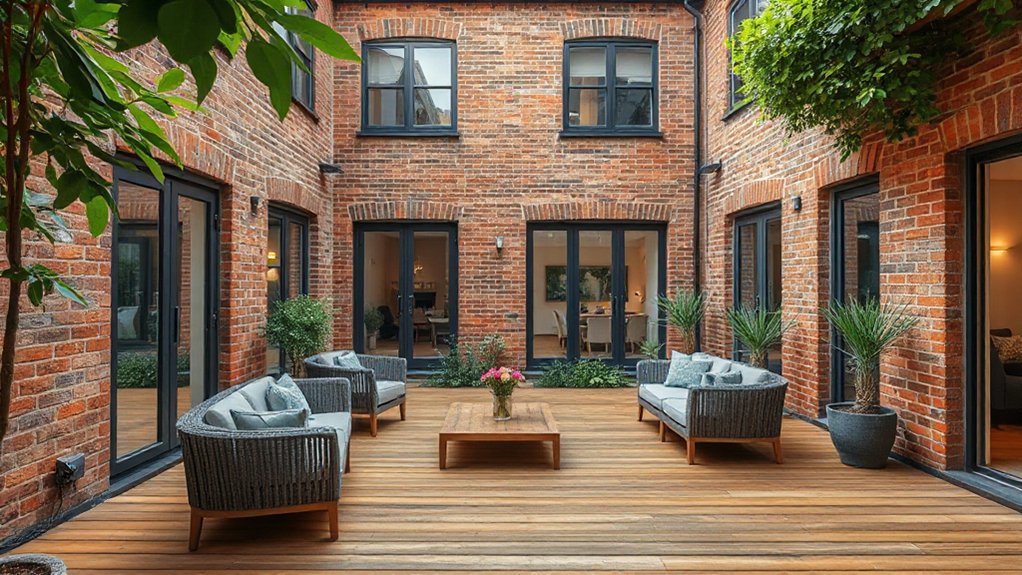
Outdoor spaces in a Victorian terrace can extend the living area while preserving brick charm and period detailing. You’ll optimize courtyards and decks by configuring sightlines and materials that respect heritage while delivering modern function.
Prioritize garden privacy with strategically placed screens, climbing plants, and timber fencing that harmonize with brickwork. Integrate outdoor lighting to enhance safety, ambience, and architectural features without glare or light spill.
Choose permeable paving to manage rainwater and reduce surface heat. Include storage alcoves and a compact seating zone that maximizes use without clutter, ensuring easy access to indoor rooms.
Plan for weather exposure, maintenance cycles, and future-proofing so the space remains inviting year-round.
- Courtyard alignment with interior rooms
- Material palette that echoes brick charm
- Privacy strategies and plant screening
- Lighting placement for circulation and accents
Sustainable Materials and Low-Impact Choices
You’ll start with reclaimed timber choices that balance aesthetic with structural needs and regional availability.
Consider low-impact insulation options that minimize embodied energy while meeting passive-house performance targets, and pair them with durable, non-toxic finishes to protect both the materials and indoor air quality.
This approach keeps sustainability central to the retrofit, without compromising durability or, ultimately, the Victorian essence of the terrace.
Reclaimed Timber Choices
Reclaimed timber offers a sustainable alternative to new materials by reusing existing resources and reducing embodied energy, which is critical for a modern Victorian terrace. You’ll assess provenance, species, and grade to guarantee compatibility with structural and aesthetic goals, prioritising durable timbers for longevity.
By selecting reclaimed planks, beams, or panels, you preserve historic character while minimising waste and emissions. Consider finish options that enhance grain and patina without masking integrity, and pair reclaimed timber with contrasting modern materials for balance.
You’ll also evaluate treatment needs to prevent pests and moisture migration, using low-VOC coatings to maintain indoor air quality. Emphasise sustainable furniture and engineered joinery to maximise strength without overproduction.
- Provenance and grading for compatibility
- Species suitability and moisture remediation
- Low-VOC finishes and durable coatings
- Integrating sustainable furniture with reclaimed timbers
Low-Impact Insulation Options
Modernising a Victorian terrace calls for insulation that preserves both thermal performance and historic fabric without adding excessive mass or emissions. You’ll prioritise low‑impact options that meet contemporary standards without compromising detailing or breathability.
Focus on renewable insulation materials with verified reduced embodied energy, guaranteeing compatibility with classic fabric and ventilation strategies. Where possible, opt for bio‑based foams, flax or hemp fibers, and mineral wool blends that balance density, thermal resistance, and ease of installation.
Pair these with careful cavity detailing, airtightness strategies, and minimal mechanical disruption. Complement insulation choices with Eco friendly windows to reduce heat loss at openings and improve solar gain management.
Make certain sourcing reflects lifecycle assessments and local availability, supporting a long‑term, low‑carbon performance profile.
Durable, Non-T Toxic Finishes
Durable, non-Toxic finishes are essential in a modernized Victorian terrace, balancing long-term performance with occupant safety and historic fidelity. You’ll select eco friendly finishes that resist moisture, UV exposure, and wear while minimizing VOCs and toxin exposure.
Prioritize breathable coatings that regulate humidity without trapping moisture, reducing rot risk. Non toxic paints should meet low-emission standards, ensuring indoor air quality remains high.
Consider behind-wall compatibility and ease of reapplication to preserve original timber and plasterwork. Document lifecycle impacts, from sourcing to disposal, and favor regional suppliers to lower embodied carbon.
Implementation should align with heritage constraints while offering durable color and sheen that withstands Bristol’s climate.
- Eco friendly finishes
- Non toxic paints
- Breathable, low-VOC coatings
- Reversible, repairable systems
Budgeting Smartly: Costs, Trades, and Timing
Budgeting smartly for a Victorian terrace retrofit means establishing a clear cost framework early, then tracking variances against it as plans evolve. You set a baseline that includes material, labour, contingencies, and soft costs, then monitor changes with disciplined change control.
A rigorous cost analysis identifies outliers, quantifies risk, and informs decision thresholds before commitments are made. Align scope with procurement timelines to avoid idle labour and stacking overruns.
Trade coordination becomes essential: synchronize trades, sequence milestones, and share progress dashboards to prevent bottlenecks and rework. Establish staged approvals tied to measurable deliverables, not promises.
Build a contingency reserve of 10–15% for unknowns typical in historic refurbishments, then tighten forecasts as designs crystallize. Regularly revisit assumptions, update the forecast, and sustain cost discipline throughout execution.
Navigating Permissions and Local Considerations in Bristol
In Bristol, steering permissions and local considerations start with a precise map of what needs consent, who issues it, and how long it takes, so you can plan approvals alongside design development. You’ll identify heritage conservation requirements early, aligning design decisions with statutory protections and any listed status impacts.
Planning permissions follow a clear path: pre-application advice, formal submission, and council determination, with explicit timelines and potential conditions. You’ll document materials, demolition impacts, and zone-specific stipulations to avoid delays.
Community consultations and conservation area rules shape feasible alterations, extensions, and façade treatments. By coordinating teams, you reduce rework and guarantee compliance from project outset.
- Determine authority, scope, and deadlines for heritage conservation and planning permissions
- Map consent stages, required documents, and submission timelines
- Align design choices with listed status, conservation area rules, and material standards
- Schedule stakeholder reviews and pre-application guidance to prevent changes later
Frequently Asked Questions
How Long Does a Victorian Terrace Renovation in Bristol Typically Take?
A Victorian terrace renovation in Bristol typically takes several months, depending on scope. You should plan for 4–6 months as a baseline, allowing scheduling buffers. You’ll prioritizeHistorical authenticity while ensuring Design flexibility to adapt as needs evolve.
What Are Common Hidden Costs in Bristol Terrace Projects?
Hidden costs in Bristol terrace projects include unforeseen structural repairs, damp remediation, and permit delays. Historically, preservation work can spike budgets; energy efficiency upgrades add成本. You’ll notice these risks when planning contingency funds for historical preservation and energy efficiency measures.
Can Modern Setups Respect Conservation Guidelines in Bristol?
Can you modern setups respect conservation guidelines in Bristol? Yes, by prioritizing heritage preservation and design integration, you implement technically sound interventions that harmonize with the existing fabric, satisfy planning requirements, and maintain historic value while enabling contemporary functionality.
Which Builders or Trades Locals Trust for These Homes?
You should trust local artisans and reputable builders with historic craftsmanship, thoroughly vetting portfolios and references. Seek firms that collaborate with conservation officers, demonstrate meticulous detailing, and prioritize authentic materials—ensuring consistent quality and strong ongoing support.
What Permits Are Required for Structural Changes in Bristol Terraces?
What permits are required? You must follow Permitting procedures and adhere to Building regulations before any structural changes. Do you understand how these standards guide the process, approvals, and inspections to ensure safety, compliance, and lawful alteration.
Conclusion
You’ve barely touched the surface of Victorian charm, yet you’ve drafted a modern playbook for it. Irony here: brick-and-timber living promises shelter and sustainability while demanding permits, budgets, and constraints keep testing your resolve. In Bristol’s light, you’ll balance preservation with progress, airtightness with airflow, and heritage with hype. So yes, you’ll achieve a stylish, functional home—just with a spreadsheet, a savvy trades network, and a little humility about what “modern” actually requires.
About the Author