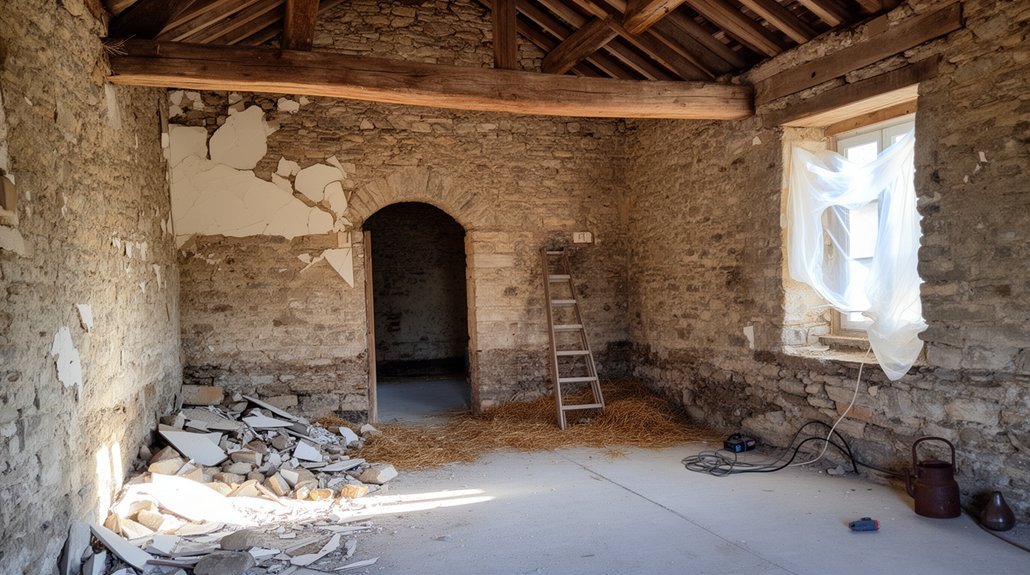
Renovating a stone barn is doable, but you’ll want to upfront map structural loads, moisture paths, and hidden rot to avoid late-stage surprises. Expect crack patterns, mortar degradation, and rising damp indicators that require targeted repair and compatible lime mortars. Secure planning permissions early, with a heritage-aware narrative, and build in contingency for material volatility and lead times. Appoint a historic-fabric–savvy supervisor, lock change controls, and segment procurement to prevent budget creep. Without these, you’ll hit avoidable bottlenecks later. More tips follow.
Assessing Renovation Feasibility for a Stone Barn
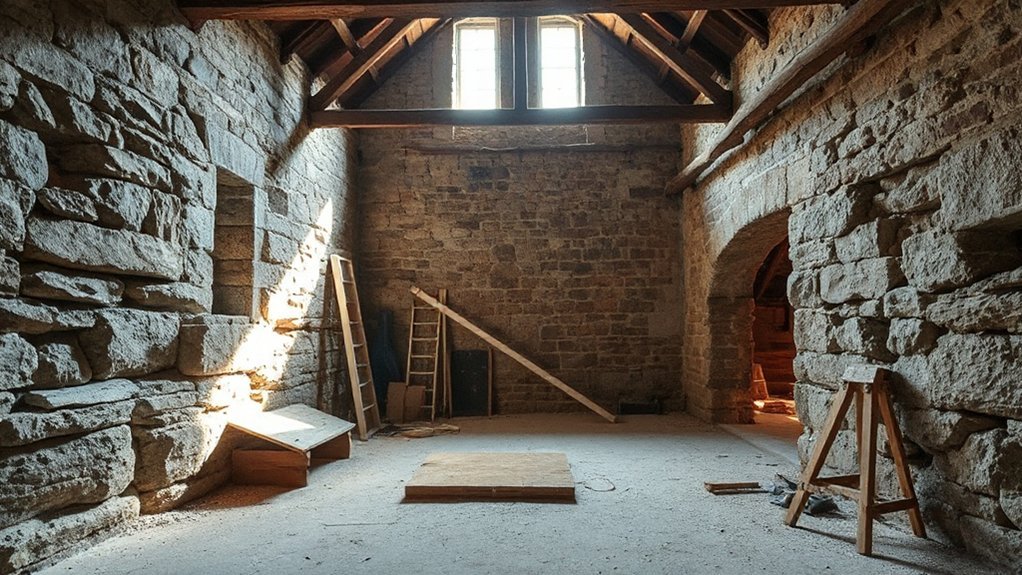
Evaluating renovation feasibility for a stone barn starts with a clear understanding of structure, loads, and constraints. You map existing mortar, lintels, and wall thickness to determine load paths, curb all settlement risks, and identify hidden rot or delamination.
You quantify foundation adequacy, floor span capacities, and seismic or wind considerations that could alter structural upgrades. Historic preservation informs assessment choices, balancing original fabric against retrofit needs.
You assess enclosure integrity, moisture management, and thermal performance to forecast long-term maintenance costs. Material selection becomes a constraint and lever; you compare lime-based mortars, lime-putty plasters, and compatible reinforcements to avoid incompatible composites.
You document tolerances, establish a decision matrix for repairs versus replacement, and set scoping for services, drainage, and access without compromising historic character.
Planning Permission and Listed-Building Constraints
Begin by identifying your project’s historic significance and how it informs massing, fenestration, and material choices. Then frame a permit strategy around key preservation guidelines.
Engage early with the local planning authority and conservation officer, presenting a design rationale that evidences sensitivity to original fabric and character. Expect pre-application advice, potential Section 106 considerations, and possible demands for adherence to preservation guidelines, including crack assessment, lime mortar compatibility, and traditional detailing.
Documentation should demonstrate practical compliance paths, risk-aware sequencing, and a coherent history-based narrative to avoid protracted amendments.
Surveying Structural and Moisture Risks
Begin with a targeted inspection of load paths and fabric integrity, mapping wall-bay connections, roof anchors, and floor joists to pinpoint failure modes and moisture ingress routes.
You’ll assess wall tie continuity, lintel span behavior, and timber-to-stone interfaces for hidden movement.
Document crack patterns, mortar degradation, and plaster pull-off that signal structural distress.
Use moisture meters and infrared scans to locate hidden moisture intrusion zones behind soffits, chimneys, and parapets, then correlate with historical damp patches.
Evaluate damp-proof course integrity, rising damp indicators, and external brickwork buckle risks.
Track seasonal movement by monitoring differential shrinkage and frost cycles.
Prioritize findings by risk to Structural stability, and forecast how moisture intrusion could escalate under load, guiding targeted remediation and temporary stabilization steps.
Budgeting for Unforeseen Repairs and Timelines
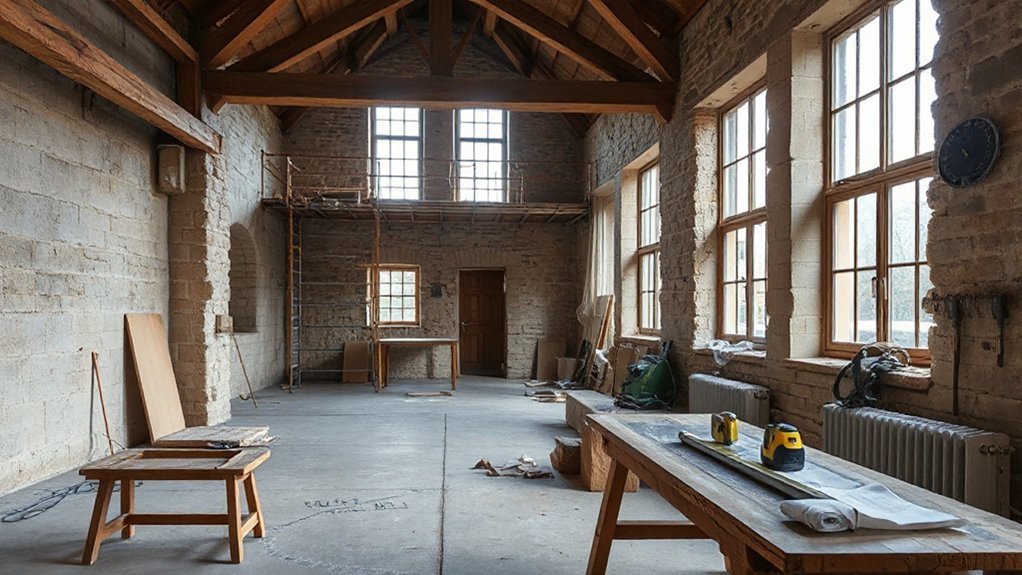
As you set the budget, build in an unforeseen repair contingency equal to 10–20% of works.
Plus a separate line item for weather- and stone-related delays.
Maintain a timeline buffer of 4–6 weeks for critical trades and permit reviews.
Map it to milestone payments to avoid cascading delays.
Use clear triggers and documentation to switch contingencies between repairs and timelines without derailing the overall program.
Unforeseen Repair Contingencies
When you renovate a stone barn, unforeseen repairs can derail timelines and blow budgets, so build a contingency plan that covers both cost overruns and schedule pauses.
You’ll quantify risk with a formal contingency reserve tied to scope risk, materials volatility, and hidden structural flags.
Track supplier backlogs and contractor reliability to prevent false promises from skewing schedules.
The plan should also specify trigger points for re‑baselining budgets and milestones, plus a change-control log to capture scope shifts.
1) Reserve sizing: base on a percentage of early estimates, plus add for site-specific risks.
2) Contingency granularity: separate allowances for inspections, remediation, and contingency reversals.
3) procurement buffers: align lead times with realistic delivery windows.
4) governance: assign a contingency manager and weekly review cadence.
Timeline Buffer Strategies
In managing timeline buffers for a stone barn conversion, you pair budgeting for unforeseen repairs with deliberate scheduling slack to protect critical milestones. You quantify contingency as a percentage of total build days, then layer in phase-specific buffers for demolition, masonry, roof, and interior fit-out.
Time management becomes a discipline: lock the critical path first, then assign float to non-critical tasks, preserving finish-date integrity.
Resource allocation hinges on early supplier lead times, weather windows, and permit backlogs; you reserve labor gangs and equipment swaps to avoid holdovers.
Track burn rates against milestones weekly, flagging variances before they cascade.
Contingency reviews sync with RACI updates, ensuring accountability.
Documented buffers reduce risk, accelerate decision turns, and keep stakeholders aligned while maintaining cost discipline and predictable completion.
Thermal Design: Insulation and Airtightness for Stone Walls
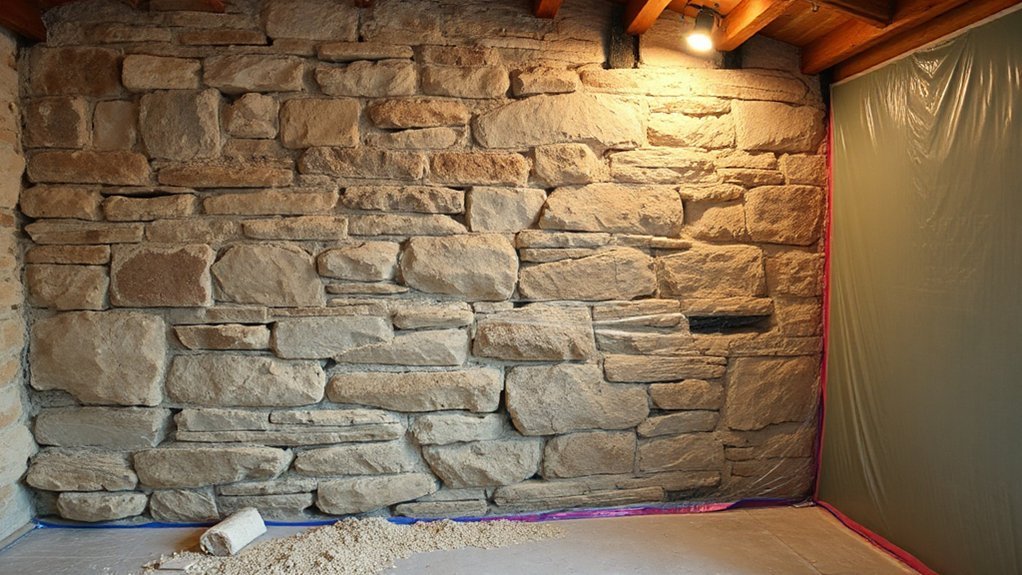
You’ll pinpoint Thermal Performance Gaps early, mapping where stone walls shed heat and where mass dampens temperature swings.
Implement airtightness strategies that balance breathable stone with continuous vapour control, targeting a tight shell without risking condensation within cavities.
We’ll discuss detailing for insulation junctions, ventilation trade-offs, and retrofit options that keep thermal paths minimal and predictable.
Thermal Performance Gaps
- Identify thermal bridging hotspots at lintels, corners, and wall-to-floor interfaces.
- Map insulation gaps, prioritizing cavity retrofits and compatible mineral wool or aerogel blends.
- Plan for continuous membranes with careful detailing around openings and penetrations.
- Validate improvements with on-site testing and iterative refinements to reduce heat flux and dew-point risks.
Air Tightness Strategies
Air tightness is non-negotiable for stone walls, where small gaps compound heat loss and risk condensation. You’ll tackle air leakage with a phased detailing approach: pre-install continuous membranes at inner leaf junctions, seal penetrations, and guarantee robust jointing at quoins.
Use tape and mastic on rough masonry, then deploy a ventilated cavity to manage pressure differentials without compromising fabric. In practice, specify low-permeability boards or lime-based renders that cure without cracking, paired with a mineral wool or aerogel infill that maintains insulation continuity.
Air leakage tests—blower door first, then targeted line tests—validate assemblies before finishes. For ventilation strategies, couple airtight shells with controlled ventilation: demand-controlled extract or balanced systems, integrated humidity sensors, and heat recovery where feasible to sustain comfort without compromising tightness.
Balancing Historic Character With Modern Comfort
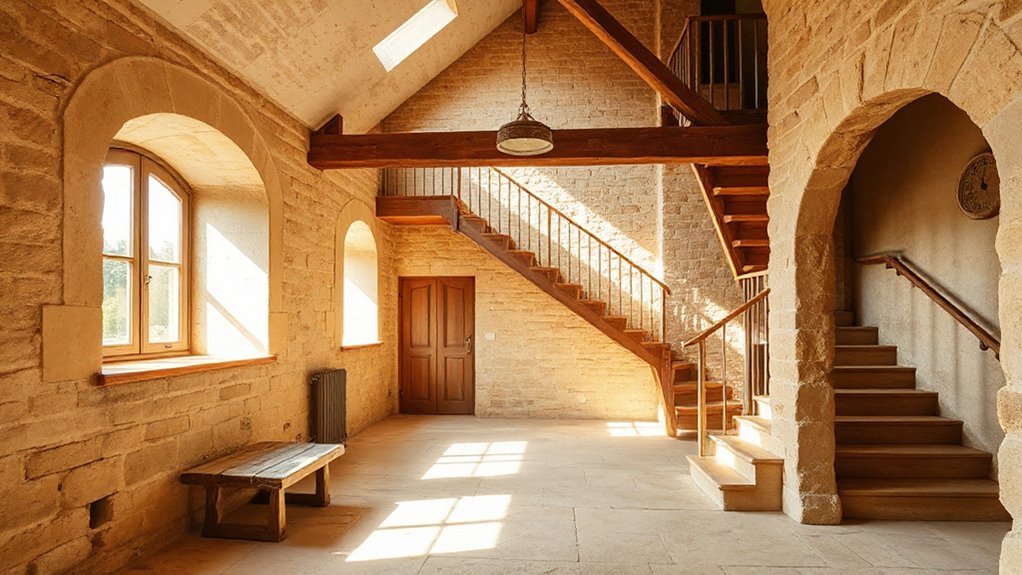
1) Retain masonry integrity and timber detailing.
2) Insulate without infiltration by adapting breathable, discreet barriers.
3) Upgrade mechanicals with zoned controls and radiant or efficient heat.
4) Select finishes that respect patina yet meet current performance standards.
Maintain proportion, scale, and window openings to preserve the visual language.
Document changes for future stewardship, focusing on reversibility where feasible.
Favor robust, low-maintenance materials.
Integrate daylight, mechanical quiet, and thermal comfort to support occupancy without eroding the barn’s story.
How to Choose Specialist Contractors and Supervision
Choosing specialist contractors and establishing supervision requires a clear scope, proven credentials, and rigorous oversight from day one. You’ll start with a defined bill of quantities and performance specs, then match trades to stone barn specifics—getting specialist contractor selection right is non‑negotiable.
Vet portfolios for dry stone, lime mortar, roof sap, and limewash compatibility; demand case studies and on‑site references. Verify licenses, insurance, and warranty terms; insist on CPD‑tracked safety briefings and method statements.
For supervision best practices, appoint a capable site supervisor who understands historic fabric, moisture risk, and thermal performance. Establish progress milestones, snag lists, and non‑conformance protocols; require weekly hurdle reviews and photograph logs.
Maintain a single point of contact, audit submittals, and lock in change control procedures to preserve budget and timeline integrity.
Managing Timelines, Permits, and Approvals: A Practical Roadmap
Managing timelines, permits, and approvals starts with a realistic project calendar tied to your scope and contractor commitments. You’ll map critical path milestones, permit windows, and allow for weather and inspection buffers while prioritizing historic significance in planning decisions.
Align procurement with material sourcing constraints to avoid delays and budget creep. Documented approvals become a control point, not a bottleneck, with proactive stakeholder sign-offs and transparent change orders.
Below is a practical roadmap you can apply immediately:
- Set milestones aligned to regulatory steps and subcontractor calendars.
- Build permits and approvals into the budget with contingency.
- Pre-select suppliers, verify material sourcing, and confirm lead times.
- Schedule site reviews to verify condition, heritage constraints, and compliance.
Frequently Asked Questions
How Long Does It Typically Take to Obtain Planning Permission for a Stone Barn?
Typically, planning approval for a stone barn takes 8–12 weeks after you submit the application process, assuming complete documentation and no planning objections; delays arise from consultees, archaeology, or design tweaks during site-specific review.
What Hidden Costs Arise After Structural and Moisture Surveys?
Hidden expenses creep in like damp corners after survey, you’ll confront unexpected fees, and contingencies multiply. You’ll itemize post-survey repairs, reporting, and permits, ensuring budget buffers for structural tweaks, moisture remediation, and specialist consultations to avoid costly overruns.
Can Retrofitting Insulation Damage Historic Stone Features?
Yes, retrofitting insulation can risk historic stone features if you misuse modern insulation methods; you must balance breathability with vapor barriers, maintaining moisture management, while aligning with Historic preservation principles and using adaptable, non-invasive install techniques.
Which Contractors Are Best for Lime Mortar on Old Barns?
You’ll hire lime mortar specialists with historic preservation credentials, proven barn experience, and quarry-consistent mixes; expect lime putty, hydraulic lime, and breathable mortars. They’ll document salt balance, repointing schedules, and thermal performance for durable, authentic restoration.
How Do I Prioritize Repairs Without Compromising Listed-Building Status?
Prioritize foundational stability first, then protect historic preservation and conservation techniques, you’ll avoid irreversible harm. Map vulnerabilities, consult listed-building guidelines, document every intervention, use lime mortar where appropriate, and communicate changes with your conservation officer throughout the process.
Conclusion
You’ve planned a tight, practical path from feasibility to finish, but expect hidden costs and timing quirks with stone barns. Budget for surprises, document thoroughly, and secure the right approvals before you cut. Hire specialists with proven barn experience, supervise closely, and insist on detailed test records, moisture histories, and thermal framing plans. Stay disciplined about permits and inspections; delays aren’t failures, they’re cautionary signals. Remember: slow, steady wins the race—“measure twice, cut once” to safeguard history.
About the Author