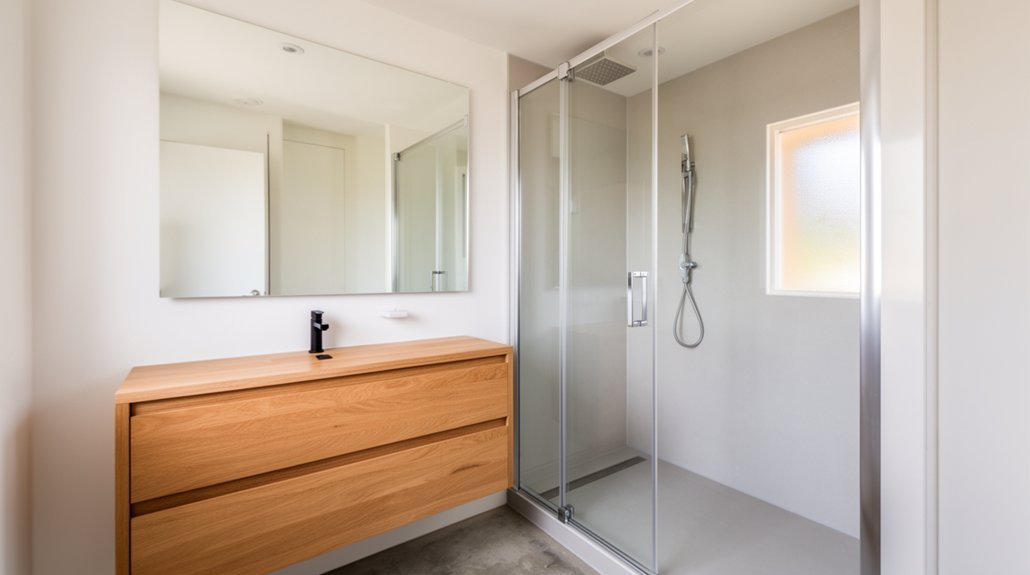
A minimalist bathroom in a small UK home maximizes space with clean lines, light-reflective finishes, and discreet storage to feel larger and calmer. Start with a cohesive, two-to-three color palette and wall-hung basins or compact vanities to free floor space. Choose space-saving toilets, slim storage, and frameless glass for openness. Use layered lighting and large-format pale tiles to reflect light. If you want practical, stylish tips that fit a tight footprint, you’ll find more insights below.
Why Minimalist Design Works in Small UK Bathrooms
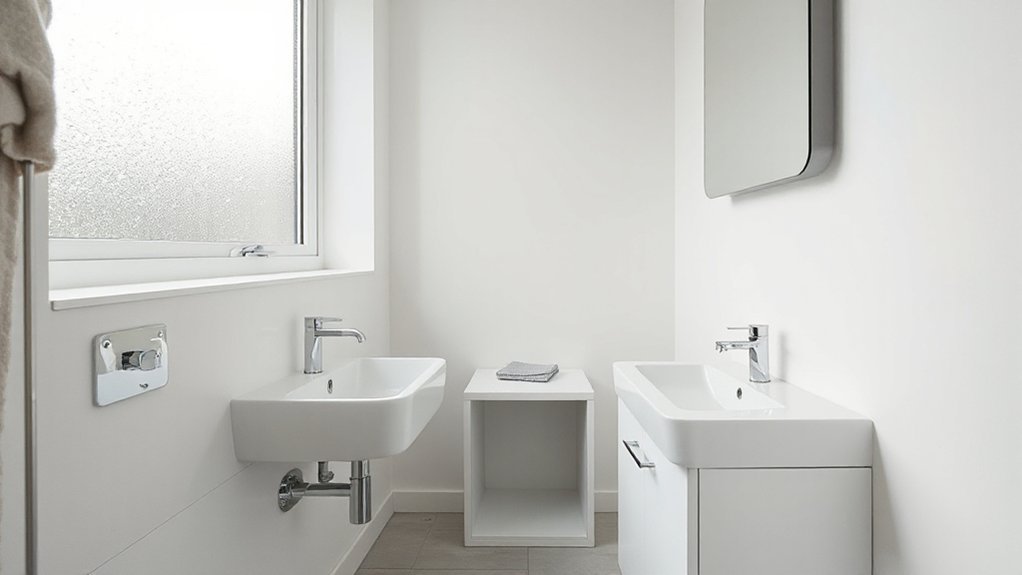
Small UK bathrooms benefit from minimalist design because every square inch counts. You gain floor space, visual breathing room, and easier maintenance when clutter stays out.
Minimalist layouts emphasize function over ornament, so you select only essential elements. You’ll notice improved light, cleaner lines, and a calmer atmosphere that makes small rooms feel larger.
Keep color palettes pale and cohesive to reflect daylight and avoid visual fragmentation. Choose compact fixtures that fit snugly without crowding, and prioritize storage that hides clutter.
Vintage fixtures can anchor the look with character without bulk, while Botanical accents deliver personality without overpowering the space.
This approach supports practicality, efficiency, and a serene, updated feel suited to compact UK bathrooms.
Assessing Your Space: Measure Twice, Plan Once
Before you pick fixtures or sketch layouts, map the space accurately: measure twice, plan once. You’ll start with a precise floor plan, noting door swings, window locations, and pipework. Measure three times for critical dimensions: width, depth, and height, then translate them to a scalable grid.
Identify usable wall areas for storage and display, limiting protrusions that crowd movement. Prioritize empty, functional zones: shower, basin, toilet, and at least one slim storage solution. Consider door clearance and mirror placement to maximise light reflection.
Plan for future flexibility: adaptable units and reversible fittings. Keep decorative accessories minimal, ensuring they don’t encroach on circulation. Choose statement art for focal points, not clutter, and place it where it enhances perceived space, not crowding it.
How to Choose a Color Palette That Feels Bigger
A bigger feel starts with a restrained color palette that reflects light rather than absorbs it. Start with neutrals as the base, then introduce subtle contrast for depth.
Color psychology matters: cool tones enhance airiness, warm accents create comfort without shrinking space. Limit the hues to two or three total; this keeps lines clean and visually expansive.
Choose paint finishes deliberately: matte erases texture, satin adds a touch of sheen suitable for damp environments, and eggshell balances durability with a soft glow.
Use higher reflectivity on ceilings and walls to bounce light around, reserving darker shades for small, intentional focal areas like cabinetry or a niche.
Test swatches on all lighting conditions, including evening.
Finally, maintain consistency across surfaces to reinforce unity and perceived room size.
Wall-Hung Basins and Compact Vanity Options
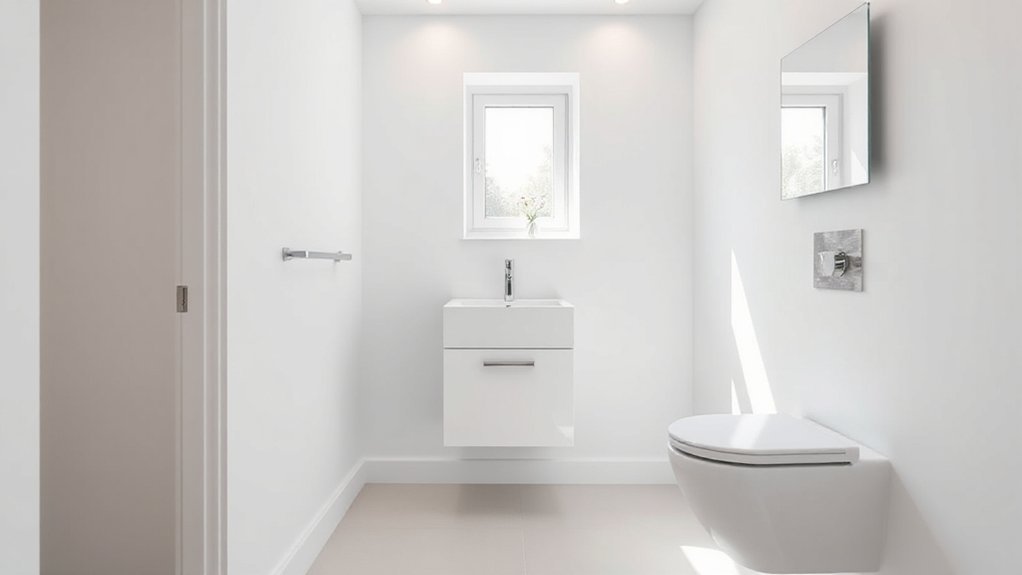
Wall-hung basins free up floor space and make small bathrooms feel roomier.
While compact vanity options maximise storage without crowding the flow.
You’ll benefit from cleaner lines, easier cleaning, and versatile layouts that suit UK widths and pipe layouts.
Consider the best Wall-hung Basin Benefits, then pair with compact vanity styles to optimize every square metre.
Wall-Hung Basin Benefits
Wall-hung basins lift key design constraints in small UK bathrooms by creating the impression of more floor space and making cleaning easier. They free up floor area beneath the pedestal, reducing visual clutter and enabling layouts that suit tight footprints.
With no bulky vanity to dominate sightlines, you gain flexibility to position mirrors, storage, and lighting precisely where you need them. This setup supports compact vanity options because wall mounting allows slim profiles and integrated storage above the sink, not below.
Maintenance becomes straightforward: clean lines, fewer recesses, and easier access to pipes.
To add character without compromising space, consider vintage accents and rustic textures in taps, shelves, or cabinetry nearby. The result is a functional, airy bathroom that stays coherent with minimalist principles.
Compact Vanity Styles
Choosing compact vanity styles means pairing wall-hung basins with slim profiles that maximize floor space while maintaining function. You’ll find options that blend clean lines with practical storage, letting you keep essentials nearby without crowding the room.
To guide your selection:
- Wall-hung basins offer easy cleaning and an airy feel.
- Slim vanity units preserve legroom while sustaining essential surface area.
- Integrated outlets or shelves support daily routines without clutter.
- Finishes range from matte neutrals to bold contrasts for vintage accents and industrial lighting vibes.
Opt for wall-mounted taps and soft-close drawers to streamline maintenance. Consider chrome or brushed metal fixtures to echo vintage accents, and pair with industrial lighting to sharpen the minimalist aesthetic while preserving character.
Small-Bathroom Space Savers
Small bathrooms can gain real elbow room with wall-hung basins and compact vanity units that maximize floor space without sacrificing utility. Wall-hung basins free the floor for easier cleaning and create the impression of a larger footprint.
Compact vanity options offer essential storage without bulk. Choose slender profiles, integrated supports, and wall-mounted taps to keep lines clean and unobtrusive.
Guarantee proper ventilation by coordinating extractor placement with windowed or mechanical bathroom ventilation to prevent moisture buildup around pipes and fixtures.
When selecting plumbing fixtures, opt for dual-flush mechanisms and recessed waste outlets to maintain a minimalist look.
Install a mirror with integrated lighting to enhance perceived space without additional bulk.
Finish with moisture-resistant materials that resist cleaning agents and daily wear.
Space-Saving Toilets and Concealed Cisterns for UK Homes
Space-saving toilets and concealed cisterns are a smart choice for UK homes where space is at a premium. You gain floor area and a neater profile, while modern mechanisms guarantee quiet operation and reliable performance.
Choose wall-hung or compact models to maximise visibility and ease cleaning, then pair with a concealed cistern for a seamless wall finish. This approach suits tight layouts without sacrificing comfort, efficiency, or style.
Consider durability, dual-flush options, and soft-close seats to enhance daily use. The right setup blends luxury fixtures and vintage styles, delivering a refined look that still feels practical.
- Wall-hung units for easy cleaning and improved flow
- Concealed cisterns to hide plumbing and save space
- Dual-flush systems for water efficiency
- Soft-close seats for quiet, lasting comfort
Glass Screens or Shower Curtains: Which Creates Openness?
Glass screens boost openness by letting light flow and lines stay uninterrupted.
Curtains soften the space with texture and movement.
If you want a clean, airy feel, choose glass.
If you prefer a gentler look and tactile warmth, opt for curtains.
Your choice sets the mood for openness versus softness in a small UK bathroom.
Glass For Openness
Choosing openness in a compact bathroom hinges on whether you prefer glass screens or a shower curtain. You’ll maximize perception of space by selecting glass, but consider style impact and maintenance.
Glass for openness supports clean lines and reflected light, while a curtain can soften the room; both choices influence perceived size.
- Opt for clear, frameless screens to elongate sightlines.
- Pair glass with minimal hardware to reduce visual clutter.
- Use bold patterns in towels or accessories to anchor the space.
- Introduce vintage fixtures as focal points without overpowering the scheme.
Remember: glass works best when spare decor mirrors the room’s simplicity. Keep surfaces gleaming and avoid heavy textures that break the openness.
Curtains For Softness
Curtains can soften a compact bathroom without sacrificing openness, but they soften differently than glass. You’ll create a light, airy feel with fabric instead of reflecting surfaces, yet you still control boundaries and privacy.
Curtain textures matter: choose a smooth, matte finish to avoid visual heaviness, or a subtle rib to add depth without bulk. Avoid heavy drapes in tight spaces; opt for lighter weaves that breathe and flow.
When you prefer softness without sacrificing cleanliness, softer fabric choices include breathable cotton blends or linen-look synthetics that resist dampness and mildew.
Hang treatments high and wide to preserve sightlines, and use a sheer backlayer to maintain brightness. Pair with minimalist hardware, and let the fabric’s motion subtly delineate zones without clashing with walls.
Hidden Storage Ideas for Small Bathrooms
Hidden storage can transform a cramped bathroom, especially in small UK homes. You’ll reclaim surface area by layering storage into functional corners and behind doors. Prioritize hidden solutions that don’t disrupt clean lines, and choose options that enhance color psychology and lighting fixtures for a cohesive feel.
- Over-toilet cabinets with mirrored fronts to double as storage and a reflective element.
- Recessed niches in walls for bottles, soaps, and towels, keeping counters clear.
- Built-in drawers under sinks with soft-close hinges to reduce clutter.
- Floating vanity with integrated storage panels, preserving floor space while maintaining airflow.
These tweaks boost organization without crowding the space, ensuring a calm, minimalist aesthetic. Use uniform hardware and neutral tones to reinforce a unified look.
Under-Stair and Alcove Niches: Practical Storage Solutions
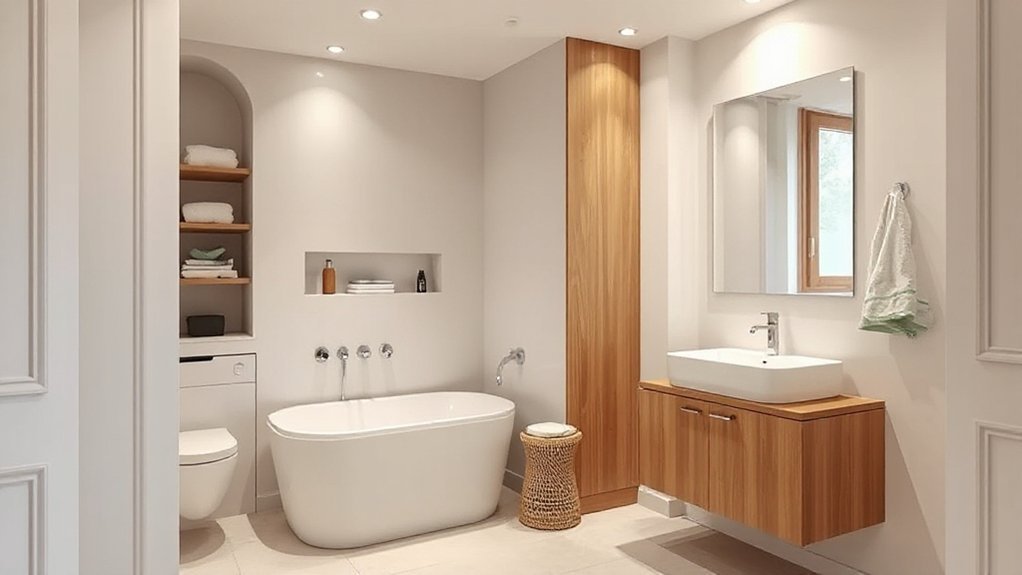
Under-stair storage can transform dead space into practical shelving for daily use.
Alcove niches offer discreet, reachable locations for essentials.
Consider integrating pull-out baskets, slim cabinets, or modular organizers to maximize capacity without crowding the room.
Start by evaluating what you reach most often and tailor the layout to keep your compact bathroom tidy and functional.
Under-Stair Storage Ideas
Under-stair storage is a smart, space-saving solution for small UK homes, turning wasted depth into practical shelves, drawers, or pantry nooks. You’ll optimize awkward profiles with clean lines, minimal hardware, and a cohesive finish that matches bathroom shelving.
Plan around moisture exposure and lightweight materials to keep durability high.
- Measure available depth and height precisely to tailor units that don’t crowd the corridor.
- Choose pull-out drawers or hinged doors to maximise reach without sacrificing floor space.
- Integrate ventilated shelves for towels, toiletries, or cleaning supplies.
- Finish with a moisture-resistant veneer or paint that aligns with your minimalist basin area.
Tips: keep cords and cleaners out of sight, label zones, and maintain a calm, clutter-free look. Under stair storage, bathroom shelving.
Alcove Niche Organization
Alcove niches offer tidy, unobtrusive storage that fits snugly into compact UK bathrooms. You leverage under-stair and alcove recesses by selecting slim, recessed shelving and pull-out baskets that keep daily essentials accessible without crowding floors.
Install moisture-resistant materials, with a matte finish to reduce glare, and anchor units to studs for stability. Use vertical space: tall, narrow cabinets or stackable drawers maximize capacity without expanding footprint.
Integrate vintage accents—small enamel tins, aged glass jars, or brass handles—to add character without bulk. For lighting, choose statement lighting that diffuses evenly across the niche, avoiding shadows in corners.
Keep a consistent color palette, aligning trim, shelving, and cabinetry to maintain a cohesive, uncluttered look. Regularly purge unused items to preserve order.
Compact Bathroom Shelving
To maximize small-bathroom storage, install slim, recessed shelves and pull-out baskets in under-stair and alcove niches, so daily essentials stay accessible without crowding the floor.
Compact shelving keeps clutter low and flow high, balancing function with style. Choose materials that resist humidity, like sealed timber or powder-coated metal, for longevity and clean lines.
Integrate vintage fixtures for a retro touch, and ornate decor to elevate the overall feel, without sacrificing practicality.
- Choose shallow, adjustable shelves to fit varying items.
- Use pull-out baskets or dividers to maximize reach and visibility.
- Label zones for toiletries, towels, and cleaning products.
- Mount mirrors or glass panels to reflect light and enlarge the space.
Lighting Tricks to Brighten a Compact Bath
Lighting is the quickest way to make a compact bath feel larger. In a small UK space, you balance brightness with intent.
Use layered lighting: overhead, task, and ambient components that don’t crowd the room. Choose cool or neutral white bulbs to render true colours and keep surfaces crisp.
Mirror lighting should be bright but diffused to reduce glare; place sconces outside mirror edges or use backlit panels for even glow. Avoid heavy pendants that steal headroom.
Incorporate vintage fixtures or retro-inspired elements sparingly to add character without clutter, ensuring they’re proportionate to the space.
For energy efficiency, opt LED options with high Colour Rendering Index (CRI) and dimmers for flexibility.
Finally, reflect light off light-coloured surfaces to amplify the sense of space.
Flooring and Wall Finishes That Amplify Space
Flooring and wall finishes can dramatically expand a small UK bath when chosen for light, continuity, and texture. You’ll maximize perceived space by pairing large-format, pale tiles with seamless grouts and gentle reflection from polished or matte surfaces. Use color and texture to guide the eye, not chunking the room.
Optimize lighting fixtures to bounce light off walls and floors, enhancing the sense of airiness while maintaining contrast where you need it. Ventilation options should be unobtrusive yet effective, preventing damp and glare. Choose materials with low slip risk in wet zones and easy maintenance.
- Choose large-format, light tiles with minimal grout
- Pair matte walls with glossy accents to accentuate depth
- Install discreet lighting fixtures to expand brightness
- Select efficient, quiet Ventilation options for consistent airflow
UK Plumbing Basics for Small Bathrooms: A Practical Checklist
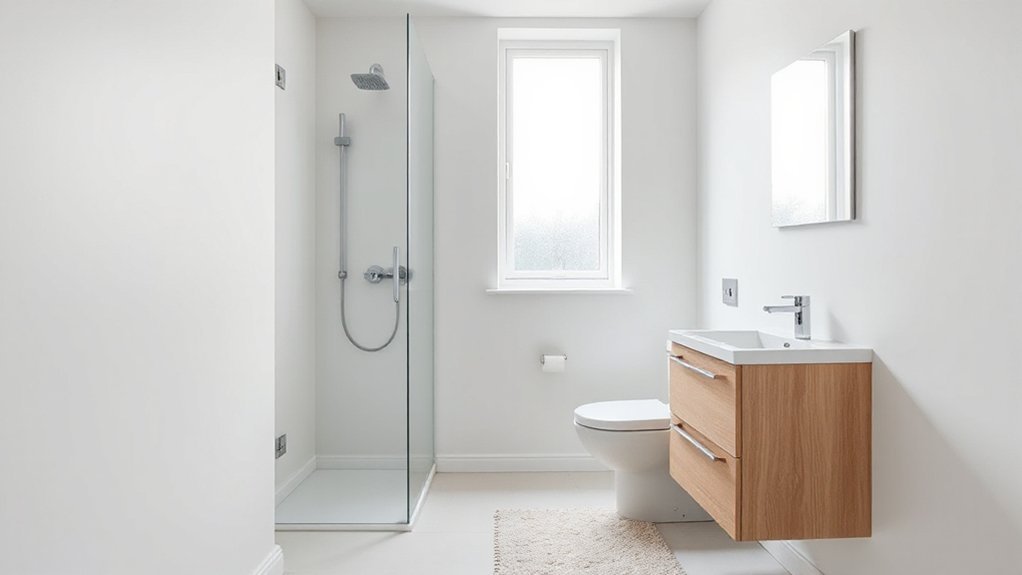
With small UK bathrooms, simple, reliable plumbing is the backbone of a comfortable space. You’ll want a practical checklist that prevents delays and costly fixes.
Start with bathroom ventilation: guarantee unobstructed exhausts and operable windows where possible to curb moisture buildup. Prioritize quiet, compact solutions that fit through tight access points.
Next, assess plumbing fixtures for efficiency and space: compact basins, dual-flush toilets, and short-tub equivalents reduce clutter without sacrificing use. Confirm accessible shut-off valves and clear pipe routes to minimize leaks.
Insulation around exposed pipes prevents freezing and condensation. Verify hot-water delivery meets demand with proper sizing and circulation, avoiding scald risks.
Install high-quality flexible connectors and trickle-free seals. Finally, document warranties and maintenance intervals for ongoing reliability.
Eco-Friendly Materials That Save Money in Small Baths
Eco-friendly materials save money in small baths by combining durability with low operating costs and compact form. You’ll maximize space and minimize waste with smart choices that pay back over time.
- Recycled glass tiles reduce embodied energy while delivering a sleek, reflective surface.
- Vinyl flooring alternatives like luxury vinyl plank offer water resistance, ease of maintenance, and affordability.
- Composite countertops (quartz, recycled acrylic) endure humidity and daily use without frequent replacement.
- Low-flow fixtures paired with durable brass or stainless hardware cut water bills and resist corrosion.
Choose vintage fixtures for character without sacrificing efficiency, and spotlight statement lighting to elevate the room.
Prioritize materials that are repairable, easy to clean, and sourced locally where possible to reinforce long-term savings.
Finishing Touches: Hardware, Mirrors, and Accessories
When you curate finishing touches, choose hardware, mirrors, and accessories that enhance function without clutter. Keep lines clean and finishes consistent across taps, towel rails, and storage units to reinforce a calm, cohesive space.
Select mirrors with subtle framed edges or none at all to maximize light and perceived space, prioritising shapes that mirror the room’s geometry. Mirrors should seamlessly align with vanity heights and door swing, avoiding protrusions.
Add purposeful accessories—minimalist soap dispensers, compact cosmetic containers, and a single, low-profile tray for daily items.
Introduce Bathroom plants to soften chrome and create a natural cue without overgrowth.
Guarantee Toilet paper storage stays discreet yet accessible, integrated into cabinetry or a recessed holder.
Maintain ample, unobstructed clearance for safe movement.
Budget Upgrades With Measurable Impact
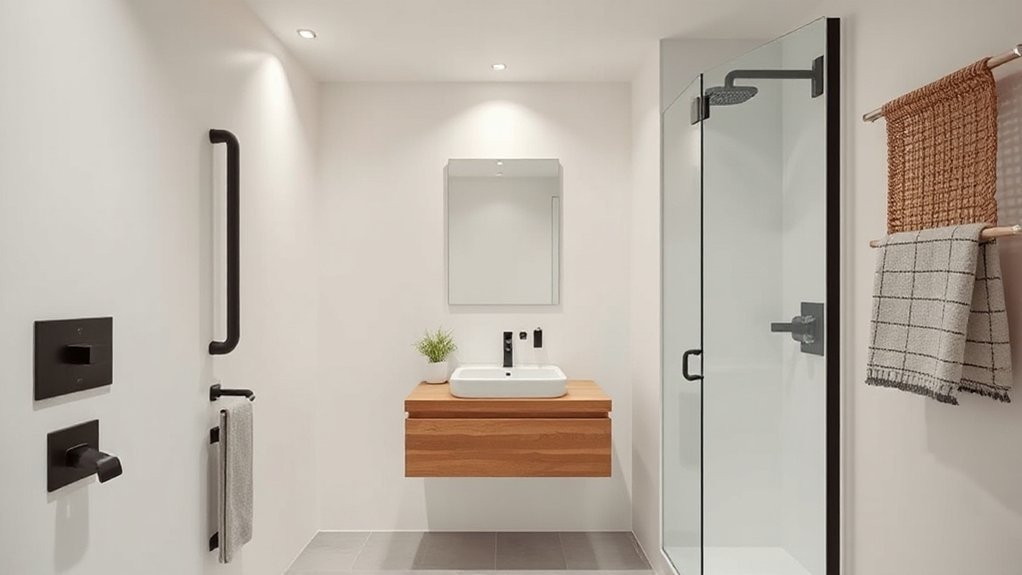
Small changes can yield measurable impact in a budget-friendly bathroom refresh. You’ll see clear gains by choosing targeted upgrades that feel premium without breaking the bank. Focus on perceptual upgrades—things you immediately notice when you enter.
- Install luxury fixtures that blend function with form, prioritizing water efficiency and tactile quality.
- Introduce statement tiles as a focal wall or border to elevate mood with minimal layout changes.
- Reframe lighting with a bright, white balance and dimmable options to alter space perception.
- Upgrade a single vanity or mirror with a refined finish to sharpen overall aesthetics.
Measurable impact comes from quality over quantity; small, deliberate changes deliver noticeable, lasting improvements.
Step-by-Step Blueprint for a Compact Bathroom Remodel
Start with a clear layout: map your bathroom to maximize flow and footprint, prioritizing a compact, functional footprint.
Then choose storage solutions that hide clutter while staying accessible, from wall-mounted cabinets to niche shelving.
We’ll explore practical steps for optimizing layout and integrating smart storage to keep the space minimalist and easy to maintain.
Layout Optimization
Can you optimize a tight bathroom layout in minutes by prioritizing flow and fixtures? Yes. You streamline the footprint by choosing compact, functional units and aligning utilities for seamless movement.
Focus on three core zones: entrance, wet edge, and vanity. Use a simple, linear flow to minimize wasted space and maximize perceived room.
- Map a clear traffic line from door to shower or tub, avoiding backtracking.
- Pick wall-hung fixtures to free floor space and improve sightlines.
- Place the toilet and vanity at 600–750 mm centers for comfortable access.
- Use vertical storage and a slim vanity to reduce clutter without sacrificing storage.
In this plan, Vintage fixtures and decorative tiles anchor style while maintaining efficiency.
Storage Solutions
Ever wondered how to maximize storage without sacrificing floor space? You’ll implement vertical planning, wall-mounted cabinets, and recessed niches to keep surfaces clear.
Prioritise a single linear run of storage along the primary wall, so you preserve room for movement. Choose compact, depth-efficient units with soft-close hardware to reduce noise and wear.
Use open shelving sparingly to display essentials without clutter. Integrate mirrored doors to double the perceived space while hiding contents.
Opt for concealed cisterns and under-sink pull-outs to hide daily items. Maintain color harmony across cabinetry, fixtures, and towels to sustain a calm, cohesive look.
Assure material durability by selecting moisture-resistant laminates or solid-surface fronts. Finally, seal joints to prevent damp ingress and prolong longevity.
Common Mistakes in Small Bathrooms and How to Avoid Them
Common mistakes in small bathrooms often stem from trying to fit too much into too little space. You’ll waste square footage and feel cramped if you ignore flow, lighting, and storage priorities. To avoid common pitfalls, focus on essentials and strategic placement.
1) Choose compact fixtures with clean lines to preserve room.
2) Use wall-hung units and mirrors to create visual height and reduce clutter.
3) Plan lighting layered for task, ambient, and mood without overloading the circuit.
4) Integrate vintage fixtures or decorative accents sparingly to enhance character without crowding.
Real-World UK Examples: Compact Minimalist Baths Worth Copying
Compact bath layouts prove you can free floor space without sacrificing function, so consider where a shower niche or a wall-hung basin fits best.
We’ll compare space-savvy materials—like large-format tiles and slim resin countertops—to cut visual clutter and enhance light reflection.
Ready to spot real UK examples that balance practicality with a minimalist aesthetic?
Compact Bath Configurations
If you’re optimizing a UK bathroom space, compact bath configurations prove that form and function can coexist without sacrificing style. You’ll see real-world practicality in layouts that maximize area while keeping a calm minimalist aesthetic.
Focused choices keep water use efficient and cleaning simple, without compromising ambience. Here are compact approaches you can copy:
1) Corner baths paired with inset storage to free floor space
2) Linear back-to-wall designs that streamline plumbing and open sightlines
3) Shower-bath combinations with clear glass to visually expand the room
4) Freestanding, compact tubs accented by vintage fixtures and statement tiles
These configurations balance proportion and ease, delivering value in small layouts and nodding to timeless details.
Space-Savvy Materials Choices
Space-savvy materials do more than look good; they sustain a compact minimalist bathroom with everyday practicality. You’ll prioritise surfaces that resist moisture and grime, like matte porcelain, quartz composites, and solid-surface laminates, which stay cleaner with minimal upkeep.
Choose wall and floor tiles in light, large formats to create a sense of space while reducing grout lines and maintenance time. Opt for integrated, wall-mounted plumbing fixtures to free floor area and simplify cleaning.
Use recessed niches and slim shelving to avoid clutter without sacrificing function. For ventilation, pick materials that tolerate humidity and pair with reliable bathroom ventilation to control moisture.
Durable faucets and concealed plumbing fixtures reduce visual bulk, supporting a streamlined, serene ethos.
Ready-to-Buy Product Picks for a Small Minimalist Bathroom
Ready-to-buy picks for a small minimalist bathroom focus on efficiency and clean lines. You’ll want compact, low-profile fixtures that maximize space and reflect restraint. Prioritize quality over quantity with a few versatile pieces.
- Compact wall-mounted vanity with soft-close drawer and a slim basin.
- Wall-hung toilet with dual-flush and a recessed cistern for a seamless look.
- Slimline rainfall showerhead and a frameless glass panel to visually expand the room.
- Matte black or brushed nickel finishes on hardware, plus a pair of statement tiles for focal appeal.
Consider vintage fixtures sparingly for character, and use statement tiles as accents to elevate the minimalist palette without clutter.
Frequently Asked Questions
How Can I Maximize Storage Without Clutter in Small UK Bathrooms?
Yes: maximize storage by using Creative shelving and Hidden storage. You should install wall-mounted units, recessed niches, and over-toilet shelves; choose vertical organizers, slim baskets, and doors with mirrors to visually expand space while keeping clutter away.
What Are Cost-Effective Minimalist Upgrades for Rental Properties?
Budget-friendly decor meets eco-conscious choices; you upgrade rental bathrooms with thrifted mirrors and peel-and-stick storage, saving costs while minimizing waste. You implement space-saving shelves, light-reflective colors, and modular fixtures to maximize impact without investing much.
Which Materials Resist Moisture in Small UK Bathrooms?
Moisture resistant tiles and Waterproof paint resist moisture in small UK bathrooms. You choose moisture barriers and sealants, guarantee proper ventilation, and maintain grout and caulk. You’ll prevent damp, preserve surfaces, and keep a clean, durable finish.
How Do I Ensure Good Ventilation in Compact Spaces?
“Where there’s a will, there’s a way.” You guarantee good ventilation in compact spaces by choosing ventilation options like inline fans, humidity sensors, and window vents, and focus on moisture control with proper ducting, seals, and exhaust placement.
What Resizing Options Exist for Uk-Standard Fixtures?
You can resize UK-standard fixtures by opting for compact models, adjustable-height options, or wall-mounted variants. Make certain bathroom lighting is bright and evenly distributed, while color schemes stay light and cohesive to visually expand space.
Conclusion
In a quiet village, your bathroom is a lighthouse in foggy seas. You steer with measured steps, each fixture a buoy—wall-hung basin, hidden cistern—saving space without shouting. When clutter drifts, you lower anchors: tight palettes, clean lines, purposeful lighting. Remember, small ships need big minds; simplicity becomes your compass. With careful plan and faithful choices, you’ll navigate to calm, open shores where minimalist design reveals room to breathe instead of crowding. Your compact charm shines, guiding others home.
About the Author