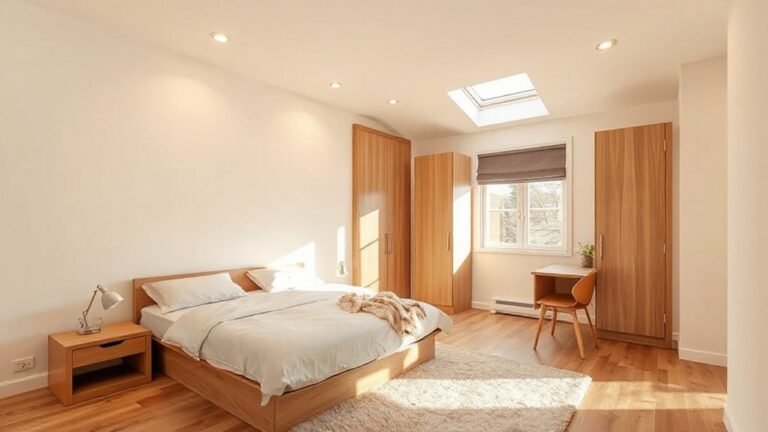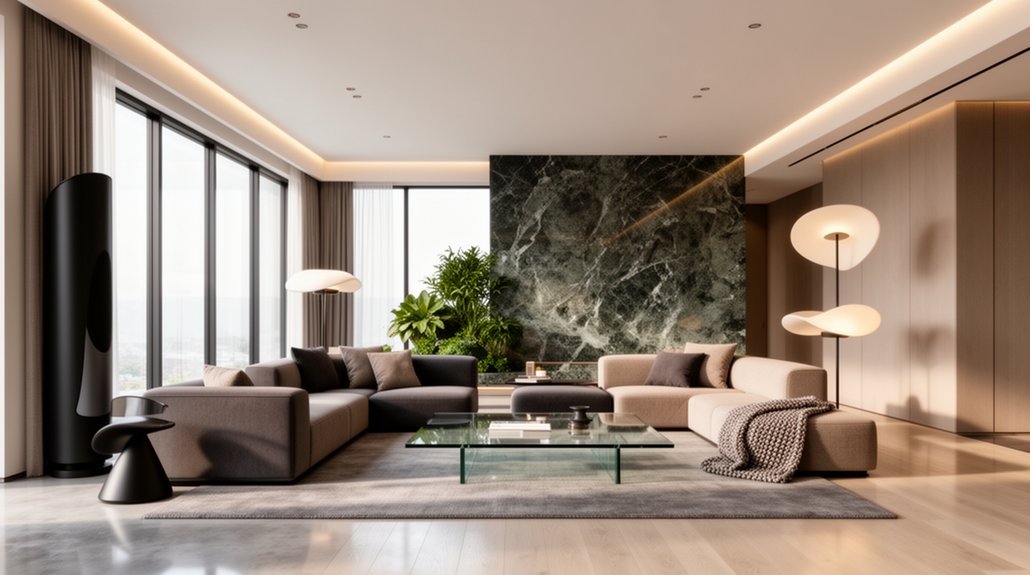
Ultra-modern living rooms in 2026 prioritize modular, adaptable layouts paired with sustainable materials and smart technology. You’ll see durable, recycled textiles, biodegradable finishes, and transparent supply chains that support longevity and easy maintenance. Smart systems handle lighting, climate, and automated shades, with tunable white and scene presets designed for occupancy and natural light. Warm minimalism governs color, texture, and ambient lighting, while functional, multi‑purpose furniture preserves accessibility and flow. Continue to explore patterns that guarantee comfort and timeless appeal.
Define Ultra-Modern Living Rooms in 2026: Key Criteria
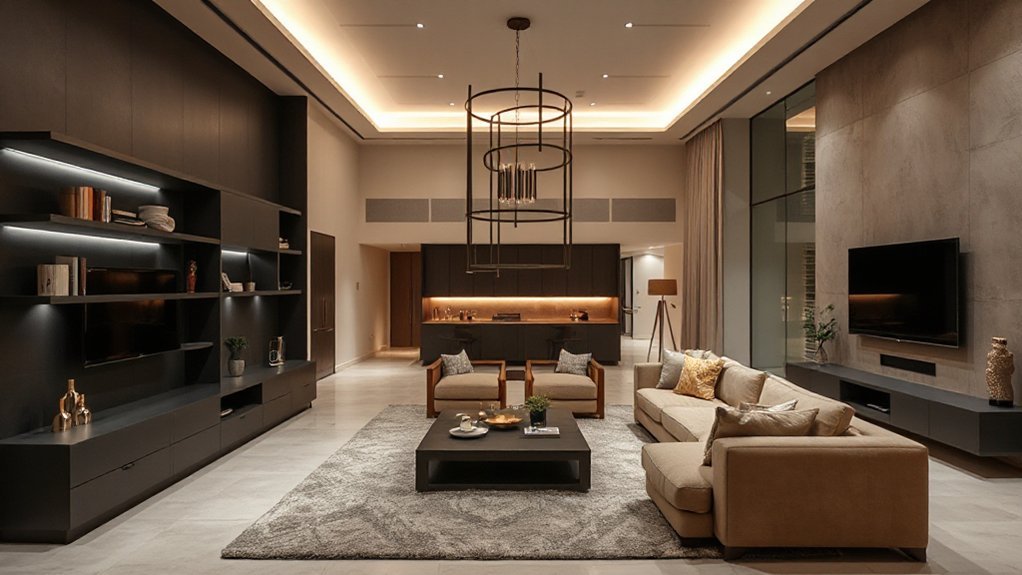
Ultra-modern living rooms in 2026 prioritize clean lines, functional minimalism, and smart integration while maintaining warmth. You assess space by defining clarity of form, proportion, and material restraint, ensuring expressiveness comes from texture rather than ornament.
Key criteria include adaptive lighting, automated climate control, and seamless audiovisual convergence that supports daily tasks without distraction. You favor restrained palettes with high-contrast accents to emphasize structure, while avoiding visual clutter through concealed storage and modular furnishings.
Art deco influences surface as subtle cues—geometric details, refined hardware, and tactile finishes—without overpowering contemporary geometry. Vintage accents are limited to curated pieces that anchor storytelling and heritage without disrupting the equipoise of modern silhouettes.
Your selection reinforces durability, ease of maintenance, and scalable layouts for evolving living patterns.
Sustainable Materials for Everyday Comfort and Longevity
Prioritize materials that resist wear, stains, and fading, and confirm supplier transparency on raw inputs and processing methods. Recycled textiles contribute to circular design by diverting waste from landfills while delivering acceptable softness and resilience for upholstery and rugs.
Biodegradable finishes reduce end-of-life environmental impact, provided they maintain surface performance during routine cleaning and abrasion. Align material choices with product warranties, maintenance protocols, and regional environmental standards, ensuring consistent performance across furniture, seating, and soft furnishings while supporting long-term value and minimal renovation frequency.
Smart Tech Staples: Lighting, Climate, and Automation
Smart tech integration complements durable materials by enhancing daily comfort and efficiency without compromising longevity. You configure lighting scenes and climate control to respond to occupancy, time, and natural light, ensuring energy use aligns with occupancy patterns.
Automated shades, tunable white, and scene-based presets simplify daily routines while preserving design integrity. Virtual assistants centralize control, enabling quick adjustments without touching devices, while privacy-friendly protocols protect data within connected ecosystems.
Augmented reality aids placement decisions and maintenance planning, letting you visualize sensor placement, zoning, and airflow before installation. Precision sensors monitor temperature, humidity, and air quality, maintaining comfort zones and reducing waste.
In this approach, automation supports both performance targets and aesthetic cohesion, reinforcing durability and user-centric adaptability throughout the living space.
Warm Minimalism: Color, Texture, and Ambient Lighting
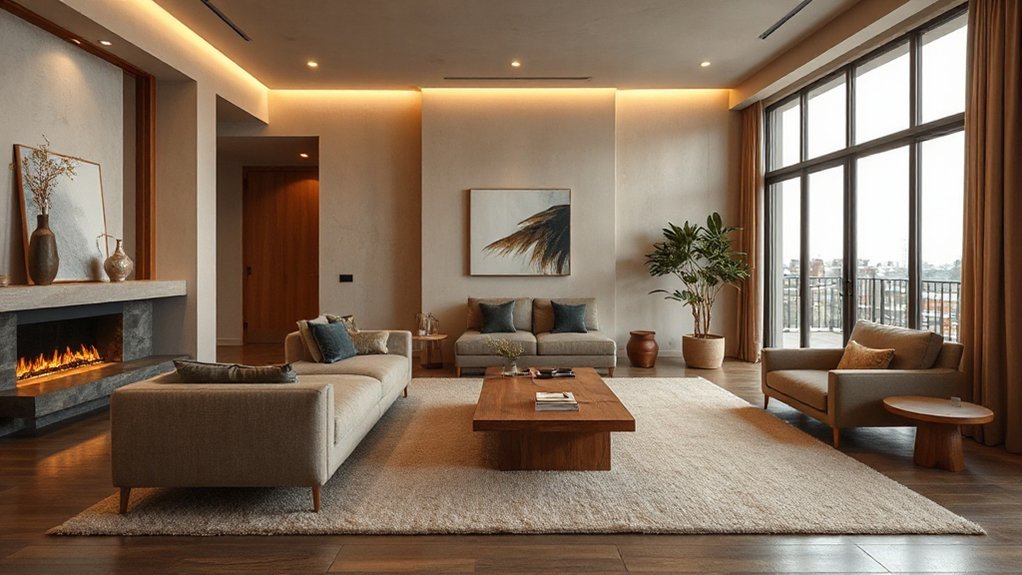
You combine Color-Wall Harmony with Texture-Driven Ambience to establish a warm minimalist base that supports subtle, expressive accents.
This balance guides material choices and surface treatments, ensuring tactility alongside restrained palettes.
Consider how ambient lighting reveals depth and texture, reinforcing harmony without clutter.
Color-Wall Harmony
You prioritize balanced color relationships that support legible architectural lines and furniture silhouettes, avoiding harsh contrasts. In practice, you curate color contrast through controlled saturation, ensuring any accent tone reinforces the base palette without overpowering the room.
You evaluate wall textures as a unifying element, selecting finishes that complement wood, fabric, and metal without duplicating visual noise. Subtle sheen differences and tactile surfaces guide the perception of depth, while lighting levels reveal texture details without creating glare.
This approach sustains a calm, sophisticated atmosphere suitable for daily use and refined entertaining, aligning with strategic brand aesthetics and durable material choices for long-term performance.
Texture-Driven Ambience
Start from calm, low-saturation tones and layer tactile elements—woven fabrics, suede, natural stone, and unglazed ceramics—to cultivate depth. Ambient lighting should emphasize material individuality, using warm, dimmable sources that sculpt surface shadows and highlight microtextures.
Avoid clutter; select pieces that reinforce proportion and rhythm, ensuring each item enables tactile layering across zones. Consider finishes with subtle sheen to enhance warmth and reflectivity at varying times of day.
This approach yields a cohesive, durable, and refined environment suitable for long-term occupancy and evolving lifestyle needs.
Functional Furniture for Any Space: Small to Large Rooms
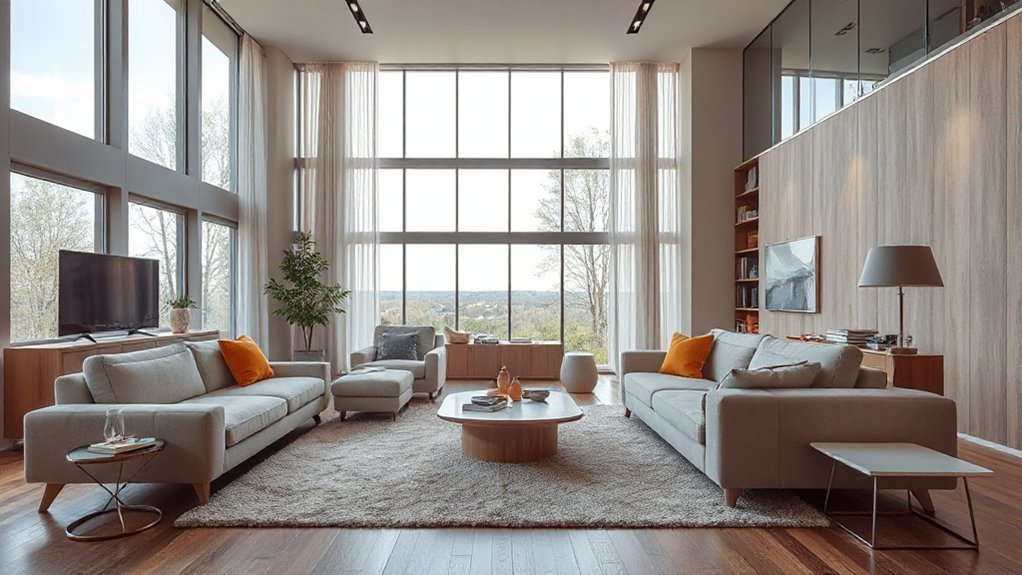
You’ll explore flexible layout solutions, prioritizing adaptability as spaces shift from compact to expansive.
Consider space-smart storage ideas that maximize every square inch without compromising access or style.
Evaluate multi-functional seating arrangements that pair comfort with efficiency, enabling seamless shifts across small and large rooms.
Flexible Layout Solutions
- Modular sofas for rapid reconfiguration
- Adjustable partitions to redefine zones
- Integrated storage in compact footprints
- Low-profile, acoustically considerate finishes
Space-Smart Storage Ideas
As homes evolve to accommodate flexible layouts, space-smart storage solutions become foundational. You deploy hidden compartments within coffee tables and ottomans to conceal essentials without sacrificing surface area or aesthetics. Modular shelving systems adapt vertically and horizontally, enabling precise weight distribution and configurable depth for books, electronics, and display items.
In small rooms, underutilized wall recesses convert to storage niches, while dual-purpose consoles pair seating with drawer arrays, reducing clutter without encroaching on floor space. For mid to large rooms, you prioritize modular shelving units that synchronize with room zoning, supporting seasonal decor and media components through removable inserts.
Precision hardware and soft-close mechanisms guarantee durable operation. Overall, these approaches deliver functional efficiency, scalable organization, and clean sightlines aligned with contemporary design intent.
Multi-Functional Seating Arrangements
Multi-functional seating marries comfort with versatility, enabling flexible room configurations without sacrificing style. In compact layouts, you’ll prioritize convertible sofas for overnight guests and space-saving storage within arms’ reach.
For larger interiors, modular chairs empower you to reconfigure zones without major effort, supporting conversation hubs or media walls as needs shift.
Prioritize build quality, ensuring durable upholstery, robust frames, and easy-clean surfaces to sustain long-term performance.
Consider neutral tones with subtle accent colors to maintain visual coherence across furniture clusters.
Integrate hidden shelving or modular ottomans to add storage without bulk. You’ll favor items that resist wear, stackability for transport, and scalable arrangements that adapt to evolving living patterns.
- Convertible sofas suitable for guest accommodations
- Modular chairs for flexible seating grids
- Integrated storage options within seating
- Durable, scalable, easy-care materials
Evaluate Trends Without Sacrificing Comfort
To evaluate trends without sacrificing comfort, start by identifying which innovations enhance livability and which add clutter or fatigue. You assess seating ergonomics, storage efficiency, and ambient controls, ensuring each element supports sustained use without encroaching on space.
Prioritize modular systems, intuitive lighting, and noise reduction, pairing form with function to maintain repose-friendly environments. When integrating trends, favor subtle statement pieces over conspicuous displays, preserving flow and accessibility.
Consider material durability, thermal comfort, and ease of maintenance for long-term satisfaction. Balance modern tech with timeless comfort, avoiding overautomation that may impede relaxation.
Incorporate Vintage accents and Artistic decor sparingly to enrich character without overpowering function.
Document measurable outcomes—user fatigue, task efficiency, and perceived calm—to guide iterative refinements aligned with professional standards and occupant well-being.
Frequently Asked Questions
How Will Ultra-Modern Living Rooms Adapt to Multi-Functional Layouts?
Multi-functional layouts will hinge on modular furniture and adaptable spaces, allowing you to reconfigure zones for work, leisure, or guests. You’ll optimize flow, preserve sightlines, and maintain elegance, ensuring modular furniture adapts seamlessly to evolving needs.
What Ethical Certifications Matter for Sustainable Materials in 2026?
Yes—Avoiding the context, you should seek certifications like FSC, PEFC, and Cradle to Cradle, with eco friendly sourcing and fair trade materials prioritized; this guarantees responsible supply chains, transparency, and rigorous third-party verification for sustainable materials in 2026.
Can Smart Tech Integration Coexist With Human-Centered Comfort?
Yes, smart tech can coexist with human-centered comfort when you prioritize AI privacy and integrate emotional design, ensuring responsive cues respect boundaries, balance control, and maintain serene environments while delivering efficient, data-conscious, and user-focused performance.
Do Bold Colors Remain Relevant With Minimalist Aesthetics?
Bold accents remain relevant with minimalist aesthetics, you’ll embrace color dominance precisely when restraint highlights personality; irony aside, you still prioritize balance, ensuring Bold accents sharpen focus while Color dominance harmonizes space, elevating industry-standard design without overpowering function.
How to Balance Acoustics With Open-Plan Ultra-Modern Designs?
Acoustic zoning balances open-plan spaces by segmenting zones with strategic furnishings. You should prioritize soundproof furniture, combining upholstered pieces and mass-loaded panels, ensuring dialogue zones stay clear while maintaining flow, formality, and precise acoustic control throughout the ultra-modern design.
Conclusion
You stand at the doorway where future and function meet. Ultra-modern living rooms symbolize a balance of light and restraint: sleek silhouettes guarding warmth, and quiet tech guiding daily rituals without shouting. Sustainability grows into comfort, like a sturdy frame surrounding a radiant hearth. As you adapt, the space becomes a compass—small rooms feel expansive, large ones intimate—each choice echoing a deliberate promise: design that serves, endures, and invites you to live more thoughtfully.
About the Author