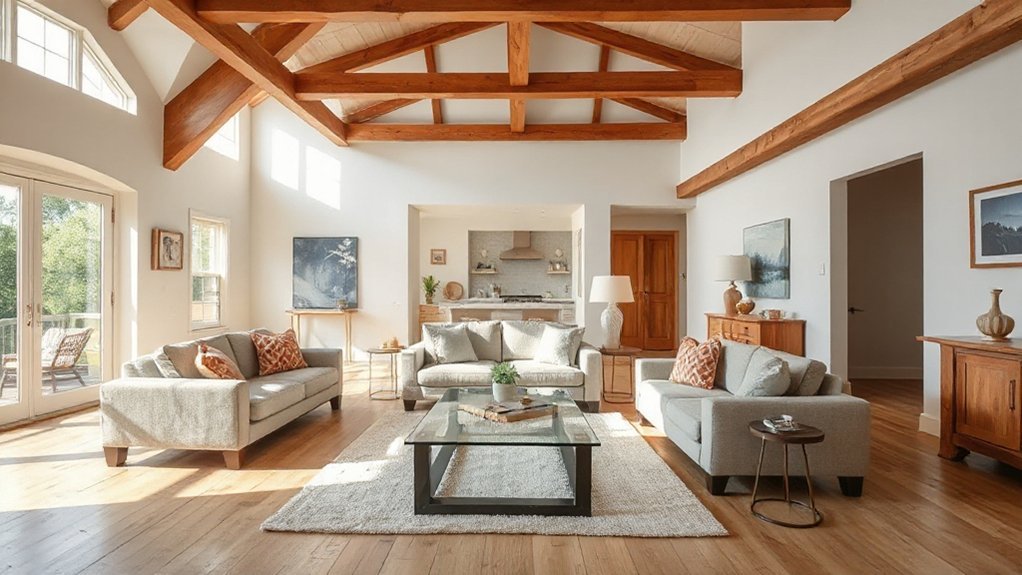
You define a clear design framework, you balance preservation with innovation, you plan phased renovations, you integrate discreet tech, you prioritize comfort and performance. You’ll align up-front goals with budget, timeline, and priorities, then preserve character-defining details while upgrading for energy efficiency and daylight. You’ll use period-appropriate finishes, quiet HVAC, and reliable surfaces, and you’ll weave subtle smart upgrades without compromising architecture. The next steps will show you how to implement this carefully, with a practical path toward a timeless update.
Define Your Traditional Home’s Character and Modern Goals
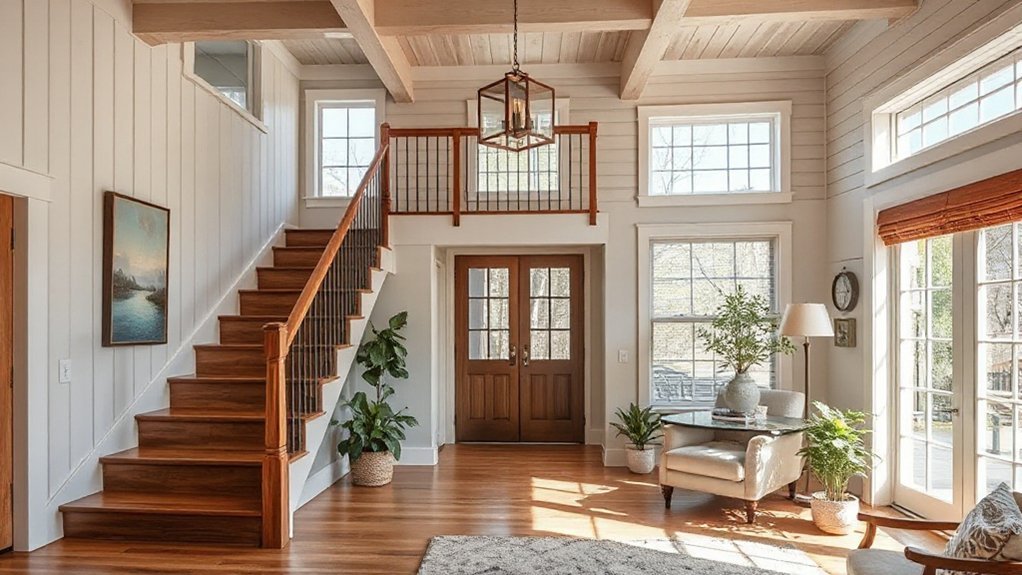
To modernize a traditional home effectively, start by defining its core character and your renovation goals. You evaluate historical significance to identify architectural cues worth preserving, such as original detailing, materials, or massing, and you determine which elements support your daily living needs.
Clarify your Modern Goals: improved daylight, energy efficiency, functional circulation, and durable finishes, mapped to the home’s structural logic.
Prioritize architectural harmony by aligning new interventions with proportion, rhythm, and texture already present, ensuring progressions feel seamless rather than divergent.
Document constraints, accessibility needs, and resilience targets, then translate them into measurable criteria, like U-values, insulation continuity, and egress compliance.
This grounding prevents scope drift and anchors design decisions in context, evidence, and craft, yielding a coherent, respectfully updated, timeless home.
Set Parameters: Budget, Timeline, and Priorities
Set a clear budget to anchor decisions and prevent scope creep, documenting line items for structure, systems, and finishes.
Establish a realistic timeline with milestones and contingencies to align stakeholders and track progress.
Prioritize renovations by impact and feasibility, creating a phased plan that links budget to timelines and expected outcomes.
Set Clear Budget
Establish clear parameters for your renovation: set a realistic budget, define a precise timeline, and identify priorities that will guide every decision. You’ll begin with a concrete budget framework, then verify it against design goals and systems upgrades.
Budget allocation should align with prioritized scopes, allocating contingency for unknowns without overrunning ceilings. Ground your plan in cost estimation methods: unit costs, historical bids, and supplier quotes, adjusted for local market shifts.
Track expenses weekly, updating variances to stay on track. Consider phasing high-cost elements to maintain momentum while preserving quality.
Maintain documentation of approvals, invoices, and change orders to support transparent decision-making. Balance aspirational features with practical constraints, ensuring you can deliver value without compromising safety, compliance, or performance.
Establish Timeline
A clear timeline anchors the project by translating the budget and priorities into actionable milestones. You translate your approved budget into phase goals, delivery dates, and review checkpoints, ensuring each milestone aligns with practical constraints and contractor capabilities.
Establish a realistic timetable that accommodates Historical preservation needs without sacrificing essential modern upgrades; document permitting windows, material lead times, and seasonal work restrictions.
Define priority sequencing—structural integrity, energy efficiency, and essential systems—while preserving the core character of the home.
Build in contingency buffers for supply delays or weather interruptions, and set decision points for scope adjustments.
Communicate the timetable to all stakeholders, updating them with changes and rationale, so outcomes remain predictable, traceable, and aligned with your stated objectives and quality standards.
Timetable flexibility keeps the plan responsive yet controlled.
Prioritize Renovations Plan
Prioritizing renovations means translating your budget, timeline, and goals into a concrete action plan. You allocate funds to high-impact updates first, preserving essential structure while enabling modern function. Establish a phased schedule that respects permitting realities, supplier lead times, and seasonal constraints; document milestones so progress stays measurable.
Define decision criteria: return on investment, occupant comfort, and risk reduction. Rank projects by impact, feasibility, and alignment with your long-term vision, then map dependencies to avoid bottlenecks.
Historical preservation informs choices about materials, finish, and detailing to maintain character without compromising efficiency. Cultural integration guides adaptive reuse, ensuring new systems harmonize with existing aesthetics.
Validate each priority with cost estimates, risk assessments, and potential subsidies, ensuring your plan remains adaptable and records-informed.
Plan Open Layouts That Preserve Historic Details
You can plan open layouts that maintain historic details by identifying key original elements to preserve and designing sightlines that highlight them.
Balance open flow with preserved moldings, columns, or transoms, so modern paths don’t obscure historic cues.
Integrate contemporary aesthetics through finishes and fixtures that respect scale and material language while enhancing function.
Preserve Historic Detail
When planning open layouts, focus on preserving historic details by carefully separating spaces with nonstructural elements or partial walls that don’t erase original alcoves, moldings, or trim. You’ll prioritize architectural preservation by documenting existing features and testing load paths before any alteration, ensuring removals are reversible where possible.
Use precise terminology to describe existing conditions, such as cornices, friezes, transoms, and baseboards, and reference historical drawings to maintain historical accuracy.
Integrate new layouts with minimal disruption to historic fabric, employing careful detailing, compatible materials, and staggered sightlines that reveal original recesses and alcoves.
Validate changes with performance metrics for acoustics and daylight, confirming that modern amenities don’t compromise historic integrity or the building’s character.
Plan Open Flow
Plan open layouts that preserve historic details by shaping the flow with nonstructural partitions, partial walls, and carefully placed furniture that delineate spaces without erasing original alcoves, moldings, or trim. You tailor circulation with subtle zoning, ensuring sightlines emphasize craftsmanship while enabling flexible use.
Use furniture arrangement to define living, dining, and circulation zones without heavy enclosures, preserving墙 niches and crown molding. Choose a restrained color palette that respects historic finishes while enhancing legibility of spaces; prefer neutral bases with purposeful accents to highlight architectural details.
Create acoustic differentiation through textiles and area rugs rather than barriers. Document critical progressions to guide future renovations. Maintain consistent ceiling lines and preserve bellies or pediments where present.
This approach combines functional openness with respect for era-specific detailing.
Integrate Modern Aesthetics
Blending modern aesthetics with historic preservation hinges on shaping open layouts that respect original details. You evaluate wall alignments, sightlines, and load-bearing conditions to create flow without erasing character. Use partial partitions and restrained glazing to delineate zones while preserving rhythm, and select materials that echo historical palettes—limestone, brick, oak—reinforced by contemporary finishes.
Prioritize daylight through strategically placed windows and skylights to reveal craftsmanship, not overwhelm it. Plan kitchen and living areas as integrated hubs that maintain alcove nooks, crown moldings, and transom windows as focal cues. Consider furniture placement that honors historical proportions, avoiding oversized fixtures.
Align design choices with artistic expression and cultural influence, ensuring modern silhouettes complement rather than compete with details. This evidence-based approach yields cohesive spaces that feel authentic and timeless.
Choose Period-Appropriate Finishes and Materials
Choosing period-appropriate finishes and materials establishes authenticity while enabling modern performance. You’ll select substrates, finishes, and details that reflect era intent while meeting current code, durability, and upkeep expectations.
Prioritize historically accurate materials where feasible, then substitute modern equivalents that preserve appearance without compromising structural behavior. Evaluate joinery, hardware, and surface textures for proportionality and patina that read as authentic rather than decorative.
Consider material durability, moisture resistance, and cleaning requirements to minimize long-term maintenance. Favor timber, brick, stone, plaster, and period-appropriate paints with stable pigments, matched to original construction methods.
Document provenance and compatibility with existing systems to prevent retrospective incongruities. Balance aesthetics with performance, ensuring progression between spaces respect scale and rhythm while maintaining energy efficiency and accessibility standards.
Upgrade HVAC and Insulation for Quiet Comfort
Upgrading HVAC and insulation builds on the materials and finish choices you selected to honor both era appearance and modern performance. You’ll evaluate envelope tightness first, sealing gaps around headers, sash joints, and wiring penetrations.
Then add insulation with appropriate R-values for climate and building type. Choose ductwork and equipment that minimize noise transmission, using flexible connections and compliant absorptive lining where feasible.
Install a high-efficiency air handler and variable-speed blower matched to pressure balance, reducing cycling and vibrational noise. Integrate smart thermostats to modulate heat and cooling based on occupancy, weather, and setpoints, supporting noise reduction through gradual adjustments.
Prioritize continuous commissioning, regular filter changes, and vibration isolation to sustain quiet comfort and energy efficiency over time.
Modernize Lighting and Electrical for Daily Use
Modernize lighting and electrical for daily use begins with understanding how to balance aesthetics, efficiency, and safety. You assess existing circuits, load demands, and switchgear, then align fixtures with room function and color rendering.
Choose high-CRI LEDs and dimmable controls to preserve vintage ambiance while reducing consumption. Implement dedicated circuits for key zones, and label panels for quick fault isolation.
When considering wiring upgrades, map routes to minimize invasiveness and comply with current codes, employing conduit or NM cable as required by location.
Favor reliable switches, outlets with tamper-resistant bodies, and GFCI/AFCI protection in damp or sleeping areas.
Integrate smart timing and occupancy sensors to optimize usage without compromising style. Vintage fixtures can be preserved by discreet adapters and controlled contemporary illumination.
Select Low-Maintenance Surfaces That Last
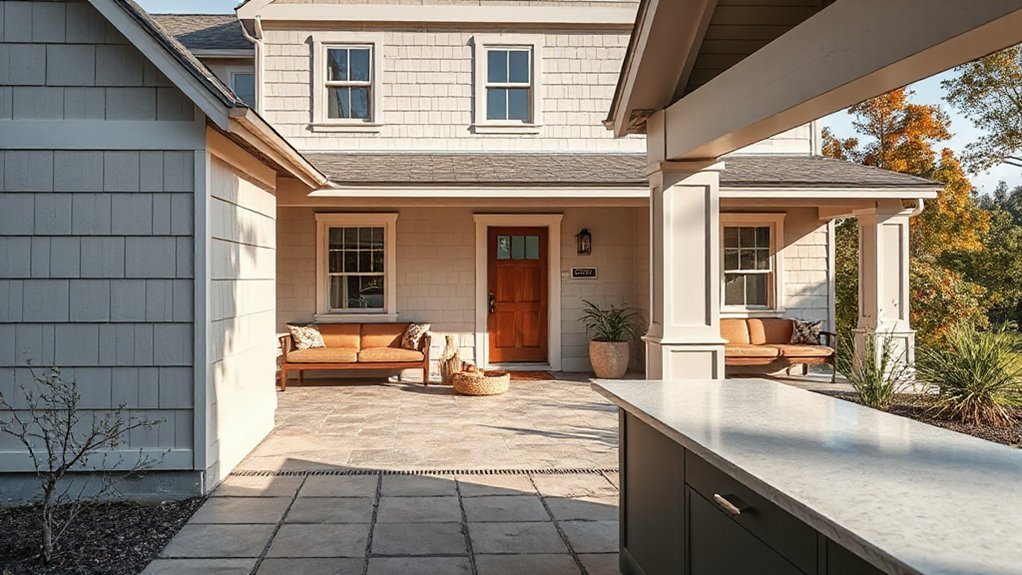
When selecting surfaces for a traditional-home modernization, prioritize materials that resist wear while minimizing maintenance. You’ll want surfaces with proven surface durability, resisting scratching, staining, and moisture ingress under typical family use.
Favor engineered options that combine density, low porosity, and stable finishes over time, reducing maintenance cycles. Consider finishes engineered for cleanability—matte or low-sheen coatings that resist fingerprinting without showing wear.
Select materials with documented material longevity, including low thermal expansion and high dimensional stability to prevent cracking or warping with seasonal changes.
Prioritize installation systems that seal joints and seams effectively, limiting water migration and mold risk.
Finally, verify performance in relevant environments (kitchens, baths, entryways) and review independent, long-term durability data to inform choices.
Incorporate Subtle Smart Home Upgrades That Blend In
To subtly elevate a traditional home, integrate smart features that are unobtrusive, reliable, and easy to use in daily life. You’ll prioritize devices with minimalist aesthetics, quiet operation, and strong privacy controls.
Focus on smart technology that leverages existing wall plates, recessed mounts, or hidden power outlets to maintain line and form. Select systems with standardized protocols and local control options to reduce latency and dependency on cloud services.
Target lighting, climate, and security routines that blend with conventional finishes, not dominate them. Use scene triggers that are intuitive—motion-activated exterior lighting, sleep modes, and temperature presets that respect historic insulation.
Document placements, guarantee professional calibration, and test interoperability across rooms. Subtle integration preserves charm while delivering measurable comfort and energy efficiency.
Create a Phased Plan: Implementation Checklist and Next Steps
Begin by mapping the smart-upgrade concepts from the previous phase into a practical, phased plan that minimizes disruption to traditional aesthetics. You’ll establish a stepwise implementation checklist, aligning each action with historical preservation priorities and design harmony.
Phase 1 focuses on governance: confirm permits, budget, and stakeholder roles, documenting baseline conditions.
Phase 2 targets prioritization: select noninvasive upgrades with reversible options, verify compatibility with existing materials, and set performance metrics.
Phase 3 addresses execution sequencing: schedule trades, isolate crew work areas, and implement temporary protections.
Phase 4 validates outcomes: conduct commissioning, record as-built details, and adjust plans for future-proofing.
Throughout, maintain documentation, risk logs, and change-control procedures.
Conclude with Next Steps: monitor performance, gather feedback, and iterate upgrades to sustain authenticity and function. Historical preservation, Design harmony.
Frequently Asked Questions
How Do I Preserve Historic Features While Updating Systems?
Prioritize historical accuracy by documenting existing features, then upgrade electrical, plumbing, and HVAC with concealed or reversible modifications. Preserve trim, moldings, and fabric detailing to maintain character, while ensuring structural integrity via seismic or reinforcement upgrades where needed.
What Grants or Incentives Support Traditional-Home Modernization?
You can access grant programs and incentive options through federal, state, and local programs, including historic preservation grants and energy-efficiency rebates, which cover modernization efforts while preserving character, with documentation and eligibility criteria guiding your evidence-based decision.
How Can I Forecast Maintenance Needs for Aging Finishes?
You can forecast maintenance needs by inspecting aging finishes, tracking wear patterns, and scheduling periodic tests; monitor home safety and material durability, noting moisture, cracking, and adhesion. Use data-driven calendars to prioritize repairs and preventive actions.
Which Contractor Qualifications Ensure Respectful Historic Renovations?
You should hire contractors with valid licensing and proven experience in preservation standards, ensuring respectful historic renovations; verify licenses, certifications, and prior projects, and require adherence to preservation standards, documented methods, and transparent communication throughout planning, execution, and post-work review.
How Do I Balance Energy Efficiency With Period-Authentic Details?
Sure, you balance energy efficiency with period-authentic details by prioritizing vintage charm in aesthetics while pursuing modern upgrades—insulate, seal, and efficient HVAC—without compromising historic fabric, then measure performance with precise, evidence-based metrics and feedback.
Conclusion
To modernize thoughtfully, you balance preservation with progress, honoring character while inviting comfort. You define goals, delineate limits, and design with intent—preserving details, upgrading systems, and selecting enduring finishes. You plan openly, yet respect historic envelopes, enabling daylight, efficiency, and quiet. You integrate discreet tech, yet maintain charm. You phase the work, measure outcomes, and adjust plans. You’ll refresh, restore, and reimagine—consistently aiming for resilience, beauty, and timeless livability. Preserve, upgrade, repeat.
About the Author