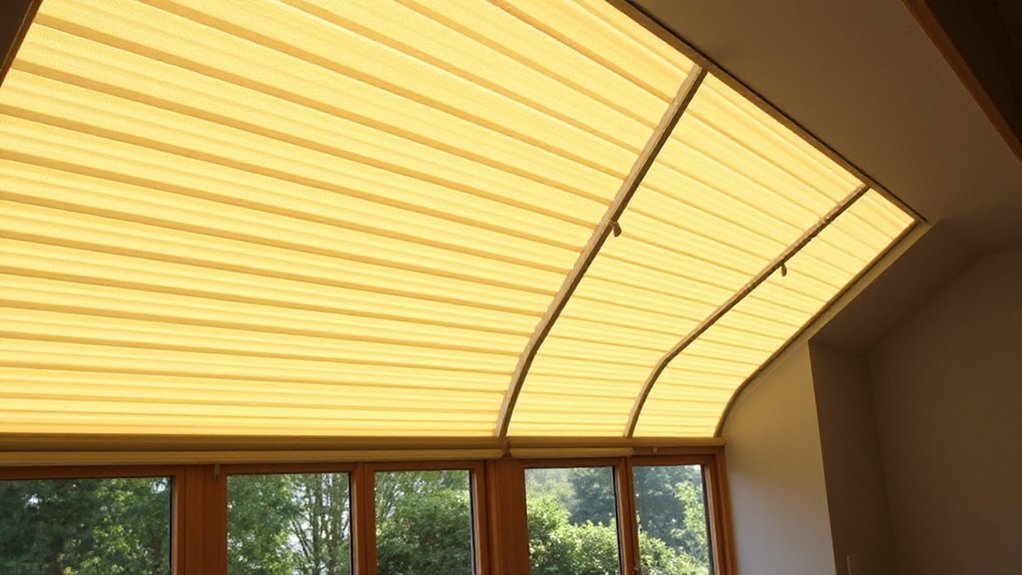
You want blinds that tame glare, cut heat, and keep your conservatory comfortable year-round. The best options blend insulation with light control—cellular honeycombs for real energy savings, layered or dual fabrics for flexible opacity, and precise Venetian or motorized systems for glare management. Reflective fabrics can help, but you’ll weigh their light loss against heat reduction. Start by matching your climate, window design, and daily routines, then test options that promise real performance gains. Your ideal setup awaits, if you choose wisely.
What Conservatory Blinds Solve for Light, Heat, and Privacy
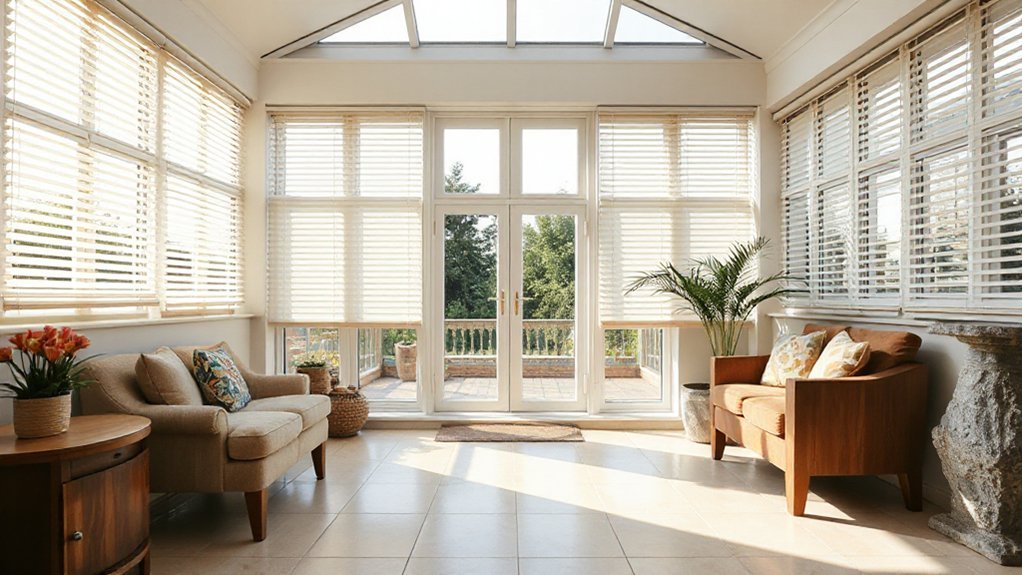
Conservatory blinds address three core needs: controlling light, reducing heat, and boosting privacy. You assess how glazing, fabric, and slat orientation interact with your room’s sun path, ensuring glare is minimized without sacrificing daylight.
Light control data show fabrics with higher openness factors or tighter weaves cut glare while maintaining view, yet thermally efficient options curb heat gain by up to 40% in peak sun.
Privacy toggles hinge on tilt, stack, and opacity, preserving exterior visibility while shielding interiors.
Historical trends reveal shifting preferences toward dual-purpose fabrics and motorized systems, reflecting evolving climate and convenience.
Cultural influences shape color, texture, and installation style, guiding you to align blinds with architectural identity.
You’ll benefit from measurable performance without compromising aesthetics or access to natural light.
A Practical Framework for Choosing Conservatory Blinds
To choose conservatory blinds effectively, start with a practical framework that links your goals—light, heat, privacy—to measurable options. You’ll map daily sun exposure, seasonal temperatures, and privacy needs to concrete metrics like shading percentage, U-values, and glare reduction.
Identify nonnegotiables (durability, easy operation) and nice‑to‑have features (remote control, moisture resistance).
Compare three core decision axes: light transmission, insulation performance, and privacy level, assigning weights that reflect your climate and occupancy.
Use a decision matrix to score each option against your criteria, then validate with real-world tests (sample swatches, room light readings, and installer recommendations).
Design aesthetics and color options should align with your interior palette and exterior surroundings, ensuring cohesive styling without sacrificing function.
End with a short, data-backed recommendation.
How Each Blind Type Impacts Light Control
Different blind types shape light in distinct ways: roller blinds dim external glare with fabric opacity, Venetian blinds offer precise slat control for variable daylight, and cellular or honeycomb blinds trap air to reduce glare while boosting insulation.
You’ll notice light modulation varies by design: rollers yield soft, even diffusion and minimal color shift; slatted Venetians provide stepwise daylight adjustment, preserving view while reducing glare at chosen angles; cellulars create a multi-layer barrier that softens strongest sun, then locks light in when closed.
Consider color options and fabric textures to tune perceived brightness and warmth; darker textiles reduce glare more than light neutrals, while textured fabrics scatter light differently than smooth ones.
Your choice should align with preferred glare levels and overall room ambiance.
Insulation in Focus: Rating, Gaps, and Comfort by Type
Insulation performance varies by blind type, with ratings reflecting both air-trapping capacity and potential gaps around edges. You’ll see a clear hierarchy: cellular fabrics trap air best, followed by vinyl and wood slats, with roman and roller styles delivering moderate performance.
Gaps at frames or between slats determine the real-world result, so assess per-edge seals and mounting accuracy. Data show R-values and heat flow reductions correlate strongly with air pockets and edge-tightness, not just fabric thickness.
Your evaluation should align with daily comfort targets, seasonality, and energy costs. When choosing, consider window treatments that minimize drafts while preserving aesthetic appeal. Prioritize visible seal quality, fit to your window recess, and how the option integrates with your overall room design.
Do Reflective Fabrics Really Cut Heat Without Dulling Light?
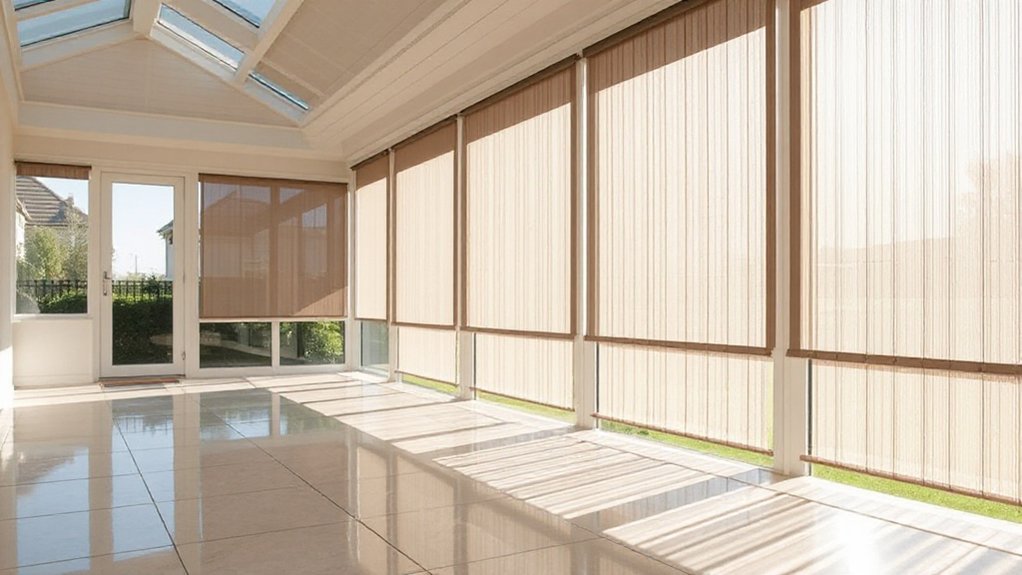
Reflective fabrics can reduce heat gain by reflecting a portion of solar radiation, and their effectiveness hinges on both material properties and installation.
You’ll see a measurable drop in interior temperatures when the fabric’s reflectivity aligns with your window orientation and sun exposure. In data terms, high-reflectance materials can cut radiant heat transfer by a few to more than ten degrees Fahrenheit under peak sun, depending on fabric weave, coating, and air gaps behind the shade.
Yet, heat reflection comes with trade-offs: some light is still transmitted, so you may notice reduced glare rather than total darkness. Choose fabrics with balanced reflectivity, consider existing glazing, and verify installation seals to sustain performance over time.
Reflective fabrics deliver meaningful cooling without universally dulling daylight.
Blackout and Room-Darkening Options for Daytime and Night Use
Blackout and room-darkening options let you tailor daytime glare and nighttime darkness without sacrificing insulation or ventilation. You’ll find a range of fabrics and slat designs that block external light while maintaining cross-ventilation, preserving a comfortable indoor climate.
For daytime use, look for high-opacity materials and tight-weave fabrics that minimize sun glare without overheating the space. At night, choose linings or multilayer constructions that maximize darkness while still allowing airflow when needed.
Color options matter: darker tones improve perceived blackout effectiveness, but lighter shades can balance light control with softer interiors.
Motorized operation adds precision and convenience—set preset scenes, or integrate with smart home routines for automatic dimming. Consider reliability, battery life, and available warranties when evaluating your color and motor options.
Cellular (Honeycomb) Blinds: Energy Efficiency in Practice
Cellular blinds offer clear insulation metrics, showing higher R-values in multi-cell designs and tighter seals at edges. You’ll see how light-control techniques, like tiered shading and texture, translate into measurable energy savings across seasons.
In practice, assess real-world performance data to match insulation performance metrics with your conservatory’s climate and usage patterns.
Insulation Performance Metrics
How do cellular (honeycomb) blinds perform in real-world insulation terms? In practice, you’ll see measured U-values and R-values that reflect core structure. The insulating value hinges on cell size, fabric weight, and installed fit.
Smaller cells generally deliver higher trapped-air volume, boosting thermal resistance, while larger cells trade some insulation for light diffusion. Dense fabrics add a tactile layer of thermal mass, reducing convective heat transfer near the pane.
When evaluating performance, compare tested U-values for the blind system with and without hold-down seals to gauge real-world gains. Dimming technology can influence perceived comfort by lowering glare without compromising insulation.
Consider fabric textures as part of the stack; different textures alter air gaps and wind resistance, subtly shaping overall energy performance.
Light Control Techniques
When you choose cellular (honeycomb) blinds, you’re selecting an architecture that actively influences energy use by trapping air in compact pockets. This reduces heat transfer both ways, improving insulation while enabling precise light control.
In practice, the cellular cells create multiple diffuse shading levels, letting you fine-tune daylight without glare. Light is softened, reducing eye strain and preserving color fidelity, which helps with color coordination in interior design.
For energy performance, measure, not guess: consider the cell size, fabric, and material—smaller cells yield tighter seals but may limit view. Artistic designs and textures offer personalization without sacrificing function, while layered installations with sheer curtains extend modulation options.
As you compare options, prioritize fabrics that maintain stability under UV exposure and maintain consistent light diffusion.
Energy Savings Realities
Have you ever wondered how much you can truly save with cellular blinds in real indoor conditions? In practice, energy savings hinge on layering, seal, and operation.
Cellular blinds trap air in honeycomb pockets, reducing heat transfer during winter and minimizing solar gain in summer.
Real-world performance varies with window orientation, glazing, and climate, but tests show typical reductions in heating and cooling loads of 5–20% when paired with proper sealing and programming.
You’ll notice bigger gains if you use consistent daylight trapping and nighttime insulation.
Color options affect heat absorption, so lighter tones help in hot climates.
If you opt for motorized systems, you gain precise scheduling, reduced houden fluctuations, and easier automation, further enhancing consistent comfort and measurable energy reductions.
Dual-Layer and Layered Blinds for Flexible Light Control
Dual-layer and layered blinds combine two or more blind fabrics or slat systems into a single window treatment, giving you flexible control over light and privacy. You can mix sheer panels with blackout fabrics or combine slats of different widths to tailor glare and heat.
This approach optimizes daylight management without sacrificing privacy, so you maintain consistent indoor temperatures. Data shows layered configurations often reduce peak solar gain by up to 30% compared with single-layer designs, improving comfort during hot days.
Color options allow you to match decor while signaling intent for shading intensity. Motorized operation adds convenience, enabling programmable scenes and remote control for precise light levels.
For high-use rooms, layered systems deliver repeatable performance with minimal manual adjustments.
Measure Twice, Fit Once: Installation Basics and Maintenance
Getting measurements right saves time and guarantees a proper fit, so start by double-checking width, height, and window depth before ordering.
In installation, follow manufacturer guidelines, use the correct screws and brackets, and verify the headrail is level to prevent uneven operation.
Regular maintenance—cleaning, inspecting cords or motors, and testing operation—helps sustain performance and extend the blinds’ lifespan.
Measure Twice, Fit Once
Measuring accurately is the foundation of a smooth blinds installation. You’ll prevent fit errors that cause light leaks, uneven edges, and poor insulation performance.
Begin with a clear plan: measure width at three points (top, middle, bottom) and height at three locations (left, center, right). Record smallest width and largest height to guarantee a universal fit.
Use a steel tape for precision, and note millimeter differences that matter for tilt mechanisms and fabric headers. Account for frame depth and any molding that could obstruct operation.
Double-check your measurements before ordering.
Color coordination and design aesthetics guide your choice, but accuracy protects them; mismeasured panels disrupt alignment and symmetry.
Installation Basics and Maintenance
Once you’ve got accurate measurements, you can install and tune your blinds with confidence. Start with a clean surface and check mounting brackets for level alignment. Use a spirit level to ensure frames sit plumb; slight deviations can affect shade travel and light control.
Follow manufacturer instructions for screw size and depth, and pre-drill where needed to prevent wood splitting. Test operation before final sash installation, adjusting cord tension or wand stops to maintain smooth movement.
When selecting Color options and pattern choices, document how each option impacts insulation ratings and light diffusion; record measurements for repeatable setup.
Regular maintenance includes cleaning slats, inspecting cords, and lubricating moving parts quarterly. Schedule annual checks to address wear, guaranteeing durable performance season to season.
Durability, Materials, and Budget: Fabrics, PVC, and Wood
Durability, materials, and budget are the three guardrails you’ll rely on when choosing conservatory blinds: fabrics, PVC, and wood each offer distinct trade-offs in longevity, performance, and cost.
In practice, fabric textures influence heat absorption, glare reduction, and cleaning effort, while material longevity varies by exposure, care, and set-up.
PVC delivers moisture resistance and lower upfront cost, yet may warp in extreme temperatures and show aging signs sooner than polymer blends.
Wood provides natural insulation and a premium feel but demands humidity control and periodic maintenance to prevent cracking.
To optimize value, calculate total cost of ownership across 5–10 years, including replacement cycles, cleaning, and finish refreshes.
Align choice with climate, sun exposure, and usage to maximize performance per dollar.
Frequently Asked Questions
How Do Blinds Affect Acoustic Comfort in Conservatories?
Blinds influence acoustic comfort by boosting sound absorption and improving acoustic insulation when fitted correctly. You’ll notice reduced echo and quieter rooms as you choose materials and reveals that optimize absorption, while sealing gaps enhances overall acoustic performance.
Which Blinds Balance Glare and Daylight Without Color Shift?
You should choose blinds that balance glare and daylight without color shift: opt for light filtering fabrics with high color preservation, UV resistance, and stable transmittance, so you maintain true hues while maximizing natural light and comfort.
Can Blinds Be Child-Safe and Easy to Operate?
Sure—blinds can be child-safe and easy to operate. You’ll want cordless or wand-operated options with locking mechanisms, smooth edges, and sturdy cords. Child safety and easy operation maximize protection and convenience for you and your family.
Do Automated Blinds Require Professional Installation?
Yes, automated blinds can be installed professionally or DIY, depending on your setup. If you choose DIY, follow smart technology guides and privacy solutions carefully to guarantee safe wiring and reliable operation; otherwise, opt for expert installation.
How Long Do Outdoor vs. Indoor Blinds Last Outdoors?
Directly: indoor blinds typically last 5–15 years, outdoors 2–7 years, depending on material durability and exposure. You’ll want robust materials, and routine maintenance requirements to maximize lifespan—clean, inspect fasteners, protect from extreme weather, and replace worn parts.
Conclusion
You’ve got options that actually matter: cellular blinds for real warmth, dual-layer fabrics for flexible light, and motorized control to tame mornings and scorchers alike. If you crave precise daylight, think Venetian slats; if you crave quiet efficiency, pick honeycombs with solid seals. Don’t chase gimmicks—measure carefully, install correctly, and match to climate. In short: smarter choices save more energy, drama, and postoperative curtain-raising. Your conservatory will thank you with cooler summers and cozier winters.
About the Author