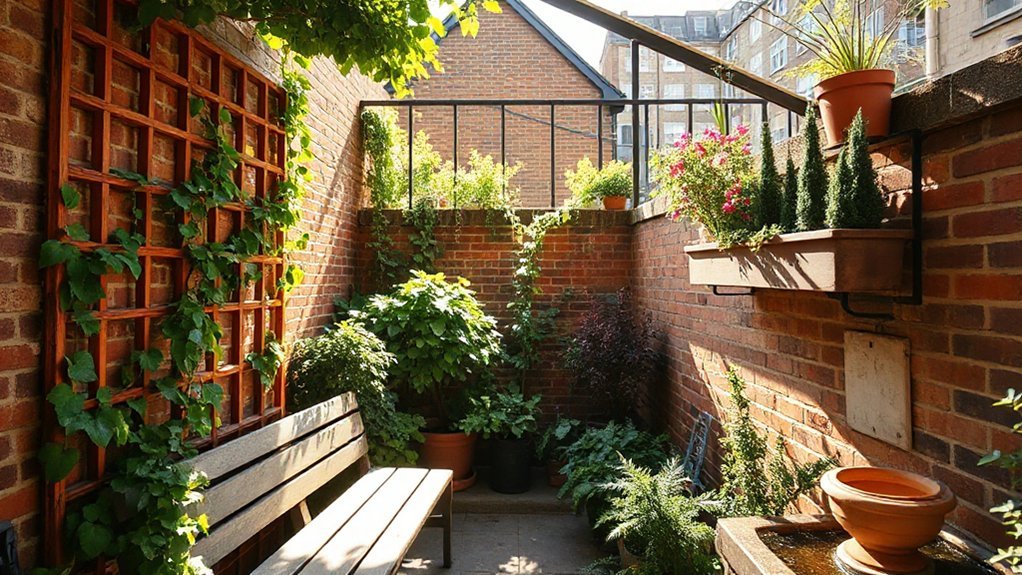
In a city of terraces and tiny outdoor inches, you’ve likely seen greenery squeezed into corners and hoped for more. You’ll want a plan that balances aesthetics with function, from vertical walls to compact furniture, so your space feels bigger and has purpose. Start with light, shape, and durability, then layer in plants and smart tech for year-round color and ease. Curious how to pull it all together without crowding the footprint? Let’s map out the first steps.
Do You Need Smart Outdoor Solutions for a London Terrace?
Smart outdoor solutions aren’t a luxury on a London terrace—they’re a necessity for making the most of limited space. In a compact outdoor area, you’ll gain reliability and order when you implement smart irrigation to keep plants healthy without waste.
Automated lighting extends usability, enhances safety, and highlights architectural details as dusk settles. You’ll appreciate how precise controls prevent overwatering and under-lighting, while preserving precious energy.
Think modular planters, built-in seating, and weatherproof tech that blends with the aesthetic rather than shouting for attention. Prioritize scalable systems you can adjust as your garden evolves, so every inch feels intentional.
With smart irrigation and automated lighting, your terrace becomes a tidy, inviting extension of your home—functional, stylish, and low-maintenance.
Assess Light and Shape: Measure Sun Hours and Space Proportions
To design with confidence, start by mapping how light moves across your space and recording its peak hours. Track sun paths from morning to late afternoon, noting where shade lands and how long each zone stays bright. This Sunlight assessment helps you place seating, planter boxes, and a compact dining nook where glare won’t disrupt views or comfort.
Next, assess space proportioning: measure available length, width, and any awkward corners, then sketch a simple grid to prioritize function versus openness. Prioritize a focal point—perhaps a trellis or vertical garden—that’s scaled to your area.
Use proportional reasoning to balance soft furnishings with hard surfaces, ensuring that walkways stay clear. Keep the layout adaptable for changing seasons, light, and shadow.
Choose Weather-Resistant Materials for Small Areas
You’ll want weather-resistant materials that stay sturdy in London’s damp, variable climate, so choose textures that resist rain and freeze-thaw.
Think compact, durable options for small spaces—slotted boards, porcelain tiles, composite decking, and galvanized metal—that maximize life and minimize maintenance.
As you plan, consider how each material feels underfoot and how it weathers over time to keep your compact garden both practical and aesthetically calm.
Weather-Resistant Materials
Weather-resistant materials for small garden nooks in London should be chosen for durability, low maintenance, and visual harmony with the surrounding architecture. You’ll prioritize materials that resist rain, frost, and UV exposure, like powder-coated aluminum, synthetic rattan, treated timber, and recycled composite boards.
Pick finishes in neutral tones that echo brick and slate, so the space reads cohesive. Weatherproof furniture should combine comfort with compact profiles, avoiding bulky silhouettes that crowd limited footprints.
Choose resistant plant containers that are sturdy, self-watering if possible, and raised slightly off damp surfaces to prevent rot. Planters with integrated liners reduce splash and maintenance.
Install simple drainage, and seal joints to deter moisture ingress. This approach keeps your small garden visually serene, resilient, and ready for year-round use.
Small-Space Durability Tips
In small London spaces, choose weather-resistant materials that stay sturdy and look sharp with minimal upkeep. You’ll want surfaces and containers that resist rain, sun, and soil preparation issues without crowding the view.
Opt for powder-coated metals, treated timber, and composite options that resist warping and fading. Weather-smart pavers create clean lines, while permeable options help manage drainage—crucial in compact plots.
Prioritize textures that hide fingerprints and dust, so upkeep remains quick. To curb pests, select materials with tight weep holes and grounded bases, easing pest control.
Consider modular pieces you can reconfigure seasonally, keeping paths clear and sightlines open. Finish with a protective seal on outdoor wood and rotate planters to reduce wear, sustaining a durable, refined micro-garden.
Install Vertical Gardens to Maximize Tiny Terraces
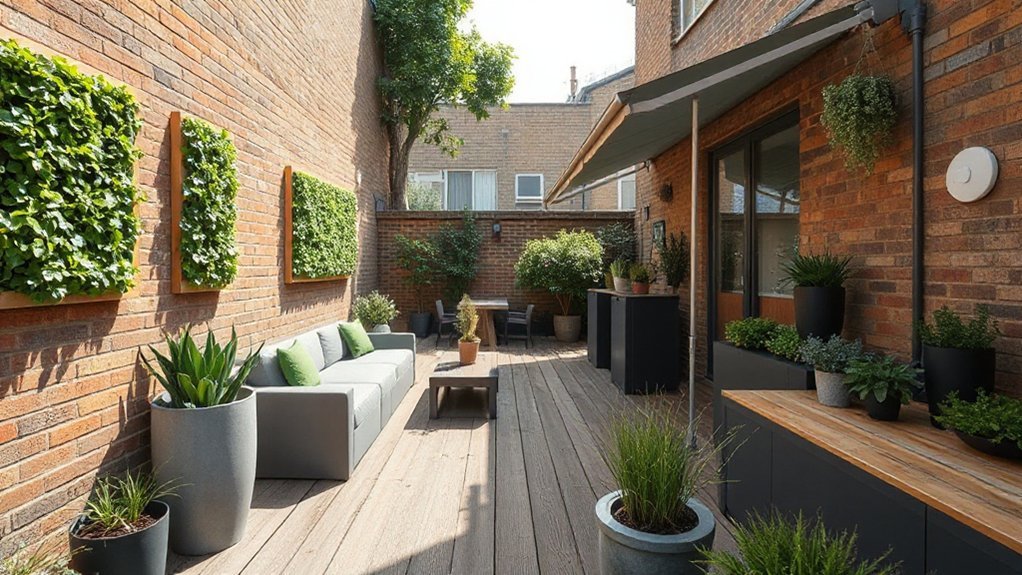
Vertical gardens are a smart way to reclaim tiny terraces, turning limited space into a lush, usable green wall. You can install lightweight panels or modular pots along a fence or railing, creating depth without crowding floor space.
Choose a drip irrigation kit to keep maintenance minimal and watering focused. Opt for a mix of compact, sun-loving varieties and shade-tolerant species to cover year-round interest.
Vertical gardens enable space optimization by layering textures—perfumed herbs at eye level, leafy greens below, and trailing ornamentals high up. Install a simple trellis or wall-mounted racks to guide growth and guarantee airflow.
Pair with smart planters that snap into place for easy rearrangement as light shifts. Keep paths clear and containers stable to maintain a tidy, expansive feel.
Use Multi-Functional Furniture for Mini Yards
Succeed with a small-yards mindset by choosing multi-functional furniture that bends space without crowding it. In a mini yard, select pieces that serve more than one purpose, so every inch earns its keep.
Think a slim console that opens to reveal extra seating, or a coffee table with built-in storage for cushions and tools, keeping surfaces clear. Opt modular seating you can rearrange for entertaining or solitude, and tables that fold away when not in use.
Burnished metals or pale woods read as spacious, while weatherproof finishes resist London drizzle. Prioritize lightweight frames to shift zones without effort.
Multi-functional furniture keeps walkways open, enhancing flow, and it doubles as mini yard storage. You’ll enjoy functional aesthetics without clutter.
Decking, Paving, and Drainage Solutions for London Rain
Smart decking and paving in London weather starts with drainage that actually works, not just looks good. You’ll design level surfaces with integrated falls and a permeable layer that channels water away from foundations.
Choose decking boards with anti-slip finishes and hidden fixings to keep joints tight during downpours. While paving uses a brushed finish to reduce slickness.
Plan edging that stops soil washback and consider a gentle gradient toward a rainwater plan to prevent pooling.
Weave in garden lighting to highlight textures after dark and to cue safe movement along damp paths.
For pest control, select materials and seals that deter pests without harsh chemicals.
Keep planting beds slightly raised to ease maintenance and improve drainage.
Zone Your Balcony for Dining, Lounging, and Growing
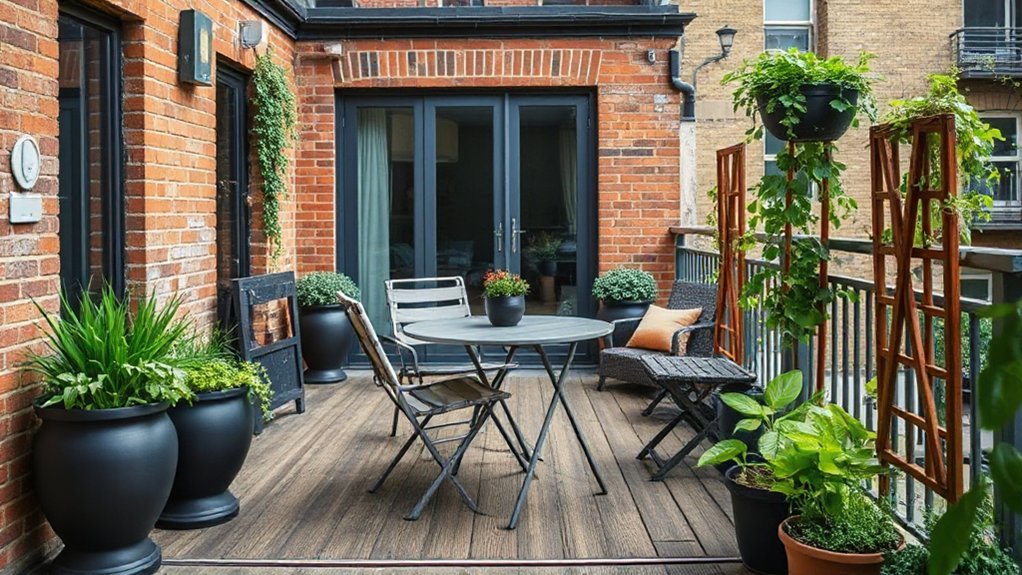
Balconies are small but mighty spaces, so start by clearly zoning areas for dining, lounging, and growing. You’ll create a natural flow by placing a slim dining setup along one edge, a cozy lounge nook with compact seating in the opposite corner, and a narrow planter run in between.
Use multi-functional furnishings, like fold-out tables and stackable chairs, to keep the footprint flexible. Define each zone with subtle cues: a rug under the seating area, a trellis or lattice for climbing herbs, and ambient outdoor lighting to guide movement after dark.
Prioritize balcony privacy with screen panels, tall planters, or a bamboo screen. Elevate mood and usability with curated lighting, task-friendly lamps, and weather-friendly textures.
Seasonal Planting Picks to Keep Months of Green
Seasonal planting picks keep your London balcony looking fresh from spring through winter, with a mix of compact perennials, seasonal greens, and low-maintenance containers. You’ll rotate textures and colors to maximize balance, using size-compatible plants that thrive in tight spaces.
Prioritize seasonal blooms for continuous interest, pairing early-spring bulbs with midseason flowering pansies and hardy herbs for scent. Choose plant diversity to create micro-ecosystems: drought-tolerant succulents beside leafy greens, or compact grasses with trailing vinca.
Implement vertical options like wall pots or railing planters to free floor space while adding depth. Label varieties for easy care, and tuck in a small pot for seasonal cuttings.
With thoughtful spacing, your balcony stays vibrant, organized, and usable throughout the year.
Budget-Friendly Upgrades That Deliver in Small Spaces
Small-space budgets don’t have to mean juggling compromises; with a few practical upgrades, you can dramatically boost function and style without breaking the bank. Start with vertical value: wall-mounted planters and trellises maximize green without stealing floor space, while multi-tier pots create depth and privacy.
Choose cost-effective enhancements like recycled materials for edging, simple rail planters, and adjustable shelves to flex as plants grow. For seating, opt for compact, foldable options that tuck beside a pot wall or balcony.
Light is a cheap ally: solar lanterns and string LEDs extend the charm into evenings. Water efficiently with a small, well-placed drip system or self-watering pots.
Finally, embrace compact gardening techniques that emphasize scale, rhythm, and cohesion rather than volume. Your London outdoor grows brighter, neater, and more usable.
Frequently Asked Questions
How Can I Shield Neighbors From My Small London Garden?
You shield your neighbors by adding garden design elements like tall, airy privacy screens and layered borders; plant screens and lattice panels create visual barriers, while seating and lighting maximize space, ensuring a practical, aesthetic, and spatially comfortable garden.
What Are Low-Maintenance Plants for Shady Balconies?
You should choose shade tolerant varieties and smart Plant combinations that maximize vertical space and visual calm. Think evergreen greens with low-growing blooms, water-smart concentrates, and container mix highlights to create practical, aesthetic, spatial balance on your balcony.
Can Smart Lighting Fit Into a Compact Terrace?
Yes: smart lighting fits a compact terrace. You’ll layer smart technology to shape outdoor ambiance, control brightness, color, and schedules, while keeping cables tidy and the space practical, aesthetic, and spatially balanced.
Which Irrigation Systems Suit Restricted Outdoor Spaces?
For restricted spaces, you’ll prefer drip irrigation and compact sprinkler systems. They minimize waste, fit narrow beds, and keep roots hydrated without oversaturation, delivering precise moisture while you maintain a neat, aesthetic, and spatially efficient garden.
How Do I Handle Noise and Privacy With Vertical Planters?
You’ll tame every whisper with vertical planters, using soundproof fencing and privacy screens. You’ll stack, shade, and subtly block sightlines, creating a practical, aesthetic rhythm—spatially efficient, so noise fades and privacy feels effortlessly luxurious.
Conclusion
With wit, you’ll weave wonder into a compact courtyard. Think vertical energy, smart storage, and stylish shade—all season, all sensor-ready. Soften skeptics with sustainable, south-facing schemes and drought-tolerant pops. Zone zones for dining, dreaming, and growing, then tuck in tidy, tactile touches: textures, terraces, and thoughtful lighting. Small space, serious style—savvy, sturdy, and sensational. You’ll transform tight London terraces into inviting, adaptable retreats that feel larger, livelier, and loved.
About the Author