
When you hire a builder, you should start with solid proof—licenses, insurance, permits, and a clear work history—to avoid costly surprises. You’ll want to verify each credential with the issuing body, confirm insurance coverage and bond status, and guarantee permits align with local codes. Then weigh past projects and client feedback with a critical eye. If inconsistencies pop up, you’re not done—there’s more to uncover before you commit, and the stakes aren’t trivial.
Verify Licenses and Insurance You Can Trust
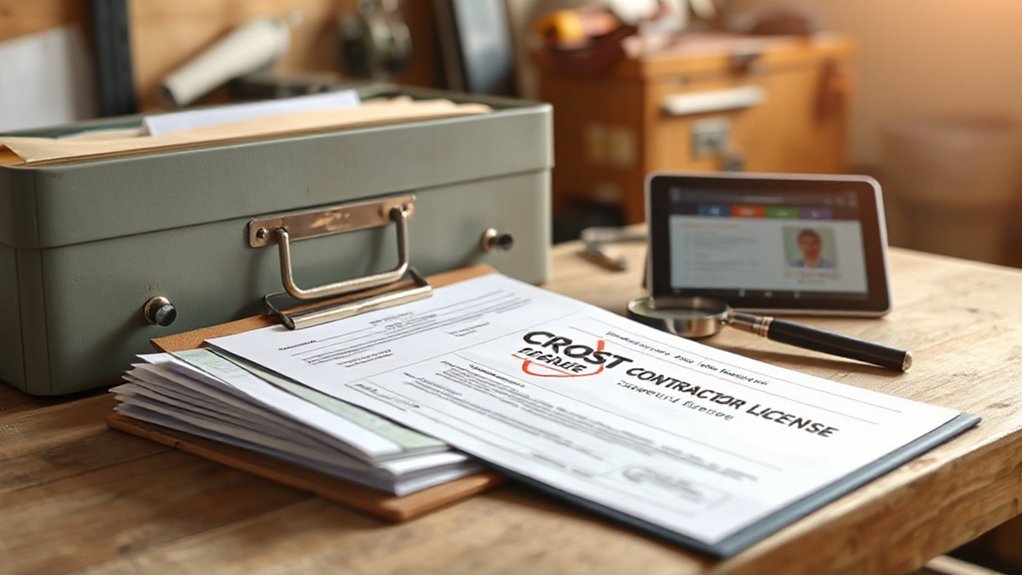
Before you hire, verify that the contractor’s licenses and insurance are valid and current. You’ll want documentation from official records, not promises on a brochure. Check license numbers with the state or local licensing board and confirm classifications, expiration dates, and any disciplinary actions.
Request current certificates of insurance for general liability and workers’ comp, then contact the insurer to confirm coverage and limits. Verify that coverage remains active during the project and inquire about subcontractors’ coverage.
Don’t overlook project-specific permits and approvals, including building permits that tie to the contractor’s license. A contractor with a solid reputation and transparent proof reduces risk, yet skepticism is warranted: cross-check dates, names, and policy numbers.
When in doubt, document findings to support your decision about contractor reputation and accountability.
Check Bonding and Financial Responsibility
How can you guarantee a builder’s financial reliability before committing? Start with verifiable measures: request proof of bonding coverage and a current financial statement. Check whether the bond is active, with the insurer’s contact for confirmation, and verify limits match project risk.
Look for economic red flags—recent bankruptcies, liens, or lawsuits—and ask for a detailed payment schedule and cash-flow projections. Compare bids for consistency in cost assumptions; significant deviations may signal hidden risks.
Demand industry-standard bonds (performance and payment) and confirm transferability if the project changes. Examine credit references from suppliers and subcontractors to gauge reliability.
Financial stability isn’t a chorus line; it’s a safeguard against interruptions, project overruns, and nonperformance—all essential to protecting your investment.
Assess Past Projects: Photos, Scope, and Client References
You should review past project photos for consistency with the stated scope and to spot missing details or quality gaps.
Check client references critically: ask about timelines, cost accuracy, and post-project support to separate brag from proven performance.
Use these signals to judge whether the builder’s claims align with real results.
Past Project Photos
Past project photos are your first hard look at a builder’s work, so don’t skim them. Visuals reveal consistency, finish, and care beyond glossy claims.
Look for clear progression across rooms and finishes, noting mismatches that hint at rushed scopes or subcontracting gaps. Scrutinize photo dates and project timelines; gaps may signal delays or scope creep.
Compare exterior shots for alignment with zoning, materials, and weatherproofing standards. Assess material quality by close-ups of joints, trims, and siding progression; chipped veneers or uneven caulking merit skepticism.
Seek evidence of post-completion details, like kickboards, sealants, and waterproofing tests, to gauge durability. Use photos to form hypotheses about workmanship, then verify with on-site measurements and references.
Photos support analysis, but they’re not substitutes for corroborated, objective documentation.
Client Reference Checks
Are past client references reliable indicators of a builder’s true performance, or do they hide gaps you’ll only notice after a project begins? You should treat references as data points, not guarantees.
Ask for multiple, independent references who completed similar scopes to yours. Probe for concrete details: how closely the project timeline matched initial estimates, whether the Budget estimation stayed within agreed limits, and if changes triggered cost or delay spikes.
Request verifiable outcomes, not polished narratives. Look for patterns: consistent on-site communication, documented change orders, and post‑completion support.
Cross-check references against publicly available project photos and the contractor’s portfolio to detect unreported deviations. Be wary of selective reporting; insist on final outcomes, not just progress milestones, to assess overall reliability.
Read Reviews With Your Critical Eye: Red Flags to Watch for
When evaluating reviews, don’t take every claim at face value; look for patterns and inconsistencies that reveal credibility or its absence. You’ll spot red flags that separate genuine feedback from manufactured praise or subtle manipulation.
Start by examining specificity: vague statements, extreme praise, or identical wording across reviews suggest coordination. Watch for timing: clusters of reviews posted in a short window can indicate bought opinions.
Consider reviewer history: anonymous or new accounts with a single review deserve skepticism. Look for corroboration across independent sources and photos, permits, or project details that match your scope.
Beware reputation pitfalls and review biases that color judgments—your goal is objective confirmation, not emotional reassurance. A disciplined approach reduces risk and strengthens your hiring decision.
Ask the Right Hiring Questions Before You Commit
Before you hire, ask targeted questions that reveal competence, reliability, and alignment with your project. You’ll want evidence, not vibes: ask for project-specific examples, timelines, and budgets, plus verifiable references.
Probe how they handle setbacks, change orders, and subcontractor coordination, and listen for concrete processes rather than gloss. Use interview techniques that test problem-solving and risk awareness, such as asking to describe a difficult on-site decision and the outcome.
Evaluate communication strategies by noting response time, clarity, and written follow-ups. Demand documentation: licenses, insurance, permits, and a formal scope of work. Be skeptical of vague assurances and inflated warranties.
Compare responses across candidates, prioritizing track record, transparency, and real commitment to your objectives rather than charming boilerplate.
Use This Practical Due-Diligence Checklist
To evaluate a builder credibly, use this practical due-diligence checklist as your backbone rather than impressions or promises.
Start with verified licenses and insurance, then confirm active status and coverage details to avoid gaps.
Check performance history through official records, dispute histories, and any settlement outcomes, not glossy brochures.
Inspect completed projects in person, note workmanship, timeliness, and any recurring issues.
Request a detailed, itemized estimate and a written contract outlining change orders, warranties, and payment schedules.
Contact prior clients and request candid references, validating contractor reputation beyond marketing claims.
Verify legal considerations, including liens, permits, and compliance with local codes.
Finally, assess financial stability and bonding status to mitigate risk, ensuring you aren’t left bearing costs.
Frequently Asked Questions
How Long Should a Builder’s License Be Active Before Hiring?
A builder’s license should be active for at least the project duration, plus a buffer. Verify current Building permits and Insurance coverage, check renewal history, and demand proof; beware gaps, misstatements, or lapse notices that suggest risk or noncompliance.
What Bonding Levels Are Considered Adequate for Residential Work?
Adequate bonding for residential work isn’t fixed; you should look for at least statutory minimums plus composites from insurance coverage and guarantees. Verify Building permits, insist on documented coverage, and demand updated records before you commit to any contractor.
How Many Past Projects Should You Review for Reliability?
You should review at least five to seven past projects for reliability, evaluating project timelines and material quality. You’ll want skeptical, evidence-based notes, comparing delays, budget overruns, and finishes to verify consistency before committing to a builder.
How Can You Verify Subcontractor Qualifications Independently?
You want to verify subcontractor qualifications independently, so perform background verification and reference checks, skeptically and evidence-based: scrutinize licenses, insurance, past project records, and site audits, noting inconsistencies, timelines, and verifier credibility before you commit.
What Red Flags in Contracts Indicate Hidden Costs?
Hidden fees often show up in vague Contract clauses, so you should scrutinize every line and demand specifics, transparency, and cap limits; if costs aren’t clearly defined, you’re right to push back—otherwise you risk surprise charges and disputes.
Conclusion
You’ve seen why careful due diligence matters, and the evidence backs it up: hiring a licensed, insured builder reduces project risk by up to 30% on average, with fewer lien disputes and change-order woes. Trust the process—verify licenses, insurance, and permits; review past work and client feedback with a skeptical eye; and ask pointed questions. If something feels off, walk away. A thorough, evidence-based approach protects your investment and outcomes far better than quick, superficial checks.
About the Author