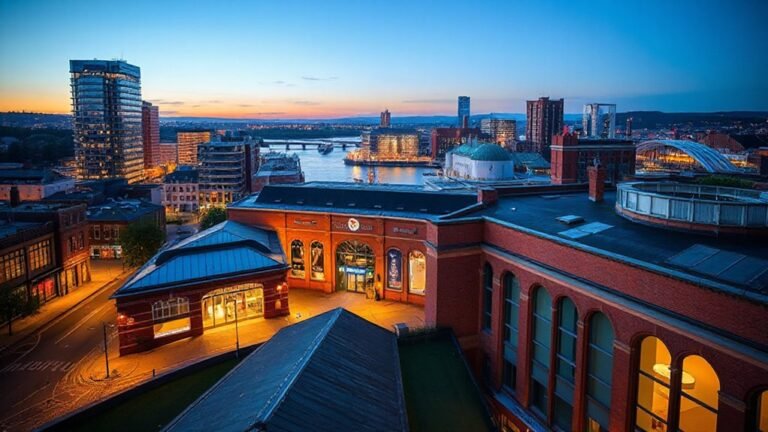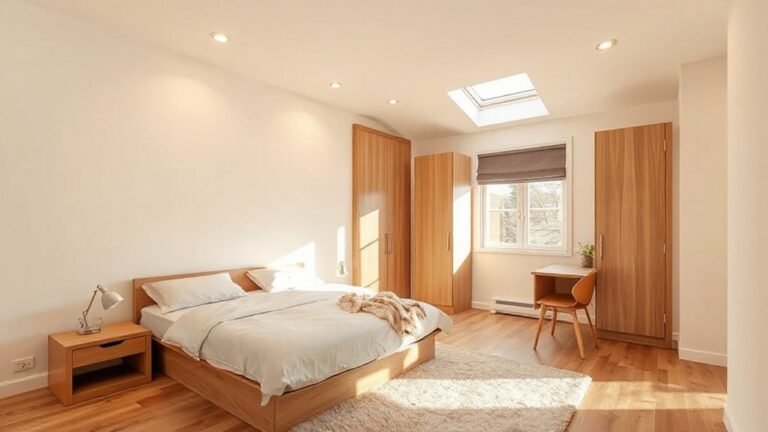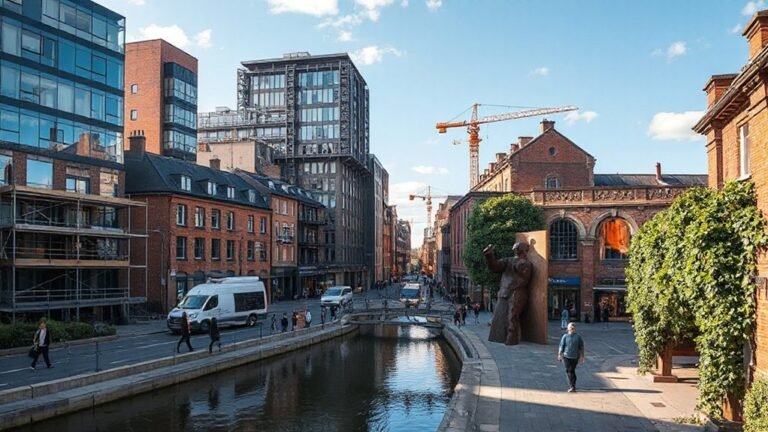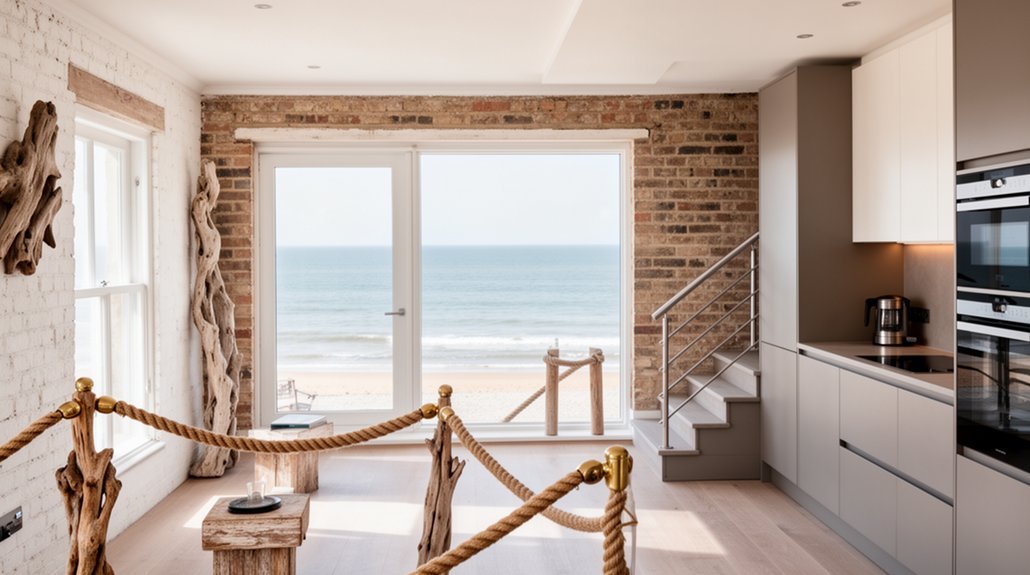
A Brighton coastal upgrade starts with a clear brief: maximize natural light, manage moisture, and deploy durable, sea-tested finishes. Map layouts for airflow, cross-ventilation, and sightlines to reduce glare while boosting comfort. Select marine-grade substrates, airtight seals, and corrosion-resistant HVAC, paired with smart controls for humidity and energy recovery. Plan storage with hidden, modular systems, and choose finishes that echo sea tones yet withstand salt spray. If you keep reading, you’ll reveal practical steps to implement these concepts.
Define Your Brighton Coastal Upgrade Goals
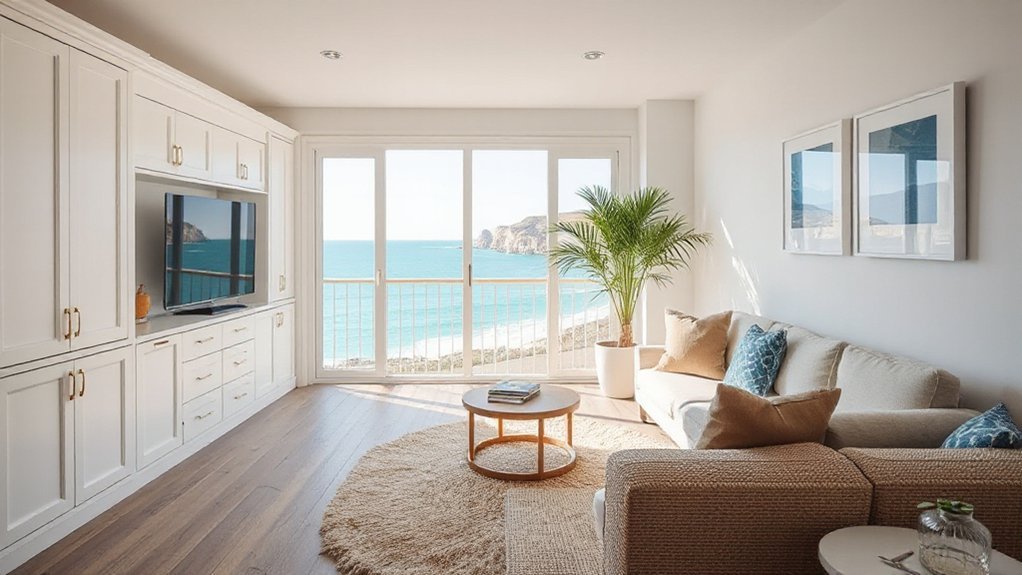
To define your Brighton coastal upgrade goals, start by clarifying what matters most to you—natural light, sea views, moisture control, or low-maintenance finishes—and translate these priorities into measurable criteria (square footage, energy targets, material durability).
You’ll map these targets to a practical brief, identifying performance benchmarks, budget bands, and decision gates.
Focus on how ocean breeze interacts with enclosure ratings, humidity control, and ventilation strategies, ensuring that every objective aligns with resilience against coastal exposure.
Translate aesthetics into seaside decor concepts that withstand salt, wind, and UV without compromising function.
Document acceptance criteria for finishes, coatings, and fixtures, then assign responsibility for validation at milestones.
Your goals become the standard against which every design choice and supplier quotation is evaluated.
Assess Layout, Light, and Airflow in Your Brighton Flat
Evaluating layout, light, and airflow starts with a precise map of how space will be used and how air moves through it. You’ll chart zones for living, dining, and work, noting doorways, sightlines, and thermal choke points.
Assess natural light by tracking sun paths across walls and windows, then identify glare and shading needs.
Airflow follows the building’s ventilation logic; map supply and return paths, cross-ventilation potential, and how coastal breezes enter at different heights.
Prioritize architectural symmetry in room proportions and furniture placement to reduce visual clutter and improve circulation.
Use color coordination to reinforce zoning and create perceived brightness.
Document findings, then test adjustments with small-scale layouts before committing, ensuring changes support consistent comfort, efficiency, and coastal living practicality.
Prioritize Moisture Control and Sea-Air Materials
In coastal Brighton, you’ll prioritize moisture control from the start to safeguard structure and occupant comfort. You’ll leverage sea-air materials that resist corrosion and manage humidity, reducing long-term maintenance and mold risk.
Moisture Management Basics
Sea-air conditions can accelerate moisture challenges in coastal apartments, so start by prioritizing proactive moisture regulation and materials designed for humidity.
You’ll implement a structured approach: monitor humidity levels, select breathable substrates, and pair them with robust ventilation strategies.
Humidity management hinges on steady air exchanges and moisture-tolerant finishes, while ventilation systems should be sized to the space and run with simple controls.
Prioritize continuous drainage paths and condensation mitigation at windows and interfaces.
Use dehumidification where needed, and seal vulnerable joints to prevent latent infiltration.
Regular inspections reduce mold risk and preserve finishes.
As you upgrade, document readings, system performance, and maintenance schedules to ensure long-term stability, comfort, and indoor air quality.
- Humidity regulation targets and monitoring
- Ventilation systems sizing and efficiency
- Moisture-tolerant materials selection
- Continuous drainage and condensation mitigation
- Regular inspection and maintenance cadence
Sea-Air Material Benefits
Sea-air environments mandate materials that resist moisture while preserving indoor comfort. Selecting sea-front–suitable substrates reduces capillary rise, capillary moisture transport, and condensation risk. You’ll prioritize moisture control through sea-air materials engineered for coastal humidity and salt spray.
Choose marine grade substrates with proven moisture resistance and dimensional stability to maintain envelope performance. Opt for corrosion resistant fasteners and coatings to extend service life without compromising interior air quality.
Consider vapor-permeable yet moisture-evaporative assemblies that balance drying potential with thermal comfort, preventing mold growth and odor buildup. Surface finishes should resist salt deposition while allowing easy maintenance.
Align with standards for marine exposure, ensuring long-term durability. By selecting appropriate materials, you reduce remediation costs and sustain a stable, comfortable living environment near Brighton’s coast.
Smart Storage Solutions for Small Seaside Spaces
Smart storage is essential in compact coastal homes, where every inch counts and salt air can threaten durability. You’ll optimize tiny rooms by prioritizing accessible hidden compartments and multi functional furniture that blends form with efficiency.
Use wall-mounted options to free floor space, and select beds or sofas with built-in drawers. Opt for slim, moisture-resistant materials and avoid protruding hardware.
Labelled units simplify rotation of seasonal items, while vertical shelving captures high storage value without crowding your view. Consider modular systems that reconfigure as needs shift, maintaining a clean aesthetic under glare from coastal light.
Pair contrasting finishes with concealed fasteners to reduce visual clutter.
- Hidden compartments
- multi functional furniture
- Wall-mounted storage
- Slim moisture-resistant materials
- Modular reconfigurable systems
Energy Tweaks for Coastal Living in Brighton
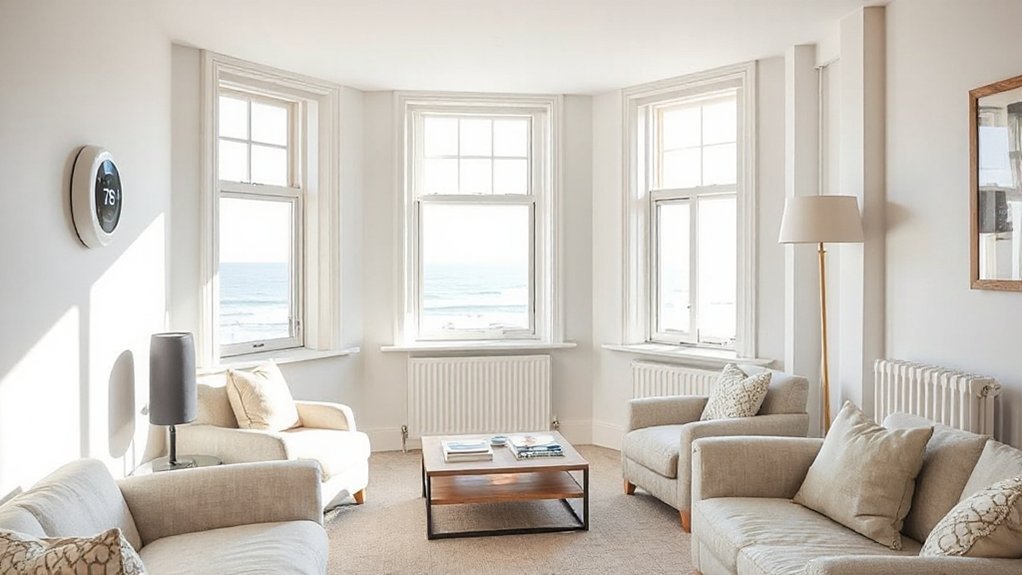
You’ll assess coastal insulation tactics to minimize heat loss while resisting salt-induced degradation, ensuring steady comfort year-round.
We’ll balance airtightness with breathable envelope details to capitalize on passive gains without trapping moisture.
Coastal Insulation Tactics
- Use high-performance mineral wool with airtight yet breathable membranes.
- Seal joints with Marine Barrier-rated tapes to deter salt ingress.
- Install continuous exterior insulation on windward elevations.
- Choose vapor-permeable, salt-tolerant membranes behind claddings.
- Integrate windproof barriers at window perimeters to minimize drafts.
Salt-Air Energy Efficiency
Salt-air environments demand energy strategies that respect both performance and durability. In Brighton, you’ll optimize systems to resist salt spray corrosion while maintaining efficiency.
Prioritize high-performance insulation with low-chemical emissions, and pair it with airtight, yet breathable, building envelopes to limit moisture migration without trapping pollutants.
Choose HVAC components rated for coastal climates, featuring corrosion-resistant coatings and easily serviceable filters to sustain air quality.
Use sealed ductwork and energy recovery ventilation to reclaim heat while supplying fresh air, reducing energy loss from infiltration common near shoreline properties.
Apply smart controls that adapt to humidity swings and outdoor salinity, preventing over-conditioning.
Document maintenance cycles focused on condensate management and filtration integrity to preserve long-term performance and air quality.
Coastal Wet Room and Bathroom Upgrades
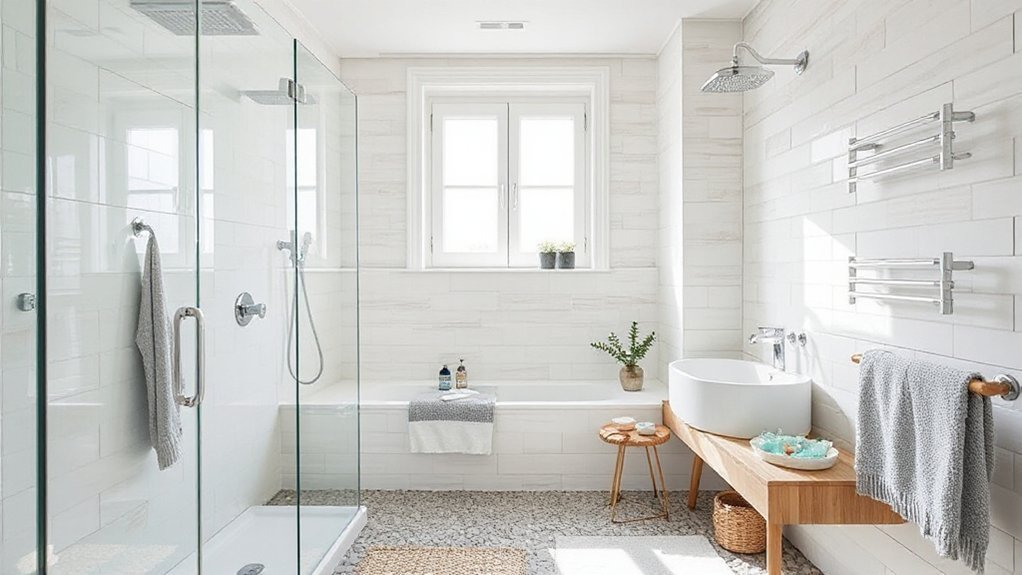
Coastal wet rooms and bathrooms in a Brighton apartment demand robust moisture management and durable fixtures designed to withstand salt-laden air. You install high-grade waterproofing, corrosion-resistant fittings, and vented enclosures to prevent mould and humidity buildup.
Opt for slip-resistant tiles, low-maintenance grout, and sealed edge profiles to minimize ongoing upkeep. Prioritize energy-efficient extraction and intelligent controls to balance comfort with moisture control.
Incorporate marine inspired fixtures and sea glass accents to achieve a cohesive seaside aesthetic without compromising performance. Choose non-porous surfaces and easily cleanable seams to simplify maintenance, and plan for accessible drainage and robust seals around doors and thresholds.
Your upgrades should combine reliability with a refined, coastal-leaning look that endures.
- Marine inspired fixtures
- Sea glass accents
- Weather-resistant cabinets
- Anti-microbial surfaces
- Efficient exhaust solutions
Finishes and Colors That Echo Brighton’s Vibe
Brighton’s seaside character is best reflected in finishes and colors that blend maritime influence with modern durability. You’ll choose materials and tones that resist humidity while conveying coastal mood, balancing grain, texture, and light reflectance.
Start with Seaside palettes that pair airy neutrals with sea-glass greens and weathered blues, then layer tactile surfaces—matte tiles, honed stone, and oiled woods—for depth.
Nautical accents should punctuate rather than overwhelm: slim brass hardware, rope-inspired detailing, and marine-grade textiles in restrained patterns.
Consider epoxy or porcelain planks that mimic driftwood but endure wet air, and lime-washed walls for soft luminosity.
Maintain contrast through trim and cabinetry in darker blues or charcoal, ensuring continuity with coastal views.
Always test color under natural light before finalizing, evaluating glare and aging effects.
Plan Budget, Permits, and Timeline for Your Coastline Renovation
To plan a successful coastline renovation, start with a clear budget, a realistic permit map, and a pragmatic timeline. You’ll align costs with scope, identify contingencies, and set measurable milestones to protect schedule and quality.
Track the permit process early, anticipating council reviews, inspections, and potential constraint windows. Build in regulatory buffers for coastal codes, environmental constraints, and structural checks to avoid delays.
- Budget planning: itemize trades, contingencies, and VAT to prevent overruns
- Permit process: map approvals, fees, and required documentation
- Timeline: define phases, milestones, and critical path
- Risk management: assess coastal exposure, weather windows, and supply delays
- Documentation: maintain versioned plans, change orders, and permit logs to stay audit-ready
Frequently Asked Questions
How Does Sea Air Affect Paint and Varnish Durability in Brighton?
Sea air accelerates salt corrosion on metal fittings and degrades paint and varnish through moisture-driven film failure; you’ll notice chalking and blistering. Monitor air humidity, use moisture-resistant coatings, and seal gaps to minimize salt and humidity impacts.
What Moisture Risks Are Unique to Brighton Coastal Flats?
Coastal Brighton flats face unique moisture risks: elevated humidity concerns coupled with salt corrosion, which can accelerate wood rot and metal degradation. You should monitor humidity, seal joints, employ corrosion-resistant materials, and guarantee proper ventilation to protect substrates.
Which Local Permits Apply to Apartment Renovations in Brighton?
You’ll need to check local Building codes and noise restrictions for Brighton apartment renovations; comply with planning and permitting requirements, neighbor notifications, and licensed contractor rules to avoid delays and fines. Coordinate reviews, inspections, and documented compliance throughout the project.
How Can I Maximize Natural Light Despite Seafront Shading?
Maximize natural light by prioritizing sunlight optimization and thoughtful window placement; choose larger, strategically angled windows, consider light shelves, and mirror-enhancing interior layouts. You’ll reduce shading impact from the seafront and brighten rooms throughout daylight hours.
What Budget Contingency Is Typical for Coastal Renovations in Brighton?
A typical budget contingency for coastal renovations in Brighton is about 10–15% of total costs. You’ll account for interior color schemes and flooring material choices, adjusting for weather-related overruns and supply delays, while maintaining project continuity and quality.
Conclusion
You’ve mapped a thoughtful upgrade path for a Brighton coastal flat, balancing moisture control, light, and clever storage with seaside finishes. As you implement, track a key stat: coastal homes save up to 15–20% more energy when airtight in combination with efficient ventilation and heat recovery. That visualization—air exchanges versus humidity control—drives decisions. Stay disciplined on permits and timelines, but stay flexible for maritime weather. Your refreshed space will feel brighter, healthier, and more resilient against sea air.
About the Author