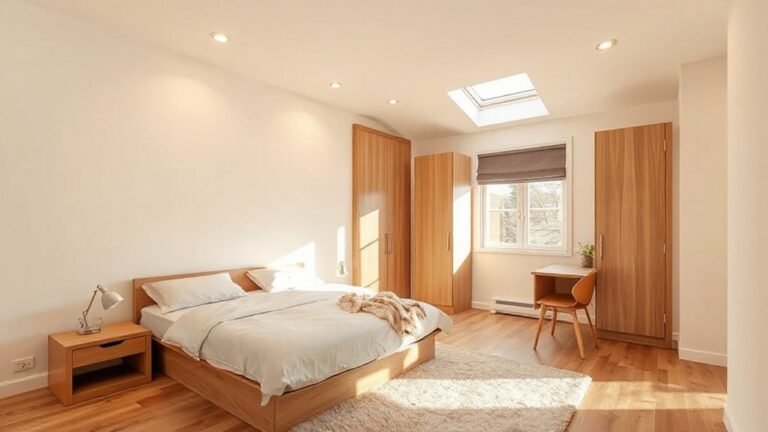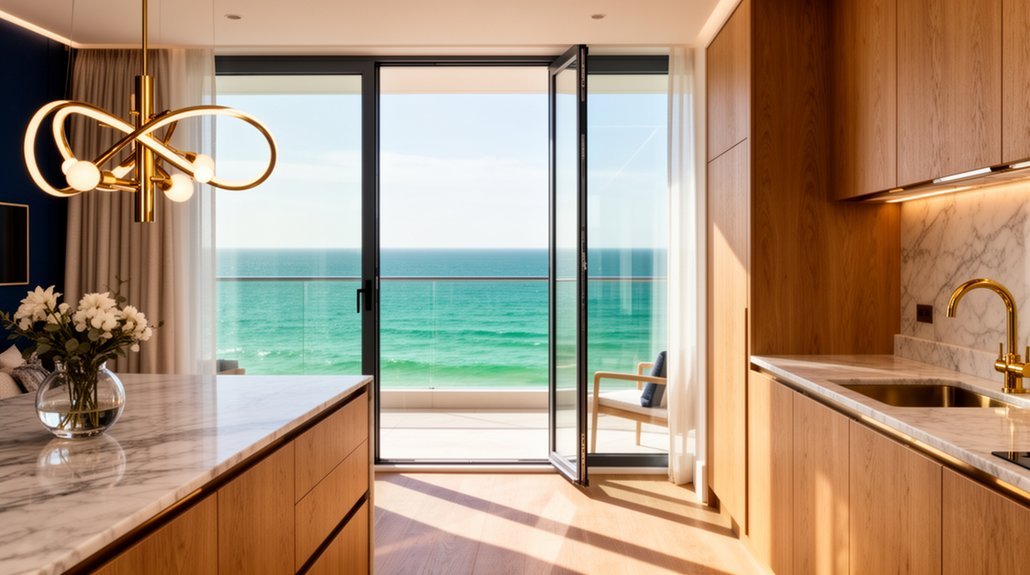
You can craft a seafront Bournemouth renovation that blends precise material choice with resilient coastal detailing for a low‑maintenance, frame-tight home that shines in salt air and bright seascapes. Prioritize durable alloys, coatings, and non-porous finishes, then couple with sound sealing, mass‑loaded acoustics, and moisture‑resistant interiors. Create open-plan waterfront living with seamless indoor–outdoor flow, thermally broken glazing, and level-access balconies. Organise storage to stay clutter-free, and treat lighting, palette, and coastal furniture as integral architecture—there’s much more to optimize.
What Makes a Seafront Bournemouth Home Feel Luxurious
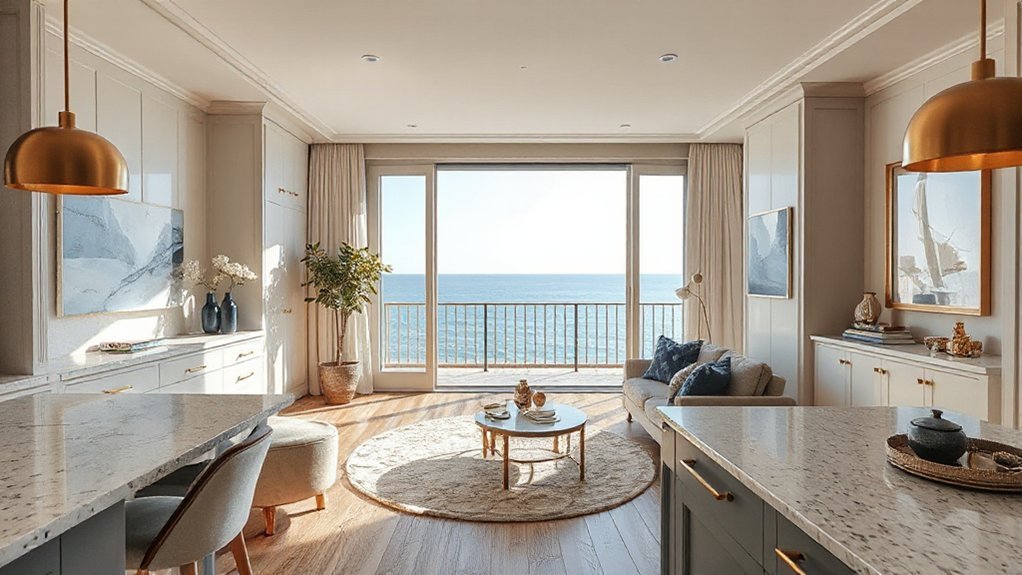
A luxurious seafront home in Bournemouth articulates itself through a precise blend of design intentionality and material quality. You assess space by sequence, prioritizing circulation, sightlines, and tactile certainty. Seafront views anchor spatial hierarchy, guiding window placement, glazing performance, and frame detailing to reduce glare while maximizing daylight.
You select materials with proven dimensional stability against humidity and salt exposure, pairing warm textures with cool finishes to evoke calm luxury. Acoustic control is non-negotiable: you implement continuous sealing, resilient underlay, and targeted damping to preserve quietude amid coastal activity.
Climate performance informs envelope design, balancing natural ventilation with retentive insulation. You guarantee lighting integrates with ocean light—dynamic, color-consistent, and controllable. Coastal breeze is acknowledged in operable shading and low-profile sun traps, sustaining comfort without compromising exterior connection.
Bournemouth-Ready Materials That Withstand Salt Air
To withstand Bournemouth’s salt-laden air, choose materials with proven corrosion resistance, low moisture absorption, and stable dimensional performance. You’ll prioritize salt resistant materials that perform reliably in marine climates, minimizing maintenance cycles and long-term costs.
Favor alloys and composites with superior galvanic protection, plus coatings engineered for coastal exposure. When selecting substrate and fasteners, match hardness and expansion coefficients to reduce micro-cracking and joint degradation.
For surfaces, opt for non-porous, chemically resistant finishes that resist salt spray and humidity fluctuations. Exterior cladding should deliver coastal durability without excessive weight, enabling structural longevity.
Interiors benefit from sealed, inert materials that resist moisture ingress and salt deposition. Pair glass, metal, and stone choices with proven performance data for predictable, durable aesthetics.
Open-Plan Living for Waterfront Calm
Open-plan living at the waterfront hinges on deliberate spatial zoning and material restraint that preserve calm while maximizing light and flow. You design zones with clear sightlines, using low partitions, rugs, and ceiling cues to guide movement without interrupting openness.
Choose a restrained palette—soft neutrals, matte textures, and subtle reflective surfaces—to maintain seafront ambiance while reducing visual clutter. Furnishings stay compact and modular, enabling adaptable layouts for entertaining or quiet work, with tech concealed to sustain uninterrupted views.
Lighting should sweep across tasks and horizons, emphasizing horizon lines and coastal serenity after dusk. Consider acoustic dampening for conversation zones without isolating the space.
Windows and doors frame the outside, extending air and sea color into the interior, reinforcing a seamless, tranquil environment.
Kitchen Upgrades: Premium Finishes With Ocean Views
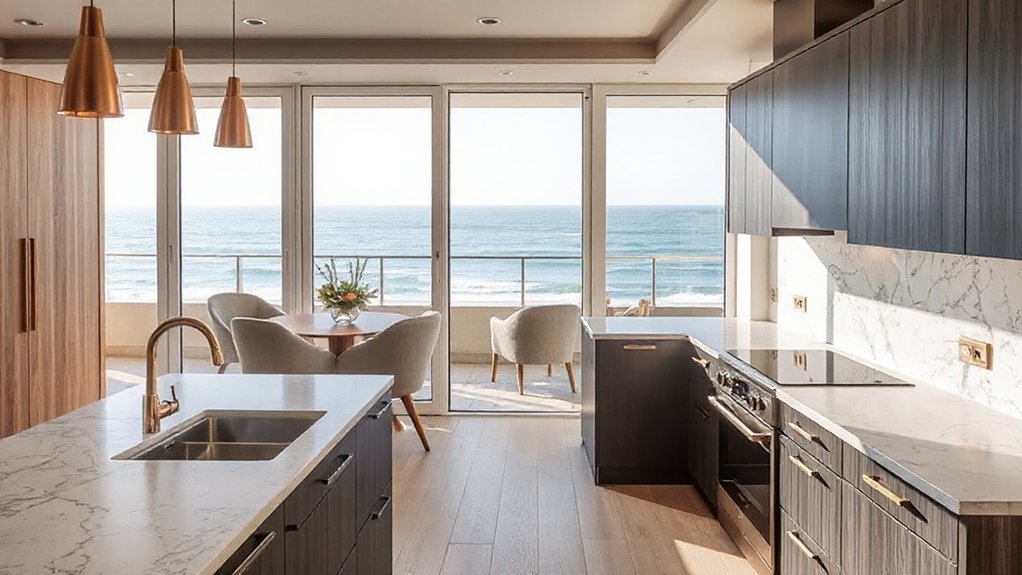
As you elevate the kitchen with premium finishes, ocean views become inseparable from daily function. You’ll select durable, low-maintenance materials that resist salt air and fingerprints, prioritizing seamless integration with the seafront aesthetic.
Install thermally efficient cabinetry with soft-close hardware and dovetail joints to guarantee longevity under coastal conditions.
Countertops should balance resilience and luxury; consider quartz or high-grade stone with natural veining that echoes sea glass tones.
Lighting must be layered: recessed task lighting paired with adjustable under-cabinet fixtures to enhance view and texture.
Finishes should incorporate sea glass hues and matte textures to reduce glare while sustaining elegance.
Integrate coastal greenery accents through planters that tolerate humidity, reinforcing a fresh, breathable atmosphere without clutter.
Prioritize ventilation and access for easy cleanup after al fresco dining.
Bespoke Storage for a Clutter-Free Seafront Home
Custom wardrobe architecture defines how you allocate space behind doors and within alcoves to maximize storage without sacrificing sightlines.
Hidden cabinet solutions streamline clutter by concealing infrequently used items while preserving accessible, everyday reach.
Together, these approaches establish a polished, seafront-ready system that supports a clutter-free lifestyle.
Custom Wardrobe Architecture
Your approach prioritizes modular components, allowing flexible reconfiguration as wardrobes expand with seasonal needs. Custom wardrobe solutions incorporate breathable, non-warping materials and gasketed joinery to minimize environmental impact from coastal humidity.
You specify silent-running hardware, soft-close tracks, and recessed lighting to preserve sightlines while highlighting textiles and hardware. Bespoke storage focuses on zoning: accessible daily wear, formal pieces, and seasonal overflow are segregated yet visually cohesive.
Integrate mirrored surfaces judiciously to amplify light without creating glare on the seafront. This disciplined framework delivers tidy, enduring storage aligned with coastal living ideals.
Hidden Cabinet Solutions
Hidden cabinets extend the logic of modular wardrobe systems into concealed, clutter-free storage tailored to seaside living. You implement Hidden Cabinet Solutions to maximize space without compromising views or finishes.
Prioritize hidden compartments that blend with wall panels, doors, or structural alcoves, ensuring seamless integration with existing decor. Concealed shelving should be rated for humidity and salt exposure, using corrosion-resistant hardware and seals.
Choose push-to-open or magnetic latch mechanisms to maintain a clean aesthetic while preserving accessibility. Configurations might include pull-out hampers behind trim, retracting desktops, and hidden wine storage within cabinetry.
Consider lighting integrated into inner shelves for ease of use at night. Document installation tolerances to avoid misalignment with window frames and sills, maintaining a pristine seaside look.
Ocean-Ready Bathrooms: High-End Fixtures and Surfaces
You’ll explore spa-grade fixtures and marble-driven surfaces that elevate oceanfront living with durability and premium aesthetics.
Precision in material selection guarantees corrosion resistance, seamless maintenance, and a cohesive high-end bathroom narrative.
This discussion starts with the balance of performance and luxury, focusing on enduring finishes that endure Bournemouth’s maritime climate.
Spa-Grade Fixtures
Looking to transform a seafront bathroom into a spa-grade retreat? You’ll select spa-grade fixtures that emphasize marine integrity and longevity. Prioritize corrosion-resistant components, like brushed stainless steel, solid brass, and treated ceramics, to withstand sea air.
Choose concealed fittings to minimize grout joints and streamline cleaning, ensuring a pristine, hygienic environment. Calibrate water flow and pressure with thermostatic faucets for safe, consistent operation.
Integrate energy-efficient systems, such as dual-flush toilets and low-flow showerheads, to balance luxury with sustainability. The result is an ocean-ready bathroom that reads as a luxury spa, where every fixture reinforces calm, control, and durability.
- Seamless, wall-metted controls for a drug-free, clutter-free profile
- Corrosion-resistant, marine-grade bathroom fixtures
- Thermostatic valves delivering precise warmth
- Hidden-tile passages and frameless glazing for visual calm
Marble-Driven Surfaces
Prioritize dense, low-porosity varieties to minimize staining from toiletries and sunscreen; sealers should be suitable for marine conditions and reapplied per manufacturer guidelines.
Edges and profiles matter: opt for softened or eased edges to reduce chipping risk in high-traffic zones. Install integrated surfaces where possible to eliminate seam vulnerabilities near wet areas.
Pair marble countertops with complementary vitrified tiles or mica-rich finishes to balance translucence and slip resistance.
Maintenance requires a routine wipe-down, immediate spill management, and periodic professional honing to preserve luster and structural integrity.
Layered Coastal Lighting for Mood and Durability
Layered coastal lighting combines function and atmosphere to suit a seafront apartment, ensuring both mood and durability. You purposefully mix ambient, task, and accent layers to control glare, reflections on glass, and ocean-view shadows. Use dimmable LEDs, corrosion-resistant fixtures, and moisture-rated seals to maintain longevity.
Place uplights behind architectural features for depth, and counterbalance with warm task lighting near seating to reduce fatigue. Layered lighting supports day-to-night shifts, preserving mood durability through weather-driven humidity and salt exposure.
A coordinated control system maintains consistent color temperature while responsive sensors adjust brightness with natural light changes. Regular maintenance of seals, lenses, and drivers prevents lumen depreciation and corrosion, keeping aesthetic integrity intact while maximizing energy efficiency.
- Ambient layering with hidden coves for soft glow
- Task-focused LED strips at counters and desks
- Accent fixtures highlighting textures and views
- Smart controls for adaptive, durable illumination
Color Story: Soft Sands, Deep Ocean, and Metallic Accents
You’ll establish a color foundation with Soft Sand hues as the calm base. Then reinforce depth using Deep Ocean accents.
Pair these with Metallic Shine details to introduce precise highlights and reflective texture. This triad creates a cohesive palette that anchors luxury while allowing material and form to take center stage.
Soft Sand Hues Palette
The Soft Sand Hues Palette blends warm neutrals with oceanic depth to create a cohesive backdrop for a seafront apartment. You’ll harness this scheme to balance light-filled rooms with grounded, tactile materials, achieving seaside serenity and coastal comfort.
Subtle variations in sand, taupe, and ivory read as layered neutrals, while hints of metallic accents add refinement without glare. The palette supports both natural textures and modern fixtures, ensuring timeless appeal when paired with architectural features like expansive glazing and coastal timber.
You optimize lighting with warm-temperature LEDs to preserve the warm undertones, avoiding harsh contrasts. This approach delivers a quiet, refined aesthetic that elevates views rather than competing with them.
- Warm neutrals meet oceanic depth for versatile canvases
- Textured surfaces echo sandy coastlines with refined tactility
- Metallic accents provide measured sophistication
- Lighting choices preserve seaside serenity and coastal comfort
Deep Ocean Accents
Use performance materials in high-traffic areas to sustain coastal exposure, pairing them with matte surfaces to reduce glare. The result is a technical, cohesive scheme: restrained color, purposeful contrast, and refined details that elevate the seafront experience without dominating it.
Metallic Shine Details
- Satin-bronze hardware accents
- Mirror-polished faucet fixtures
- Brushed steel cabinet fronts
- Copper-toned trim details
Seamless Indoor-Outdoor Flow: Windows, Doors & Balconies
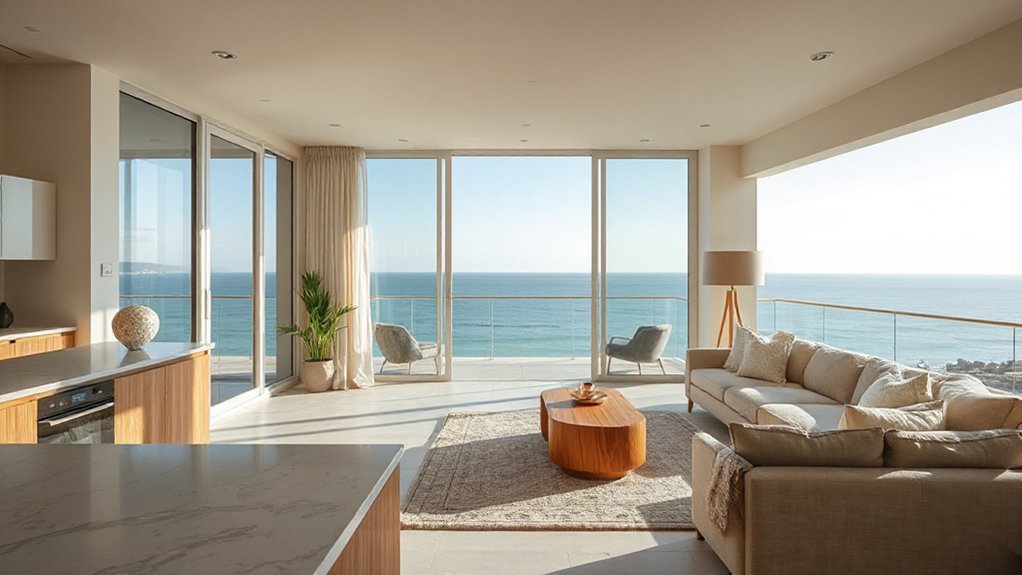
To achieve a seamless indoor–outdoor flow, the focus is on maximizing light, access, and sightlines through carefully selected windows, doors, and balcony configurations. You optimize glass-to-wall ratios, employ thermal breaks, and pair low-profile frames with continuous floor levels to eliminate thresholds.
Elevate operation by choosing multi-panel sliders or fold-away systems that partition rooms without interrupting sightlines. Strategic placement of operable windows enables cross-ventilation while preserving solar gain in winter.
Balcony connections should be designed for effortless access, with level thresholds and concealed drainage to maintain clean lines. Incorporate window treatments that complement the architecture without obstructing views, and select balcony furniture that resists coastal corrosion while promoting flexible seating.
This approach sustains a cohesive, high-performance aesthetic throughout the living spaces.
Luxury Yet Durable Flooring for Seafront Living
You’ll evaluate durable flooring materials that withstand seaside humidity and foot traffic without compromising luxury.
Consider sea‑slip–resistant surfaces that maintain grip while preserving aesthetic appeal, and prioritize options with proven performance in coastal environments.
Balance luxury with low maintenance to guarantee long‑lasting beauty and practical resilience for seafront living.
Durable Flooring Materials
Durable flooring for a seafront luxury flat must combine resilience with refined aesthetics, resisting salt spray, sand, and high foot traffic while maintaining a quiet, upscale ambiance. You benefit from materials engineered for coastal environments, focusing on long-term performance and ease of maintenance.
Prioritize eco-friendly materials and sustainable flooring options that minimize environmental impact without sacrificing strength or appearance. Look for seals, wear layers, and moisture resistance that address humidity, salt air, and frequent cleaning.
Choose understated textures and color palettes that hide wear while amplifying natural light. Balance practical durability with sophisticated finishes to preserve a refined, luxurious feel over time.
- Solid engineered wood with protective top layer and low gloss finish
- Enhanced limestone-look porcelain tile with slip resistance
- Recycled composite luxury vinyl plank with UV stability
- Concrete-inspired microtide polished concrete underlayment
Seaside Slip-Resistant Surfaces
Seaside environments demand flooring that combines grip with understated luxury, and slip resistance is non-negotiable for a seafront residence. You’ll prioritize Seaside slip resistant surfaces that maintain traction under wet or sandy conditions while preserving a refined aesthetic.
Choose textures and profiles that reduce glare and cover expanse without sacrificing comfort underfoot. Consider grout stability, slip ratings, and wear resistance suited to coastal humidity and salt exposure.
Installations should feature anti-slip ceramic, textured porcelain, or polymer composites with embedded aggregate for durable traction. Pair with seamless progressions between interiors and terraces to minimize trip hazards.
Documented Coastal safety features—drainage efficiency, channelized moisture paths, and compliant surface finishes—reinforce risk mitigation. Your selection should balance performance with visual coherence, ensuring long-term reliability in fluctuating seaside environments.
Luxury Yet Low Maintenance
Choosing flooring for a seafront home requires a balance of durability and ease of maintenance, so select materials that resist moisture, salt exposure, and daily wear while preserving a refined aesthetic. You’ll prioritize options that perform under coastal humidity, yet stay visually understated to suit minimalist decor. Look for water-resistant cores, factory-applied finishes, and tight-grain textures that hide scuffs.
Eco-friendly finishes reduce VOCs without compromising longevity, while engineered solutions resist warping from temperature swings. Prioritize consistency in tone and grout that cleans easily. The result is a luxurious, low-maintenance surface that ages gracefully, supporting ongoing coastal living.
- Matte, low-sheen planks with a subtle grain that echoes driftwood
- Textured, slip-resistant surfaces for safe, coastal foot traffic
- Mineral-based or recyclable composite boards with stable dimensions
- Seamless or minimal-grout installations for ease of care
Statement Textures: Marble, Concrete, and Textured Plaster
Marble, concrete, and textured plaster establish a strong tactile language for a seafront apartment, signaling durability, luxury, and a refined material hierarchy. You’ll leverage statement textures to articulate space, guiding perception through surface grain, density, and finish.
Marble delivers cool luminosity and subtle veining, creating formal contrast against darker, matte substrates. Concrete provides weight and industrial tactility, anchoring open plans without compromising elegance. Textured plaster introduces depth, catching light and shadow to enhance architectural rhythm.
Use material contrast deliberately: pair polished stone with raw concrete for dynamic holographic shifts, and deploy plaster texture to soften transitions between zones. Maintain consistency in grout, seam precision, and edge detailing to sustain a high-end cadence.
The result is a curated, durable palette that elevates seafront living while remaining practical.
Smart Home Systems for Seafront Living
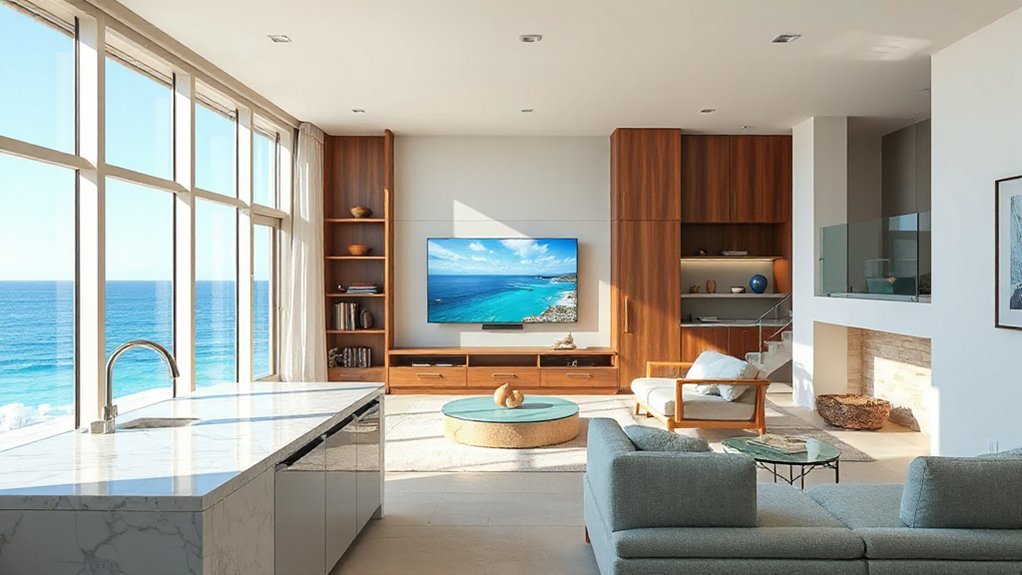
- Robotic window shading responding to sun angle and wind
- Coastal-grade sensors monitoring humidity, salinity, and temperature
- Centralized dashboard for cross-room automation
- Automated scene presets aligning mood, light, and ventilation
Soundproofing and Privacy for Premium Bournemouth Homes
Soundproofing and privacy are essential for premium Bournemouth homes, where seawind and urban noise can intrude on comfort and focus. You implement targeted soundproofing techniques to minimize transmission paths between rooms and from exterior facades, selecting mass‑loaded vinyl, decoupled drywall, and acoustic seals.
Build assemblies with airtight envelopes, vibration isolation, and resilient channels to reduce impact and structure‑borne noise. Consider floor‑ceiling overlays and floating subfloors in high‑activity areas to curb footfall disturbances.
For privacy enhancement, optimize acoustic zoning, strategic door seals, and privacy glazing in shared spaces, paired with transparent, noise‑absorbing partitions where visuals remain important. Integrate smart controls to adjust acoustic profiles by time and occupancy, ensuring consistent sound quality while preserving daylight and ambience.
Custom Cabinetry for Wet Environments
How should you approach cabinetry designed for wet environments in premium seafront homes? In this context, you specify materials and finishes that perform under humidity, salt, and splash zones. Opt for marine grade finishes and hardware rated for corrosion resistance, and select humidity resistant cabinetry with tight seals and vapor barriers.
Use cabinetry that integrates with moisture-control strategies—dripless seams, chamfered edges, and recessed pulls to minimize water ingress. Prioritize low-maintenance surfaces that clean easily without dulling.
Guarantee proper ventilation and airflow behind units to prevent mildew. Your design should balance aesthetics with durability, preserving luxury appeal while withstanding coastal challenges.
- A sleek, humidity-friendly vanity befitting premium bathrooms
- Cabinets with sealed joints and smooth, easy-clean surfaces
- Corrosion-resistant hardware that glides quietly
- Hidden ventilation channels for continuous airflow
Outdoor-Indoor Living: Balconies, Breeze, and Coastal Furniture
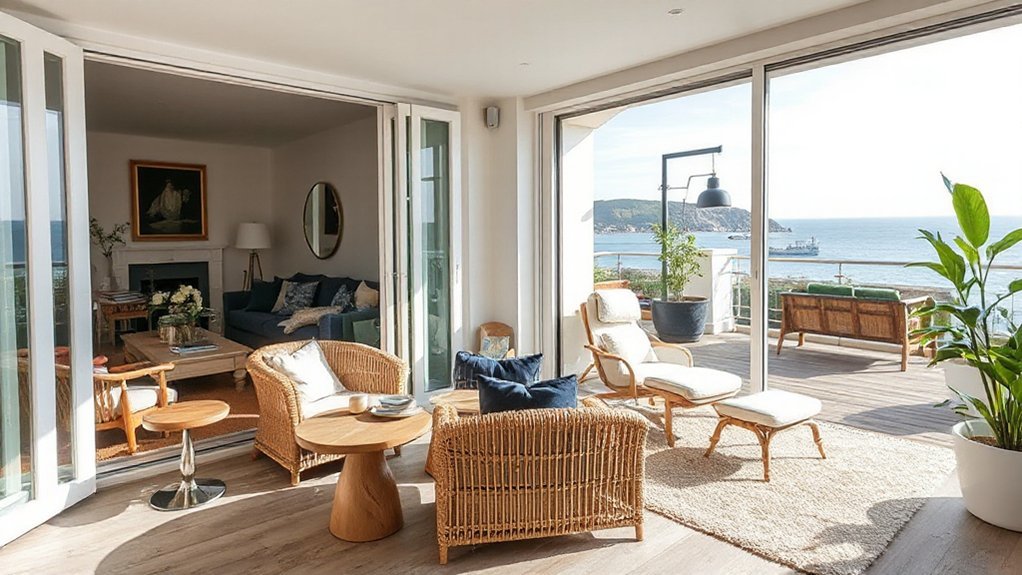
Outdoor-indoor living on seafront balconies requires a disciplined approach to both structure and furnishings: design should blur the line between interior comfort and exterior resilience, delivering weatherproof luxury without compromise.
You optimize balcony design by selecting high-performance materials, condensation-proof fasteners, and fade-resistant finishes that survive salt spray.
Prioritize modular seating and compact dining solutions that maximize turnover without sacrificing comfort, ensuring airflow and easy maintenance.
Integrate integrated drainage and anti-slip surfaces to maintain safety in volatile coastal conditions.
Choose coastal furniture with corrosion-resistant frames and UV-stable fabrics, treated for mildew resistance.
Lighting should be glare-free and weather-sealed, enabling evening use without degradation.
Plan storage discreetly to uphold a cohesive aesthetic while preserving functional, open-air living across seasons.
Coastal Art and Accessories: Personalisation Without Clutter
You can curate a bespoke coastal display that stays refined by prioritizing a single, cohesive theme and selecting carefully sourced pieces.
Aim for minimalist seaside accents that contrast textures and materials without overwhelming the room. This approach emphasizes Personalised Coastal Display while keeping clutter to a minimum.
Personalised Coastal Display
A personalised coastal display blends artful coastal elements with streamlined organization, ensuring your seafront apartment feels cohesive rather than cluttered. You curate a focused collection that highlights texture, color, and scale, avoiding excess to maintain calm. Each piece earns its place through thoughtful framing, lighting, and alignment with architectural lines, while protectively housing memories without crowding walls.
You’ll balance statement works with smaller accents, achieving rhythm across spaces.
- A single, large seafront artwork anchors a room, drawing the eye and setting a color narrative
- Minimalist frames accentuate natural light and ocean tones
- Textured elements—sea-grass, driftwood, linen—add tactility without noise
- Strategically placed shelves display rotates of coastal pieces and keepsakes
This approach preserves clarity, ensuring personalised coastal display remains purposeful and elegant.
Minimalist Seaside Accents
Choose coastal art and accessories that offer meaning beyond decoration, such as framed maps, monochrome shells, or abstract seascapes that echo the horizon. Limit accents to a finite set; each item should be selected for texture, scale, and rhythm, not filler.
Implement strategic grouping: triptychs above seating, a single sculptural element on a console, and a low-profile rug to anchor zones. This approach delivers seaside serenity and minimalist elegance, sustaining an uninterrupted line of sight and a breathable, high-end atmosphere.
Regularly reassess the arrangement to preserve balance.
Budgeting a Bournemouth Luxury Renovation: Plan, Prioritize, Protect
Begin with a clear budgeting framework: define total project funding, establish a contingency, and map costs to design goals. You’ll align spending with Seafront aesthetics while safeguarding scope through disciplined prioritization and phase planning.
Use a formal cost model to quantify trades, materials, and labor, then attach measurable design milestones to each expenditure. Maintain a living budget ledger that flags volatility, allowing quick reallocation toward high-impact, Budget friendly upgrades without compromising core luxury standards.
Guard against scope creep with written approvals and clear change orders. Incorporate risk assessment for coastal conditions, such as salt exposure and invigorating surfaces, to protect long-term value.
Document assumptions, adjust for seasonality, and review monthly to preserve tighter control over cash flow and timelines.
- A coastal budget map that visually links costs to design outcomes
- Contingency buffers sized to risk and procurement lead times
- Phase-driven expenditures aligned with priority goals
- Clear change-control protocols to prevent drift
Maintenance and Longevity Tips for Ocean-Ported Homes
Renovations that prioritize luxury must also protect long-term performance, especially in ocean-ported homes where salt spray, humidity, and wind exposure accelerate wear. You should implement maintenance routines that address salt damage, corrosion, and moisture ingress before visible symptoms appear.
Schedule biannual inspections of exterior cladding, fasteners, and sealants, and document findings for trending issues. Prioritize high-durability finishes and corrosion-resistant hardware in coastal zones, plus protective coatings on metalwork and railings.
Implement a proactive monitoring plan for HVAC, moisture meters in walls, and roof edge details to catch leaks early. Longevity strategies hinge on timely repairs, redundant drainage, and energy-efficient envelopes that resist thermal cycling.
Align maintenance with seasonal weather patterns, ensuring that touch-ups occur during mild, dry periods for maximum adhesion and performance. Maintain clear records for resale value and structural integrity.
Frequently Asked Questions
How Can I Maximize Resale Value With Seafront Renovations?
You maximize resale value by prioritizing durable coastal finishes, efficient layouts, and views. Implement Seaside landscaping and align with Coastal decor trends; optimize lighting, energy efficiency, and soundproofing to appeal to discerning buyers in marine environments.
What Are Best Low-Maintenance Coastal Finishes in Bournemouth?
You should choose low-maintenance coastal finishes like Seaside color palettes and Coastal texture accents, which resist salt and humidity. These selections stay polished, require minimal upkeep, and maintain a professional, technical aesthetic suitable for Bournemouth’s seafront environments.
Which Windows Provide Strongest Sea-Salt Protection?
Marine grade windows provide the strongest sea-salt protection, delivering salt resistant glazing that withstands coastal exposure. You should specify marine grade windows with salt resistant glazing, ensuring corrosion resistance, airtight seals, and durable coatings for Bournemouth’s harsh marine environment.
How to Balance Natural Light With Glare Control Near the Ocean?
You can balance natural light and glare by selecting window treatments designed for glare mitigation, like UV-blocking films or adjustable blinds, and position them to maximize daylight while reducing reflectivity from the sea. This approach guarantees consistent, comfortable visibility.
What Local Regulations Affect Seafront Renovation Projects?
You must comply with seafront zoning and coastal building codes, ensuring setbacks, elevations, and materials meet limits. You’ll navigate permits, flood resilience standards, and environmental protections, balancing aesthetics and risk assessment to sustainably renovate near the shoreline.
Conclusion
You’ve seen how seafront luxury hinges on materials that resist salt air, precise storage, and seamless indoor-outdoor flow. With Bournemouth’s oceanfront climate, expect a 25% higher refresh rate for coastal-grade finishes versus standard interiors, thanks to UV stabilization and corrosion resistance. Prioritize ventilation, sealants, and low-maintenance textiles to keep this space pristine. Plan visits with a coastal renovator, protect your investment with a robust maintenance schedule, and let timeless, ballast-weighted furniture anchor every waterfront moment.
About the Author