Did you know that homes with open, versatile layouts see higher daily satisfaction scores in family living? Modern farmhouse interiors blend warmth with clean lines, so you can enjoy durable surfaces, soft textiles, and timeless details without clutter. You’ll find practical kitchen layouts, cozy living spaces, and subtle color palettes that adapt as your family grows. Curious how to balance rustic charm with streamlined design while keeping maintenance manageable? Let’s explore the best ideas for suburban farmhouse living.
What Modern Farmhouse Means for Suburban Homes
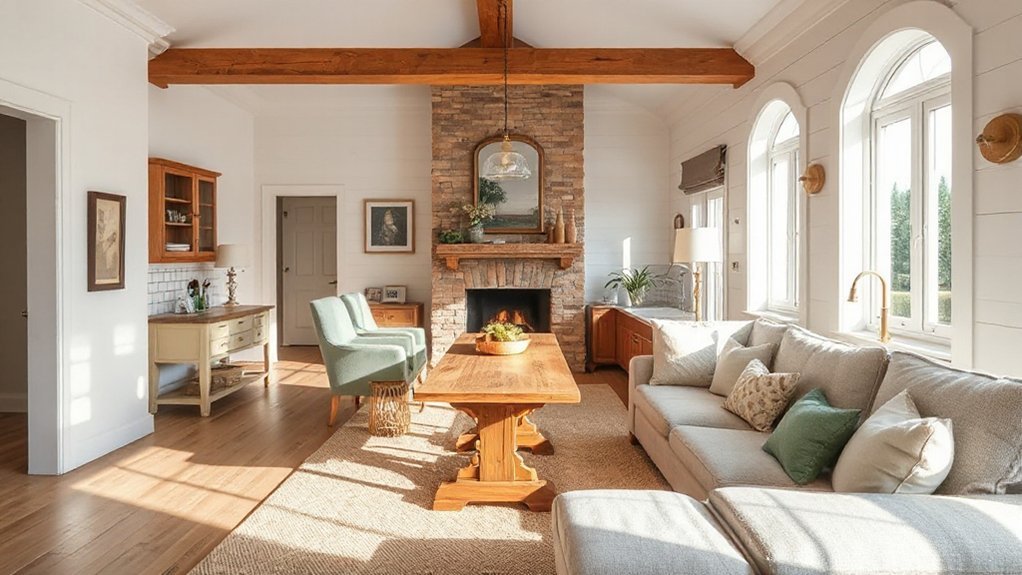
Modern farmhouse design in suburban spaces blends rustic warmth with streamlined ease, creating a practical style that feels timeless rather than trend-driven. You’ll notice that modern farmhouse isn’t about gimmicks; it’s about balanced textures, clean lines, and functional spaces. You’ll draw on historical influences, letting simple silhouettes and familiar materials anchor rooms without nostalgia overpowering function. You’ll also consider regional adaptations, tailoring palettes, textures, and finishes to your climate and culture, so the look feels local rather than imported. You’ll pair sturdy woods with matte metals, and keep cabinetry airy with open shelving. You’ll prioritize daylight, smart storage, and durable surfaces that tolerate daily life. Ultimately, you’ll achieve a cohesive, comfortable aesthetic that remains effortlessly current.
Layouts That Maximize Family Life in a Farmhouse
Think about layout choices that keep family life flowing: a family-centric floor plan that keeps daily routines connected, open-concept living zones that invite contact without chaos, and a mudroom with smart storage to manage coats, gear, and arrivals. You’ll balance everyday practicality with social spaces, so gatherings feel intimate yet effortless. Start by mapping where family needs intersect—entry, kitchen, and common areas—to maximize function and togetherness.
Family-Centric Floor Plans
When you’re designing a farmhouse that truly serves a busy family, layout choices matter as much as aesthetics. A family-centric plan prioritizes flow between kitchens, mudrooms, and shared spaces, minimizing foot traffic friction. Think a central hub that connects dining, living, and homework nooks without isolating high-traffic zones. Rotation between compact, multi-use rooms prevents clutter and supports spontaneous gathering. Include built-in storage, deep counters, and kid-friendly finishes to endure daily rhythms. Prioritize sightlines so you can supervise sofas, play areas, and entries from one glance. Vintage charm appears in thoughtful details—soft lighting, warm finishes, and period-inspired hardware—while garden integration invites outdoor meals and easy access to a sunny play zone. The result is cohesive, practical, and inviting for every family moment.
Open-Concept Living Zones
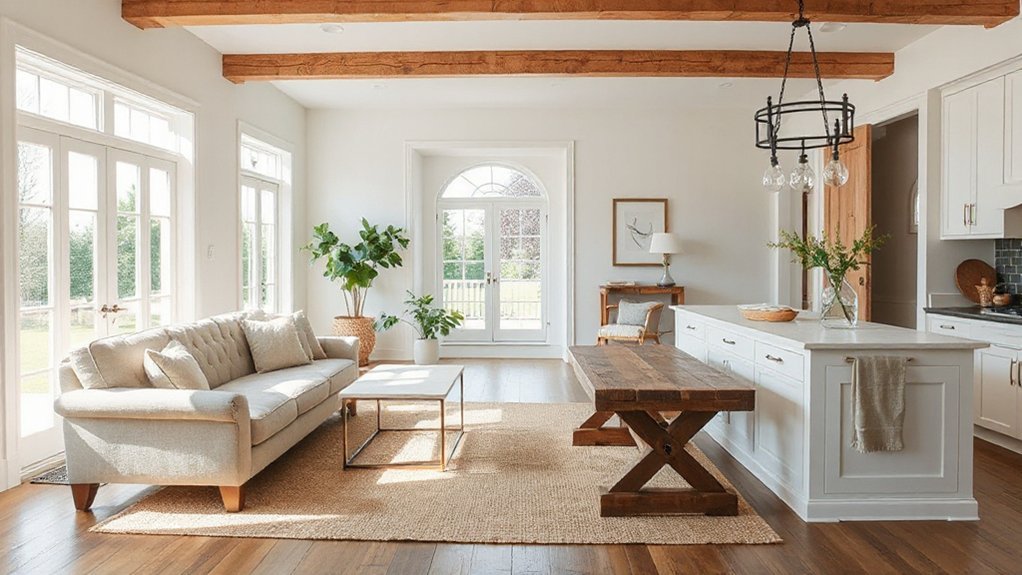
Open-concept living zones fuse kitchen, dining, and family spaces into one cohesive, shared footprint that keeps daily routines fluid. You’ll design around sightlines and reachable zones, so conversation flows as you move from stove to table to couch. Use a unified color palette and consistent finishes to maintain polish while preserving warmth. Place the island to anchor cooking and casual dining, then position seating to invite collaboration without crowding traffic. Choose practical storage that hides clutter yet stays accessible, ensuring quick cleanups don’t interrupt gatherings. Integrate soft lighting with dimmers to shift mood for meals or movie nights. Add Farmhouse decor touches and Rustic furniture accents to emphasize a timeless, welcoming atmosphere that supports everyday life.
Mudroom and Storage Flow
Mudrooms should be the first line of defense against clutter, so design them for efficiency and everyday spray-and-go routines. Your aim is a smooth flow from entry to main living areas, with clear zones for shoes, coats, and bags. Prioritize a sturdy bench with reachable hooks and a shallow cubby system to keep odds and ends out of sight. Use durable, easy-clean materials that handle daily traffic and wet-weather gear. Entertaining guests? A dedicated coat storage solution reduces congestion near the door and prevents bottlenecks. Plan ample circulation space for family members moving in and out, especially during school mornings. Integrate practical storage furniture that blends with farmhouse styling to support cohesive entryway organization and a calmer, more efficient home workflow.
Timeless Color Palettes for Suburban Farmhouses
Timeless color palettes for suburban farmhouses blend warmth and practicality, ensuring spaces feel inviting without ever feeling dated. You’ll favor a restrained base—creams, warm whites, and soft grays—then layer with anchored accents like sage, muted terracotta, or navy. This approach keeps rooms cohesive and flexible for changing tastes or seasons. You’ll use low-sheen paints to maintain light reflection without glare, preserving a calm, lived-in feel. Consider vintage decor as punctuation—a weathered wood mirror, a brass lamp, or a faded rug—that adds character without shouting. Garden integration informs palette choices too: introduce botanical greens through textiles and cabinetry hues that echo outdoor spaces, bridging indoors and out. The result is versatile, timeless, and ready for evolving family moments.
Durable Surfaces: Materials That Stand Up to Family Life
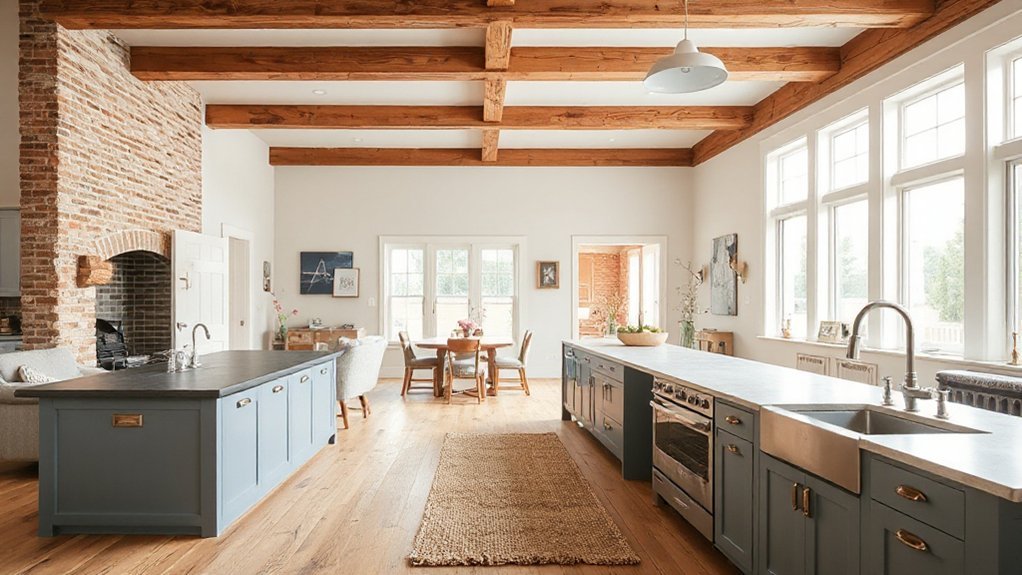
Durable surfaces matter most in busy family homes, where daily life demands resilience as much as style. You’ll choose materials that endure spills, heat, and traffic without screaming for maintenance. Start with countertops that tolerate knives and hot pans, like quartz or solid-surface blends, then pair with floors that resist scratches yet feel warm underfoot, such as engineered wood or polished concrete. Look for finishes that hide fingerprints and clean with a damp cloth. Eco friendly materials can meet performance and provenance, from recycled glass accents to water-based sealants. For furniture, opt for tightly woven textiles and stain-resistant fabrics that pass the “everyday test.” Vintage decor pieces add character, but keep them protected with durable finishes and thoughtful placement where life happens, not just shown.
Kitchen Inspirations: Bright, Practical, Social
A bright, practical kitchen keeps family life centered without sacrificing style. You design with purpose: durable counters, ample prep space, and a layout that invites movement from stove to island to dining nook. You’ll optimize lighting to brighten tasks and create a warm mood for social moments. Storage is smart and reachable, so you grab what you need without disrupting the flow. You keep cleaning simple with wipe-clean surfaces and a dedicated “mess zone” that doesn’t pull focus. Farmhouse gardening informs your herb planters near the window, blending kitchen and yard into one accessible workflow. Exterior paint options influence the mood of your adjoining spaces, ensuring the kitchen reads cohesive from every angle. This approach supports family life with polish and practicality.
Living Rooms That Invite Connection and Comfort
When you design living rooms that invite connection and comfort, you create spaces that draw people in and keep conversations flowing. You’ll balance seating with varied heights and textures for easy interaction, ensuring at least one conversations-ready focal point. Choose a warm palette and natural materials that echo Farmhouse gardening sensibilities, so greenery feels integrated rather than staged. Prioritize lighting that blends task and ambient tones, letting chatter happen without glare. Introduce Vintage decor accents—slipcovered sofas, distressed wood coffee tables, and heirloom lamps—that spark nostalgia without clutter. Keep pathways clear and seating flexible to accommodate gatherings, kids, and pets. Integrate accessible storage to reduce visual noise, and align textiles with the room’s tonal base for a cohesive, inviting atmosphere.
Rustic Details Without Clutter: Shiplap, Barn Doors, and Accents
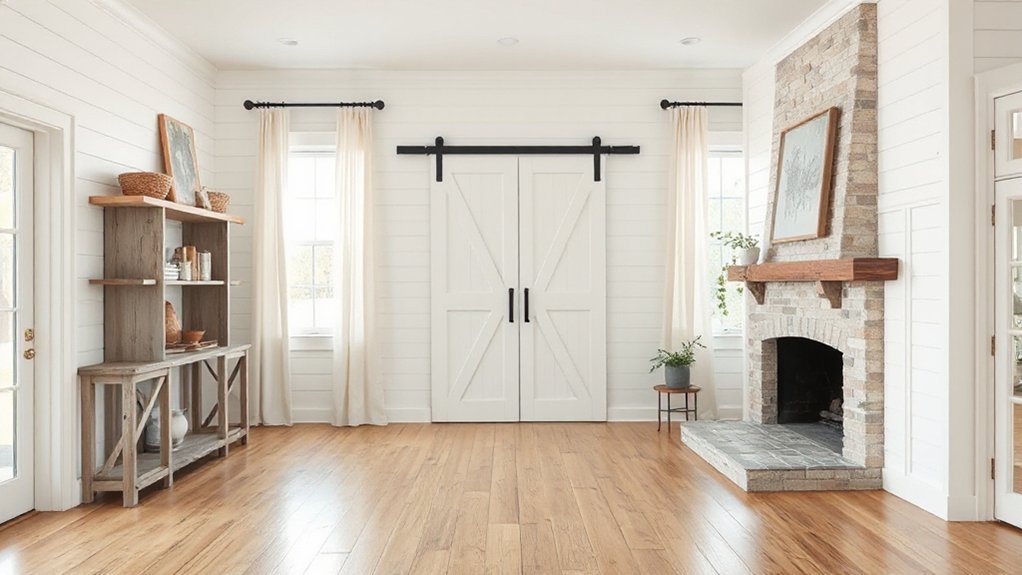
You’ll notice how shiplap adds texture without overpowering a room when you choose a light, even finish and keep it on focal walls or accents. For barn doors, pick clean lines and precise hardware to save space while defining zones. Pair subtle accents—think warm woods, metal highlights, and restrained textiles—to keep the look cohesive and uncluttered.
Shiplap Texture Tips
Shiplap adds texture without overwhelming a room, and when you use it thoughtfully, it serves as a quiet backdrop for the rest of your decor. You’ll optimize its impact by choosing boards with a consistent groove and selecting a finish that complements your palette. For subtle texture contrast, hover between matte and satin sheens to keep surfaces lively without shouting. Apply shiplap installation on a single feature wall or within a doorway niche to anchor a space, then balance with smooth drywall elsewhere. Keep trim minimal and colors restrained to preserve a cohesive look. Pair with natural wood accents, brass hardware, and soft textiles to enhance warmth. Use lighting to highlight grain and lines, not to compete with them.
Barn Door Placement
Barn doors can streamline storage and add rustic character without crowding a room. You’ll place them where they maximize function, like between a kitchen and dining nook or to conceal a laundry alcove, so you keep floor space open. Choose tracks that align with ceiling height and keep hardware simple to maintain a clean silhouette. If you’re working with vintage appliances, let their patina stay visible by selecting doors in neutral tones that don’t compete—think warm whites, soft ivory, or muted gray. Garden integration can guide placement too; install a barn door to separate an indoor-outdoor eating area, or use a glazed panel to blur the boundary thoughtfully. Keep movement smooth with properly sized rollers and clearances for tight door swings.
Subtle Accent Choices
Are you aiming for texture and warmth without overwhelming a space? Subtle accents can anchor a room with quiet confidence. Choose simple elements like shiplap panels or a slim barn door that don’t dominate sightlines yet add character. Keep colors paired with your core palette, allowing vintage decor to appear as a curated story rather than a distraction. Use finishes that echo natural materials—soft whites, warm whites, or muted grays—so textures breathe without shouting. Integrate garden inspiration through planters, woven baskets, or botanical prints that feel connected, not gimmicky. Let statement pieces be purposeful: a single vintage clock, a modest mirror, or a wrought-iron hook set. Edit relentlessly; every accent should enhance flow and function, not clutter.
Lighting and Textures That Elevate Comfort
Lighting and textures shape how comfortable a space feels, so start by layering warm, dimmable lights with tactile materials that invite touch. You’ll create a cozy base that’s practical and inviting, using soft textures and natural finishes to reinforce calm.
- Warm-toned fixtures paired with dimmers to control mood
- Linen, wool, or boucle upholstery for everyday softness
- Textured throws and woven rugs to add depth
- Wood grain surfaces and stone accents for rustic charm
- Vintage accents integrated with clean lines for balanced character
Keep color restrained to enhance cohesion, letting natural materials do the talking. This approach blends comfort with durability, making rooms feel lived-in yet refined.
Maintain Your Modern Farmhouse: Practical Upkeep That Stays Fresh
Maintaining a modern farmhouse style is about practical upkeep that keeps the look fresh without demanding constant effort. You’ll protect the aesthetic by scheduling simple, repeatable tasks that fit your week. Start with surfaces: wipe, dust, and seal high-traffic wood to prevent wear without harsh scrubbing. Rotate decorative pieces to preserve interest, and blend Vintage decor with current essentials so rooms feel curated, not cluttered. Establish a light cleaning routine that minimizes moisture buildup in kitchens and baths, using breathable fabrics and quick-dry mats. For color, favor neutrals with occasional warm accents to maintain cohesion as trends shift. Embrace Urban influences through streamlined hardware and space-saving storage that preserve openness. Consistent maintenance keeps your spaces fresh, functional, and effortlessly stylish.
Frequently Asked Questions
How to Balance Modern and Farmhouse Styles Cohesively?
To balance modern and farmhouse styles, mix rustic charm with polished finishes, and use vintage accents sparingly. You’ll unify spaces by choosing a cohesive color palette, clean lines, and textures that echo both eras, staying practical and cohesive throughout.
What Budget Range Suits Suburban Farmhouse Renovations?
Honestly, you’ll spend about $20,000 to $60,000 depending on scope. You’ll enjoy Rustic lighting and Vintage accessories, and you’ll prioritize durable basics, smart fixtures, and scalable upgrades to fit tighter budgets while preserving charm.
Which Plants Thrive in Farmhouse-Inspired Interiors?
You’ll thrive with plants like pothos, snake plant, and ZZ to add life. Choose rustic decor and vintage accents, and place them where light’s strongest; they’re easy, resilient, and suit a farmhouse-inspired interior.
How to Maintain Farmhouse Textures Without Heaviness?
You’ll preserve farmhouse textures without heaviness by balancing rustic wood with airy surfaces, clever lighting, and breathable fabrics. Use rustic wood accents sparingly and incorporate vintage textiles to soften edges, creating a light, cohesive look.
What Safety Features Suit Family-Friendly Farmhouses?
You should prioritize safety in a family-friendly farmhouse with sturdy doors, anchored furniture, and hidden outlets. Consider Farmhouse lighting for low glare, motion sensors, and Farmhouse color schemes to keep spaces calm and age-friendly.
Conclusion
You’ll find that your modern farmhouse isn’t just a vibe—it’s a practice you live. Coincidences show up when you reach for a warm throw and find it perched on the same shelf you painted last spring, or you pause by the mudroom and discover the kids left a note about chores you’d almost forgotten. Stay practical, embrace durable finishes, and let soft textures and quiet colors do the heavy lifting. Your cohesive, timeless home will feel inevitable.
About the Author