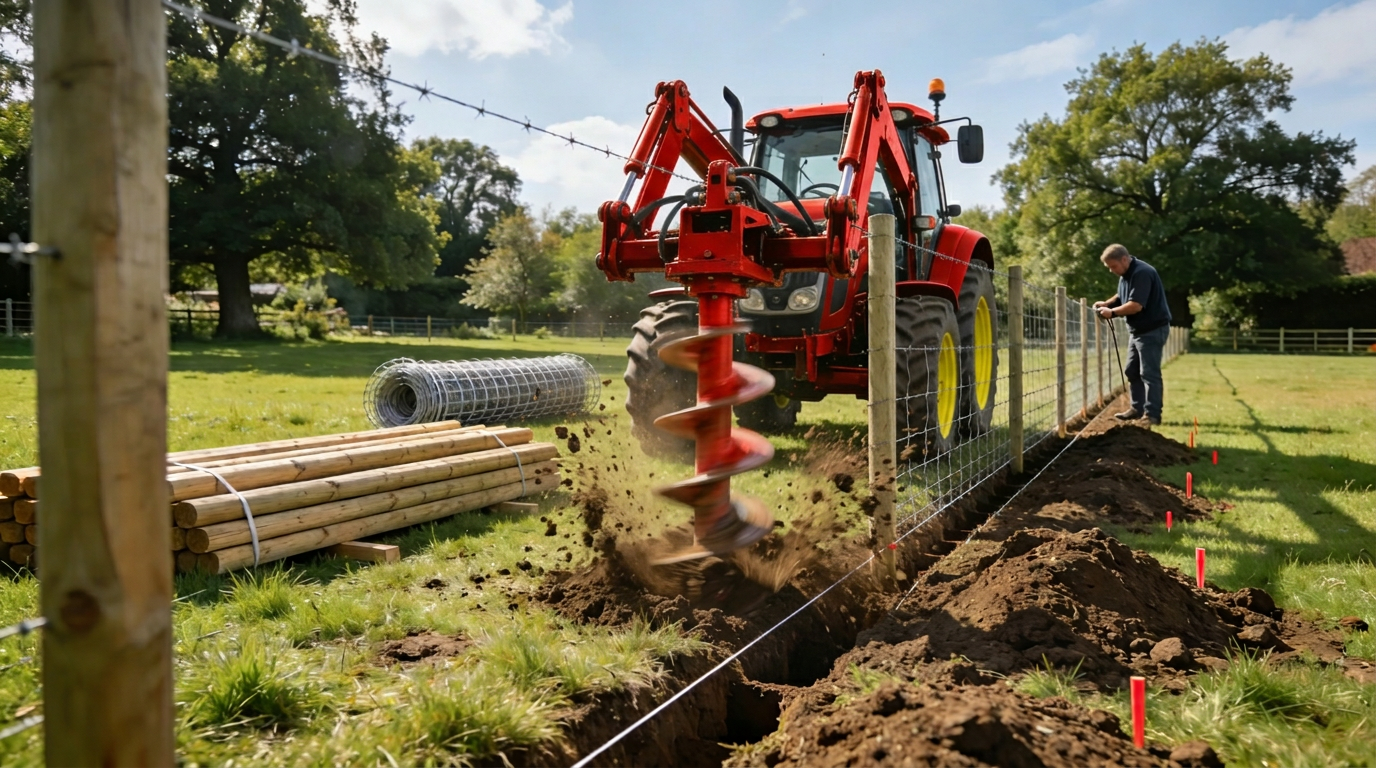
Renting a post hole digger is the obvious solution for a one-off job — a new fence line, a deck project, a batch of tree plantings — where the cost of buying equipment outright cannot be justified by the frequency of use. It is also sometimes the wrong solution: the wrong machine for the ground conditions, a false economy when labour and repeat hire costs are factored in, or simply unavailable when you need it most. Understanding the full picture before you book makes the difference between a job that goes efficiently and one that costs more than buying would have.
Key Takeaways
- Rental makes clear financial sense for one-off or infrequent projects — if you are drilling 20 holes this year and nothing next year, hire costs a fraction of purchase and you return the equipment when the job is done.
- The type of machine matters enormously — a one-person petrol auger, a two-person towable auger, and a tractor-mounted 3 point auger are not interchangeable; matching the machine to the ground conditions and the number of holes is the most important decision.
- Daily hire rates can mislead — factor in transport, fuel, consumables (replacement teeth, shear bolts), and the realistic number of days the job will take before comparing hire cost to purchase.
- Ground conditions determine success or failure — rocky ground, heavy clay, or tree-root-dense soil can stall a hire machine, cause repeated shear bolt failures, and make a job take several times longer than expected.
- Availability is a genuine risk — tool hire depots run low on post hole digger stock in spring and summer; booking well in advance is essential for peak-season fence and landscaping projects.
- You are responsible for underground service strikes — always locate buried services before drilling, regardless of whether the equipment is hired or owned.
- Buying may be more economical than it appears for regular users — a basic petrol one-person auger can be purchased for £300–£600 and will pay for itself after a handful of hire days.
The Main Types Available to Hire
Before weighing pros and cons, it helps to understand that “post hole digger hire” covers several quite different machines:
One-person petrol auger: A handheld or handlebar-mounted petrol engine driving a single auger bit, operated by one person. Compact, easy to transport in a car boot or small van. Suitable for softer ground conditions and smaller diameter holes (up to 9–12″). Tiring to operate for large numbers of holes, and prone to violent kickback if the auger strikes rock or root.
Two-person petrol auger (towable or standalone): A larger petrol engine on a frame with two handlebar grips, operated by two people. More power than a one-person unit, better suited to firm soils and 12″ augers. The two-person configuration reduces kickback risk but still requires physical effort and two operators.
Towable auger unit: A self-contained engine on a wheeled trailer, typically with a hydraulic or mechanical auger drive. Can be towed to site by a car with a tow ball. Significantly more power than handheld units, suitable for firm ground and larger diameter holes. Still requires manual positioning for each hole.
Skid steer or mini excavator attachment: An auger drive unit mounted to a hired skid steer loader or mini excavator. The machine provides power and the operator sits in a cab. Can handle much harder ground conditions and larger diameter holes than handheld equipment. More complex and expensive to hire, but the right choice for hard or rocky ground.
Tractor-mounted 3 point auger: As described in the full guide — a three-point hitch implement driven by PTO. Only available to hire if you have access to a compatible tractor. Highly productive for large numbers of holes in agricultural or large-property settings.
The Pros of Renting a Post Hole Digger
1. Cost Efficiency for Infrequent Use
For a homeowner with a single fencing project, a deck build, or a one-time tree-planting batch, the hire cost is a fraction of the purchase price. A full day’s hire of a one-person petrol auger typically costs £50–£90 in the UK. A two-person unit runs £70–£120 per day. Towable units and skid steer auger attachments are considerably more — £150–£300+ per day — but still substantially less than the capital cost of ownership for a one-time user.
Purchase prices for equivalent equipment start at around £300–£600 for a basic one-person petrol auger and rise to £1,500–£3,000+ for a quality towable or tractor-mounted unit. If you will use the machine twice in your lifetime, hire is the financially rational choice.
2. No Storage, Maintenance, or Depreciation
Owned equipment depreciates, requires storage space, and needs maintenance to remain reliable. Hired equipment is returned when the job is done — no garage space required, no oil to change, no spark plug to replace, no fuel to drain at the end of the season. For homeowners without agricultural storage facilities, this is a genuine practical advantage.
3. Access to the Right Machine for the Job
A hire depot’s fleet typically includes several machine types and auger sizes that would not be economical to own individually. If your project requires a 16″ auger for a specific section and a 9″ for the rest, you can hire both. If the ground conditions call for a skid steer-mounted auger that you would never use again, you can hire one for the day.
4. Equipment is Maintained and Ready
Reputable hire depots service their equipment between hires — fuel topped up, oil checked, blades inspected. A hired machine in a well-run depot will typically arrive in working condition without the pre-season maintenance routine that owned equipment requires.
5. No Capital Commitment
For a rental property, a one-off project, or a budget-constrained build, not tying up capital in equipment is a real advantage. Hire costs are an operating expense; purchased equipment is a capital commitment that sits on a balance sheet whether it is being used or not.
The Cons of Renting a Post Hole Digger
1. Daily Rates Add Up Quickly
Hire costs seem reasonable per day but accumulate rapidly if the job takes longer than planned. A fence line that looks like a one-day job often becomes two days — particularly if the ground is harder than anticipated, if the auger requires shear bolt replacements, or if positioning and moving the equipment between holes takes longer than expected. A two-day hire at £80/day is £160 in equipment alone, before fuel, transport, and your own labour. At that cost, you are within range of buying a basic unit that would be yours to keep.
2. Transport Logistics
Most hire depots do not deliver. You collect the machine, transport it to site, and return it at the end of the hire period. A one-person petrol auger fits in a large car boot or van. A towable unit requires a tow vehicle and tow ball. A skid steer with an auger attachment typically requires a trailer and a suitable tow vehicle capable of handling the load. If you do not own an appropriate transport vehicle, delivery and collection add cost — either a hire van or a delivery charge from the depot.
3. Availability in Peak Season
Spring and early summer are the busiest periods for post hole digger hire — the same time that most fencing, decking, and planting projects are underway. In popular areas, post hole diggers can be fully booked days or weeks ahead. Booking at short notice during a dry spell in May is often impossible. Poor planning at this point means either waiting (delaying the project) or hiring whatever is available rather than what is appropriate.
4. Unfamiliarity with the Machine
Hired equipment comes in different configurations. If you have not operated a particular model before, the learning curve costs time — and on a day-rate hire, time is money. The safety features, auger engagement mechanism, throttle response, and ground pressure controls vary between manufacturers. A brief familiarisation period at the depot before you leave is worth requesting.
5. Damage Liability
Hire agreements include a damage liability clause. Striking a buried service, bending an auger on rock, or breaking a shear bolt are all situations that can lead to damage charges. While most hire depots offer a damage waiver (for an additional daily charge), this is an additional cost that buyers do not face with their own equipment. Read the hire agreement carefully before signing — understand exactly what you are liable for and what the waiver covers.
6. Ground Condition Mismatch
Hire depots stock general-purpose equipment calibrated for typical ground conditions. In heavily clay-dominated ground, in soil with significant stone content, or in areas with dense tree roots, a standard hire auger may struggle — requiring frequent shear bolt replacement, stalling, or making slow progress that extends the hire period significantly. A one-day job in good soil becomes a two-day job in difficult ground with the same machine.
In these conditions, a more powerful hired machine (skid steer auger or towable hydraulic unit) would be appropriate — but upgrading mid-hire involves returning the original machine and collecting the alternative, wasting a hire day in the process.
7. Hidden Additional Costs
The daily hire rate is rarely the full cost. Factor in:
- Fuel (you supply the petrol for most petrol-powered units)
- Replacement shear bolts if the auger strikes obstruction (usually cheap but annoying)
- Replacement auger teeth if worn (some depots charge if teeth are significantly worn)
- Damage waiver
- Deposit (some depots require a refundable deposit against damage)
- Transport vehicle if you do not own one
When to Hire vs When to Buy
Hire makes sense when:
- The project involves fewer than 20–30 holes and is unlikely to recur
- You do not have storage space for powered equipment
- The ground conditions are typical and unlikely to challenge standard hire equipment
- The auger size needed is outside what you would regularly require
- You are a homeowner with a single project, not a contractor
Buy makes sense when:
- You install fencing, plant trees, or set posts regularly (more than once or twice a year)
- You have agricultural storage and maintenance capability
- You have a compatible tractor for a 3 point unit, or suitable transport for a standalone unit
- You want to be able to work when conditions are right rather than when equipment is available
- You are a contractor for whom equipment availability directly affects project scheduling and income
The break-even calculation: A basic one-person petrol auger purchased for £400 breaks even against hire at approximately 5–6 hire days (at £75/day hire, minus fuel). If you expect to need more than 5–6 hire days’ worth of use over the equipment’s life, buying is financially superior. For a quality towable unit at £2,000 purchase price vs £200/day hire, the break-even is 10 hire days — not an unreasonably high bar for a regular user.
Practical Advice Before You Book
Assess your ground conditions honestly. Walk the fence line and probe the soil. Hard, stony, or root-dense ground calls for a more powerful machine than a standard hire auger. If in doubt, call the hire depot and describe the ground — a good depot will advise on the appropriate equipment.
Book well in advance in spring and summer. Do not assume availability. Call or book online 1–2 weeks ahead for peak season projects.
Check the auger sizes available. Confirm the depot has the auger diameter you need for your specific post size. A 9″ auger for a post that needs a 12″ hole requires a second hire or a second trip.
Ask about the deposit and damage terms. Understand what you are signing before you drive away.
Underground service check. Before any drilling — hired or owned equipment — confirm the location of buried services. In the UK, use LSBUD (linesearchbeforeudig.co.uk) or contact individual utility providers. Striking a buried cable or pipe with a hired auger is your liability, not the depot’s.
Have a plan for the spoil. Auger drilling generates a significant volume of excavated material per hole. Know in advance where it will go — it can usually be backfilled around the post after setting, but on a large project the spoil management adds time to the job.
Hired or owned, a post hole digger is one of the most time-saving tools available for anyone setting posts at scale. Getting the machine right for the job, the ground, and the project scope is the decision that determines whether the hire experience is efficient and cost-effective — or a frustrating, expensive lesson in the wrong equipment for the conditions.
About the Author