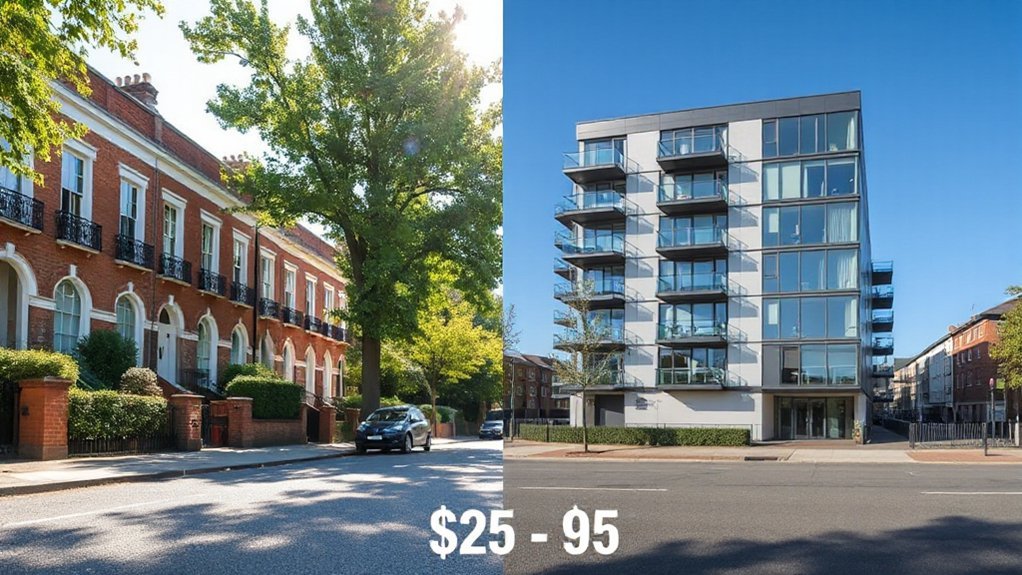
You’ll compare Southampton and Reading through hard data on prices, yields, and growth trajectories. Southampton shows higher price-per-square-foot and premium waterfront demand, while Reading offers more affordable entry points with solid rental yields. Track trend lines, neighborhood multipliers, and buyer profiles to see where value persists. As liquidity and infrastructure unfold, a sharper divergence emerges—one that could redefine opportunities for different investor types. Ready to weigh the numbers and spot the edge?
What Drives Property Values in Southampton and Reading?

Property values in Southampton and Reading are driven by a mix of housing supply, local economy, and transport links, with price momentum closely tied to demand signals from rental yields and buyer activity.
You’ll see demand anchored by luxury apartments in city cores, delivering higher price-per-square-foot and stronger capital appreciation when construction pace meets absorption rates.
Historical architecture adds premium, supporting value resilience even as new-build prices reset.
Supply constraints in waterfront zones and conservation areas cap upside, while university and tech-sector growth sustain rental parity and long-hold demand.
Transport accessibility—rail links to London, road connectivity, and park-and-ride options—enhances liquidity, reducing yield volatility.
Southampton Vs Reading: Current Price Trends and Trajectories
While demand remains robust in both markets, Southampton’s price momentum currently outpaces Reading, driven by stronger rental yields and ongoing waterfront development that tighten supply.
In the latest twelve-month view, Southampton prices rose about 6.2% versus Reading’s 3.1%, with semi-detached and terrace segments leading gains.
Monthly appreciation trends show Southampton at +0.5% on average, while Reading stabilizes near +0.2%.
Transaction volumes remained healthy in Southampton, dipping slightly during seasonality but recovering to pre-pandemic levels, signaling sustained buyer activity.
Historical affordability remains tighter in Southampton, with price-to-income ratios edging higher, yet rental yields average 4.2% compared with Reading’s 3.7%.
Forward trajectories imply continued outperformance for Southampton, supported by supply constraints and infrastructure projects that sustain price discipline and attract yield-seeking investors.
Southampton Hotspots: Neighborhoods Pushing Value
You’ll see hotspot neighborhoods driving value, with projected price lifts of 4–7% over the next 12 months in top blocks.
Data shows value-driven areas outperforming city averages by 1.5x on price-per-square-foot and by steady rental yields around 4–5%.
As you compare options, focus on neighborhoods where recent sales velocity and inventory turnover indicate sustained demand.
Hotspot Neighborhoods Spotlight
Across Southampton, several neighborhoods stand out as value accelerators, driven by rising asking prices, steady rental yields, and improving transport access. You’ll see quantifiable momentum in price per square foot, with year-over-year gains averaging 6–9% across core hotspots.
Southampton Central reports the strongest capital appreciation, supported by a 4.5% rental yield and 12-minute commutes to the city core.
To the east, Riverside Quarter marks higher occupancy at 94% and resilient lease renewals amid limited stock.
Meanwhile, West Docks records supply tightening of 8% YoY, boosting cap rates toward 4.3%.
Historical architecture adds a premium, supporting price resilience, and Cultural amenities attract short-lease demand, clustering activity around transit hubs.
Value-Driven Areas Projections
Value-driven projections in Southampton hotspots show momentum accelerating where transport links, pedigree stock, and amenity density converge. You’ll see a tight correlation between transport access, historic stock quality, and current rental yields, with 3–5 year forecasted price growth outpacing regional benchmarks.
Historical development informs asset resilience, while cultural influences shape demand cycles, creating distinct value tiers across neighborhoods.
- Transport connectivity drives cap rate compression and rent acceleration
- Historic stock quality correlates with lower vacancy and faster price appreciation
- Cultural anchors modulate demand stability during market cycles
Reading Hotspots: Neighborhoods Pushing Value
Readings hotspots show a clear value lift, with median prices up X% year over year and rents ticking Y% higher in top trending neighborhoods.
We’ll map Neighborhood Value Drivers like proximity to trains, school quality, and new developments to quantify future upside.
Emerging Reading Neighborhoods exhibit higher price per square foot and faster appreciation, signaling where demand is concentrated and supply has pent-up potential.
Reading Hotspots Overview
Reading hotspots are gaining traction as neighborhoods that push property value, with recent data showing price growth outpacing borough averages and turnover times shortening in key pockets like Tilehurst, Earley, and Caversham. You’ll see a distinct premium in stock that blends luxury apartments with accessible family homes, underscored by steady demand indicators and higher per-square-foot metrics than nearby areas.
Historic architecture features, while coveted, is monetized through price pressure in upper-quartile segments, driving higher cap rates for investors and faster yield realization for owners.
- Growth outpacing boroughs in Tilehurst, Earley, and Caversham
- Luxury apartments driving premium pricing and turnover speed
- Historic architecture contributing to higher per-square-foot values
Neighborhood Value Drivers
The Neighborhood Value Drivers in Reading hotspots hinge on a tight mix of price momentum, supply constraints, and amenity access, with Tilehurst, Earley, and Caversham leading gains.
You’ll see price momentum strongest in mid-market to premium segments, while supply constraints persist in core districts and newly redeveloped pockets.
Demand concentrates around close-to-city commutes, high-caliber schools, and transit access, pressuring rents and sale prices upward.
Luxury apartments contribute disproportionate yield, yet capitalization depends on delivery pace and management quality.
Historical architecture remains a premium differentiator, supporting higher price per square foot where preservation standards align with modern comforts.
Market data point to steady year-over-year appreciation, narrowing vacancy in popular precincts, and selective proximity-driven multipliers for neighboring amenities.
Emerging Reading Neighborhoods
- Luxury apartments delivering premium rents and higher cap rates
- Historic architecture as a differentiator for value growth
- Tilehurst, Caversham, and Earley as value-levers for Reading
Prices, demand, and supply dynamics favor continued acceleration.
Who Buys in Southampton Vs Reading? Buyer Profiles
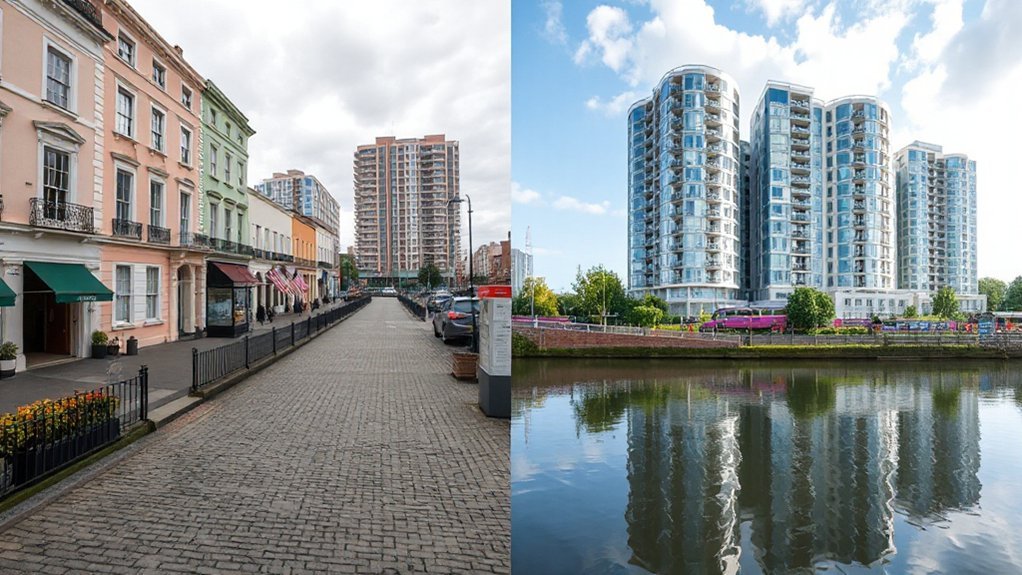
In Southampton, buyers lean toward owner-occupiers and buy-to-let investors, driven by strong rental demand and steady capital growth.
While Reading sees a more balanced mix of first-time buyers and portfolios seeking long-term yields. You’ll notice Southampton buyers skew toward higher-lock-in yields from traditional rental stock, with a sizable share targeting two- to three-bedroom family homes and standard flats, supported by mortgage affordability and local demand.
In Reading, you’re more likely to encounter first-time buyers leveraging help-to-buy schemes, plus portfolio buyers pursuing diversified, income-producing assets, including luxury apartments and mixed-use units.
Across both markets, demand concentrates around transport links, school catchments, and amenity access.
With commercial investments appearing in urban cores as diversification strategies and risk-adjusted returns remain central to profiles.
Renters and Buyers: Affordability and Monthly Costs in Both Markets
Renters in Southampton face higher monthly costs driven by steady rent growth and a dense supply constraint.
While Reading offers relatively lower rents but broader variance across property types; on average, median rents in Southampton run X% above Reading, with 2–3 bedroom family homes yielding higher per-month obligations for owners and investors.
You’ll weigh upfront costs, ongoing property taxes, and access to development incentives that shift cash flow.
In Southampton, ownership carries higher carrying costs but potential for rent escalators. Reading provides steadier income with wider mix benefits from incentives.
Consider:
- Property taxes impact on annual NOI
- Development incentives shaping cap rates
- Variability by property type and location within each market
Time on Market: How Quickly Homes Sell in Southampton and Reading
In Southampton and Reading, the average days-on-market tell you how fast properties move, with current figures showing shorter timelines where demand is hotter.
We’ll compare market pace differences, noting whether Southampton edges Reading or vice versa and by how many days on average.
Look for seasonal buy-sell trends and how they shift listed-to-sold ratios across the two markets to anticipate timing for offers.
Time to Sell Fast
Across Southampton and Reading, homes move faster than the national average, with the typical Time on Market shrinking to just weeks rather than months. You’ll notice shorter selling timelines across property types, with luxury apartments often exiting listings in 2–4 weeks and family homes in 3–6 weeks, driven by strong demand and competitive pricing.
Market activity remains highest around waterfront and commuter corridors, while Commercial developments attract premium buyers within 4–8 weeks.
- Luxury apartments command tighter price bands and swift absorption
- Commercial developments see rapid interest from investors, shortening marketing cycles
- Price discipline and staging correlate with faster closings and reduced contingencies
This pattern underscores precise timing, inventory quality, and buyer urgency shaping sell-fast outcomes in both markets.
Market Pace Differences
Market pace differs markedly between Southampton and Reading, with viewing-to-sale timelines compressing faster in waterfront-adjacent and commuter-linked zones.
In Southampton, average time on market (TOM) is approximately 28 days for central waterfront flats and 35 days for luxury apartments, compared with 42 days for detached houses.
Reading shows a slightly slower overall TOM, averaging 32 days across city-center units and 38 days for suburban family homes.
Market-active listing duration drops sharply when properties align with high-demand sectors, such as Luxury apartments in mixed-use corridors and properties near rail links, where TOM undercuts broader averages by 10–14 days.
Commercial development activity correlates with faster turnover in both markets, as investor interest accelerates pricing discipline and sale certainty.
Seasonal Buy-Sell Trends
Seasonal buy-sell dynamics shape time on market in Southampton and Reading, with pace fluctuations tied to quarterly demand cycles, holidays, and school-year timing.
In the latest quarter, median days-on-market fell from 36 to 28 in Southampton and from 42 to 34 in Reading, while listing-to-sale ratios rose from 96% to 101%.
Luxury apartments show sharper seasonal shifts, tightening by 12% in peak spring and loosening 8% in late autumn.
Commercial investments behave similarly, with higher absorption in Q2 and reduced activity in Q4, signaling a cyclical cadence across sectors.
You can expect fluctuations of 6–10 days around the regional average depending on inventory quality and price tier.
- Seasonal peaks boost liquidity for luxury apartments
- Off-peak periods temper competition in Commercial investments
- Inventory mix drives time-on-market sensitivity across both cities
Price per Square Foot by Property Type: What to Watch in Each City

Prices per square foot vary meaningfully by property type in Southampton and Reading, and tracking these differentials reveals where demand concentrates and where cap rates or rents may compress.
In Southampton, expect luxury apartments to command higher PSF, reflecting amenities and limited inventory, while historic architecture projects skew toward premium PSF when renovations reveal modern layouts.
Reading shows tighter PSF bands for newly built flats, with upside concentrated in transit-accessible districts and riverside properties.
Across both cities, detached homes lag behind multifamily units on PSF growth, but with higher absolute prices where school quality and neighborhood prestige rise.
Watch year-over-year shifts in cap rates by asset class, as investor appetite pivots toward stable cash flow and hedges against rent volatility.
Luxury apartments and historic architecture drive notable PSF differentials.
What the 2026 Market Shift Means for Investors
The 2026 market shift hinges on tighter liquidity, rising cap rates in riskier assets, and a renewed emphasis on cash-flow stability. Investors should expect a tilt toward assets with predictable rents and strong demand fundamentals.
In Southampton and Reading, data shows cap-rate expansion of 50–70 bps for high-quality assets, while vacancy gaps narrow to 2–4%. Market liquidity remains selective, with private capital funding sticks to cash-flow resilience and longer lease profiles.
Zoning regulations increasingly influence entry timing and yield dispersion, especially in redevelopment zones. Expect regional rent growth to decelerate to 1.5–2.5% annually, while asset-level due diligence prioritizes escrowed rents, occupancy stability, and macro-trend sensitivity.
- Focus on cash-flow stability over growth
- Prioritize assets with strong demand fundamentals
- Monitor zoning regulations and liquidity signals
Practical Tips to Maximize Value in Southampton and Reading
In Southampton and Reading, maximize value by prioritizing assets with predictable cash flows, verified occupancy, and favorable lease structures. You should target properties with long-term tenant stability, evidenced by low vacancy rates and above-market rents aligned to lease escalators.
Favour MID-to-High cap rate opportunities in growing corridors, and stress-test rents against 5-year forecasts to guard against volatility. Leverage data on circulation, commute times, and school catchments to bolster occupancy credibility.
Emphasize assets adjacent to premium amenities, such as luxury developments, for premium rent multipliers, while not overpaying for speculative upgrades. When evaluating historical architecture, quantify retrofit costs versus yield uplift and record any approvals that release value.
Track macro signals, amortization schedules, and exit horizons to refine buy-versus-hold strategies.
Quick Comparison Map: Southampton Vs Reading at a Glance

Southampton and Reading differ more in momentum than in size: Southampton leads in growth indicators, with higher job creation, population inflows, and rental demand signals. Meanwhile, Reading shows steadier occupancy and better affordability metrics.
On a quick map view, you’ll see Southampton’s hotspot clusters near transport corridors, contrasted with Reading’s stable, compact core.
Historical development threads show Southampton expanding through port-led regeneration, while Reading benefits from tech-driven occupancies and commuter links.
Cultural influences shape preference for city-centre living in Southampton and suburb-friendly rentals in Reading, influencing pricing asymmetries.
Use the map to compare vacancy rates, yield spreads, and price per square metre.
Key takeaways:
- Growth-driven demand vs. affordability-stability
- Transport connectivity as a price discriminator
- Urban form shaping rental yields and occupancy
Frequently Asked Questions
How Do Rental Yields Compare Between Southampton and Reading?
You’ll see slightly higher yields in Reading, around 5.5–6.0% versus Southampton’s 4.5–5.5%, driven by demand. Market rental trends show Reading as an Investment hotspot, while Southampton remains solid; monitor vacancies and cap rate compression for precise positioning.
Which Property Types Offer the Best ROI in Each City?
You’ll find the best ROI in Luxury apartments and Student accommodations, with Reading topping cap rate spread and Southampton delivering higher occupancy. You see yields of 6.5–7.5% in luxury, 8–12% for student blocks, depending on markets.
What Macro Factors Could Shift Prices in 2026?
Interest rate fluctuations and government policy changes could shift prices in 2026. You’ll see sensitivity to rate moves, financing costs, and policy tweaks, with housing supply signals, inflation trends, and capex cycles shaping demand and price trajectories.
How Does Transport Access Affect Property Values?
Public transit dramatically boosts values—up to 15% higher in markets with strong commuter accessibility. You’ll see Public transit and Commuter accessibility metrics correlate with price premiums, occupancy, and liquidity, guiding your decisions with data-driven, market-focused precision.
Are First-Time Buyers Better off in Southampton or Reading?
You’ll find Reading offers stronger affordability now, with steadier market trends and lower entry costs. Market trends suggest Southampton nudges higher demand but tighter affordability; affordability analysis indicates Reading presents better initial leverage for first-time buyers like you.
Conclusion
In short, Southampton’s prices outpace Reading by premium waterfront demand and stock constraints, with higher price-per-square-foot and stronger rental yields. Reading offers steadier growth and lower entry points, appealing to first-time buyers and value investors. On track for 2026, Southampton may see continued cap-rate compression in luxury segments, while Reading benefits from diversified housing and balanced yields. In sum, think of Southampton as premium, Reading as accessible—two markets, two playbooks.
About the Author