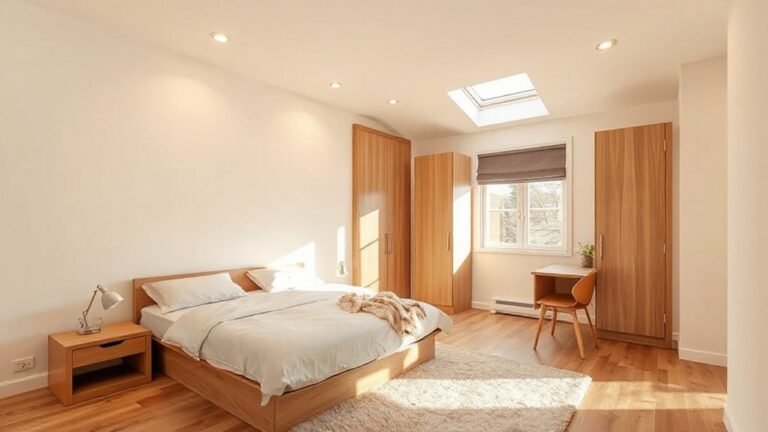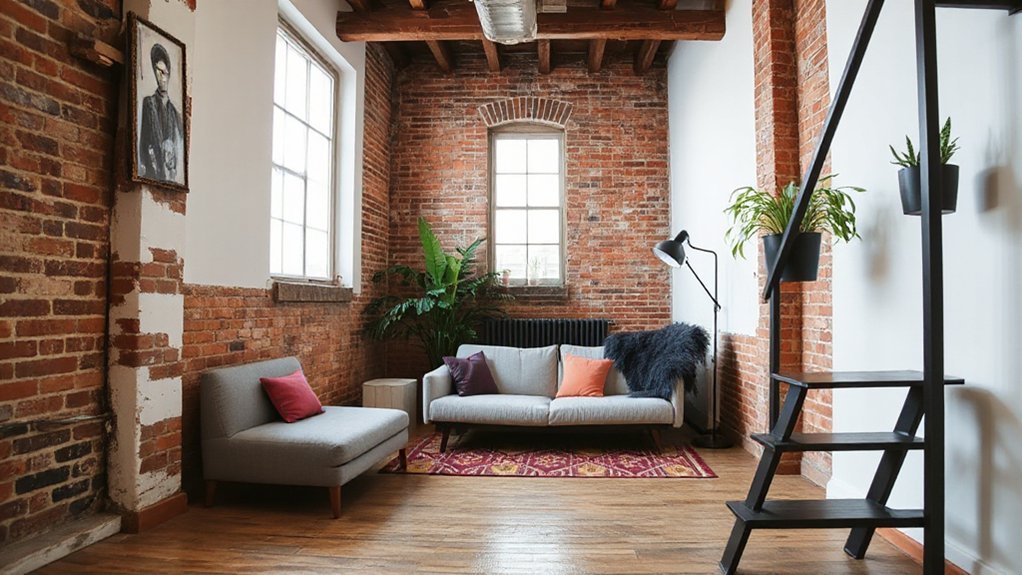
Chances are you don’t realize how much a loft’s quirks can work for you, not against you. Instead of fighting beams, sloped ceilings, or awkward nooks, use them as built‑in character and focal points. You’ll want to map traffic flow, choose modular, multi‑functional pieces, and layer light to soften edges. If you lean into vertical storage and clever wall mounts, you’ll open the floor while keeping everything within reach—and that balance just might change how you live in the space.
Pinpoint Loft Constraints and Design Goals
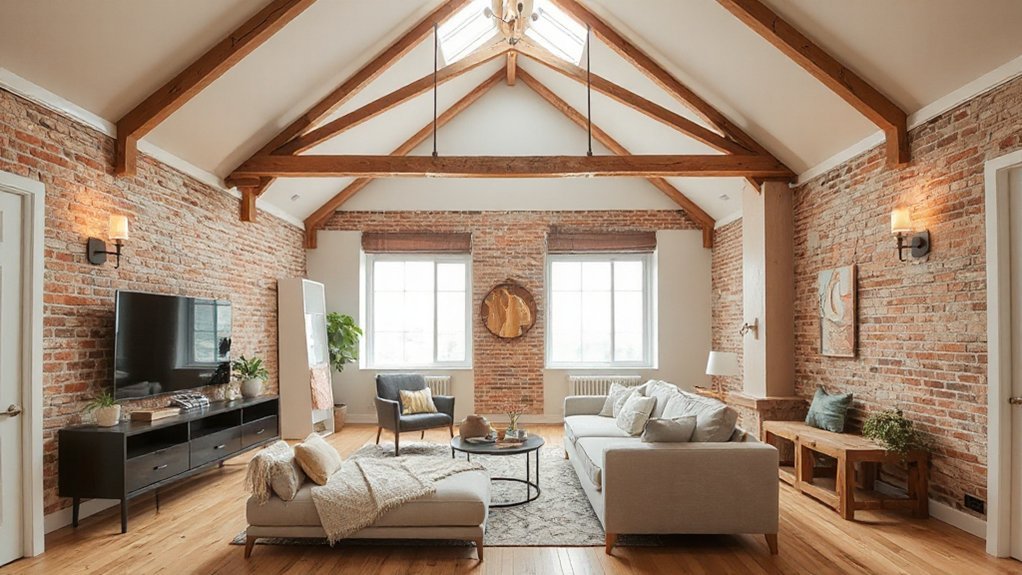
Start by clearly identifying the loft’s fixed elements—floor plan, ceiling height, natural light, and any architectural quirks—so you can work with what you have rather than against it. You’ll map constraints like alcoves, beam placements, and column locations, then translate them into design goals that feel inevitable, not imposed. Prioritize natural lighting by locating seating and work zones near windows, and plan privacy solutions that don’t interrupt openness—slatted screens, sheer drapes, or tall, slender bookcases. Clarify your performance needs: storage, function, and traffic flow. Set decisive goals: maximize usable area, create distinct zones, and preserve scale with proportional furniture. With constraints clarified, you’ll choose materials and finishes that echo the loft’s character while delivering practical, stylish livability. Your plan becomes a clear, actionable path.
Unlock Vertical Storage and Wall-Mounted Solutions
Vertical storage and wall-mounted solutions aren’t afterthoughts—they’re your loft’s best leverage. Choose walls first, not furniture, to maximize available floor space. Start with floating shelves at eye level to display books, plants, and essentials without crowding surfaces. Install wall-mounted cabinets high enough to keep daily items accessible yet out of sight, hiding clutter behind clean lines. Consider peg rails or a slim rail system for tools, earbuds, and cords—swap accessories in minutes. Use vertical dividers in closets to double capacity without expanding footprint. Integrate Creative lighting along shelving edges or under cabinets to brighten corners and reduce shadows, enhancing perceived space. Pair these with Functional decor: sleek hooks, minimalist baskets, and monochrome tones to maintain cohesion. Your vertical strategy delivers order, style, and practicality in one crisp move.
Zone Your Space With Flexible, Modular Furniture
Flexible, modular furniture lets you redefine zones on the fly. In a tight loft, you’ll benefit from pieces that do double duty, so rooms stay open without feeling busy. Choose sofas with hidden storage, ottomans that flip into guest seats, and shelves that also act as room dividers. Multi functional furniture keeps traffic flowing while clearly marking zones for work, dining, and lounging. Use modular zones to tailor layouts as your needs shift—stackable crates, portable screens, and lightweight bookcases let you reconfigure in minutes. Keep sightlines clear by selecting low-profile forms and transparent or airy materials. Prioritize cohesion with a restrained palette and consistent hardware. This approach delivers practical, stylish versatility without overwhelming the space.
Unify the Loft With Light, Color, and Texture
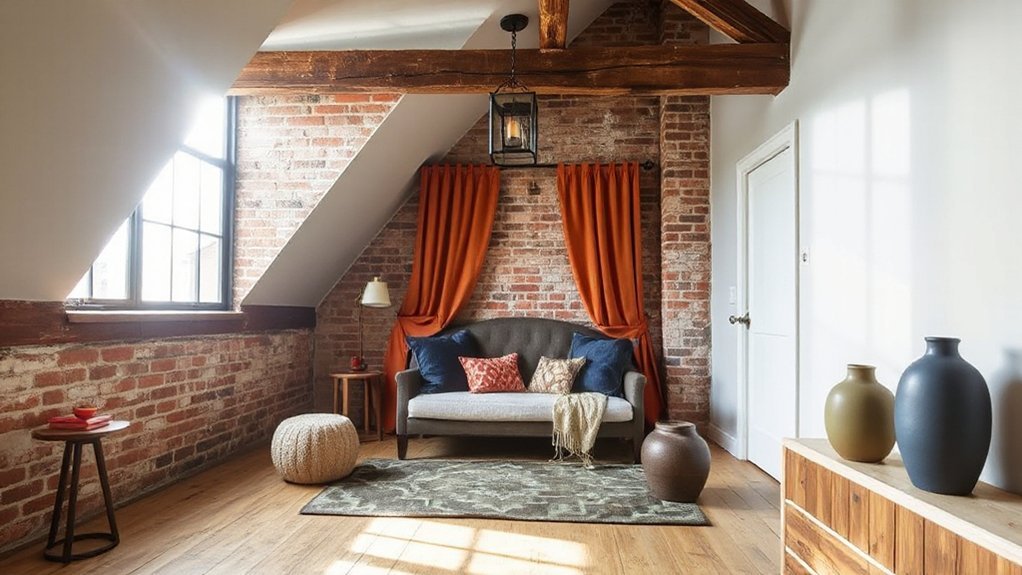
When you unify a loft, light, color, and texture become your quickest allies. Start by layering Lighting techniques: ambient glow, task cues, and a strategic accent to expand space without clutter. Choose Color palettes that reflect the room’s natural light and your mood, then carry them through furniture, textiles, and art for cohesion. Texture adds depth; mix smooth surfaces with tactile weaves, brushed metals, and matte finishes to avoid flatness. Keep scale mindful: large windows deserve airy drapes, compact goods need open shelving to breathe. Contrast light walls with grounded furnishings to carve zones, yet unify them with a unifying backbone—repeat a subdued hue or material across pieces. Finally, test changes quickly, adjusting until your loft feels effortless, accented, and livable.
Tackle Sloped Ceilings, Beams, and Quirks
Sloped ceilings, beams, and quirky angles aren’t design obstacles—they’re opportunities to define character and flow. You map function to form by embracing lines that guide focus, not fight gravity. Start with sight-lines: place seating to skim the highest points, so low nooks don’t feel cramped. Use multi-layered lighting to carve zones; Creative lighting lets you carve drama without bulk, and it softens sharp corners. Build visual rhythm with consistent materials that follow the slope, like a continuous wood plank or a fabric-wrapped wall, so progression feel intentional. Highlight architectural quirks with Artistic accents—painted beams, sculptural shelves, or framed your favorite mementos. Keep storage slim and recessed to avoid crowding. Finally, test proportions by stepping back: measure, adjust, and refine.
Personalize With Scale, Balance, and Style
Start by sizing every piece to the space rather than the trend. When you decorate awkward lofts, scale becomes your best tool. Match furniture to sightlines and ceiling height, so rooms feel coherent rather than cramped. Balance bold moves with calm neutrals to avoid overwhelm; this is where you anchor the room. Create artistic focal points with a single standout piece or a curated vignette, then organize surrounding objects to support it. Use color blocking to guide the eye: place warm tones where you want intimacy and cool tones where you want airiness. Don’t over-clutter; every item should earn its keep. Finish with textiles and lighting that reinforce your intended mood, ensuring style feels lived-in, intentional, and effortlessly you.
Frequently Asked Questions
How Can I Maximize Natural Light in a Dark Loft?
To maximize natural light, you’ll embrace lighting techniques like strategically placed mirrors and bright, translucent window treatments that bounce sunlight around. You’ll choose light colors, declutter, and position seating to optimize the glow throughout the space.
What Budget-Friendly Storage Ideas Work for Slopes?
Yes—use creative shelving and hidden compartments that fit slopes, you’ll maximize storage without clutter. Picture low-profile units, modular pieces, and clever pull-outs; think a vintage typewriter as an anachronism beside sleek, practical, decisive organization.
Which Colors Visually Expand Small, Irregular Spaces?
You should favor light, cool neutrals for walls and ceilings to visually expand space. Use color psychology insights and add light reflecting surfaces—mirrored, glossy, or metallic accents—to brighten corners and sharpen architectural quirks.
How Do I Choose Multi-Use Furniture for Quirky Layouts?
You imagine transforming clutter into calm: you choose convertible furniture that folds away, and modular designs you can rearrange daily. You’ll measure, compare, and commit, picking pieces that maximize flow, function, and style in quirky layouts.
What Layout Mistakes Should I Avoid in Tight Lofts?
Avoid tight-loft layout mistakes by planning Creative wall placements and applying furniture scaling techniques. Think strategically: you’ll anchor spaces, avoid crowding corners, and choose proportional pieces that breathe room while keeping your loft stylish, practical, and decisively cohesive.
Conclusion
So there you are, perched in your quirky loft, a living mural of beams and slopes. Envision this: modular furniture pirouetting around odd corners, skylights yawning, and shelves elbowing for vertical glory. You layer light like a chef layering flavors—soft, bright, then moody—until every angle forgives you. Color whispers on textured walls, zones snap into place with magnetic ease, and your space finally declares, “I’m functional and stylish—now quit fussing.” Voilà: stylish chaos, domesticated.
About the Author