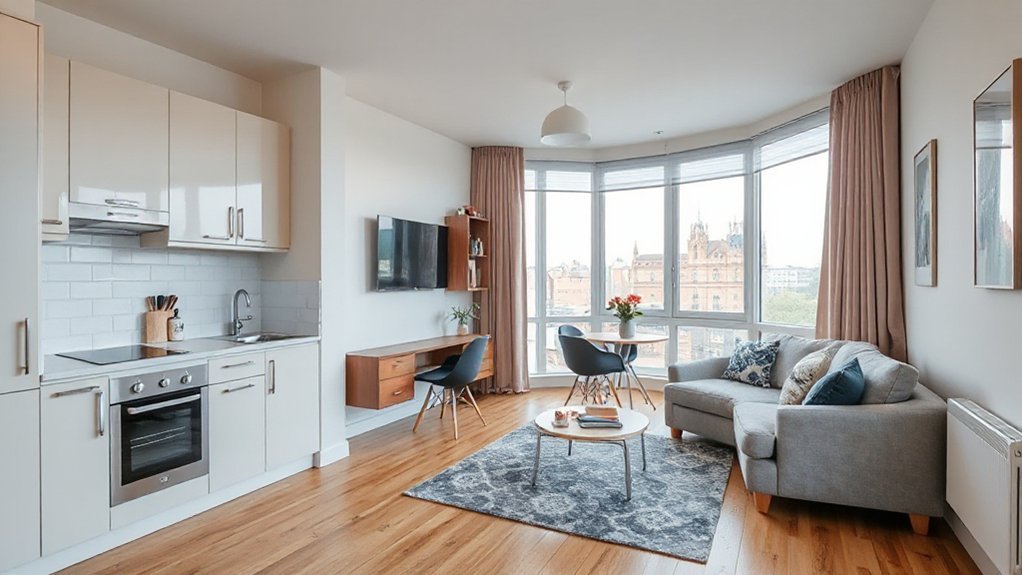
You’ll want a lean plan: target cost-effective, durable upgrades that cut bills and boost appeal in UK student hubs. Prioritize insulation, smart controls, and ventilation to lift energy performance, then layout spaces for flexible study and social use. Durable, easy-clean finishes reduce maintenance risk, while well-designed communal areas drive longer tenancies. Focus on high-demand areas and tailor tweaks to local student needs, then weigh upfront costs against long-term yields as you map the ROI. The next step? consider the specifics that matter most in your city.
Start Here: Do You Need Renovations for Higher Yields?
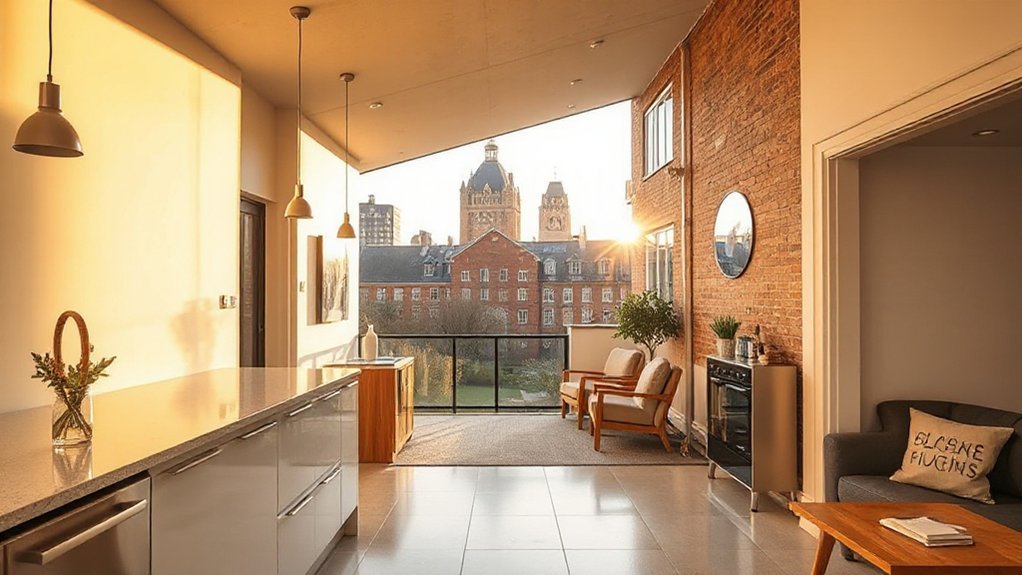
If you’re aiming to boost rental yields in UK university towns, start by evaluating whether your current property can meet student and short-stay demand without costly renovations. You’ll perform a quick property valuation to gauge baseline value and potential uplift from minor, targeted changes.
Focus on spaces, layout, and durability that support high tenant turnover, since tenant satisfaction drives renewals and referrals. Compare current rents against market benchmarks and occupancy patterns for nearby student clusters.
If valuation signals satisfactory yields with minimal fixes, prioritize leasing operations, not major build-outs. If gaps appear, measure ROI on improvements like cosmetic refreshes or flexible living zones.
Your disciplined, data-driven approach minimizes risk while maximizing predictable income and community belonging.
Budget-Efficient Energy Upgrades That Lower Bills
Upgrading insulation on a budget can cut heat loss by a measurable margin and reduce monthly bills quickly.
Pair that with efficient heating, and you’ll see consistent savings even if usage patterns vary across semesters.
We’ll weigh upfront costs against long-term energy reductions to balance risk and return for your rental portfolio.
Insulation Upgrades on Budget
Could budget-friendly insulation upgrades meaningfully cut heating bills in UK university towns? You’ll see measured gains when you target walls, lofts, and floors with proven insulation materials.
Data show heat loss declines of 15–30% after proper installation, translating to tangible monthly savings for student flats and shared houses.
Choose budget friendly solutions that balance cost and payoff—dense mineral wool, dense-pack cellulose, and high-performance external boards often deliver the best payback timelines.
Prioritize airtightness improvements alongside mineral wool fills to curb draft paths.
Risks include improper sealing or moisture buildup, so pair upgrades with ventilation checks and short-term monitoring.
Result-focused planning means estimate upfront costs, track energy usage over seasons, and adjust with scalable options as occupancy changes.
Belonging grows when tenants feel consistently warm and financially supported.
Efficient Heating for Savings
Efficient heating upgrades deliver tangible savings by cutting energy use where it matters most in student housing—from common boilers to thermostat controls and heat emitters. You’ll see clearer bills as smarter systems reduce waste during peak demand and overnight dormancy.
Pairing smart thermostats with zone controls helps you tailor heat to occupancy, boosting comfort without overspending. Solar heating can augment traditional boilers, slashing grid consumption during sunny terms and lowering seasonal bills.
This approach offers measurable payback timelines, supported by monthly usage data and maintenance logs. Risks include upfront capital, need for professional installation, and ensuring controls remain occupant-friendly.
Track occupancy, set targets, and review performance quarterly to verify that efficiency—and your rental appeal—continues growing together. Smart thermostats, Solar heating.
Space-Saving Layouts That Attract Student Tenants
You’ll see higher occupancy and rents when you optimize Compact Room Configurations that maximize usable space without sacrificing privacy.
Pair Flexible Furniture Strategies with modular layouts to boost room adaptability, measured by faster lease-ups and higher retention among student tenants.
Prioritize Multi-Use Living Spaces to increase perceived square footage and resilience against market dips, tracking impact with occupancy, turnover, and rent per square foot.
Compact Room Configurations
Compact room configurations deliver higher rental yield in student-focused properties by maximizing usable space without increasing footprint. You’ll see stronger occupancy stability when spaces feel generous yet efficient, thanks to clever zoning and built-in storage that reduces clutter.
High density layouts can be optimized with retractable desks, wall beds, and modular wardrobes, enabling independent study corners without sacrificing collaboration zones.
Shared bathrooms become viable in compact schemes when access routes minimize foot traffic and maintenance needs stay predictable.
Data shows rent per square foot rises where flow is intuitive and noise control is prioritized, lowering churn.
Risk-aware planning includes fire exit clarity, accessibility compliance, and scalable design so you can adapt to changing cohorts without costly reworks.
Belonging grows as students perceive thoughtful, community-friendly spaces.
Flexible Furniture Strategies
Flexible furniture strategies maximize usable space without shrinking comfort, enabling you to attract and retain student tenants by delivering adaptable living areas that feel larger and more functional. You’ll see data-backed results when you choose modular furniture and adaptable layouts that optimize square footage while preserving study zones and social interaction.
In practice, smart selections—folding desks, wall beds, and compact storage—reduce clutter, boost daily usability, and support longer tenancies. Prospective renters notice efficient flows, consistent build quality, and reassurance that spaces adapt to varied routines, from quiet study to group collaborations.
Risk awareness means sizing for demand, selecting durable finishes, and planning for maintenance. This approach builds belonging by offering flexible, reliable spaces that align with student expectations and budgeting realities.
Multi-Use Living Spaces
Multi-use living spaces blend efficiency with adaptability to attract student tenants and maximize rentability. You’ll see stronger occupancy when layouts support study, socializing, and rest within compact footprints.
Data shows modular furniture and zoned micro-areas boost perceived value, driving higher rents without expanding square footage. Prioritize integrated storage, hidden beds, and foldable work surfaces to sustain daily flow and reduce turnover risk.
Pair space-saving layouts with luxury amenities—compact wine storage, smart lighting, and climate zones—to elevate appeal while controlling costs.
Design consistency across bedrooms, kitchens, and lounges fosters a cohesive feel, enhancing aesthetic enhancements that tenants report as decisive.
Monitor usage patterns, adjust configurations, and test configurations per unit to optimize yield while maintaining a sense of belonging and safety.
Durable, Student-Friendly Finishes for Busy Halls
Durable, student-friendly finishes are essential in busy halls to minimize maintenance costs and maximize occupancy. You’ll prioritize finish durability by selecting coatings and surfaces proven in high-traffic student environments, backed by data on lifecycle costs and downtime.
Opt for student friendly materials that resist scuffs, moisture, and vandalism, yet maintain a welcoming aesthetic. In practice, this means low-odor paints, impact-resistant laminates, and resilient vinyl or epoxy floors with slip resistance and easy cleaning.
Track performance through defect logs and cost-per-gap closure, aiming for lower repaint and replacement intervals. Assess risk with supplier warranties and refurbishment windows that align with tenancy cycles.
Your strategy should balance durability, comfort, and community feel, reinforcing belonging while preserving value and occupancy in demanding hall climates.
Modern Communal Spaces That Command Premium Rents

Modern communal spaces must blend design, durability, and occupant behavior to justify premium rents in UK university cities. You’ll see yields rise when layouts support social interaction without sacrificing privacy, and when materials resist heavy use.
Prioritize flexible zones: lounge areas, study nooks, and kitchen hubs that scale with occupancy. Data show premium rents correlate with conspicuous luxury amenities and well-timed maintenance cycles, not mere aesthetics.
Implement efficient lighting, sound-absorbing surfaces, and durable furnishings to reduce turnover costs while boosting perceived value. Track usage patterns to optimize space allocation and energy use, minimizing risk.
Emphasize aesthetic improvements—cohesive color palettes, natural textures, and high-contrast wayfinding—to foster belonging and steady demand among students and staff alike.
Balanced investment, clear metrics, and responsive upkeep drive sustained profitability.
Tailoring Upgrades to Manchester, Leeds, Birmingham, Glasgow
To tailor upgrades effectively for Manchester, Leeds, Birmingham, and Glasgow, start with city-specific demand signals, occupancy patterns, and regulatory contexts to prioritize high-impact areas. You’ll map local market trends to student amenities that drive retention and yields, focusing on neighborhoods with strong demand.
You’ll also ground decisions in occupancy data, turnover rates, and lease duration to identify conversion opportunities from bare to furnished practicality. Prioritize room types that align with growth sectors, while respecting zoning and safety rules to minimize risk.
You’ll emphasize durable, low-friction improvements that appeal to diverse student cohorts and commuting patterns. Pair upgrades with flexible leases and accessible amenities to boost occupancy stability.
Upfront Costs vs. Long-Term ROI: A Practical Calculator
Upfront costs set the ceiling on what you can achieve, but long-term ROI determines whether those investments pay off. You’ll use a practical calculator to compare initial outlays against projected annual cash flow, occupancy, and resale value.
Input purchase price, refit costs, and financing terms, then model scenarios across tenancy cycles. The tool highlights break-even timelines, sensitivity to rental growth, and maintenance escalations, so you can align choices with your risk tolerance and belonging-driven goals.
Expect transparent tradeoffs: higher upfronts may boost margins if demand stays strong, while leaner fixes protect you in softer markets. By tracking upfront costs and long term ROI, you build confidence, reduce surprises, and reinforce the cohort of investors who plan, test, and persist.
Frequently Asked Questions
How Quickly Can Renovations Start After Tenant Turnover?
Renovations can start within 1–5 days after turnover, depending on permits and insurance. You’ll accelerate by securing property insurance and renovation permits upfront, minimizing risk while prioritizing transparent timelines and a belonging-minded, data-driven plan.
Which Renovations Boost Occupancy in University Towns Fastest?
Directly boosting occupancy fastest, you prioritize student accommodation upgrades that offer high ROI while balancing renovation costs; you compare occupancy growth vs. price, minimize risk, and create belonging, choosing practical, data-driven renovations that attract tenants quickly.
Do Landlord Licenses Impact Renovation Choices in UK Cities?
Landlord licensing does influence renovation choices, introducing Renovation restrictions that heighten compliance risk. You’ll prioritize durable, verifiable upgrades, tracking outcomes and costs rigorously to guarantee tenancy speeds and occupancy stay high while staying within regulate-and-belong standards.
Are Eco-Certifications Required for Premium Student Rents?
No, eco-certifications aren’t strictly required for premium rents, but they boost appeal. You’ll attract higher occupancies by showcasing eco certifications, tracking energy metrics, and reducing risk, helping tenants feel confident and connected to sustainable, data-driven living.
How Do Market Rents Influence Renovation ROI Timing?
Coincidence prompts you: when market rents rise, ROI timing tightens; you align renovation milestones with market trends, adjusting investment strategies to minimize risk, maximize occupancy, and cultivate belonging among tenants while delivering data-driven, results-oriented outcomes.
Conclusion
You’ll see higher occupancy and steadier yields when you choose cost-efficient, durable upgrades backed by data. Start with insulation, smart controls, and modular spaces to slash bills and boost appeal. Anticipate objections about upfront costs by framing them as ROI: quicker rent-ups, longer tenancies, and lower vacancy risk. If a retrofit seems pricey, run the calculator on ROI timelines and sensitivity scenarios to prove the long-term gains outweigh the initial outlay. Results you can trust, risks managed, profits amplified.
About the Author