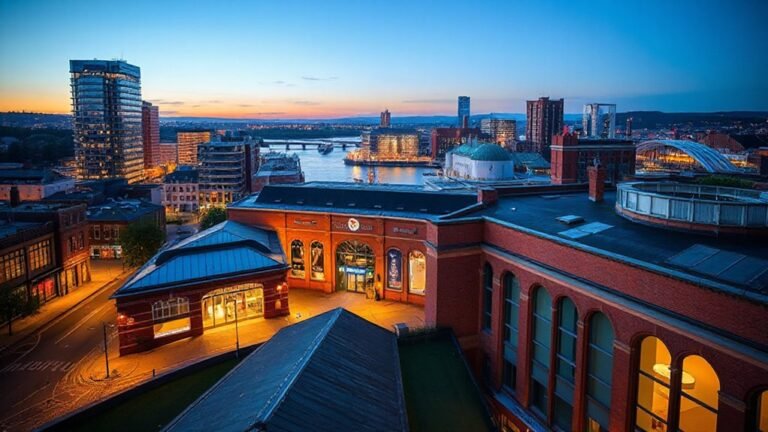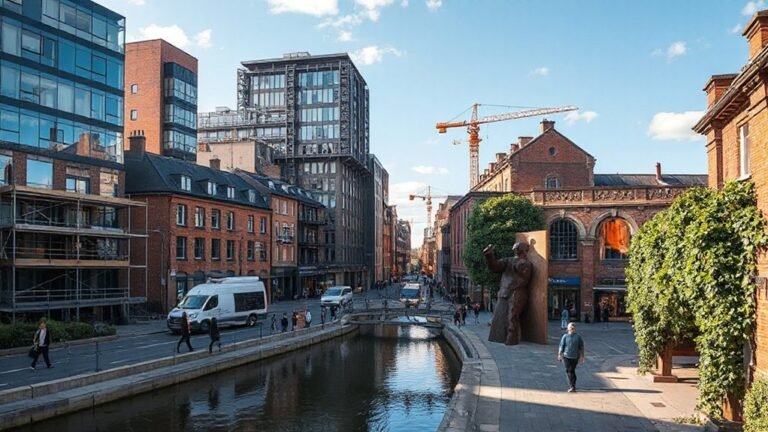
You’re looking at the top Bristol neighbourhoods by house price growth through a data-driven lens: demand clusters around transit corridors, strong schools, and emerging urban cores, with redevelopment and green space fueling value. Prices rise where amenities, walkability, and investment converge, while infrastructure upgrades sustain momentum. It’s a pattern that signals where value may persist, but the specifics—and what they mean for your strategy—invite closer scrutiny as the market evolves.
What’s Driving Bristol Price Growth in the 2020s?
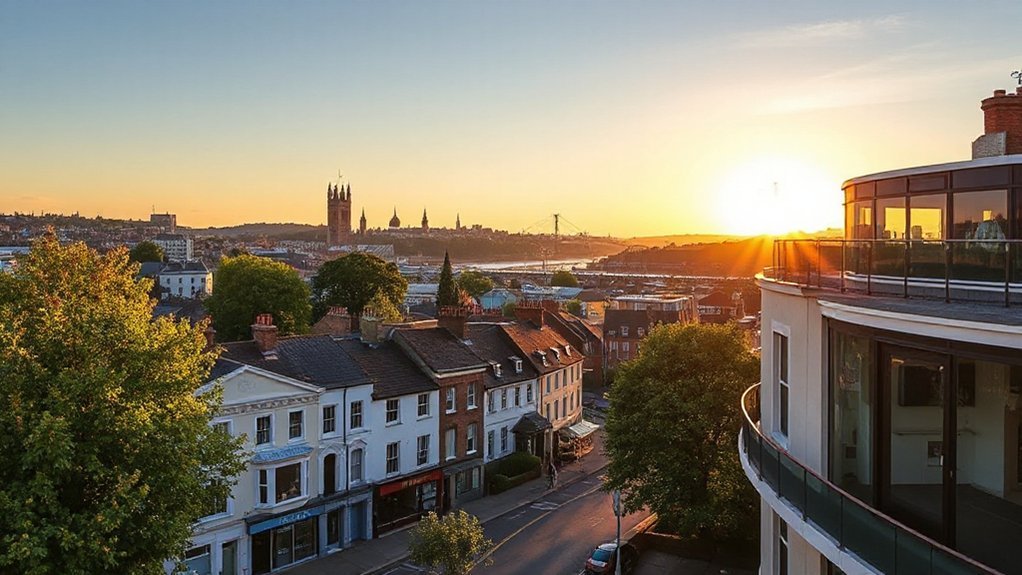
Several forces drive Bristol’s price growth in the 2020s. You’ll see rapid inventory changes, with market fluctuations shaping short-term moves and signaling longer-term trajectories.
Price momentum reflects sustained demand from buyers who value transit access, schools, and city amenities, even as new listings patch gaps between supply and demand.
Data show higher price appreciation where employment growth and wage levels rise, supporting affordability across different sectors.
You respond to shifting buyer preferences by prioritizing properties offering energy efficiency, flexible layouts, and potential rental yield.
Collective effects—in-migration, investor activity, and planning policy—create a growth corridor in central and fringe markets.
While macro cycles matter, micro-market signals, such as days-on-market and price per square foot, provide actionable insight for buyers and investors.
Top Bristol Neighbourhoods by Price Growth (Ranked)
Here are Bristol’s top neighborhoods by price growth, ranked to reflect recent performance through 2020s mid-cycle signals. You’ll see a data-driven view, highlighting areas with sustained appreciation and solid supporting fundamentals.
Historical housing trends show pockets of consistent upside, even as overall value shifts shift with economic cycles. Neighborhood gentrification appears in several cores where demand, amenities, and school quality cluster, pushing prices higher while transaction velocity remains robust.
In this ranking, you assess year-over-year gains, 5-year averages, and volatility measures to identify durability versus momentum. Hot spots exist where supply constrained inventories meet rising buyer competition, while stable performers balance growth with affordability pressures.
The result is a concise, evidence-based snapshot of where Bristol’s price growth currently sits, by neighborhood.
Case Study: Transport Links Boosting Neighbourhood Value
Transport links are a proven lever for neighborhood value, with data showing near-term price gains aligning with improved access to employment hubs and amenities. In this case study, you’ll see how transit improvements correlate with price momentum, not just proximity.
Shorter commutes, faster connections, and reliable service lift buyer confidence, reflected in higher per-square-foot values across adjacent blocks. Historic architecture often benefits from preserved streetscapes that attract longer-term residents, reinforcing price stability even as markets rise.
The evidence highlights a stepwise pattern: new or enhanced routes precede modest price uplifts, followed by accelerated growth as ridership and footfall rise. You’ll also notice how community events cluster near transport hubs, reinforcing demand and supporting incremental value gains over time.
Amenities and Schools That Lift Bristol Property Value
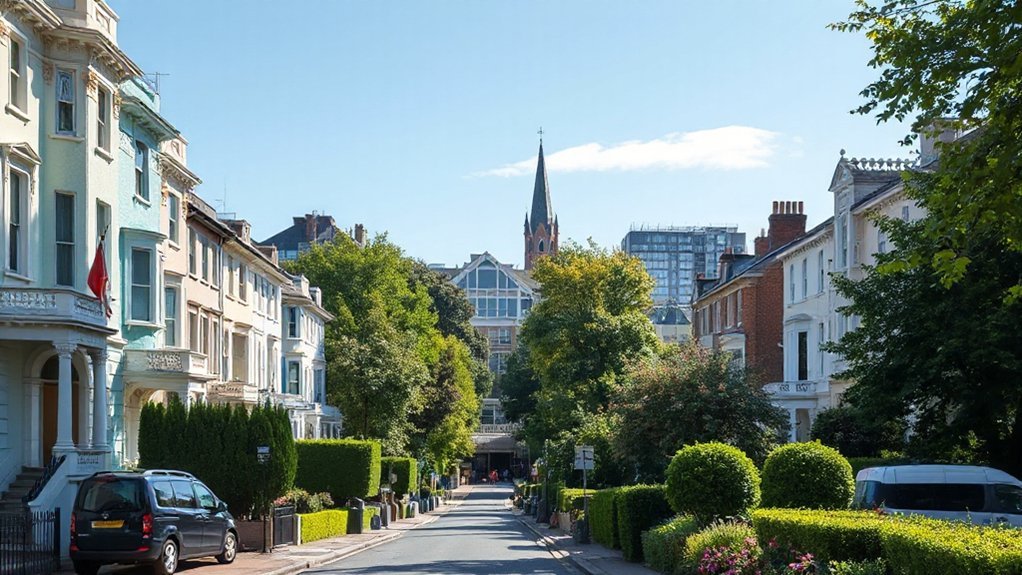
Amenities and schools shape Bristol property value, with top-rated schools and vibrant local amenities driving buyer demand and higher price per square foot. You’ll see price premiums tied to proximity to high-performing academies and fees that reflect exam outcomes and Ofsted ratings.
Data from multiple boroughs show secondary provision near within-zone catchments correlates with stronger annual growth, while primary access associates with longer-term stability.
Beyond academics, present-day amenities—local cuisine spots and cultural anchors—lift desirability, translating into higher per-square-foot values when paired with reputable schooling.
Art galleries, museums, and community hubs contribute to walkability and liveability scores, reinforcing price resilience during market cycles.
In short, combinations of excellent schools and curated local experiences consistently outperform peers in value appreciation.
Redevelopment Plans in Bristol and What Buyers Should Watch
Redevelopment plans can meaningfully shift property values and neighborhood dynamics, so you’ll want to track approved schemes, zoning changes, and timelines.
Data shows buy‑in periods and construction waves often correlate with price volatility and short‑term market pauses, followed by longer‑term uplift.
Watch for development watchpoints like permitting milestones, contractor performance, and community feedback loops to gauge risk and opportunity.
Redevelopment Impacts On Buyers
Redevelopment plans in Bristol can directly affect buyer decisions, so you should scrutinize proposals, timelines, and funding sources before committing.
In recent projects, clear correlations emerge between announced schemes and nearby price trajectories, even before construction starts. You’ll want to track approved masterplans, zoning changes, and anticipated remediation costs, as these factors influence final sale prices and mortgage lending terms.
Evidence shows redevelopment effects often include short-term price volatility, followed by longer-run stabilization as amenities and infrastructure materialize.
Consider how affordable housing requirements, community benefit agreements, and transport upgrades might shift desirability and density.
Your buyer considerations should also weigh project phasing and risk of delays, ensuring contingency plans align with appetite for potential value gains versus disruption.
Data-driven due diligence minimizes surprises and guides informed offers.
Key Development Watchpoints
1) Approved masterplans and zoning revisions
2) Funding sources, grants, and debt implications
3) Development timelines and phase risk
4) Demographic and demand shifts with price sensitivity
How to Evaluate Future Growth in Bristol Neighbourhoods
You should start by examining Economic Indicators Ahead to gauge which areas show sustainable price momentum.
You’ll also weigh Demographic Shifts Highlighted to understand who’s moving in and how demand may shift over time.
Finally, you’ll map Infrastructure And Transport Plans to assess how planned projects could release new growth corridors and affect prices.
Economic Indicators Ahead
- Local employment growth and wage trends, mapped to neighborhood demand
- Mortgage rate sensitivity and financing conditions, affecting buyer capacity
- Housing supply pipelines, planning approvals, and time-to-build dynamics
- Price-to-income and rent-to-income ratios, signaling affordability pressures
Interpreting these data points lets you separate transient spikes from durable momentum, improving your timing for investing in Bristol areas.
Demographic Shifts Highlighted
Demographic shifts provide a forward-looking lens on Bristol neighbourhood growth, building on the income and demand signals discussed earlier. You’ll assess how changing age structures, household compositions, and migration patterns reshape local markets.
Demographic trends indicate a rising share of young professionals and downsizers in select districts, while student populations concentrate around university corridors. Population shifts correlate with demand for smaller, higher-density housing near amenities, schools, and transit nodes, influencing price trajectories differently across wards.
You should triangulate census data, school enrollments, and housing tenure rates to map sensitivity to affordability, turnover, and vacancy. Early signals suggest pockets of sustained growth where employers attract talent and where cultural amenities attract diverse households.
Use this evidence to forecast neighbourhood resilience and potential price acceleration.
Infrastructure And Transport Plans
How can Bristol’s infrastructure and transport plans shape future neighborhood growth, and how should you evaluate their impact?
You’ll assess plans by linking projected transport capacity, grid reliability, and energy strategies to neighborhood metrics like access, commute times, and dwelling efficiency. Strong indicators include integration of Smart grids and Renewable energy, which boost reliability and reduce operating costs for residents and businesses.
Evaluate phasing, funding, and delivery risk alongside environmental and social benefits, using published timelines, planning documents, and impact analyses.
Compare projected density gains with current housing supply, and consider how interchanges, bus rapid transit, and cycling networks affect growth corridors.
Demand-side resilience and climate adaptability should guide investment prioritization.
- Transport capacity versus demand
- Energy integration and grid reliability
- Climate and resilience alignment
- Delivery timelines and funding signals
Quick Takeaways for Buyers and Investors
If you’re evaluating Bristol neighbourhoods for investment or a home purchase, focus on price growth momentum, not just current values. The data show steady momentum in areas with recent price-per-square-foot gains and tighter supply, signaling durable appreciation beyond peak listings.
Prioritize neighborhoods with consistent quarterly growth and low vacancy rates, which correlate with rising rents and investment yield. In your analysis, compare annualized growth over three to five years and consider macro factors like new developments and accessibility improvements.
Look for pockets where luxury apartments, updated transit links, and strong local economies reinforce gains without overpaying. Don’t overlook Green spaces, which attract families and can sustain premium pricing.
Target areas that balance affordability, liquidity, and long-term resilience to optimize risk-adjusted returns.
Frequently Asked Questions
How Do Interest Rates Affect Bristol House Price Growth Now?
Interest rates cool growth by raising mortgage affordability, which dampens buyer demand in Bristol. You’ll see prices stabilize as borrowing costs rise, while declines hinge on inflation trends, lender offerings, and policy shifts shaping affordability and demand.
Which Neighbourhoods Show Sustainable Long-Term Growth Beyond 2030?
Evidence shows sustainable growth lies where Historical affordability meets Community development; where affordable access, mixed-use projects, and transport links endure. You’ll see neighborhoods balancing supply and demand, outperforming peers with stable demand, diverse housing, and ongoing investment beyond 2030.
Do New Transport Projects Impact Surrounding Property Values Immediately?
New transport projects can raise surrounding property value quickly, though effects vary. You’ll see immediate bumps when transport infrastructure improves access, with persistence contingent on broader demand, congestion, and complementary development shaping sustained value growth.
How Do Local Council Policies Influence Price Trajectories?
Policies steer price paths: you’ll see trajectories drift where zoning regulations streamline development and where robust community engagement guides projects, shaping demand. You’ll note evidence: predictable reform raises confidence, while delayed rules cool speculative spikes.
Are Rental Yields Aligned With Price Growth in Bristol Districts?
Rental yield disparities exist, and Bristol districts show mixed alignment with price growth, you’ll find. You’ll note that neighborhood affordability moderates yields, while data indicates some growth zones underperform rents relative to prices.
Conclusion
You’ve seen Bristol’s growth isn’t random—it’s powered by transport links, top schools, and amenity-rich cores. The data show value clustering around rail and bus corridors, with redevelopment opening further upside. Look for neighborhoods with ongoing projects and green, walkable streets. Remember: slow and steady wins the race, but in property, “the early bird catches the worm” when access and quality converge. Use the evidence here to target future gains and de-risk your investments.
About the Author