You can modernise a Victorian terrace without major disruption by prioritising energy efficiency and comfort while safeguarding original features. Start with a professional assessment to target insulation, heating, and lighting that respect heritage; choose discreet upgrades and low-dust methods. Plan for quiet, compact systems, smart controls, and clever storage that don’t alter layouts. With careful scheduling and clear communication, you’ll preserve charm and improve function—but the best approach may hinge on what you uncover next.
Define Your Victorian Comfort Criteria
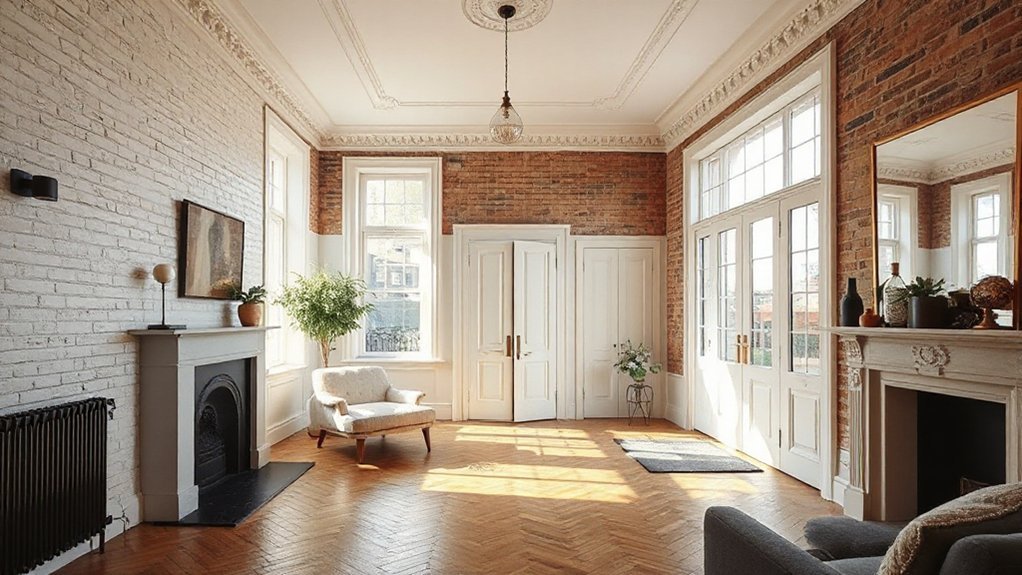
Defining your Victorian comfort criteria starts with listing the core needs that matter most in daily life, then mapping them to the building’s constraints. You’ll assess warmth, acoustics, storage, and safety, translating each into actionable design choices that respect the terrace’s fabric.
Prioritize comfort zones that align with your routines, such as a quiet study alcove, easy-clean surfaces, and reliable modern plumbing, while maintaining a lived-in feel. Consider how traffic flow, light, and task-specific functions interact with structural limits, avoiding overreach that could damage historic elements.
Ground your plan in practical benchmarks: energy efficiency, durable materials, and unobtrusive finishes. You’ll anchor decisions to Victorian decor cues without sacrificing usability, ensuring continuity with historical preservation goals while delivering daily ease and belonging.
Lighting That Respects Victorian Charm
You can start by aligning Victorian lighting aesthetics with subtle modern illumination, balancing ornate fixtures with clean lines.
Keep wiring and fixture safety front and center, ensuring both authenticity and up-to-date electrical standards.
This approach sets the tone for evidence-based choices that respect history while providing practical, reliable lighting.
Victorian Lighting Aesthetics
Victorian lighting isn’t just about fixtures—it’s about balance between warmth, craft, and legibility. You’ll want glow temperatures and CRI that honor authentic interiors without shouting, so aim for warm whites around 2700–3000K and a CRI above 90.
Dimmer controls let you shift mood for quiet evenings, gatherings, or reading, preserving architectural details.
When selecting lighting, prioritize scale that respects room proportion; avoid oversized pendants in low-ceilinged spaces and choose wall sconces to echo, not overpower, original cornices.
Integrate Victorian wallpaper and ornate furnishings by exposing natural finishes and using lamps with brass or bronze patinas that age gracefully.
Subtle contrasts—soft shadows, warm illumination—enhance legibility of textural details while maintaining contemporary comfort and a sense of belonging.
Subtle Modern Illumination
Subtle modern illumination respects Victorian charm by pairing low-profile lighting with warm, true-to-tone finishes that highlight architectural details without competing with them. You’ll achieve this through carefully chosen sources that emit soft ambient lighting, avoiding glare and harsh shadows.
Vintage fixtures can anchor rooms with authenticity, while discreet contemporary elements preserve sightlines and proportion. Prioritize color temperatures around 2700–3000K to sustain a cozy, antique atmosphere, and select dimmers to modulate intensity as rooms shift from day to night.
Place wall sconces beside decorative plasterwork and beneath mirror edges to enhance textures without overpowering periods features. The goal is cohesion over flash, so integrate finishes that echo wood, brass, and aged metal tones while ensuring practical task lighting remains unobtrusive.
Ambient lighting supports comfort, belonging, and effortless navigation.
Wiring And Fixture Safety
Electrical safety is non-negotiable when modernising a Victorian terrace, and careful wiring choices protect both the home’s character and its occupants. You’ll assess existing systems for outdated wiring, then replace problematic runs with compliant cable and proper insulation.
Prioritise consumer units that support modern protections, and guarantee earth bonding and residual current devices are in place for fault tolerance.
Fixture safety matters, too: choose fittings that suit period aesthetics while meeting current clearance, insulation, and heat‑dissipation standards. Verify fixture compatibility with your chosen switches, dimmers, and circuit load, avoiding mixed technologies that can cause nuisance tripping.
Engage a qualified electrician for routing, fixation, and final testing, documenting upgrades for future maintenance.
Thoughtful planning preserves charm without compromising safety or reliability.
Energy-Efficient Upgrades for Victorian Homes
There are practical, proven upgrades that can dramatically reduce heat loss in Victorian homes without compromising their character. You’ll see gains from airtight sealing, draft-proofing sash windows, and adding insulating layers behind existing walls, floors, and roofs.
Focus on heritage-appropriate materials and methods to respect historic preservation while improving performance. Upgrade to high-efficiency boilers or heat pumps suited to older layouts, paired with smart thermostats to avoid wasted energy.
Consider radiant barriers or underfloor insulation where feasible, ensuring slips of plaster and timber remain visible in interior decor. Use programmable controls to balance comfort and cost, and insist on professional assessment to identify thermal bridges.
Energy savings reinforce belonging: you’ll live comfortably without sacrificing authenticity or community standards.
Smart Storage and Spatial Flow for Layouts
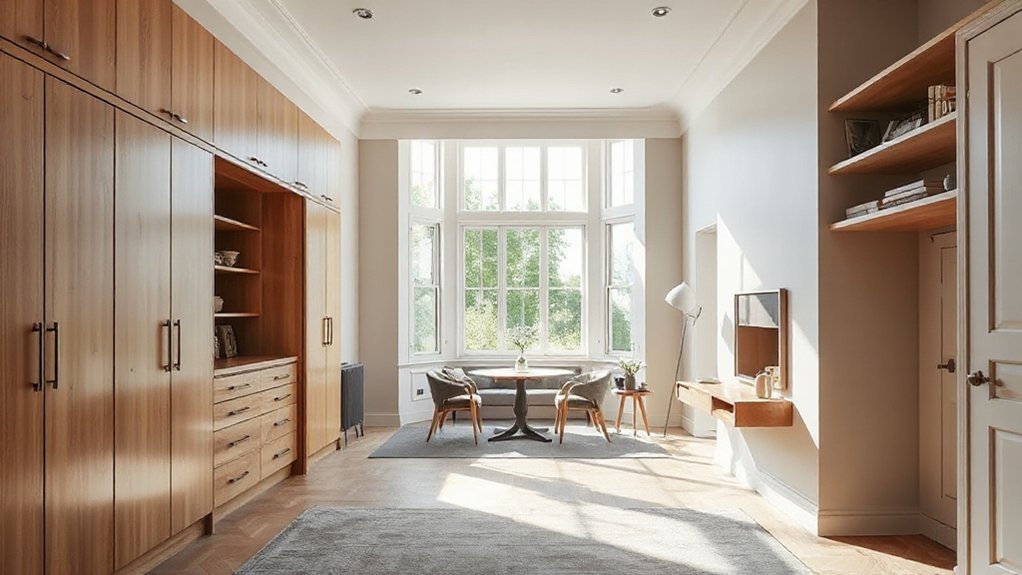
Smart storage layouts maximize usable space without crowding rooms, using built-in cabinetry, alcoves, and multi-purpose furniture. By planning flow-L R and traffic patterns, you create intuitive routes that keep sightlines open and rooms visually larger.
Start with a simple zone map that prioritizes frequently used areas, then tailor storage to those functions to support seamless spatial flow.
Smart Storage Layouts
Smart storage layouts streamline a Victorian terrace by aligning every square inch with daily needs and clear spatial flow. You tailor cabinets and alcoves to tasks, reducing clutter while preserving historic sightlines.
Custom cabinetry integrates vertical space, from under-stair nooks to high shelf recesses, keeping essentials reachable without disrupting architecture. Hidden compartments offer secure storage for valuables and rarely used items, located where they won’t interrupt tempos of daily life.
Choose modular units that adapt to changing routines, enabling flexible living without wall demolition. Prioritize all-in-one solutions: integrated desks, pull-out pantry drawers, and wardrobe organizers that respect ceiling heights and corridor widths.
Evidence shows disciplined layouts boost perceived roominess and reduce misplacement. With intentional design, you cultivate belonging by using space thoughtfully, collaboratively refining storage as your needs evolve.
Flow-Optimized Spaces
Flow-Optimized Spaces combine smart storage with clear spatial flow to reveal practical, adaptable Victorian terraces. You design around intent, routing traffic through zones that minimize friction and maximize usability.
Built-in cabinets, hidden drawers, and retractable surfaces reduce clutter while preserving historical character. Prioritize sightlines that emphasize architectural restoration details, ensuring transitions feel seamless rather than forced.
Layout decisions should respect room proportions and original doorways, avoiding oversized interventions that compromise Historical accuracy. Use multi-functional furniture with shallow profiles in narrow corridors to maintain airiness.
In kitchens and living areas, integrate storage within existing alcoves or chimney stacks where possible. Document changes to support Historical accuracy, and choose finishes that reflect period materials.
This approach fosters belonging by balancing modern practicality with respectful, evidence-based restoration principles.
Silent, Efficient HVAC Upgrades for Historic Houses
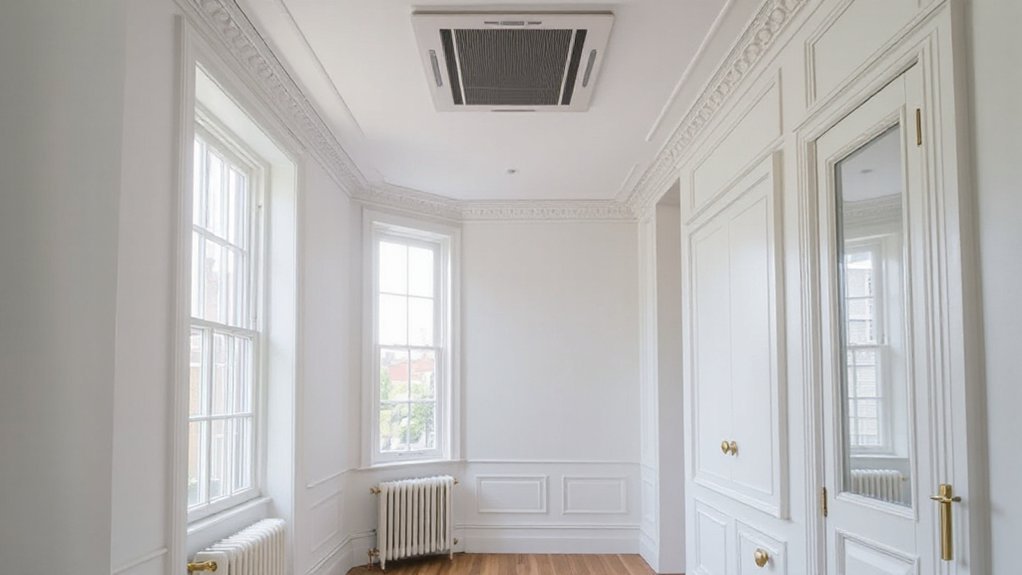
One key challenge in historic houses is cooling and heating without disrupting original fabric or exterior aesthetics. You can pursue silent operation by selecting ducted, compact systems with vibration isolators and acoustically rated components, minimizing sound transfer to living spaces.
Focus on efficiency improvements through high SEER and HSPF equipment, paired with smart thermostats and zoning to avoid overconditioning unoccupied rooms.
Replace or retrofit boilers with modulating gas or heat-pump models designed for low-temperature radiant floors or screeded slabs, preserving skirting lines and plasterwork.
Insulation enhancements behind coving and in attic access improve performance without visible changes.
Validate professional commissioning confirms load calculations, refrigerant integrity, and air-sealing effectiveness, so comfort feels natural and occupants sense shared ownership of a thoughtfully modernized home.
Low-Dust, Low-Hassle Upgrade Plan and Safety Tips
A low-dust, low-hassle upgrade plan focuses on minimizing disruption while maximizing indoor air quality and safety. You’ll schedule work in controlled blocks, use containment and HEPA filtration, and choose low-dust methods for plaster, paint, and sanding.
Before you begin, review period specific decor constraints and align tasks with historical preservation guidelines to avoid unintended damage. Protect occupants with air monitoring and temporary barriers, and communicate milestones to foster belonging and trust.
Employ dust-minimizing tools, brush-and-roll coatings, and rapid-clean routines to reduce residue. Select finishes that respect scale, depth, and colour historically associated with the terrace, while meeting modern performance standards.
Document decisions for future caretakers and maintain a living, compliant, low-risk plan throughout the project.
Frequently Asked Questions
How Can I Preserve Period Features During Upgrades Without Losing Comfort?
You preserve period features by prioritizing historical authenticity and aesthetic integration, upgrading only essential systems with minimal intrusion, and selecting sympathetic materials; you’ll feel connected, supported, and comfortable as you blend heritage grace with modern efficiency.
What Are Non-Invasive Options for Insulation in Victorian Walls?
You should consider non-invasive insulation options like internal wall panels or vacuum insulated plasterboard, prioritizing Historic preservation while you evaluate insulation techniques that maintain fabric integrity and display: you’ll belong to a careful, evidence-based conservation-minded community.
Can I Retrofit Modern Plumbing Without Damaging Historic Plaster?
Yes, you can retrofit modern plumbing without wrecking historic plaster. Start with chase-free pipe routes, leak-tested fittings, and cementitious restoration. This supports a smart home, eco-friendly materials, while keeping your community-minded, belonging-focused heritage intact and stylish.
Are There Affordable, Discreet Ventilation Solutions for Old Homes?
Yes. You can install discreet ventilation, using smart thermostats to balance temperature and air quality. Choose compact inline fans or passive vents, ensuring minimal disruption while preserving historic fabric, so you feel comfortable, connected, and confidently part of your home’s ecosystem.
How Do I Balance Energy Savings With Preserving Original Aesthetics?
You balance energy savings with preserving original aesthetics by prioritizing Historic preservation while upgrading essential systems, using modern energy-efficient insulation and windows selectively, and documenting changes to sustain authenticity and create a sense of belonging within your home.
Conclusion
You can modernise a Victorian terrace with minimal disruption by prioritising insulation, discreet upgrades, and smart controls that don’t erase character. Assess your comfort criteria, preserve plaster and period details, and choose heritage-friendly materials. Use low-dust methods, quiet HVAC, and space-saving storage to maximise flow. Schedule work to limit dust and noise, and communicate clearly with trades. Stay evidence-backed: test airtightness, monitor energy gains, and keep a flexible plan—it’s a win-win, a well-tuned machine, truly.
About the Author