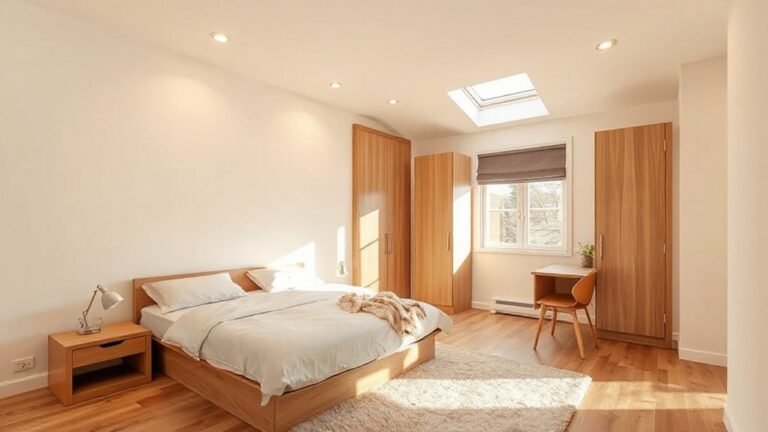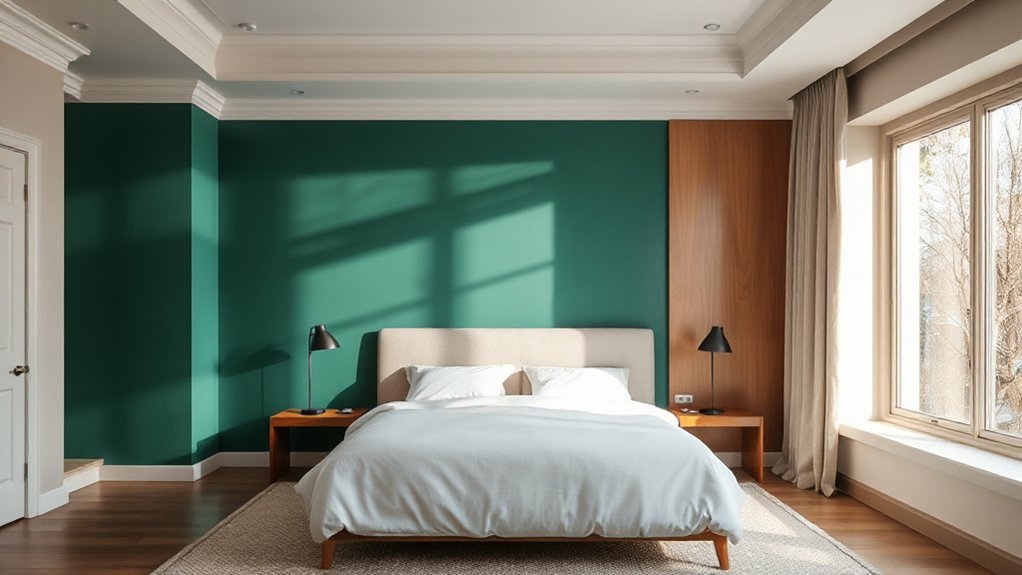
Choosing an accent wall in your bedroom starts with the right focal point—often behind the headboard—so you set a calm or energizing tone from the moment you enter. You’ll balance color, texture, and pattern with furniture and lighting that feel cohesive, not crowded. Use this wall to express your personality while keeping the rest of the room serene. Ready to shape a space that feels both stylish and inviting, but with a subtle edge that invites a closer look?
What an Accent Wall Can Do for Your Bedroom
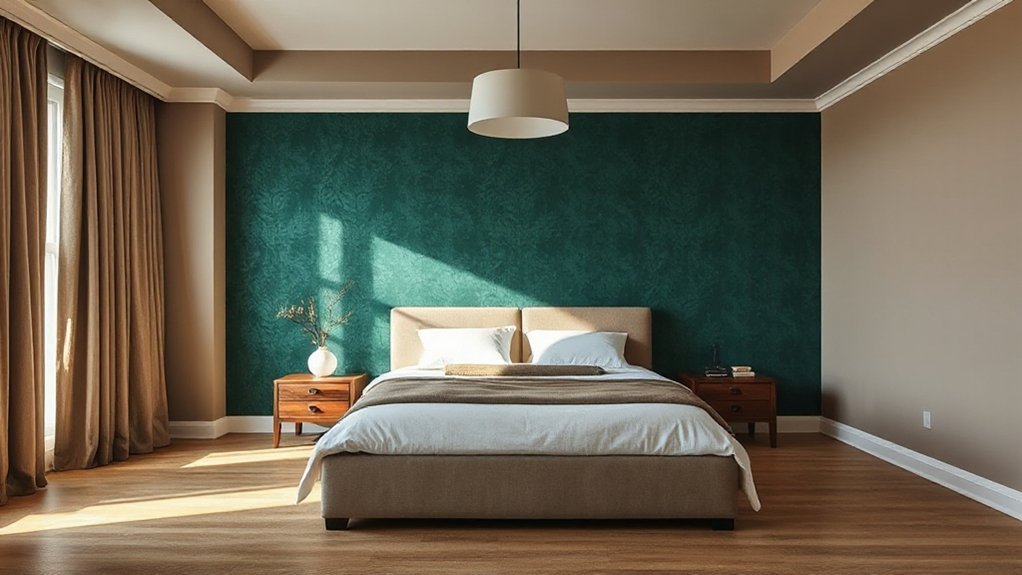
A well-chosen accent wall can transform a bedroom by adding depth, style, and a focal point without overwhelming the space. You’ll harness color psychology to set the mood: calming blues for rest, warm terracotta for coziness, or bold charcoal for drama. An accent wall guides the eye, establishes hierarchy, and reinforces your room’s narrative with intentional contrast. Keep lighting and furnishings in mind so the wall reads softly at night and crisply during the day. Wall art placement matters: position pieces at eye level to create balance, avoid clutter, and let a single statement work with or anchor other décor. Use texture or subtle patterns to enhance interest without competing with your overall color story. In short, your wall becomes a purposeful mood-maker.
Choosing the Right Wall to Highlight for an Accent Wall
Think about which wall naturally draws your eye first—that visual focus area that sets the mood the moment you enter. Consider traffic flow so the accent wall enhances movement rather than obstructs it. Align color and texture with your daily rhythms for a balanced, aspirational bedroom.
Visual Focus Area
Choosing the right wall sets the mood for your room, so pick a surface that naturally draws the eye—often the headboard wall or the one behind the seating area. You want a visual focus area that feels intentional, not incidental, guiding the eye to your centerpiece without shouting. Identify architectural cues—niches, tall ceilings, or a dominant vertical line—and align your accent with them for a seamless flow. Consider color psychology to influence mood: warmer hues create coziness, cooler tones add calm, and bold contrasts energize subtly. Keep wall art concise and deliberate; a single large piece or a curated triptych often outperforms clutter. Guarantee lighting enhances the focal wall, highlighting texture or paint depth. The result: a cohesive, aspirational bedroom with a clear visual hierarchy.
Traffic Flow Considerations
When you pick the wall to highlight, consider how traffic will flow around the room. Choose a location that remains unobstructed by doors, beds, and dressers to avoid bottlenecks. Positioning matters: a wall behind the bed typically feels serene, while an exit-side wall can create an energizing focal point. Think about movement from entry and toward storage zones to make certain you don’t force detours. Color psychology informs the impact of your choice—softer tones invite calm in high-traffic areas, bolder hues energize but should be restrained. Wall mounting should be secure and visually balanced with furniture scale, allowing light to bounce without glare. Plan the sightline: your accent wall should be visible from multiple angles without competing reflections or clutter.
Accent-Wall Color Strategies: Calm Versus Energizing
Accent walls set the mood in a bedroom, so pick a color strategy that matches how you want to feel: calm for rest or energizing for focus. When you choose calm, opt soft neutrals, cool blues, or misty greens that compress wall proportions visually, making the space feel retreat-like and larger. For energizing, select saturated hues or contrasting accents that heighten alertness without overpowering the room’s balance. Use color psychology principles to align intensity with your routine: calmer tones for winding down, bolder ones for morning momentum. Consider the wall’s position and lighting, ensuring the accent wall complements doorways and windows rather than competing with them. Finalize a palette that sustains harmony while delivering intentional mood shifts.
Texture and Materials for the Accent Wall
Texture sets the vibe before color, so you’ll want wall options that feel tangible—think woven textiles, brick, or sculpted plaster. Material choices for depth guide your room’s personality, from warm woods to cool stone, each bringing a distinct weight and touch. Finish impacts tone, with matte to satin surfaces shaping light and mood to finish the look with clarity and confidence.
Texture Options For Walls
There are plenty of tactile options for an accent wall that can transform a bedroom’s mood, from soft, real plaster to bold, textured panels. You’ll feel the difference with Layered textures and choose finishes that balance warmth, acoustics, and light reflection. Prioritize Material durability without sacrificing appeal, so your wall endures daily life and seasonal shifts.
1) Soft plaster with a subtle grain for nuanced depth and timeless resonance
2) Wood slats or beadboard for natural warmth and durable texture
3) Fabric-backed panels offering plush tactility and easy maintenance
4) Sculpted 3D panels delivering cinematic shadows while staying robust
Material Choices For Depth
Material depth comes from combining tactile texture with the right material. You’ll choose textures that pair well with your room’s light and mood, then match them to durable substrates. Consider wood, stone, brick, or high-performance composites that stay stable over time. Material durability matters: select products rated for moisture, everyday wear, and cleaners common in bedrooms. For a sleek look, thin panels or engineered veneers offer depth without bulk. For warmth, textured plaster or fabric-backed panels create luminous shadows. Installation methods vary: vertical planks, herringbone layouts, or panel grids can all emphasize depth. Plan anchors, fasteners, and substrate prep to avoid warping. Prioritize clean edges and consistent seams, then seal or finish as needed to protect texture while preserving tactile appeal.
Finish Impact On Tone
Finish contributes as much as color and form to the room as the wall itself. When you choose texture and materials, you shape the mood just as much as the paint. Matte, glossy, rough, or smooth finishes alter light, depth, and perceived size, guiding how you feel in the space. Consider color psychology and how surface quality reinforces intention. Textured panels add warmth and coziness, while sleek surfaces push toward calm modernity. Material decisions align with interior design trends, signaling tactility and intent. Make intentional contrasts to energize or soothe, then repeat subtly across accessories. Your finish choice should harmonize with furniture, textiles, and lighting for a cohesive scene.
- Warm textures invite comfort and intimacy
- Sleek surfaces amplify calm and clarity
- Rich materials create depth and luxury
- Subtle contrasts sharpen focus and balance
Accent-Wall Wallpaper Ideas That Reflect You
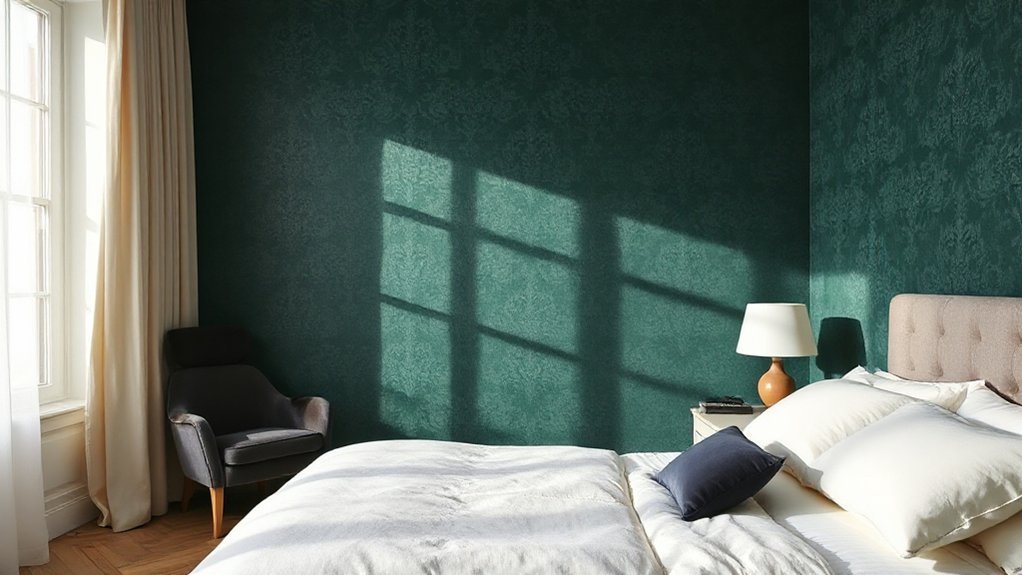
Accent-wall wallpaper lets you tell your room’s story without saying a word. You’ll choose patterns and textures that mirror your personality, not just trends. Think color psychology: muted greens for calm, deep blues for focus, warm terracotta for coziness. If you love vintage vibes, lean into historical styles like classic damask or Art Deco motifs; they cue elegance with minimal effort. For a modern edge, opt for geometric or abstract prints in high-contrast palettes to convey energy. Texture matters too—linen-look or tactile vinyl adds depth without overwhelming the space. Consider scale: large prints feel bold; small repeats read refined. You’ll curate a wall that speaks softly but distinctly, guiding mood, light, and flow while preserving your room’s balance and restraint.
Balancing the Accent Wall With the Rest of the Room
To balance an accent wall, consider how the wall’s color, pattern, and texture interact with the room’s overall palette and lighting. You align mood with color psychology, using contrast or harmony to guide focus without shouting. Let wall art anchor the space, echoing the wall’s character while remaining cohesive with furnishings. Maintain rhythm by repeating subtle notes—frames, motifs, or tones—throughout the room.
- Choose a complementary color scheme that enhances calm or energy.
- Use proportional patterns to create depth without clutter.
- Pair the wall’s texture with soft textiles for balance.
- Integrate wall art that reinforces the room’s narrative and avoids visual overload.
Lighting and Accessories to Elevate the Accent Wall
Good lighting can transform your accent wall from bold to breathtaking, so layer illumination to emphasize color, texture, and detail. To make the wall a true focal point, combine ambient, task, and accent lighting. Use a dimmable overhead light for depth and a pair of sconces or picture lights that flank the wall, shaping shadows and highlighting texture. Add a narrow led strip at the top or base to create subtle glow without glare, enhancing visual harmony with adjacent surfaces. Accessories should reinforce the wall’s character: a minimalist mirror, a single framed artwork, or a wall-mounted shelf with careful spacing. Keep cords tucked, and choose metallics or wood that echo the room’s palette for cohesive, serene drama.
Common Pitfalls and Quick Fixes for Accent Walls
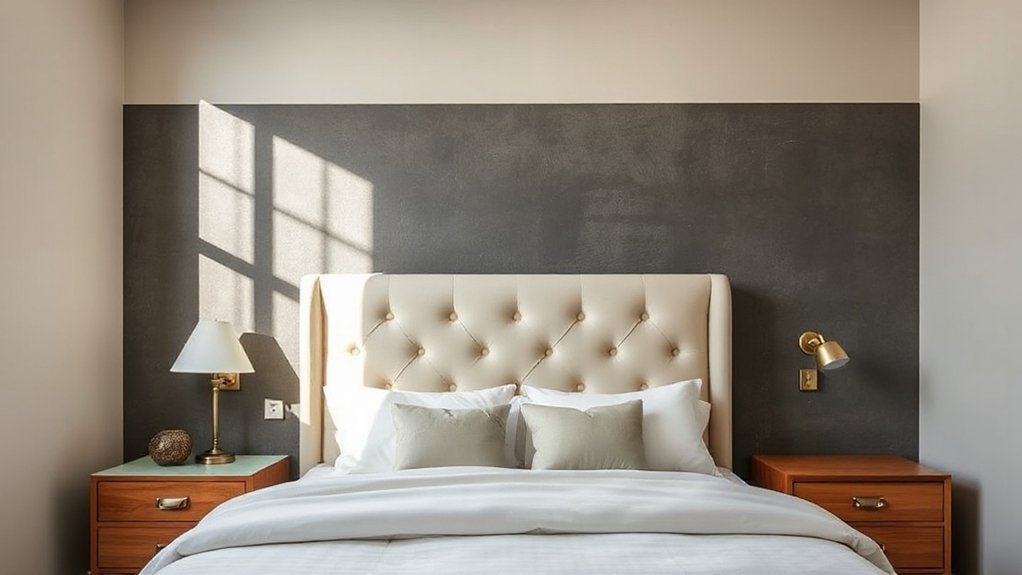
Mistakes aren’t fate for your accent wall. You can spot common pitfalls early and fix them fast to keep the room feeling intentional. Focus on color psychology and how the wall shapes mood, scale, and harmony with furniture placement. If the accent clashes with dominant hues, recalibrate with a calmer tone or a bolder, cohesive accent that supports the bed and seating zone. Avoid overwhelming patterns that compete with architecture or textiles. Guarantee lighting highlights texture rather than glare, and keep balance with negative space.
- Pick a hue that supports furniture placement and lighting without shouting.
- Avoid busy patterns that clash with other walls or decor.
- Test color in multiple lighting moments before committing.
- Align the wall’s texture and finish with room’s overall vibe.
Frequently Asked Questions
How Tall Should an Accent Wall Be to Look Right?
A good rule is to make your accent wall about 75% of the room’s height for strong impact. Aim for color contrast and balanced wall proportions, ensuring the accent breathes with windows and furniture. Adjust ceiling lines as needed.
Can Ceiling Color Affect the Accent Wall’s Impact?
Like a quiet conductor guiding a symphony, yes: ceiling color can boost the accent wall’s impact. You’ll leverage color psychology and ceiling coordination to harmonize mood, enhancing contrast without overwhelming the room.
Is a Dark Accent Wall Suitable in Small Bedrooms?
A dark accent wall can work in small bedrooms if you emphasize color contrast and balance. You’ll create depth without shrinking space, and subtle wall patterns will keep the room lively while preserving an airy feel.
How Does Lighting Placement Change the Wall’s Effect?
Lighting placement transforms mood: position lights to sculpt texture and spotlight focal areas, while wall color harmony remains the anchor. Use Lighting techniques to highlight features, creating contrast without overpowering, and guarantee balanced, cohesive ambience.
Can I Use Multiple Textures on One Accent Wall?
Yes, you can. Mix Wallpaper patterns with Texture layering on one accent wall to add depth. You’ll create contrast, rhythm, and coziness, while keeping balance—choose complementary patterns and scale, and align textures with your lighting and furnishings.
Conclusion
You’ve got the blueprint to make an accent wall sing in your bedroom. Pick the right wall, choose colors that calm or energize, and layer textures and lighting for depth. One surprising stat: homes with thoughtfully placed accent walls see up to 20% higher perceived room sophistication. Keep clutter low and balance with cohesive furniture to sustain the look. Stay aspirational—your wall should feel intentional, inviting, and unmistakably you.
About the Author