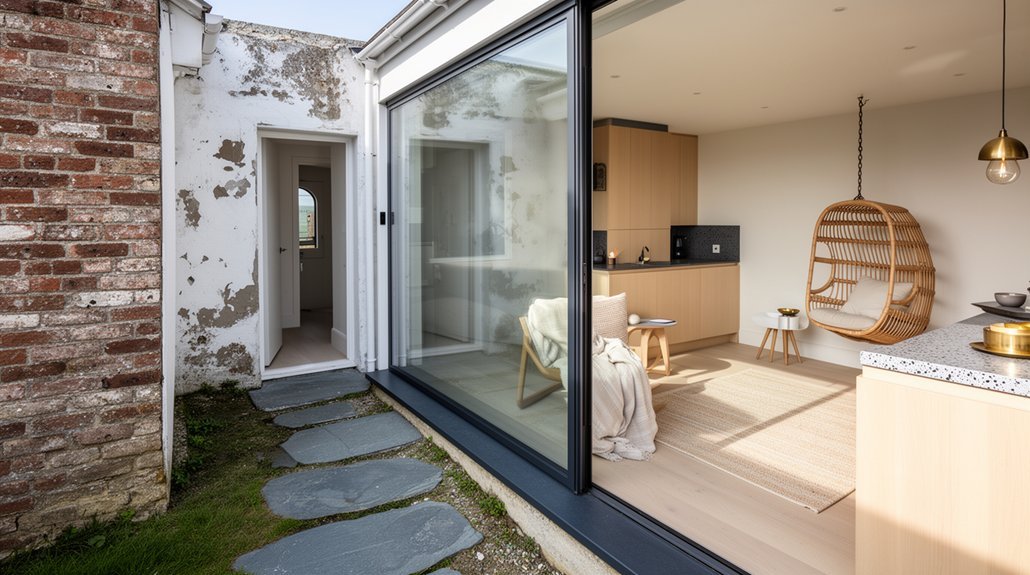
Transform a Devon coastal cottage into a modern retreat by preserving its character with durable, seaside-appropriate materials and a streamlined layout. Prioritize repair over replacement, keep authentic features, and use breathable coatings to protect timber, lime plaster, and joinery. Enhance daylight with light palettes and low-maintenance finishes, while aligning spaces for flow, cross-ventilation, and outdoor access. Integrate verandas and gardens to blur indoors and out, then update kitchens and bathrooms with resilient, compact systems. You’ll uncover practical steps to refine this balance further.
What Makes a Devon Coastal Cottage Truly Special
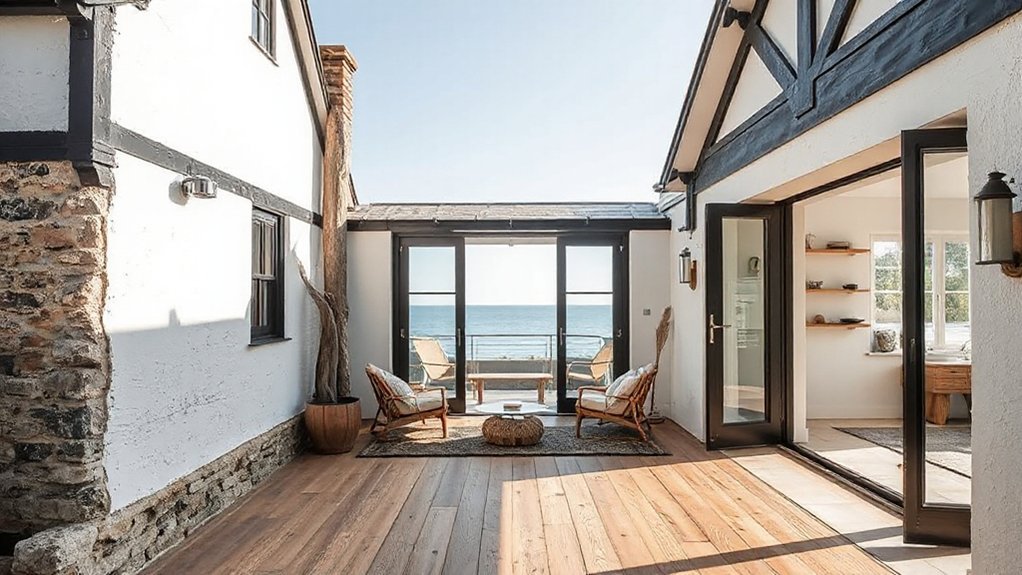
A Devon coastal cottage stands out because its location defines its character: proximity to the sea shapes daily rhythms, light patterns, and structural needs. You’ll recognize that the site dictates insulation strategy, damp control, and weatherproof detailing, all essential for reliability.
Seaside serenity emerges from disciplined planning: strategic window placement, durable timber, and low-maintenance finishes that endure salt spray and wind loading. Coastal craftsmanship governs joinery tolerances, roof geometry, and wall assemblies to balance permanence with flexibility.
You’ll value compact layouts that maximize natural ventilation without compromising thermal performance. Surface materials must resist graffiti, abrasion, and moisture ingress, while interior planes emphasize clarity of function.
In short, the special value lies in how environment, technique, and durability converge to create a resilient, authentic refuge.
Define Your Modern Devon Retreat: Atmosphere, Function, and Comfort
To define your modern Devon retreat, start with atmosphere: a calm, coastal calm that feels curated rather than decorative, with light that shifts through seasons and a material palette that reads as durable yet refined.
You’ll establish function by mapping daily rituals to space: a primary living zone that blends view, warmth, and acoustic clarity; a kitchen designed for efficiency, with durable surfaces and integrated storage; and quiet zones for work or reading adjacent to natural light.
Prioritize coastal serenity in texture and color—linen, oak, and soft blues—paired with modern comfort through controllable climate, low-maintenance finishes, and accessible circulation.
Technical layout, robust detailing, and predictable performance underpin every choice, ensuring a retreat that remains legible, resilient, and comfortably contemporary.
Restore the Quirks, Don’t Replace Them
Preserve the existing charm by repairing, not replacing, worn features that define the cottage’s character. You should identify quirks worth keeping—timber wainscoting, uneven floors, and original hardware—and approach restoration with precision rather than overhaul.
Prioritize subtle improvements that celebrate these details while meeting modern performance standards.
Preserve Existing Charm
The goal is to preserve the dwelling’s character by restoring quirks rather than replacing them, so identify elements that define its provenance—timber beams, plasterwork, hardware—and approach repairs with fidelity to original methods and materials.
You assess historic architecture features to determine authentic restoration paths, prioritizing surface patinas and joinery accuracy. You document conditions, then repair using compatible timber, lime plaster, and traditional fasteners, avoiding modern substitutes that alter texture or tone.
You maintain the building’s environmental performance through breathable coatings and correct curing practices, not through forced modernization. You engage skilled trades in local craftsmanship for precise replication of decorative motifs and structural details.
This discipline sustains authenticity, informs future maintenance, and respects the cottage’s cultural lineage without eroding its essence.
Repair, Not Replace
Because once a flaw appears, you repair it in place rather than replacing the element outright. When flaws surface in fixtures, joinery, or fabric, assess root cause, document condition, and plan a targeted fix that preserves original intent.
Prioritize repair over replacement to maintain provenance and reduce disruption to the cottage’s rhythm. For surfaces with patina, employ careful restoration techniques and compatible materials to avoid visual discord.
Embrace DIY upgrades where feasible, ensuring upgrades enhance performance without erasing history. Maintain alignment with historical preservation standards, selecting historically appropriate finishes, fasteners, and hardware.
Schedule phased interventions to minimize downtime and preserve structure. Record every repair for future stewardship, enabling consistent, reversible improvements that respect the cottage’s character while advancing modern comfort.
Celebrate Quirks, Subtly
Small flaws tell a story, so celebrate quirks by restoring them instead of replacing them. You’ll approach this with a precise method: identify original joinery, hardware, and textures that define the cottage’s character, then preserve those elements where feasible.
Prioritize restoration over substitution, accepting minor imperfections as design evidence rather than flaws. When updates are necessary, integrate quirky details and subtle accents that complement the period feel—think mothballed door hinges, weathered trims, and hand-painted finishes—without overpowering the modern system upgrades.
Document every intervention for future maintenance. Use calibration steps to ensure doors, windows, and panels operate smoothly while maintaining their patina.
This restraint yields authenticity, legibility, and cohesion, delivering a refined, timeless retreat that respects its Devonse history.
Brighten With Light: Palettes and Natural Materials
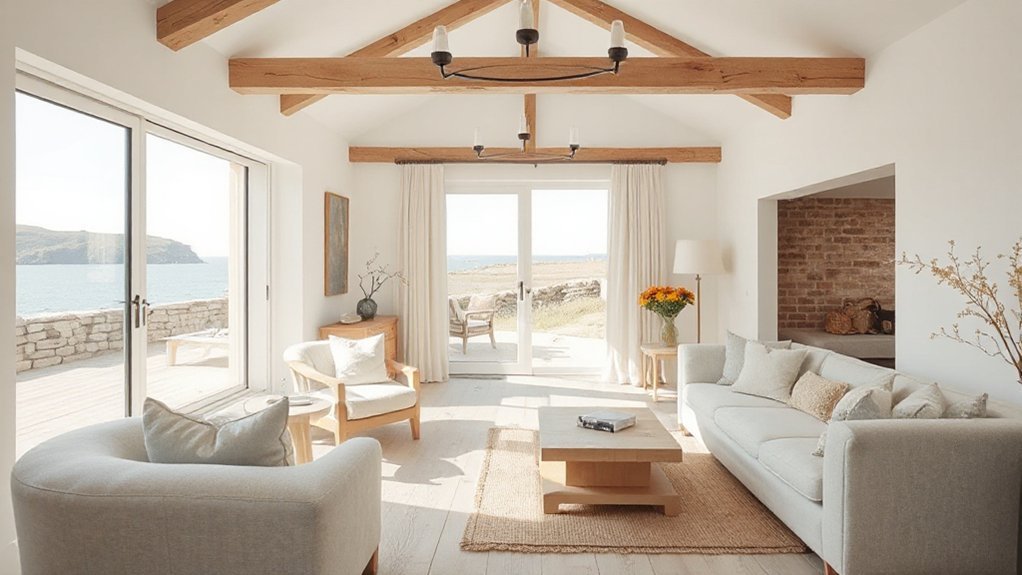
To brighten a coastal cottage, choose light, airy palettes and natural materials that reflect the sea and sun. You’ll optimize natural lighting by aligning finishes with reflective surfaces and understated textures, reducing glare while enhancing daylight.
Favor white, cream, and pale gray fabrics, with accents drawn from sand and sky. Use natural materials—larch, oak, linen, wool—that age gracefully and resist coastal humidity.
Pair matte paints with subtle gloss on cabinetry to amplify light without glare. Limit high-contrast color shifts; instead, curate color palettes that expand space and improve clarity.
Introduce timber accents and stone elements sparingly to maintain airiness. Guarantee finishes are low-maintenance and water-resistant, supporting long-term durability in Devon’s sea-drenched environment.
Layout Principles for Sea-Air Living
Sea-air living hinges on a layout that maximizes flow, sightlines, and access to outdoor spaces. You orient rooms to reduce corridor length and promote natural circulation between kitchen, living, and deck.
Prioritize open-plan zones with clear sightlines to the sea, using partial partitions or built-ins to define areas without obstructing views.
Position primary windows and doors to capture prevailing breezes, ensuring cross-ventilation with operable vents or skylights.
Align storage and utility spaces with service cores to minimize path disruption and maintain calm, uncluttered spaces.
Use seaside architecture cues and marine-inspired decor to reinforce coastal identity while preserving function.
Choose durable finishes and low-maintenance materials suitable for salt air, optimizing both acoustics and thermal comfort in a compact footprint.
Sustainable Luxuries That Feel Effortless
Sustainable luxuries feel effortless when essential comforts align with efficiency and durability. You’ll choose eco friendly materials that withstand coastal humidity and salt spray, balancing tactile quality with lifecycle impact.
Prioritize natural fibers, Low-VOC finishes, and durable surfaces that resist wear without compromise. Energy efficient appliances integrate into daily routines, lowering utility peaks while delivering reliable performance.
Opt for heat recovery ventilation to maintain air quality with minimal noise, and couple it with smart controls that adapt to occupancy. Insulation and airtight detailing ensure consistent temperatures, reducing conditioning loads.
Design details should be simple, repairable, and modular, so upgrades occur without disruptive overhauls. This approach delivers refined experiences—soft textures, quiet operation, and predictable energy use—without sacrificing durability or coastal practicality.
Kitchen Revival: Sun-Drenched Heart of the Cottage
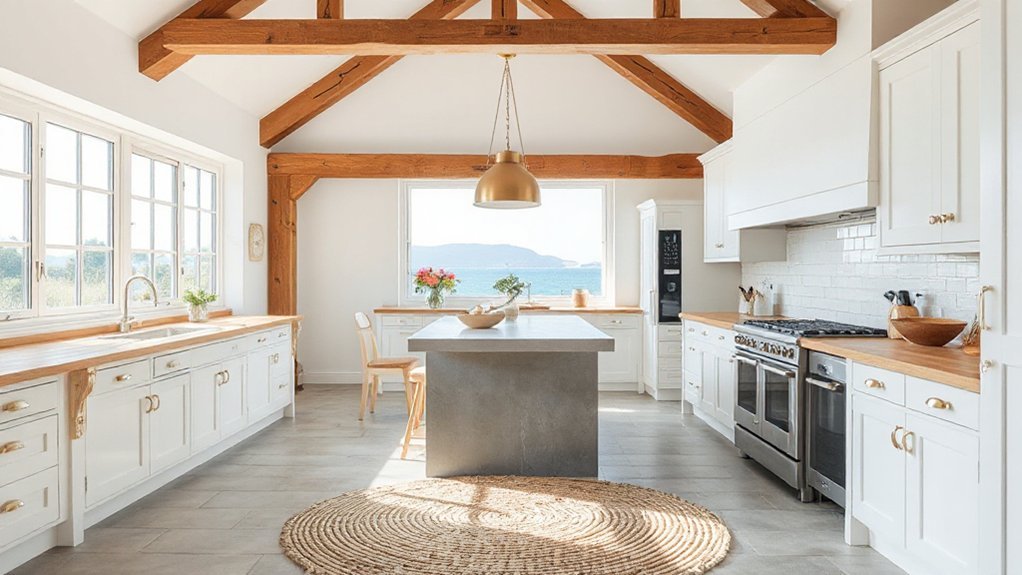
Think through a sunlit kitchen layout that maximizes natural light and flow, enabling easy movement between cooking, prep, and dining zones.
Pair a coastal palette with durable finishes to sustain bright, serene visuals while resisting sea air wear.
Focus on functional zest zones—designated work, storage, and seating areas—that coordinate with daylight patterns and coastal rhythms.
Sunlit Kitchen Layout
The sunlit kitchen serves as the efficient hub of the cottage, with strategically placed windows and light-wood surfaces that reflect natural brightness and reduce reliance on artificial lighting.
You design the layout to maximize workflow: a linear work triangle, prep zone, and concealed storage, all within compact, moisture-resistant cabinetry.
Floor-to-ceiling pantries keep essentials accessible yet unobtrusive, while integrated appliances preserve clean lines.
Light-coloured countertops enhance reflectivity, and under-cabinet lighting provides task-specific brightness without glare.
Seating is limited to a compact dining nook that won’t interrupt circulation or ventilation.
Finishing touches balance vintage charm with nautical decor, ensuring cohesion with the broader coastal scheme.
The result is a bright, efficient zone that supports quick meal prep, easy maintenance, and spontaneous social interaction.
Coastal Palette Trends
Use matte ceramic whites for cabinetry to reduce glare and preserve calm, natural nuances in grain. Surfaces stay cool and durable with quartz or porcelain in reflective, low-contrast finishes, supporting easy maintenance.
Accents lean on seafront textures: rattan, wicker, and driftwood-inspired trims that reinforce Seaside serenity without clutter. You balance color saturation with restraint, ensuring consistency from the island to the pantry.
The result articulates Coastal craftsmanship: a cohesive, resilient, sun-welcoming core that elevates culinary routines and daily living.
Functional Zest Zones
Even in a sun-drenched kitchen, functional zest drives daily flow by clearly delineating work zones: prep, cooking, cleaning, and storage. You’ll arrange layout to minimize steps, placing the prep counter adjacent to refrigeration and the sink for seamless rinsing.
Cooking zones stay heat-shielded from traffic, with a dedicated hob, range hood, and timed access to spices.
Cleaning areas feature a deep sink, disposal, and accessible waste sorting, styled for quiet operation.
Storage zones prioritize vertical shelving and pull-out bins, reducing clutter and optimizing reach—especially under high-use cabinets.
Vintage charm meets modern amenities through integrated lighting, concealed power, and durable, wipe-clean surfaces.
The result is a precise, efficient workflow that preserves coastal character without sacrificing practicality.
Spa-Quality Bathrooms on a Coastal Budget
So how can you achieve spa-quality bathrooms on a coastal budget without sacrificing function or style? You design for efficiency first, selecting durable, water-resistant materials and compact layouts that maximize motion space. Prioritize concealed plumbing, moisture barriers, and low-profile fixtures to reduce renovation costs without compromising performance.
Choose high-efficiency faucets, dual-flush or pressure-assisted toilets, and LED lighting to lower operating expenses. Historical preservation informs trim choices and fixture shapes that nod to Devon’s heritage while staying modern. Blend artistic accents with minimalist surfaces—stone, ceramic, or porcelain—creating a calm, spa-like field.
Install large-format tiles to minimize grout and maintenance, paired with heated floors for comfort. Consciously plan storage, ventilation, and slip-resistant finishes to sustain long-term value on a coastal budget.
Soft Textures and Durable Fabrics for Damp Climates
You’ll prioritize durable fabrics that resist damp and mildew without sacrificing softness. Think performance textiles that stay stable in high humidity.
This balance sets the foundation for a coastal, modern retreat that remains low-maintenance year-round.
Durable Fabrics For Damp
When selecting fabrics for damp coastal spaces, prioritize materials that resist moisture, resist mold growth, and dry quickly. You’ll want textiles that endure frequent humidity without staining or warping, delivering reliable performance under coastal winds and salt exposure.
Focus on construction quality, tight weaves, and treated finishes that maintain colorfastness and shape.
- Textile durability confirmed by lab testing for humidity cycling
- Moisture resistant fabrics with mildew resistance certification
- Fast drying fibers that resist water uptake
- Low-maintenance finishes enabling routine cleaning without degradation
Choose fabrics that balance function and aesthetics, ensuring calm, durable interiors rather than reactive replacements.
This approach supports long-term resilience, preserves finishes, and sustains a polished, modern retreat.
Soft Textures In Climate
Soft textures can coexist with durability in damp coastal climates by pairing tactile indulgence with moisture-smart construction. You’ll select textiles that resist mildew and fading, prioritizing low-pile, tight-weave fabrics for upholstery and performance linens that breathe yet repel moisture.
Textile layering adds depth without bulk, combining a moisture barrier with warmth through nested fabrics and underlays. Introduce textiles with quick-dry properties in seating zones and consider moisture-buffering cotton blends for drapery.
For walls and ceilings, acoustically tuned fabric panels reduce reverberation while preserving softness. Acoustic treatments should be strategically placed in high-traffic or humid areas to maintain clarity of speech and comfort.
Maintain a simple palette to prevent pattern clash, ensuring durable fibers are paired with easy-care finishes for long-term performance.
Outdoor-Indoor Harmony: Verandas, Beams, and a Coastal Garden
Outdoor-indoor harmony hinges on seamless shifts between verandas, timber beams, and a coastal garden. You orchestrate transitions that respect materials, scale, and exposure, ensuring the veranda design reads as an extension of interior space while withstanding sea air.
Timber beams corridor the flow, guiding sightlines toward the garden and beyond. Strategic planting reduces glare and directs movement along garden pathways, creating continuous access from living zones to exterior rooms.
Focused detailing prevents moisture ingress and maintains structural integrity.
- Aligns materials and finishes to unify spaces
- Controls sun, wind, and glare for comfort
- Maximizes views while preserving privacy
- Integrates drainage and maintenance for longevity
This approach yields cohesive, low-maintenance outdoor living that feels seamless and purposeful.
Frequently Asked Questions
How Long Does a Devon Coastal Cottage Renovation Typically Take?
A typical Devon coastal cottage renovation takes roughly 12–20 weeks, depending on scope. You’ll align with a strict renovation timeline, prioritizing coastal aesthetic details, permits, and trades coordination to minimize delays and maintain project momentum.
What Are the Peak Seasonal Considerations for Coastal Projects?
Ever wondered how peak seasons affect coastal projects? You prioritize weather windows, tides, and access. Seaside flora and Coastal erosion demand phased scheduling, protective framing, and rapid storage; you adapt workflows, minimize downtime, and communicate constraints clearly to stakeholders.
Are There Grants or Grants Available for Coastal Home Upgrades?
Yes, you can access financial incentives and renovation grants for coastal home upgrades. You should researching local schemes, eligibility criteria, and application deadlines, then compile documentation to maximize funding opportunities and reduce project costs.
How Do You Budget for Unpredictable Seaside Weather Delays?
Yes: budget for unpredictable seaside weather delays by adding contingency lines, seasonal buffers, and milestone-based releases. Track Seaside insulation and Oceanfront roofing costs, including permits and weather-indexed schedules, adjusting for storms, tides, and supply-chain hiccups.
What Maintenance Tasks Are Essential After Completion?
Exterior inspections and pest prevention are essential after completion. You should schedule routine checks, tighten seals, reseal coatings, and monitor drainage. You’ll perform annual exterior inspections, address cracks promptly, and maintain pest prevention to protect structure.
Conclusion
You can transform a Devon coastal cottage into a modern retreat without losing its soul. Prioritize light, natural materials, and durable coastal fabrics; restore quirks rather than erase them; and balance bright spaces with warm textures. Plan layouts for sea-air living, revive the kitchen as a sun-lit hub, and craft spa-like bathrooms on a sensible budget. Think of your garden as an extension of the veranda. The coast speaks through materials, and you answer with intentional restraint. Like tides, your design returns, refreshed.
About the Author