
You might think safety costs more than it’s worth, but Glasgow’s safest areas combine low crime with strong community networks and solid transit links. In these neighborhoods, you’ll notice consistent policing, active watch schemes, and well‑lit streets that support everyday life. The data points to stability that affects property value and quality of life, yet the full picture—how these factors vary by area and season—requires a closer look. Let’s explore which spots stand out.
How Glasgow Defines Safety for Home Buyers
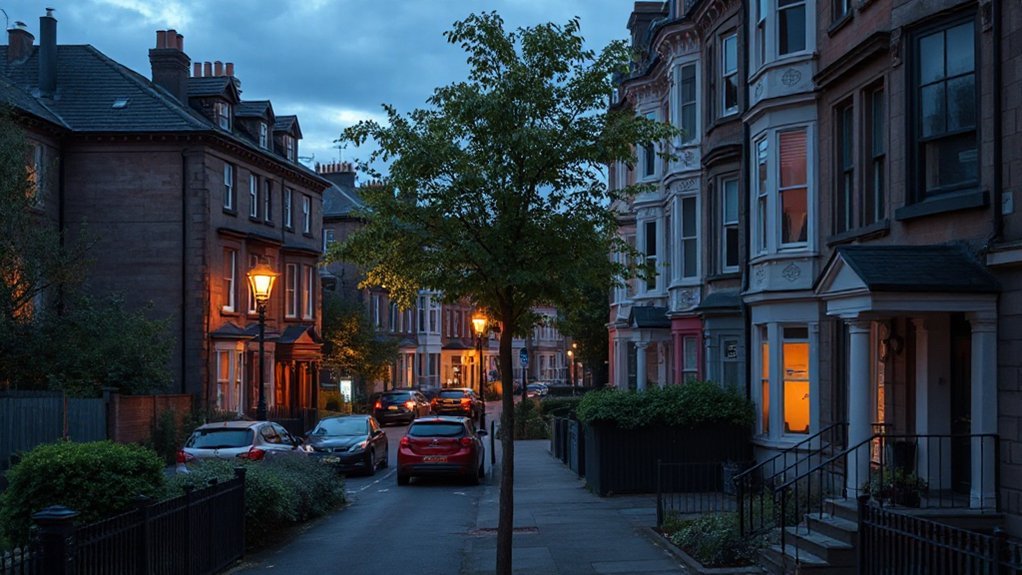
How does Glasgow define safety for home buyers? You approach safety as a composite metric, weighting crime rates, infrastructure resilience, and housing quality. You compare area-level data on accident incidence, fire safety, and building compliance, then adjust for population density and age structure.
You assess neighborhood stability through eviction rates, vacancy trends, and long-term investment signals. You also consider social cohesion indicators, such as neighborhood festivals and local traditions, as proxies for communal monitoring and support networks.
You translate these factors into a transparent scoring framework, enabling you to rank districts objectively. You seek consistent, up-to-date datasets, and you prioritize neighborhoods with robust emergency services access, reliable utilities, and proactive safety programs, while avoiding overreliance on single indicators.
Key Safety Indicators: Crime, Policing, and Community Feel
Crime, policing, and community feel are the core pillars for Glasgow’s safety profile. You’ll see how crime data, police presence, and resident sentiment interrelate to shape trust and perceived security.
Crime metrics provide relative risk, highlighting hotspots and time-of-day patterns without sensationalism.
Policing indicators reflect response times, visible patrols, and community partnerships that deter incidents and improve deterrence credibility.
Community feel captures resident confidence, social cohesion, and proactive reporting behaviors, which correlate with lower incidents and faster problem resolution.
You’ll also consider community engagement initiatives and neighborhood amenities as amplifiers of safety, since accessible services and voluntary programs boost informal surveillance and resident empowerment.
Together, these elements form a data-driven map guiding you toward neighborhoods with durable, observable safety benefits.
North Glasgow Safety Snapshot: Leafy Streets and Low Crime
You’ll notice a low crime climate paired with leafy street appeal in North Glasgow, which aligns with safety indicators and resident satisfaction.
The data suggest quieter, well-maintained corridors correlate with fewer incidents and higher perceived safety.
We’ll explore how these patterns inform broader risk assessments and whether neighborhoods with similar profiles sustain this stability.
Low Crime Climate
North Glasgow presents an especially low-crime profile, with street-level incidents clustering in older, dense neighborhoods while leafy, well-maintained corridors show markedly fewer offenses. You’ll notice a steady, data-driven pattern: overall crime rates remain below city averages, and fluctuations align with seasonal activity and targeted policing.
Historical crime trends reveal gradual declines over the past decade, with short-term spikes tied to specific issues rather than systemic risk. Community engagement, including neighborhood watch and local partnerships, correlates with durable safety gains.
1) Track incidents by area to identify persistent pockets and optimize patrols.
2) Measure response times and clearance rates to gauge policing efficacy.
3) Document resident feedback on perceived safety to calibrate outreach and services.
Leafy Street Appeal
Leafy streets in North Glasgow contribute to a remarkably low-risk profile, with tree-lined avenues, well-kept frontages, and active maintenance programs correlating with reduced incidents. You’ll notice that property upkeep aligns with lower vandalism rates and steadier perceived safety, as documented by routine patrol data and covariate analyses.
Across precincts, greenery density correlates with slower traffic, encouraging cautious driving and fewer pedestrian conflicts. Data also show higher resident engagement on leafy streets, boosting informal guardianship and rapid reporting of issues.
This combination supports stronger neighborhood charm without compromising urban livability. For home buyers, leafy streets signal stability, while consistent municipal investment reinforces long-term value.
In short, leafy streets support a disciplined safety profile and sustainable appeal, reinforcing North Glasgow’s distinctive neighborhood charm.
South Side Calm: Quiet Cul-de-sacs and Community Policing
South Side Calm is characterized by quiet cul-de-sacs and a steady pattern of community policing that together reduce incident reports and improve perceived safety. You’ll notice consistent patrols, visible quick-response units, and proactive problem-solving that aligns with resident feedback.
Data shows lower crime density and fewer calls for service in these pockets, supporting a calmer daily rhythm. Community engagement and accessible neighborhood amenities correlate with higher resident satisfaction and stronger informal surveillance, which sustains the safety metric.
You benefit from predictable traffic calming, well-maintained greenspaces, and nearby shops that reinforce social cohesion without sacrificing quiet.
1) Regular meeting schedules and channels that capture concerns promptly
2) Active neighborhood watch programs paired with responsive policing
3) Accessible amenities like parks, libraries, and small retail clusters
West End Safety Profile: University Towns and Active Neighbourhoods

West End safety is shaped by dense university presence and high-activity neighbourhoods, where foot traffic, campus policing, and student-oriented services drive both routine monitoring and rapid response.
You’ll see lower burglary rates and frequent situational patrols in core campus-adjacent blocks, complemented by CCTV coverage and well-lit streets.
University safety correlates with organized security collaborations between student unions and local police, enabling targeted risk assessments and timely disclosures.
In student neighborhoods, housing density and mixed-use timing influence incident patterns, with evenings and weekends showing stable protection levels when services scale to demand.
Data indicate low violent crime but variable property crime in nightlife corridors, underscoring the value of secure entry systems and visible ward presence for ongoing protection.
East End Safety Profiles: Strong Records and Local Networks
East End safety profiles show a track record of stability supported by strong community networks and coordinated policing. As a result, residents benefit from reliable response times and proactive crime prevention.
You’ll notice data showing steady incident declines, reinforced by neighborhood watch, local volunteers, and school partnerships that amplify situational awareness. This framework supports measurable outcomes in compare-ready dashboards for crime and safety.
Community engagement and streamlined reporting protocols boost transparency, while targeted patrols align with peak hours, reducing opportunities for misconduct.
Neighborhood amenities, from parks to transit hubs, enhance daily safety by increasing usage and natural surveillance. You gain confidence knowing safety is reinforced by data-backed strategies and active resident participation.
- Strengthened patrol coordination and rapid reporting channels
- Regular community meetings linked to policing analytics
- Accessible neighborhood amenities driving natural surveillance
Inner City vs. Suburban Safety: What to Expect in Glasgow
Glasgow’s inner-city and suburban safety profiles show distinct patterns in crime types, response times, and community involvement. You’ll notice higher incident variety in the core wards, with faster police responses to urban hotspots but greater exposure to property-centric crimes.
Suburban areas tend to report lower overall volumes, yet seasonal spikes align with local events and school cycles. In both settings, street lighting, visibility, and formal networks drive deterrence, while perceived disorder influences resident behavior.
Urban renewal efforts correlate with shifting crime dynamics: renovated blocks can displace activity but also attract legitimate investment and cohesion. Cultural diversity shapes neighborhood resilience, contributing to cross-community collaboration and rapid information sharing.
How Transit Affects Safety: Access, Wait Times, and Street Life

Transit access shapes safety by influencing foot traffic, street lighting, and perceived crime risk. Wait times reflect system reliability and can affect ridership patterns, at both dawn and late evening.
You’ll see how street life activates around hubs and how this correlates with incident data, helping you assess safety implications across Glasgow neighborhoods.
Transit Access And Safety
How do transit access, wait times, and street life shape safety in Glasgow neighborhoods? You’ll see that proximity to reliable transit reduces isolation and crime risk, while longer waits can deter nighttime travel and raise vulnerability.
Analyzing data shows that areas with frequent services experience steadier footfall, enhanced natural surveillance, and quicker emergency response due to shorter access barriers. You’ll benefit from integrating community engagement and emergency preparedness into planning, ensuring residents know routes, shelters, and contact points.
The focus is on measurable safety outcomes: reduced crime incidents, faster incident declarations, and clearer wayfinding. Align transit strategy with safety goals to support cohesive neighborhoods and informed residents who can act in emergencies.
- Proximity to frequent routes boosts surveillance and accessibility.
- Frequent wait times correlate with steadier street life and quicker responses.
- Community engagement and emergency preparedness amplify safety benefits.
Wait Times And Street Life
Evidence shows wait times shape street life and safety just as transit access does. You’ll see that wait times influence pedestrian flows, perceived risk, and usage patterns near stops and routes.
Shorter waits correlate with higher dwell-time in transit corridors, boosting foot traffic and street life while diluting idle areas where adverse incidents cluster. Longer waits concentrate crowds at limited access points, elevating crowding, queuing, and stress, which can undermine safety perceptions even when overall crime rates stay stable.
Data from pedestrian counts and service reliability metrics show a clear link: consistent, frequent service sustains daily activity, improves visibility, and supports informal surveillance.
Prioritize routes with dependable headways to enhance wait times, fortify street life, and reinforce neighborhood safety for home buyers.
Family-Friendly Safety: Schools, Parks, and Reliable Services
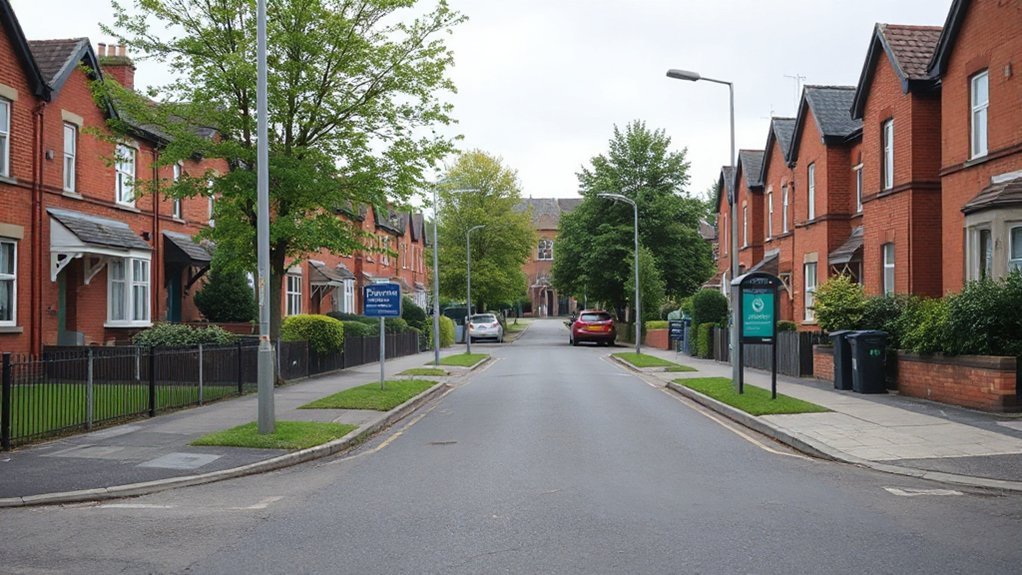
Evaluating family safety in Glasgow involves examining three core pillars: schools, parks, and reliable services. You’ll see how school ratings, catchment stability, and after-school programs correlate with local safety metrics.
Parks and green spaces matter: well-lit, well-maintained itineraries reduce incidents and support family routines.
Reliable services—transit, healthcare access, waste management—drive predictability, a key factor for emergency preparedness.
Data show quieter neighborhoods with active community engagement report fewer incidents and faster response times.
- Schools: performance, enrollment stability, safety protocols
- Parks: lighting, maintenance, supervised programs, accessibility
- Services: public transit reliability, healthcare access, emergency planning
For ongoing safety, track community events and reinforce emergency preparedness within your daily routines.
How Residents Contribute to Safety: Watches, Ward Panels, and Building Trust
You contribute to Glasgow’s safety by participating in Watches and Ward Panels, which formalize neighborhood oversight and rapid response.
Data shows these activities correlate with lower incident rates and higher resident trust, especially when clear communication channels are established.
Building community trust, along with formal networks, enhances collective vigilance and sustains long-term safety gains.
Watches and Ward Panels
Community-led safety in Glasgow relies on Watches and Ward Panels to deter crime, share timely information, and build trust between residents and authorities. You’ll see measurable benefits when programs are well-managed, with clear contact points, defined roles, and regular feedback loops.
Data shows reduced incident response times and higher reporting rates in areas with active neighborhood watch structures. Your participation strengthens neighborhood resilience, enabling early warning and coordinated action without overburdening officers.
Focused watch activities correlate with safer streets, improved lighting decisions, and better resource allocation. Continuous evaluation ensures panels stay relevant and effective.
- Establish clear reporting protocols and contact points.
- Maintain regular data reviews to track trends and outcomes.
- Promote transparency to sustain resident confidence and engagement.
Building Community Trust
Building trust is foundational to safety, and residents drive it by participating in Watches and Ward Panels, sharing timely information, and engaging with authorities.
You contribute to a measurable rise in neighborhood resilience when you exchange incident data, report patterns, and support transparent policing practices.
Local research links high levels of community engagement with lower crime oscillations and faster incident resolution, especially where information-sharing aligns with formal channels.
Your involvement strengthens social norms, accountability, and resource targeting, creating a feedback loop that improves response times and perceived safety.
In Glasgow, trust-building correlates with routine attenuations in fear indicators and enhanced by consistent communication streams.
Maintain clarity, verify sources, and prioritize corroborated reports to sustain durable, data-driven safety outcomes for residents.
Neighborhood Safety Networks
What role do Watches, Ward Panels, and related networks play in Glasgow’s safety landscape, and how do residents translate participation into measurable outcomes? You’ll see data-driven signals from activity logs, incident reporting, and attendance at neighborhood events.
Networks mobilize rapid responses, deter crime through visibility, and build trust with local authorities, yielding clearer patrol patterns and reduced response times.
Measurable outcomes include incident rate changes, perceived safety scores, and increased bystander intervention.
Local amenities and accessible neighborhood events correlate with higher participation and stronger social cohesion, which correlates with lower crime risk.
Engagement also informs resource planning, from lighting upgrades to patrol scheduling, enhancing overall safety without added friction.
Neighborhood events and local amenities together reinforce proactive safety culture.
- Watches and Ward Panels participation metrics
- Incident and response time trends
- Trust and perception surveys
Property Crime vs. Personal Safety: What Matters Most to Buyers
Property crime and personal safety aren’t interchangeable concerns, yet Buyers weigh them together when evaluating risk. You’ll compare incident rates, clearance data, and exposure patterns to understand overall threat, not just headlines.
In Glasgow, property crime may affect costs and perceived security, while personal safety influences daily routines and trust in public spaces. You’ll look for stable property crime trends alongside corroborating indicators like lighting, park usage, and police presence.
Data suggests that areas with strong Neighborhood amenities often correlate with lower property loss risk and higher perceived safety, even if individual incidents occur. Consider how local traditions shape community vigilance and social support networks.
Balance quantifiable risk with lived experience to determine which factors matter most for your long-term comfort.
Verifying Safety Before You Buy: Practical Checks and Sources

To verify safety before you buy, start with practical checks you can act on right away. Ground truth comes from data sources, local councils, and community dashboards, so you can triangulate risk rather than rely on anecdotes.
Look for year-over-year crime trends, housing-reported incidents, and emergency preparedness plans published by the city. Cross-check multiple sources and note any inconsistencies for follow-up.
Integrate community engagement indicators—resident associations, safety forums, and turnout at local meetings—to gauge social cohesion that influences actual safety outcomes.
Also verify district-level resilience metrics, such as flood or fire readiness, to understand exposure.
Involve neighbors in informal risk chats to spot hidden issues before purchase.
- Compare official crime and safety reports
- Review community engagement indicators
- Check emergency preparedness documentation
A Neighborhood Visit: A Safety-Focused Walkthrough
A safety-focused neighborhood walkthrough should be structured and purposeful, balancing observable conditions with verifiable data. You’ll note street lighting, curb maintenance, and sightlines, then cross-check with recent crime maps and resident surveys for context.
Observe pedestrian flow, defensible space, and alley cleanliness as immediate indicators of daily safety. Record noise levels and traffic patterns during different times to gauge risk exposure and emergency accessibility.
Visit key anchors: parks, schools, and transit hubs, evaluating hours, upkeep, and crowding. Evaluate neighborhood amenities for accessibility, maintenance, and safety-conscious design.
Attend or review summaries of local events to understand community cohesion and surveillance density. Synthesize observations with crime data, then identify actionable improvements and safety perceptions that align with ongoing livability.
How to Use Safety Data in Your Glasgow Home Search
Access local crime data to establish a baseline for safety across Glasgow neighborhoods.
Interpret safety metrics by comparing incident rates, trends, and context, so you can identify patterns beyond raw numbers.
Weigh walkability and lighting as practical safeguards, integrating them with crime data to prioritize areas that support everyday peace of mind.
Accessing Local Crime Data
Local crime data can anchor your Glasgow home search, letting you compare neighborhoods by reported incidents, clearance rates, and trends over time. You’ll access official crime dashboards, local council reports, and police summaries to map risk patterns to streets and amenities.
Use filters for time windows, crime types, and proximity to schools or transit. Link data to community engagement and emergency preparedness insights to gauge resilience, not just fear.
Look for consistent data sources and recent updates to avoid stale impressions.
1) Benchmark neighborhoods by incident density and clearance performance over the past 12 months
2) Cross-check with council safety initiatives and community programs to assess responsiveness
3) Track changes after major local events to anticipate shifts in risk and readiness
Interpreting Safety Metrics
To interpret safety metrics effectively, you’ll start by translating incident counts, clearance rates, and trend lines into actionable insights for Glasgow neighborhoods.
You’ll compare year-over-year changes, weighting recent data more heavily to reflect current conditions.
Map metrics to real-world impact: higher incident counts signal risk pockets; improving clearance rates suggest police effectiveness; downward trends indicate improving safety contexts.
Normalize figures by population to enable fair comparisons across areas, and segment by crime type to distinguish violent from property incidents.
Integrate non-crime indicators, like community engagement and safety technology adoption, to gauge resilience and intervention reach.
Use dashboards to visualize gaps and track progress over time.
Your focus remains concise, evidence-based, and decision-oriented for informed home-search decisions.
Prioritizing Walkability & Lighting
If you want a practical home search in Glasgow, prioritize neighborhoods where walkability and lighting data align with safety trends: well-lit streets, continuous pedestrian networks, and high walk-score readings typically correlate with lower crime exposure and faster emergency responses.
- Assess Community engagement and lighting improvements to gauge ongoing maintenance and resident participation that sustain safe corridors.
- Compare walkability metrics with crime heat maps, focusing on hours of activity and visible surveillance in key routes.
- Prioritize areas where data shows consistent lighting upgrades, crosswalks, and signage, linked to lower incident rates and quicker responses.
This data-driven approach helps you target high-quality buffers, supports informed decisions, and aligns your search with measurable safety improvements.
Comparing Real Estate Pricing in the Safest Areas
When you compare real estate pricing across Glasgow’s safest neighborhoods, price points consistently reflect supply-demand dynamics, crime perception, and long-term desirability. You’ll notice premium ranges in areas with strong transit links and high-quality schooling, while more affordable pockets cluster where growth potential remains uncertain.
Data shows that listing durations lengthen in slower submarkets, yet price-per-square-foot typically stabilizes once demand returns. Historical architecture adds value, attracting buyers who trade finite inventory for character and efficiency.
Local festivals correlate with modest upticks in weekend activity, boosting perceived livability without inflating core pricing. Across the board, price dispersion narrows in highly desirable micro-neighborhoods, signaling buyers’ willingness to pay for safety, accessibility, and predictable future gains.
In short, pricing mirrors risk-adjusted desirability and projected stability.
Next Steps: Building Your Safety-Aware Home-Buying Plan
With safety and stability as your north star, you’ll outline a focused home-buying plan that prioritizes risk-aware decisions and measurable milestones. You’ll translate data signals into an actionable checklist, aligning budget, location metrics, and long-term value. Focus on affordable amenities and access to historic landmarks to maximize quality of life without overpaying. Your plan should quantify risk, set decision thresholds, and lock in deadlines to prevent scope creep.
1) Define target neighborhoods by crime density, school quality, and walkability, then map affordable amenities against expected utility.
2) Establish a holding period and price-goints with automated alerts for market shifts, financing rates, and appraisal ranges tied to historic landmarks presence.
3) Implement a review cadence with a data-backed go/no-go criteria before offers.
Frequently Asked Questions
How Are “safety” and “Neighborhood Feel” Measured in Glasgow?
You measure safety and neighborhood feel in Glasgow with crime rates, emergency response times, and resident surveys, linking them to community engagement and perceptions of cohesion, plus access to local amenities. You analyze trends, unequal exposure, and trust levels.
Do Safety Indicators Vary by Time of Day or Season?
Safety indicators do vary by time of day and season, you’ll see sharper spikes at night and winter; factor in community engagement and environmental hazards to interpret trends accurately.
Which Areas Show Best Emergency Response Times in Glasgow?
“Time is money.” You’ll see fastest emergency response in central districts, with strong Community engagement and high Neighborhood walkability driving quicker ambulance and fire crew access, and data showing responses improve where connectivity and outreach are prioritized.
How Do School Safety and Pedestrian Routes Affect Home Buying Safety?
School safety and Pedestrian routes influence home buying safety by shaping risk exposure; you’ll favor neighborhoods with evaluable school safety metrics and well-connected pedestrian routes, reducing traffic dangers, improving walkability, and supporting safer daily commutes and emergency access.
What Non-Crime Risks Should Buyers Assess in Glasgow Neighborhoods?
You should prioritize non-crime risks like environmental hazards and community engagement in Glasgow neighborhoods. Like a measured chart, you assess flood risk, air quality, utilities, and local participation data to gauge overall safety and resilience for buyers.
Conclusion
Conclusion (75 words):
Safety in Glasgow isn’t a single streetlight but a tapestry. Think of crime data, policing presence, and community ties as threads weaving a stronger fabric around your future home. When you map North Glasgow’s quiet lanes, South Side cul-de-sacs, and West End’s active blocks, you’re reading a symbol: a shield stitched from residents, transit access, and vigilance. Use these indicators as coordinates, guiding your search toward neighborhoods where security becomes second nature, not an afterthought.
About the Author