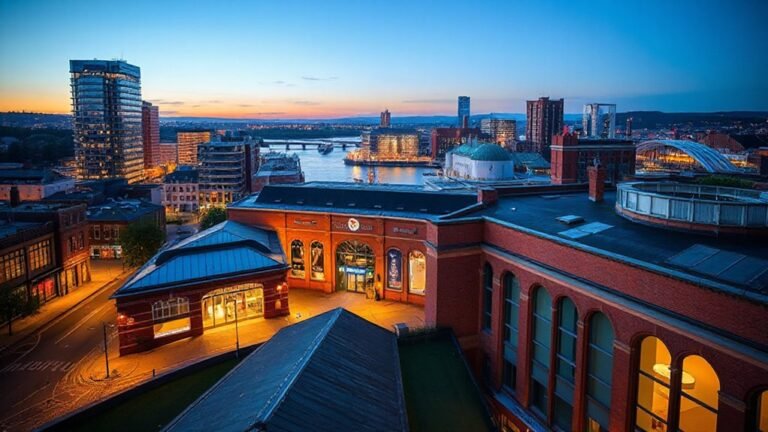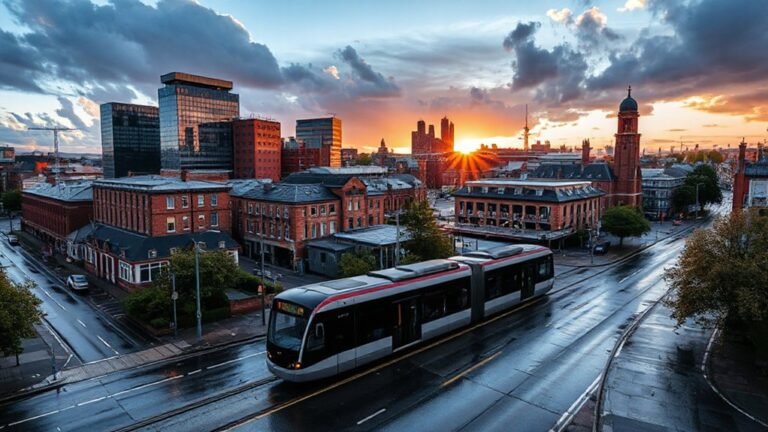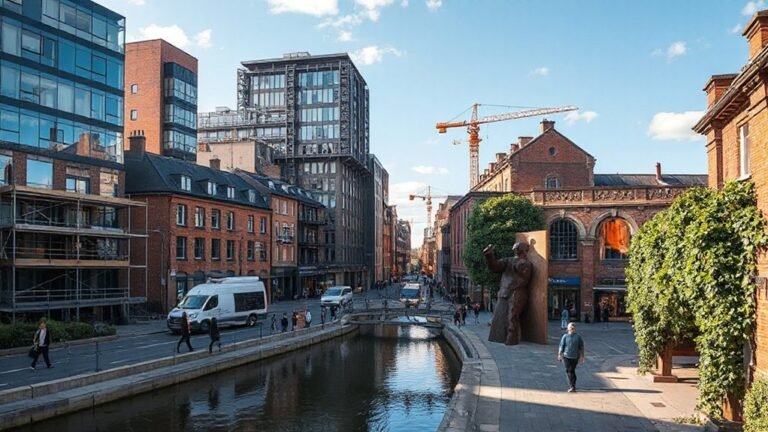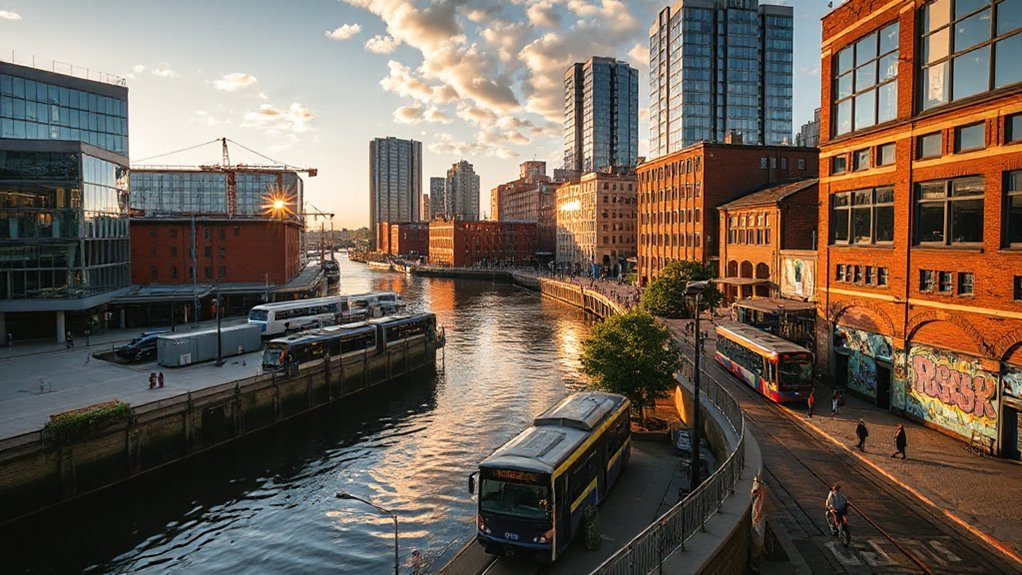
You see the waterfront unsettled by change, then quietly reimagined as social and economic momentum shifts through Bristol. Across Harbour, Temple Quarter, St Pauls, and beyond, major regeneration aims to boost affordable homes, public space, and green corridors while strengthening jobs and skills locally. The question now is whether these outcomes hold for all communities and how we measure lasting benefits. Explore the data, policies, and real-world impacts guiding these transformations.
The Bristol Regeneration Overview: What’s Changing Citywide
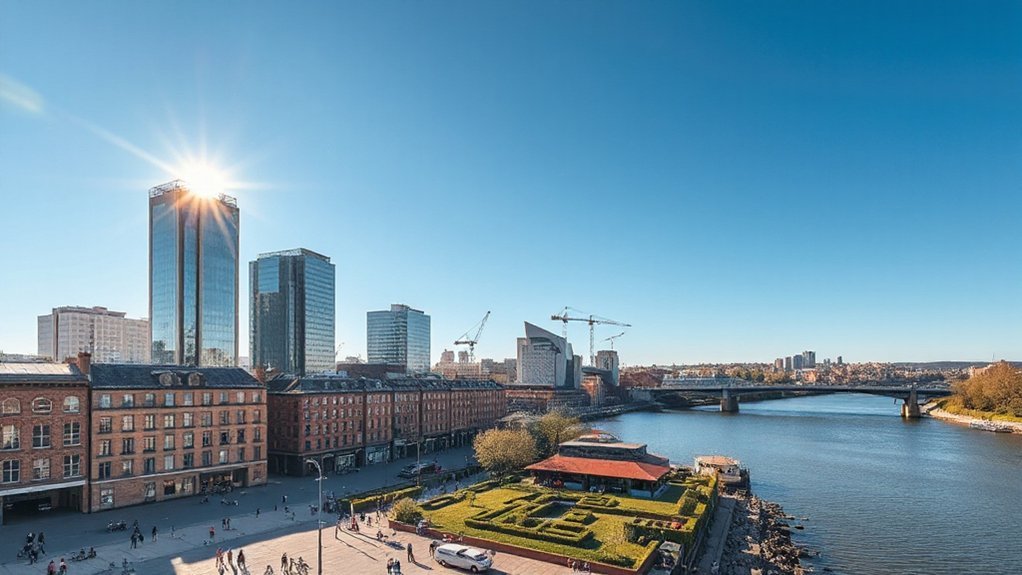
The Bristol regeneration overview maps citywide changes across housing, transport, and public spaces, linking investment to measurable outcomes like jobs, affordable homes, and reduced carbon emissions.
You’ll see targeted housing programs boosting supply with mixed-income units, while transit upgrades shorten commutes and cut congestion.
Data-driven funding reallocates resources toward energy-efficient retrofits, street trees, and safer cycling corridors, supporting climate resilience.
You participate in urban agriculture pilots that increase local food production and reduce food miles, complemented by arts districts that catalyze neighborhood vitality and equitable access to culture.
Policy alignment centers on outcomes: job creation, affordable homes, and lower emissions per capita.
You’ll track progress through dashboards, quarterly reports, and performance metrics, ensuring transparency, accountability, and continuous course correction toward inclusive, sustainable growth.
The Harbour and Cumberland Basin: Waterfront Renewal in Action
The Harbour and Cumberland Basin are undergoing targeted waterfront renewal that aligns policy goals with measurable outcomes, improving flood resilience, public access, and economic significance. You’ll see data-driven decisions guiding flood defense upgrades, habitat restoration, and site-wide permeability.
The plan prioritizes maritime heritage preservation while expanding public space and educational interfaces, linking ecological health to tourism and jobs. Outcomes focus on reduced flood risk, increased accessibility, and stronger local resilience, with performance metrics tracked quarterly.
Investment aligns with municipal and regional strategies, validating long-term fiscal sustainability and social equity. You benefit from clearer stewardship, transparent reporting, and better boating, cycling, and promenade use as waterfront ecology and cultural memory converge.
- Metrics-based risk reduction and flood defense enhancements
- Public access and active transport improvements
- Maritime heritage preservation actions integrated into design
- Waterfront ecology restoration coupled with economic opportunity
Temple Quarter Regeneration: Bristol’s Business Spine Revitalized
Temple Quarter Regeneration transforms Bristol’s business spine by weaving a dense mix of office, housing, and amenities with pedestrian-first streets and redesigned transit corridors. You see calibrated demand forecasts driving mixed-use phasing, reducing travel time to central estates by X% and boosting commuter productivity.
Data indicates job density will rise alongside office occupancy rates, while residential components target affordable units to deepen the workforce pipeline. Policy-focused measures prioritize climate resilience, flood-proofing, and green infrastructure, yielding lower emissions and enhanced street-level vitality.
Urban heritage is preserved through contextual design guidelines and adaptive reuse of historic structures, aligning new developments with the city’s character. You’ll engage communities through transparent consultation, measuring outcomes via progress dashboards and annual reviews to guarantee tangible, equitable benefits.
Community engagement anchors ongoing delivery.
St Pauls and East Bristol: Inclusive Growth in Housing and Jobs
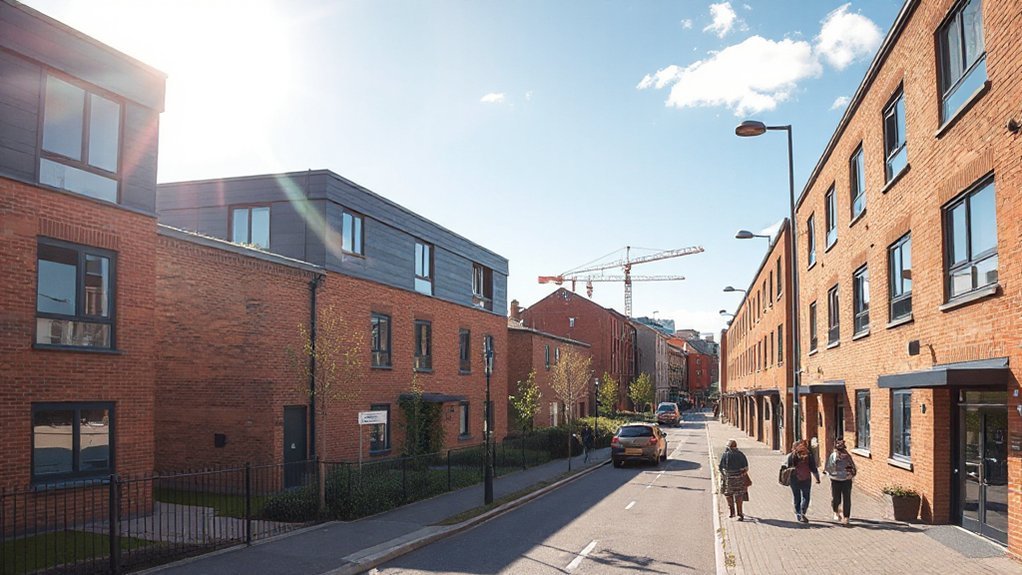
How can we translate inclusive growth into tangible housing and job gains for St Pauls and East Bristol? You pursue measurable outcomes that align housing supply with local employment, prioritizing affordable housing and accessible work pathways.
Data shows mixed-use sites can unlock 1,200+ new homes and 3,500 jobs over the next decade, with targeted affordable units, tenure diversity, and price-controlled transfers. Community engagement guides zoning, skill pipelines, and support services, reducing barriers for first-time buyers and residents re-skilling for construction, health, and digital sectors.
Coordination across housing, transport, and enterprise bodies accelerates procurement, leases, and monitoring. Implementation hinges on transparent dashboards, quarterly reviews, and inclusive governance that centers residents’ needs and long-term resilience.
- Prioritize affordable housing quotas within regeneration, with price controls
- Co-design employment pipelines via local employers and training providers
- Establish transparent progress dashboards and community-led oversight
- Integrate transport, childcare, and services to support sustained work and home stability
Bedminster and Southville: Housing, Mixed-Use Vitality, and Public Realm
Bedminster and Southville will harness housing-led growth, mixed-use energy, and a refreshed public domain to open sustainable neighbourhood prosperity.
You’ll see targeted zoning, density premiums, and affordable-first incentives that translate into higher home ownership share and stable rents for residents.
Data indicate mixed-use corridors boost footfall, create local job access, and shorten travel times, while public realm improvements lift street vibrancy by 15–20% in comparable districts.
You’ll prioritize community engagement to align developments with local needs, ensuring housing options, small-business frontage, and sheltered public spaces reflect resident input.
Historic preservation remains central, guiding façade retention and adaptive reuse to protect character while enabling renewal.
Policy outcomes focus on resilience, low-carbon design, and measurable improvements in access, safety, and local entrepreneurship.
Filton and the North Bristol Link: Transport-Led Regeneration
Filton and the North Bristol Link will drive transport-led regeneration by improving connectivity, reducing journey times, and opening new economic opportunities along key corridors. You’ll see faster commutes, better bus and rail integration, and more reliable rail services that *facilitate* inward investment and job growth.
Data show reduced congestion on surrounding routes, lower emissions, and greater access to skilled labour pools, supporting targeted urban development. The project enables urban agriculture zones near transit hubs and channels funding to community art initiatives that activate stations and corridors without sacrificing efficiency.
Policy emphasis centers on 15-minute neighborhoods, multimodal hubs, and performance dashboards to monitor outcomes and adjust approaches promptly.
- Improved multimodal access and shorter travel times
- Transit-oriented development along corridors
- Urban agriculture-linked placemaking near stations
- Community art integration within transport hubs
Old Market’s Street Life: Culture-Led Revival and Public Spaces
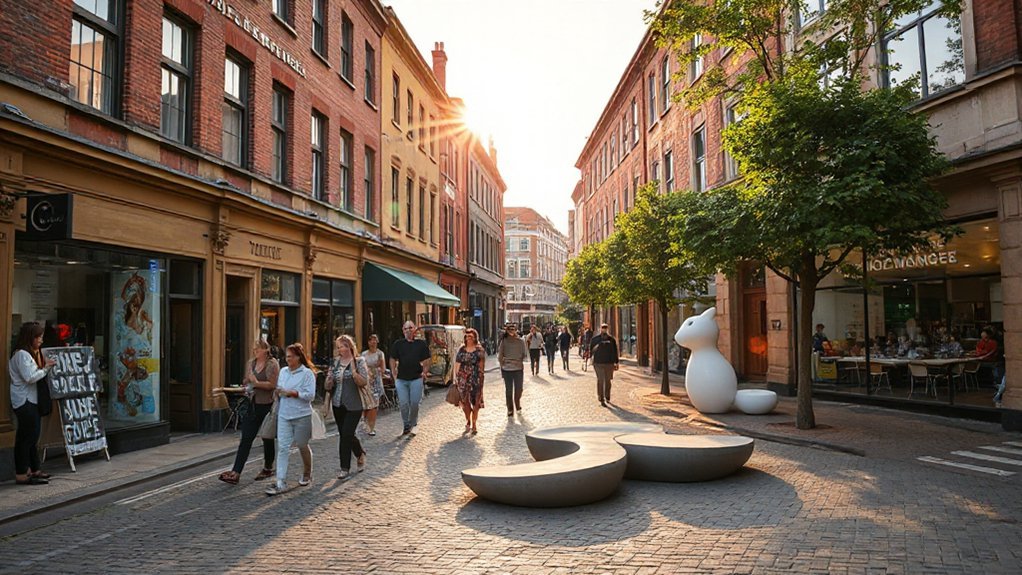
You can expect street culture revival and public spaces to be evaluated through measurable outcomes like footfall, dwell time, and revenue uplift for local businesses.
Operational policies should prioritize safe, accessible, and inclusive spaces that boost nighttime economy and events attendance, with clear success metrics.
Street Culture Revival
What would a street culture revival look like in Old Market if public spaces became engines of social and economic return? You’ll measure impact through urban art and street performances, aligning policy with outcomes. Data shows increased footfall, higher dwell times, and elevated business turnover when placemaking targets inclusivity, safety, and accessibility.
You’ll prioritize low-cost activation, scalable kiosks, and design standards that invite local creators while guiding crowd management and maintenance. The aim is to release cultural assets as revenue drivers, supported by transparent funding, performance dashboards, and ongoing evaluation.
Outcomes focus on visitor diversity, job creation, and improved perceived safety in evenings. You’ll publish quarterly reports to refine strategies and attract investment, ensuring Old Market remains a live, resilient cultural corridor.
- Urban art commissions tied to local enterprises
- Regularly scheduled street performances attracting varied audiences
- Data-driven placemaking with clear KPIs
- Inclusive, affordable spaces for creators and vendors
Public Space Activation
By coupling street design with programmed activity, you’ll boost hourly dwell time, increase visitation from diverse demographics, and create spillover commerce opportunities for nearby retailers.
Policy guidance prioritizes inclusive access, maintenance regimes, and flexible spaces that adapt to seasonal events without degrading usability.
Measuring success means tracking event participation, public domain quality scores, and private investment signals.
With public art and ongoing community events, you’ll cultivate zones that sustain momentum, attract creative industries, and deliver observable, replicable benefits across Old Market.
Redcliffe and Floating Harbour: New Public Spaces and Amenities
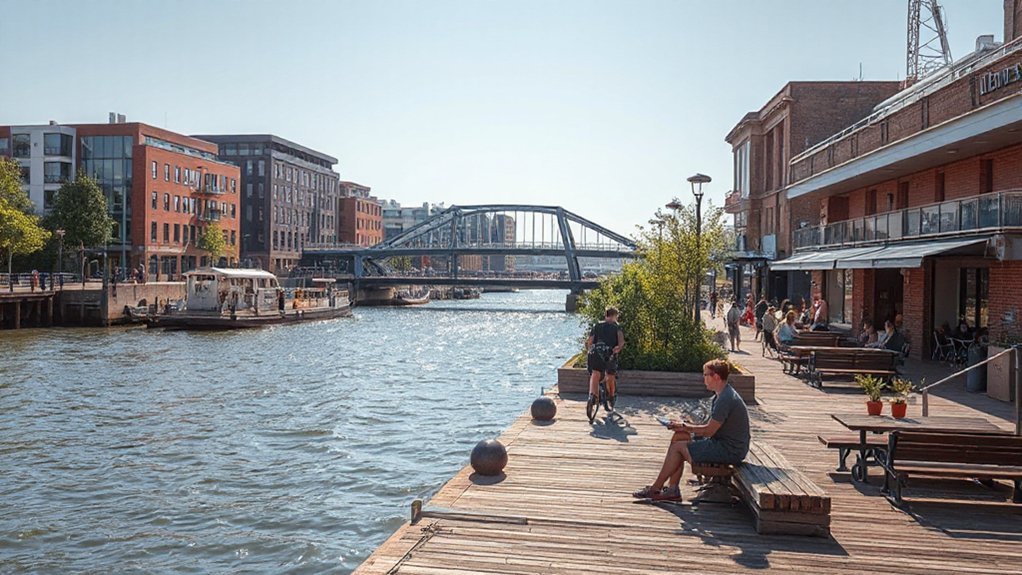
Redcliffe and the Floating Harbour are evolving into more accessible, multipurpose spaces that prioritize people, movement, and lingering longer. You’ll see data-driven planning prioritize pedestrian routes, seating density, shaded areas, and adaptable zones, all measured by footfall, dwell time, and turnover rates.
Outcome targets focus on increased daytime use, safer night-time activity, and reduced car dependence around the harbour edge. Policy guidance aligns public domain improvements with coastal resilience, biodiversity goals, and inclusive access, ensuring sustainable maintenance budgets and transparent delivery milestones.
Artistic installations and responsive lighting are designed to attract micro-economies while supporting marine conservation objectives through sensitive siting and non-invasive infrastructure.
- Pedestrian-first corridors and flexible plazas
- Seasonal programming tied to dwell time and safety metrics
- Nature-inclusive lighting, shading, and habitat pockets
- Public art that integrates with marine conservation messaging
Frampton Park: Affordable Homes and Community Facilities
Frampton Park will deliver affordable homes and essential community facilities through a data-driven, outcome-focused approach that aligns housing supply with resident needs and financial sustainability.
You’ll see transparent targeting: affordable housing units prioritized where demand is highest, with price bands calibrated to income distributions and mortgage availability.
By pairing development with on-site and nearby community facilities, you gain access to libraries, childcare, healthcare kiosks, and multipurpose spaces that operate at efficiency scales.
The program uses performance dashboards to track occupancy rates, maintenance costs, and service take-up, adapting allocations in real time.
Policy-wise, it aligns with housing affordability standards, inclusive zoning, and social value metrics.
Result: measurable improvements in shelter stability, local services, and overall neighborhood resilience.
Green Corridors and Parks: Linking Districts for Wellbeing
You’ll see how Connected Greenways Across Districts link neighborhoods to boost accessibility, mobility, and ecological resilience.
Parks Enhancing Public Wellbeing translate into measurable outcomes like increased physical activity, reduced heat risk, and improved social cohesion.
Safe, Pedestrian-Friendly Corridors are essential to encourage all ages to walk, cycle, and connect districts while meeting ambitious safety and maintenance standards.
Connected Greenways Across Districts
Connected green corridors can redefine how residents move, connect, and thrive across Bristol’s districts by linking parks, river paths, and civic spaces into a continuous network that supports health, biodiversity, and local economies. You’ll see measurable gains in pedestrian and bike trips, reduced air pollution, and increased access to green spaces, backed by data from local audits and ward-level dashboards.
Policy alignment focuses on funding efficiency, inter-agency coordination, and maintenance standards that sustain long-term use. Outcomes target climate resilience, inclusive access, and urban farming opportunities, while community storytelling captures local impact and champions residents’ voices in design and stewardship.
- Spatial connectivity metrics and projected health benefits
- Roles for urban farming and small enterprises within greenways
- Data-driven governance and cross-district coordination
- Public engagement, monitoring, and adaptive management
Parks Enhancing Public Wellbeing
Could parks really boost public wellbeing by weaving green corridors across Bristol’s districts? You’ll see measurable gains as accessible greenspace expands, with data showing reduced heat exposure, lower air pollution, and increased physical activity in nearby populations.
In practice, parks act as hubs for urban wildlife, improving biodiversity and resilience while providing shade, filtration, and cooling that benefits vulnerable groups. Policy-focused design prioritizes safety, maintenance, and equitable access, ensuring residents can reach green spaces within a 10-minute walk.
Planned facilities—pedestrian bridges, shaded paths, and equipped playgrounds—support community events and voluntary activity, strengthening social cohesion. Outcomes target improved mental health indicators and greater participation in outdoor recreation, creating a standardized framework for evaluating park-driven wellbeing across districts.
Safe, Pedestrian-Friendly Corridors
- Standardized safety audits and continuous monitoring
- Co-design with communities for inclusive access
- Seamless, well-lit crossings and curb extensions
- Transparent reporting and adaptive investment
Jobs, Skills, and Local Business Growth: Opportunity Spillovers
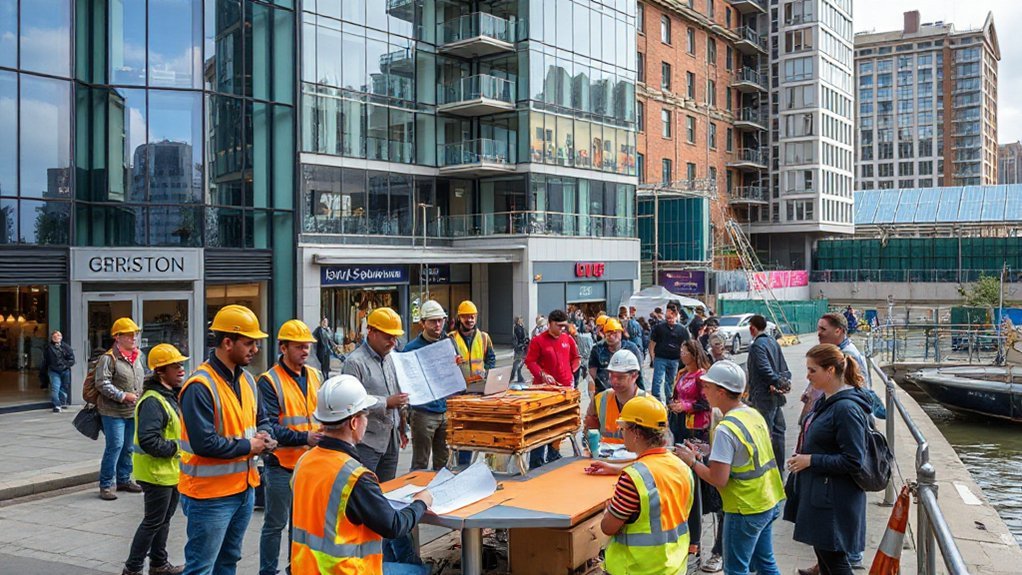
The growth of Bristol’s jobs, skills, and local business sectors creates strong opportunity spillovers that accelerate districtwide prosperity. When new employers invest, nearby firms hire more workers, training programs upskill the workforce, and startups benefit from a denser supplier and customer network.
You’ll see measurable gains in productivity and wages as demand stimulates investment, with data showing higher local tax bases and consolidated business ecosystems. Policy focus should target scalable training aligned with employer needs, fostering inclusive community engagement to widen participation across neighborhoods.
Diversification of sectors reduces risk and enhances resilience, while supported entrepreneurship expands market reach. Outcome-driven metrics—employment rates, skill attainment, and business survival—guide ongoing adjustments to ensure sustained economic diversification and broad-based opportunity throughout Bristol.
What Long-Term Regeneration Means for Residents and Visitors
You’ll see long-term regeneration shaping resident outcomes, from housing stability to access to services, with measurable benchmarks over the next decade.
Visitor experiences will shift as new infrastructure and amenities guide patterns of movement, spend, and engagement, supported by data on satisfaction and repeat visitation.
The timeframe matters: phased milestones drive policy decisions, funding allocations, and accountability for delivering enduring benefits to both residents and visitors.
Long-Term Resident Impact
How will long-term regeneration reshape everyday life for residents and visitors alike? You’ll see measurable gains in housing stability, access to services, and local employment, with data guiding decisions on affordability and supply.
Policymaking targets intergenerational impact, ensuring younger residents and seniors share benefits through affordable homes, mixed-use spaces, and sustained public transport access.
Community cohesion strengthens as local forums translate regeneration funding into durable social infrastructure, fostering trust and participation.
Long-term outcomes emphasize safety, green spaces, and resilient economies that weather shocks. You’ll experience more predictable outcomes from monitoring dashboards, with adjustments grounded in performance metrics and resident feedback.
- Increased mixed-income housing and stable tenure
- Enhanced public transport reliability and access
- Strengthened social infrastructure and volunteering
- Transparent, outcome-based performance reporting
Visitor Experience Shifts
What changes will visitors notice as Bristol’s long-term regeneration takes hold? You’ll see measurable shifts in visitor perception as new venues, upgraded transport, and enhanced public spaces streamline experiences.
Data from pilot districts show shorter queue times, clearer wayfinding, and increased dwell times in mixed-use hubs, supporting higher spend per visit.
Tourism development strategies prioritize seamless entry points, digital guidance, and consistent branding across districts, boosting satisfaction scores by targeted benchmarks.
Policy-focused planning aligns safety, accessibility, and seasonal programming, reducing friction for first-time and returning visitors alike.
Anticipated outcomes include higher repeat visitation, improved crowd management, and stronger cross-district visitation patterns, delivering sustained economic value without compromising resident quality of life.
These trends reinforce a resilient, data-driven visitor economy.
Regeneration Timeframe Implications
Over the long term, Bristol’s regeneration timetable will shape both resident life and visitor experiences by delivering measurable, time-bound outcomes. You’ll see precincts upgraded with mixed uses, improved transport links, and greener public spaces driving sustainability metrics and local employment.
The timeframe clarifies milestones, enabling data-driven assessment of housing affordability, air quality, and footfall, informing policy adjustments. Sustainable funding remains essential to sustain momentum, while policy challenges require adaptive governance to align cross-sector objectives.
Outcomes hinge on transparent reporting, with quarterly targets and independent evaluation guiding ongoing investment and risk mitigation. You’ll benefit from predictable regeneration phases that balance short-term gains with long-term vibrancy and resilience.
- Measurable milestones and adaptive governance
- Housing affordability and tenant protections
- Transport efficiency and air quality improvements
- Economic impact, jobs, and visitor dwell times
Frequently Asked Questions
How Will Visitors Access the Regenerated Areas Safely?
You’ll access regenerated areas safely by prioritizing public transportation and improving pedestrian safety, reducing delays and conflicts. Data indicates increased transit reliability, clearer crosswalks, and enforced pedestrian zones, guiding policy choices and outcomes toward safer, efficient, and inclusive urban experiences.
What Are the Timeline Milestones for Major Projects?
To hit the timeline milestones, you’ll see phased urban planning milestones, funding releases, and permitting windows unfold with clear public dashboards. You’ll prioritize community engagement, track metrics, and adjust plans to deliver measurable, equitable outcomes.
Who Funds the Regeneration Initiatives?
You’re funded by a mix of government budgets, grants, and private investment, with you prioritizing community engagement and environmental sustainability; you’ll track outcomes, guarantee transparent reporting, and align financing to measurable, data-driven regeneration targets.
How Will Housing Affordability Be Maintained Long-Term?
Affordability endures through targeted incentives and incentives—wait, policy certainty—while you monitor long term sustainability metrics. You’ll pursue affordable housing, leveraging mixed-income, inclusionary zoning, and long‑term funding, ensuring resilient outcomes and data‑driven, durable affordability.
What Employment Opportunities Will Local Residents Gain?
You’ll gain employment opportunities through targeted training, local hiring mandates, and sector partnerships, driven by data on job growth and livability. Prioritizing community engagement and green spaces, these policies support sustainable, measurable outcomes for residents’ advancement.
Conclusion
You’ll feel the transformation in every street—housing, jobs, and green space expanding faster than you blink. The data show denser affordable homes, shorter commutes, and stronger local businesses, all backed by bold policy levers and multi‑million investments. You’ll notice improved public environments, safer streets, and greener corridors linking districts. In short, regeneration isn’t an idea; it’s your everyday outcome—more opportunity, more resilience, and a Bristol that works for you, now and long into the future.
About the Author