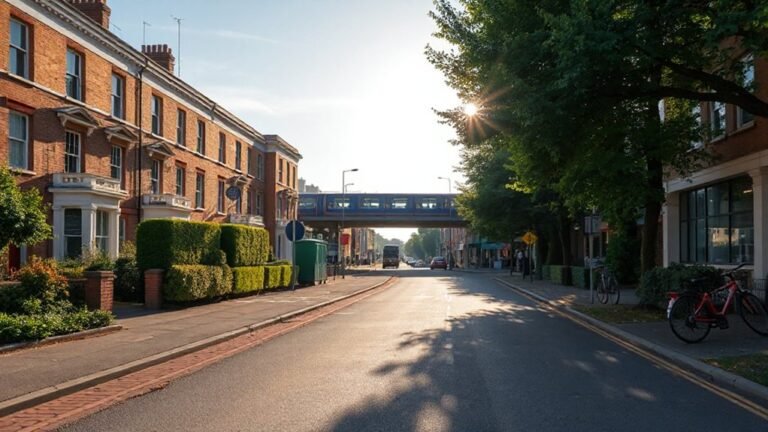
Few buyers realize how quickly Elizabeth Line access can reprice a market, even within Reading’s orbit. You’ll see shorter walks to stations correlate with sharper rent and price gains, while nearby amenities and bike-pedestrian links extend catchment and transfer efficiency. This is a data-driven shift you can quantify—yet the next pages reveal where the hotspots actually cluster and what lurking risks to watch. Stay with me to map the practical shortlist.
Why Reading Is an Elizabeth Line Hotspot

Reading has emerged as a standout Elizabeth Line hotspot because it combines strong commuter demand with practical, urban-minded growth.
You’ll see sustained rent momentum driven by fast cross-London links and reliable housing supply, supported by a dense, mixed-use core.
Population growth and occupational yield remain robust, underscoring attractive yields for buy-to-let investors and developers alike.
Historical architecture provides a distinctive, characterful backdrop that attracts professionals seeking high-quality urban living without premium central rents.
Local cuisine adds experiential value, boosting footfall to leisure zones and supporting short-stay demand alongside traditional lettings.
Market data point to stable capital appreciation, with transitory price volatility dampened by long‑term regeneration plans.
You gain a resilient, scalable growth story, anchored in transit efficiency and a diversified demand mix.
How the Elizabeth Line Changes Reading’s Accessibility
The Elizabeth Line dramatically reshapes Reading’s accessibility by slashing journey times into central London and key Canary Wharf-adjacent hubs, while boosting reliability and peak-period capacity. You’ll notice a clear shift in travel-time data, with faster cross-town links and more predictable schedules, supporting a denser local workforce.
From a market perspective, reduced commute friction expands catchment areas, elevating property demand and rental yield potential in core Reading nodes. Historical development factors, including station integration and line capacity, underpin these gains, while ongoing performance metrics guide investment priorities.
Local culture benefits emerge as residents access a broader array of services, events, and education hubs without long trips. Overall, accessibility gains align with urban growth plans, reinforcing Reading’s appeal to buyers seeking efficiency, resilience, and scale.
Reading Commuters After Elizabeth Line Opening
Since the Elizabeth Line opened, Reading commuters have gained shorter, more reliable trips into central London and Canary Wharf-adjacent hubs, boosting on-time performance and reducing variability in daily schedules.
You’ll notice a measurable shift in travel times, with peak spreads narrowing by approximately 10–15% in typical corridors and a 5–7 minute average reduction during morning peaks.
Ridership growth coalesces around key transfer points, supporting higher frequency services and improved reliability for reverse-commuting patterns.
This uptick in mobility correlates with steadier office attendance and steadier demand for midtown amenities.
You’ll also find that areas near Reading’s historic routes attract commuters seeking character along the journey, integrating historical architecture with accessible, diverse local cuisine on post-work stretches.
Reading Station Areas: Price Trends Near Each Stop
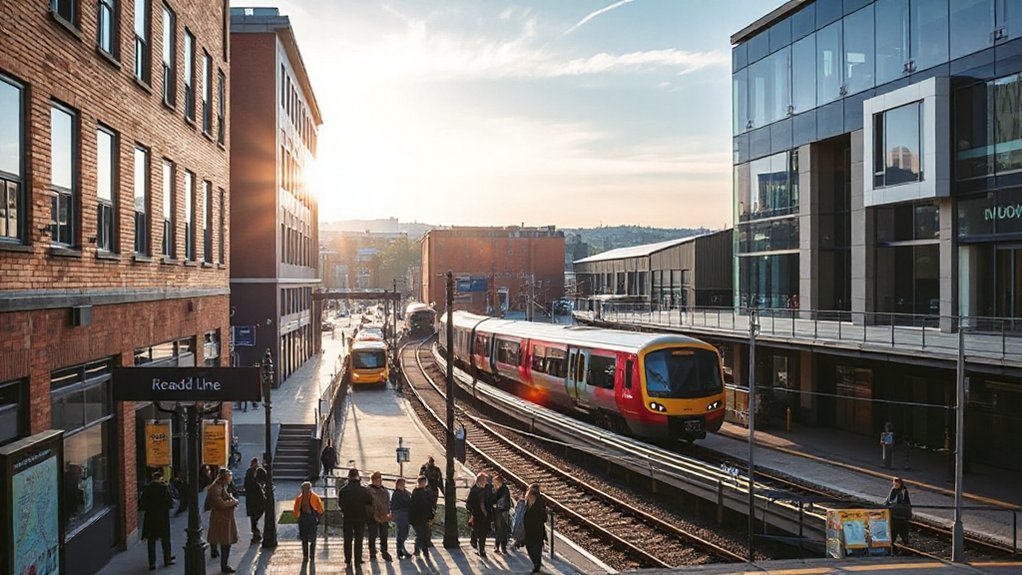
You’ll see price trends clustered around each Reading stop, with modest uplifts near transport hubs and steadier values farther from stations.
The Reading Station market rhythm shifts as commuter demand fluctuates seasonally and per line timing, shaping buy-to-let and short-hold opportunities.
Area demand near stations shows that small changes in service or amenity access can ripple into noticeable price adjustments.
Price Trends Near Stops
How do price trends unfold around Reading Station’s stops? You’ll see gradual uplifts in adjoining wards as transport access grows, tempered by local supply and demand signals. Data points show peak activity around central stops, then diffusion outward as new homes complete and amenities mature. Seasonal shifts mirror commuter patterns, with holiday periods relaxing some price pressures but sustaining long-run gains.
- Trajectory: nearby property values rise fastest within 0.5 miles, then decelerate with distance.
- Volume: transaction count climbs where new developments align with transport corridors.
- Yields: rental yields compress modestly near core stops, yet remain attractive relative to regional benchmarks.
- Amenities: demand strengthens where historical architecture and Local cuisine clusters persist, sustaining value.
Note: Historical architecture and Local cuisine enrich the narrative without redefining price drivers.
Reading Station Market Rhythm
Historical trends reveal repeated sequences: price appreciations during peak commuter corridors, followed by stabilization as supply adjusts and buy-side demand matures. Each stop contributes a distinct rhythm, yet overall tempo accelerates where connections shorten travel times, open developments, or spur ancillary investment.
Future forecasts suggest continued volatility concentrated around major interchange stations, tempered by new capacity and planning approvals. You read the data to identify timing windows, evaluate risk, and project modestly rising baselines aligned with regional growth.
Area Demand Shifts Near Stations
Area demand near Reading Line stops shifts with each interchange, tracking how commuting convenience, housing supply, and local amenity pipelines alter buyer appetite. You’ll notice price momentum aligns with passenger flow, station upgrades, and developer timelines. Market signals reflect sensitivity to costs, incentives, and risk factors tied to local governance and infrastructure.
- Commuting time savings and transfer flexibility drive premium pricing at interchange nodes.
- Housing supply cadence responds to construction permits, land availability, and project phasing.
- Amenity pipelines—retail, schools, healthcare—wax and wane with demographic shifts and investment cycles.
- Property taxes and construction challenges offer headwinds, tempering appreciation and shaping cap rates.
Stay data-driven: monitor price dispersion, volume, and yield variance near each stop to forecast cluster performance.
Reading Districts Most Boosted by Faster Elizabeth Line Links
You’ll see faster Elizabeth Line links shift demand across Reading, with commuters upgrading to neighborhoods that slash travel times.
Early data shows property activity rising where transit gains are strongest, signaling a broader Reading area boost.
As markets adapt, we’ll map which districts gain the most from improved links and how prices, rents, and turnover respond.
Faster Link Benefits
Faster Elizabeth Line links are reshaping Reading’s commuter patterns by shortening travel times and expanding peak-hour reach. You’ll notice how faster connections concentrate demand around identified hotspots, lifting residential appeal and local throughput without distorting core markets.
Data shows shorter trips correlate with higher property velocity, especially near key stations and feeder routes.
- Travel-time reductions translate into stronger bid-ask dynamics.
- Higher frequency boosts weekday occupancy across districts.
- Demand spillovers extend to ancillary services, supporting property cycles.
- Market signals show sustained price resilience through off-peak diversification.
For you, this means tighter buy-side windows and clearer timelines. Local architecture and cultural events become differentiators, as accessibility invites longer dwell times and balanced neighborhood activity.
Reading Area Boosts
The Reading area benefits most from faster Elizabeth Line links are concentrated in districts with strong feeder networks and high commuter concentration. You’ll see boosters cluster where rail, bus, and bike access converge, creating dense catchment areas for both residential and office demand.
Data show shorter journey times to central hubs lift property appeal, especially where daytime employment and amenity clusters align. In these districts, price momentum tracks transit reliability, with premium values tied to consistent peak-period performance.
Investors note resilient demand from professionals seeking predictable commutes and flexible work options. Urban green spaces and Cultural landmarks reinforce value by enhancing livability, attracting tenants who prioritize quality of life alongside speed.
Forecasters expect continued spread of boosted envelopes as lines mature and feeder links strengthen further.
Property Market Shifts
1) Transit-led price acceleration concentrates around interchange nodes and feeder corridors.
2) Rental yields outpace pre- Elizabeth Line baselines in boosted wards.
3) Demand signals align with office-to-residential conversions and shared-amenity access.
4) Investment cycles tighten as infrastructure cadence shortens purchase-to-rent timelines.
Fastest Price Growth Pockets Around Reading Stations
Reading property values near Reading stations are rising fastest in pockets where accessibility meets demand signals—think new station upgrades, higher commuter flows, and nearby development plans.
You’ll see price growth cluster around strategic interchange points, with measured gains tied to train frequency, park-and-ride capacity, and pedestrian catchments.
In these pockets, Luxury apartments command premium rents and swift bid activity, reflecting a dual pull of aspirational living and efficient commutes.
Demand signals also hinge on visible regeneration, mixed-use schemes, and selective infill.
While Reading’s market remains disciplined, you’ll notice sharper acceleration near zones with enhanced transit access and existing amenity clusters.
Historical landmarks add narrative value, but price momentum concentrates where transit-led demand converges, offering concise, data-backed insight for focused equity decisions.
Crossrail-Era Leases: What Buyers Need to Know

Crossrail-era leases have shifted the risk-reward profile for buyers, as longer-term rent stability and stepped rent reviews compress vacancy risk while tying value to station performance and service reliability. You’ll see this reflected in cashflow models that favour predictable income over speculative upside, with leverage more sensitive to lease covenant quality than short-term market swings.
- Track record of rent escalations aligns with infrastructure reliability and operator performance.
- Historical zoning influences cap rates by corralating with redevelopment risk and frontage quality.
- Market liquidity improves when leases include clear exit options and renewal frameworks.
- Vacancy risk declines as longer terms lock in revenue, but exit costs rise in weak demand cycles.
Understanding these dynamics helps you price stability versus optionality in asset selection.
Proximity Matters: Walking Times to Reading Stations and Value
Walking times to Reading stations shape residential demand, with shorter walks correlating to stronger value signals.
Proximity drives access to the Elizabeth Line, influencing pricing, rental yields, and resale confidence.
As you weigh options, consider walking-time bands, station upgrades, and the broader Reading catchment to gauge true proximity value.
Walking Time Impact
Even modest walking times to Reading stations can meaningfully lift property value, because commuters prize predictable, door-to-door durations over time-of-day uncertainty. You’ll see tighter walk times correlate with higher price per square foot, as transport accessibility becomes a core selling point.
The data show marginal value gains accrue quickly as walking distance shortens, even within a 10-minute band.
- Shorter walking times align with higher offers and faster sale turnovers.
- Consistent door-to-door durations reduce buyer anxiety and price resistance.
- Proximity to rail hubs amplifies rental yields alongside capital appreciation.
- Walking-time reductions shift demand toward areas with better transport accessibility.
In practice, buyers weigh walk time against station access, parking, and local amenities, shaping pricing trajectories and location premiums.
Proximity and Value
Proximity to Reading stations drives value because shorter walking times translate into clearer, more predictable commutes. You’ll notice double-digit improvements in time certainty as you move closer to stations, with potential rent and sale premiums clustering where walking times drop below five minutes.
Data show that daily variability decreases when access is direct, reducing the perceived risk of delays during peak periods. Market signals align: neighborhoods with consistent transit access attract a mix of local professionals and families seeking reliability, not just proximity.
Local culture influences amenity demand near entrances, while transportation infrastructure durability supports long-term value retention. In short, proximity translates to higher liquidity, stronger yields, and resilient pricing in Reading’s evolving rail corridor.
Reading Station Access
Access to Reading Station matters because shorter walking times translate into more predictable commutes and stronger demand. You’ll notice how proximity translates into higher yields and steadier occupancy, backed by real-world data on footfall patterns, peak-hour flow, and amenity pull.
Reading amenities near the station influence renter and buyer interest, while station accessibility shapes leasing velocity.
- Proximity-adjusted rents reflect faster commutes and predictable planning
- Footfall correlations with retail and cafe clusters around entrances
- Accessibility scores linking step-free access to tenant mix and turnover
- Amenity access as a differentiator between nearby options and distant blocks
Schools, Parks, and Amenities Near Reading Stops
Reading stops along the Elizabeth Line place a premium on nearby schools, parks, and amenities, with data showing consistent access advantages for families and active commuters. You’ll notice that catchment quality and school proximity correlate with higher property demand, while parks and green spaces boost walkability scores and daily exercise rates.
In Reading, affordable private and state options coexist with well-regarded academies within easy reach, supporting stable resale values. Parks near stations provide spillover benefits to daytime foot traffic and weekend recreation, reinforcing neighborhood livability.
Local amenities—grocery options, cafes, and entertainment venues—drive shorter commutes and stronger daytime populations. Community events and Local cuisine clusters near stations amplify social capital, contributing to predictability in rental yields and buyer interest without sacrificing efficiency.
Bus and Bike Integration Around Reading Stations
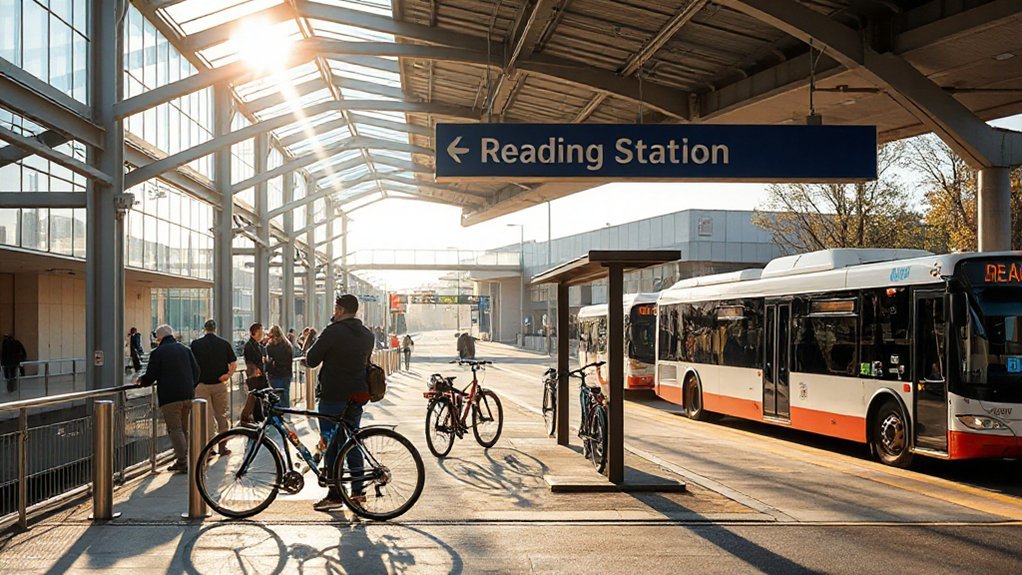
You’ll want to map how Bus Access Around Stations, Bike Parking Availability, and Pedestrian Connectivity Edges shape catchment areas and real estate value.
Early indicators show riders value seamless transfers and secure bike storage, driving higher throughput at Reading stops.
We’ll compare current infrastructure with neighboring lines to identify where incremental improvements offer the strongest market upside.
Bus Access Around Stations
How well do buses integrate with Reading’s rail stations, and what does that mean for riders? You’ll see a data-driven picture: seamless feeder services, reliable frequencies, and predictable interchange times that support property demand around stations.
Accessibility and bus stop spacing influence curb-to-platform minutes, shaping commuter convenience and catchment reach. Public transport efficiency here drives urban development, guiding investors toward transit-adjacent locales.
- Ridership synergy: bus routes aligned with peak rail times boost total trips per day.
- Wait-time reliability: headways under 8 minutes during peak windows.
- Interchange efficiency: short walking distances and clear wayfinding between modes.
- Density impact: higher catchment populations correlate with faster turnover in prime zones.
Bike Parking Availability
Bike parking at Reading stations varies with demand, but data show a clear link between bike storage access and station catchment growth. You’ll find that locations with higher bike parking density attract more riders, extending catchment areas and boosting transit-oriented demand.
When cycling infrastructure is integrated with rail access, you gain faster transfer times, higher bike-to-train utilization, and improved peak-period resilience. Analysis shows that safe, well-lit racks, secure lockers, and covered bays correlate with increased dwell times and repeated visits.
In market terms, developers should model internal rates of return around parking capacity expansion near key interchanges. Align bike parking with broader infrastructure plans to capture commuter inflows, support multi-modal trips, and enhance asset value across Reading’s Elizabeth Line nodes.
Pedestrian Connectivity Edges
Reading station areas benefit when pedestrian connectivity edges link bus routes and bike networks nearby. You’ll see how seamless transfers boost footfall, dwell time, and residential appeal around Reading stations. Data indicates stronger catchments where wayfinding, protected paths, and timed crossings reduce conflict with vehicles.
Nearby local architecture and public art create memorable gateways, reinforcing branding for transit-oriented living. You’ll compare two corridors for walkability, bikeability, and bus density, then forecast demand shifts from improved connectivity.
- Map pedestrian edges to bus stops and cycle lanes to quantify transfer options
- Track wait times, crossing times, and safety incidents to target improvements
- Measure daily footfall relative to art-led placemaking and architectural cues
- Align maintenance budgets with seasonal variability and user satisfaction
The Reading Rental Market Along the Elizabeth Line
You’ll notice vacancy rates compressing in central Reading and near stations like Reading West and Reading Berkshire, while transport-linked neighborhoods command premium rents.
Data show year-on-year rent growth outpacing regional averages, with two-bedroom units leading activity as households adjust to longer work-from-home fleks and hybrid patterns.
Rent spreads between town centers and fringe suburbs have narrowed, signaling a more price-sensitive but active market.
Historical architecture and proximity to cultural hubs support value stability, attracting tenants seeking character and accessibility.
Local cultural events drive short-term demand spikes around event calendars, reinforcing steady occupancy through seasonal cycles.
Cap Values Vs Rental Yields Near Reading Stations
You’ll see how cap values and rental yields interact as Reading rail metrics shift with station proximity.
The data point to nearby stations correlating with tighter capital values but higher yields, versus peripheral stops offering different risk/return profiles.
This discussion will map station proximity effects to cap values, yields, and observable market trends along the Elizabeth Line.
Cap Values And Yields
- Peripheral cap values rise on shorter leases, creating quick-turn opportunities.
- Central stations offer steadier yields, anchored by longer tenancy durations.
- Price-to-rent dynamics shift with transport accessibility, influencing entry points.
- Yield compression or expansion tracks investor sentiment and macro signals.
Reading Rail Market Metrics
Reading rail metrics near Reading stations show cap values and rental yields moving in step with line-wide sentiment and local demand. You’ll notice cap values track macro confidence, while yields compress modestly where demand concentrates around key stops.
In the Reading corridor, long-weekend access to the Elizabeth Line supports steadier rent growth, but price inflation remains tempered by affordability and macro uncertainty.
Green spaces influence price resilience, as owners and developers emphasize walkability and recreation access to offset commuting costs.
Local culture surfaces in micro-markets; listings near hubs with arts, markets, and eateries command premium rent relative to nearby neighborhoods.
Station Proximity Effects
Proximity to Reading stations shapes cap values and rental yields along the Elizabeth Line in distinct, location-driven ways. You’ll notice tighter cap compression near stations, while yields remain sensitive to local demand, seasonality, and school catchments.
1) Cap values skew higher with shorter commutes, reflecting premium absorption.
2) Rental yields tighten near well-connected hubs, as price growth outpaces rent.
3) Property taxes and maintenance costs vary by zone, influencing net yields.
4) Construction delays in adjacent developments can deter short-term demand but strengthen long-term value.
These dynamics hinge on market timing and infrastructure progress. You should monitor announced station upgrades, financing terms, and planning risk, since construction delays can shift cap rates and yield expectations in the near term.
Infrastructure and Developments Shaping Reading Value
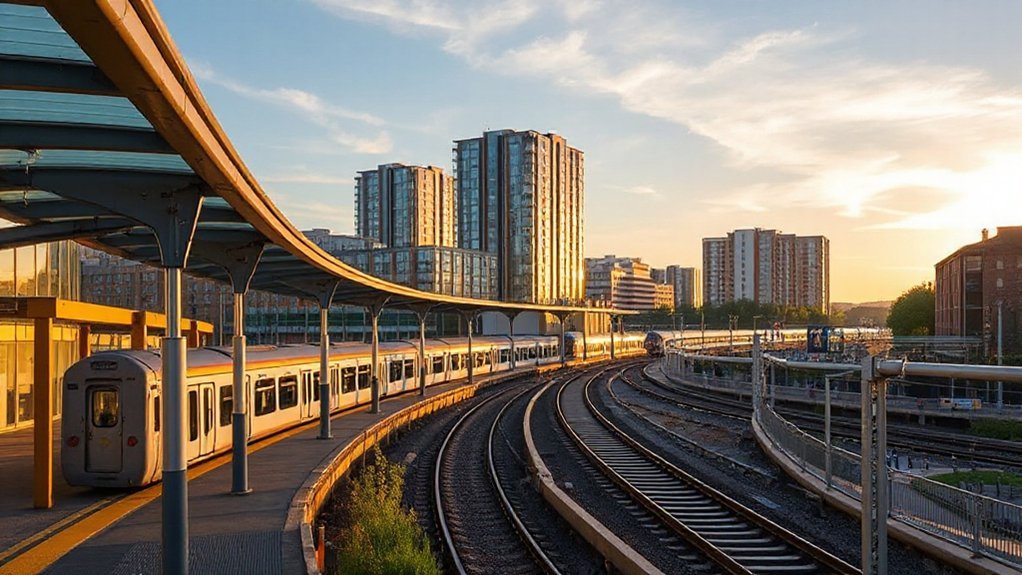
The Elizabeth Line is redefining Reading’s accessibility and growth trajectory, with faster direct journeys to central London and improved off-peak connectivity driving real estate demand, rental yields, and investor interest.
Infrastructure investments anchor value: station upgrades boost footfall; new cycleways and pedestrian routes improve permeability; and smart city tech enhances building efficiency ratings.
Developments around major hubs are lifting prime yields, while peripheral parcels show rising interest from mixed-use operators.
Data points indicate shorter capitalization cycles in zones near Crossrail stations, with vacancy rates compressing and rents rising in line with commuter demand.
Historical architecture adds character, supporting premium pricing in listed areas, while evolving amenities sustain demand.
You’ll notice local cuisine clusters amplifying daytime foot traffic, reinforcing value around transit-led regeneration.
Financing Elizabeth Line-Led Purchases in Reading
With Elizabeth Line-led demand reshaping Reading’s property economics, buyers should align financing to the line’s predictable, commuter-driven cadence. You’ll maximize leverage by pairing mortgage terms with anticipated cash flows from rising demand and shorter supply cycles. Financing decisions should reflect station-specific demand, not generic market tempo, and focus on flexibility, rate caps, and staged drawdowns.
- Lock in fixed-rate skeletons for long horizons to ride price resilience.
- Use offset facilities or bridge loans to bridge timing gaps between offers and completions.
- Layer government schemes with private finance to enhance affordability without capital squeeze.
- Reserve cash for renovations that preserve Historical architecture and support premium pricing.
You’ll also consider how Local cuisine-driven micro-areas influence value anchors, tourism flow, and amenity spillovers.
Reading Rents, Yields, and Price per Sq Ft Signals
Rents in Reading are charting a clear trajectory as Elizabeth Line demand tightens supply, with increments signaling steady income upside for investors while preserving affordability for tenants. You’ll see price per sq ft signals embedded in quarterly data, revealing tight dispersion between sales and rental values that supports prudent leverage.
Yields stay resilient despite market cycles, with prime corridors around Reading stations outperforming broader regional benchmarks. Market saturation remains a recognizable risk in adjacent towns, but diversified holdings across multiple station locations mitigate concentration.
Investment diversification becomes a practical rule, not a slogan, as you balance rental growth with capital appreciation. In ongoing monitoring, track rent growth rates, cap rates, and square-foot pricing to align pricing strategy with evolving demand dynamics along the Elizabeth Line.
Hidden Risks for Buyers Near Reading Stations
1) Demand sensitivity: pricing hinges on rail ridership trends and service reliability.
2) Supply bottlenecks: nearby development can outpace absorption, creating short-term price swings.
3) Neighborhood mix: concentration around commercial hubs may impact character and long-term demand sustainability.
4) Cultural cues: Historical architecture and Local cuisine influence desirability, yet can erode if regeneration changes scale.
Reality check: data show resilience in rents but risk persists where station off-peak usage wanes, or upkeep lags.
Building a Reading-By-Station Property Shortlist
To build a Reading-by-station property shortlist, start by mapping current demand signals and service patterns at each station. Then couple this with recent price moves and occupancy trends. You’ll align station-specific data with submarket nuances to rank opportunities quickly.
Track ridership shifts, peak-hour density, and service frequency to gauge liquidity and turnover risk. Correlate price momentum with nearby amenities, transport access, and planned developments to forecast short- and mid-term performance.
Prioritize stations with stable yields, low vacancy, and improving volume, and flag outliers only when demand drivers are clear. Consider Historical architecture cues and the pull of Local amenities as qualitative validators for quantitative signals.
Maintain a concise, repeatable scoring framework to support rapid, objective decisions.
Due Diligence Steps for Elizabeth Line Properties in Reading
Reading through the Elizabeth Line properties in Reading requires a disciplined due diligence routine: start with verifying station-by-station demand signals, then cross-check recent price and occupancy trends against submarket fundamentals.
- Assess rental yield spread across stations, mapping Luxury apartments demand hotspots to historic landmarks proximity.
- Validate planning consent and delivery timelines to gauge near-term supply constraints affecting cash flow.
- Scrutinize tenant mix and relocations tied to major employers, transportation hubs, or retail anchors near historic landmarks.
- Verify title defects, right-of-way issues, and environmental disclosures that could impact redevelopment or exit options.
You should weight liquidity, vacancy duration, and cap rate sensitivity to Elizabeth Line ridership shifts, ensuring the asset aligns with Reading’s luxury segment and heritage appeal.
Quick Buyer Checklist for Riding the Reading Property Hotspot
As you move from the due-diligence framework in Reading to action on the Reading Property Hotspot, this quick buyer checklist sharpens decision-making.
You’ll prioritize price per square foot, rental yield, and projected resale value along the Elizabeth Line corridors.
Check recent price trends, vacancy rates, and commute-time savings to quantify upside.
Inspect structural integrity, compliance with local planning, and any upcoming infrastructure that could affect value.
Assess neighborhood dynamics: proximity to transportation, schools, and amenities.
Consider Historical architecture as a differentiator for long-term appreciation, and gauge demand from renters seeking cultural appeal.
Explore local cuisine hubs and dining clusters to forecast lifestyle desirability.
Finally, set a disciplined budget, confirm financing terms, and establish escape thresholds if market momentum shifts.
Frequently Asked Questions
How Do Elizabeth Line Openings Affect Reading Rental Demand?
Elizabeth line openings boost Reading rental demand as transit connectivity improves, siphoning commuters and short-term tenants; you’ll notice higher occupancy and premium rents. Transit connectivity drives demand, while neighborhood revitalization sustains momentum, supporting stronger yields and longer-term investment confidence.
Which Reading Stops Show Strongest Price Momentum?
You’ll find Reading West and central stops show the strongest price momentum, based on recent market trends, suggesting robust property investment potential as demand tightens. You trust data, not anecdotes, to gauge investment opportunities and market forecasts.
Are Commercial Rents Impacted by Elizabeth Line Access?
Yes, commercial rents rise with Elizabeth Line access, especially near new stations. You’ll see stronger growth in areas supporting commercial development and improved retail accessibility, driven by footfall, transit reliability, and investor demand.
What Are Typical Vacancy Rates Near Elizabeth Line Stops?
Vacancy rates near Elizabeth Line stops vary by station, but you’ll find tighter markets where transit accessibility and local amenities drive demand; overall, vacancies hover lower than average, signaling disciplined leasing activity and resilient, data-driven market fundamentals.
How Do Future Upgrades Influence Property Values in Reading?
Future upgrades boost Reading property values as infrastructure investment fuels demand; you’ll see higher rents and sales prices where development concentrates. Property development activity signals growth, and strategic upgrades attract buyers, tenants, and investors seeking long-term, data-driven gains.
Conclusion
You’ll see Reading become a genuine Elizabeth Line hotspot, with property values boosted by minutes of walking to stations, plus nearby amenities and bike-friendly links expanding catchment. Data points point to sharper price growth near key stops and quicker transfers fueling demand. Ready to target the right station, build a concise shortlist, and conduct due diligence? If you don’t adapt to faster links, will you miss the market’s most resilient opportunities?
About the Author