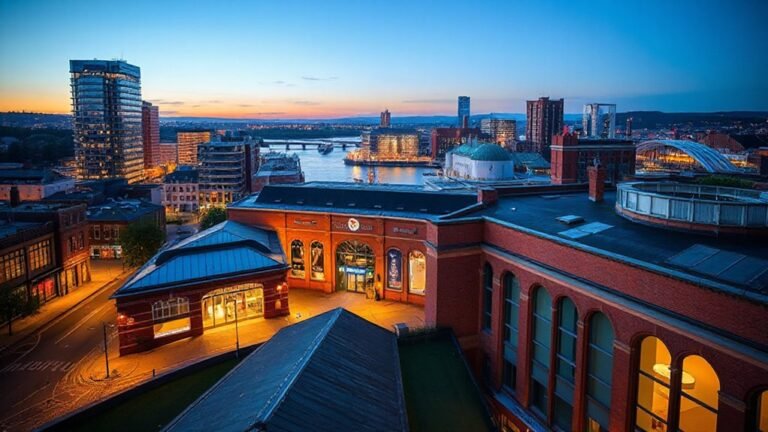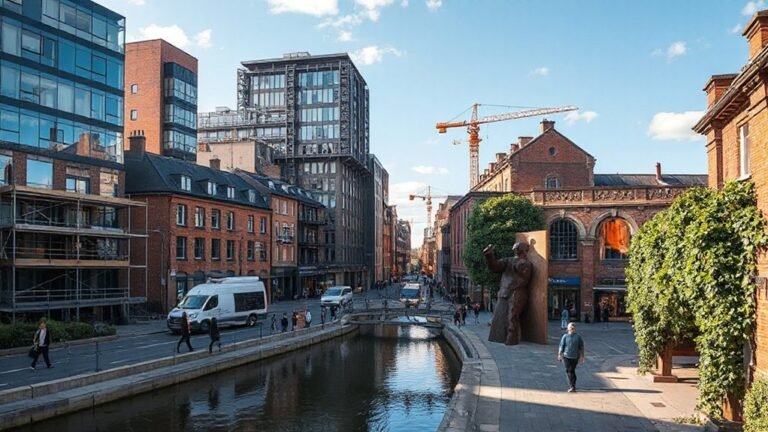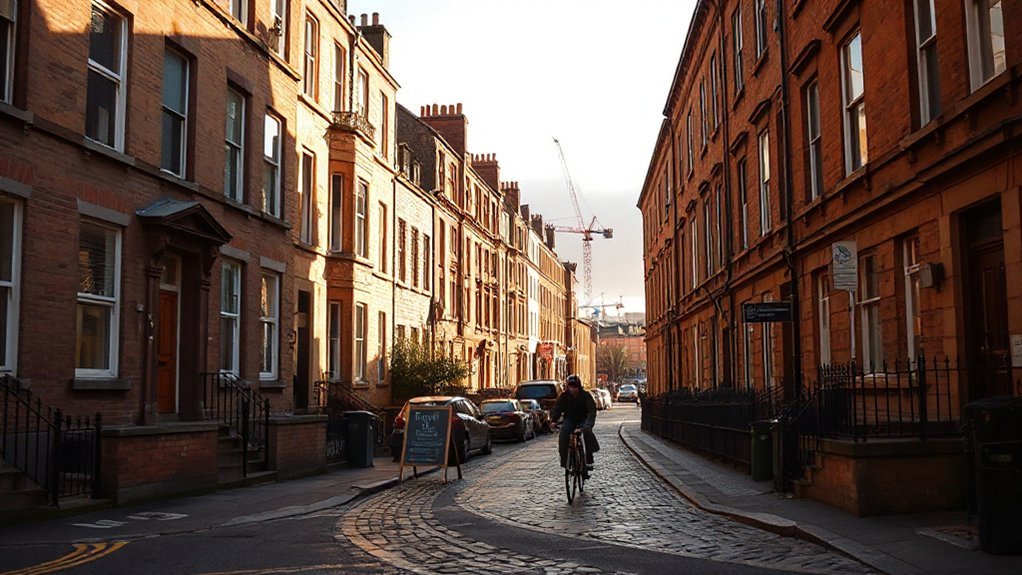
Are you considering to buy in Glasgow this year? Glasgow’s affordability has improved, with median prices in some areas up to 20% below city-wide peaks recently and rent growth outpacing inflation in several pockets. You’ll find strong capital-growth potential in places like Partick, Hyndland, and Darnley, driven by rail and tram links, council estate upgrades, and emerging regeneration zones. There’s nuance to weigh—track the balance of yield versus long-term value, plus upcoming infrastructure and community projects that could tilt the scales in unexpected ways.
Glasgow Affordability Today: Drivers and Trends
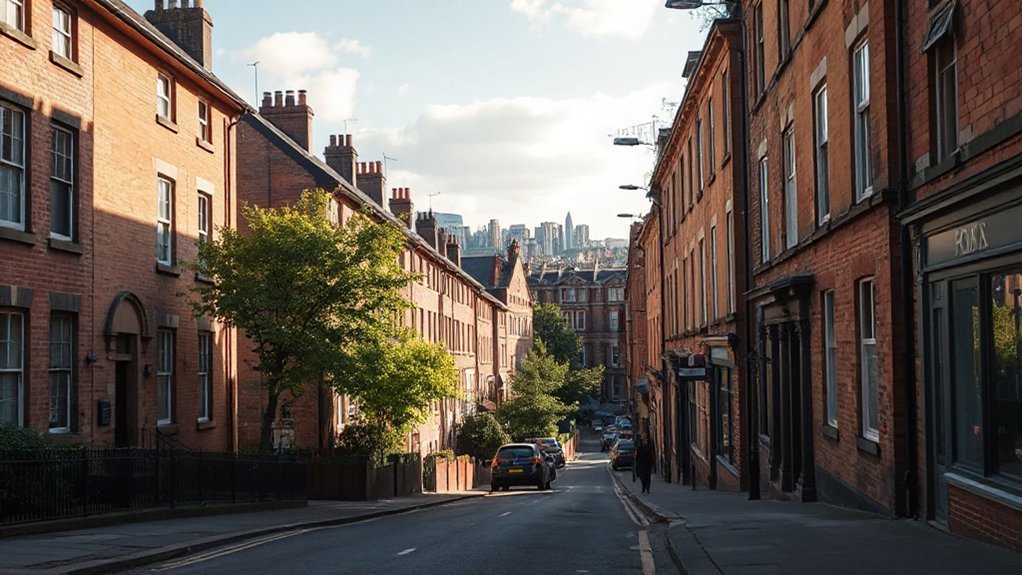
Glasgow’s affordability today is shaped by a mix of supply dynamics, wage trends, and housing policy, with demand shifting toward well-connected neighborhoods and sustainable delivery options.
You’ll see housing affordability influenced by listing velocity, build-out rates, and planning outcomes, which keep price growth calibrated despite macro risks.
Over the next year, market affordability is forecast to tighten modestly in central pockets, while peripheral areas offer better value and rental stability.
Rent-to-price gaps remain a key signal, guiding buyers toward neighborhoods with transport access and mixed-use amenities.
Data suggests steady but selective gains in capital flux, supported by targeted incentives and mortgage products.
You observe steady normalization in affordability metrics, reinforcing prudent, data-driven decision-making for buyers seeking long-run value.
How to Evaluate a Glasgow Neighborhood Quickly
To evaluate a Glasgow neighborhood quickly, start with the basics: transport links, local amenities, and recent price performance. You’ll form a first impression from tangible signals like commute times, supermarket access, and median price momentum over the last 12 months. Use these steps to benchmark neighborhoods against growth potential and lifestyle fit.
1) Assess accessibility: rail and bus hubs, bike routes, and travel times to key centers.
2) Gauge amenities and demand drivers: schools, parks, local cuisine options, and proximity to cultural festivals.
3) Check price momentum: recent transaction prices, year-over-year changes, and rental yield signals.
This approach yields a data-driven, forward-looking view you can act on, minimizing risk while highlighting distinctive cultural and culinary appeal.
Castlemilk: Affordable Entry With Amenity Access
Castlemilk offers an affordable entry point for buyers, so you can secure initial equity without overextending.
You’ll find amenity access nearby, supporting daily convenience and lifestyle needs.
With nearby growth potential, this area can strengthen your long-term value while keeping upfront costs manageable.
Affordable Entry Point
Castlemilk offers an affordable entry point with ready-made amenity access, making it a practical first step for buyers prioritizing value. You’ll find a track record of improving affordability alongside steady demand, supporting predictable entry costs and potential for early equity.
This area sits among affordable suburbs with growing appeal, underpinned by ongoing regeneration and measured price stabilization. Your focus on property affordability aligns with evidence of favorable entry price bands and rental-readiness for future cash flow.
- Track price movements and regeneration milestones to time your purchase
- Compare nearby costs against city averages to quantify value
- Assess amenity access alongside transport links for long-term demand
This approach keeps you ahead of market shifts, shaping a prudent, forward-looking entry strategy.
Amenity Access Nearby
In Castlemilk, you’ll gain ready-made access to key amenities within a practical radius, enhancing daily convenience and sealing value for a first-step buyer. Amenity access is a standout factor in neighborhood evaluation, shaping both short-term practicality and long-term appeal.
Local supermarkets, pharmacies, and transit links reduce daily friction, while parks and leisure centers support healthy living without added commute time. Market data indicates stable delivery of essential services and predictable maintenance costs, contributing to reliable cash flow for starter investors.
This area shows consistent demand from first-time buyers seeking affordable entry with practical access. Look for developments that preserve walkable routes and minimize car reliance, reinforcing resilient price trajectories.
To conclude, amenity access strengthens Castlemilk’s market fundamentals and buyer confidence.
Growth Potential Nearby
Could Castlemilk’s proximity to ongoing regeneration open meaningful growth for buyers seeking an affordable entry with strong amenity access? Yes, and the data backs it.
Nearby urban renewal initiatives are widening housing supply, improving transport links, and boosting local services, which support price stability and upside.
Castlemilk’s affordable base remains attractive as capital cycles converge with broader Glasgow gains, especially where cultural districts attract footfall and enterprise.
Expect steady yield retention even as values rise, aided by targeted infrastructure investments and new community facilities.
Climate-forward planning and mixed-use projects further de-risk entry purchases while expanding rental demand.
- Regeneration momentum compounds affordability with enhanced amenity access
- Transport and infrastructure upgrades open wider market exposure
- Cultural districts attract discretionary investment and stabilize rents
Easterhouse: Improving Transport Links and Value Trajectory
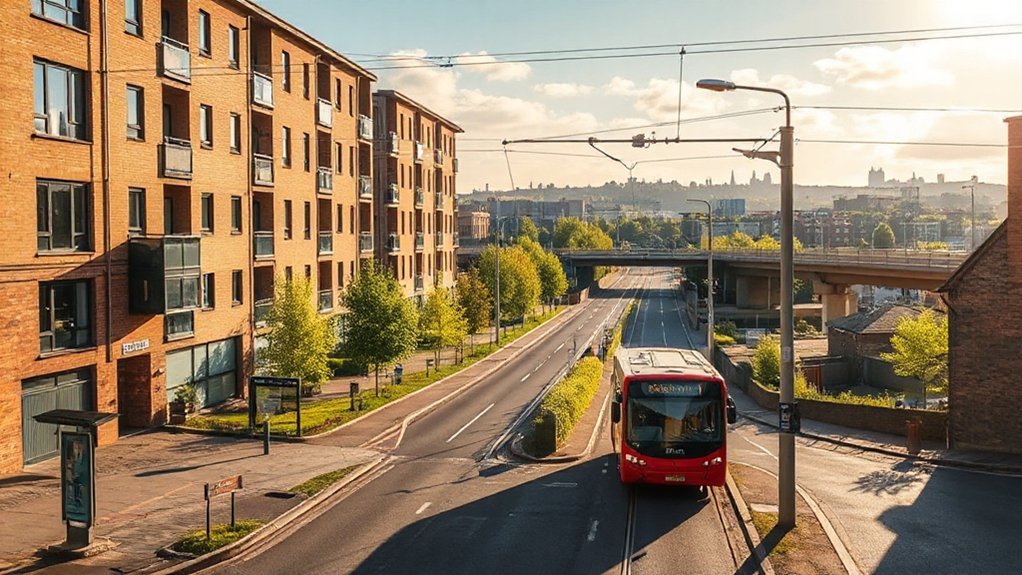
Easterhouse is poised for a transport-led upgrade that could elevate housing values and attract investment, as improved links to Glasgow city center and peripheral hubs translate into shorter commutes and greater accessibility. You’ll see clearer corridors to employment nodes, with proposed bus rapid transit and enhanced rail connectivity shaping demand dynamics.
Early data indicate yield-supportive rent trajectories and steady price appreciation where transport enhancements align with regeneration plans. Easterhouse transport improvements are likely to compress downside and expand upside by widening workforce catchments and enabling last-mile efficiency.
Investors should monitor project timelines, funding approvals, and corridor performance metrics, as upgrades converge with existing affordability. In this context, Easterhouse value remains sensitive to delivery speed, modal reliability, and uninterrupted capital flows.
Shieldhall and Coats’ Green: Near-City-Center Affordability
Shieldhall and Coats’ Green sit near Glasgow’s city edge, where affordability meets practical accessibility as transport links continue to strengthen. You’ll notice steady value upside as city-center commutes shorten, while monthly outlays stay sensible.
The area blends historical asset value with cultural activity, supporting resilient demand. Anticipate favorable rental yields and gradual price appreciation driven by improving transit and local amenities.
- Historical landmarks anchor market narrative, providing stable visibility for future price corrections.
- Cultural festivals drive occupancy during peak seasons, bolstering short- and mid-term yields.
- Ongoing infrastructure upgrades lift accessibility without premium-city costs, enhancing long-run capital growth.
North Glasgow Corridors: Connectivity That Boosts Pricing
North Glasgow Corridors opens pricing upside by weaving faster transit links, reliable bus routes, and new cycleways into a cohesive spine from Springburn through Possilpark to the north edge.
You’ll notice the data signaling higher demand density around improving stations and junctions, with fare-adjusted returns driven by shorter commute times and predictable service.
Connectivity upgrades attract owner-occupier and investor buyers seeking resilience, diversification, and steady rent growth.
Historical architecture anchors the area’s character while new developments optimize land use near transit nodes, supporting premium pricing without erasing heritage.
Cultural festivals add seasonal uplift, sustaining footfall and ancillary spend.
Looking forward, continued alignment of transport investments with mixed-use schemes should extend pricing upside, not just in North Glasgow but across adjacent corridors.
Glasgow East Regeneration and Growth Prospects
Glasgow East is poised for meaningful regeneration, building on improving connectivity and market demand seen in the northern corridors. You’ll notice East regeneration momentum driven by infrastructure upgrades, housing supply expansion, and incremental investment in social and commercial spaces.
Growth prospects remain solid as private capital targets mid-market housing, logistics hubs, and mixed-use projects that *liberate* new demand corridors. The East’s affordability edge supports sustained price resilience even as volumes rise, with rental yields improving where new stock aligns with commuter catchments.
Population growth, developer activity, and grant-backed initiatives reinforce upside potential. Expect tighter delivery timelines, enhanced data transparency, and clearer planning signals that help you time purchases for capital gains.
1) Infrastructure-led demand acceleration
2) Affordable supply aligning with growth markets
3) Transparent, data-driven investment signals
Partick and Hyndland: Price Relief With Lifestyle Appeal
Partick and Hyndland offer price relief without sacrificing lifestyle, as recent data shows steadier price modesty alongside strong demand signals from an urban, transit-rich pocket.
You’ll notice value in walkable streets, café clusters, and proximity to dual rail lines that bolster liquidity for buyers.
Over the coming year, price modesty is likely to persist even as volumes stay elevated, supported by dense housing stock and ongoing private investment.
This area blends affordability with lifestyle appeal, yielding resilient returns as renters and buy-to-let investors seek convenience and access.
Market signals point to a favorable entry window, with steady appreciation potential underpinned by underwritten demand and continued infrastructure improvements.
For buyers prioritizing balance, this locale remains a compelling, data-driven pick.
Councils Estates With Upgrades: Where Modern Amenities Meet Value
Councils Estates with upgrades are delivering modern amenities at attractive values, as improvements lift appeal without sacrificing affordability. You’ll notice how Council upgrades translate into tangible gains: better infrastructure, energy efficiency, and community facilities that raise long-term value without overpaying now.
- Higher-quality common areas and safer streetscapes boost desirability and resale potential
- Modern amenities like upgraded lighting, broadband-ready homes, and efficient HVAC cut running costs
- Planned recycling, EV charging, and green space improvements support ongoing price resilience
You should track performance metrics: vacancy trends, rental yields, and appraised values post-upgrade. This approach keeps you ahead, aligning with a market where upgrades drive faster price recovery and steady capital growth.
In short, upgraded councils estates offer compelling, data-backed value today and in the horizon.
West End Pockets Near Universities: Pricing Discipline and Demand
West End pockets near universities are tightening pricing discipline as student demand remains highly elastic and rental markets tighten around core campuses. You’ll see rents stabilize as occupancy drives milder year-over-year gains, with price sensitivity most acute for entry-level units and multi-bedroom shares.
University demand remains the primary catalyst, supported by limited new supply and persistent inbound enrollments, creating a predictable base for rental yields and resale value.
In practice, you’ll observe tighter vacancy rates in blocks adjacent to lecture halls and student unions, while modest premium persists for proximity to transit hubs and library access.
For buyers, the trajectory favors measured price appreciation, anchored by student rentals and resilient demand from graduate programs seeking affordable, well-connected homes.
Southside Growth: Retail Anchors and Housing Demand
Southside Growth shows a shift from campus-driven demand to a broader mix of retail anchors and housing appeal. You’ll see steady leverage from Southside retail, expanding beyond university corridors as footfall diversifies and incomes rise.
Housing demand strengthens where amenities and transport converge, supporting price resilience and rental uptime. The data point to a recalibration in buyer profiles, with families and professionals competing alongside students, boosting turnover and price momentum.
Savvy investors target corridors with mix-use nodes, where retail anchors create spillovers into apartment demand and value retention.
1) Core retail anchors attract diverse spending, stabilizing rental yields and supporting price growth.
2) Transit-oriented clusters elevate housing demand, shortening commute times and expanding buyer pools.
3) Demographic breadth and amenity variety reduce volatility, enabling resilient long-term upside.
Broomhill, Pollok, and Darnley: Affordable Entrances With Upside
You’ll find affordable entrances in Broomhill, Pollok, and Darnley that offer tangible upside as demand grows. These areas show tracks of growth potential supported by rising rents, new amenities, and improving transport links.
If you’re evaluating entry points with long-term value, this trio warrants close attention.
Affordable Entrances, Upside
Although prices are accessible today, these Glasgow neighborhoods offer compelling upside through planned developments, improving transport links, and growing amenities that attract buyers and renters alike. You’ll notice affordable neighborhoods delivering measurable property upside as projects unfold, with data-backed trajectories guiding decisions.
- Broomhill’s mixed-use upgrades are expanding local services, boosting appeal and resale potential.
- Pollok benefits from transit tweaks and new parks, lifting occupancy demand and price resilience.
- Darnley’s investment in affordable housing mixed with infrastructure gains supports steady value growth.
These areas show disciplined, economy-driven upside: affordable entrances with clear upside potential, underpinned by transport, amenities, and development pipelines. Your target now is to track delivery milestones, rental yields, and long-term cap rates to capitalize on the upcoming value shift.
Growth Potential in Areas
Growth in Broomhill, Pollok, and Darnley hinges on measurable upside from affordable entrances. You’ll see value emerge where entry costs align with rental yield and long-term demand, supported by clear zoning and infrastructure plans.
In Broomhill, expected redevelopment and improved transport connections could lift footfall and asset resilience, while Pollok benefits from ongoing community upgrades and potential phased housing projects that temper capex risk.
Darnley’s affordability paired with targeted regeneration creates upside potential for capital appreciation and stable rental income.
Market signals show inbound investment is tied to housing regulations that balance supply with quality standards, protecting both buyers and tenants.
Property taxation policies will influence yields, so monitor changes that affect carrying costs and depreciation timelines for your portfolio.
Rail and Tram Corridors to Watch: Impact on Prices
Rail and tram corridors around Glasgow are shaping price dynamics as transit accessibility rises and amenity access expands. You’ll see prices consolidating near reliable routes, with stronger lifts in areas where Rail corridors and Tram corridors intersect growth hubs, boosting demand and resale velocity.
1) Corridor proximity metrics show faster appreciation in top rail and tram corridors, signaling clear buy points for long-term capital gains.
2) Development pipeline near stations indicates higher density, improved amenities, and tighter supply, pushing yields downward and price ceilings upward.
3) Transit-led revamps spark rental demand and vacancy tightening, strengthening price resilience even in cycle downturns.
In short, transit corridors are a forward-looking lever, directing where affordability meets future value. Look for data-driven signals around station-centric projects and walkable access to key amenities.
Road Connectivity and Pricing: What to Expect

Road connectivity is a key driver of pricing, and Glasgow’s road network is increasingly shaping where buyers and renters expect value. You’ll notice corridor pricing patterns where arterial routes boost access to city centers and growth zones, while peripheral links cap upside in slower metros.
Quantified by travel times, congestion levels, and toll equivalents, pricing models show faster commutes correlating with premium per square foot and shorter holding periods.
Historical architecture near major arteries often commands higher rents due to prestige and accessibility, even as newer builds compete on transit-friendly layouts.
Culinary hotspots clustered along well-connected corridors attract higher demand, reinforcing premium pockets within otherwise modest markets.
Expect continued consolidation around core routes as developers optimize mix of roads, rail integration, and walkable amenities.
Parks, Schools, and Services: Local Amenities That Protect Value
Parks, schools, and local services are prime value protectors in Glasgow’s housing market, with access to green space, reputable schools, and convenient amenities translating into stronger demand and steadier price trajectories. You’ll see neighborhoods with documented park access, school performance data, and service availability outperform peers on price stability and recovery after market dips.
- Evidence-backed demand: green spaces and nearby transportation hubs correlate with narrower bid-ask spreads and faster price growth.
- Stable workflows: access to everyday services reduces resale time and supports higher rent capture in mixed-use areas.
- Forward momentum: districts near primary access points, parks, and reliable schools exhibit stronger capital trajectories over five-year horizons.
Green spaces and Transportation hubs anchor resilience, guiding prudent, forward-looking investments.
House Type Mix That Sustains Demand: Flats, Terraces, New Builds
In Glasgow’s housing mix, flats, terraces, and new builds each play a distinct role in sustaining demand and price resilience. You’ll see flat layouts driving high-density demand in central zones, while terraces attract family buyers seeking outdoor space and long-term stability.
New builds deliver modern efficiencies, lower maintenance, and predictable management costs, appealing to investors and owner-occupiers alike. Data show turnover stabilizes when supply aligns with target demographics, reducing vacancy spikes during economic shifts.
Market signals emphasize scalable housing architecture that supports flexible ownership models and placemaking. Effective property management keeps service charges predictable and common areas well maintained, preserving value across cycles.
For you, prioritizing mixed-type housing with quality infrastructure and clear upkeep reduces risk and strengthens capital resilience.
Investment Case: Rental Yield vs Capital Growth in Glasgow
Despite Glasgow’s mixed housing stock, rental yield and capital growth often diverge, so investors should weigh cash-on-cash returns against expected price appreciation across submarkets. You’ll compare income stability with long-term equity, guided by submarket dynamics, vacancy trends, and macro demand signals.
In practice, sound investment strategies blend yield with price appreciation potential, while efficient property management preserves cash flow.
1) Compare submarket profiles for rental demand, noting student, professional, and family cohorts to estimate occupancy and turnover.
2) Model cash-on-cash returns versus projected appreciation, using sensitivity tests for interest-rate shifts and refurbishment costs.
3) Prioritize assets with scalable value drivers—amenities, transit access, and landlord-friendly regulations—for sustainable capital growth.
First-Time Buyer Pathway in Glasgow: Budgeting, Grants, Timelines
Glasgow’s housing market presents distinct pathways for first-time buyers, linking budgeting discipline, grant access, and realistic timelines to open ownership. You’ll map a clear path by evaluating housing affordability in your target neighborhoods, then calibrating upfront costs against ongoing monthly commitments.
Budgeting strategies focus on debt-to-income ratios, deposit buffers, and contingency funds, with data showing that larger deposits shorten mortgage terms and lower monthly payments. Grants and support schemes—when aligned with income ceilings and property type—can shave thousands off the price, accelerating timeline milestones.
Timelines depend on lender criteria and application speed, but a disciplined plan—including pre-approval, property search windows, and conditional offers—can compress months into quarters. Expect gradual market shifts; your preparedness widens opportunities and smooths ownership.
Risk Factors to Monitor for Glasgow Affordability
You’ll want to track Market Volatility Factors and Economic Shifts Ahead as they shape Glasgow affordability in real time.
Our data-driven view shows how rapid price swings and regional growth trends can impact financing, rents, and buyer power over the next 12–24 months.
Market Volatility Factors
Market volatility in Glasgow’s housing market hinges on several key risk factors you should monitor: interest rate trajectories, local employment trends, and affordability-linked demand shifts. You’ll see how shifts in mortgage costs and borrowing capacity ripple through price momentum, while job growth and sector mix shape buyer confidence.
Forward indicators suggest sensitivity to policy and planning signals, including how market speculation interacts with supply constraints and zoning regulations. Stay data-driven as you assess risk exposure and timing.
1) Interest rate paths and affordability thresholds
2) Local employment resilience and diversification
3) Zoning rules, development pipelines, and speculative activity
Economic Shifts Ahead
You’ll see wage trajectories diverge by industry, shaping disposable income and debt service capacity, while sectoral shifts influence demand for housing and rents. Urban renewal momentum can lift property values in targeted districts, but may also compress affordability if upgrades outpace incomes.
Demographic shifts—aging, young families, and migration patterns—will recalibrate demand timing and price elasticity. Credit conditions, including lending standards and mortgage availability, will directly affect purchase feasibility.
In Glasgow, monitoring these catalysts helps gauge risk-adjusted returns and the resilience of affordability and capital growth. Stay alert to policy tweaks, infrastructure cadence, and market sentiment signals.
Frequently Asked Questions
Which Glasgow Areas Show the Strongest 5-Year Capital Growth Signals?
You’ll see strongest five-year capital growth signals in luxury apartments clustered near heritage neighborhoods, where demand is rising, prices trend upward, and future development sustains momentum for you to capitalize on continued market strength.
How Do Recent Transport Upgrades Alter Pricing in Outer Glasgow?
Case study: you see outer Glasgow property prices rise as new rail links cut commute times. Public transport upgrades boost appeal, lifting demand and pricing, so you benefit from higher resale value and steadier rental yields.
Which Property Types Balance Affordability With Rental Demand?
You should consider affordable neighborhoods and rental yield hotspots, balancing price with demand; you’ll favor multi-family and mid-range flats in growth corridors, where data shows solid rent retention, steady occupancy, and favorable capitalization trends for durable, scalable returns.
Do University-Related Demand Cycles Affect Long-Term Value?
Student housing demand cycles do influence long-term value, with steady rental yields as university populations grow. You’ll see temporary dips during holidays, but sustained demand and higher occupancy push rents, enhancing affordability dynamics and capital appreciation.
What Grants or Schemes Most Effectively Boost First-Time Buyer Capacity?
You should pursue government incentives and differing mortgage options to boost your first-time buyer capacity, as data-driven trends show steady expansion in uptake, with targeted schemes expanding access, lowering upfront costs, and enhancing affordability across Glasgow’s evolving housing market.
Conclusion
Glasgow’s affordability story is evolving, not static. Prices, rents, and yields point upward when supported by transport upgrades, regeneration, and targeted investment. Affordability today anchors on entry points in Castlemilk, Easterhouse, Shieldhall, and Coats’ Green, while capital growth hinges on mix, density, and quality infrastructure. You should watch demand drivers, monitor council programs, and time entry to align with budget, timelines, and grants. Stay disciplined, stay data-driven, and stay forward-looking for sustainable return.
About the Author