A Beginner’s Guide to Garden Hardscaping: Key Elements to Consider
Most garden transformations begin with the same mistake: thinking about plants first. Plants are the part of the garden that most people find most appealing — the colour, the texture, the seasonal change — but in a well-designed garden they are the final layer of a composition whose foundations are built from stone, timber, brick, gravel, and concrete. These permanent structural elements are what garden designers call hardscaping, and getting them right — or wrong — determines whether a garden is functional, beautiful, and manageable for years to come, regardless of what is planted in it.
A garden with excellent hardscaping and mediocre planting looks better, lasts longer, and requires less maintenance than a garden with excellent planting on a poorly considered hard framework. This guide explains what hardscaping is, what its main elements are, and what decisions you need to make before any contractor starts work.
What Is Hardscaping?
Hardscaping refers to the non-living, structural elements of a garden or outdoor space. It is the complement to softscaping — the plants, turf, and organic elements that change with the seasons. Hardscaping includes:
- Patios, terraces, and paved areas
- Paths and walkways
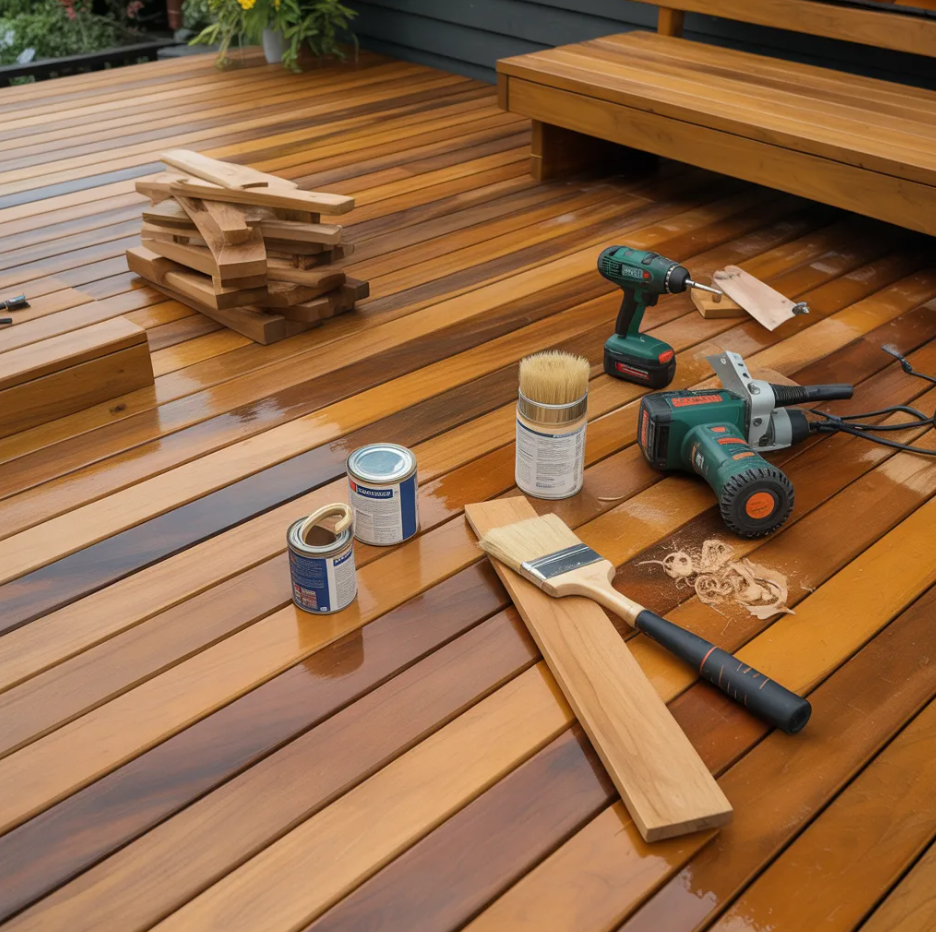
- Decking
- Retaining walls and boundary walls
- Raised beds and planters
- Steps and changes of level
- Water features and ponds
- Garden buildings — sheds, pergolas, arbours, summer houses
- Driveways and parking areas
- Edging and borders
Hardscaping elements are permanent or semi-permanent. They define the structure of the garden, determine how it is used, and establish the proportions and sight lines that make a space feel either well composed or confused. Once installed, they are expensive to change — which is why getting the design right before any material is laid is so important.
Start With Function, Not Aesthetics
The most common design error in garden hardscaping is to choose materials before defining how the space will be used. The right materials and layout for a garden used primarily for children’s play, evening entertaining, growing vegetables, or a combination of all three are different — and choosing materials without clarity on function produces a garden that looks good in photographs but fails in daily use.
Before considering any material or product, answer these questions:
How will the garden be primarily used? Entertaining adults in the evening, family use including children and dogs, productive growing, passive enjoyment of plants, or a combination?
How many people need to move through or use the space simultaneously? A path wide enough for one person in single file is inadequate if two people regularly walk the garden side by side.
What maintenance commitment are you prepared to make? Natural stone is beautiful but requires occasional sealing and moss treatment. Gravel is low cost but requires weeding and redistribution. Decking is attractive but needs annual treatment and can become slippery. Concrete block paving is hard-wearing and low maintenance but can look harsh. There is always a trade-off between aesthetic quality and maintenance burden, and it should be made consciously.
What is the budget, and how will it be allocated? Hardscaping is typically the most expensive part of a garden design and the most expensive to change once done. A well-considered smaller terrace in high-quality natural stone is almost always a better investment than a large terrace in budget materials.
The Key Elements of Garden Hardscaping
Patios and Terraces
The patio or terrace is the most used outdoor space in most British gardens — the connection between the house and the garden, the place for garden furniture, outdoor dining, and the majority of the time spent outdoors in warm weather.
Size. Most garden patios are too small. A furniture set with a table for four or six requires more space than most homeowners imagine when marking out a proposed patio on paper. A minimum of 3 metres x 3 metres is needed for a modest seating area; 4 metres x 4 metres is more comfortable for entertaining. Plan the furniture layout before finalising the dimensions.
Material. The main options for domestic patios are:
- Natural stone (sandstone, limestone, slate, granite) — the premium choice. Natural stone provides a quality of surface, colour, and texture that manufactured alternatives cannot replicate. Indian sandstone and natural limestone are the most widely used in UK domestic gardens. Both are available in a range of colours and finishes, and properly sealed and maintained will last for decades.
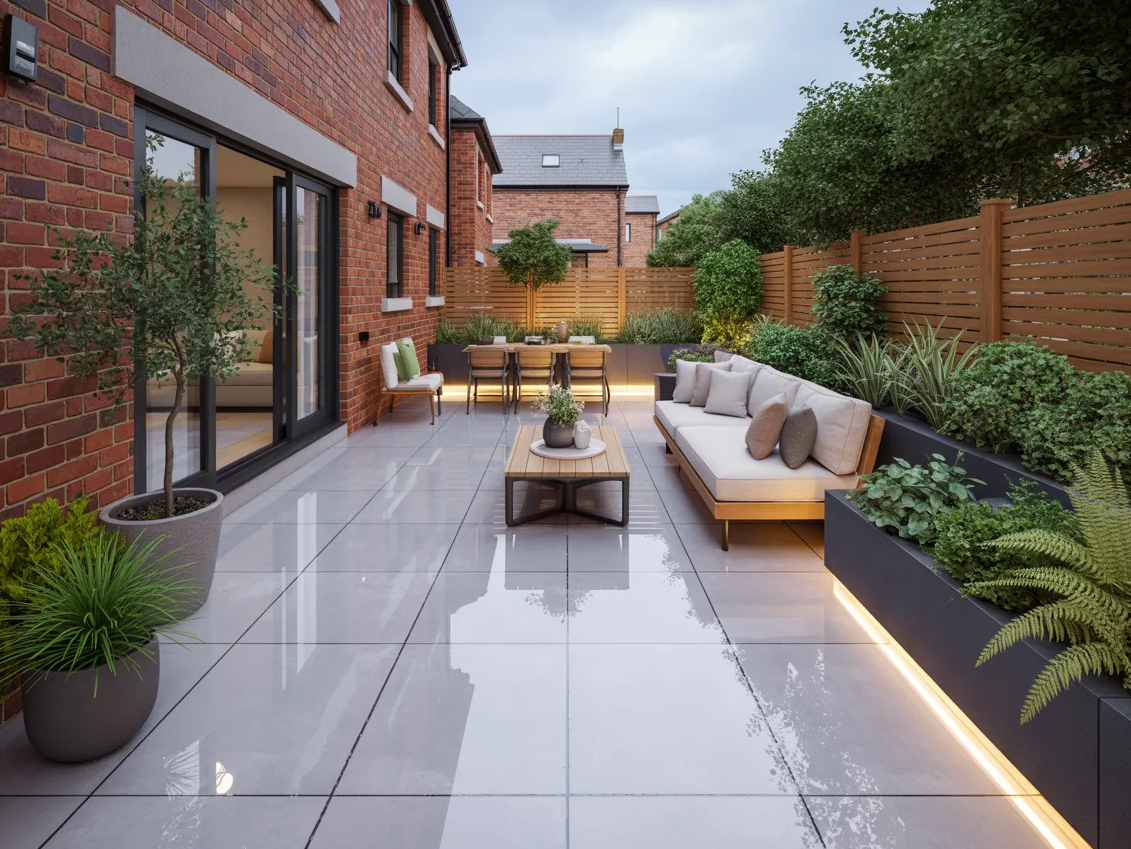
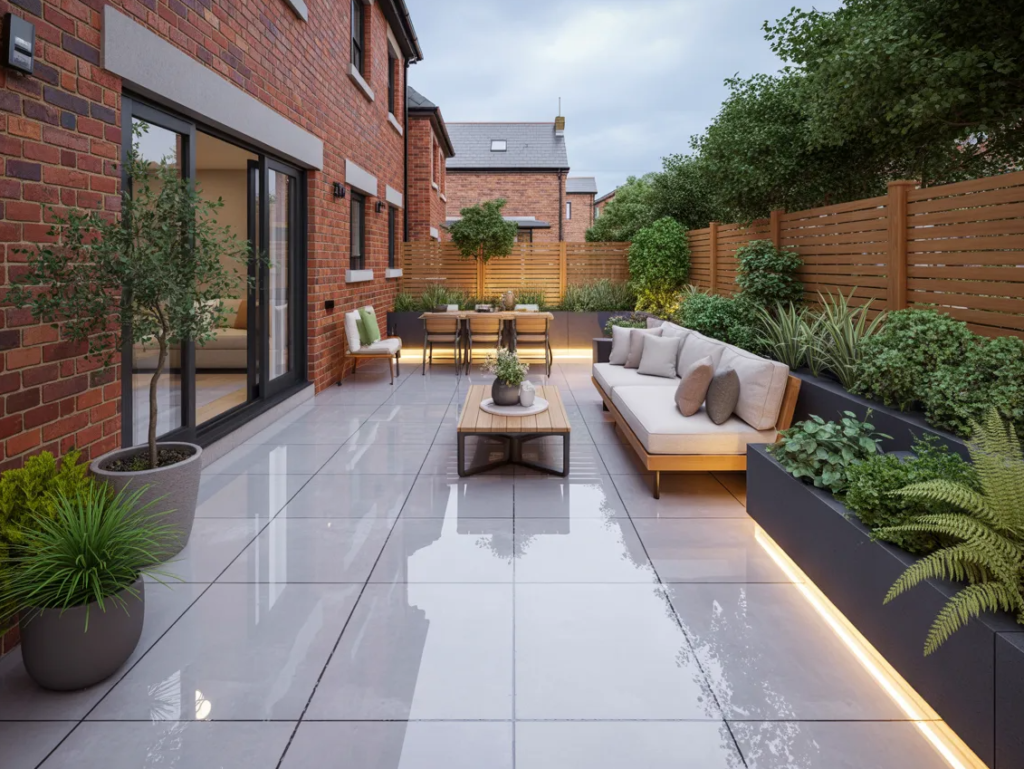
- Porcelain tiles — a more recent and rapidly growing category. Large-format porcelain slabs (typically 600mm x 900mm or larger) provide a very clean, contemporary look with excellent durability and very low maintenance. They are not frost-proof in all cases — check the frost resistance rating — and require a very flat, well-compacted sub-base. They are typically more expensive than natural stone but increasingly competitive with quality sandstone.
- Concrete block paving and Marshalls-style setts — practical and durable. Concrete block paving (the standard choice for most driveways and many budget patios) is extremely hard-wearing, comes in a wide range of colours and finishes, and is relatively affordable. It lacks the visual warmth of natural stone. Concrete setts can look good in the right context, particularly in contemporary or more formal designs.
- Gravel and resin-bound aggregate — suitable for larger areas where a fully paved surface is unnecessary and where the aesthetic of loose aggregate is appropriate. Resin-bound gravel (loose aggregate set in clear resin, applied over a rigid sub-base) provides a permeable, relatively low-maintenance surface that suits informal or naturalistic designs.
Drainage. Any paved area must be designed with drainage in mind. Building Regulations in England require that surfaces adjacent to the dwelling drain away from the house and toward a suitable soakaway or drainage channel. A minimum fall of 1:60 from the house wall toward the garden edge is the standard requirement.
Paths and Walkways
A garden path is not merely a practical connector between two points. It is a design element that determines how the garden is experienced — how the eye is led through the space, where pace slows, and what is revealed as a visitor moves through the garden.
Width. A path that two people can walk along side by side requires a minimum of 1.2 metres. A path for single-file pedestrian use can be narrower — 600–900mm — but a path that is too narrow to walk with reasonable ease feels mean and uncomfortable. The width of a path also communicates intent: a wide, generous path invites movement and suggests formality; a narrow, sinuous path suggests exploration.
Material. Paths can use the same material as the patio to create visual unity, or a contrasting material to distinguish circulation routes from living areas. Sett paths in a formal garden, stepping stone paths in a lawn, gravel paths in an informal or cottage garden — each communicates a different character and suits different contexts.
Drainage and grip. Path surfaces must drain — ponding water on a path creates both safety and practical problems. In shaded or north-facing locations, any surface can become slippery with algae — consider a brushed or textured finish on path materials, particularly for any surface that is used in wet conditions.
Walls and Retaining Structures
Where a garden changes level — whether through natural gradient or through a deliberate design decision to create terraced levels — retaining walls hold the higher level and define the transition between them. They are structural elements that must be designed and built correctly, particularly at significant heights.
Material. Retaining walls in domestic gardens are most commonly built from natural stone (dry-stone or mortared), brick, concrete block, or timber sleepers. Natural stone or brick retaining walls that complement the house materials create the most cohesive visual result. Timber sleepers are a practical and cost-effective option, particularly for raised beds, though they have a shorter lifespan than masonry alternatives.
Engineering. Retaining walls over approximately 600mm in height need to be properly engineered — with appropriate foundations, drainage provision (weepholes or land drains behind the wall to prevent water build-up), and sufficient mass or batter (lean back) to resist the soil pressure. Retaining walls that fail — which is typically the result of inadequate drainage causing water pressure behind the wall — are expensive to repair and can be dangerous.
Planning permission. In most cases, garden walls up to 2 metres in height do not require planning permission (1 metre adjacent to a highway). Check with the local planning authority for any project that approaches these limits, or where there are complications such as listed building status or conservation area designation.
Steps and Level Changes
Where a garden changes level — whether from house to terrace, terrace to lawn, or between different areas of the garden — steps are one of the most architecturally significant elements of the entire design. Well-designed steps invite ascent or descent; poorly proportioned steps are awkward, uncomfortable, and potentially dangerous.
Rise and going. The rise (the vertical height of each step) and the going (the horizontal depth of the tread) must be proportioned correctly for comfortable walking. A standard external step has a rise of 100–150mm and a going of 350–450mm. The combination of rise and going should satisfy the rule: 2R + G = 600–640mm. Steps that are too steep (high rise, small going) are difficult to ascend comfortably; steps that are too shallow (low rise, very deep going) can cause tripping.
Width. Steps should be at least as wide as the path leading to them. Wider steps are more generous and more architecturally impressive — a broad flight of steps proportioned for two people to ascend side by side is one of the most effective devices in garden design.
Material. Steps are most commonly built from the same material as the surrounding paving for visual continuity, or from a contrasting material used as a deliberate design feature. The step nosing (the front edge of each tread) should provide a clear visual cue — a projecting nosing in a slightly different material or texture is both functional and decorative.
Garden Buildings: Pergolas, Arbours, and Structures
Garden buildings and structures — pergolas, arbours, arches, summer houses, and sheds — are hardscaping elements that provide height, shade, and the vertical dimension that most garden designs lack.
Pergolas and overhead structures provide shade, define an outdoor room, and create an opportunity for climbing plants that would otherwise have no vertical support. A pergola over a seating area extends its usability into brighter summer conditions and creates an enclosed, sheltered feeling that an open paved area does not provide.
Materials. Hardwood timber (oak, tropical hardwood) is the premium material for garden structures — naturally durable, visually warm, and capable of being left untreated to weather to an attractive silver-grey. Softwood pergolas require regular treatment. Steel and aluminium structures are increasingly popular for contemporary designs, particularly powder-coated in dark colours.
Planning. Most garden outbuildings and pergolas fall within permitted development provided they meet size, height, and location criteria. Any structure that approaches permitted development limits — or any structure in a conservation area or on a listed property — should be checked with the local planning authority before construction begins.
Sub-Base: The Foundation Everything Depends On
The sub-base is the layer of compacted aggregate beneath any paved surface, and it is the most commonly under-specified element of domestic hardscaping. A beautiful patio laid on an inadequate sub-base will move, crack, and require replacement far sooner than its materials should require — and the remediation requires lifting all the slabs and starting again from the base.
The standard specification for a domestic patio sub-base is:
- Minimum 100mm of Type 1 MOT compacted hardcore — more on areas that will take vehicular load
- A blinding layer of sharp sand to level the sub-base before the laying course
- A laying course of sharp sand, mortar, or proprietary bedding compound depending on the surface material
For driveways and any area taking vehicle loads, the sub-base should be a minimum of 150mm of compacted Type 1, with 200mm advisable for softer ground conditions.
Porcelain and large-format slabs require a particularly flat, rigid sub-base — any movement in the base will crack the slab. A semi-dry mortar bed or a proprietary full-bed mortar product is the correct bedding for these materials.
Drainage: The Element Most Often Overlooked
No hardscaping project should begin without a clear drainage plan. Hard surfaces are impermeable — they do not absorb rainwater, which must go somewhere. Where it goes, and how fast, determines whether the project complies with planning requirements, whether the house is protected from surface water, and whether the garden is usable in wet weather.
Fall direction. Any paved area must slope away from the house and toward an appropriate outlet — a drainage channel, a lawn edge, a soakaway, or a connection to a surface water drain. A minimum fall of 1:60 is standard.
Permeable paving. Where a driveway or large paved area is being installed, planning regulations in England require that the surface be permeable unless water is directed to a soak-away or surface water drain. Permeable block paving, resin-bound aggregate, or gravel all satisfy the permeability requirement. Standard concrete or asphalt does not.
Land drainage. Where the garden collects water from adjacent higher land, or where the ground is naturally poorly draining, a land drainage system — perforated pipes laid in gravel-filled trenches, directing water to a suitable outlet — may be required before hardscaping can be effectively completed.
Budget Guidance
Hardscaping costs vary significantly by material, contractor location, site access, and project complexity. As a rough guide for the UK market in 2026:
- Basic concrete block patio (supply and lay): £100–£150 per m²
- Indian sandstone patio (supply and lay): £120–£180 per m²
- Porcelain slab patio (supply and lay): £150–£250 per m²
- Natural limestone or premium stone (supply and lay): £180–£300+ per m²
- Timber decking (supply and lay, softwood): £100–£180 per m²
- Timber decking (supply and lay, hardwood): £150–£300+ per m²
- Gravel path or area (supply and lay): £40–£80 per m²
- Retaining wall in natural stone (supply and build): £250–£450+ per linear metre depending on height and complexity
These are indicative ranges only. Get at least three written quotes for any significant project.
Working With a Garden Designer or Landscaper
For gardens of any complexity or value, working with a professional garden designer before engaging a landscaper is almost always worthwhile. A designer produces a detailed plan that defines materials, levels, drainage, structures, and planting with the precision needed to get accurate contractor quotes and to ensure that the finished result is what was intended.
The cost of a good garden design — typically £500–£3,000 for a residential project depending on garden size and design complexity — is easily recovered in better decisions during the build phase. A contractor working from a detailed designer’s plan makes fewer mistakes, produces fewer unforeseen variations, and delivers a more consistent result than a contractor working from a vague brief.
A garden is a long-term investment. The hardscaping that goes into it — the stone, the walls, the paths, the levels — will be there for decades. Getting those decisions right from the beginning, on the basis of good design and clear planning, is the foundation on which everything else depends.
About the Author