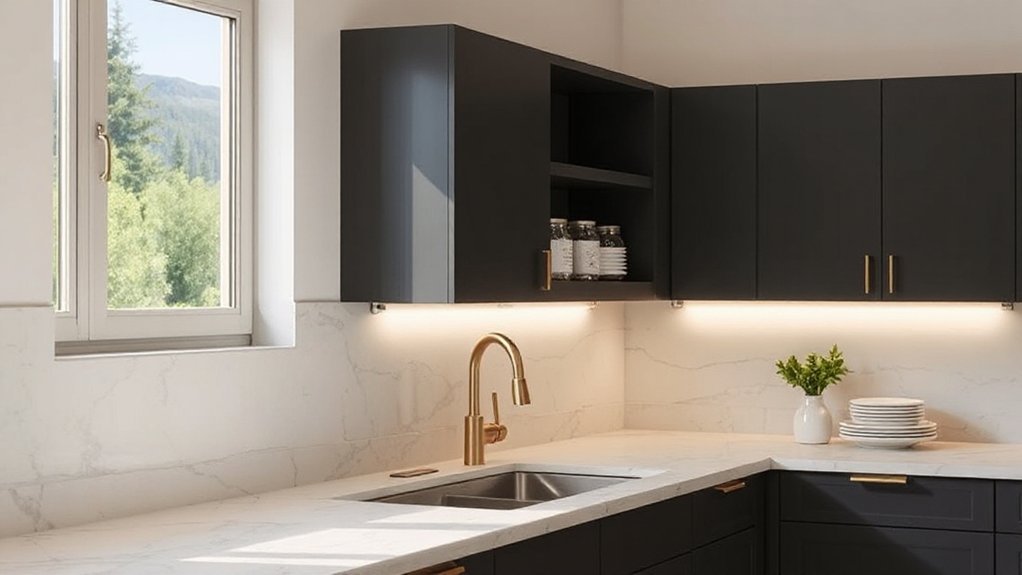
You can achieve a high-end kitchen on a budget by thoughtfully upgrading key elements—cabinet fronts, durable counters, and integrated backsplashes—while keeping finishes cohesive and lighting layered. Start with affordable updates that deliver the most impact, like fresh paint or new hardware, then select quartz or porcelain surfaces and warm, dimmable lighting to elevate the space. Smart storage and restrained color palettes complete the look; there’s a refined mood you can’t ignore, if you stay deliberate about where to invest.
How to Define a High-End Kitchen on Any Budget
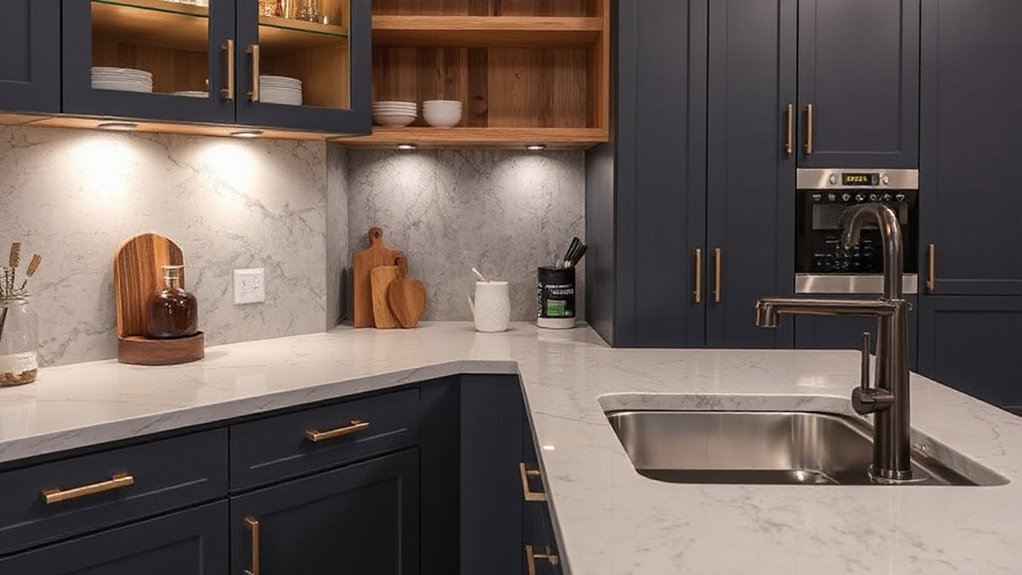
To define a high-end kitchen on any budget, start by prioritizing what truly matters: quality fixtures, durable materials, and smart layout. You’ll craft a space that speaks luxury kitchen design without breaking the bank.
Focus on foundational elements: dependable appliances, solid countertops, and an efficient work triangle. Choose timeless finishes over fleeting trends to achieve a high end aesthetic that lasts.
Invest in lighting that blends function with atmosphere—layer ambient, task, and accent sources. Let hardware, such as drawer pulls and faucet finishes, coordinate across surfaces for cohesive elegance.
Embrace restraint: select a single statement piece, then support it with complementary, high-quality details. Remember, balance and proportion trump excess, delivering a refined, economical path to a luxurious, practical kitchen.
Budget-to-Impact Order: Upgrading Cabinets First
Start with a cabinet makeover to maximize impact at a lower cost, because small changes can redefine the whole room.
Prioritize budget-friendly fronts first to refresh the look without overhauling structure, then pair with refreshed hardware for an instantly cohesive upgrade.
This cabinet-first approach sets a strong, trend-aware foundation for the rest of your kitchen updates.
Cabinet Makeover Impact
Upgrading cabinets first is the smartest move when you’re chasing the biggest kitchen impact on a budget. The cabinet makeover sets the baseline for tone, texture, and perceived value, so focus here before investing elsewhere.
A fresh coat of cabinet paint can dramatically alter brightness, contrast, and perceived height without tearing out boxes. It also coordinates with existing countertops and backsplashes, streamlining your design narrative.
Pair paint with precise hardware upgrades to punch up style with minimal effort or cost. Choose hardware finishes that echo fixtures and lighting to create cohesive polish.
This approach yields a high-end look through refined details and consistent color stories, making later updates feel intentional rather than reactive. Prioritize materials, finish quality, and install accuracy for lasting impact.
Budget-Friendly Fronts First
Ever wonder why fronts first? You’ll gain the most impact by upgrading cabinet fronts before other details. Start with a cohesive color, finish, and profile that align with your existing Kitchen layout, so the whole space reads intentional, not piecemeal.
You don’t need a full gut to feel premium; a single refresh can redefine scale, light, and perception. Choose doors that reflect current trends yet endure, like soft-close drawers and shallow profiles that preserve sightlines.
Coordinate with cabinets’ internal hardware and surrounding countertops to avoid disjointed contrasts. When you plan appliance selection, keep the fronts in mind to prevent mismatched metal or chrome clashes.
Prioritize clean lines, consistent hardware, and durable materials to maximize budget-to-impact efficiency.
Refreshing Cabinet Hardware
If you’ve refreshed the doors and fronts, upgrading cabinet hardware is the smart next move to seal the look with minimal disruption. Swap in hardware with clean lines and finishes that echo your chosen style, whether matte black, brushed brass, or satin nickel.
Aim for cohesive hardware sizing across drawers and doors to preserve rhythm and reduce visual clutter. Vintage accents, like knob shapes with a mid-century touch or cup pulls, add character without overhauling the structure.
Choose eco-friendly materials—recycled metal or sustainably sourced wood composites—and avoid fussy installation. Quick updates, lower cost, higher impact: you’ll notice better cabinet feel, easier use, and a refined finish that reads high-end.
Maintain consistency, test in good lighting, and enjoy the fresh, cohesive result.
Luxe-Looking Countertops and Backsplashes for Less
You can achieve luxe-looking countertops and backsplashes without breaking the bank by choosing durable, high-impact materials and smart layout tricks. Start with quartz or porcelain slabs that mimic marble but resist staining and etching, offering a seamless, high-end vibe at a lower cost.
Consider integrated backsplashes for a sleek, continuous surface that reduces grout lines and maintenance. For materials, mix practicality with style: budget-friendly options like laminate that imitates stone or concrete can pass as premium when paired with elegant edge profiles.
Incorporate eco-friendly materials and responsibly sourced laminates to boost sustainability. Introduce vintage-inspired designs through warm veining, subtle textures, or brick-pattern tiles for character without overhead.
Keep contrasts restrained, and let hardware and lighting remain minimal to preserve a refined, timeless feel.
Lighting That Elevates Mood and Perception
Warm dimmer control lets you set the mood without changing the space’s feel.
Layered ambient lighting creates depth and adjusts perception as you cook, dine, or entertain.
Accent color highlights add personality while guiding attention to key areas.
Warm Dimmer Control
As evenings settle in, a warm dimmer brings both atmosphere and comfort, softly guiding mood and perception without glare. You’ll notice how gradual light shifts create ambient lighting that feels intimate yet practical for daily tasks.
A well‑rated dimmer smooths color temperature toward honeyed tones, elevating your kitchen’s finish without overpowering cabinetry. Use it to cue mood enhancement during meals, casual chats, or evening cleanup, aligning brightness with activity and time of day.
Choose controls that feel responsive and reliable, and pair with energy‑efficient bulbs to sustain savings. Installation should be straightforward in standard junction boxes, yet consult a pro if wiring isn’t familiar.
This small upgrade delivers high‑end vibe, improves usability, and keeps your space inviting, functional, and stylish.
Layered Ambient Lighting
Layered ambient lighting blends multiple light layers to sculpt mood and perception, avoiding a single harsh source. You create depth by combining ambient, task, and accent lamps, guided by intent rather than glare.
Start with warm, diffuse ceiling or under-cabinet light to soften shadows, then layer in task lighting at your primary work zones for clarity without strain. Add subtle accent lighting to highlight textures and architectural features, keeping brightness lower than main tasks.
Consider lighting zones that can be controlled separately, so you tailor mood for meals, chats, or late-night prep. Favor dimmable LEDs and color temperatures around 2700–3000K for cohesiveness.
This ambient layering approach delivers a high-end look on a budget while preserving energy efficiency and flexibility.
Accent Color Highlights
Accent color highlights can instantly lift a kitchen’s mood and perception by stitching personality into lighting. You’ll guide the scene with subtle color accents that don’t overpower, but sharpen focus on tasks and mood. Choose fixtures and bulbs that reflect your color palette coordination, so the glow reads as intentional, not accidental.
Consider warm whites for comfort, or cool tones to sharpen edges in a modern layout. Switchable or dimmable options let you tailor atmosphere for hobbies, meals, or cleanup.
Use pendant heights and shade finishes to echo accent hues in cabinetry, glass, or hardware, keeping the finish cohesive. This strategic approach elevates visuals without breaking the bank, delivering a high-end feel through thoughtful lighting design.
Smart Storage Tweaks for a Premium Feel
When you optimize pantry and cabinet layouts, smart storage tweaks deliver a premium feel without a total remodel. You’ll gain instant clarity by grouping like items, labeling containers, and dedicating zones for weekly essentials.
Install pull-out shelves and adjustable organizers to maximize every inch, reducing search time and clutter. Clear acrylic bins keep bulk items visible, while matching lids and uniform containers boost a cohesive, high-end look.
Use vertical space with door organizers and slim, pull-through racks for spices, oils, and small gadgets. Implement a lazy Susan or corner carousel to avoid dead corners.
Consider a compact under-sink pullout for cleaning supplies. Smart storage elevates daily routine, elevating premium organization without the expense.
Finishes That Read Expensive in a Kitchen
Finishes that read expensive in a kitchen start with material choices and well-considered details that elevate the space without a full remodel. You’ll signal quality through durable surfaces, precise edge profiles, and restrained color palettes.
Choose materials that age gracefully and resist wear, then pair them with clean, streamlined profiles. Eco-friendly materials matter: recycled metal accents, responsibly sourced wood, and high-performance composites read premium without the price tag.
Vintage finishes add character when applied thoughtfully—toned-down patinas, soft glazes, and subtle distressing can elevate cabinets and backsplashes without looking gimmicky. Avoid high-contrast chaos; instead, opt for cohesive sheens and consistent undertones.
The goal is quiet sophistication: tactility you notice, not shouty flair. Finish choices should feel timeless, not trendy, ensuring lasting perceived value.
Subtle Accessorizing: Pulls, Fixtures, and Textiles
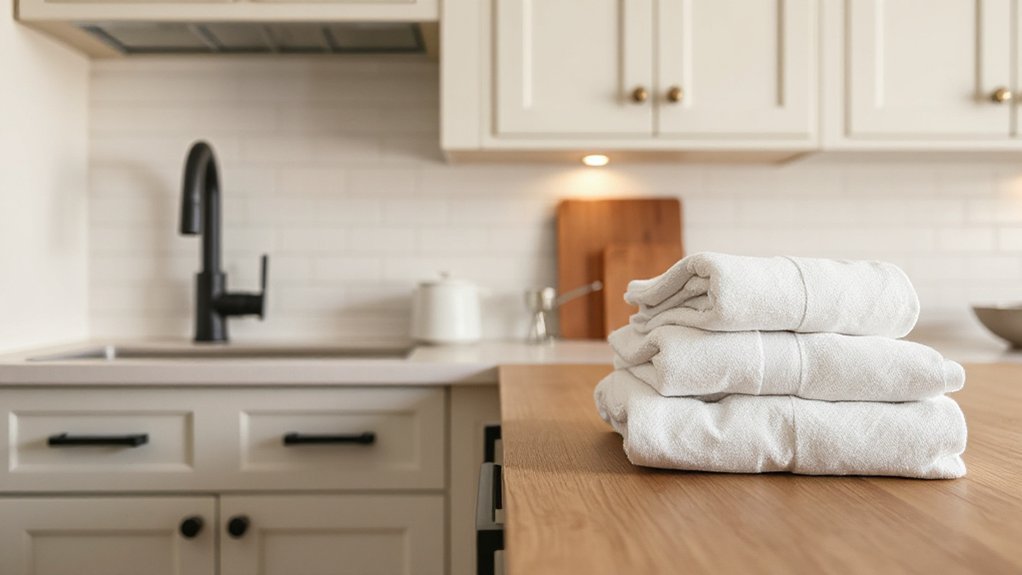
Subtle accessorizing elevates a kitchen without shouting for attention. You can elevate surfaces with decorative textiles that harmonize with cabinetry, countertops, and hardware, avoiding busy patterns that clash with existing tones.
Choose textiles in durable fabrics and low-sheen weaves to keep a polished, lived-in feel that’s easy to maintain.
When selecting hardware, opt for elegant pulls that echo the room’s metal accents—matte black, brushed brass, or satin nickel—that coordinate with fixtures rather than compete with them.
Fixtures themselves should be understated: slim silhouettes, clean lines, and proper scale for your drawer fronts and cabinetry.
Keep the overall palette cohesive, letting small accents—like a coordinated towel and a minimal rug—pull the look together.
This approach yields high-end influence without overspending.
Planning and Prioritizing Budget-Friendly Upgrades
To plan and prioritize budget-friendly upgrades, start with a clear, two-tier checklist: must-haves that affect daily use and nice-to-haves that elevate style.
You’ll align with budget planning by identifying items that improve function first—storage, lighting, faucets—then layer in design touches that refresh tone and feel.
Set a realistic cap and schedule for replacements, linking purchases to actual usage patterns rather than impulse buys.
Prioritize projects that deliver the most impact per dollar, and track costs to avoid scope creep.
Use priority setting to rank items by frequency of use, potential energy savings, and return on investment.
Finally, test aesthetics in small, flexible ways—swap hardware or add a temporary backsplash—before committing to bigger, costly upgrades.
Frequently Asked Questions
How Can I Avoid Overpaying for Low-End Materials?
Yes, you avoid overpaying by discount shopping and material comparisons, then comparing specs, warranties, and finish levels before buying; trust reputable sources, watch for bulk or sale events, and negotiate with suppliers to secure fair pricing.
What Small Details Make Cabinets Look Custom?
Yes, small details that make cabinets look custom include selecting standout cabinet hardware and refined paint techniques; you’ll feel confident, because you avoid generic vibes. Choose purposeful hardware and expert paint techniques to elevate every inch of cabinetry.
Can Budget Upgrades Impact Resale Value Significantly?
Yes, budget upgrades can considerably boost resale value. You’ll attract buyers by featuring luxury appliances and designer lighting, which signal quality and modern taste, while tasteful finishes and smart details maintain a high-end perception without breaking your budget.
Which Finishes Best Mimic High-End Metals Affordably?
You’ll want a luxury faucet in brushed nickel, since it mimics premium metals without breaking the bank. It pairs beautifully with chrome or matte-black accents, delivering high-end “cool” vibes while staying budget-conscious and durable for daily use.
How Do I Prioritize Upgrades for Maximum Wow Factor?
Prioritize lighting fixtures first; they instantly elevate space, then select a standout backsplash options to create contrast. Think of one example: a bright fixture + dramatic tile combo doubles perceived value. Budget tip: focus on finish quality, not quantity.
Conclusion
You can transform your kitchen without breaking the bank by prioritizing cabinets, durable countertops, and cohesive hardware. Start with a budget-to-impact approach, then layer lighting and smart storage for depth and function. Choose finishes that read expensive, add subtle textures, and keep colors restrained for an instantly polished vibe. Remember: consistency wins. Like a well-composed outfit, a few well-chosen details—pulls, fixtures, textiles—make the whole space look luxe, confident, and timeless.
About the Author