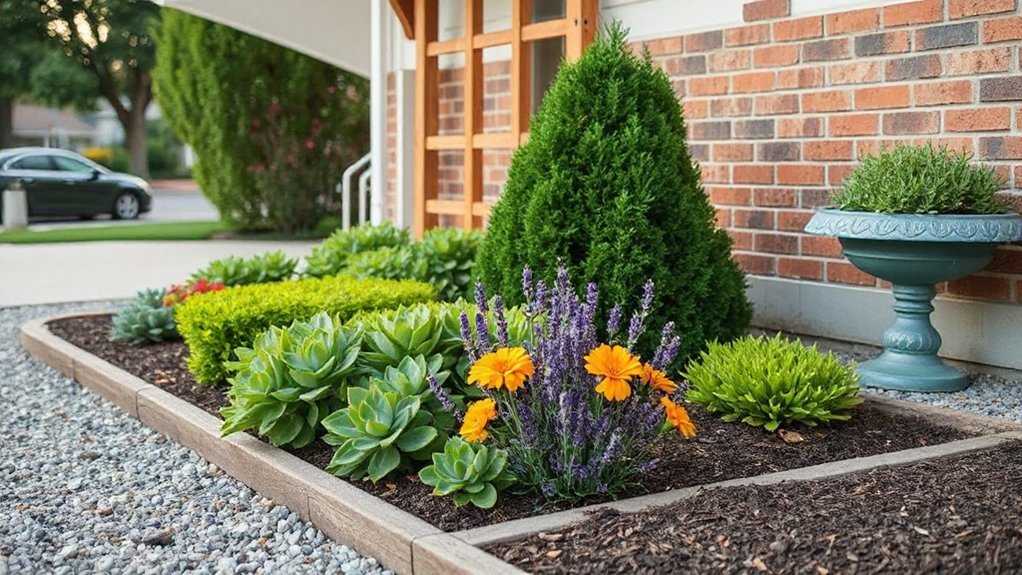
You can elevate your front garden with a disciplined, budget-conscious strategy that prioritizes crisp edges, clean mulch, and a restrained plant palette of hardy perennials. Focus on repeatable color schemes, evergreen anchors, and cost-efficient containers to create structure without overspending. Practical tweaks—edging, pathway repairs, and salvaged materials—start the transformation, while lighting and a few strategic accents finish the look. Start here, then decide how to scale your impact with seasonal tweaks and durable, low-maintenance choices.
Design a Budget-Friendly Front Garden: Goals, Budget, and Constraints
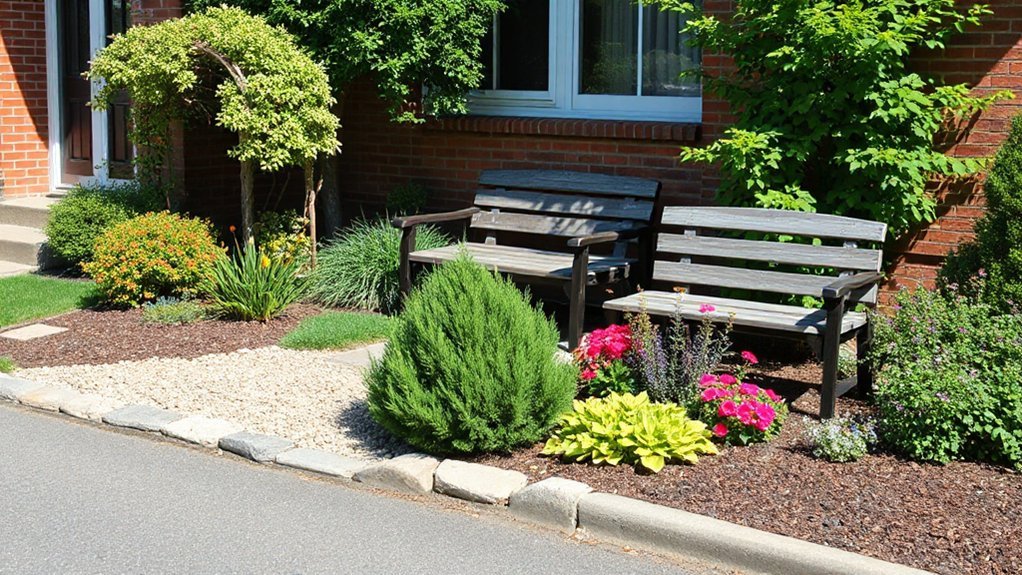
Designing a budget-friendly front garden starts with clear goals, a realistic budget, and defined constraints. You map project aims to site, form, and function, then translate them into measurable targets and a prioritised sequence. Establish scalable cost bands for materials, labour, and contingencies, avoiding overly optimistic assumptions. Define constraints such as site microclimate, drainage, access, and maintenance workload; document tolerances for growth patterns and seasonal color. Architect a modular layout: zones for circulation, seating, and focal amenity, enabling phased implementation. Integrate garden lighting to extend usability and highlight structure without costly fixtures. Plan outdoor furniture to harmonise with scale, ensuring space efficiency and durability. Use cost-effective materials with predictable maintenance, and verify compatibility with local regulations and recycling options to minimise lifecycle expenses.
Quick Wins to Boost Curb Appeal on a Dime
You can sharpen curb appeal quickly by implementing targeted exterior upgrades, focusing on durable, low-maintenance choices. Start with fresh mulch and pots to reset color and texture, then pair crisp, clean edges to define planting zones. This approach emphasizes precise detailing and repeatable motifs that unify the front facade without breaking your budget.
Quick Exterior Upgrades
Quick exterior upgrades yield noticeable curb appeal with minimal cost by targeting high-visibility, standardized improvements. You implement repeatable, scalable fixes that enhance perception of order and quality. Begin with a clean, level entry path; repair cracks and re-sweep joints to establish a precise baseline. Prioritize fascia, door, and window definition through crisp paint or weatherproof finish in neutral contrast tones. Introduce subtle garden lighting along walk lines and focal points to extend daylight hierarchy into evening value. Integrate compact, ergonomic outdoor furniture where seating supports porch presence without crowding approach zones. Replace incongruent hardware and mailboxes with coordinated finishes and signage that read well from the curb. Maintain proportional plant massing; avoid oversized specimens that disrupt sightlines. These steps deliver measurable impact without altering structural elements.
Fresh Mulch And Pots
Fresh mulch and well-chosen pots offer immediate curb-appeal dividends with minimal investment. You’ll select mulch that matches soil chemistry and desired maintenance, ensuring particle size, color, and depth optimize weed suppression and moisture retention. Apply a uniform 2–3 cm layer around bed edges to promote clean lines and reduce erosion. Pair pots with scale-appropriate silhouettes and evergreen or seasonal focal plants, spacing them to guide sightlines toward the entry. Choose matte, UV-stable containers in cohesive tones that echo architectural materials. Integrate garden furniture where seating reinforces rhythm without clutter, and position it at intentional focal points. Complement the arrangement with discreet outdoor lighting—path lights and uplights—that accent micro-landscapes at dusk, enhancing texture, contrast, and safety.
Clean And Green Edges
With clean, crisp edges, define bed lines and mowing boundaries using sharp, consistent separation that reads as intentional design. You should implement a crisp delineation between lawn and edge, then enforce uniform edge height with a handheld edger or trimmer for repeatable results. Use a mower with a deck height matched to your chosen edge radius to prevent scalloping. Install a narrow, durable edging material, set flush or slightly below soil grade, and keep it free of soil buildup. Pair this with deliberate plant placements: a contained flower arrangement at focal points, and evergreen backups to maintain line integrity year-round. Integrate low-voltage garden lighting to emphasize edges after dusk, guiding the eye along clean geometry without glare.
Choose Designer-Look Containers That Cost Less
What makes designer-look containers cost less? You pursue value through material choice, sizing, and finish rather than brand prestige. Opt for cost-efficient composites or treated ceramics that emulate premium textures, then tune scale to your doorway geometry for strong silhouette. Favor modular, stackable, or pedestal designs that maximize greenery with minimal form complexity, reducing production costs and waste. Pair simple shapes with restrained color palettes to convey high-end restraint; avoid ornate rims or heavy reliefs that inflate price. Use clever drainage solutions and lightweight walls to simplify installation and transport. Emphasize container creativity in placement, rhythm, and grouping to enhance perceived luxury without excess. Leverage design dynamics—contrast, repetition, and alignment—to maintain a cohesive, upscale look on a limited budget.
Best Budget Perennials for Year-Round Color
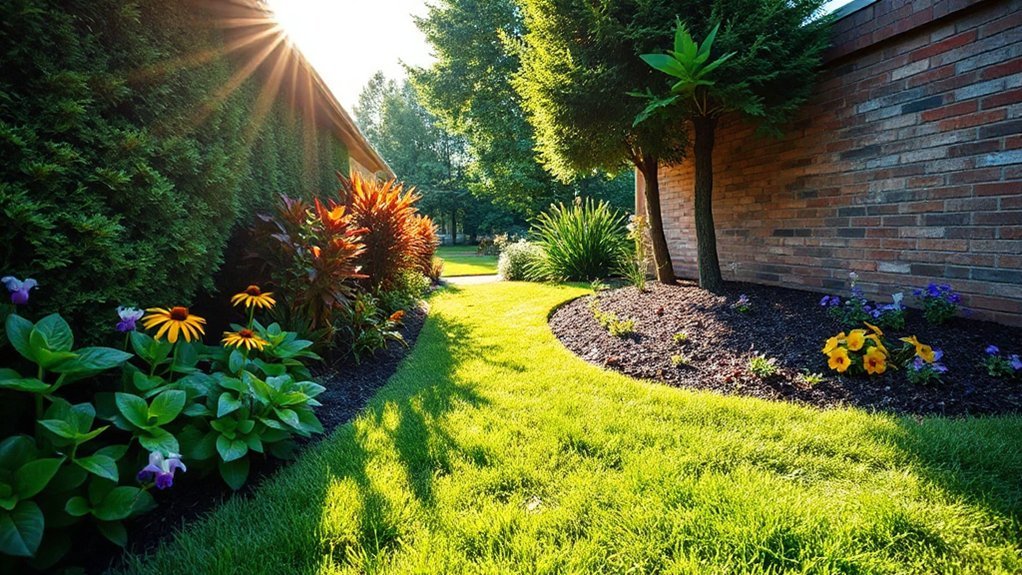
You’ll identify Year-Round Color Picks that align with your design intent and budget, focusing on reliable, season-spanning impact. These Budget-Friendly Perennial Choices balance color, texture, and maintenance, ensuring consistent visual interest with minimal input. Consider Low-Care Garden Staples that support durable, repeatable performance across the year, shaping a cohesive front garden palette.
Year-Round Color Picks
Year-round color hinges on selecting budget-friendly perennials that reliably perform across seasons while maintaining design cohesion. You’ll prioritize sturdy, low-maintenance options with overlapping bloom windows to minimize gaps in color and texture. Choose core species for continuous presence, then layer secondary varieties to extend interest through shoulder seasons. For year-round effect, integrate evergreen foliage with seasonal flowers to preserve structure during dormancy. Use a limited palette to enhance garden layout planning, ensuring that leaf color, form, and height contribute to a balanced silhouette from curb view. Favor varieties with pest and drought tolerance to reduce upkeep. Plan for microclimates—sun, shade, and wind—to optimize performance. Tailor plant spacing to mature size, then test seasonal flower arrangements in scale models before finalizing placement.
Budget-Friendly Perennial Choices
Budget-friendly perennials that perform across seasons provide the backbone for a cohesive year-round display. You should select sturdy, low-input species that align with your site’s garden zoning to guarantee reliability and repeatable color. Prioritize cultivars with extended bloom windows or complementary foliage texture to minimize gaps between seasonal shifts. For year-round coverage, pair evergreen base accents with deciduous bloomers that seed or regrow reliably, keeping root zones mulched and well-drained. When evaluating options, consider clumping habit, mature width, and pest resistance to avoid overcrowding and frequent maintenance. Address landscaping myths by confirming zone-specific performance data from local sources. Document light, soil, and moisture requirements, then test a small bed before full-scale installation to validate color timing and durability.
Low-Care Garden Staples
Low-maintenance perennials deliver reliable color with minimal inputs, making them ideal for budget-conscious schemes. You’ll select low-water, drought-tolerant staples that maintain seasonal interest with predictable performance. Opt for compact, clump-forming varieties to preserve walkable paths and maintain sightlines in small plots. Prioritize species with extended bloom windows and complementary foliage to reduce maintenance cycles. Use a restrained color palette to simplify irrigation zoning and reduce deadheading. Design emphasis should be on massing, not species diversity, to maximize visual impact with minimal input. Integrate hard-edged beds and mulch to suppress weeds and stabilize soil moisture. These garden decor elements support wildlife habitats by providing shelter and nectar while keeping upkeep predictable and cost-effective. Choose perennials with proven year-round structure for dependable curb-appeal.
Mulch and Edge Smarter for a Polished Look
A polished look starts with deliberate mulch selection and clean edging that define bed boundaries and suppress weeds. You’ll choose a coarse mulch for walkable paths and a finer layer for planting beds, ensuring even coverage without piling against stems. Edge profiles matter: use a crisp, consistent line with a steel-edged tool and a straight, mechanical rocking motion to prevent soil intrusion onto ballast. Measure bed widths and align mulch depth to plant requirements, typically 2–3 inches, adjusting for annual mulch breakdown. For durability, install a narrow edging strip beneath the mulch edge to maintain separation from turf. Integrate garden lighting and outdoor furniture sightlines to reinforce structure without crowding. Prioritize maintenance access and avoid mulch near bark or succulent foliage.
Drought-Tolerant Planting for Easy Maintenance
Drought-tolerant planting focuses on selecting resilient species and structuring beds to minimize irrigation while maintaining visual appeal. You’ll prioritize xeriscape design principles, aligning plant selection, soil preparation, and irrigation timing to maximize efficiency. Begin with groupings of compatible, drought resistant shrubs and perennials that share similar water needs, reducing management complexity. Choose deep-rooted, sun-hardy varieties to stabilize soil and enhance seasonal texture with foliage, form, and subtle color shifts. Design bed layouts to promote soil moisture retention: mulched, well-drained beds, sun angles considered for drip irrigation accuracy, and staggered canopy heights to minimize shade-induced evaporation. Implement efficient irrigation—drip lines, zone control, and soil moisture targets—to sustain performance during dry spells without routine rewatering. Regular maintenance focuses on pruning for airflow, deadheading, and selective kelechi-free replacement when needed.
Affordable Hardscaping: Path Edges and Borders
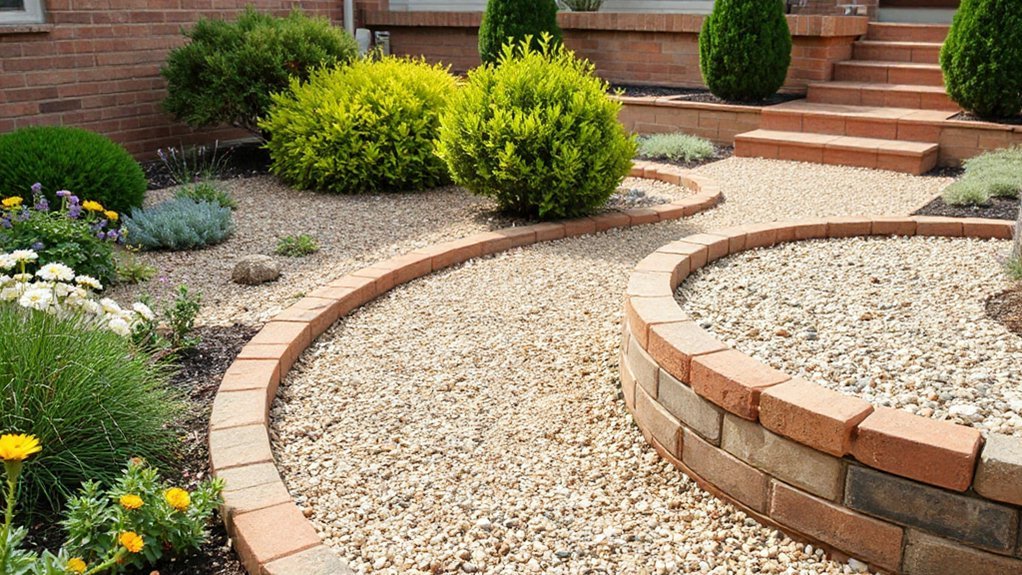
Edges define circulation and frame planting beds, so select edging materials and forms that resist climate exposure while guiding foot traffic. You assess border edging as a structural element, not mere ornament, prioritizing durable materials and tight tolerances. For stone pathways, align joints to a consistent grout line or gap, ensuring clean progressions to borders and minimal trip risk. Choose border edging that anchors mulch and soil, yet permits weed control access, such as rigid metal, concrete, or beveled timber with a preserved edge. Implement a cohesive profile by matching edge thickness to path width, avoiding overbearing scales. Install with compacted substrate and setbacks to prevent soil intrusion. Where space is limited, use alternating textures—stone pathways and low-profile border edging—to read as a unified, low-maintenance front garden motif.
Seasonal Color Swaps Without Breaking the Bank
Seasonal color swaps can keep a front garden dynamic without a full redesign or budget blowout. You’ll optimize curb appeal by aligning seasonal planting with a deliberate color coordination plan, emphasizing contrasts and harmony. Precision selection matters: choose plant heights, bloom times, and foliage textures that sustain visual interest through changes in light and temperature.
- Observe bloom windows and select overlap to maintain continuity.
- Pair contrasting hues with similar saturation for crisp impact.
- Use foliage texture and container color to bridge transitions between seasons.
This approach minimizes cost while maximizing perceived effort, leveraging modular updates rather than wholesale replacement. Document new palettes, track performance, and rotate seasonal accents accordingly. You’ll create a cohesive rhythm that feels intentional, not accidental, ensuring the front garden remains striking throughout the year.
Where to Source Affordable Plants and Reuse Materials
To source affordable plants and reuse materials effectively, start with a materials-and-sourcing plan that prioritizes local availability, seasonal price fluctuations, and long-term durability. You’ll map supply sources, compare bulk vs. retail costs, and evaluate transferability to your microclimate. Target affordable nurseries that stock regionally adapted specimens and offer warranties or returns, and prefer plants with low maintenance requirements to preserve budget. For reuse, inspect and catalog salvageable items, focusing on durability, weather resistance, and scale compatibility with your design. Incorporate recycled garden decor that complements form and color without overpowering plant structure. Validate material provenance, avoid treated or hazardous components, and negotiate delivery or pickup windows to minimize waste. Document sourcing decisions to support future substitutions and maintain cohesive curb-appeal aesthetics.
Maintenance Habits for Lasting Curb Appeal
Careful maintenance sustains the curb-appeal framework you established through sourcing and reuse. You’ll implement disciplined routines that protect plant health, enhance safety, and preserve design intent. Systematic checks prevent decay from undermining value, ensuring a longer visual life cycle for your small-budget strategy. Focus on precise execution of tweaks that maintain form, function, and mood.
- Schedule regular pruning, soil refreshes, and mulch replenishment to sustain texture, color, and structure.
- Audit Garden lighting alignment, fixture integrity, and wiring protection to preserve night-time drama without glare.
- Integrate Pest control measures—monitoring, targeted treatments, and resistant varieties—to maintain peace of mind and plant vigor.
Frequently Asked Questions
How Can I Prioritize Curb Appeal With Zero Plant Purchases?
Yes—prioritize curb appeal by reallocating existing elements, no purchases required. You’ll install garden lighting from repurposed fixtures and craft decorative pathways using reclaimed materials, emphasizing vertical interest, contrast, and symmetry for a precise, design-focused result.
Which Small-Budget Changes Add the Most Visual Impact Quickly?
You’ll add fast impact with garden lighting and decorative accents, using concise, technical precision. You design scenes, not chaos; you’ll install low-cost fixtures, set focal points, and balance scales, ensuring lighting highlights textures while accents guide the eye swiftly. Satirically rhythmic.
What Low-Cost Plant Combos Look Good Year-Round?
You should combine evergreen perennials with seasonal annuals for year-round appeal, using container gardening to rotate color. Pair near-sun and shade-tolerant species, aligning with Seasonal color schemes, so you maintain structure while maximizing contrast and durability.
How Can I Recycle Materials for Durable Borders?
Recycling materials can yield durable borders. You analyze whether landscape reuse actually strengthens edge integrity; evidence suggests yes. Use recycled bricks, timber, or concrete pavers for eco friendly edging, forming sturdy, low-maintenance, cost-efficient, and visually cohesive borders.
What Maintenance Routine Keeps Costs Low Long-Term?
Regularly inspect and clean lighting fixtures, replace bulbs promptly, and seal connections to minimize energy waste; prune, mulch, and weed monthly to maintain soil health. Use garden lighting for safety and driveway enhancement, ensuring Weatherproofing and cable protection.
Conclusion
You can elevate curb appeal on a shoestring by planning thoughtfully, not flamboyantly. Prioritize crisp edges, clean mulch, and evergreen scaffolding, then layer inexpensive perennials for year‑round structure. Use designer‑look containers, modest hardscaping upgrades, and smart seasonal swaps to keep visuals fresh without strain. Source affordable plants and repurpose salvaged materials to subtly enrich texture. Maintain diligently, and you’ll enjoy a refined, inviting entrance whose charm quietly outlasts faddish trends.
About the Author