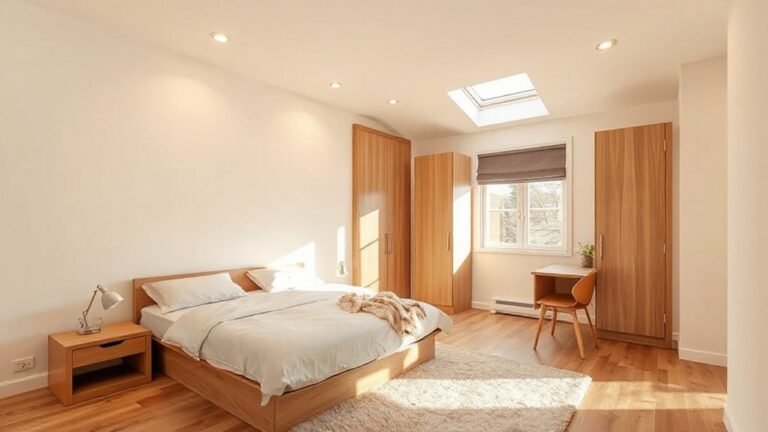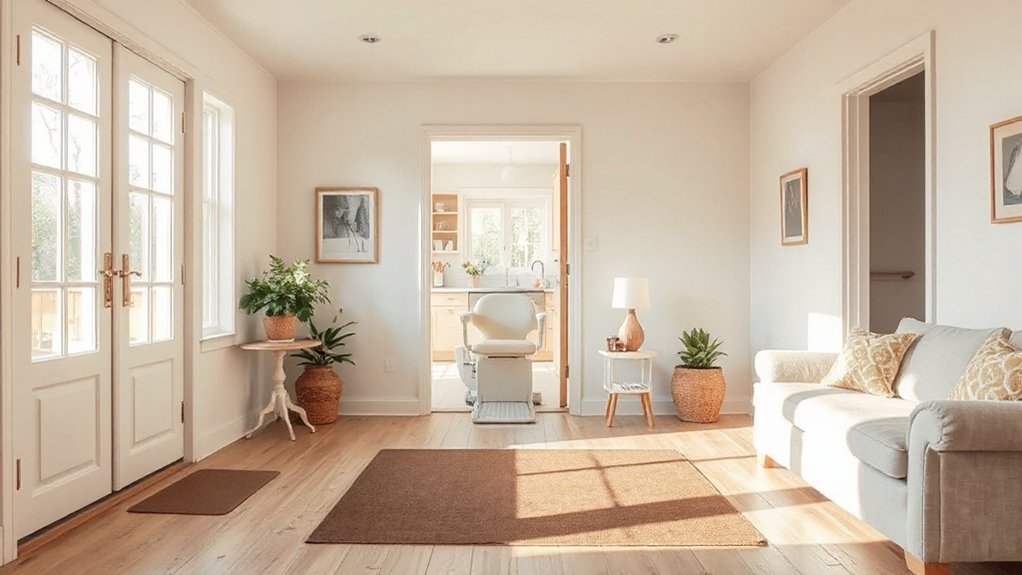
Aging in place starts with safety you can feel confident about and practical choices you can live with daily. You’ll want easy entry, wider doorways, non-slip floors, and lighting you can adjust without fumbling for switches. Smart safety devices, grab bars, and lever faucets fit into routines without adding complexity. Start small or plan a phased upgrade, but keep the goal clear: a home that stays as independent as you need—and as comfortable as you deserve—while what’s next quietly waits.
Aging in Place: Priority Safety and Comfort
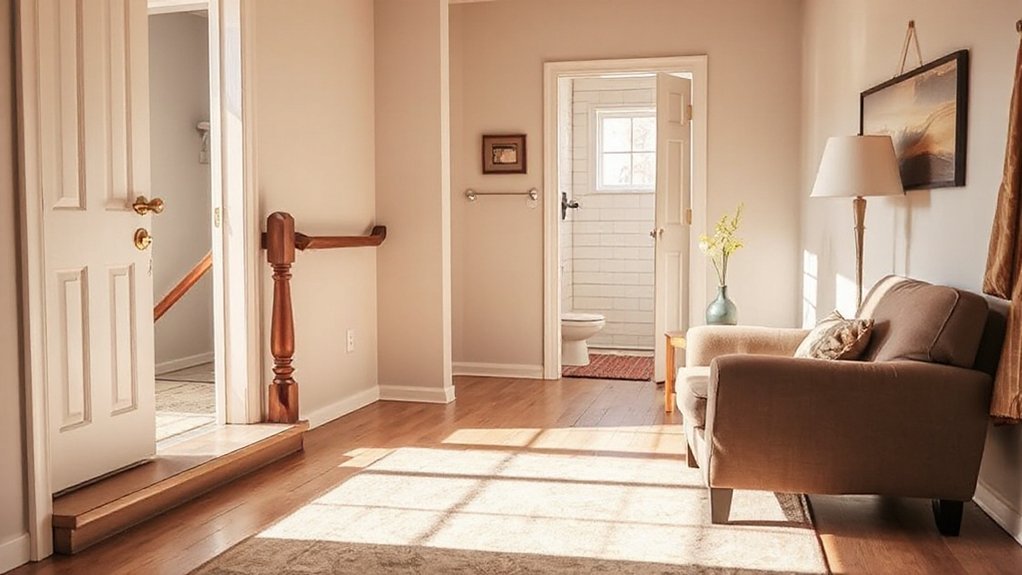
Aging in place thrives when safety and comfort align with daily routines. You’ll create a dependable environment by pairing functional design with your routine, reducing surprises and stress.
Prioritize motion-friendly layouts, balanced lighting, and non-slip surfaces to lower fall risk while supporting independence.
Choose adaptive furniture that adapts to your changing needs—seats with firm support, accessible height, and flexible storage to minimize bending and reaching.
Establish clear, predictable routines for tasks like bathing, cooking, and medication management, reinforcing safety through consistent practices.
Build Emergency preparedness into everyday life: keep a visible, updated emergency plan, charged devices, and a small grab-and-go kit.
These steps merge comfort with safety, empowering you to stay in your home confidently.
Create Barrier-Free Entry: No-Step Entrances, Ramps, and Main-Floor Access
Creating barrier-free entryways begins at the doorstep, where small design choices can prevent trips and make daily comes-and-goes smoother. You’ll want no-step entrances and a gentle grade on ramps, with non-slip surfaces and adequate width for mobility aids.
For main-floor access, position primary doors to open outward or swing minimally, and guarantee thresholds are bump-free or beveled. Lighting should be bright yet glare-free, with switches reachable from a chair or walker.
Consider exterior paths that are level, slip-resistant, and clearly marked to guide you inside. Inside, maintain seamless transitions between rooms and a clear path to essential areas, preserving interior aesthetics while prioritizing safety.
These updates support aging in place without compromising home exterior charm or interior aesthetics.
Widen Doorways for Easier Passage and Smoother Circulation
If you’re redesigning for easier movement, widening doorways can make trips through your home safer and more comfortable. You’ll reduce scraping walls, rerouting furniture, and wrestling with tight turns.
Doorway widening creates a smoother path for walkers, canes, and wheelchairs, supporting independent living. Evidence shows that even modest increases—from 28 inches to 32 inches—significantly improve accessibility and reduce bumping hazards near entrances and in hallways.
Plan with door swing, hinge placement, and swing-free clearances to prevent furniture collisions. This is a practical, cost-conscious upgrade that often complements existing grab bars and ramps.
Consider structural impact, potential load changes, and local code requirements. Passage expansion should focus on consistent widths, clear thresholds, and functional traffic flow throughout active living areas.
Doorway widening supports safer, more confident daily movement.
Choose Non-Slip Flooring and Safe Thresholds
You’ll want non-slip flooring options that stand up to moisture and wear, reducing fall risk while staying easy to clean.
Consider threshold accessibility solutions that smooth passages between rooms without creating tripping hazards.
Prioritize safe passage design—think low, beveled thresholds and wide, clear paths—to support confident movement throughout your home.
Non-Slip Flooring Options
What non-slip flooring options work best for aging in place, and how can you choose safe thresholds that prevent trips and falls? You’ll want surfaces with high traction and forgiving comfort underfoot. Look for flooring rated for slip resistance and moisture, such as textured vinyl, cork, or rubber tiles, which balance grip with ease of cleaning.
Choose low-pile, seamless options when possible to reduce trip hazards, and confirm consistent finishes across rooms. Eco-friendly materials can meet both safety and sustainability goals, while acoustic insulation helps reduce noise transmission and creates a calmer home environment.
Prioritize gradual transitions with flat thresholds or beveled edges to minimize stumbles. Always verify installation quality, seam gaps, and subfloor stability for lasting safety improvements.
Threshold Accessibility Solutions
Are you balancing safety and accessibility when crossing thresholds at home? Threshold accessibility starts with choosing non-slip flooring and level transitions that reduce trip risks. Look for flooring with a c0–c2 slip rating and consistent height to minimize sudden steps.
If you have existing thresholds, consider beveled edges or ramps that comply with ADA-style guidance, avoiding abrupt changes that catch wheels or feet. For every doorway, aim for a maximum rise of 1/2 inch or a gentle ramp where needed.
Smart technology and home automation can support safety without intruding on design—motion-activated lighting, door sensors, and automated passages that illuminate when you approach.
Prioritize durable materials, easy cleanability, and proven performance to support independence with confidence.
Safe Transition Design
Smooth progressions between rooms reduce trip hazards and support independent living. Safe handover design prioritizes non-slip flooring and thoughtfully placed thresholds so you glide from room to room without surprises.
Choose materials with uniform textures and good grip, avoiding high-contrast edges that can confuse balance cues. When thresholds are necessary, opt for low-profile, beveled designs or seamless connections to minimize stumbles.
Where possible, install flush entries and door sills under 1/2 inch high to preserve wheelchair or cane flow. Integrate home automation controls at reachable heights to reduce bending or reaching hazards.
Encourage social engagement by keeping communication devices and timers within arm’s reach, supporting timely assistance if needs arise. This practical approach reinforces confidence, safety, and independence throughout daily routines.
Layered, Glare-Free Lighting for Independence
Layered, glare-free lighting is essential for independence because it reduces hazards and supports reliable navigation at any time of day. You’ll benefit from a mix of ambient, task, and accent lighting that can be adjusted as needed, especially for stairs, bathrooms, and kitchens.
Dimmer switches or tunable LEDs help you tailor brightness without harsh shifts, promoting comfortable vision in low-contrast spaces. Position lights to minimize shadows and glare, using indirect sources or diffusers to keep surfaces evenly lit.
Prioritize glare reduction with matte finishes and properly angled fixtures. Use cool-to-neutral color temperatures for daytime tasks and warmer tones in the evening to cue winding down.
Layered lighting is practical, evidence-based, and supports safe, confident daily routines.
Smart Safety Tech That Fits Daily Life
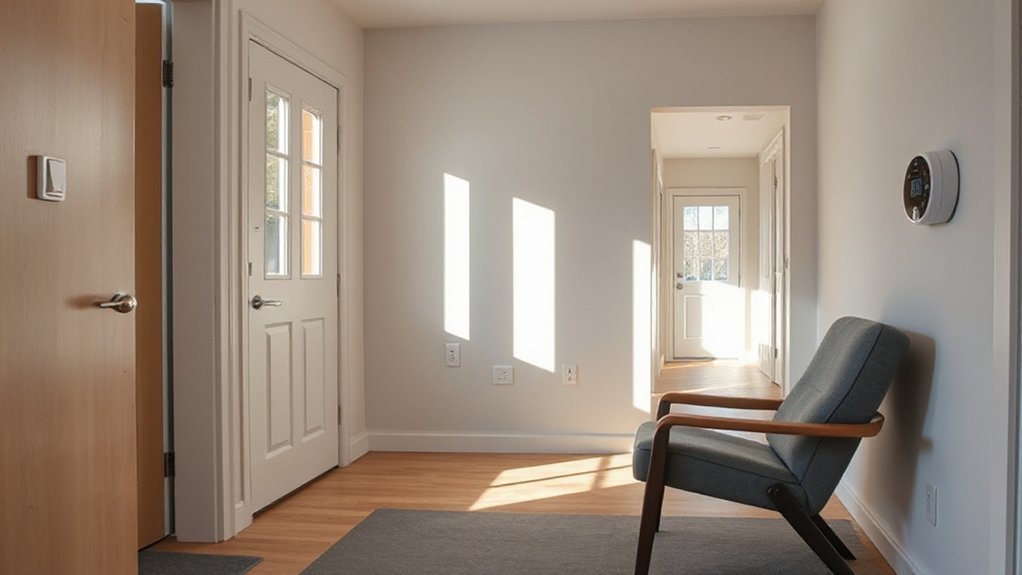
Smart safety tech blends seamlessly with daily routines, helping you stay independent without adding complexity. You’ll find devices that respond to voice activation, so you don’t have to reach for a button or pull a cord when mobility is limited.
Wearable alerts monitor sudden movements or falls and can alert caregivers or emergency services without delay. Look for systems that integrate with your existing smartphone or home hub, ensuring a single place to manage notifications.
Use practical tests to confirm reliability in daily life, not just in marketing demos. Prioritize clear, unobtrusive designs, long battery life, and straightforward pairing.
Choose solutions with transparent data sharing and robust privacy controls, so safety supports confidence, not intrusion, in everyday activities.
Kitchen and Bathroom Upgrades That Reduce Risk
Accessible faucet design and non-slip flooring upgrades can considerably cut slip-and-fall risks in kitchens and bathrooms.
You’ll benefit from lever-style or touchless faucets that are easier to operate with limited grip, paired with flooring that provides reliable traction.
With evidence-based choices and practical installation steps, these updates support safer daily routines without sacrificing function or style.
Accessible Faucet Design
Have you ever struggled to turn a stiff faucet handle or reach a high spout while cooking or brushing your teeth? Accessible faucet design makes daily tasks safer and easier.
Look for lever or push-button controls, single-handle cartridges, and low-profile spouts that glide within reach. Ergonomic handles reduce grip strain, while universal-design faucets accommodate diverse hand sizes and arthritis.
Motion-activated or touchless models minimize contact and streamline operation, though keep in mind potential battery or sensor maintenance.
Choose durable finishes that resist fingerprints and corrosion. Eco-friendly fixtures can lower water use without sacrificing performance, supporting sustainability.
Install reachable valve placement and remove under-sink clutter to improve maneuverability.
Prioritize simple maintenance, clear labeling, and compatibility with existing piping for practical, evidence-based aging-in-place upgrades.
Non-Slip Flooring Upgrades
Non-slip flooring is a practical follow-on to accessible faucet design, because slick surfaces are a common risk in kitchens and bathrooms. You’ll reduce fall risk by choosing materials with proven grip, like textured porcelain, vinyl with non-slip tread, or epoxy that maintains traction when wet.
Look for ANSI or ADA-compliant ratings and read independent slip tests to confirm performance in wet conditions. In high-traffic areas, opt for partial or total slip resistant surfaces to maintain safety without sacrificing aesthetics.
Consider traction enhancing coatings on existing floors—these coatings create a durable, uniform texture that resists wear and water exposure. Pair flooring upgrades with mats and grab bars for a thorough, evidence-based approach to aging in place.
Budgeting and Phased Planning for Upgrades
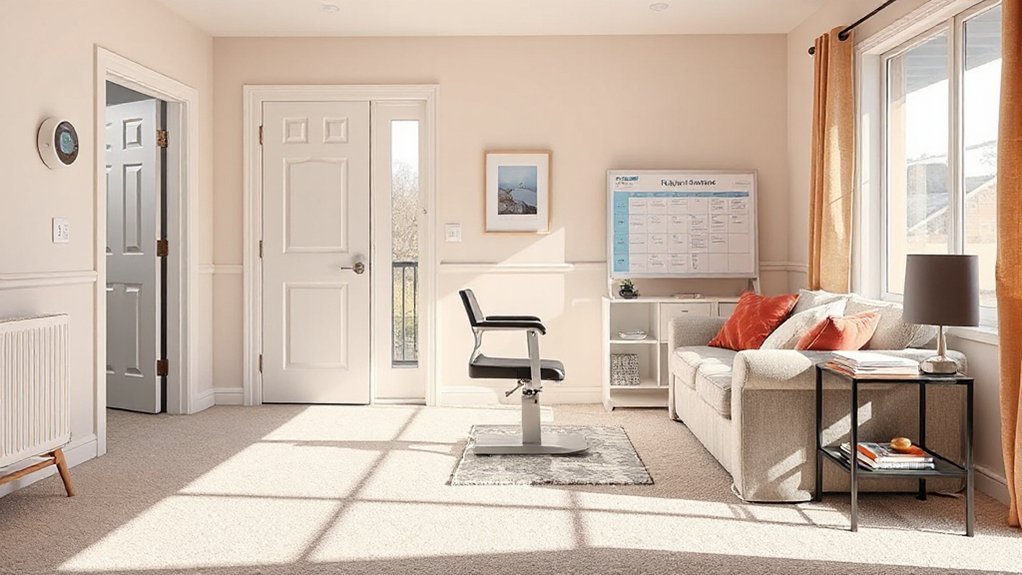
Budgeting and phased planning can feel overwhelming, but breaking the process into clear steps helps you protect your independence without overspending. Start with a realistic review of your needs, noting safety, comfort, and accessibility priorities.
Then estimate costs using local averages for the upgrades you want, adding a 10–20% contingency for surprises.
Create a phased timeline that matches your budget, spacing larger projects with practical intervals.
Track funding sources, such as savings, loans, or grants, and align them with your goals.
Focus on financial planning that preserves cash flow, rather than one-off splurges.
For each phase, prepare a short scope document and select a trusted contractor who communicates clearly, checks references, and provides written estimates.
Contractor selection should emphasize transparency, warranties, and adherence to timelines.
Quick Wins to Maximize Impact Today
If you’ve already started planning in phases, you’ll appreciate how small, high-impact changes can make daily living safer and more comfortable right away. Quick wins don’t require a full remodel; they optimize function with minimal disruption.
Prioritize lighting upgrades, like brighter hallway lamps and motion-activated night lights to reduce falls. Add non-slip mats in kitchens and baths, plus grab bars where needed.
Implement simple home automation tweaks—programmable thermostats, smart plugs, and voice-controlled assistants—to streamline routines and reduce temptations to skip safety steps.
Choose aesthetic enhancements that also improve visibility and calm, such as clean line contrast on stairs and clutter-free surfaces.
Track outcomes, adjusting as you learn what supports independence best. These small steps build confidence while validating long-term aging-in-place goals.
Frequently Asked Questions
How Do I Decide Which Upgrades to Prioritize First?
Prioritize safety first: assess what’s most risky, then budget. Start with practical upgrades like Smart technology for accessibility and lighting, plus aesthetic improvements to reduce stress. Gather evidence, test usability, and update steps as needs evolve.
What Funding Options Help Aging-In-Place Renovations?
First, you’ll find financial assistance and government grants available. As you plan, think of them as a warming beacon guiding you, evidence-based options that support practical aging-in-place renovations and reduce upfront costs.
Can Aging-In-Place Changes Increase Home Value?
Aging-in-place changes can increase your home value, especially if they improve accessibility and safety. You may boost home equity and resale value by prioritizing durable, widely appealing features and documenting quality upgrades for buyers.
Are There Any Rental-Friendly Safety Upgrades?
Yes—there are rental-friendly safety upgrades you can use. You’ll rely on removable adhesives and temporary ramp solutions, easing shifts. These options are evidence-based, practical, and compassionately support independent living without damaging the property. This approach saves embarrassment and stress.
How Long Do Common Accessibility Renovations Take?
Renovations like bathroom modifications and kitchen adaptations typically take a few days to a few weeks, depending on scope and permits. You’ll plan, coordinate, and expect minimal disruption while staying evidence-based and practical throughout the process.
Conclusion
Picture aging in place as steering a sturdy ship through changing seas. Your home becomes the harbor: barrier-free decks, widened doorways as easy-to-navigate bays, slip‑proof decks, and lamps that guide you without glare. With smart safety devices and practical upgrades, you reduce risk while preserving independence. Plan in stages, budget wisely, and celebrate small victories—each improvement is a tide that lowers the swell of danger, keeps you moving with confidence, and honors your lived comfort.
About the Author