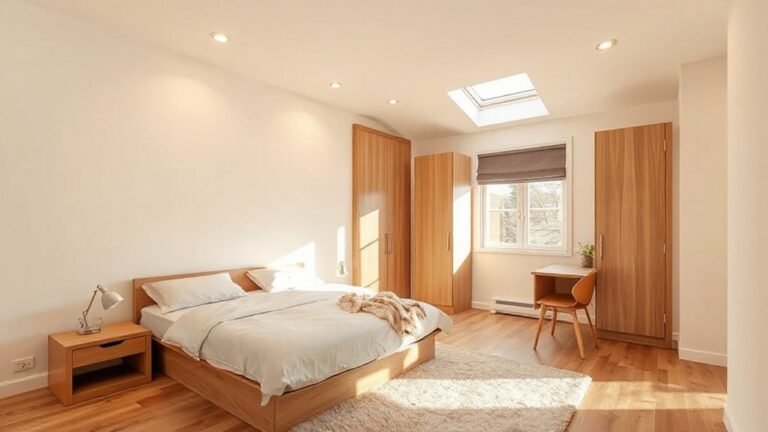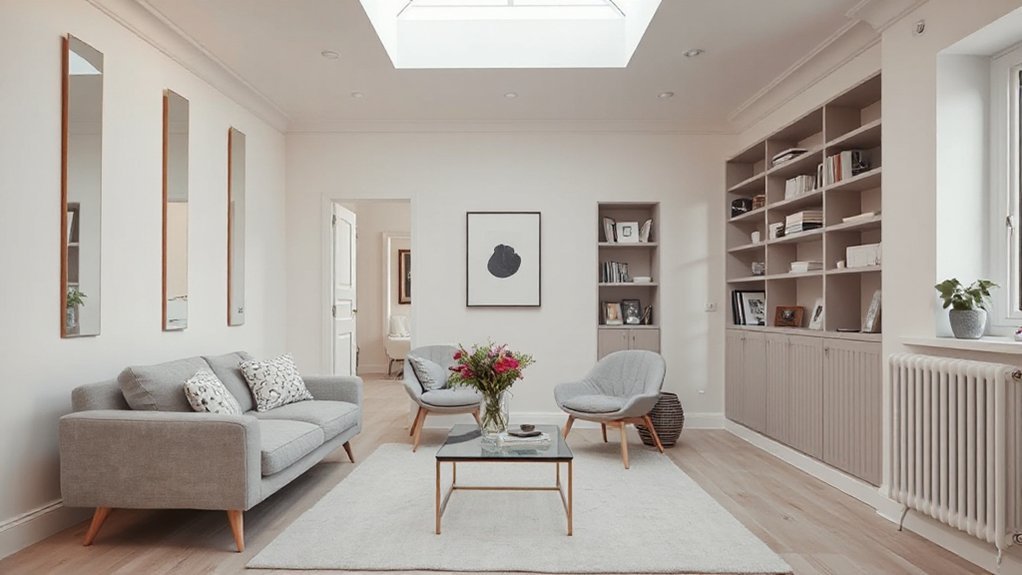
In tight UK spaces, you can make rooms feel bigger by choosing multifunctional pieces, like slim sofas and storage ottomans, and by keeping clutter to a minimum. You’ll free floor space with vertical storage and wall-mounted units, while mirrors and reflective surfaces bounce light around. Stick to a cohesive, light palette with soft textures, and plan your layout to promote flow. Curious how to balance brightness and calm without sacrificing comfort? Let’s start with the basics.
How Small UK Rooms Feel Bigger With Practical Tricks
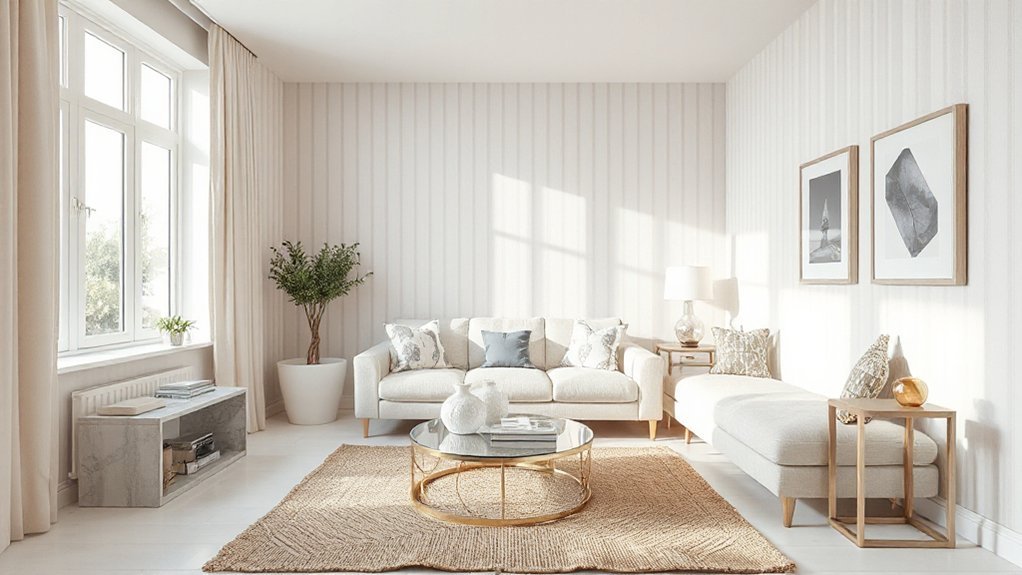
Small rooms can feel cramped, but smart tweaks make them breathe. You’ll recast space with purposeful furniture arrangement, choosing pieces that serve multiple goals: seating, storage, and flow. Anchor the far corner with a slim sofa or compact loveseat, then place a low-profile coffee table to widen sightlines. Favor vertical storage—tall shelves and wall hooks—to keep floors clear and the room airy. Use decorative accessories sparingly but boldly: a single oversized mirror, a bold rug, and a few woven baskets to cue depth without clutter. Align furniture edges with walls to create clean, uninterrupted lines, and create zones with subtle contrasts in texture. Finally, keep surfaces uncluttered; every item earns its keep to preserve openness.
Maximise Natural Light With Window-Smart Design
Maximise natural light by choosing window placements that catch sun paths and frame outdoor views. Use natural light maximizers like large, unobstructed panes and strategically placed mirrors to bounce light into darker corners. Consider window placement tricks that boost brightness without compromising heat or privacy.
Natural Light Maximizers
Natural light can transform a compact room, so start by optimizing what you already have: clear the path for sunlight to reach every corner. You’ll begin by choosing window treatments that minimize obstructions: sheer fabrics, light-coloured blinds, and floating drapes that sit above the sill. Aim for unobstructed sightlines to outdoor views, which instantly extend perceived space. Keep trim simple and reflectivity high—think glossy paint, glass, and mirrors placed to bounce daylight deeper. If you have multiple windows, unify frames and align curtain tops to avoid visual clutter. Avoid heavy valances and dark, bulky hardware that trap shade and shade. Embrace daylight as a design element: it defines scale, highlights texture, and keeps rooms feeling airy all day.
Window Placement Tricks
Smart window placement lets daylight reach deeper into a room, so map out where light enters and how it travels across surfaces. You’ll gain depth by positioning low-profile screens or furniture to reflect glare away from you, not into it. Consider slightly angled mirrors or skylights to bounce daylight toward darker corners without adding bulk. Choose window treatments that amplify brightness—ceilings and walls in light tones maximize contrast and perception of space. Opt for sheer curtains or minimal frames that don’t trap light, and reserve heavier fabrics for shading only when needed. Curtain styles should complement scale: slim rods, clean lines, and unobtrusive hems prevent visual heaviness. Finally, align windows with architectural cues to extend sightlines and keep traffic paths open.
Choose Low-Profile Furniture to Free Floor Space
Choosing low-profile furniture frees floor space and creates an uncluttered feel. You’ll notice rooms read bigger when you pick pieces that sit close to the ground and don’t visually crowd the area. Pair low seating with open understorage to keep essentials accessible without bulk. Favor slim legs, compact surfaces, and modular layouts that adapt as needs change. This approach supports multifunctional furniture and minimalist décor, letting rooms breathe while staying practical.
1) Opt for sofas and chairs with legs that elevate sightlines and reveal floor.
2) Choose coffee tables with open bases or nesting options to hide daily clutter.
3) Integrate storage ottomans and slim consoles that multitask without overwhelming the space.
Build Visual Unity With a Cohesive Color Palette
A cohesive color palette ties every part of a room together, guiding your eye and creating a sense of continuity. Start with a dominant, soft base and pull in 1–2 accent hues to echo throughout furniture, textiles, and décor. This unified flow makes small UK spaces feel larger by reducing visual noise and anchoring each element to a shared mood.
Cohesive Color Schemes
A cohesive color scheme ties a room together, guiding the eye and making small spaces feel larger. You create flow by using a limited palette, then layering tones for depth. Color coordination keeps furniture, walls, and textiles working in unison, while shade harmony ensures contrasts feel deliberate, not chaotic. Choose a primary hue and pull in supporting shades a step lighter or darker to avoid jarring shifts. Keep accents minimal to prevent visual clutter.
1) Start with a unifying base color across major surfaces, then add two supporting shades for contrast.
2) Use lighter tones to push walls back and darker tones to ground furniture.
3) Apply small pops of color in accessories for focal points without breaking cohesion.
Unified Visual Flow
Unified visual flow starts with a cohesive color palette that travels smoothly from room to room; when hues relate, spaces feel connected even if they’re functionally different. You keep this consistency through deliberate furniture arrangement and synchronized decorative accents. Choose a shared neutral base and repeat two to three contrasting accents across zones to stitch the look together without crowding. In small UK rooms, refine sightlines with lighter shades on larger surfaces and reserve deeper tones for focal points, like a standout chair or rug. Limit varied wood tones to one family to reduce visual noise. Align furniture edges to create quiet paths, avoiding abrupt breaks. Decorative accents—vases, cushions, throws—should echo the palette, reinforcing unity while allowing individual room personalities to breathe.
Use Mirrors and Reflective Surfaces for Depth
Mirrors and reflective surfaces are your secret weapons for depth, especially in tight UK rooms. You’ll trick the eye with light bouncing around, making walls disappear and spaces feel breathing room-wide. Start with careful mirror placement to avoid doubling clutter; place tall, slim panels opposite windows for max daylight. Choose reflective decor that adds sparkle without shouting—think brushed metal trays, glass vases, and glossy frames. Keep frames slim and unobtrusive to preserve clean lines. Now, use shallow, reflective surfaces on furniture tops to echo light without overpowering color schemes. Align angles to capture architectural features, not your laundry basket.
- Mirror placement strategies that mirror the room’s silhouette
- Reflective decor accents that won’t overwhelm
- Surface reflections to double perceived space
Grow Vertical Presence With Compact Storage Solutions
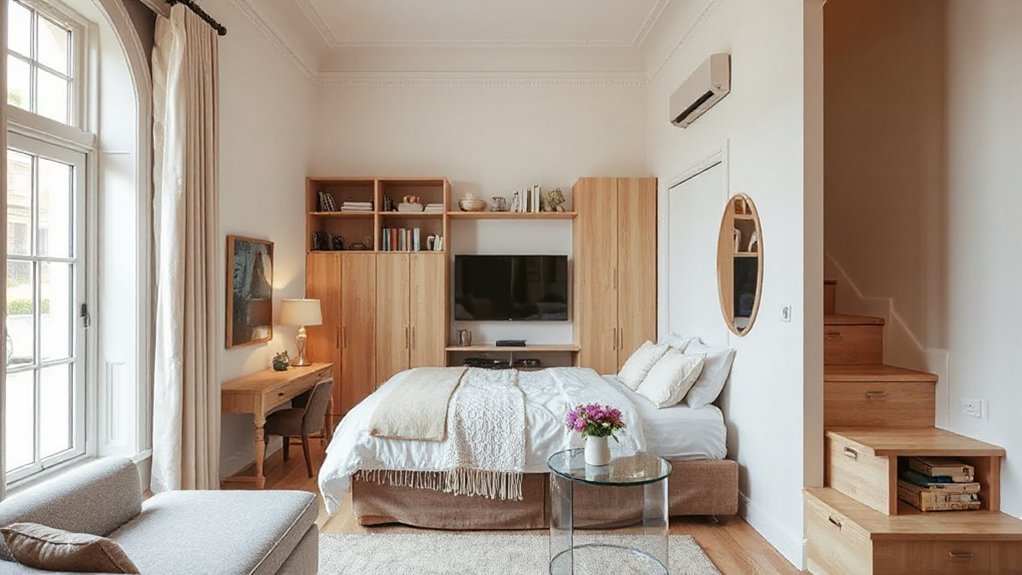
Rise above clutter by stacking smartly: compact storage that climbs rather than sprawls. You’ll gain floor space by embracing vertical shelving that reaches toward the ceiling, not across the room. Choose slim, modular units you can customize as your needs shift, so nothing feels wasted. Wall mounted storage keeps surfaces clear, letting light travel and eyes roam upward, which visually expands the space. Opt for brackets and rails that blend with walls for a seamless look, and stagger shelves to display books, boxes, and decor without crowding. Use labeled bins to maintain order, and tuck rarely used items higher up. End results feel calm, organized, and airy, proving compact storage can elevate height as well as function.
Lighten the Space With Texture, Pattern, and Tactile Finishes
Textures and patterns can lighten a small room by adding visual breath without crowding it. You’ll achieve this with textured finishes and tactile materials that offer depth without bulk, so walls, floors, and soft furnishings read lighter and more expansive. Choose reflective or matte surfaces strategically to bounce light, while keeping color palettes cohesive. Subtle textures create interest without muddling the space, helping the eye travel across the room rather than clumping in corners.
- Use a pale, lightly textured wallpaper or plaster for walls to introduce texture without weight.
- Layer tactile materials like linen, wool, and boucle in cushions and throws to add warmth and movement.
- Select furniture with slim profiles and soft, textured upholstery to maintain airiness while inviting touch.
Frequently Asked Questions
How Can Color Psychology Impact Perceived Room Size?
Color psychology shapes perceived room size by color contrast and mood enhancement; you’ll feel spatially bigger when you use lighter, low-contrast walls with brighter accents, boosting mood and opening sightlines. Balance warm accents to avoid claustrophobic triggers.
What Are Budget-Friendly Decluttering Strategies for Small Spaces?
Did you know 40% of clutter comes from unused items? You can cut it by 50% with smart storage solutions and deliberate furniture arrangement. You’ll declutter faster, freeing space, while keeping essentials neatly accessible and visually calm.
Do Ceiling Treatments Affect Room Brightness and Height?
Yes, ceiling treatments affect brightness and height. Choose ceiling patterns that reflect light, and install lighting fixtures toward walls to bounce illumination upward, making ceilings feel higher while keeping the space airy and practical for daily tasks.
Can Acoustic Considerations Influence Perceived Spaciousness?
Yes, acoustic considerations influence perceived spaciousness. You’ll notice more openness with careful room treatment, which uses Soundproofing techniques and strategic Acoustic panel placement to reflect space, reduce clutter, and maintain mood while maximizing apparent size.
Are There Safety Tips for Multi-Functional Compact Furniture?
Ironically, yes—you’ll love safety tips when you’re juggling multi-functional furniture. You’ll secure it with a safety lock and trust sturdy construction, so you stay safe, stable, and amused, enjoying practical, precise, creative, compact solutions.
Conclusion
You’ve got this—small rooms don’t have to feel tiny. With strategic light, low-profile furniture, and vertical storage, you’ll reveal a surprising amount of space. Keep color cohesive, lean on mirrors, and layer light textures for depth and warmth. Every corner becomes a whisper of calm, not a trap. Stay curious, fine-tune placements, and watch your room breathe—it’s practically a miracle, like shrinking the universe to fit your front door. Revolutionized, your space feels ginormous.
About the Author