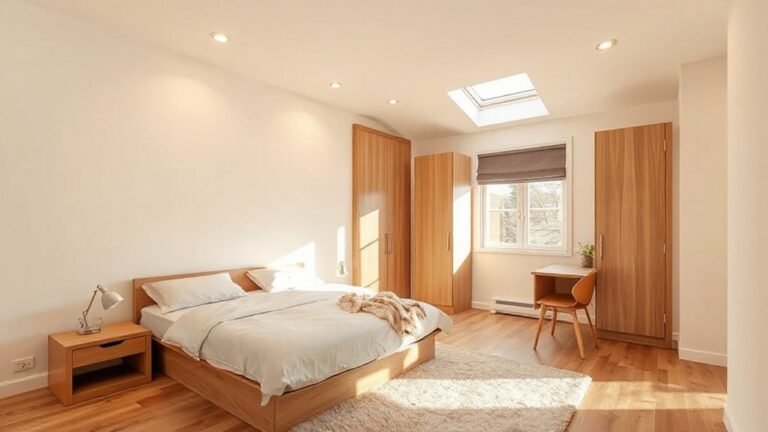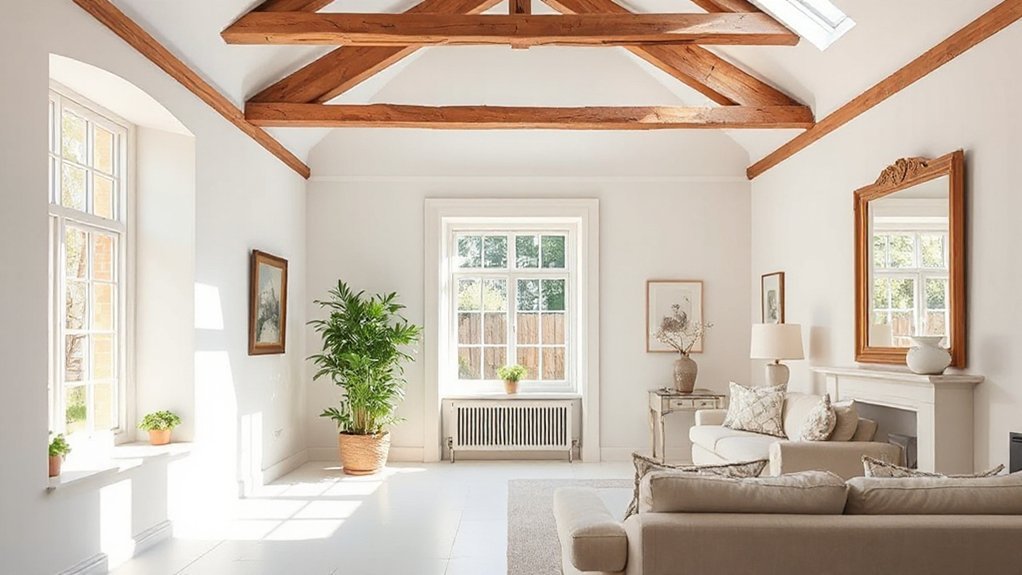
Like a quiet chorus behind old panes, daylight in your brick-and-mortar can define mood and efficiency. You’ll want a clear baseline of current light levels and a plan that respects heritage while boosting transmission. Start by evaluating window performance, then consider character-compatible upgrades, interior finishes, and strategic layouts. With exterior refinements and smart glazing choices, you’ll open brighter spaces without sacrificing authenticity, but the path demands careful balance—so you’ll want to explore each step before committing to the next.
Assess Daylight Baseline and Set Brightness Goals
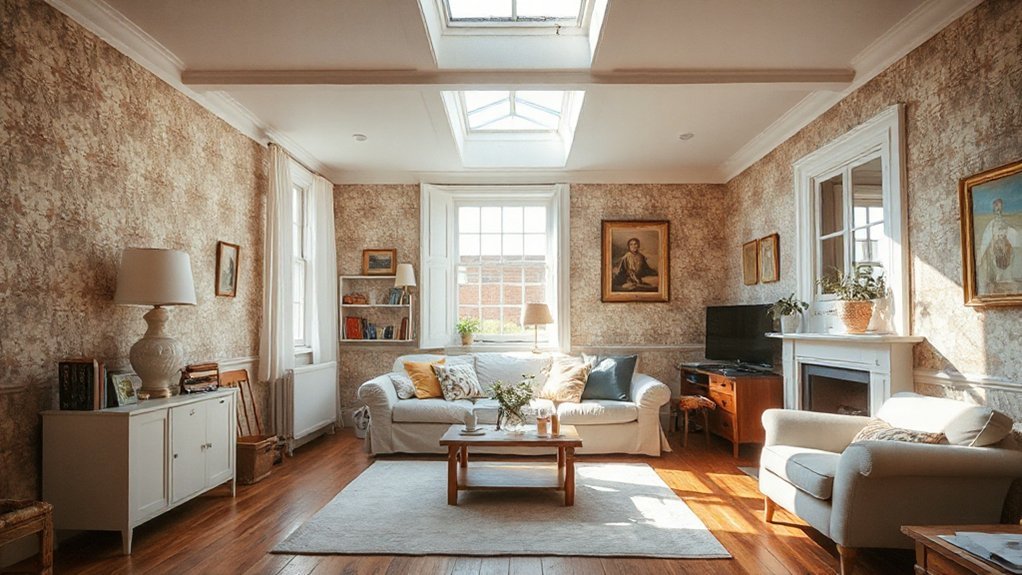
Before you make changes, establish a daylight baseline by measuring current light levels in key rooms at different times of day and under typical weather conditions. You’ll capture a quantitative snapshot using a consistent method: a calibrated light meter, fixed-height sensing, and uniform measurement points.
Record illuminance in lux and note surrounding factors such as wall colors, fabric finishes, and window orientation. Create a baseline spreadsheet mapping time of day, weather, and room用途.
Define brightness targets as achievable ranges aligned with function: reading, cooking, and relaxation. Compare results against recommended indoor daylight standards and consider seasonal variation.
Document confidence intervals and measurement uncertainty. Use the baseline to drive objective choices for glazing, shading, and layout adjustments, ensuring that subsequent changes improve usability without compromising energy performance.
Prioritize Window Upgrades for Character Homes
Upgrading windows in character homes directly enhances daylight quality while preserving architectural integrity. You should prioritize replacements that respect historic features, scale, and proportion, selecting designs that match original fenestration where feasible.
Assess window materials for compatibility with listed status or local planning guidance, favoring timber frames or certified equivalents that offer durability, insulation, and minimal visual impact. Insulate sashes and frames without concealing mouldings or glazing bars; consider lime-based putty for repair rather than synthetic sealants that compromise historic preservation.
Choose glazing with appropriate U-values and acoustic performance, avoiding modern oversized panes that disrupt street elevation rhythm. Collaborate with conservation teams to document decisions, maintain heritage values, and ensure long-term daylight gains align with preservation objectives and building performance targets.
Prioritize maintenance plans that extend lifecycle and prevent deterioration.
Exterior Improvements to Let More Light In
Exterior-focused strategies can boost daylight without altering architectural character, by optimizing building envelope performance and site siting. You’ll assess existing envelope gaps, insulation, and air leakage to prevent unintended shading or glare while maximizing natural brightness.
Prioritize aligning eave lines, roof slope, and window setback to capture unobstructed sun paths across seasons. Considerside openings, corridor and stairwell luminance, and internal layouts that reflect light deeper into rooms.
Exterior paint colors and contrasting trim can influence perceived brightness when applied to facades and fences, but avoid dark tones that absorb light.
Garden landscaping should be arranged to minimize south-facing shading on primary windows while maintaining privacy. Use permeable paving and light-reflective materials near elevations to reduce heat gain.
Ensure any alterations comply with local heritage guidance and listed-building constraints.
Smart Glass Choices for Period Homes
Smart glass can reduce glare and heat while maintaining daylight. You’ll want options with proven dimming performance and minimal visible tint for period aesthetics.
It should align with your home’s architectural fabric, balancing authentic look with modern energy benefits and reliable privacy control.
Consider how climate and orientation affect shading, and weigh the tradeoffs between privacy, heat management, and potential maintenance or replacement costs.
Smart Glass Benefits
Smart glass offers adaptive shading and solar control that can be discreetly installed within period-housing fabric, reducing heat gain while preserving original aesthetics. You’ll benefit from controllable transmittance that preserves daylight levels while limiting glare, maintaining usable interior space.
In active rooms, dynamic tinting responds to sun position and exterior conditions, improving comfort without added shading devices that alter historic envelopes.
Energy efficiency improves as reduced cooling loads accompany lower lighting needs, since natural daylight remains abundant but less infrared heat enters.
Installation can be retrofitted behind existing glazing or integrated into discreet sash configurations, preserving architectural integrity.
Long-term maintenance is minimal with solid-state coatings, and reversible options keep options open for future refurbishment.
Smart glass aligns performance with conservation aims, delivering measurable reductions in energy use and occupants’ thermal discomfort.
Aesthetic Period Integration
Aesthetic Period Integration requires choosing smart glass options that respect a property’s historical fabric while delivering contemporary performance. You evaluate glazing choices against architectural features, ensuring sash profiles, muntins, and reveals are preserved or convincingly replicated.
Opt for high-transparency laminates or low-iron glass to maximize daylight without compromising UV control, and select coatings that keep traditional aesthetics intact under varying light conditions. Tint levels should be calibrated for equal daylight distribution across rooms, avoiding glare on period plaster and historic furnishings.
Prefer switchable or variable tint technologies that can be concealed within existing frames to maintain period authenticity. Documentation of performance metrics, including solar gain and thermal transmittance, supports a coherent architectural narrative, reinforcing architectural harmony while meeting modern comfort standards.
Climate and Privacy Tradeoffs
When integrating smart glass into period homes, you must weigh climate control benefits against privacy needs, since dynamic glazing alters solar gain, glare, and sightlines at different times of day.
In practice, select glazing with controllable transmittance to balance heating loads and cooling needs without compromising daylight. Consider solar shading strategies to minimize glare during summer peak while preserving exterior views when desired.
Privacy screens can be integrated in conjunction with smart glass to meet upper-floor or street-facing requirements without sacrificing room brightness. Edge detailing and frame precision matter, as seal integrity affects performance.
Evaluate commissioning data for long-term performance under UK climate, including condensation risk and UV stability. Document control logic for predictable, repeatable environments throughout varied occupancy.
Reflective Interiors to Multiply Daylight
To multiply daylight in older UK properties, you can deploy reflective interiors that bounce natural light deeper into rooms. Strategic use of light surfaces directs sunbeams from windows across zones, reducing glare while preserving color fidelity.
Choose high-reflectance finishes with low chroma and muted undertones to maintain tonal balance throughout the day. Prioritize surfaces with a reflectance value above 70% in key planes—wall panels, ceilings, and built-in cabinetry—to maximize bounce without overbrightening.
Interior color schemes should lean toward cool or neutral bases, complemented by small, deliberate accents to prevent flat illumination. Furniture placement matters: position mirrors and glossy surfaces to intercept incoming light without obstructing circulation.
Avoid dense textures that absorb light; instead, select smooth, low-sheen textures for predictable diffusion.
Layout Tweaks to Expand Sunlit Space
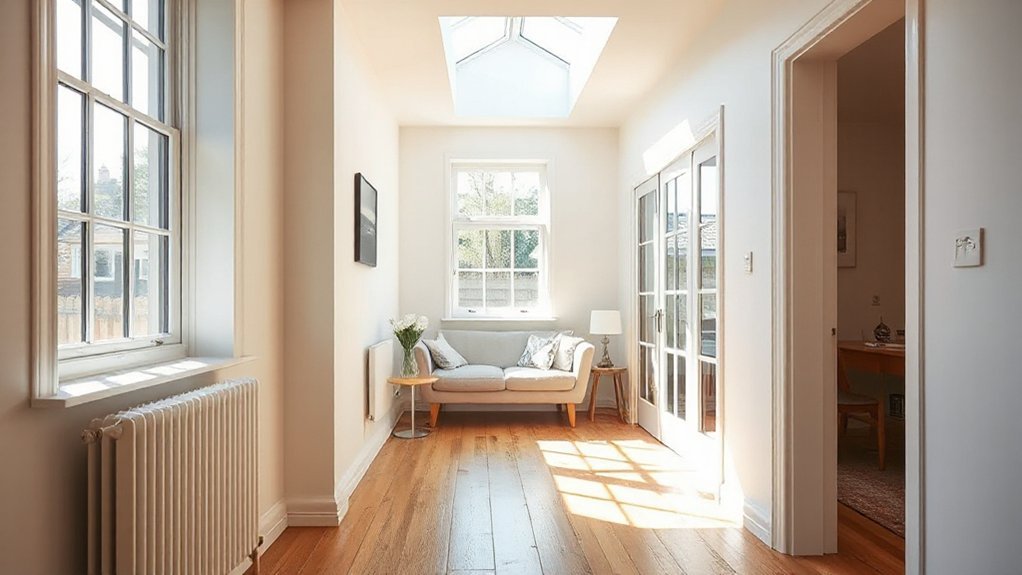
Carefully rearranging layout elements can magnify daylight penetration without increasing window size. You’ll begin by mapping primary sightlines from each window to seating and work zones, then reposition furniture to avoid blocking glass and to create uninterrupted axial flow for light.
Implement open-plan cues where possible, favoring low-profile storage and compact partitions that don’t cast deep shadows. Consider ceiling adjustments that reflect or diffuse daylight, such as shallow recesses or linear coves aligned with primary windows to bounce light deeper into rooms.
Integrate interior plantings along sunlit margins to soften reflections without absorbing too much glare. Use light-coloured finishes, but preserve contrast where needed to maintain depth.
Validate changes with daylight simulations or simple illuminance readings at key hours for accuracy.
Reduce Glare Without Dimming the Room
Reducing glare without dimming the room means controlling light quality while preserving brightness. In practice, you target specular reflections and high-contrast hotspots that fatigue eyes and distort color.
Apply glare control by selecting glazing with appropriate UV and infrared filtering, and use low-sun angles’ shading strategies to diffuse direct rays. Window tinting can attenuate peak luminance without perceptible dimming if chosen for indoor perception.
Pair tinted panes with anti-reflective coatings on secondary glazing or interior blinds that adjust with sun position. Position furniture and work surfaces to break line-of-sight reflections from windows.
Calibrate window films to maintain color fidelity of fabrics and walls, avoiding yellowing over time. Document performance with lumen maintenance data to confirm sustained brightness.
Layered Lighting for Year-Round Brightness
Layered lighting combines ambient, task, and accent layers to maintain consistent brightness throughout the year, compensating for seasonal shifts in natural light.
You implement layered lighting by pairing ambient layering with focused task illumination to preserve visibility in all rooms. Begin with a dimmable general glow that maintains brightness in spaces without glare, then add task lighting at desks, countertops, and reading chairs to support specific activities without overpowering the ambient level.
Choose color temperatures around 2700–3000K for warmth in living areas and 3500K for work zones, adjusting with intelligent controls for daylength. Use fittings that minimize excess reflection from old plaster and timber.
Ascertain switches and sensors synchronize with daylight, preventing overlighting in bright months while preserving depth and texture in winter. Regularly review layout as furniture shifts.
Budget-Friendly Maintenance for Longevity
Maintaining longevity on a budget means prioritizing durable components, proactive upkeep, and cost-effective replacements that align with your existing lighting scheme.
To optimize natural light, schedule seasonal inspections of window frames, seals, and sills to prevent drafts that darken interiors. Target affordable repairs that restore performance without replacing entire assemblies; lubricate hinges, adjust operators, and reseal gaps with compatible weatherproofing.
Choose high-quality but economical glazing spacers and reflective interior surfaces to maximize daylight diffusion. Document wear indicators and create a maintenance calendar to avoid peak repair windows.
Prioritize longevity tips such as prioritizing UV-stable finishes and avoiding aggressive cleaners that degrade seals. This approach minimizes long-term costs while preserving light transmission, enabling steadier illumination of living spaces throughout the year.
Frequently Asked Questions
Can Daylight Metrics Apply to Irregular UK Property Layouts?
Yes, daylight metrics can apply to irregular UK layouts, but you’ll need tailored modeling. Consider window placement to optimize angles, and interior skylights to capture light pockets, ensuring metrics account for façade irregularities, shading, and reflective surfaces.
How Do Listed Buildings Affect Light Improvement Options?
Listed buildings constrain light improvements; 60% of cases require statutory notification or listed-building consent, limiting alterations. You’ll balance historical preservation with window regulations, using compliant glazing and elevation strategies to maximize daylight without compromising heritage integrity.
What Grants or Tax Reliefs Support Daylight Upgrades?
Grants and tax reliefs for daylight upgrades include eligible energy efficiency incentives and heritage grants; you should check eligibility for window replacements and daylight sensors, ensuring required compliance, valuation, and documentation before applying through with your local authority or program.
Do Interior Mirrors Impact Real Daylight, Not Just Perceived Brightness?
You’ll find that interior mirrors do influence light, though not creating true daylight; they primarily alter perceived brightness. Mirror illusion can double perceived brightness in a room, but real daylight remains unchanged.
How to Balance Daylight With Thermal Comfort in Older Homes?
You balance daylight with thermal comfort by optimizing Window placement and selecting curtain choices that control solar gain while preserving glare-free illumination, using airtight seals, and shading strategies that adapt to seasonal radiation, ensuring comfort without sacrificing daylighting efficiency.
Conclusion
You’ll finish with a brighter, healthier space that respects character. An interesting stat: high-reflectance paints can boost perceived daylight by up to 30%, reducing artificial lighting needs. After upgrading glazing and sashes, you’ll notice steadier light levels across rooms, even on overcast days. Maintain gaps and seals to sustain gains, and layer lighting to adapt with seasons. By prioritizing precise daylight baselines and tasteful enhancements, you’ll maximize natural light without compromising heritage.
About the Author