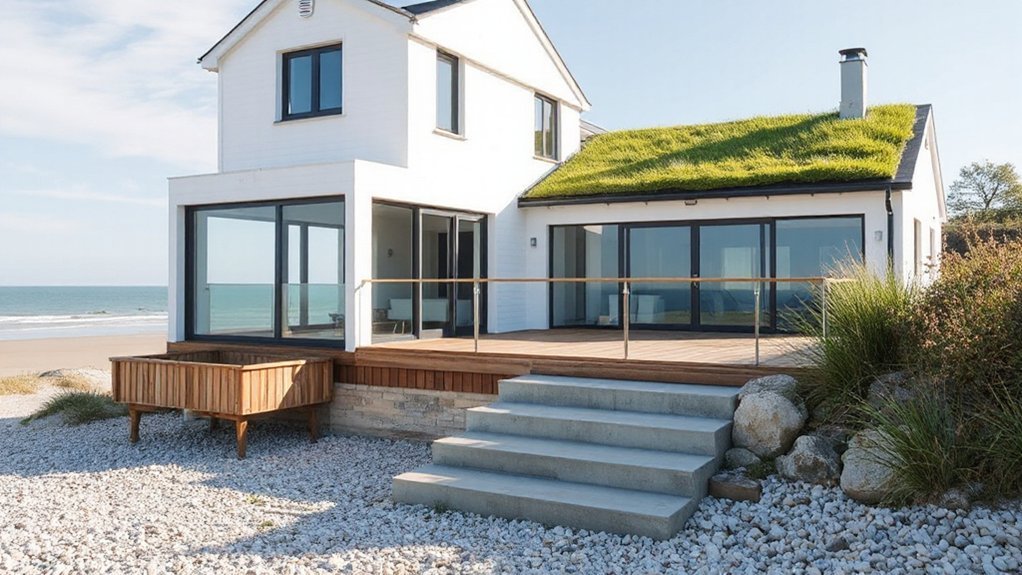
Think of your coastal home as a sturdy ship waiting for its next voyage. You’ll want extensions that shrug off salt spray, maximize light with glass and skylights, and feel seamless from indoors to outdoors. Use salt-resistant materials, raised decks, and wind-smart layouts so you can enjoy beach-side living year-round. It’s a practical balance of durability, value, and comfort that’s worth planning—but there’s more to take into account before you start.
Coastal Extension Criteria Homeowners Value
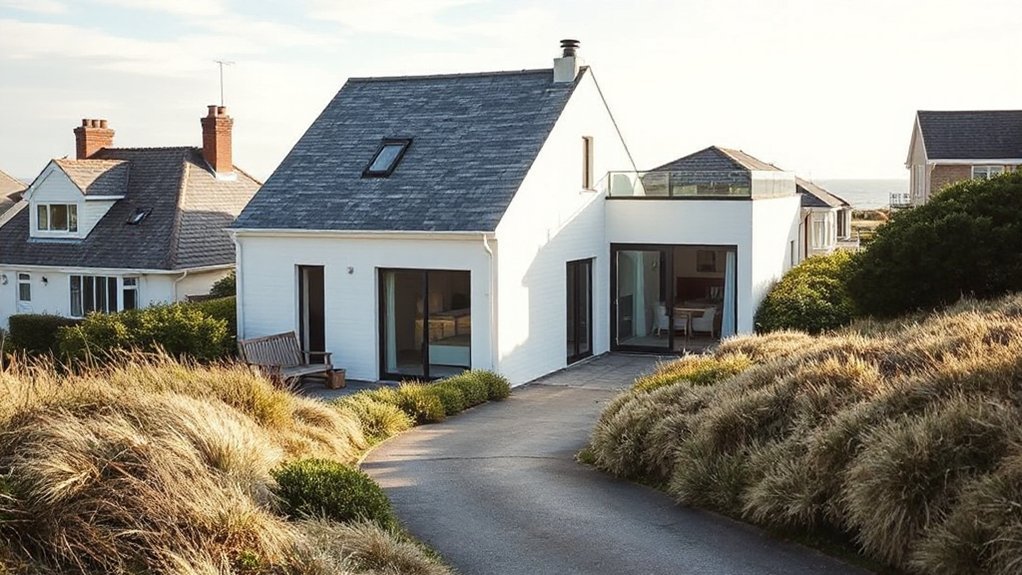
Coastal homeowners value extensions that boost livability without compromising the home’s resilience to wind, salt, and moisture. You prioritize practical gains: better interior layout, set to support daily routines while withstanding coastal conditions.
Start by evaluating your interior layout: will an open-plan area improve circulation, or do you need defined zones for work and family time?
Your aesthetic preferences guide material choices, from paint finishes to durable surfaces that resist humidity and salt spray. Favor products with tested wind resistance and low maintenance.
Consider how your extension affects moisture management, ventilation, and thermal comfort.
Budget-smart decisions matter, so compare installation timelines and warranty terms.
Choose layouts and finishes that feel cohesive, reduce clutter, and align with your coastal lifestyle without sacrificing resilience. Prioritize durability alongside design.
Maximize Light With Glass and Roof Options
To maximize light, prioritize glass placements and roof options that invite daylight while preserving energy efficiency. You’ll maximize brightness by pairing low-profile skylights with well-insulated roof segments, preventing heat loss in cooler coastal mornings.
Consider skylight installation that includes UV protection and tempered glazing to resist salt-air corrosion. Orient larger glass wall options to capture prevailing, gentle coastal sun without overexposure; use operable sections for natural ventilation on breezy days.
Choose glass with high solar gain control and low-emissivity coatings to balance warmth in winter and coolness in summer. For roof choices, lean toward insulated, reflective membranes and skylight flanges designed for coastal salt conditions.
Combine these elements with shades or overhangs to modulate glare and preserve comfort throughout living spaces.
Salt-Resistant Materials That Age Well
Salt-resistant materials age well when you pick coatings and substrates designed for corrosive coastal air. In coastal extensions, choose metals like stainless steel, aluminum, or treated timber with proven salt resistance.
Use corrosion resistant coatings that form a barrier, and opt for primers that enhance adhesion to humid, salty environments.
For wood, select rot-resistant species or composite boards with stable dimensional behavior, finished with durable exterior finishes that resist UV and moisture.
Cementitious products with low porosity reduce salt ingress, while vinyl offers tight seals and minimal maintenance.
Guarantee fasteners are stainless or coated to prevent galvanic corrosion.
Regular inspections catch early wear, and recoat when sheen fades to maintain long-term protection against wind-driven salt and rain.
Sunrooms and Bright Coastal Living Spaces
Bright sun streams through sunrooms and bright coastal living spaces, turning simple extensions into airy, inviting rooms you’ll actually use. You’ll want wide glazing, low-maintenance frames, and proper shading to keep glare manageable without losing views.
Choose expansive glass doors that open to decks, so breezes sweep through and furniture stays fresh. Prioritize insulation, heating, and cooling so comfort isn’t seasonal; extend your HVAC or add radiant panels for year‑round usability.
Seaside serenity comes from calm palettes and natural textures—think light woods, linen upholstery, and soft blues. Layer lighting for day and night, including task lamps for reading and accent LEDs to mimic sunset tones.
Keep clutter out with built‑in storage, and lean into Ocean inspired decor with coastal artwork and nautical accents.
Weather-Smart Structure for Wind and Tides
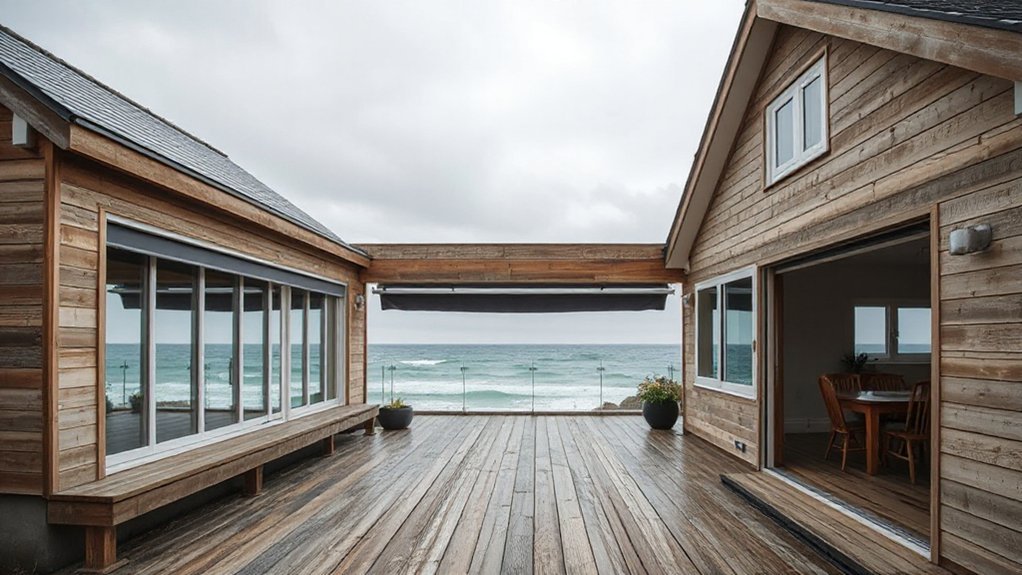
You’ll start with a wind-resistant frame design that stands up to gusts without wobble, keeping doors and windows secure during storms.
Consider tide-tolerant material choices that resist swelling and wear from saltwater exposure, so you don’t fight maintenance year after year.
Use salt air protective finishes to preserve clarity and strength, ensuring your coastal extension remains durable and low-maintenance.
Wind-Resistant Frame Design
Ever wonder how a frame can stand up to coastal winds and shifting tides? You’ll design with a wind-resilient frame that stays solid under pressure. Start with a rigid, sealed perimeter: reinforced corners, continuous studs, and strong shearies to resist racking.
Use corrosion-resistant hardware and storm-proof framing joints that flex slightly without snapping. Choose marine grade windows integrated into the frame so seals stay intact as gusts shift.
Align fasteners to distribute load along the wall plane, not just at one point, and seal gaps to prevent moisture intrusion. Incorporate triangulated bracing where openings near the edge exist, and guarantee overhangs shed salt spray away from joints.
Finish with proper drainage and maintenance checks—coastal performance requires consistent vigilance.
Tide-Tolerant Material Choices
Tide-tolerant materials keep coastal structures resilient by resisting salt corrosion, moisture intrusion, and wind-driven wear. You’ll prioritize selections that pair durability with installability, avoiding fragile finishes easily damaged by sea spray.
Start with framing that uses treated timber or steel designed for salt exposure, then match fasteners to prevent galvanic corrosion. Choose corrosion resistant hardware for hinges, latches, and connectors, guaranteeing reliable operation after wet tests.
For decks and cladding, opt for marine grade coatings and non-porous, low-maintenance surfaces that scrub cleanly without staining. Incorporate composites or fiber cement where appropriate to reduce swelling and warping from humidity.
Confirm detailing avoids trapped moisture, with proper flashing and drainage. Finally, verify product certifications align with local coastal codes for sustained performance.
Salt Air Protective Finishes
How do you shield exterior surfaces from salt air and salt spray while keeping colors true and finishes durable? You select salt-tolerant coatings that stay flexible yet hard-wearing.
Begin with marine grade finishes designed for coastal climates, capable of resisting corrosion, mildew, and UV fade. Apply with a meticulous surface prep: clean, dry, and lightly abraded, then prime with a zinc-rich or moisture-curing primer for bonding to timber or substrate.
Layer with breathable, water-repellent sealants to reduce salt spray penetration while maintaining color clarity. Install salt spray barriers at vulnerable joints and fasteners to slow corrosive attack.
Repaint on a predictable schedule, and store color samples that resist chalking. Regular inspection catches blistering early, preserving the weather-smart structure you’re aiming for.
Budgeting Brighton-Style Extensions
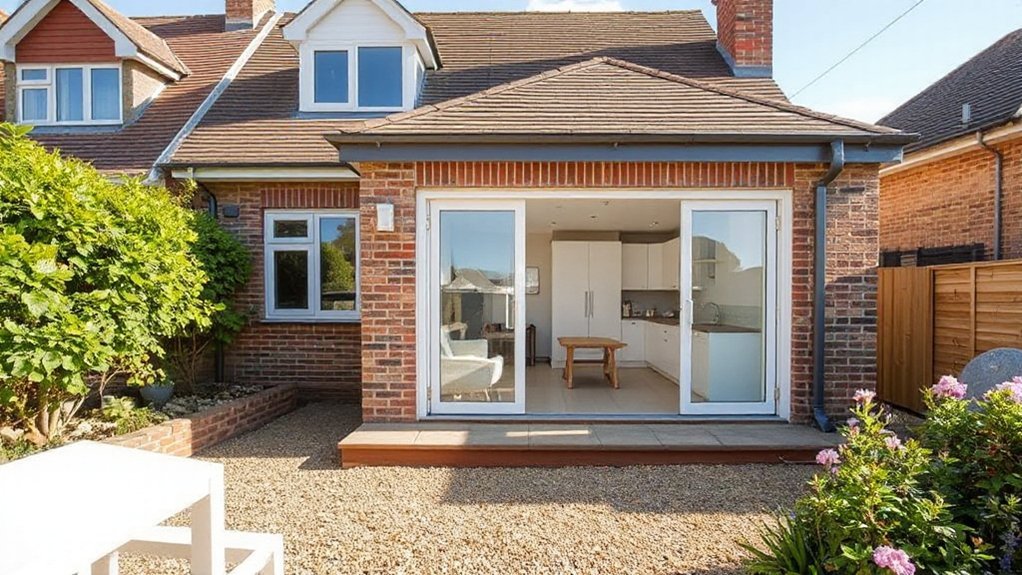
If you’re planning a coastal extension on a tight budget, start by prioritizing the essentials: solid foundations, weatherproofing, and careful material selection. You’ll save more by choosing mid-market products with proven durability, then layering upgrades as funds allow.
Map out a phased plan: core structure first, then insulation, windows, and cladding in affordable, durable options. Opt for standard sizes to cut waste and delivery costs, and negotiate bulk buys for concrete, timber, and fixings.
Budget friendly upgrades can include recycled or responsibly sourced materials, low-porosity paints, and simple, efficient insulation schemes.
Use creative design ideas to maximize light and space without overhauling the footprint.
Track every expense with a simple spreadsheet, and reserve a contingency for weather-related delays. Regularly review costs against progress to stay on target.
Case Studies: Seaside Extensions That Add Value
Seaside extensions that add real value aren’t just about bigger rooms—they’re about smart layout, durable materials, and weather-smart details that stand up to coastal conditions. You’ll see case studies where oozing seaside charm blends with practical function: extra daylight, flexible living zones, and low-maintenance finishes that resist salt air.
In one project, a raised timber deck integrates with a glass wall to blur indoors and outdoors, enhancing flow without sacrificing privacy. Another highlights a compact footprint with a beamed roof and insulated cladding that cut heating bills and boosted comfort year-round.
Across examples, attention to ventilation, moisture barriers, and corrosion-resistant fittings preserves longevity. These tweaks consistently lift property value while capturing coastal character.
Planning a Coastal Build: Permits, Timelines, and Checklists
Planning a coastal build means staying on top of permits, timelines, and checklists from day one so nothing derails your project when weather and tides shift. You’ll map local approvals early, then align surveys, design reviews, and contractor milestones to coastal constraints.
Check setbacks, flood zones, and erosion protections, and build in contingency windows for permits that lag or require revisions. Create a phased timeline that prioritizes foundations, drainage, and seaside landscaping, so heat, wind, and salt don’t surprise you later.
Document permits, inspections, and approval dates in a single log, updating weekly. For coastal privacy, plan screening and wind-blocks early, so outdoor spaces stay usable.
Keep communication tight with your architect and council, and track permits against seasonal windows to avoid delays.
Frequently Asked Questions
How Do Coastal Setbacks Affect Extension Size in Brighton?
Coastal setbacks limit your extension size, so you’ll plan conservatively to meet zoning. You’ll weigh Seaside privacy and Wind resistance, using smaller, sturdier designs, higher eaves, and wind-rated materials to balance light, views, and safety for Brighton works.
Can I Install Solar Panels on Sea-Facing Extensions?
Can you install solar panels on sea-facing extensions? Yes, with proper wind resistance considerations and awareness of tidal impacts. You’ll assess mounting options, drainage, and insulation, ensuring compliance, securing permits, and optimizing output while minimizing risk during storms.
Are There Special Insurance Considerations for Coastal Builds?
Yes, you’ll face marine environment and flood risk considerations; check insurer requirements, upgrade foundations, and use corrosion-resistant materials, watertight membranes, and proper drainage to protect coastal builds and guarantee timely coverage and claims.
What Maintenance Schedule Protects Salt Exposure Year-Round?
Salt corrosion is slowed by strict maintenance: rinse salt off monthly, inspect metals quarterly, recoat every 2–3 years, seal joints yearly, and replace worn fasteners promptly. Weatherproofing strategies emphasize breathable membranes, UV-proof coatings, and corrosion-resistant hardware.
Do Local Deadlines Impact Coastal Planning Approvals?
Yes, local deadlines can affect coastal planning approvals; you’ll need to align with permit windows, public consultations, and council schedules, while climate change policies and coastal erosion strategies shape conditions and timelines for project feasibility and compliance.
Conclusion
You’ve got a shoreline-ready plan: durable, light-filled spaces that hug the view and shrug off salt and wind. Choose glass and roof options that flood interiors with daylight, pair them with salt-resistant materials, and design wind-smart structures that welcome outdoor living. Track permits and timelines, budget for coastal quirks, and learn from seaside case studies. The rhythm of careful detail—build, test, maintain—locks in value, comfort, and lasting seaside appeal. Your Brighton extension starts now.
About the Author