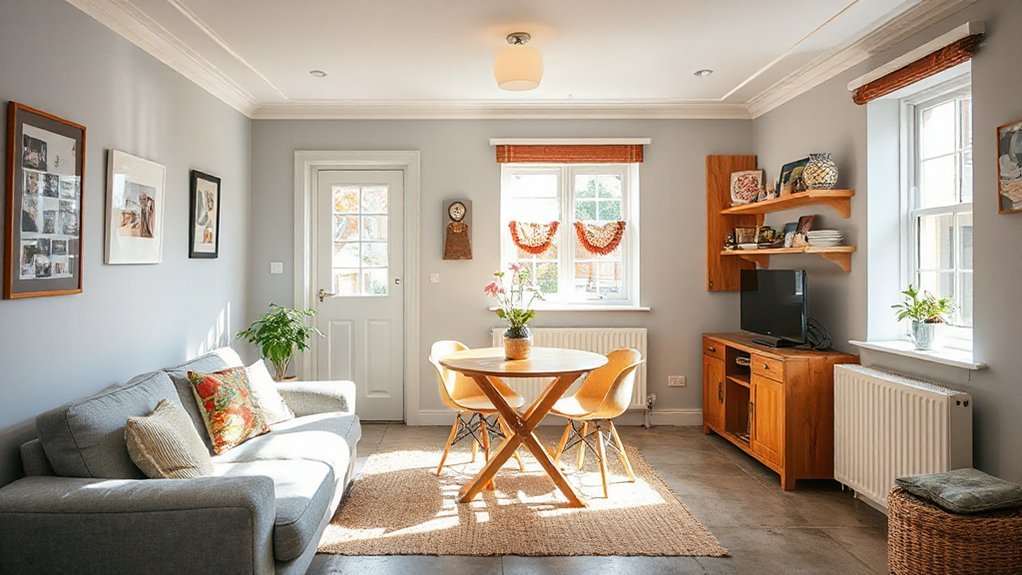
You step into a sunlit, compact UK room and notice every corner counts, every gap matters. You’ll want simple, tangible upgrades that stretch your budget: seal drafts, paint with light tones, and add mirrors to fake space, then move on to smart insulation, LED lighting, and smart thermostats for real savings. It’s practical, doable, and worth planning—but there’s a clear path you can follow, if you stay with me a moment longer.
Set a Realistic Budget for a UK Small Home
Set a realistic budget for a UK small home by starting with a clear total you won’t exceed. You’ll map upfront costs, then layer in contingencies so you don’t derail plans if surprises hit.
Begin with essential purchases: insulation, doors, and windows, then allocate for finishing touches.
Account for professional fees, building control, and any permitted development constraints.
Include ongoing costs like Home insurance and property taxes, so you aren’t blindsided when the renewal lands.
Prioritise renovations that release value without overreaching — small, durable upgrades over flashy gimmicks.
Track every pound in a simple spreadsheet, assigning a ceiling to each category and reviewing monthly.
Leave a modest buffer for unexpected issues, such as damp or structural checks.
With discipline, your budget keeps projects focused, affordable, and reliably on track.
Boost Light With Budget UK Lighting Ideas
You can brighten a small UK space on a budget by using mirrors to reflect light and create the illusion of space. Layer your lighting with a mix of floor lamps, wall lights, and task lighting so every corner feels awake without overspending.
Start with a few practical, affordable options and tweak placement to maximize natural daylight.
Brighten With Mirrors
Mirrors are a quick, budget-friendly way to brighten small UK spaces: place a large mirror opposite a window to bounce natural light, or prop a few smaller ones around to create the illusion of depth.
In practice, choose frameless or slim-edged designs to keep costs down and walls feeling open. Position mirrors to reflect daylight from the main sources, not artificial glare, for best effect.
Strategic mirror placement around entrances and narrow hallways can visually widen these areas without major work. Use multiple small mirrors for a gallery vibe, or one statement piece to anchor a room.
Complement with decorative accents that pick up reflected light, and keep backing colors light and matte to maximize brightness. This approach delivers affordable, noticeable improvements without clutter.
Layered Lighting Ideas
Layered lighting is the fastest way to brighten small UK spaces without a big price tag. You’ll boost mood and function by mixing sources in every room.
Start with ambient layering: a dimmable ceiling light paired with wall sconces or floor lamps creates depth without glare.
Add task illumination where you cook, read, or work—under-cabinet LEDs in the kitchen, a desk lamp, or a focused shelf light.
Use light colors and smart positioning to reflect daylight and prevent shadows.
Choose affordable, energy-efficient bulbs and plug-in options to save on installation.
Group lights in zones so you can tailor brightness to tasks and time of day.
Keep cords tidy, and avoid overlighting; balance is better than brightness alone.
Budget Storage Hacks for Tiny UK Homes
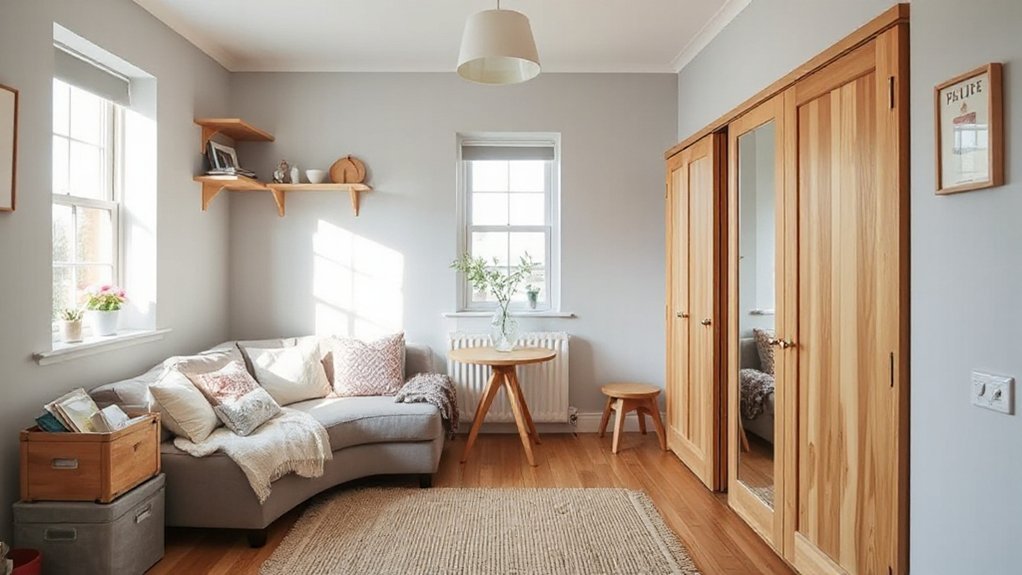
Hidden wall crates give you extra storage without stealing floor space, so you can keep essentials within easy reach.
Pair them with underbed organisers to corral clothes, toys, or seasonal gear tucked away out of sight.
Start small, test how these options fit your layout, and adjust to maximize every inch of your tiny UK home.
Hidden Wall Crates
Ever thought tiny UK homes could hide big storage? Hidden wall crates offer a clever fix. You install slim, modular crates into wall cavities behind lightweight panels, creating concealed storage without encroaching on floor space.
Use them for seasonal gear, tools, or pantry extras, then seal with accessible latches for quick reach. Picture frames or vented panels can camouflage the openings, keeping the system discreet and budget-friendly.
When choosing materials, opt for moisture-resistant plastics or plywood with a low-cost finish to withstand UK climates. Map your walls to avoid pipes or wires, and keep crates shallow to maintain wall integrity.
Label fronts for quick access, and rotate items seasonally to maximize usefulness of concealed storage.
Underbed Organisers
Underbed organisers are a smart extension of concealed storage, keeping clutter out of sight while staying affordable. You’ll gain instant floor space without major renovation, ideal for tiny UK homes.
Choose underbed storage boxes with clear lids so you can see contents at a glance, and pick shallow designs to avoid obstructing drawers or bed frames.
Opt for soft-sided organisers for lightweight items and sturdy plastic or fabric bins for heavier contents.
Consider modular solutions that slide under beds with wheels for easy access.
Organiser types vary from shallow drawers to rolling totes, each suited to different items like seasonal wear, linens, or documents.
Label bins and rotate storage seasonally to maximise efficiency.
Underbed storage delivers practical, cost-conscious organization.
Budget Flooring and Wall Upgrades for Small UK Homes
Budget flooring and wall upgrades for small UK homes should focus on cost-effective choices that maximize space and light while staying durable. You’ll gain a brighter feel by choosing lighter tones and seamless progressions between rooms, which visually expands footprints.
For flooring, consider affordable tiles in large formats or vinyl planks that mimic wood; they’re resilient, easy to clean, and budget-friendly. If you prefer carpet, opt for mid-pile in neutral shades to reduce noise and create warmth.
On walls, use paint techniques like matte or eggshell finishes to hide imperfections and reflect light softly. Pair durable, wipe-clean surfaces with simple trim to finish spaces neatly.
Look for bulk-buy paint and tile deals to stretch every pound further, ensuring consistency across rooms.
Budget Kitchen Refreshes for Small UK Homes
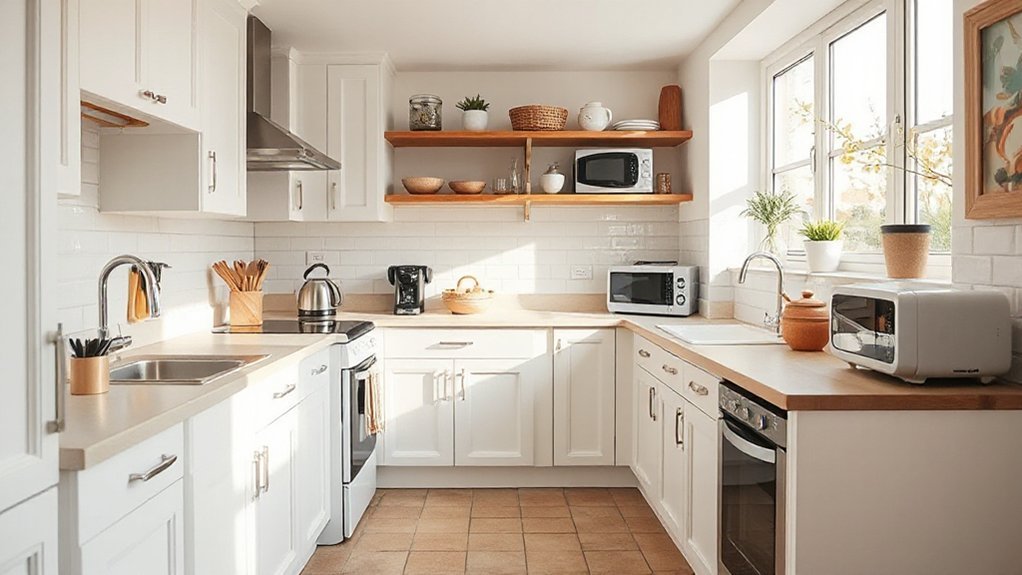
Small kitchens can feel brighter and more functional with a focused refresh. You can maximize space and value by quick, affordable updates.
Start with cabinet efficiency: replace doors or fit slim organizers inside existing kitchen cabinets to make every inch count. If doors are dated, consider inexpensive, light-toned laminates or paint for a brighter look.
For countertops, choose durable, affordable countertop materials like laminate or butcher‑block to swap in without a full remodel.
Add under‑cabinet lighting to boost visibility without a major install.
Seek magnetic strips for knives and metal rails for pots to free counter real estate.
Use open shelving sparingly to display essentials, keeping clutter low.
Refinish hardware; new handles can transform the whole cabinet appearance on a budget.
Budget Bathroom Upgrades That Feel Luxurious
Could you upgrade a small bathroom to feel luxurious without breaking the bank? Yes, you can, with thoughtful, affordable updates. Focus on three areas: fixtures, surfaces, and mood.
Choose luxury fixtures like a rainfall showerhead, a compact freestanding basin, and a slimline towel warmer to create a high-end feel without a full renovation. Replace dull hardware with brushed brass or matte black levers for instant polish.
For surfaces, repaint dated tiles with a moisture‑resistant paint or apply affordable tile decals to mimic subway or herringbone patterns.
Hit the spa vibe with spa-inspired accessories: soft-close cabinet doors, plush towels, and scented candles.
Finish with warm LED lighting and a fog-free mirror. Keep layouts simple, reuseable, and easy to clean for lasting impact.
Energy-Saving Upgrades on a Budget: Quick Wins
Saving energy in a tight space doesn’t have to cost a lot or require a full makeover. You can start with quick, practical wins that cut bills without major disruption.
Insulate gaps around doors and pipes with affordable draught excluders and foam, then seal outlets and attic hatch access.
Climate control gets easier with a smart thermostat—program it to lower heat when you’re out and at night, saving daily energy without sacrificing comfort.
Consider solar panels if your roof has good sun exposure; even a small array can offset heating and hot water use over time.
Replace incandescent bulbs with LEDs and add low-flow fixtures to reduce water heating needs.
Prioritize high-ROI updates and track your monthly energy use for momentum.
DIY Permits and UK Regulations: A Practical Guide
Managing DIY permits and UK regulations isn’t optional when you’re renovating a small property—it’s essential. Before you start, identify which aspects need approvals, as this saves costly rework. Check if your project requires building permits for structural changes, extensions, or new installations.
Even minor updates can trigger rules, so map each task to the right consent path. Familiarize yourself with zoning regulations that affect use, extensions, and occupancy; your planning authority can clarify permitted developments and restrictions.
Budget for permitting costs and possible professional input, like a chartered surveyor or planning consultant, to avoid delays. Keep records: notices, approvals, and compliance certificates.
Build a simple timeline and review schedule into your plan to stay on track and avoid fines or compulsory alterations.
Frequently Asked Questions
How Do Utility Tariffs Affect Small UK Renovation Budgets?
Utility costs rise with tariff fluctuations, tightening your renovation budget. You should track tariffs, lock in fixed rates where possible, and prioritise energy-efficient upgrades to mitigate spikes, offsetting higher project costs while maintaining comfort and budget discipline.
What Grants Exist for UK Energy-Efficient Upgrades?
You can access Renewable incentives and insulation grants to fund upgrades. Check local authorities and energy suppliers for schemes; apply early, compare eligibility, and target affordable measures like loft insulation and efficient boilers to stretch your budget.
Can VAT Relief Apply to Home Improvement Costs in the UK?
VAT exemptions can apply to certain home improvement costs, but renovation eligibility varies by project and supplier. You’ll want to verify with a tradesperson or HMRC, tallying receipts to claim VAT relief where applicable.
Which UK Insurers Cover DIY Renovation Work Variables?
Insurers vary, but you should check which policies cover DIY renovation variables, including tools, debris, and water damage. You’ll want explicit insurance coverage for renovations, understand exclusions, and compare quotes to keep costs manageable.
How Do Planning Constraints Affect Minor UK Home Projects?
Planning constraints require you to obtain building permits for certain works and schedule structural assessments where needed; you’ll stay compliant, avoid fines, and keep costs predictable for small UK projects.
Conclusion
You’ve got this: plan wisely, budget tightly, and act boldly. Plan wisely, budget tightly, act boldly. Prioritize ROI upgrades, prioritise ROI upgrades, and track every penny. Save with smart insulation, LED lighting, and clever storage. Save with cheap finishes, cheap finishes, and DIY updates. Improve flow, improve value, improve comfort. Improve flow, improve value, improve comfort. Stay compliant, stay organized, stay flexible. Stay compliant, stay organized, stay flexible. Your small UK home shines when you balance practicality with purpose.
About the Author