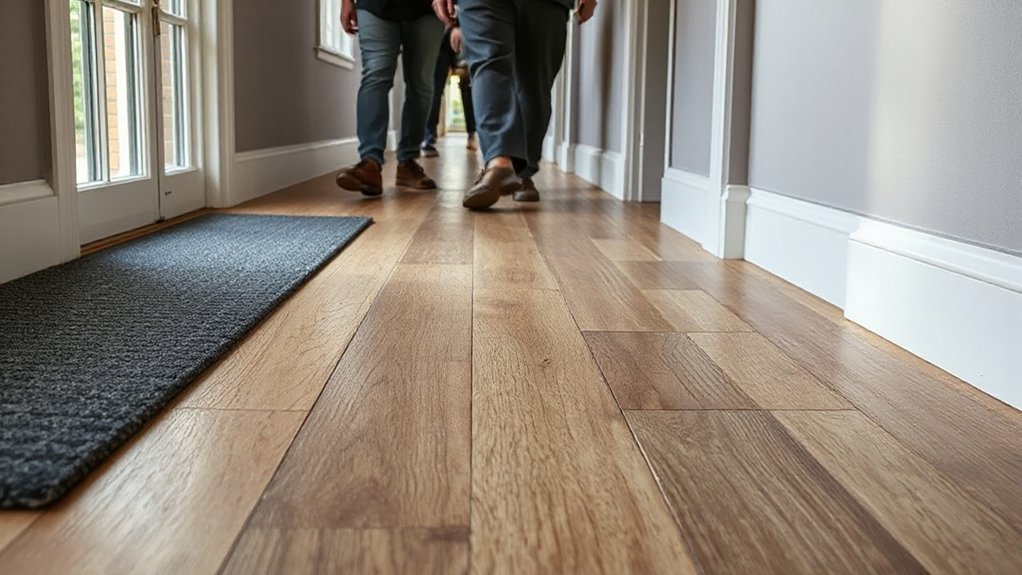
For UK homes with heavy footfall, you need flooring that combines durability, ease of maintenance, and safety. Consider options like high-quality engineered wood, polished concrete, or commercial-grade vinyl, which resist dents and wear while staying low-maintenance. Add slip-resistant tiles where moisture is common and choose eco-friendly materials with low lifecycle impacts to boost safety and sustainability. Proper installation and protective measures—plus regular cleaning—will extend life, but the best choice depends on how each space is used and lived in.
Key Criteria for Heavy-Use Flooring in UK Homes
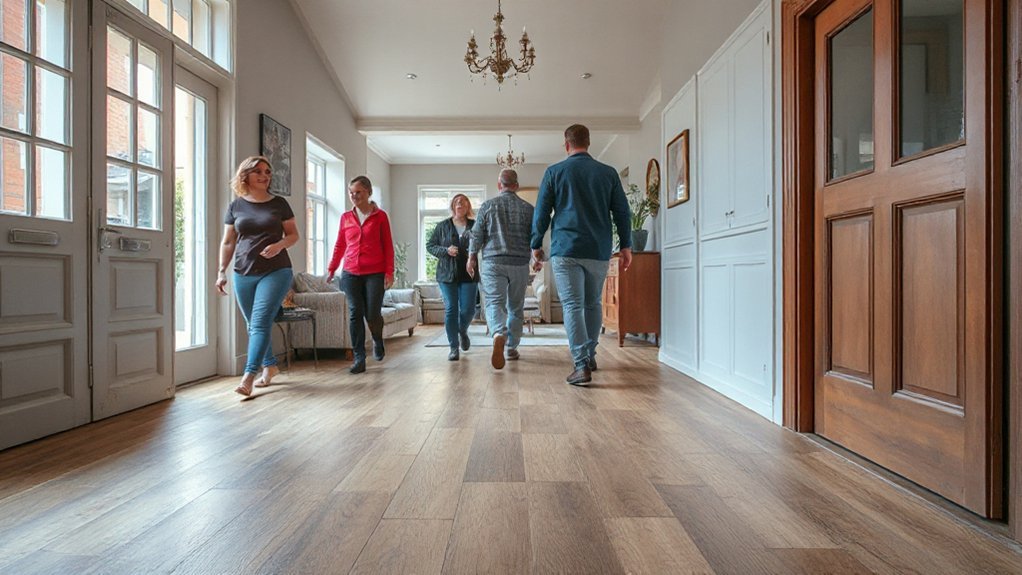
When selecting flooring for heavy foot traffic in UK homes, there are three core criteria to prioritize: durability, resilience, and maintenance needs. You evaluate material hardness, abrasion resistance, and load-bearing performance from independent tests and certifications, such as EN or ASTM standards.
Durability governs long-term wear patterns under daily activity, while resilience affects recovery from impact and temporary deformation. Maintenance needs determine cleaning frequency, finish reapplication, and resistance to staining or moisture ingress.
Eco-friendly options should be weighed alongside lifecycle impacts, including production energy, recyclability, and end-of-life disposal.
Aesthetic considerations must align with function, ensuring slip resistance and color stability without compromising performance. Documented performance data and testing regimes guide your selections toward evidence-based, practically verifiable outcomes.
Durable Flooring Options: An At-a-Glance Guide
Durable flooring options stand up to heavy footfall by prioritizing hardness, abrasion resistance, and load-bearing performance, all supported by independent tests and standards such as EN and ASTM. You’ll compare material classes by measurable wear ratings, indentation resistance, and dimensional stability under dynamic loads.
Concrete and polished stone offer exceptional hardness and long life, yet require proper finishing and maintenance to preserve slip resistance and acoustics. High-density engineered options deliver improved impact resistance with manageable installation costs.
Eco-friendly options focus on low-emission binders, recycled content, and modular replacements to reduce lifecycle waste. Acoustic solutions are essential in busy areas, using underlay, panel construction, or resilient cores to mitigate footsteps without sacrificing durability.
Informed choices balance performance data, environmental footprint, and serviceability for busy UK homes.
Laminate vs Vinyl in the UK: Durability, Look, and Maintenance
Laminate and vinyl flooring each offer practical options for UK homes, but they differ in durability, appearance, and maintenance needs.
In heavy-traffic areas, laminate typically provides higher stiffness and edge stability, resisting indentation from footwear, while vinyl offers superior water resistance and resilience under repeated moisture exposure.
Durability metrics show AC ratings for laminate and wear layers for vinyl; higher ratings correlate with longer lifespans under foot traffic.
Aesthetic outcomes hinge on surface realism: decorative patterns in both materials can mimic wood or stone, though vinyl often achieves more convincing depth and texture.
Maintenance demands diverge: laminate requires prompt moisture control and dry cleaning, whereas vinyl tolerates spills with wipe-clean ease.
Installation techniques, substrate preparation, and rated click-lock systems substantially influence long-term performance and ongoing appearance.
Tile Solutions for UK Moisture and Busy Hallways
In heavy-traffic UK hallways where moisture exposure is common, tile solutions offer a robust combination of moisture resistance and high wear performance. You evaluate porcelain and ceramic grades with low water absorption to optimize longevity in damp zones, and you prioritize skid resistance ratings suitable for frequent footfall.
Moisture resistance is influenced by grout choice, sealants, and proper surface preparation prior to tile installation; select epoxy or cementitious grouts for enhanced water sealing in wet entries.
Consider rectified edges and consistent sizing to minimize lippage, reducing trip risk. For busy corridors, opt for large-format tiles to reduce grout lines, improving cleaning efficiency and wear uniformity.
Ensure substrate flatness meets manufacturer tolerances to prevent cracking, and verify compatible underlayment to support tile installation in moisture-prone settings.
Engineered Wood for Hallways and Living Areas
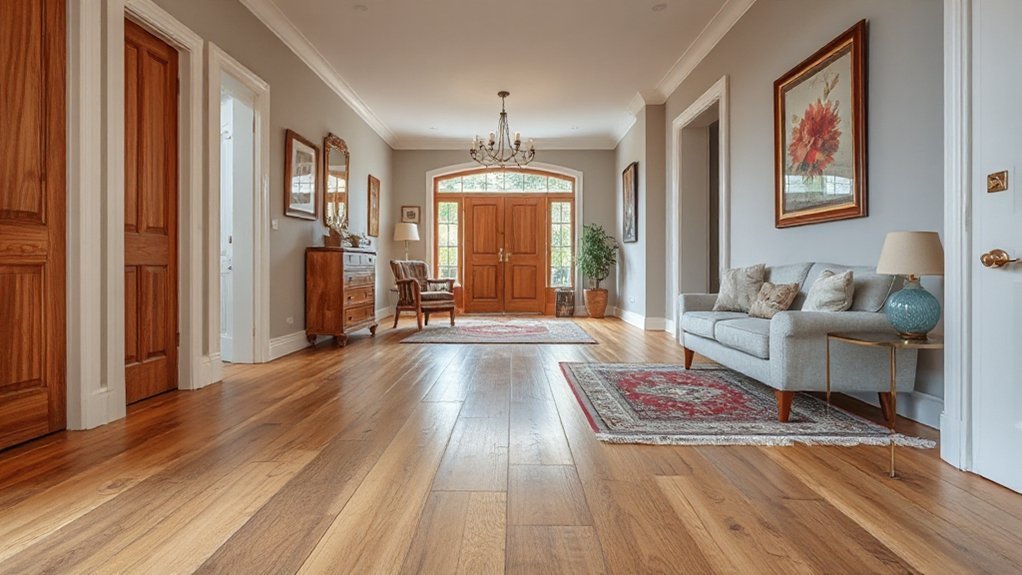
Engineered wood balances aesthetics and performance for hallways and living areas, delivering a stable core and a top veneer that resists dents and wear under heavy foot traffic. You gain dimensional stability from multiple layers, reducing expansion and contraction with indoor climate changes.
In high-traffic zones, wear layers vary in thickness, influencing long-term durability; thicker veneers offer improved resilience, while sound substrates minimize squeaks and deflection. You should consider board format and locking systems that promote uniform wear and easier maintenance.
Sustainable sourcing informs material choices without compromising performance, while engineered constructions can be engineered for moisture tolerance in living areas adjacent to kitchens.
The result delivers aesthetic versatility—warmth, tone, and grain continuity—paired with measurable durability, precise tolerances, and consistent finish quality suitable for busy UK hallways and living spaces.
Underlays, Subfloor Prep, and Installation That Last
A robust underlay and meticulous subfloor preparation are essential for long-lasting flooring in high-traffic UK homes. Choosing the right underlayment, ensuring a flat, clean substrate, and verifying moisture levels prevents telegraphing, squeaks, and premature wear.
You’ll select underlay insulation to reduce thermal bridging and acoustic transmission, matching the installation environment and flooring type. Assess substrate flatness with a 2 m straightedge; pursue subfloor leveling to ≤3 mm deviation per section.
Moisture testing must meet manufacturer thresholds; use appropriate moisture barriers beneath moisture-sensitive layers. Secure throughout with proper fasteners or adhesive systems, maintaining continuous coverage to avoid gaps.
For plank or tile installations, follow precise expansion gaps and incorporating prefinished acclimation. Thorough air and dust control minimizes contamination, ensuring adhesive bonding and long-term stability.
Budgeting Durable Flooring Without Compromise
To budget durable flooring effectively, start with a clear cost model that combines material durability, installation complexity, and lifecycle performance, rather than chasing the lowest upfront price.
You should quantify expected replacement intervals, maintenance needs, and energy costs, then map these to total cost of ownership over 10–20 years.
Prioritize materials with proven abrasion resistance, dimensional stability, and moisture tolerance in high-traffic UK settings.
Compare installation labor, subfloor preparation, and likely downtime to avoid hidden charges.
Use cost-effective choices that meet performance criteria without overspecifying; document trade-offs between initial cost and long-term value.
Balance aesthetic considerations, durability data, and warranty terms to select options that minimize lifecycle risk while preserving design intent.
Real-World Pros, Cons, and Care by Material
Real-world pros, cons, and care vary by material, so understanding how each option performs on site helps you choose wisely. You’ll assess durability, maintenance, and wear patterns under heavy footfall, prioritizing data-driven performance.
Solid hardwood offers timeless aesthetics but may dent; engineered variants improve stability and moisture resistance, yet still require periodic refinishing.
Luxury vinyl plank delivers high impact resistance and easy upkeep, while laminate provides affordable, scratch-resistant options but can be vulnerable to water intrusion.
Stone and ceramic tiles excel in longevity and cleaning ease but may be hard underfoot and require subfloor preparation.
Sustainable materials reduce environmental impact but vary in hardness and maintenance needs.
Acoustic insulation performance matters for comfort, and installation quality influences long-term outcomes.
Prioritize material-specific care guides to preserve surface integrity.
Room-by-Room UK Flooring Recommendations
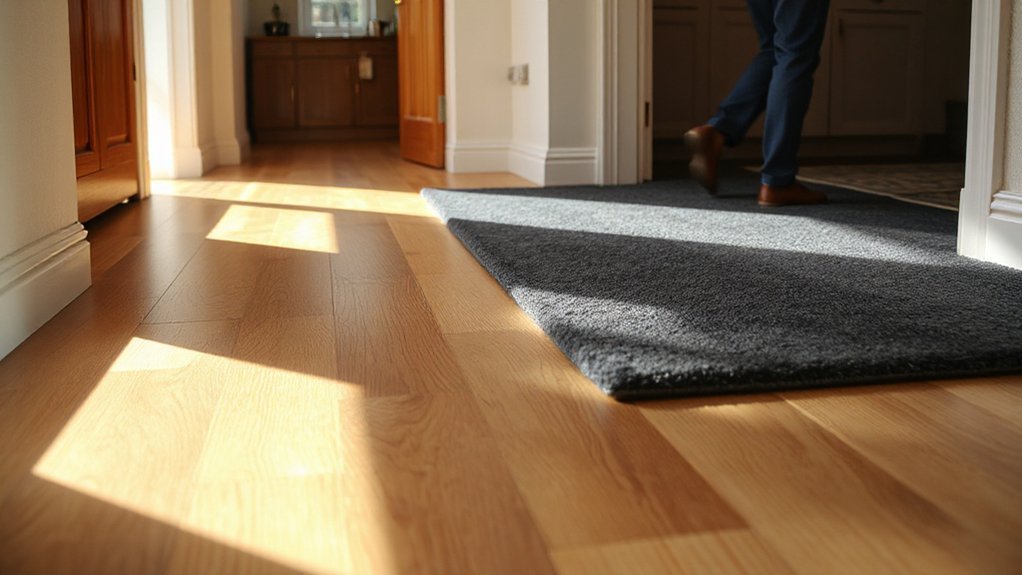
Room-by-room, UK flooring choices should align with expected traffic, moisture exposure, and cleaning routines for each space.
For entryways and hallways, opt for durable surfaces with high wear resistance and strong moisture tolerance, prioritizing seamless joints to minimize dirt accumulation.
Living areas benefit from stable, low-maintenance options that resist denting while supporting comfortable acoustics and warmth, balancing flooring installation considerations with aesthetic coherence.
Kitchens demand moisture-impervious, easy-to-clean substrates, plus water resistance at junctions and thresholds.
Bathrooms require non-slip, water-rated finishes and reliable sealing methods to prevent damage from humidity fluctuations.
Bedrooms can favor quieter, softer underfoot options that maintain long-term stability.
Quick Maintenance Habits to Extend Your Floors’ Life
Regular cleaning and proactive protection form the backbone of durable flooring in high-traffic UK homes. You should implement disciplined routines to minimize wear and preserve finish integrity.
Establish daily debris removal with a dry method before cleaning, reducing abrasive grit that accelerates surface damage. Use cleaning techniques appropriate to your flooring type—e.g., low-velocity damp mopping for hard surfaces, or microfiber systems for textiles—following manufacturer guidance to avoid residue buildup.
Schedule periodic deep cleans at intervals dictated by traffic levels and environment.
Apply protective measures such as entry mats, felt pads, and furniture coasters to limit concentrated pressure points.
For stain removal, address spills promptly using a substrate-compatible solvent and blotting method, avoiding vigorous scrubbing.
Document maintenance steps and monitor finish wear to adjust routines proactively.
Frequently Asked Questions
How Often Should Heavy-Traffic Floors Be Professionally Inspected?
You should arrange professional inspections every 12 months for heavy-traffic floors, and sooner if you notice rapid wear or damage. This Inspection frequency supports proactive maintenance, and you should coordinate Floor cleaning around inspection schedules to optimize results.
Which Finishes Resist Scuffing Best in UK Climates?
Scratch resistant coatings top your choices, and high traffic finishes follow, as you examine wear-testing results. You’ll prioritize polyurethane and ceramic-based options, noting abrasion resistance, climate stability, and maintenance demands for UK environments.
Can Pets Affect Laminate Durability Differently Than Vinyl?
Yes, pets can affect laminate durability differently than vinyl; claws and wear absorbency matter. Investigate theory: laminate tolerates moisture poorly and scratches more, while vinyl resists scratches better. Pet claws accelerate wear; flooring maintenance becomes essential for both.
Are There Eco-Friendly Heavy-Use Flooring Options UK Homes Prefer?
Yes, you can choose eco friendly materials and sustainable options; in UK homes, demand favors wear-resistant, low-VOC products like recycled-content composites, certified woods, and natural linoleum, paired with durable underlays to minimize environmental impact and maintenance.
What Are Signs a Floor Needs Early Replacement or Refinish?
Cracking, squeaking, and visible wear signal flooring lifespan is shortening; delaminating edges or cupping indicate moisture damage and wear. You’ll need refinishing or replacement, applying maintenance tips like sealing, vibration checks, and timely professional assessment to preserve performance.
Conclusion
In the end, you’ll choose not just a floor, but a safeguard for each step you take. The evidence points to durability, grip, and low maintenance as non-negotiables in busy UK homes. Yet the final decision hinges on your exact traffic patterns, moisture exposure, and lifestyle. Stay critical: measure expectations, compare warranties, and test under real-world use. When you determine the right balance, your floors won’t just endure—they’ll quietly outperform, day after day.
About the Author