Picture your drafty home shrinking heat losses as you tighten every seam. In older UK properties, the biggest EPC gains come from solid insulation—loft, walls, and floors—paired with an efficient boiler and smart controls. You’ll want a clear plan: assess current ratings, target high-impact, cost-effective upgrades, and consider low-carbon options like heat pumps where feasible. Curious how to sequence improvements for maximum impact and long-term savings, while staying within budget and timelines? Let’s map it out.
Assess Your EPC Baseline and Targets
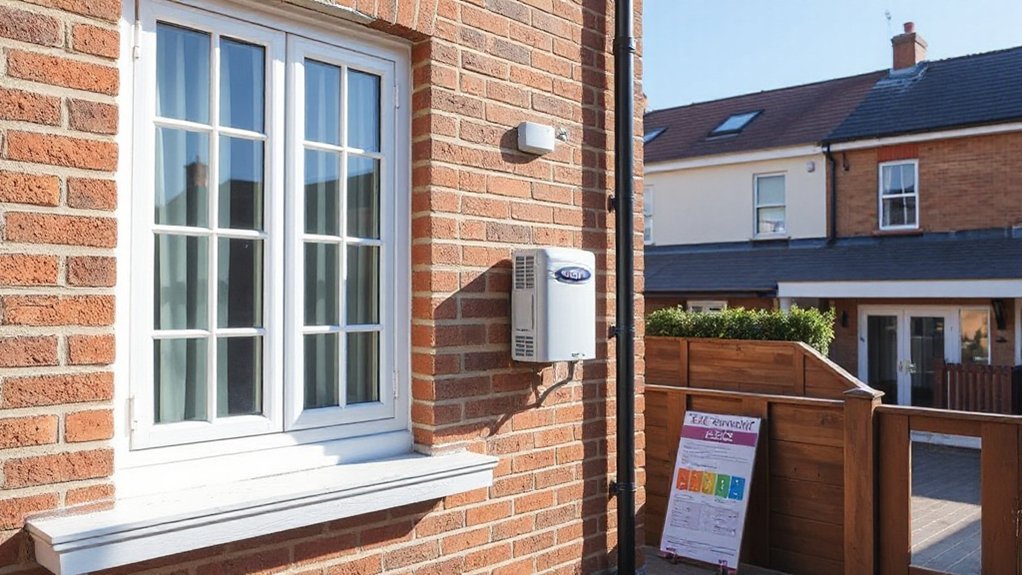
To start, determine your current EPC rating and what you’re aiming for. You’ll mostly map your existing energy use, fabric performance, and systems you already have. Gather recent bills, insulation levels, boiler type, and windows, then benchmark against typical targets for your property type.
Set a realistic, data-driven goal—ideally within one or two ratings steps, aligned with your budget and tenancy plans.
Identify clear milestones: airtightness improvement, heat loss reduction, and responsiveness of heating controls.
Consider Renewable sources as potential uplift, but verify local grants and feasibility for your home.
Include ventilation systems’ effectiveness, since appreciated airflow impacts comfort and energy use.
Track progress quarterly, adjusting strategies if weather patterns or occupancy shift, ensuring momentum toward the target without overcommitting resources.
Prioritize Upgrades by Impact and Cost
We start by prioritising upgrades that deliver the biggest impact for your property, rather than chasing the cheapest option.
Use data to map potential energy savings to upfront costs, so you can spot rapid ROI upgrades that pay back quickly.
Then plot a tiered pathway—core measures first, followed by enhancements—that steadily improves your EPC while keeping spend sensible.
Prioritize Impact Over Cost
When upgrading an older UK property, focus first on impact rather than price tag: the goal is to maximize energy savings and EPC improvement per pound spent. You’ll compare measures by likely annual energy savings and the resulting EPC uplift, not just upfront cost.
Target high-mitrate options first: solid wall insulation, efficient boilers, and high-performance windows where appropriate. Prioritize installations with proven performance data, avoiding gimmicks that underdeliver.
Consider maintenance burdens and compatibility with existing systems to minimize disruption and long-term costs. Balance efficiency gains with historical preservation and aesthetic considerations, ensuring retrofits respect the building’s character.
Document expected payback windows and wider carbon benefits to guide decisions, then iterate based on real-world performance rather than hype. Keep a clear record to optimize future upgrades.
Rapid ROI Upgrades
Rapid ROI upgrades focus on high-impact measures that deliver quick, tangible savings, balancing both effect and cost. You’ll prioritize actions that yield noticeable EPC improvements without delaying project timelines.
Target high-traffic, low-friction gains first, such as improving heating controls, sealing drafts, and upgrading to an efficient boiler with a solid payback period.
Insulation on lofts and accessible walls often delivers strong thermal return if implemented where it’s most cost-effective.
Consider heat-recovery ventilation to reduce infiltration losses in occupied spaces.
Track installed measures by cost per percentage point of EPC uplift to compare options objectively.
Respect historical preservation and aesthetic considerations, ensuring upgrades blend with the property’s character.
Document savings with before/after analyses to support future investment decisions and ongoing performance monitoring.
Tiered Efficiency Pathways
Tiered Efficiency Pathways: prioritize upgrades by impact and cost to maximize EPC improvements with clear tradeoffs. You’ll map options by expected kilowatt-hour reductions, installed costs, and payback windows, then sequence work from high impact, low disruption projects to more substantial retrofits.
Begin with retrofit choices that yield the steepest efficiency gains per pound—e.g., improved insulation, airtightness, and efficient boilers or heat pumps—while considering Historical preservation and aesthetic considerations.
Next, layer in mid-range measures like advanced controls, smarter lighting, and window upgrades where cost-per-savings remains favorable.
Reserve long-tail improvements for later, when thresholds are reached and budget allows.
Track measured performance, document tradeoffs, and stay transparent with occupants to maintain trust and maximize overall EPC uplift.
Insulation Upgrades: Attic, Walls, and Ducts
Insulation upgrades—whether in the attic, walls, or ducts—deliver solid, data-backed gains for EPC ratings in older UK homes. You’ll see the biggest results when you target the attic, wall cavities, and duct runs with well‑installed materials and tight detailing.
Attic ventilation matters; you want airflow that prevents moisture buildup without letting heat escape.
In wall cavities, don’t rely on thin fills—opt for proven insulation thickness and correct vapour barriers to reduce thermal bridges.
Duct insulation minimizes losses that you’d otherwise feel in heating costs and comfort.
Measured improvements come from standardized testing and real‑world audits, not guesses.
Plan upgrades with a sensible budget, focusing on continuous performance throughout the building envelope while avoiding over‑densification that spreads heat unevenly.
Upgrade Heating: Efficient Boilers and Controls
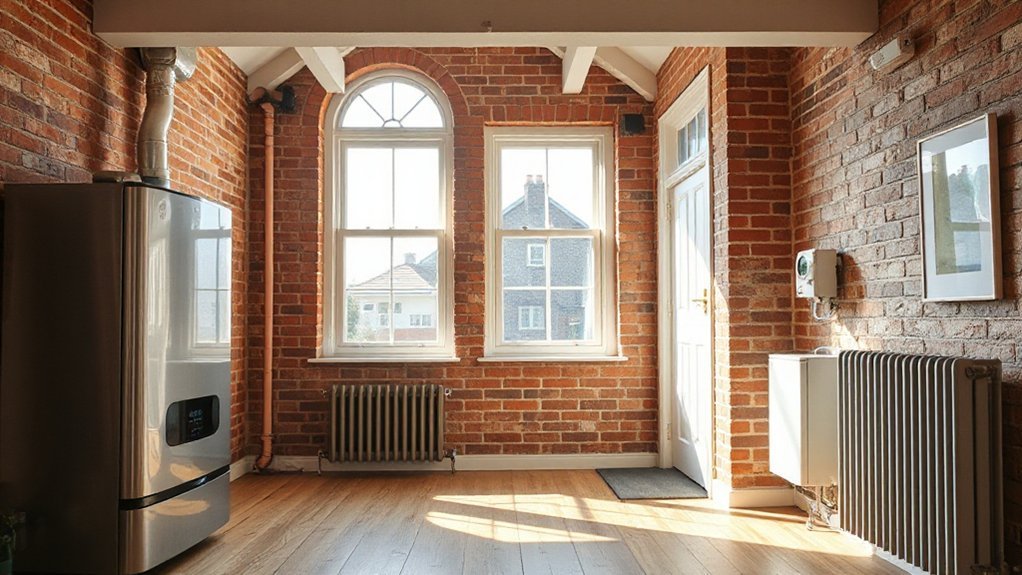
Upgrading heating with efficient boilers and smart controls can deliver real, measurable gains in EPC ratings for older UK homes. You’ll target heat loss with modern condensing boilers, sized to match demand, and paired with controls that minimize waste.
Real-world data show that high-efficiency boilers can cut fuel use by 15–30% compared with older models, while weather-compensation and smart thermostats reduce unnecessary cycling.
Focus on correct radiator placement to guarantee even room heat and prevent cold spots, optimizing circulation and reducing boiler load.
Thermostat programming matters: set back periods during unoccupied hours, but avoid aggressive temperature swings that raise peak demand.
Choose controls that integrate with boiler modulation and heating zones, enabling consistent comfort without overspending.
Monitor energy bills to confirm performance improvements over time.
Smart, Zoned, Low-Carbon Heating Options
Smart heating zoning lets you tailor comfort and costs by room or zone, using data-driven controls to turn heaters on only where needed.
Low-carbon system choices, like heat pumps or hybrids, can cut emissions while meeting demand with measured efficiency.
Pair this with efficient heat distribution to minimize waste and maximize EPC gains.
Smart Heating Zoning
Smart heating zoning lets you heat only the rooms you use, reducing energy waste and cutting bills. You’ll gain precise control with zoned thermostats, so living spaces heat when needed and stay cooler when unused.
Implementing zoning requires careful layout: map current radiators, pipes, and controls, then assign zones by usage and occupancy. Thermostat integration is key—connect room sensors to a central hub or smart thermostat so temperatures respond to real-time data.
Use clear, verifiable zoning algorithms to set daily schedules that align with occupancy patterns and weather forecasts. Expect energy savings to scale with the number of viable zones and boiler compatibility.
Start small with two or three zones, expanding only after you verify comfort and reliability, avoiding unnecessary system complexity.
Low-Carbon System Choices
Low-carbon heating options let you reduce emissions and bills without sacrificing comfort. You’ll weigh smart controls, zoned approaches, and low-carbon fuels to fit your property profile.
Smart systems optimize operation and can cut energy use by 10–30% with proper setup, while zoning concentrates heat where it’s needed most, improving comfort and efficiency.
Choose low-carbon heating options that pair well with your existing boiler or heat pump, aiming for high seasonal performance and stability in fluctuating UK grids.
Renewable integration matters: coupling solar or air-source heat pumps with storage can smooth demand and maximize self-consumption.
Policy incentives, such as grants or tariff relief, can improve payback and accelerate adoption, especially when your retrofit aligns with EPC targets and grid readiness.
Prioritize reliable hardware, clear commissioning, and measurable post-install savings.
Efficient Heat Distribution
Efficient heat distribution ties the benefits of smart controls, zoning, and low-carbon options directly to how you live in your home. You’ll reduce energy waste by sending heat where it’s needed, not where it’s easiest to place a radiator.
Smart thermostats learn rhythms, optimizing when rooms heat up and shut down, which lowers peak demand and cuts bills.
Zoning lets you tailor temperatures to different living areas, so you don’t heat unused spaces.
Low-carbon options, like heat pumps, work with thermal mass to stabilize temperatures between cycles, while heat exchangers maximize efficiency in recapture and transfer.
Consider flow rates, pipe insulation, and properly balanced circuits to avoid short-cycling.
A well-designed system improves comfort, resilience, and EPC performance.
Harness Solar and Low-Impact Alternatives
Are solar and other low-impact options worth the investment for an older UK home? You’ll assess solar harnessing and related measures by cost, efficiency, and disruption.
In practice, panels and inverters deliver steady daytime output, while modern storage can smooth demand, boosting the EPC by reducing grid reliance.
Low impact alternatives—air-source heat pumps, improved insulation, and daylighting—often compete on upfront price and running costs; lifecycle analyses help you compare payback periods.
Your decision hinges on roof orientation, shading, and existing heating system compatibility.
Consider government incentives, maintenance needs, and warranty coverage.
Data show modest gains for modestly insulated older homes, with larger improvements where several measures align.
Prioritize high-impact, low-disruption upgrades that fit your property’s structure and budget.
Frequently Asked Questions
How Long Does a Typical EPC Improvement Project Take to Complete?
A typical EPC improvement project takes 2–6 weeks, depending on scope. You’ll start with an energy efficiency assessment, then renovations, insulation, and system upgrades. Adjust timelines for permit approvals, weather, and supplier lead times in your renovation timeline.
What Grants or Funding Are Available for EPC Upgrades?
Grant eligibility varies, and funding options exist, seriously. You’ll likely qualify for government schemes, local incentives, and lender-supported programs. You’ll compare grants, apply promptly, and optimize costs—because every pound saved accelerates your EPC uplift, ironically.
Will Upgrading Improve Property Value or Rental Income?
Upgrading typically boosts property valuation and Rental potential, but gains vary by scheme and location. You’ll see clearer value when energy savings translate to lower bills, appealing to tenants and influencing resale or refinance assessments. Data supports gradual, targeted improvements.
Are There Any Disruption Considerations for Older Homes During Work?
Yes—disruption matters: expect noise, dust, and access limits, but good planning minimizes impact. You’ll protect structural integrity and respect historical preservation, coordinating works to keep vibrations and weight loads within safe, documented limits. Plan, monitor, adapt.
How Often Should EPC Assessments Be Renewed After Upgrades?
You should renew your EPC assessment every 10 years, or sooner if major upgrades occur. After upgrades, expect a Property inspection and potential certification renewal to reflect new efficiencies and updated regulations, ensuring ongoing compliance and accurate ratings.
Conclusion
Ready to act? You’ve got a clear path: assess baseline, target high-impact, low-cost upgrades first, and layer in insulation (loft, walls, ducts) with an efficient boiler and smart controls. Add zoning, airtightness, and low-carbon options, then harness solar with storage. It’s practical, data-driven, and long-term cost-saving. Are you ready to implement these steps and boost your EPC rating while slashing bills? Start with one upgrade today and build momentum.
About the Author