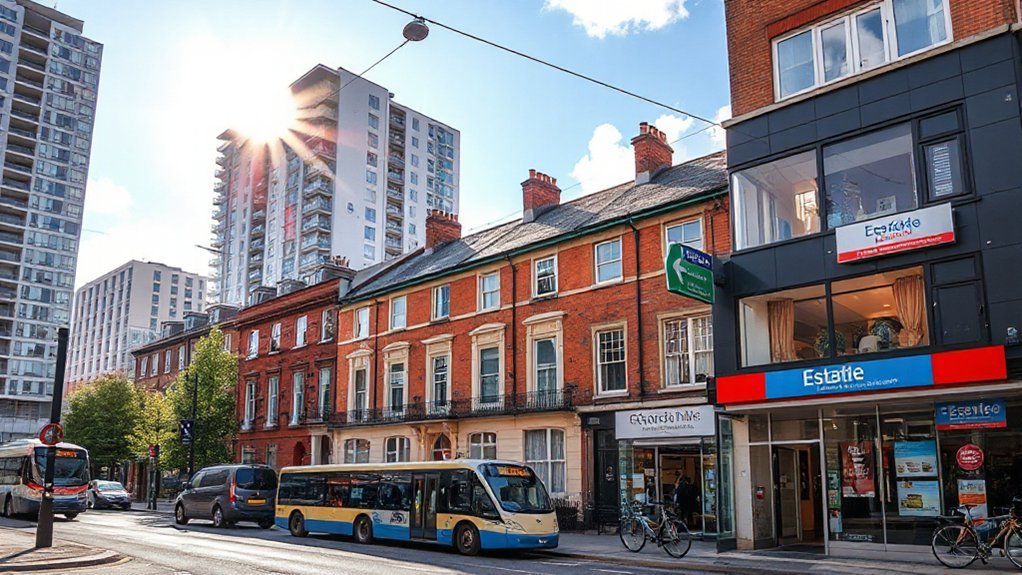
In 2026, Cardiff’s housing market shows steady demand driven by job growth, urban renewal, and strong transport links. You’ll find resilient activity in modernized period homes and multi-bedroom units in well-connected neighborhoods with amenities and green spaces. Prices vary by district, with inner areas typically pricier and lender criteria tighter. So, you’ll need solid income and deposits, plus a clear plan for post-purchase costs—and a view toward long-term growth sparked by infrastructure and regeneration projects.
What Drives Cardiff’s Housing Market in 2026

Demand for housing in Cardiff in 2026 is driven by its strong job market, growing tech and public-sector sectors, and attractive quality-of-life factors that sustain steady buyer and renter demand. You’ll see price resilience amid limited new supply, with turnover concentrated in core districts.
Luxury apartments in city-center pockets command premium rents, reflecting high demand from professionals and international buyers seeking convenience and amenities. Historic districts contribute value stability, as heritage architecture supports long-term capital preservation and distinctive living experiences.
Market activity remains skewed toward multi-bedroom units and modernized period homes, while mortgage affordability tightens purchase timelines for first-time buyers. Vacancy rates stay low, aided by steady migration and ongoing public-sector hiring, reinforcing Cardiff’s position as a resilient regional hub for 2026.
Understanding the Cardiff Mortgage Landscape in 2026
In 2026, Cardiff’s mortgage landscape hinges on tighter affordability, higher rates, and a sustained shift toward fixed-rate products as borrowers seek payment stability amid evolving lender criteria.
You’ll see lenders prioritizing debt-service ratios and stress-testing, with rate locks and fee structures tightening for risk management. Fixed-rate mortgages dominate new borrowing, offering predictable budgets even as wholesale rates fluctuate.
Downpayment requirements have stiffened modestly, yet programs targeting first-time buyers persist, leveraging local incentives and guarantor options.
Mortgage approvals increasingly reflect borrower stability and cash flow, not just property value, making neighborhood amenities visible in underwriting through verified incomes and living costs.
Historical property trends emphasize resilience in well-connected districts, where price growth aligns with stable incomes and projected demand.
Where Buyers Are Most Active in Cardiff Right Now
Across Cardiff, buyers are gravitating toward well-connected, amenity-rich neighborhoods where transport links and local services boost resale appeal, with activity concentrated around central and north-eastern corridors.
In these zones, transaction velocity remains elevated, driven by steady demand from first-time buyers and commuters alike.
Market data show higher bidding activity on listings with walkable access to buses, rail nodes, and shopping clusters, reducing days-on-market versus peripheral areas.
Urban regeneration initiatives are sustaining momentum, with new housing, parks, and serviced plots attracting quick offers and competitive prices.
Cultural hotspots near universities and cultural venues continue to attract investment-grade interest, supporting rental demand and owner-occupier turnover.
Cardiff House Price Trends in 2026: What’s Up and What’s Down
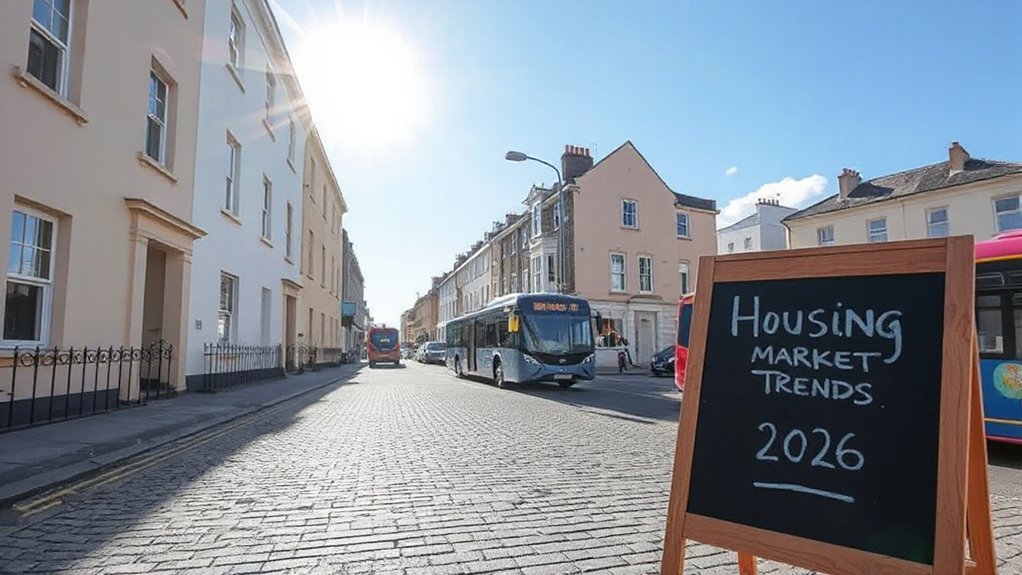
You’ll want to watch Price Movement Signals as they hint at where Cardiff prices are headed this year.
Demand Shifting Dynamics will clue you into who’s driving the market and when buyers pull back or step in.
Market Timing Cues tie these trends together, helping you gauge entry or exit points with clarity and speed.
Price Movement Signals
Prices in Cardiff are showing a mixed signals pattern for 2026, with modest price gains in outer districts offset by softening in some inner-city pockets. You’ll notice price movement signals pointing to uneven momentum across submarkets, not a uniform cycle.
Year-to-date data indicate subtle quarterly gains in suburban corridors, while central pockets lag, suggesting a bifurcated trend rather than a single trajectory.
Market fluctuations appear driven by inventory shifts, with higher seller activity in outer areas and cautious bidding in core zones.
For buyers, this implies selective entry points and timing opportunities, rather than broad concessions.
Informed investment strategies emphasize risk-adjusted returns, focusing on property type resilience, rental demand, and neighborhood fundamentals.
Maintain discipline, verify data, and align actions with your tolerance for velocity and pricing volatility.
Demand Shifting Dynamics
Demand shifts in Cardiff’s 2026 price landscape hinge on how buyers and renters respond to evolving inventory and affordability. You’ll see demand pivot as urban renewal projects reshape neighborhoods, lifting appeal where new amenities and transit links reduce total ownership costs.
In central districts, cultural influences drive premium segments, with buyers prioritizing historic character and modern efficiency together, even as rental markets loosen or tighten by submarket. Price sensitivity grows among first-time buyers, while investors chase yield in pockets near redevelopment sites.
Supply responses—new-build completions, conversions, and repurposing—generally outpace historic demand volatility, yet affordability bottlenecks persist for mortgage access and deposit requirements. Regions with diversified housing mixes retain steadier momentum, underscoring a nuanced, data-driven landscape rather than a single trend.
Urban renewal reinforces resilience; cultural influences shape value creation across Cardiff’s 2026 market.
Market Timing Cues
Market timing in Cardiff’s 2026 price cycle hinges on how quickly buyers react to shifting inventory, financing conditions, and planned infrastructure. You’ll see price momentum hinge on new listings relative to demand, with small but meaningful swings in days-on-market signaling shifts in buyer urgency.
Mortgage rates and lending criteria remain key levers; even modest rate moves can tilt quarterly成交 volumes.
Neighborhood amenities influence sprint-buy opportunities, especially near transit, schools, and retail clusters, where demand concentrates and price growth accelerates.
Property staging matters more in slower weeks, converting virtual interest into offers and reducing time-to-contract.
Watch price-per-square-foot baselines across submarkets; pockets with active redevelopment or better amenity access tend to lead.
Timing cues emerge from inventory velocity, funding availability, and project timelines, not single indicators.
Affordability by Cardiff Neighborhood: Who Can Buy Where
Neighborhood price ranges show wide gaps you’ll feel across Cardiff, shaping who can buy in each ward. Borrowing power by area varies with local income and mortgage terms, so affordability isn’t uniform from street to street.
Local market hurdles—deposit requirements, lender criteria, and typologies—will influence where you can realistically purchase.
Neighborhood Price Ranges
What price ranges define affordability across Cardiff’s neighborhoods, and who can buy where? In 2026, entry points cluster around mid-range terraces and compact flats, with average purchase prices around £280k–£420k in inner districts and £420k–£650k in outer suburbs.
You’ll find luxury upgrades concentrated in high-demand streets, where the premium adds 15–25% for modern amenities, energy efficiency, and secured parking.
For buyers seeking historic architecture, expect shoreside townhouses and period villas to command £650k–£1.1m, depending on condition and listed status.
Mortgage-ready buyers typically aim for gross incomes around £60k–£90k to secure deposits of 10–25%.
Market velocity varies by neighborhood, with faster sales in hotspots and slower pivots in quiet residential belts, signaling relative affordability tiers and demand pockets.
Borrowing Power by Area
Despite variations by area, borrowing power in Cardiff tracks closely with local price tiers: inner districts demand higher deposits and incomes, while outer suburbs offer more accessible entry points. You’ll notice affordability narrowing as you move inward, with mortgage qualifiers tightening in high-demand sectors and larger deposits often required for competitive offers.
In mid-range neighborhoods, buyers with stable income and 5–15% equity can still access typical two-bedroom flats or modest houses, especially if they leverage favorable loan-to-value terms.
Outer zones show clearer capacity for first-time buyers, aided by lower purchase prices and potential grants. Across these areas, property renovation aspirations and neighborhood amenities influence how far your budget can stretch, shaping ideal targets and renovation-forward strategies that preserve value while meeting lifestyle needs.
Local Market Hurdles
Affordability varies by Cardiff neighborhood due to price tiers, income thresholds, and loan terms, so buyers should map access to averages in each area. You’ll see distinct midrange and premium pockets where monthly payments crest beyond typical income levels, even with favorable rates.
In practice, property tax assessments and school tax burdens shape long-term costs, influencing sticker price tolerance more than upfront fees alone. Neighborhood safety and crime reporting correlate with price stability, affecting resale certainty and loan underwriting.
Lenders scrutinize debt-to-income ratios against local rent equivalents to determine qualifying payments, limiting access for first-time buyers in higher-cost zones. Conversely, affordable corridors often align with stronger caution signals from insurers and appraisers, which can tighten financing.
Stay metrics-driven: compare per-neighborhood price-to-income, tax burdens, and crime-adjusted appreciation trends.
Buy-To-Let Corridors in Cardiff: Best Value by Yield and Growth
Buy-to-let corridors in Cardiff show clear value opportunities when you focus on yield and growth potential across key neighborhoods. You’ll see the strongest returns where rental demand aligns with employment hubs, universities, and transport links.
In this framework, buy to let corridors delivering above-market rental yield typically cluster near student-focused areas and commuter corridors, then trend upward as regeneration programs mature.
Quantitative signals point to 4–6% gross yields in stable submarkets, with annual rent growth per corridor outpacing citywide averages.
Growth prospects rise where councils authorize density increases, enabling optimized asset classes—flats near stations, affordable family units near campuses, and micro-lets within mixed-use zones.
Track occupancy consistency, lease renewals, and maintenance costs to lock in steady, scalable cash flow.
City Centre vs Suburbs: Trade-Offs for Cardiff Buyers

City Centre living offers higher rental yields and faster tenant turnover, but comes with steeper purchase prices and typically higher management costs.
Suburbs deliver steadier cash flow, larger spaces, and lower entry points, though with longer vacancy cycles.
In Cardiff, data show premium yields clustered around central ADRs, yet cap rates compress as demand shifts toward urban renewal projects and transportation access.
Suburbs offer lower entry prices, larger units, and longer tenant retention, which smooths quarterly cash flow but can extend time to lease in slower markets.
Consider urban renewal initiatives and green spaces as value drivers: centres redevelop brownfield sites to attract long-term tenants, while green spaces boost desirability and occupancy stability.
Balance yields with vacancy risk and capital expenditure for a precise investment thesis.
Key Neighborhoods to Watch in 2026
Among Cardiff’s evolving neighborhoods, the 2026 playbook centers on areas with transport connectivity, brownfield redevelopment, and green-space access driving occupancies and rent growth. You’ll notice clusters near major transit hubs showing higher turnover and tighter supply, with premium rents tied to smooth commutes.
Brownfield sites converted to mixed use attract new residents seeking urban cohesion without sacrificing space. Within walkable cores, planned green spaces and accessible parks bolster occupancy metrics, while proximity to urban parks sustains demand during off-peak seasons.
Historic landmarks add cultural value, supporting price resilience and longer tenancy durations. Expect steady rent growth where redevelopment aligns with public sphere investments and school catchments remain strong.
Focus on neighborhoods offering transit access, redevelopment momentum, and green-space access to identify the strongest upside in 2026.
Financing Tactics for First-Time Buyers in Cardiff
In Cardiff, first-time buyers should weigh grant availability, current mortgage options, and practical savings plans to speed up entry into the market.
Data shows grants and lender programs can lower upfront costs while choice of fixed vs. variable rates affects monthly payments over time.
We’ll compare deposit strategies, eligibility criteria, and market timing to outline a clear path forward.
First-Time Buyer Grants
First-time buyers in Cardiff can leverage local grants and government-backed schemes to reduce upfront costs and secure more favorable mortgage terms.
In 2026, grant programs are targeted toward low- to moderate-income buyers, with caps on purchase price and house type that impact eligibility and net affordability. You’ll see data-driven access signals, approval timelines, and regional variation across neighborhoods, guiding decision depth.
1) Verify eligibility early with the local authority and lender.
2) Compare grant amounts against purchase price and closing costs.
3) Align home renovation needs with grant scope to maximize value.
4) Assess neighborhood safety indicators alongside price momentum for long-term upside.
Mortgage Options In Cardiff
Could you compare mortgage options in Cardiff using data-driven, market-focused terms to guide first-time buyers?
In Cardiff, fixed-rate deals at 2–3% are common for 25-year terms, with trackers hovering near Bank of England base plus a margin.
Expect initial costs: arrangement fees, valuation, and lender legal work, averaging 0.5–1.5% of the loan.
Consider a repayment mortgage to stabilize payments against rate volatility, or a hybrid to balance risk and flexibility.
Sunken costs include property tax estimates and potential Home inspection contingencies that protect value.
Compare LTVs up to 90% for first-time buyers, but lower LTVs reduce rates.
Look for cashback or lender incentives, but weigh long-term cost.
Guarantee affordability tests reflect joined household income and ongoing maintenance budgeting.
Saving For Deposit Strategies
Saving for a deposit in Cardiff hinges on disciplined, data‑driven tactics: target a deposit of at least 5–10% for credibility, but 15–20% often reveals better mortgage terms and avoids LTV penalties. You should prioritize efficient saving and strategic planning to win competitive markets like luxury apartments and historic districts.
- Model monthly savings targets based on income; automate transfers to high‑interest accounts.
- Leverage government schemes and first‑time buyer incentives where eligible.
- Diversify deposits across asset types while maintaining liquidity for closing costs.
- Invest in market intelligence—track yields, prices per square foot, and lender criteria.
This approach keeps you competitive in Cardiff’s evolving, data‑driven landscape, supporting decisions in luxury apartments and historic districts.
What Lenders Look For in Cardiff Purchases in 2026
Lenders evaluating Cardiff purchases in 2026 focus on borrower stability, property viability, and accurate income verification, with increased emphasis on deposit adequacy and debt service coverage.
You’ll notice tighter expectations around consistent earnings, employment history, and persistent self-employment income where applicable.
Lender criteria now prioritizes robust credit assessment, including timely repayment patterns and score thresholds aligned with loan type and loan-to-value.
Property viability matters, stressing appraisal accuracy, market rent realism, and condition verifications to avoid value risk.
Deposit adequacy is scrutinized, favoring larger reserves and source transparency.
Debt service coverage ratios remain a gatekeeper for investment purchases, influencing loan sizing and rate pricing.
Prepare with clean credit files, documented income, and clear funds paths, because underwriting adapts rapidly to Cardiff’s evolving demand signals.
Conveyancing Milestones in Cardiff: Timeline From Offer to Exchange
In Cardiff, the offer-to-acceptance window and move from draft to exchange hinge on clear timelines and lender requirements, so you can gauge when funds and documents align.
We’ll compare typical durations for offer-to-acceptance and draft-to-exchange milestones to identify bottlenecks and opportunities.
Understanding these data-driven steps helps you plan contingencies and prioritize speed-to-exchange in a competitive market.
Offer to Acceptance Timing
Offer to acceptance in Cardiff typically moves swiftly once an offer is accepted, with key milestones occurring over a 2–4 week window depending on finance, surveys, and local diligence. You’ll see a tight sequence that prioritises lender checks and contract clarity, keeping pace with market demand.
- Confirm funds and mortgage in principle, then secure formal mortgage offer to avoid delays.
- Instruct searches and surveys promptly, aligning timing with seller responses and survey findings.
- Exchange draft contracts, review responses, and resolve any issues flagged by diligence.
- Finalise completion date, book removal of conditions, and prepare funds transfer for completion.
Note: property renovation considerations and international buyers dynamics influence timing, but Cardiff remains efficient, data-driven, and competitive.
Draft to Exchange Milestones
Expect completion of initial searches within 5–10 business days, followed by responses to requisitions within 3–7 days. Title checks confirm ownership, encumbrances, and rights of way, while contract drafting finalizes preconditions and inclusions.
As days advance, your conveyancer coordinates with the seller’s team to resolve conditions, ensuring lender requirements are met and formal documents are issued for exchange.
Consider property tax implications and renovation permits early, as delays here can push milestones. By exchange, your transaction moves to completion with minimal back-and-forth.
Assessing Long-Term Value: Growth Prospects by Cardiff Area
Cardiff’s long-term value hinges on selective growth within its diverse neighborhoods, where job markets, infrastructure, and housing supply intersect to shape price trajectories. You’ll find growth potential clustered around mixed-use corridors and transit access, supporting durable price escalations even through cycles.
- Long term investment targets: prioritize neighborhoods with planned amenities and school improvements.
- Neighborhood diversification: favor areas balancing affordability with growth, reducing risk from single-market shocks.
- Infrastructure momentum: look for projects that shorten commutes and expand service coverage.
- Data-driven outlook: monitor supply adds, absorption rates, and price-per-square-foot trends to confirm resilience.
Market Signals in Cardiff: Inventory, Demand, and Days on Market
You’ll see how inventory levels are shifting today and how that affects bidding and pricing.
Demand signals are tightening or loosening, shaping your expectations for next quarter’s activity.
Days on market reveal momentum, helping you gauge speed of sales and urgency in Cardiff neighborhoods.
Inventory Trends Now
Since inventory remains tight, Cardiff’s housing market shows steady demand with limited days on market and a quick turnaround, signaling a seller’s environment. Market signals point to inventory scarcity and persistent buyer competition, shaping decisions for you. Here’s how current trends look:
- Inventory levels: constrained across key neighborhoods, with scarce new listings.
- Buyer activity: consistent demand, driving quicker offers and price discussions.
- Price momentum: gradual appreciation amid limited supply, supporting weighted pricing decisions.
- Market saturation: emerging in pockets, yet overall supply remains below neutral levels.
With these factors, you’ll want a swift, data-driven plan, focus on pre-approval, and ready-to-act flexibility when opportunities arise.
Days On Market Dynamics
Days on Market (DOM) in Cardiff is tightening as demand presses pricing and listings move quickly. You’ll notice faster turnover across neighborhoods, with lower time frames for single-family homes and rising sensitivity around price checkpoints.
Market fluctuations reflect shifting buyer urgency: homes that align with current price bands attract multiple offers, while overvalued properties stagnate despite demand. If you’re pricing aggressively, you may gain momentum, but be prepared for rapid pivots if showings don’t convert.
Inventory still influences DOM breadth: tighter supply concentrates activity on competitively priced options, shortening days further. Price sensitivity remains a governing factor; small adjustments can disclose new demand and shorten sale cycles.
Track weekly price momentum and inbound inquiries to gauge ongoing DOM trajectories and adjust strategies accordingly.
Spotting Real Deals in a Competitive Cardiff Market
In Cardiff’s hot market, spotting real deals means separating price apples from oranges by focusing on actionable data: track days on market, price per square foot, and recent comparable sales to flag listings that truly undercut the competition rather than just appear cheaper.
You’ll rely on Market psychology and clear metrics to distinguish genuine value from hype, and shape investment strategies accordingly.
- Track days on market and price movement to identify waning demand or motivated sellers.
- Compare price per square foot against recent comps to flag sustainable savings.
- Assess listing quality, updates, and disclosure to gauge true value.
- Monitor closing timelines and contingencies to measure deal certainty and risk.
A Step-by-Step Buying Playbook for 2026 Cardiff
To win in 2026 Cardiff, start with a disciplined, data-driven approach: define your budget, map local submarkets, and set clear investment criteria.
You’ll then build a step-by-step playbook: identify target neighborhoods with measurable price momentum, rental demand, and amenity access.
Use housing data to set max-price caps, cap rates, and projected cash flow, updating assumptions quarterly.
Prioritize submarket diversification to balance risk and upside.
When evaluating properties, compare list price, days on market, and recent sale comps to determine fair value.
Integrate neighborhood amenities into your appeal assessment, ensuring tenants’ quality of life aligns with favorable occupancy.
Plan property staging as a leverage tool, testing price floors and time-on-market expectations.
Document decisions, timelines, and contingencies to stay disciplined under market volatility.
Practical Inspection Priorities After Viewings in Cardiff
After your Cardiff viewing, you’ll want a focused inspection checklist that converts impressions into verifiable data. Prioritize objective signals over vibes, using a data-driven lens to assess value, risk, and required fixes.
Align notes with common costs from local trades to avoid overpaying later. Focus areas include structural soundness, moisture risk, and system integrity, complemented by documentation you’ll need for surveys and negotiations.
- Structural and framing checks, timber rot, cracks, and movement indicators.
- Damp, mold, and ventilation evidence, plus evidence of leaks or condensation.
- Electrical, plumbing, heating efficiency, and boiler age with warrantied service history.
- Finishes and home staging implications, plus photos for property surveys and compliance.
Use findings to calibrate offer, contingencies, and repair allowances.
Rental Yield and Cash-Flow Potential in Cardiff
What’s the current rental yield in Cardiff, and how does cash flow look across key submarkets? You’ll find yields averaging mid-to-high 5% in central-adjacent areas, with outer districts closer to 4–5%. Prime catchments near universities and tech corridors exhibit stronger demand, supporting steadier cash flow even as interest rates shift.
In student-heavy zones, short-to-medium term lets boost gross yields, while professional rentals deliver more consistent occupancy and longer tenancies.
Cash flow varies by property type: compact flats near transport hubs typically outperform larger units due to higher turnover and lower maintenance.
Overall, rental investments in Cardiff show resilient occupancy, modest rent growth, and favorable gross-to-net conversion when management costs stay controlled and vacancies are minimized.
Analyze submarket pockets, not just citywide averages, for accurate cash flow projections.
Post-Purchase Costs and Local Cardiff Taxes to Plan For
Post-purchase costs in Cardiff hinge on reliable, ongoing budgeting; you’ll want to anticipate taxes, fees, and ongoing maintenance to protect cash flow. Post purchase costs and Local Cardiff taxes shape your net yields and long-term profitability more than you might expect.
- Property tax exposure and predictable annual increases
- Stamp duty adjustments for second homes or leases, if applicable
- Maintenance reserves that cover routine upkeep and major repairs
- letting-related charges, insurance, and utility administration
Keep a standardized budgeting template to model scenarios, compare council tax bands, and track invoice timing. This data-driven approach helps you forecast cash flow, plan for capital needs, and mitigate surprises.
In Cardiff, staying current on local tax rules and fee changes supports steadier returns and informed, confident ownership decisions.
Finding Local Cardiff Expertise and Tools for Buyers
With post-purchase costs in mind, you’ll want reliable local guidance and practical tools to validate pricing, navigate council rules, and time major steps. You’ll find value in verified Cardiff agents who aggregate recent sale data, rental yields, and planning decisions to distinguish pricing outliers from genuine value.
Tap into neighborhood networks focused on Neighborhood revitalization to spot areas with improving infrastructure, schools, and services that historically outperform peers.
Use local-market dashboards and council-backed timelines to forecast permit milestones, build-out windows, and consent requirements, reducing surprises.
Be wary of Local market myths that simplify complex dynamics; compare multiple sources, including council PDFs, estate records, and independent appraisals.
Align expectations with current data, not anecdotes, for smarter, timely decisions.
Frequently Asked Questions
How Will Cardiff’s 2026 Rental Demand Affect Buying Decisions?
Rental demand in 2026 nudges you toward buying for stronger rental yield, especially in high-demand areas. You’ll tighten lease agreements, hedge vacancy risk, and prioritize properties with cash-flow efficiency and predictable returns to maximize investment resilience.
What Hidden Costs Should Buyers Budget for in Cardiff?
You should budget for hidden costs like mortgage options and property taxes, plus closing fees and stamp duty. You’ll see data-driven estimates guide your decisions, considering lender rates, upfront costs, and ongoing annual charges to optimize your Cardiff purchase.
Which Cardiff Streets or Pockets Are Undervalued Now?
Undervalued streets you should watch include pockets near street revitalization efforts and emerging transit links; these areas typically show accelerated property appreciation, driven by planned investments. You’ll likely see higher demand and faster value gains as data trends unfold.
How Quickly Do Properties Sell in Cardiff’s Fringe Areas?
In Cardiff’s fringe areas, properties often sell fast—typically within weeks—though market volatility can stretch timelines during shifts. You’ll see steady property appreciation when demand holds; otherwise, durations extend as buyers pause in hesitation.
What Credit Requirements Are Stricter for Cardiff Purchases in 2026?
Credit standards tighten in Cardiff purchases, with stricter lending criteria in 2026. You’ll face higher income than before, larger deposit requirements, and stricter debt-to-income checks, as lenders emphasize robust affordability and documented stability in your financial profile.
Conclusion
Across Cardiff in 2026, steady demand meets prudent lending and targeted regeneration, keeping markets resilient for buyers. Price differences are modest overall, but inner areas demand higher deposits and income. In this climate, a practical strategy—combine solid data on neighborhoods with robust due diligence on post-purchase costs—wins. Example: a mid-terrace in Wellfield gains 7–9% annualized uplift as transport links improve and regeneration accelerates, while upkeep remains manageable through phased refurbishments. Stay data-driven, buyer-focused, mortgage-savvy.
About the Author