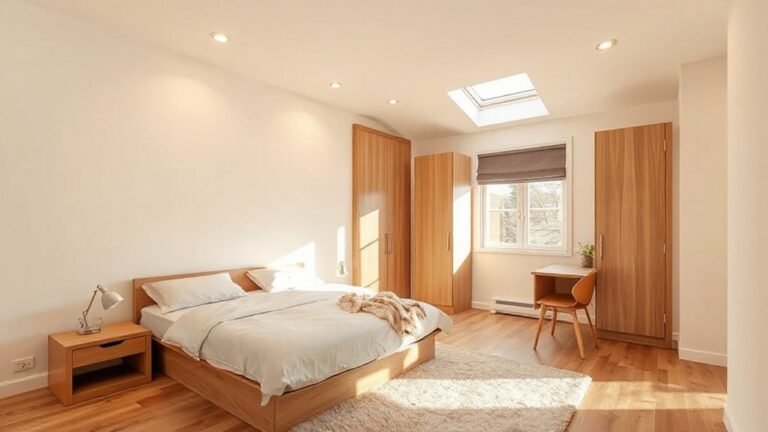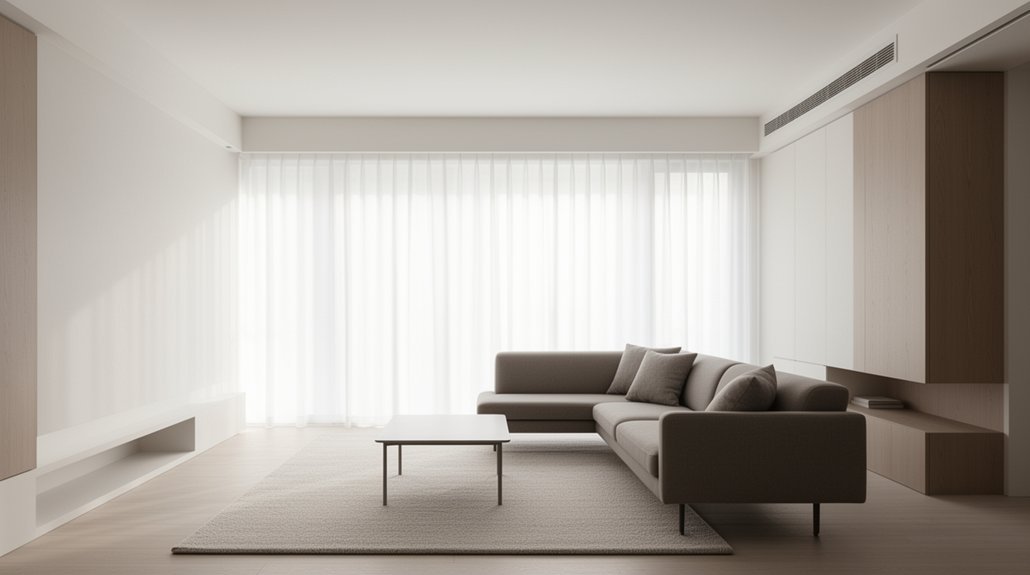
A minimalist living room that maximizes space and calm starts with a restrained palette, slim-profile furniture, and intentional light. Use clean sightlines, low profiles, and integrated storage to keep surfaces uncluttered. Layer lighting with dimmers and rely on natural light to brighten the room. Choose textures in natural fibers, soft neutrals, and purposeful accents to add warmth without bulk. Plan zones with clear sightlines and gentle negative space. If you keep going, you’ll discover more practical tweaks and setups.
What a Minimalist Living Room Delivers: Space, Calm, and Warmth
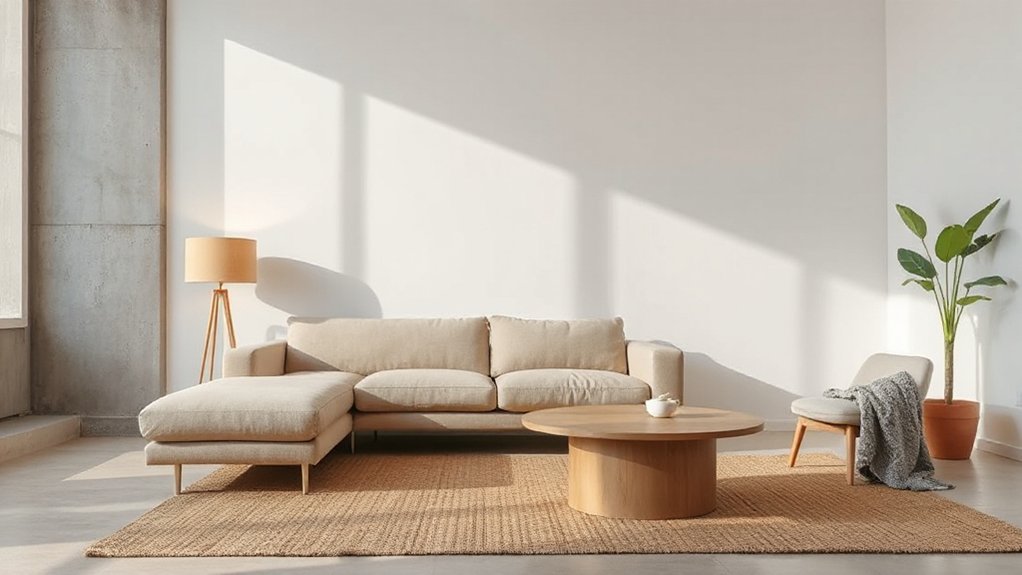
A minimalist living room delivers space, calm, and warmth by design. You’ll feel openness with clean sightlines, purposeful furniture, and breathable surfaces. You create order through intentional placement, so clutter has nowhere to hide.
Your choices shape air and light, not noise; every piece earns its keep. Artistic accents punctuate restraint, drawing focus without shouting. You pair texture and subtle materials to add warmth, from wood grains to soft textiles.
Color contrasts guide mood: light walls make rooms feel larger; darker accents anchor the space and prevent it from feeling icy. You avoid redundancy by prioritizing function over ornament.
In this setup, calm comes from predictability and rhythm, while space remains the stage for daily living where you breathe easily and move freely.
Create a Calm, Spacious Palette You’ll Love
To craft a calm, spacious palette, start with a soft foundation and build with deliberate contrast. You’ll choose light, neutral walls as airspace, then layer muted tones in textiles and art to maintain quiet cohesion.
Use color psychology to inform accents: cool neutrals feel expansive; warm undertones add subtle warmth without crowding the room. Keep a restrained palette; limit color to three to five complementary hues to avoid visual noise.
When selecting furniture, prefer low-profile pieces that reveal floor space, reinforcing calm. Consider temperature and material texture—matte finishes reduce glare; natural fibers add tactility without visual clutter.
Plan your furniture arrangement to maximize sightlines, ensuring focal points are unobstructed and clearly defined. This disciplined approach yields a serene, spacious, cohesive room.
Pick Furniture That Maximizes Space Without Clutter
Choose slim-profile furniture and multifunctional pieces to keep the room open.
Prioritize pieces with hidden storage to reduce visible clutter without sacrificing utility.
Start by evaluating each item’s footprint and versatility, so you maintain clear sightlines and a cohesive look.
Choose Slim Profiles
Slim-profile furniture helps you maximize space without creating clutter. Choose pieces with slender legs, low profiles, and integrated storage to keep sightlines open.
Opt for sofas and chairs that sit tightly to walls, avoiding oversized arms or bulky cushions. Flat-topped coffee tables or nestable options reduce visual bulk while still offering surface value.
Use color contrast strategically: lighter bodies against darker floors or walls to define zones without heaviness.
Select slim consoles or wall-mounted shelves to hold essentials without invading floor space. When you pick tables, favor rounded edges to soften the silhouette and prevent corner clutter.
Decorative accents should be minimal, cohesive, and properly scaled to avoid overpowering the room.
Prioritize quality over quantity to preserve calm, cohesive aesthetics.
Multifunctional Pieces Matter
Multifunctional pieces keep small spaces versatile and calm by combining functions without adding bulk. You’ll choose furniture that serves more than one purpose, so every inch counts. Look for a coffee table with hidden storage, or a sofa that pulls out for guests.
Opt for an ottoman that doubles as seating and a discreet bin, keeping clutter out of sight. Choose media units that camouflage cables while housing devices, remotes, and magazines.
Prioritize clean lines and compact silhouettes that don’t overwhelm the room. Integrate decorative accents and color accents thoughtfully to add personality without crowding surfaces.
Scale matters: select pieces that fit the room’s footprint and maintain clear sightlines for a breathable, organized feel. Your space stays calm, functional, and stylish.
Hidden Storage Solutions
Hidden storage is the backbone of a calm, uncluttered living room. You’ll maximize space by choosing furniture that hides items without sacrificing style. Prioritize clean lines, soft-close mechanisms, and smart silhouettes that feel light, not bulky.
Here are practical options:
- Under‑sofa storage with hinged lids for blankets, remotes, and seasonal decor.
- Bench seating with lift‑top trunks to conceal shoes, toys, or chargers.
- Floating cabinets that align with architectural details, keeping floors open.
- Ottoman cores or coffee tables with hidden drawers for daily essentials.
Pair these picks with color accents that pop against neutral walls. Use architectural details—cornices, trims, and niches—to frame storage, ensuring the room stays calm and cohesive.
Smart Storage Tricks for Visible Calm and Hidden Storage
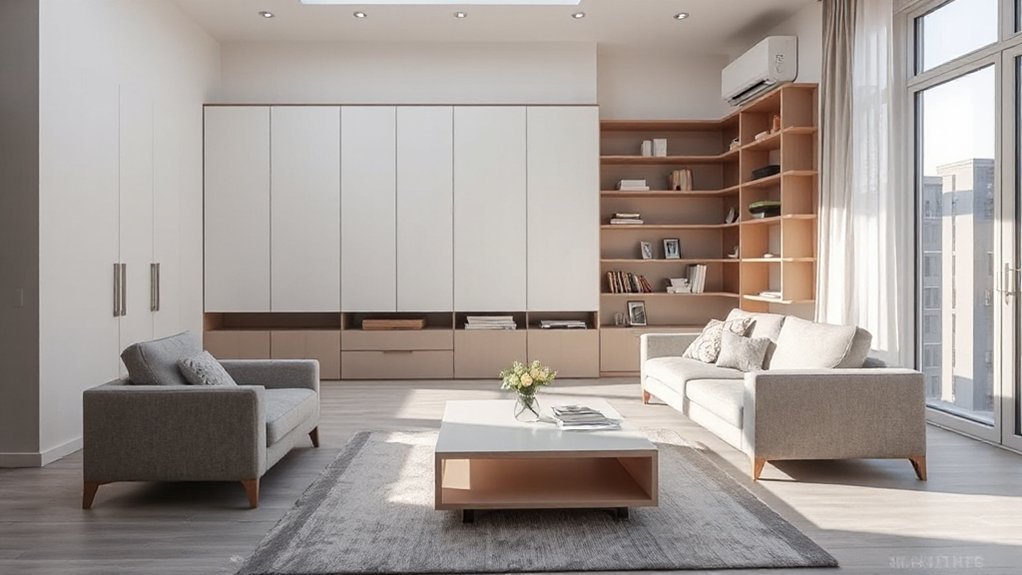
To keep a living room calm and organized, use smart storage that both reveals and hides essentials. Start with modular multimedia units that conceal cords while keeping remotes and chargers accessible.
Choose coffee tables with built-in drawers or lift-top surfaces to store clutter out of sight yet within reach. Opt for shelving with transparent baskets or labeled bins for quick visibility without visual chaos.
Integrate decorative accents and color accents that unify storage modules with your decor, so hidden compartments feel intentional rather than afterthoughts. Use wall-mounted cabinets at eye level to minimize floor clutter.
While low-profile ottomans offer hidden storage without sacrificing seating. Maintain balance by pairing open display with closed storage, ensuring every item has a home.
This achieves calm, organized spaces without sacrificing style.
Lighting That Makes the Room Feel Bigger and Brighter
Brighten a space quickly by layering light sources: start with a bright overhead or ceiling fixture, then add floor and table lamps to eliminate shadows and create a sense of airiness. You’ll cultivate ambient glow and daylight enhancement by mixing warm and cool tones, keeping fixtures unobtrusive and aligned with clean lines.
- Choose a high-lumen ceiling light for broad coverage.
- Add floor lamps to fill corners without bulk.
- Place table lamps near seating for task and glow.
- Prefer dimmers to modulate brightness and mood.
Practice strategic placement: keep sightlines clear, reflect light off pale walls, and maximize natural daylight through window treatment that avoids glare.
The result is a calmer space that feels larger, brighter, and more inviting while maintaining minimalist clarity.
Textiles and Surfaces That Add Warmth Without Bulk
Textiles and surfaces can warm a minimalist living room without adding bulk by choosing tactile fabrics and low-profile finishes. You’ll reinforce calm by opting for subdued, warm tones in textile textures that feel inviting without bulk.
Prioritize natural fibers—cotton, linen, wool—chosen in tight weaves or brushed finishes for depth without heft. Layer a single sofa throw, a pair of cushions, and a textured rug, keeping each piece slim and purposeful.
For surfaces, select matte, low-profile materials that reflect light softly: shaker wood, micro-sanded stone, or frosted glass. Avoid high-gloss or oversized panels.
Pair warm neutrals with subtle contrast to create depth. Consistency in color and texture guarantees warmth remains tangible yet uncluttered, aligning with the room’s calm, spacious vibe.
Layout Rules for Easy Flow and Distinct Zones
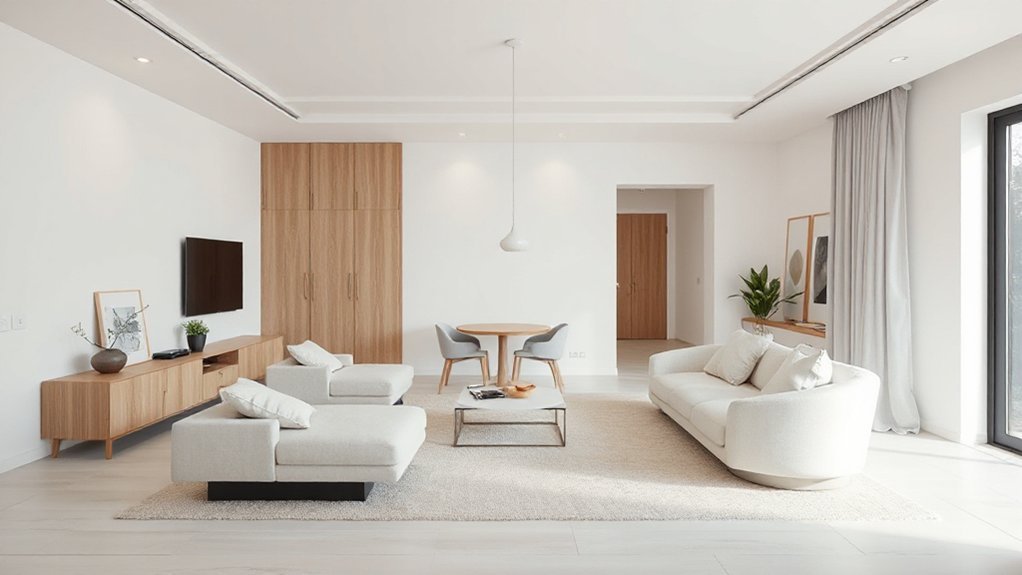
Efficient flow and clear zones start with deliberate furniture placement and sightlines. You shape space by heightening visibility between zones and keeping pathways open, so movement feels effortless. Use distinct areas—relax, work, and display—without crowding, and let each zone breathe with negative space.
- Place sofas and chairs to create clear sightlines toward a focal point, avoiding blockages.
- Align rugs and furniture to anchor zones while preserving flow and optional open paths.
- Use low-profile pieces near walkways to preserve airiness, reserving bold, artistic accents for focal points.
- Introduce statement decor in moderation to define zones without competing with architecture or clutter.
Quick Real-World Tweaks for Small Rooms
You’ll maximize space with minimalist corner zoning that separates zones without bulk.
Tuck away items using hidden storage tricks, so every surface stays clean and purposeful.
Use light-reflecting surfaces to bounce daylight and visually widen the room, keeping the look crisp and practical.
Minimalist Corner Zoning
Corner zoning in minimalist spaces tweaks a small room’s footprint by using clean, purposeful zones rather than full walls of furniture.
You implement this with sharp zoning techniques that guide flow, light, and use. Place corner shelving to define a reading nook without closing it off, and use low-profile pieces to preserve sightlines. Keep color and texture cohesive to maintain calm.
- Establish a visual boundary with a corner shelving unit
- Layer lighting to heighten zones without clutter
- Choose compact seating that anchors the area
- Use rugs and textiles to differentiate spaces subtly
This approach creates distinct, usable zones while preserving openness. It’s practical, fast, and avoids bulky dividers, letting you enjoy calm without clutter.
Hidden Storage Tricks
Use furniture with built‑in storage: ottomans, coffee tables, and benches that hide essentials while staying accessible. Opt for hidden compartments in a TV unit or bed base to stash cables, remotes, and seasonal décor.
Declutter deliberately, then curate artwork and small objects with intention—avoid overflow that dulls calm. Implement color accents through textiles and accessories, not excess furniture, so storage remains seamless.
Label boxes discreetly and group similar items to speed access. Finally, rotate pieces seasonally, keeping only what earns its keep, ensuring the room maintains a quiet, organized balance.
Light-Reflecting Surfaces
Light reflects smarter in small rooms when you choose surfaces that bounce light around. You’ll gain brightness without extra lamps by using Reflective surfaces and Glossy finishes strategically. These tweaks keep the space calm and open.
- Pick high-gloss cabinetry or a glass-front display to scatter light across walls.
- Install a reflective backsplash or metallic accents to mirror nearby lamps.
- Use oversized mirrors to double perception of depth while remaining minimal.
- Choose light-colored, glossy finishes for furniture and walls to amplify daylight.
Keep textures simple and avoid clutter so reflections stay intentional. Prioritize quality over quantity, and test in different daylight moments to confirm the glow.
Personalize Your Minimalist Living Room Without Overwhelm
Personalizing a minimalist living room doesn’t have to trigger overwhelm; start with a clear purpose and build from there. You narrow choices by defining one function for the room—relaxation, display, or conversation—and let that guide every decision.
Use a restrained palette as your base, then introduce artificial greenery for texture without mess, keeping plant varieties sparse and well-spaced.
Integrate bold accents via a single standout piece or two, such as a statement lamp or a textured throw, to anchor the space without clutter.
Prioritize quality over quantity: select durable, timeless items that age well.
Arrange deliberately, leaving negative space to breathe.
Review surfaces for reflection and resonance; every element should reinforce calm, not compete for attention.
Maintain consistency, and refresh subtly when needed.
Frequently Asked Questions
How Can I Incorporate Color Without Disrupting Minimalism?
Color psychology helps you keep calm: use restrained pops of color within monochrome palettes, focusing on one accent hue. Keep furniture and walls near neutral, and let textiles or art provide intentional contrast without clutter.
What Are Budget-Friendly Minimalist Furniture Options?
Budget friendly furniture options include modular pieces, multi-use consoles, and compact seating. You’ll overcome budget fears by choosing durable, timeless styles. Pair with minimalist storage solutions to keep surfaces clean, organized, and visually calm for a spacious feel.
How Do I Measure Ceiling Height for Layout Safety?
To measure ceiling height for layout safety, stand upright under the ceiling, use a tape measure from floor to the lowest point, note irregularities, then plan clearance for lighting fixtures and ceiling insulation access. Double-check doorways and fixtures.
Can I Combine Plants With a Calm, Uncluttered Look?
Like a modern Prometheus, you can. You’ll combine urban jungle vibes with a calm, uncluttered look, using botanical accents sparingly to maintain space, texture, and balance. You’ll place a few plants as focal, not clutter, points.
What Small Decor Mistakes Undermine a Spacious Feel?
Overly ornate accessories and decor clutter undermine a spacious feel. You should avoid stuffing surfaces, embrace negative space, and pick simple accents. Keep scale small, limit colors, and prioritize functional pieces to maintain clarity and calm.
Conclusion
In a minimalist living room, restraint is your compass and space your compass rose. You’re sailing toward calm, with simplicity steering the course. Each piece is a quiet symbol: a single chair as a lighthouse, a sofa as a bridge to open air, a glow from a slim lamp as a beacon. Let clutter be the tide that recedes; let light be the harbor. When balance holds, room and mind breathe in unison.
About the Author