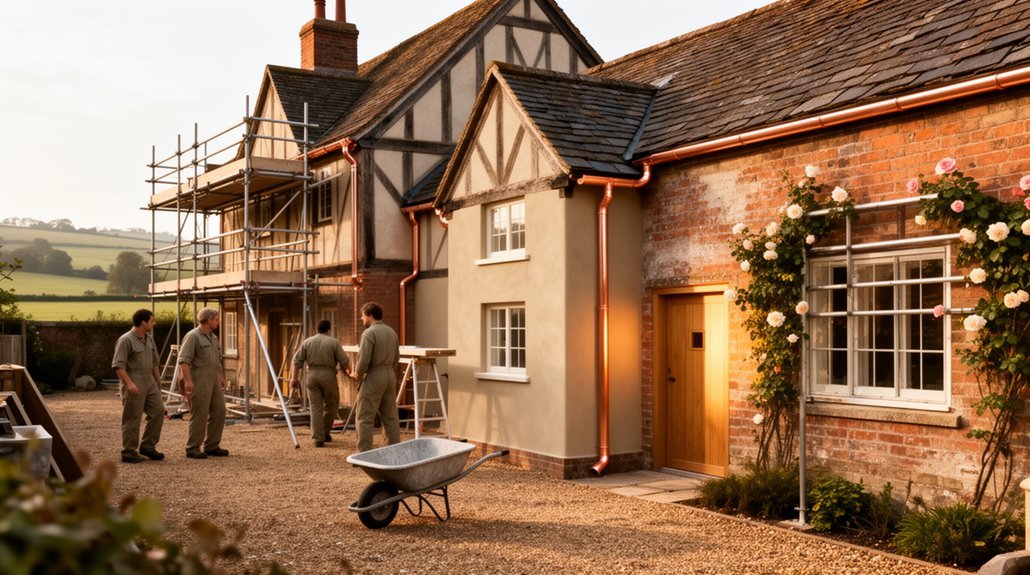
Refurbishing a traditional Shropshire farmhouse means balancing climate-aware stone and timber conservation with a period-accurate palette. Start by evaluating your building envelope, masonry joints, and timber integrity to guide noninvasive, reversible repairs. Choose authentic materials—lime mortars, lime-putty renders, mineral paints, and sourced timbers—tested under local conditions. Plan sustainable insulation, heritage glazing, and discreet heating. Preserve beams and lime plaster detailing while integrating modern comforts with minimal intrusion. With careful budgeting and phased work, you’ll protect character and durability as you progress. You’ll discover more as you continue.
Assess the Shropshire Farmhouse: Climate, Stone, and Timber
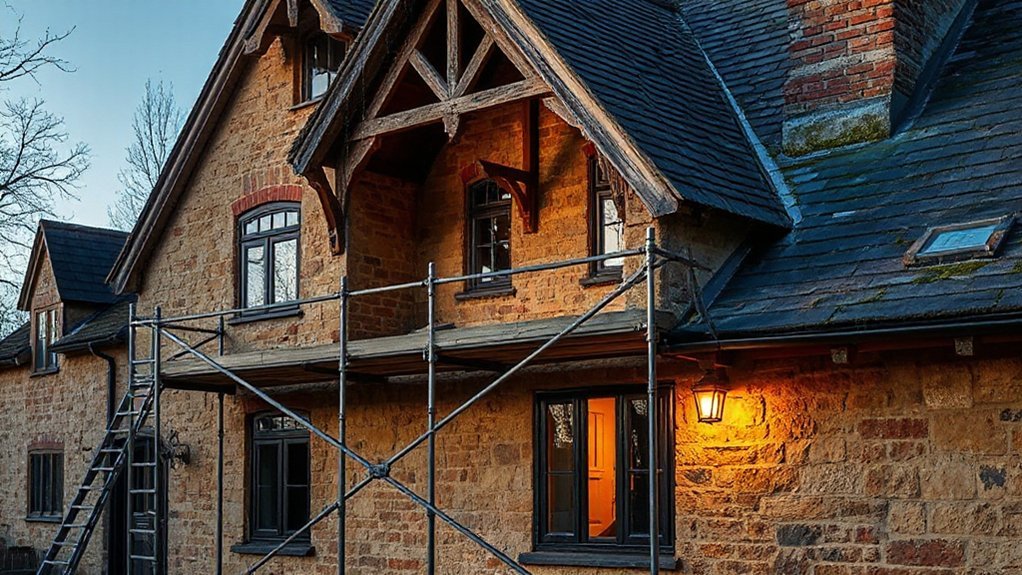
Shropshire farmhouses are shaped by a temperate maritime climate, locally tempered by the hills and prevailing winds; this influences stone performance and timber selection. You assess the building envelope by documenting stone type, mortar compatibility, and hygrothermal behavior, noting how walls breathe without excessive moisture retention.
Timber frames deserve careful evaluation for rot risk, insect disturbance, and historic joinery integrity; you plan selective stabilization that respects structural goals and energy needs.
Historical landscaping awareness guides site drainage, boundary walls, and foundational siting, preserving cultural context while enabling modern efficiency.
Local craftsmanship remains your benchmark: you foreground skilled craftspersons, verify repair techniques, and prioritize noninvasive interventions.
Your approach blends technical precision with people-centered care, aligning aesthetic intent, historical fidelity, and long-term performance for sustainable refurbishment.
Choose a Period-Accurate Palette and Authentic Materials
A period-accurate palette hinges on understanding local mineralogy, historical finishes, and the visual language of the era, then selecting colors and textures that age gracefully while supporting modern performance. You approach this with a technical eye: assess stone tint, limewash, and plaster grains, then map hues that read as authentic without compromising durability.
Choose Color palettes that reflect era-specific tonalities—clays, ochres, and subdued earths—while ensuring light reflectance and washability meet today’s standards.
Prioritize historical accuracy in material selection: lime mortar, lime-putty renders, mineral-based paints, and carefully sourced timber stains. Document finish schedules, test swatches, and application regimes to verify aging behavior under Shropshire climates.
Your informed choices bind aesthetic integrity to practical resilience, delivering a hospitable, legacy-aware interior.
Survey and Plan Structural Repairs That Preserve Character
When surveying the structure, you start with a careful load-path analysis and a room-by-room condition assessment to identify active failures, hidden defects, and opportunities to preserve character.
You document timber integrity, stone joints, and mortar compatible with historic craftsmanship, ensuring assessments respect original fabric.
Prioritize minimally invasive interventions that restore strength without erasing evidences of age, so Rural aesthetics remain legible.
Develop a repaired framework plan that highlights reversible, sympathetic methods and materials, avoiding over-reinforcement that darkens historic spaces.
Establish a sequencing strategy that minimizes disruption to occupants and structure, aligning temporary supports with existing loads.
Engage specialists early to confirm detailing, corrosion control, and differential movement mitigation.
Conclude with a repair schedule and documentation that supports ongoing maintenance, preserving authenticity while ensuring long-term performance.
Select Sustainable Insulation and Glazing for Heritage Homes
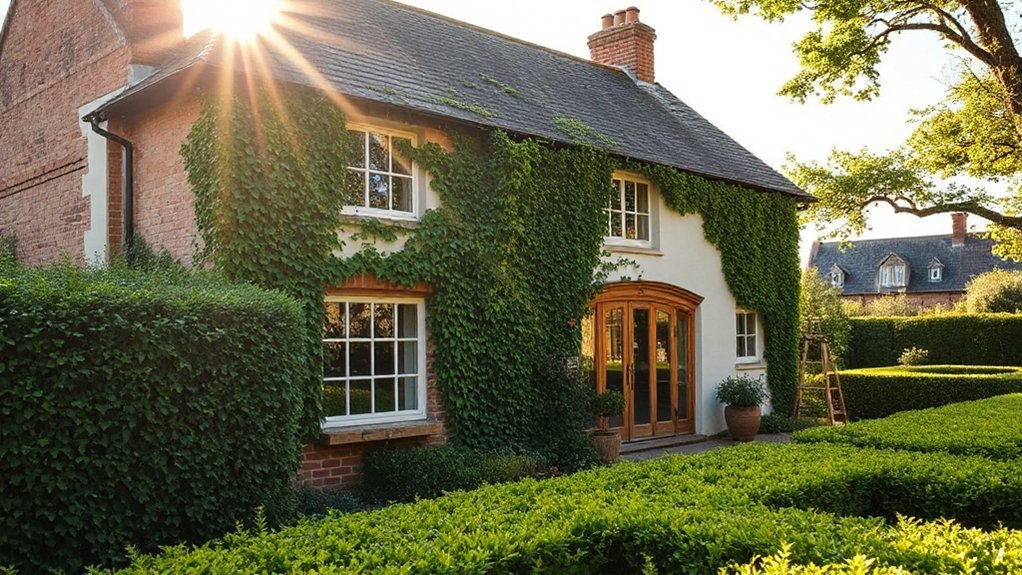
You’ll weigh sustainable insulation options that balance thermal performance with historic fabric. Prioritizing materials that reduce energy use without compromising breathability is essential.
For glazing, you’ll consider heritage-appropriate styles that minimize heat loss while preserving visual character. Focusing on weather-tight performance and compatibility with traditional frames will be important.
Together, these choices address thermal performance considerations while aligning with the home’s age, construction, and long-term comfort.
Sustainable Insulation Choices
Is sustainable insulation the key to preserving the character of a heritage home while improving comfort and energy use? You’ll assess materials against historic fabric, prioritizing both performance and breathability. Choose soft-friendly, moisture-control options like mineral wool and natural fiber battings that fit cavity constraints without compromising integrity.
Traditional wall assemblies benefit from low-embodied-energy solutions, while retrofit strategies should minimize disruption to plasterwork and timber lath. Consider thermal mass benefits from lime-plaster walls when paired with breathable insulation, maintaining summer comfort and reducing condensation risk.
Evaluate installation methods for airtightness without over-sealing delicate joints. Plan procurement with eco-conscious vendors—Eco friendly packaging matters for safe handling and waste reduction. Align insulation choices with renewable energy sources, ensuring a cohesive, future-facing preservation approach.
Glazing For Heritage Homes
Begin with window craftsmanship: choose frames and sashes that emulate traditional profiles, yet accept modern seals. Consider glazing techniques that minimize visual impact—single- or double-glazing with slim sightlines, or selectively patterned units that match existing muntin layouts.
Prioritize low-emissivity coatings on clear or tinted glass to reduce heat gain without altering appearance. For air leakage, specify precise gaskets and bead designs that suit historic materials, avoiding bulky hardware.
Guarantee compatibility with timber deterioration assessments and upcoming maintenance plans. Document each decision, focusing on long-term performance, accessibility, and ease of repair for future homeowners.
Thermal Performance Considerations
Careful selection of insulation and glazing shapes the thermal performance of heritage homes without compromising their character. You’ll balance materials and fabric first, prioritizing breathability, moisture management, and long-term durability.
Choose insulation with low emissivity and appropriate density to minimize heat loss while preserving internal humidity stability. Consider heritage-appropriate boards or mineral wool with respectful thickness, ensuring vapor-permeable barriers where feasible.
For glazing, opt for solar integration that reduces daytime heat gain without darkening rooms, using slim frames and high-performance efficient panes that respect historic sashes. Pair with weather-stripping and external shading to curb drafts.
Monitor retrofit effects with tight moisture control, ensuring ventilation remains adequate. Document performance, align with building regulations, and maintain accessibility for ongoing comfort and energy efficiency.
Restore Beams, Stone, and Lime Plaster Detailing
You’ll assess each beam, stone, and lime plaster detail for structural soundness and historic accuracy.
We’ll prioritize authentic finishes, compatible materials, and careful cleaning to preserve patina while addressing any deterioration.
Together, we’ll map a precise restoration plan that supports longevity, safety, and the building’s character.
Restore Beams Detailing
Restoring beams requires careful assessment of timber condition, historical finishes, and structural function, so you can preserve the farmhouse’s character while guaranteeing safety. You methodically inspect grain, joints, and evidence of previous repairs, documenting dimensions and any deformations.
In timber detailing, you select compatible materials, preserving patina while strengthening load paths. Where bark inclusions or checking exist, you assess whether stabilization or replacement aligns with conservation ethics and structural needs.
Use hidden and visible joinery to maintain authenticity, avoiding modern fasteners that clash with historic aesthetics. Treat surfaces with breathable finishes that respect moisture transfer, preventing future decay.
Coordinate with lime plaster timelines to ensure drying cycles don’t compromise beams. Your beams restoration plan emphasizes durability, reversibility, and minimal intervention while supporting ongoing occupancy.
Lime Plaster Finishes
Lime plaster provides a flexible, breathable skin that accommodates seasonal movement while resisting cracking when properly applied and cured. For beams, you’ll blend lime putty with pozzolanic aggregates to achieve a durable, workably cohesive coat that accepts fine detailing.
On stone, you’ll match textures and color with brushed renders and limewash accents to preserve patina. Detailing emphasizes restraint: clean joints, controlled trowel marks, and compatible pigments.
This approach supports interior comfort, long-term durability, and authentic, visually coherent spaces. Lime plaster enhances traditional finishes for a coherent farmhouse narrative.
Add Modern Comforts That Respect Rural Living and Charm
Modern comforts should enhance daily living without erasing the farmhouse’s character. You achieve this by selecting discreet systems that blend with traditional aesthetics while offering modern reliability.
Prioritize intelligent controls for heating, lighting, and ventilation that respond to occupancy and weather, without dominating the room. Choose equipment with low-profile finishes, period-appropriate textures, and quiet operation to maintain rural charm.
Integrate Smart home integration and renewable energy systems to boost efficiency while preserving ambiance. Guarantee legible interfaces and local control options for practicality and resilience.
Emphasize sound insulation, thermal efficiency, and durable materials that age gracefully. Align updates with seasonal use, so comfort is consistent without imposing complexity on daily routines.
- Discreet smart controls for climate and light
- Subtle energy storage and renewables
- Quiet, efficient HVAC and ventilation
- Hardwearing, period-matched finishes
Budget, Timelines, and Common Refurbishment Pitfalls to Avoid
Effective budgeting and a realistic timeline are essential for a successful refurbishment, especially in a traditional Shropshire farmhouse where hidden costs and seasonal constraints can derail progress.
You’ll want precise cost estimation to prevent scope creep, aligning expectations with available funds and contingency. Start with a baseline survey of structural, mechanical, and decorative tasks, then translate findings into a phased plan.
Prioritize critical fixes, then schedule non-essential upgrades to fit daylight and access limits. Project scheduling should incorporate supplier lead times, weather windows, and labor availability, with buffers for unforeseen issues.
Track changes rigorously and document deviations to maintain transparency with stakeholders. Finally, avoid over-committing to long lead items; iterative reviews ensure budget discipline while preserving character and comfort.
Frequently Asked Questions
How Can I Source Ethically Reclaimed Timber in Shropshire?
Yes: you can source ethically reclaimed timber in Shropshire by visiting certified salvagers, builders’ yards, and local community projects. You’ll verify material provenance, request sustainability documentation, and prioritize upcycling materials with transparent sustainable sourcing practices.
What Grants or Tax Relief Exist for Heritage Refurbishments Here?
Brighten your prospects, as you can access heritage conservation grants and tax relief through the grant application process, though eligibility varies by scheme. You’ll navigate technical criteria, ensuring your project aligns with preservation standards and long-term community value.
Which Local Trades Have Experience With Lime Plaster and Mortars?
Local trades with lime plaster and mortars include masons and lime specialists; seek those versed in traditional techniques for historic preservation. You’ll find firms offering lime putty, hydraulic lime, and breathable renders, ensuring authentic, durable finishes for your project.
How Do I Preserve Original Stone Joints Without Damaging Walls?
Sure, you preserve original stone joints by gentle cleaning, precise repointing with compatible lime mortars, and careful pressure control to protect wall integrity; stone preservation matters, even when you pretend it’s glamorous, because your craft wears the evidence.
What Are the Best Ways to Insulate Without Compromising Authenticity?
You should balance modern insulation with breathability, using eco friendly materials that respect walls. Prioritize airtight-but-well-ventilated systems, and employ mineral wool, cellulose, or wood fibre, ensuring thermal performance without compromising historic fabric or comfort.
Conclusion
You feel the weight of history in every stone, yet you chase comfort with quiet precision. Juxtapose the cathedral silence of thick walls with the hum of modern essentials, like a lantern beside a socket. You preserve character by planning, not patching; you embrace lime plaster as a dialogue between time and technique. You balance budgets and timelines, so each beam and brick breathes. In preservation, you gain warmth, resilience, and a future you’d proudly pass on.
About the Author