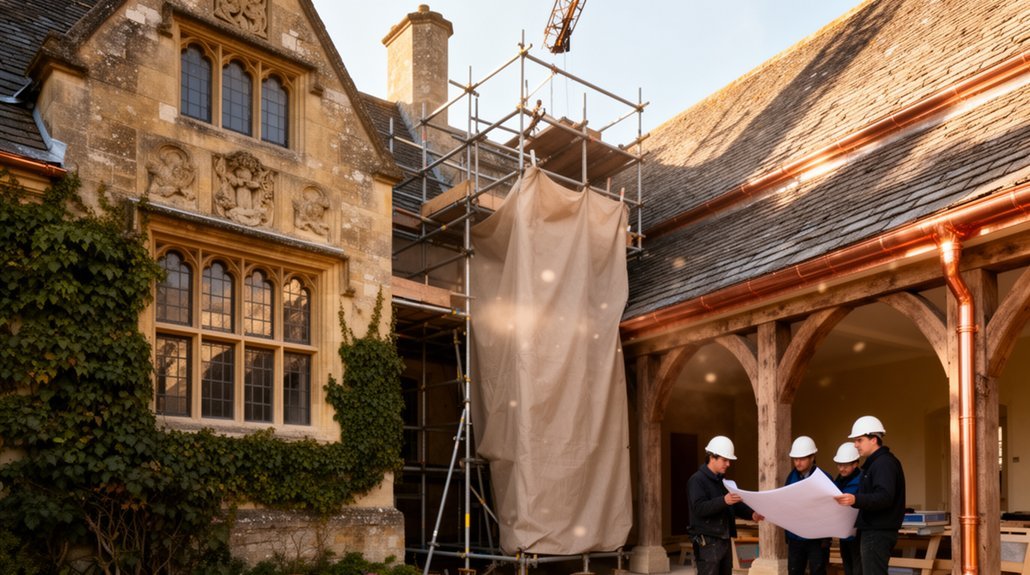
You’ll approach renovating a Gloucestershire manor wing with precise heritage methodologies, balancing faithful restoration with modern comfort to protect character-defining features while delivering usable spaces. Start with heritage context, architectural features, and reversible interventions to guide design decisions. Define scope, boundaries, and regulatory compliance early, then select traditional, breathable materials and reversible fixes. Integrate discreet modern systems through careful detailing, moisture control, and acoustic management. If you continue, you’ll gain deeper insight into proven workflows and restoration milestones.
Gloucestershire Heritage Context: What Makes a Manor Wing Special
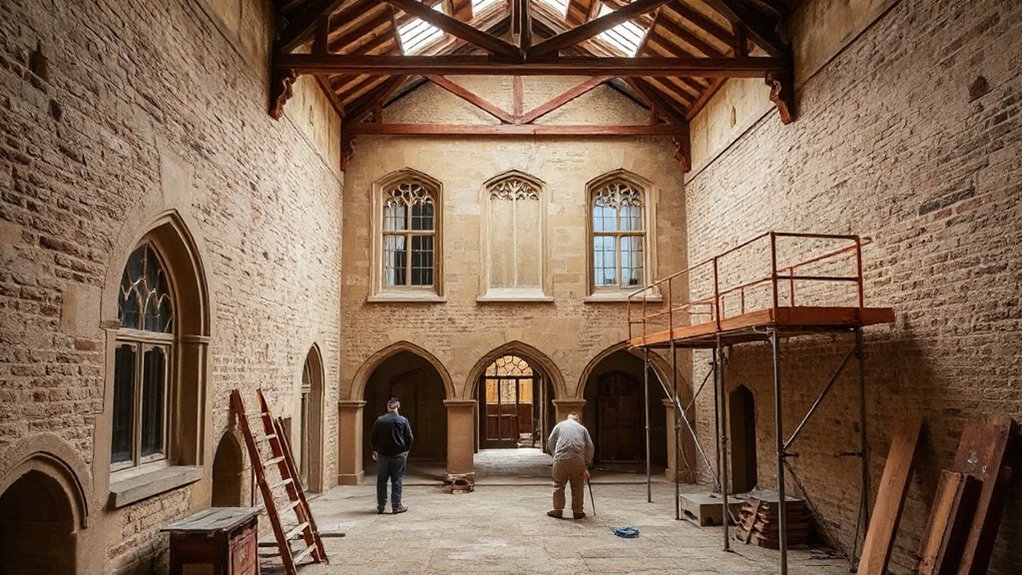
Gloucestershire’s manor wings embody a distinctive architectural and historical milieu that merits careful study before renovation. You examine how Heritage significance emerges from regional typologies, landholding patterns, and adaptive reuse histories that shape current expectations.
You assess the Architectural style through precise features: timber framing, coursed stone, mullioned windows, and roof silhouettes that signal period and craft. You map spatial logic—service cores, principal suites, ancillary chambers—to determine load paths and insulation priorities.
You document any vernacular embellishment, symbolic motifs, or later interventions that alter original intent. You reference archival plans and field surveys to corroborate design fidelity.
You align assessment criteria with conservation standards, ensuring decisions preserve identity while enabling functional renovations for modern occupancy. This foundation informs subsequent scope decisions without introducing scope-related terms here.
Scope and Boundaries for a Manor Wing Restoration
You establish the scope by identifying critical zones, load-bearing considerations, and discrete intervention types early in the project plan.
You define boundaries to align restoration work with statutory heritage requirements and practical site constraints, including access, scheduling, and cost controls.
You outline heritage compliance milestones to verify design intent, document changes, and secure approvals at key decision points.
Scope Definition Boundaries
To define the scope and boundaries for the manor wing restoration, establish the physical limits, functional expectations, and compliance requirements up front; this foundation guides design decisions, budget controls, and project sequencing.
You identify end states for restored spaces, preserved elements, and adaptable use, then translate them into measurable criteria.
Clarify exclusions clearly to prevent scope creep and maintain baseline timelines.
Document interfaces with adjacent structures, utilities, and landscape features, including access routes and protective zones around fragile fabric.
Establish acceptance criteria for condition surveys, material provenance, and workmanship standards.
Integrate risk assessment, contingency planning, and quality assurance milestones.
Include references to landscape painting considerations and potential placement of vintage furniture to preserve historic ambience without compromising structural integrity.
Ensure traceability, version control, and stakeholder sign-off at each boundary.
Heritage Compliance Milestones
A clear set of heritage compliance milestones ties the defined scope and boundaries to legally and conservationally valid outcomes. You establish milestones that align statutory requirements with conservation objectives, ensuring traceable decisions and auditable records.
Begin with a delineation of approvals, permits, and reporting cadences, then map them to project phases to prevent scope creep. Define performance criteria for preservation of character-defining elements, while accommodating modern amenities through minimally invasive interventions.
Prioritize structural safety by requiring robust assessment protocols, load paths, and proof-of-concept tests before any remediation. Integrate risk registers, defect hierarchies, and contingency planning to sustain progress under regulatory scrutiny.
Maintain clear communication channels among stakeholders, architects, engineers, and authorities. Conclude with a milestone that certifies compliance readiness for construction, occupancy, and ongoing maintenance, validating long-term heritage integrity.
Inspecting Stone and Timber: Essential Structural Checks
Before you begin any restoration work, conduct a thorough assessment of the stonework and timbers to establish a baseline of condition; this inspection informs scope, methods, and repair priorities.
You systematically verify stone stability, mortar integrity, and evidence of stone erosion, then assess timber health, joints, and fastener corrosion to identify deformation or timber decay.
- Map deterioration patterns and prioritize consolidations where stone displacement or cracking risks structure
- Evaluate mortar porosity, capillary rise, and historic binders to guide repointing approaches
- Inspect timber framing for insect damage, rot, and seasoning inconsistencies
- Document moisture pathways and ventilation to prevent recurrence of failure
Document findings with sketches, notes, and photographs for a defensible, publication-ready plan. Maintain conservative repair thresholds and traceability.
Preserve Sash Windows: What Works and Limits
Preserve sash windows by balancing historical authenticity with functional performance, implementing targeted interventions that address wear without unnecessary replacement. You’ll assess operating hardware, weight systems, and draft seals to determine non-invasive upgrades that preserve craft.
Prioritize sash window modernization approaches that improve ease of use and energy efficiency while retaining visible profiles and period-appropriate profiles. When deteriorated components limit performance, pursue window frame restoration techniques that stabilize jambs, sashes, and glazing beads without broad reconstruction.
Use reversible, conservation-minded methods for sash cords, pulleys, and weatherstripping, ensuring compatibility with original materials. Document outcomes to support ongoing maintenance, preventing future degradation.
Establish performance benchmarks, quantify gains in operation, and confirm that upgrades respect heritage values while delivering durable, breathable envelopes for the manor wing.
Restore Stone Mullions and External Detailing
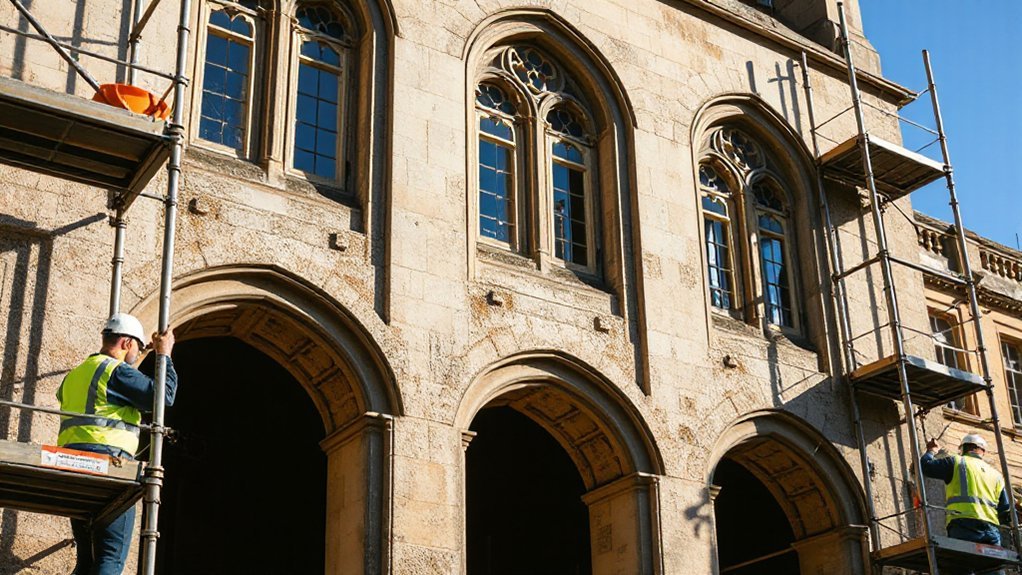
You assess each stone mullion for structural integrity and uniformity of profile before planning any restoration.
You prioritise preserving original tracings and external detailing, while detailing consolidation methods that minimize intervention.
You document material compatibility and finish to guarantee long-term stability and authentic appearance.
Preserve Stone Mullions
Stone mullions, integral to the manor’s external character, require careful assessment and targeted restoration to preserve both form and structural performance.
You will assess material condition, alignment, and joint integrity, prioritizing reversible repairs and compatible lime-based mortars.
Preserve profiles with precision chiselling, avoiding over-cutting that could weaken load paths. Where stone is cracked, you’ll implement controlled pinning or infill that matches colour and texture, ensuring weather resistance without compromising historic evident tracery.
Document gaps and tolerance changes to guide ongoing maintenance.
Integrate era-appropriate detailing with modern decor sensibilities, balancing performance and aesthetics.
Coordinate landscaping design considerations to protect mullions from moisture and root intrusion during planting along façades.
Execute works in tight tolerances, verifying openings remain true and draughts negligible.
- Condition survey findings and priorities
- Reversible repair techniques and materials
- Dry-stone or mortar-compatible repairs
- Documentation and ongoing monitoring
External Detailing Restoration
You implement controlled cleaning to remove biological growth without demineralizing the substrate. Then repair or replace damaged mullions using matching lime mortars and quarried stone where feasible. You guarantee color, texture, and profile align with the original.
You establish a reversible intervention protocol to preserve historic integrity while enabling future maintenance. You coordinate with garden landscaping plans to avoid compromising sightlines and drainage, and you specify protective detailing to resist future moisture ingress.
You also integrate lighting considerations for exterior elevations, balancing interior lighting implications with daylight performance.
Conservation Approvals: What You Need to Know
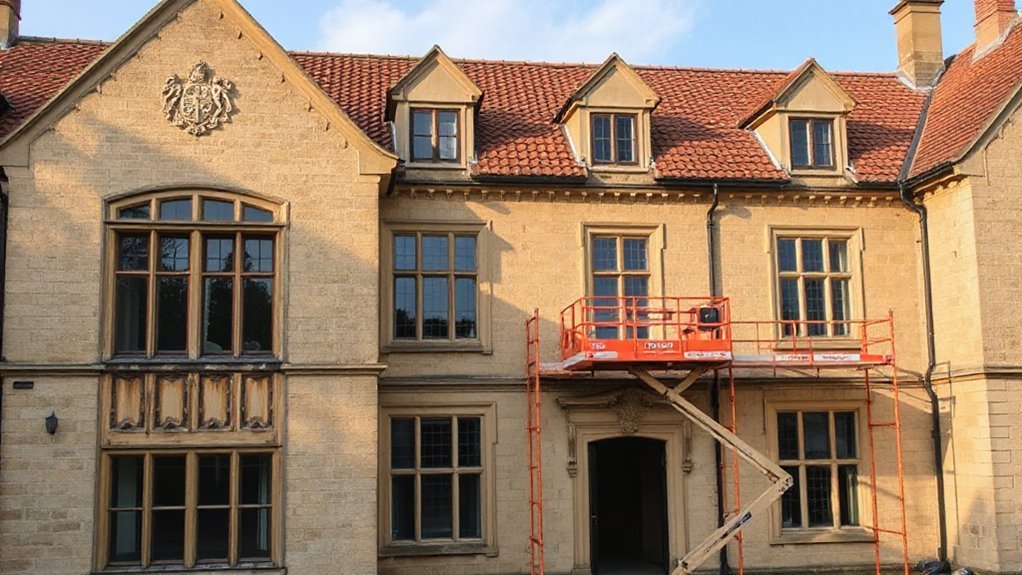
Entering a heritage project requires steering conservation approvals before any physical work begins; this process guarantees that changes respect the building’s character and statutory protections. You’ll navigate planning bodies, listed-building constraints, and Khubax guidance to align design intent with preservation standards.
In practice, approvals assess massing, materials, and historic fabric, ensuring compatibility with modern architecture while safeguarding legacy details. You’ll document proposal justifications, mitigation measures, and landscape design considerations to prevent adverse effects on setting.
Expect rigorous review cycles, potential conditions, and phased permitting tied to construction milestones. Prepare for archival-quality records, accurate as-built drawings, and ongoing compliance monitoring.
You’ll benefit from early multidisciplinary input to minimize revisions and avoid costs.
- Early consultation with authorities and stakeholders
- Clear rationale linking design to heritage values
- Documentation of architectural fabric and material choices
- Integration of landscape design without compromising significance
Materials That Honor the Manor’s Character
You specify quarry sources, and finishes with controlled documentation to guarantee traceability. You balance stone, lime plaster, timber, and brick in proportion to original elevations, avoiding incongruent modern imitations.
You evaluate joinery, fixings, and joints for reversibility, ensuring minimal invasive change. You integrate sustainable insulation that remains breathable, preventing moisture buildup without altering appearance.
You plan interface detailing at junctures between historic and new fabric, favoring recessed reveals and restrained grading. You consider modern art placements and discreet kitchen appliances as functional accents, not focal points, preserving authentic ambience.
Modern Comforts Without Compromising Heritage
Modern comfort features can be integrated without compromising the manor’s historic integrity by aligning contemporary performance with traditional fabric. You’ll implement discreet solutions that respect masonry, wood, and plaster while delivering optimized usability and efficiency.
Modern technology and interior lighting are coordinated to enhance perception of space without overpowering craftsmanship. Focus on selection, placement, and controllability to preserve patina while reducing energy demand.
Documentation of integration paths ensures future maintenance remains straightforward and non-intrusive.
- Hidden cabling routes and surface-mounted fixtures that mimic period proportion
- Dimmable LEDs with warm color temperatures aligned to original finishes
- Zonal lighting presets controlled by intuitive interfaces
- Smart adapters concealed within existing enclosures for minimal retrofit impact
Heating and Insulation for a Historic Wing
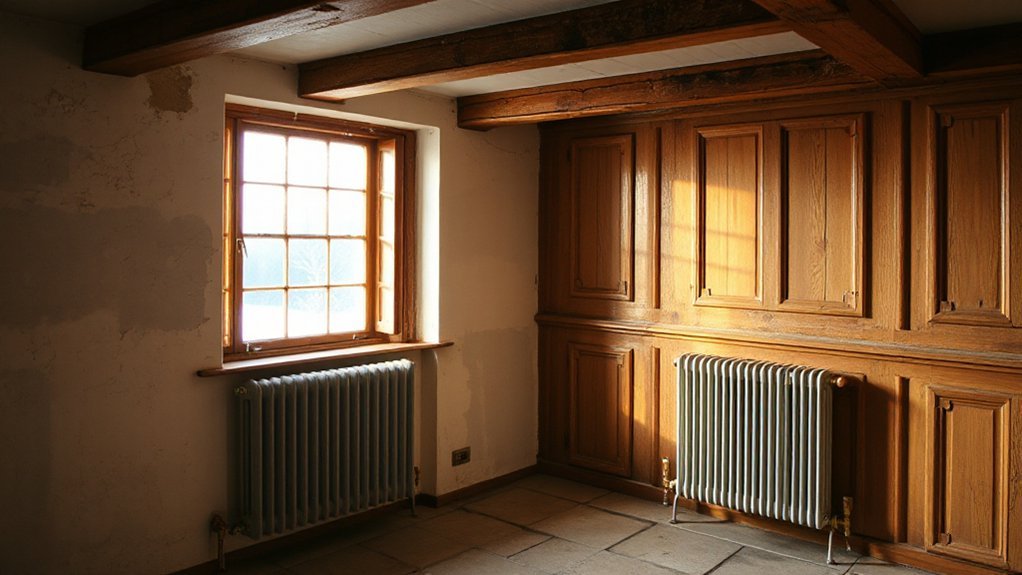
Thermal performance must be addressed without compromising the wing’s historic fabric: evaluate existing envelopes, identify heat-loss pathways, and select retrofit strategies that align with traditional materials. You assess fabric integrity, insulation depth, and air leakage, documenting performance against benchmark targets.
Prioritize continuous insulation where feasible, using historically appropriate materials and compatible boards, plasters, and finishes to avoid de-bonding or moisture traps. Seal eaves, joints, and sash gaps with discreet, reversible methods that respect Architectural detailing.
Install low-U-value glazing with sympathetic frames only where original openings permit, complementing radiant heating strategies to minimize surface temperature swings. Monitor humidity and thermal transients to preserve historical symbolism while delivering comfort.
Maintain design intent, ensuring retrofits remain reversible, non-intrusive, and compatible with future conservation needs.
Minimal-Intrusion Plumbing and Electrical Upgrades
You’ll implement minimal-intrusion plumbing and electrical upgrades by prioritizing quiet pipe routing, ensuring lines occupy non-obtrusive paths that preserve historic fabric. Hidden wiring techniques will be employed to conceal conduits behind plaster and tighter profiles.
Accessible shutoffs will be integrated into discreet locations for rapid, safe service. This discussion starts with a plan that balances preservation, compliance, and practical access, outlining how each technique supports reliability without visible alterations.
Quiet Pipe Routing
How can we implement quiet pipe routing to achieve minimal intrusion while upgrading plumbing and electrical systems in a heritage manor wing? You optimize layouts by preferring linear runs, shared trenches, and pre-fabricated assemblies that fit concealed voids. Maintain access via cleanouts and removable panels, ensuring modern plumbing and energy efficiency without disturbing historic fabric.
Use low-noise fittings, vibration dampers, and insulated conduits to minimize sound transmission and thermal loss. Document routes with precise measurements and as-built drawings to ease future maintenance.
- Select compact, modular fittings for tight spaces
- Align pipes and cables along existing wall or floor voids
- Employ vibration isolation and acoustic-rated enclosures
- Prioritize return paths to service cabinets over external exposures
Hidden Wiring Techniques
Use low-profile trunking where cavities are insufficient, ensuring acceptance by conservation officers. Plan for wireless security sensors and discreet access points, positioning them to maintain aesthetic lines without compromising performance.
Select compact distribution boards mounted in service zones, with flexible cables routed along timber frames or lime plaster, then protected by non-intrusive armoured paths where necessary. Document routes and junctions precisely, and label every cleanout.
For modern appliances, install dedicated circuits with tamper-resistant outlets tied into a unified energy-management system. Schedule testing, commissioning, and final certification to confirm reliability and heritage compliance.
Accessible Shutoffs Plan
- Clearly labeled, readily accessible shutoffs for water and power
- Zoned placement to minimize travel and disturbance
- Redundant isolation points near high-risk equipment
- Documentation and as-built drawings linked to maintenance portal
This plan emphasizes precision, rapid response, and future-proofing while preserving heritage aesthetics and serviceability within the Gloucestershire wing.
Damp and Humidity: Management Strategies
Effective damp and humidity management begins with accurate assessment and targeted mitigation. You’ll establish a baseline by measuring surface and substrate moisture, indoor air quality, and exterior water ingress indicators.
Identify moisture pathways—roof leaks, wall penetrations, and unvented spaces—and quantify risk with calibrated instruments. Prioritize damp prevention through drainage optimization, positive-side ventilation, and controlled condensation using balanced humidity control.
Implement lasting against-structure strategies: capillary barriers, breathable yet vapor-permeable membranes, and lime-based renders that manage moisture flux without trapping it. Schedule routine monitoring, seasonal remapping, and rapid mitigation when thresholds exceed design limits.
Document action logs, validate results with trend data, and adjust enclosure details to sustain long-term stability. Public-health and preservation ethics require minimal chemical intervention, drought-resilient detailing, and precise workmanship.
Acoustic Design for Heritage Spaces
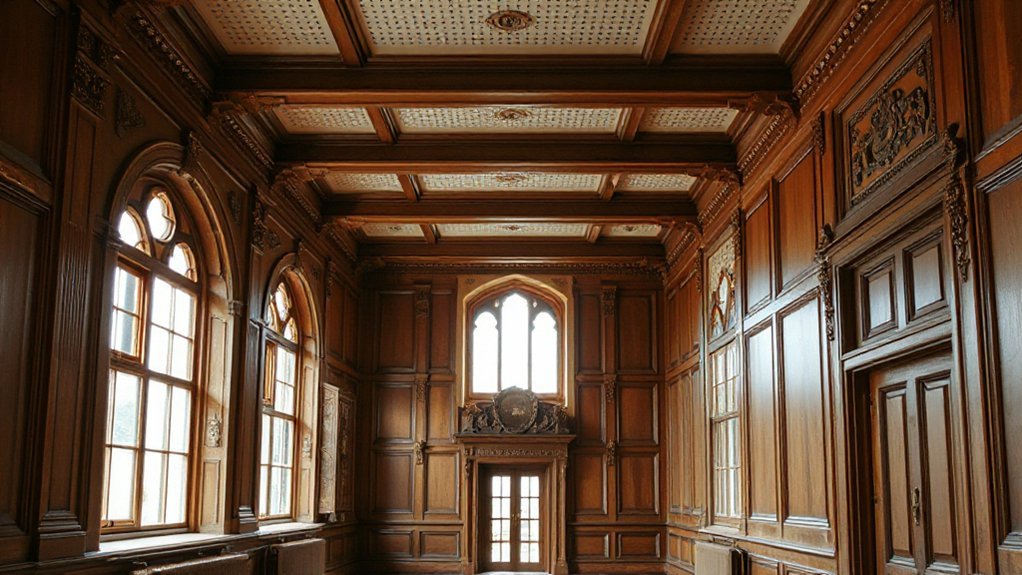
Acoustic design in heritage spaces must balance intelligibility, reverberation control, and preservation constraints to protect both occupants and historic fabric. You apply modern acoustics principles without compromising fabric, selecting materials that respect textures, gaps, and finishes while delivering clear speech and music.
You assess room geometry, audience size, and service noise, then tailor absorption, diffusion, and impedance to maintain authentic acoustical character. You implement discreet soundproofing techniques at envelope interfaces to minimize external intrusion while preserving ventilation and historic detailing.
You document performance targets, test procedures, and commissioning criteria to ensure long-term reliability. Collaboration with conservators and facilities teams ensures future maintenance aligns with conservation goals.
- Material compatibility and finish integrity
- Diffusion strategies for architectural surfaces
- Selective absorption to control reverberation
- Hidden soundproofing techniques at interfaces
Layouts That Respect Provenance and Improve Livability
You’ll align layouts with the manor’s provenance by prioritizing original sightlines, circulation patterns, and room adjacencies that reflect historic use. This approach preserves heritage cues while engineering flows that enhance everyday livability, from daylighting to accessible paths.
Respect Provenance Through Layouts
To respect provenance, begin by arranging spaces to preserve the manor’s original flow and key spatial cues while enhancing daily livability. You’ll map historic sightlines, door throats, and service cores, then integrate modern circulation without erasing sequence.
Prioritize proportional room scales, material transitions, and acoustic zoning to sustain rhythm while supporting contemporary use. Use restrained finishes that echo period character and align with long-term maintenance.
Implement flexible zones that can recalibrate for events, study zones, and family routines without compromising provenance. Align lighting, climate controls, and smart systems to minimize visual intrusion, embracing discreet technology and data-ready infrastructure.
Maintain provenance through precise adjacency logic, ensuring each room’s identity remains legible.
- Spatial sequencing
- Material harmony
- Hidden tech integration
- Flexible use without disruption
Keywords: Contemporary fashion, Digital marketing.
Improve Livability With Heritage Flow
Improve livability by translating heritage flow into clear, usable layouts that preserve provenance while meeting modern daily needs. You’ll map circulation that respects historic boundaries while enabling contemporary routines, avoiding disjointed zones and dead ends.
Prioritize adaptable spaces: rooms should flex between quiet study and communal gathering without erasing provenance. Integrate Modern technology discreetly, ensuring controls and interfaces blend with timber and plaster textures, preserving authenticity while enhancing efficiency.
Consider vertical and horizontal daylight strategies, balancing interior lighting with original fenestration to maintain ambience and reduce energy use. Implement lighting scenes that respond to occupancy and task, sustaining atmosphere without overwhelming features like cornices or archways.
Document decisions for future maintenance, ensuring provenance remains legible as uses evolve.
Lighting the Wing: Ambient Fixtures and Skylights
Ambient lighting sets the tonal foundation for the wing, balancing natural daylight with carefully selected fixtures to reveal architectural details without glare. You control intensity, color temperature, and zoning to support function and atmosphere, while preserving heritage character.
Lighting design requires precise calculations for glare control, lumen levels, and uniformity across surfaces, ensuring museums-worthy accuracy in a living space.
Fixture selection hinges on non-invasive mounting, dimmable drivers, and discreet finishes that harmonize with timber and plaster.
Skylights must be sealed, vented, and aligned with circadian goals to reduce energy use.
Strategic placement enables chiaroscuro without oversaturation, highlighting millwork and corbels while maintaining spatial rhythm.
- Daylight-linked dimming strategies
- Recessed, heritage-friendly fixtures
- Skylight glazing and shading options
- Control system integration and documentation
Redesigning Bathrooms and Kitchens With Sensitivity
You’ll balance sensitive material choices with authentic restoration goals, selecting finishes that respect historic character while resisting wear.
You’ll integrate timeless fixtures that honor period aesthetics yet meet modern performance standards.
You’ll prioritize clean lines and durable textures that coordinate seamlessly between bathrooms and kitchens, ensuring cohesive, low-maintenance functionality across the wing.
Sensitive Material Choices
What material choices best balance durability, aesthetics, and heritage considerations when redesigning bathrooms and kitchens in a manor wing? You select materials that endure wear while respecting provenance, leveraging period-appropriate textures and contemporary performance. Prioritize low-maintenance surfaces with proven resilience, and align color palettes to historic schemes without sacrificing modern utility.
Emphasize seamless waterproofing, archival-grade sealants, and joinery that minimizes visible modern fasteners. Incorporate subtle modern art influences and sustainable flooring to bridge eras without competing with original detailing. Consider non-porous, quarried-inspired stone alternatives for counters, and ceramic or glass splashbacks that echo historic glazes.
Guarantee lifecycle data informs procurement, installation, and striking, durable finishes that age gracefully.
- Material durability aligned with heritage
- Low-maintenance, archival-grade components
- Subtle modern art influences
- Sustainable flooring integration
Timeless Fixture Integration
How can you integrate fixtures that feel timeless rather than trendy while preserving the manor’s integrity? You approach bathroom and kitchen redesign with calibrated restraint, prioritizing proportion, material compatibility, and historic continuity.
Select fixtures engineered for durability and ease of maintenance, avoiding excessive ornamentation that competes with existing architecture. Favor metals and surfaces that patina gracefully, such as brushed nickel or pewter, and pair them with stone or ceramic finishes aligned to the building’s palette.
Document precise installation tolerances, ensuring plumbing runs respect original alignments and wall cavities. Consider historic landscaping and antique furniture cues when planning sightlines and alcove placements, so upgrades read as deliberate continuations rather than edits.
This disciplined methodology preserves authenticity while delivering modern function.
Extending the Wing: Garden and Courtyard Connections
Extending the wing to join the garden and courtyard requires a precise integration of existing historic fabric with new outdoor circulation paths, ensuring seamless access while preserving the manor’s legibility. You implement a direct, relievable flow between interiors and exteriors, aligning thresholds with key sightlines and preserving stone cues.
The design prioritizes Garden aesthetics and courtyard design, blending heirloom plants with contemporary hardscape. You specify durable, low-maintenance materials that echo the manor’s palette and minimize visual intrusion.
Long-term access is clarified through multilingual signage and tactful lighting, avoiding glare. The result is a coherent ecosystem where indoor activities spill softly outdoors, without compromising conservation values or historical interpretation.
- Align thresholds with historic lines
- Select durable, compatible materials
- Integrate legible wayfinding
- Balance plantings with hardscape presence
A Maintenance Plan to Keep the Restoration Alive
A maintenance plan is essential to preserve the restoration’s integrity and guarantee long-term performance. You implement a schedule that specifies inspection intervals, accepted tolerances, and documented remedial actions for every element of the manor wing.
You categorize components by material, load path, and historical significance, ensuring monitoring concentrates on performance-critical interfaces. You establish vibration, moisture, and thermal thresholds, automating alarms where feasible and recording deviations with time-stamped entries.
You define responsible parties, required qualifications, and contingency procedures to minimize disruption to visitors and occupants. You coordinate with conservation guidelines to preserve architectural styles while allowing measured upgrades.
You review outcomes after seasonal cycles, adjusting treatment protocols, condition flags, and refurbishment priorities to sustain authenticity without compromising structural and cosmetic stability.
Budgeting for a Gloucestershire Manor Wing
What’re the cost-driving factors behind restoring a Gloucestershire manor wing, and how can you budget to deliver durable heritage performance without compromising authenticity? You must identify material integrity, sourcing of period-accurate components, skilled craft labor, and contingency reserves as core drivers.
Allocate funds for structural stabilization, lime plaster, traditional timber framing, and heritage-grade finishes. Include budgets for luxury amenities and modern technology, but integrate them within authentic constraints to avoid overshoot.
Establish a phased funding plan with milestone reviews, risk allowances, and value engineering that preserves authenticity. Implement cost-tracking dashboards, supplier qualification, and warranty terms to reduce future remediation.
Maintain documentation for compliance and maintenance cycles. Align client expectations with measurable performance outcomes through precise scope and earned-value reporting.
- Contingency and risk planning
- Heritage-compliant specifications
- Phase budgeting and milestones
- Post-project maintenance funding
Timeline and Project Management for Heritage Work
Effective heritage project management requires a structured schedule that ties design approvals, permitting, and conservation milestones to discrete, measurable outcomes. You establish a critical-path timeline that aligns survey timelines, material sourcing windows, and iterative condition assessments with scheduled reviews.
Maintain a formal baseline plan, updated via weekly progress reports, risk logs, and change-control logs to preserve scope integrity.
Integrate Modern landscaping decisions early, defining vegetation removal, adaptive reuse, and site restoration milestones within constraint baselines.
Leverage Smart technology to monitor environmental conditions, moisture, and material performance, feeding real-time data to the project dashboard.
Implement milestone gates for approval, permit issuance, and quality verification, ensuring traceability of decisions.
Communicate progress succinctly to stakeholders, contractors, and conservation officers, preserving historic fabric while accelerating delivery.
Case Studies: Gloucestershire Manor Wing Makeovers
Case studies of Gloucestershire manor wing makeovers illustrate how meticulous condition assessments, material sourcing, and conservation-compatible renovations converge to preserve historic integrity while delivering modern utility.
You review first-hand examples to benchmark performance, noting how Modern architecture influences treatment choices and how Urban development pressures shape constraints. Each case demonstrates a disciplined workflow: diagnostic surveys, priority-setting, and cost-conscious sequencing that minimizes disruption.
- Structural stabilization with reversible interventions
- Matching historic fabrics through tested, available substitutes
- Code-compliant services integration harmonized with aesthetics
- Long-term monitoring plans to guarantee ongoing performance
These narratives reveal that precision planning, rigorous documentation, and collaborative oversight deliver reliable outcomes without compromising heritage value or future adaptability.
Frequently Asked Questions
How Long Does a Manor Wing Restoration Typically Take?
Typically, restoration of a manor wing takes 12–24 months, depending on scope. You’ll encounter historical preservation demands and architectural challenges, requiring meticulous planning, permits, skilled craftsmen, phased milestones, and rigorous QA to maintain structural and aesthetic integrity.
What Hidden Costs Should I Expect Early On?
Hidden costs surface early: 30% contingency helps cover overruns. You should focus on Cost estimation and Insurance considerations, detailing permits, scaffolding, and archival surveys. You’ll tighten budgets by documenting uncertainties, scope changes, and escalation clauses for subcontractor pricing.
Can Modern Kitchens Fit Without Altering Character?
Modern kitchens can fit without altering character, you just need precise planning. Prioritize Contemporary design with space optimization, integrating heritage elements subtly while preserving lines, materials, and acoustics, ensuring compliance, ventilation, and service access throughout the retrofit.
Are There Grants or Funding for Gloucestershire Projects?
Yes—Gloucestershire offers heritage preservation funding opportunities through national and local bodies, with grants and loans available for eligible projects. You’ll align proposals to criteria, coordinating schedules where coincidence boosts emphasis on conservation, and guarantee technical, publication-ready documentation.
How to Shortlist Reputable Heritage Contractors?
Shortlist reputable heritage contractors by evaluating their track record, references, and insurance, then request detailed proposals. Focus on Historical craftsmanship and Preservation techniques, scrutinize methods, timetables, and QA processes, and verify compliance with conservation guidelines and warranty terms.
Conclusion
You’ve charted a precise path from heritage context through budget and timeline, assembling a robust restoration plan. By verifying stone and timber, preserving sash windows where viable, and restoring mullions and detailing, you safeguard Gloucestershire’s character. Maintain a disciplined schedule and document decisions for future stewardship. Your approach is like a fine-turnished compass—clear, reliable, and direction-setting. With ongoing maintenance, the manor wing will endure as a measured, publication-ready exemplar of precision heritage work.
About the Author