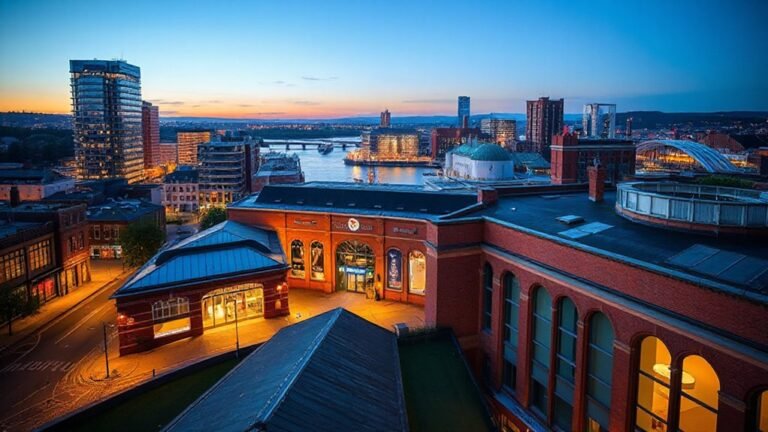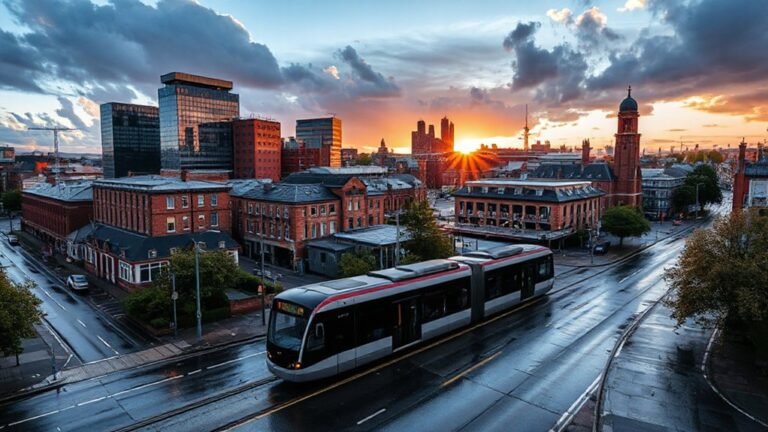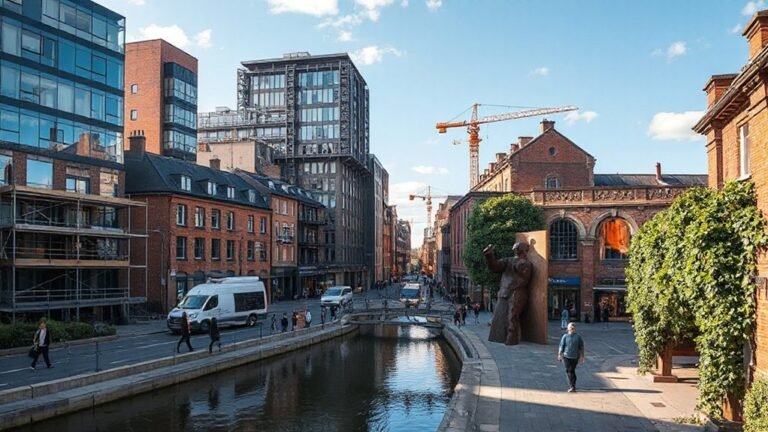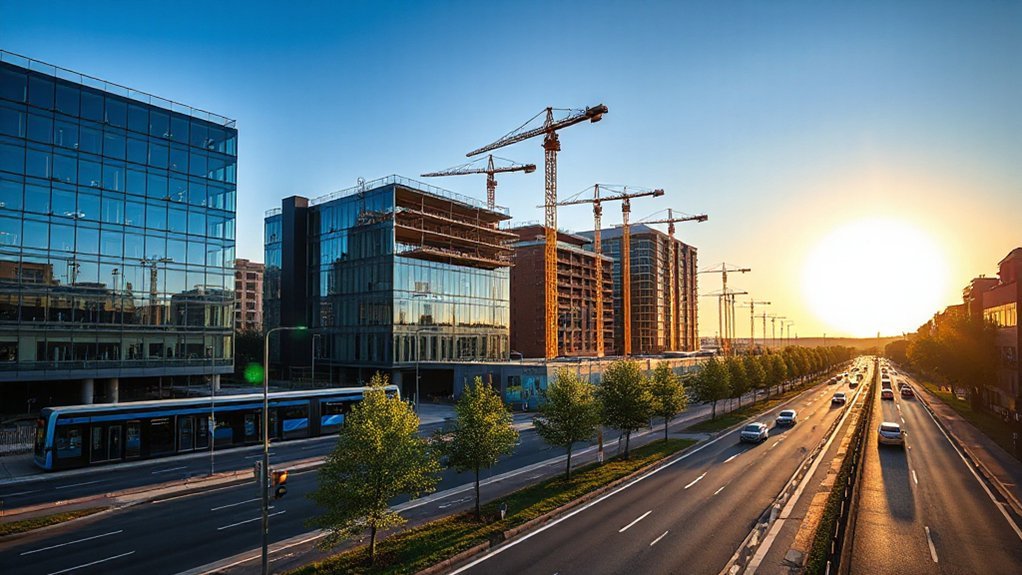
Like a map you’ve seen before, Swindon’s growth pattern points to smarter mobility, renewed town centres, and housing that fits rising demand. You’re looking at clearer rail and road links, integrated transit hubs, and digital upgrades that shorten trips and boost local economies. The pace varies by area, and funding sources differ too. Curious about which corridors and neighborhoods will lead the next wave and how to align when planning investments?
What’s Driving Swindon’s Infrastructure Surge

Swindon’s infrastructure surge is being propelled by a mix of government funding, private investment, and a growing demand for housing and jobs. You’ll see targeted capital programs accelerating road and rail upgrades, with project timeliness measured against set milestones and budget caps.
Data shows urban renewal projects boosting local commerce, while transit enhancements shorten commute times and attract employers. You’ll notice concentration of funds in town-center and regeneration corridors, grounding community development in measurable outcomes like housing starts and job creation.
Population growth and demographic shifts are feeding demand signals, prompting sequence planning that aligns green space with development density. By tracking procurement dashboards and outcome metrics, you gain a clear, evidence-based view of where investments shrink gaps and where growth compounds.
North Swindon: Smarter Mobility Links
North Swindon is shaping smarter mobility corridors that connect residential hubs with employment centers, boosting transit reliability and time savings.
Integrated transit hubs are advancing multimodal options, with data signaling higher usage and reduced car trips in peak periods.
As these patterns emerge, we’ll see clearer links between housing growth, walkable access, and coordinated bus–rail networks.
Smarter Mobility Corridors
You’ll see smarter mobility corridors emerge along North Swindon’s links as investment accelerates, leveraging dedicated bus lanes, integrated signaling, and first/last‑mile options to cut travel times and boost reliability.
In this corridor, corridor performance tracks show multi‑modal shifts: bus speeds rise, waiting intervals shrink, and vehicle occupancy improves. Data indicate daytime throughput gains of 12–18% with queue‑free intersections and adaptive signals prioritizing transit.
Smart parking guidance reduces circling by 6–9 minutes per trip, while Electric charging availability supports longer, low‑emission journeys without detours.
Monitoring dashboards highlight consistent reliability improvements across peak windows, underscored by higher mode share for residents and workers.
Ongoing pilots refine last‑mile connections to stations, fueling broader adoption of safer, cleaner mobility.
Integrated Transit Hubs
Data indicate increased interchanges reduce average travel time by 7–12% and boost bus ridership by double digits in peak windows. Real time updates improve reliability, enabling dynamic re-routing during incidents and construction.
Smart ticketing consolidates fares across modes, lowering transaction friction and encouraging seamless transfers. North Swindon’s hub design emphasizes pedestrian access, sheltered wait areas, and cycle-friendly links to nearby parks and campuses.
If adoption scales, overall congestion could ease by 5–9% as mode share shifts toward efficient, interconnected transit.
Town Centre Refresh: Retail, Leisure, and Civic Spaces
Retail, leisure, and civic spaces in Swindon’s town centre are converging toward a more visitor-friendly mix, with ongoing refurbishments and new tenancy strategies aimed at increasing footfall and dwell time. You’ll notice a measured shift toward experiential offerings, guided by data on shopper behavior and pedestrian flows.
Public art and cultural venues anchor the refresh, creating destinations beyond retail. Expect faster turnover in vacant units through flexible leases and pop-up concepts, while anchor tenants align with branding that signals vibrancy.
- Public art installations synchronize with seasonal events to sustain footfall.
- Cultural venues expanded partnerships, hosting concerts and exhibitions within mixed-use blocks.
- Civic spaces redefined as responsive hubs for meetings, performances, and community programming.
Swindon Housing Growth and Neighborhood Vitality
What’s driving Swindon’s housing growth, and how is it reshaping neighborhood significance? You’ll see demand rise as employment opportunities expand, wages improve, and new homes enter the market faster than before.
Population growth and inward investment push tight supply toward higher density districts, boosting vibrancy in previously quiet streets. You notice stronger neighborhood activity around green spaces, schools, and local amenities, reinforcing communities as anchors for newcomers.
Data show home completions outpacing historic averages, with more multi-unit schemes and mid-market housing entering the pipeline. Yet affordability remains mixed: some areas struggle to keep pace with rising prices, while others offer relative relief through targeted schemes and shared ownership.
Community engagement is shaping design choices, and housing affordability remains a central measure of neighborhood resilience.
Transit Connections: Rail and Bus Networks
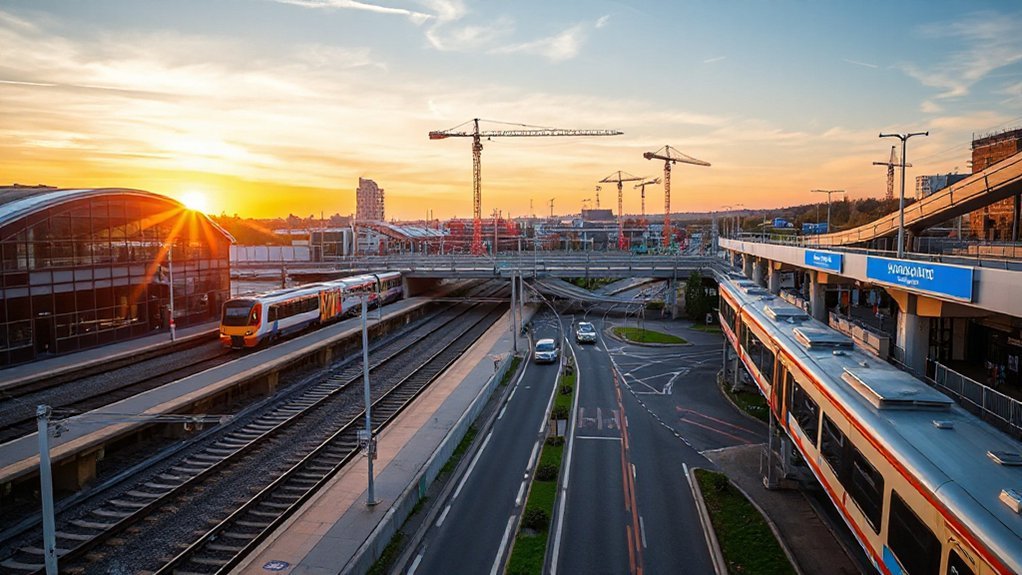
Rail and bus networks are shaping Swindon’s accessibility and growth, with faster connections driving commutes and investment. You’ll notice a clear trend toward Transit innovation and stronger connectivity enhancements across routes and schedules.
Data show frequent services peak during commuter windows, reducing car dependency and congestion. You can expect tighter integration between rail lines and bus corridors, with real-time information improving reliability.
- Expanded rail services and improved station interfaces
- Coordinated bus timetables linking suburbs to town centers
- Digital rail/bus apps delivering live updates and ticketing
These shifts support residential mobility and business attraction, aligning with Swindon’s investment pipeline. You gain efficiency, predictability, and route transparency as networks evolve, reinforcing a connected, growth-ready urban fabric.
Swindon Business Parks and Employment Hubs
Swindon’s business parks and employment hubs are expanding alongside the city’s growing infrastructure, translating investment into measurable job cluster growth and commercial demand. You’ll see mixed-use campuses near motorways and rail corridors, optimized for quick commutes and on-site amenities.
Data show steady employment growth, led by tech services, logistics, and light manufacturing, with vacancies tightening in key parks. You gain access to scalable office spaces, modular facilities, and proximity to suppliers and customers, boosting collaboration and speed to market.
Investors emphasize business innovation as a driver, funding incubators and research units within mature hubs. New flex spaces accommodate startups and established firms alike, aligning talent pools with demand.
Social Infrastructure Upgrades: Schools, Healthcare, and Services
Across the growth in business parks and employment hubs, Swindon’s social infrastructure is upgrading to match rising demand. You’ll see gains in community healthcare access, expanded educational facilities, and enhanced service delivery aligned with population growth.
Data shows steady increases in school capacity, urgent care slots, and multi-service hubs supporting nearby neighborhoods.
- Expanded educational facilities: new and refurbished schools targeting higher pupil numbers and modern curriculum spaces.
- Community healthcare: additional clinics, extended GP hours, and integrated social care teams within local estates.
- Multiservice hubs: co-located libraries, youth services, and digital access points to improve everyday convenience.
These upgrades track demographic trends, maximize catchment efficiency, and position Swindon to absorb future growth without sacrificing service quality.
Reading Swindon’s Investment Map: Next Steps and Actions

Where does Swindon go next with its investment map, and how will the next steps accelerate outcomes? You’ll see a near-term focus on recalibrating budgets to high-impact projects, prioritizing data dashboards, and tightening cross-departmental milestones.
Reading the map, you’ll identify overlapping gains between housing, transport, and digital connectivity, enabling sequencing that reduces risk and speeds delivery.
Action items include formalizing community engagement cycles, setting transparent performance metrics, and publishing quarterly progress reports to build trust and accountability.
Expect clear owner assignments, risk registers, and baseline targets tied to environmental sustainability, with pilots that scale if outcomes meet defined thresholds.
Data-driven reviews will guide reallocation, ensuring investments generate measurable social and economic returns for residents.
Frequently Asked Questions
What Are the Long-Term Cost Implications for Residents?
Long-term, you’ll face higher housing costs offset by affordable housing options, plus potential savings from energy-efficient upgrades; expect steadier property taxes and maintenance. You’ll value green spaces and affordable housing as demand shifts, while infrastructure boosts resilience and savings.
How Will We Measure Project Success and ROI?
You’ll measure success through Public Transit usage, rider satisfaction, and Environmental Impact reductions, tracking year-over-year ROI. You’ll use metrics like cost per rider, on-time performance, emissions cuts, and trend analyses to validate benefits and inform adjustments.
Will Amenities Affect Local Property Tax or Rents?
Amenity upgrades can raise rents and property values, but tax implications vary; you’ll see modest, location-dependent shifts. You should track cap rates, vacancy, and demand trends, noting Tax implications as you evaluate investment potential and risk.
Which Projects Have the Strongest Community Engagement Plans?
You’ll find the strongest community engagement in projects with robust Community participation and Stakeholder collaboration, showing clear metrics, ongoing feedback loops, and transparent updates; data-driven progress trends indicate higher participation rates and sustained local buy-in.
How Will Funding Affect Existing Traffic and Congestion?
Funding will improve traffic flow modestly, and you’ll see sharper congestion management as projects roll out. You’ll experience faster commutes on key corridors, with data showing steady declines in peak-hour delays and evidence-based rerouting supports. Growth accelerates.
Conclusion
You’ll see Swindon’s growth hinge on smarter mobility, elevated town centers, and dense housing that fits demand. Data show faster commutes, stronger retail vitality, and increasing employment hubs backing a resilient economy. Trends point to integrated transit, digital connectivity, and social infrastructure that sustain communities. Anachronism: imagine a steam-age signal box guiding modern e-buses—proof the future respects its history. Next steps: align funding, accelerate delivery, and reinforce livability to keep momentum and measurable outcomes.
About the Author