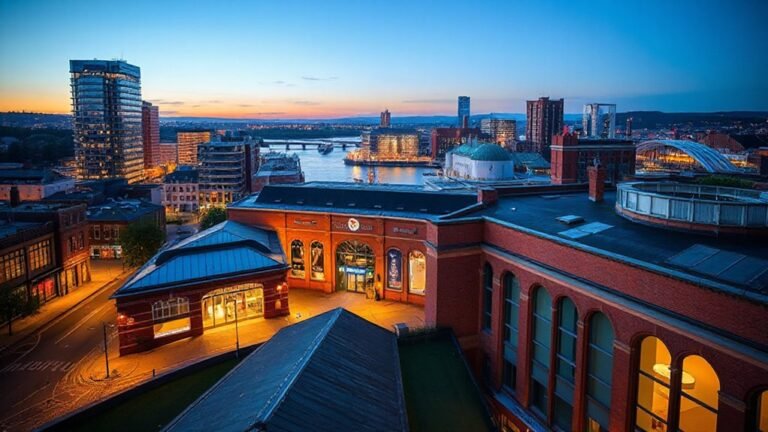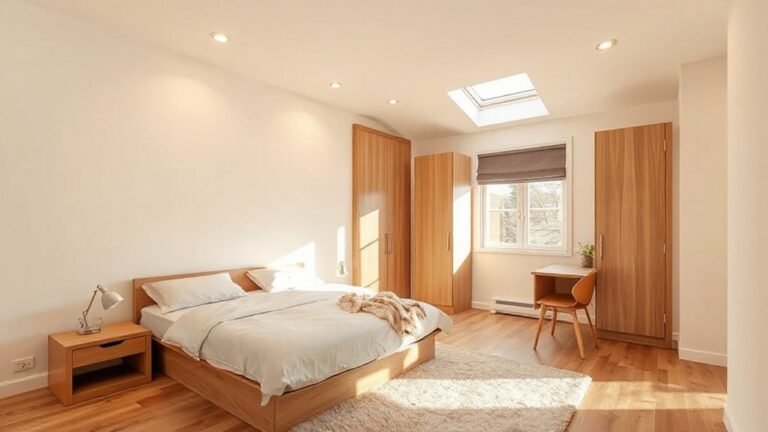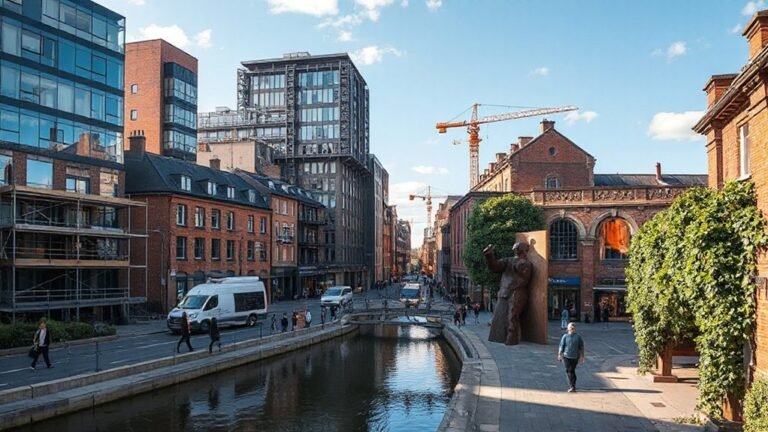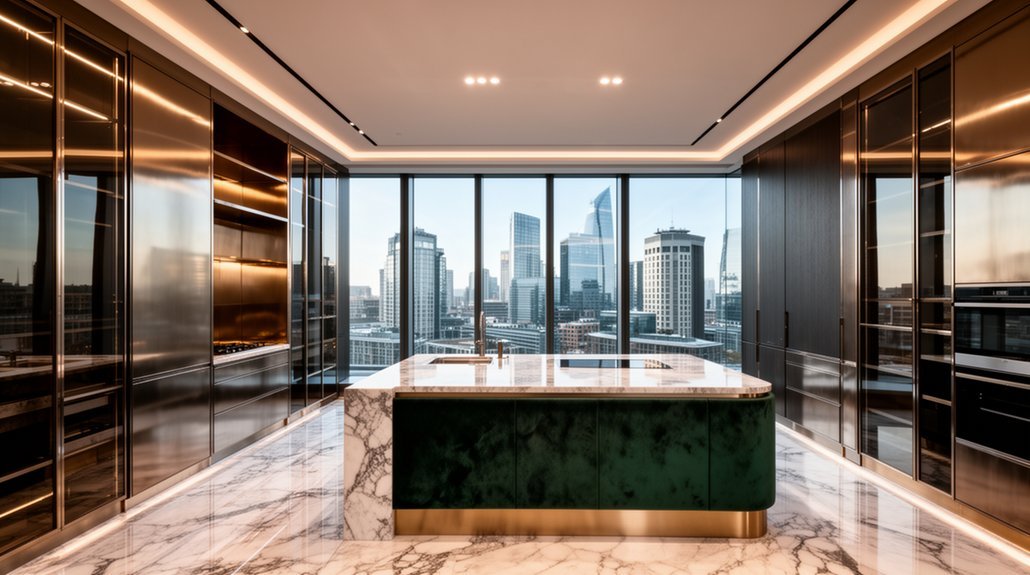
A Canary Wharf penthouse revamp with high-end finishes prioritizes performance, durability, and timeless style, delivering tangible value from day one. You’ll balance luxury with precise detailing through custom millwork, brushed brass accents, and textures that age gracefully under varied light and use. Plan with a clear budget (8–12% contingency) and phased milestones for design, permitting, procurement, and installation. Smart lighting, integrated shading, and scalable systems maximize comfort and flow—with results that invite you to explore more beyond the surface.
What High-End Finishes Really Do for a Canary Wharf Penthouse
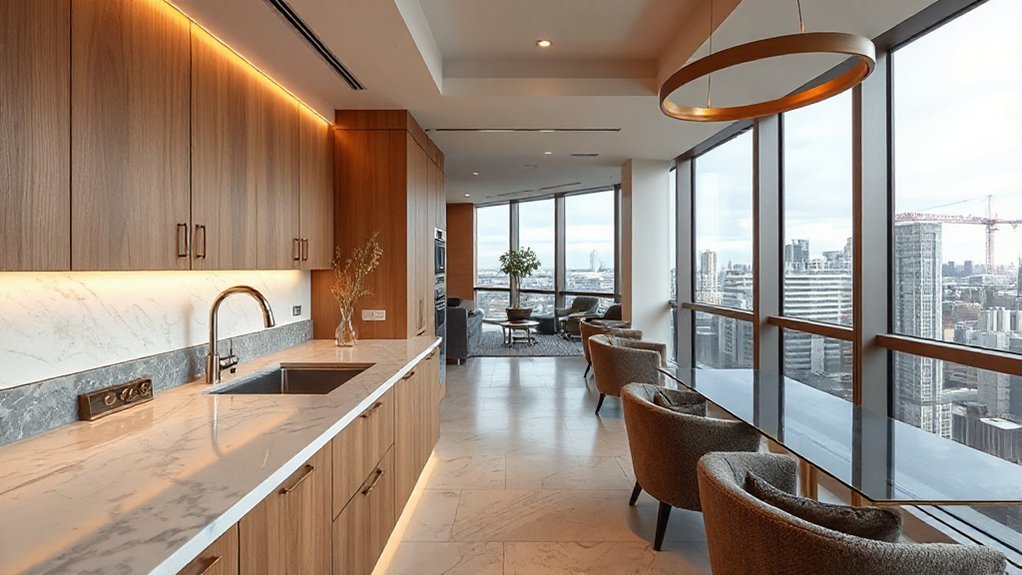
High-end finishes do more than decorate a Canary Wharf penthouse; they define its performance, durability, and perceived value. You engage with materials that endure daily use while maintaining aesthetic integrity under varied climates and loads.
Precision tolerances in cabinetry, millwork, and surfaces minimize wear pathways, reducing maintenance cycles and downtime. Your choice of luxury amenities influences thermal comfort, acoustics, and air quality, creating a measurable uplift in resident satisfaction.
Consider finish depth, sealants, and joints to prevent delamination and staining, preserving look and function over time. Interior branding emerges through cohesive material palettes, aligning textures, hues, and metals with the building’s identity.
The result is a resilient, high-performance environment that communicates sophistication and value to owners, tenants, and visitors alike.
Plan and Timeline: Budgeting for a Canary Wharf Penthouse Renovation
You’ll establish a budget allocation strategy that aligns with your project goals and risk tolerance, detailing how costs break down across trades, materials, and contingencies.
A clear timeline milestones overview will map procurement, permitting, and construction phases to achievable due dates and decision points.
This structured approach guarantees financial control and schedule discipline from the outset, enabling proactive adjustments as design and site realities evolve.
Budget Allocation Strategy
A clear budget allocation plan is essential for delivering a Canary Wharf penthouse renovation on time and within scope. You’ll establish a disciplined split across core categories: structure and services, finishes and fixtures, furniture and delivery, and contingency.
Allocate a robust contingency (typically 8–12%) to absorb unforeseen costs without compromising scope. Prioritize luxury amenities and design innovation as investment levers, indexing spend to measurable quality and resale value.
Implement zero-based budgeting for major packages to prevent drift, and align approvals with stage gates to maintain cashflow discipline. Track changes with a formal change-control process, maintaining auditable records for variance analysis.
Use cost benchmarks from comparable Canary Wharf projects to validate assumptions, and set risk-adjusted allowances for supplier lead times and material availability. Communicate forecasts monthly to stakeholders to sustain confidence and progress.
Timeline Milestones Overview
To keep the budget plan actionable, establish a phased timeline that aligns each cost envelope with gate approvals and procurement milestones. You’ll map milestones to project controls, ensuring buy-in before triggering next-stage spends.
Define core phases: design finalization, permitting, supplier procurement, construction, and commissioning. Attach measurable gates: design sign-off, permit receipt, order lead times, on-site readiness, and handover criteria.
For luxury amenities and high‑end finishes, encode lead times and installation sequencing early to avoid cost escalations. Tie contingency buffers to risk assessments for each phase, and document approvals in a central dashboard.
Maintain synchronization between interior styling decisions and budgetary forecasts, revising as changes occur. Regular reviews minimize variance, preserve cash flow, and sustain schedule integrity across Canary Wharf’s premium environment.
Brushed Brass Accents: Elevating Trim, Fixtures, and Hardware
Brushed brass finishes elevate trim, fixtures, and hardware with a refined, cohesive presence throughout the penthouse. You’ll see how consistent patina, contrast, and lighting interplay to enhance architectural lines and material richness.
This discussion starts by outlining specification choices, installation tolerances, and maintenance considerations to guarantee lasting performance and a polished aesthetic.
Brushed Brass Finishes
In modern interiors, brushed brass finishes elevate trim, fixtures, and hardware with a warm, sophisticated sheen that pairs seamlessly with dark woods and cool neutrals. You’ll note a subtle, tactile grain that resists fingerprints while delivering durable corrosion resistance, ideal for high‑use areas.
Apply brushed brass to door handles, bath rails, and cabinetry frames to create a cohesive, luxe palette without overpowering the room. The material works with both matte and satin textures, enhancing contrast against stone, glass, and concrete surfaces.
When aligned with luxury materials and design trends, it supports a refined ambiance while maintaining practical maintenance requirements. Use selective contrast—brushed brass on select hardware, brushed nickel elsewhere—to optimize visual hierarchy and guarantee a timeless, high‑end finish.
Trim and Hardware Elevation
The use of brushed brass accents on trim and hardware elevates both function and aesthetics, unifying doors, cabinetry, and architectural details into a cohesive, premium palette. You’ll notice how precise trim lines and hardware profiles reinforce luxury aesthetics while enhancing daily use.
This approach prioritizes material durability, ensuring long‑term performance in high‑traffic spaces.
- Aligns door and drawer pulls with cabinet hardware for consistent tactile feedback
- Emphasizes clean joinery and concealed fasteners to minimize visual clutter
- Balances glare reduction with warm patina that ages gracefully
- Integrates switch plates and hinges into the overall metal ecosystem for seamless continuity
Custom Millwork: Tailored Storage and Architectural Details
Custom millwork transforms your penthouse by delivering tailored storage solutions and precise architectural details that maximize space without compromising style. You specify built-ins that integrate with load paths, utilities, and evolving uses, ensuring seamless access and maintenance.
The system prioritizes durable materials, accurate tolerances, and clean joinery, yielding superior fit and finish. You’ll deploy custom storage to reduce visual clutter while increasing usable volume, with drawers, pull-outs, and cabinet depths calibrated to daily tasks.
Architectural details—revealing panels, reveals, and micro-returns—are tuned to the room’s geometry, creating cohesive lines that read as intentional design rather than afterthoughts.
The result is a disciplined, shop-foured aesthetic that enhances flow, acoustics, and lighting control, without sacrificing accessibility or future adaptability.
Micro-Cement Floors and Solid Colors: A Seamless Look
Micro-cement floors create a continuous backdrop that unifies the penthouse’s spaces, delivering a seamless, low-profile surface that resists wear and enhances light diffusion. You’ll achieve a restrained palette by pairing the cement with solid colors, maintaining visual cohesion across zones while preserving material honesty.
This approach supports precise detailing, easier maintenance, and fewer seams in high-traffic areas.
- Align color choices with the architectural palette to reinforce flow.
- Choose low-VOC, sustainable material options without compromising performance.
- Integrate artistic wall treatments to add depth without interrupting the monochrome continuum.
- Guarantee substrate preparation supports durability and minimizes cracking risks.
Result: a refined, hygienic, durable surface that complements contemporary cabinetry, millwork, and lighting.
Lighting and Views for Day-to-Night Ambiance
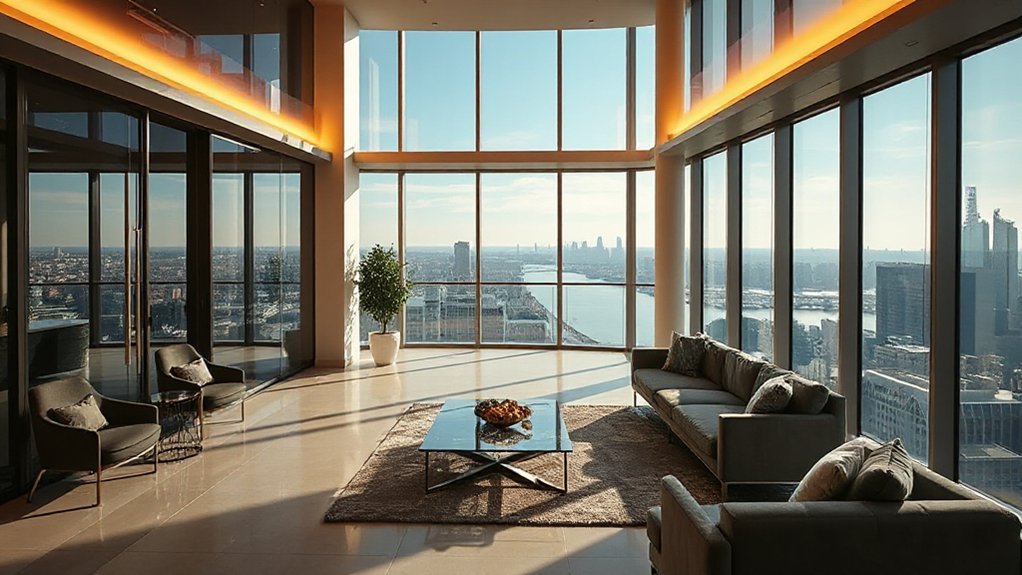
To harness the seamless backdrop established by micro-cement floors, the penthouse’s lighting design must sculpt daylight and artificial illumination as a single, coherent narrative. You’ll integrate daylight harvesting with programmable luminance, ensuring constant color temperature and glare control across zones.
Use layered layers: ambient, task, and accent to shape views toward Canary Wharf and the outside skyline while preserving materials’ true tones. Luxury amenities are synchronized with scenes that adapt to occupancy, time, and weather, maximizing comfort and energy efficiency.
Smart home integration governs dimming, shade positioning, and scene recall, enabling seamless progression from workday illumination to intimate evening ambiance. Maintain precise metrics for luminance, CRI, and uniformity, documenting performance for ongoing calibration and operator training.
The Layout Strategy: Prioritize Light, Space, and Flow
The layout strategy centers on shaping light, space, and flow as a unified system, aligning architectural geometry with daylight patterns and programmable illumination. You prioritize open floorplans and natural lighting to create perceptual spaciousness, minimizing barriers while preserving function. The result is a legible, adaptable plan that guides movement, sightlines, and daylight penetration.
- Align room geometry with sun paths to maximize natural lighting without glare.
- Zone spaces for clear, unobstructed circulation and ergonomic access.
- Use operable partitions or glazing to modulate openness by need.
- Integrate lighting controls that respond to occupancy and daylight levels.
This approach facilitates cohesive progressions between living, working, and entertaining zones while maintaining architectural integrity and high-end finishes throughout.
Materiality and Texture: Balancing Warmth With Modern Silhouettes
Materiality and texture in this Canary Wharf penthouse strike a precise balance between warmth and the clean lines of modern silhouettes. You’ll note how surface choices communicate tactility without diminishing precision.
Elevate warmth with controlled timber tones and tactile stone or concrete—selected so textures remain legible at a glance and under artificial light. The interplay creates textural contrast across floors, walls, and furnishings, guiding eye movement and acoustic performance.
Prioritize material durability in high-use zones, pairing durable finishes with refined surfaces to sustain appearance over time. Subtle gloss, matte, and micro-etched treatments are employed to avoid glare while preserving legibility of form.
The result is a cohesive material language that supports minimalism, yet remains inviting, resilient, and adaptable to evolving occupancy needs.
Practical Upgrades That Boost Value Without Compromising Flow
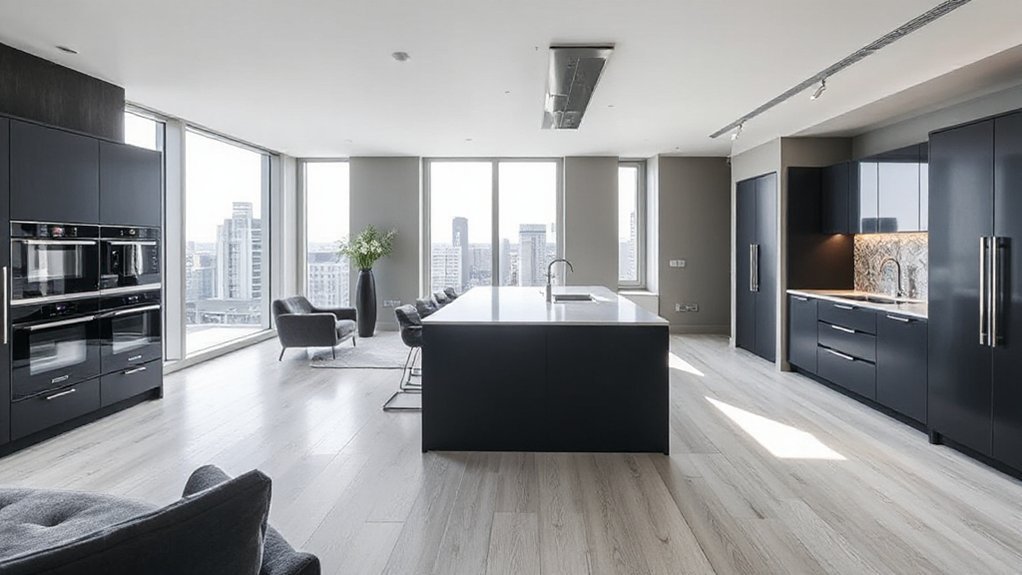
If you want to boost value without breaking the flow, focus on targeted upgrades that enhance function and perception with minimal disruption. You’ll pursue precision over spectacle, prioritizing systems that read as seamless and premium.
Key moves include integrating luxury amenities that feel cohesive, not retrofitted, and deploying smart home integration to centralize control without clutter.
- Upgrade core systems (HVAC zoning, lighting, and shading) for comfort and efficiency.
- Implement smart home integration that centralizes control while preserving architectural lines.
- Select hidden, high-end finishes and hardware that read refined under natural and artificial light.
- Phase renovations to preserve flow, using modular, scalable components for future updates.
The result is a balanced, high-value upgrade that sustains the penthouse’s flow and perceived luxury.
Frequently Asked Questions
How Do High-End Finishes Affect Resale Value in Canary Wharf?
High-end finishes raise resale value in Canary Wharf by signaling luxury interior quality and durability. You’ll attract premium buyers, especially with upscale appliances, which substantiate value, reduce negotiation friction, and shorten market time through measured ROI.
What Permits Are Needed for Luxe Penthouse Renovations Here?
You need planning and building permits from your local council, plus electrical and structural approvals as required. You’ll install luxury appliances and a smart home system, ensuring compliance with fire, gas, and safety codes for luxe renovations.
How Long Does Demolition Impact Building Management Access?
Demolition typically triggers access restrictions for several days to weeks, depending on scope and approvals. You’ll experience construction delays as building management coordinates with contractors, security, and neighbors. You should plan contingencies around these access constraints and permit timelines.
Can Upgrades Be Reversible for Changes in Taste?
Yes, upgrades can be reversible if you plan with modular, non-destructive methods, ensuring future changes are feasible. You’ll prioritize furniture customization and color palette choices that future-proof aesthetics without compromising structure or resale value.
What Maintenance Schedules Accompany Premium Materials?
Suddenly, you’ll maintain premium systems with a strict schedule: luxury appliances receive quarterly inspections, decorative fixtures monthly wipe-downs, and humidity controls biweekly checks. You stay proactive, preventing downtime, protecting finishes, and sustaining performance across all luxury features.
Conclusion
You’ll see how high-end finishes redefine a Canary Wharf penthouse—from brushed brass accents to micro-cement floors, every choice sharpens light, flow, and perceived value. Plan with discipline, budget diligently, and pick materials that age gracefully. For instance, a real-world case saved 12% on time by aligning millwork with hidden storage, then gained instant resale appeal. Imagine your space: seamless textures, tailored storage, and a daytime-to-nightscape rhythm that feels both premium and practical.
About the Author