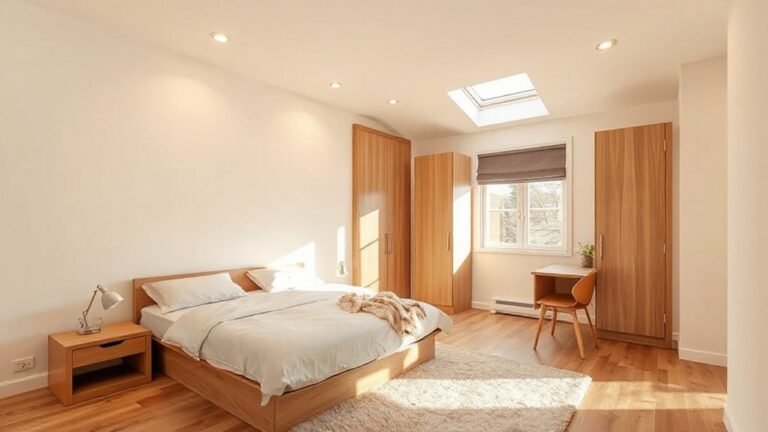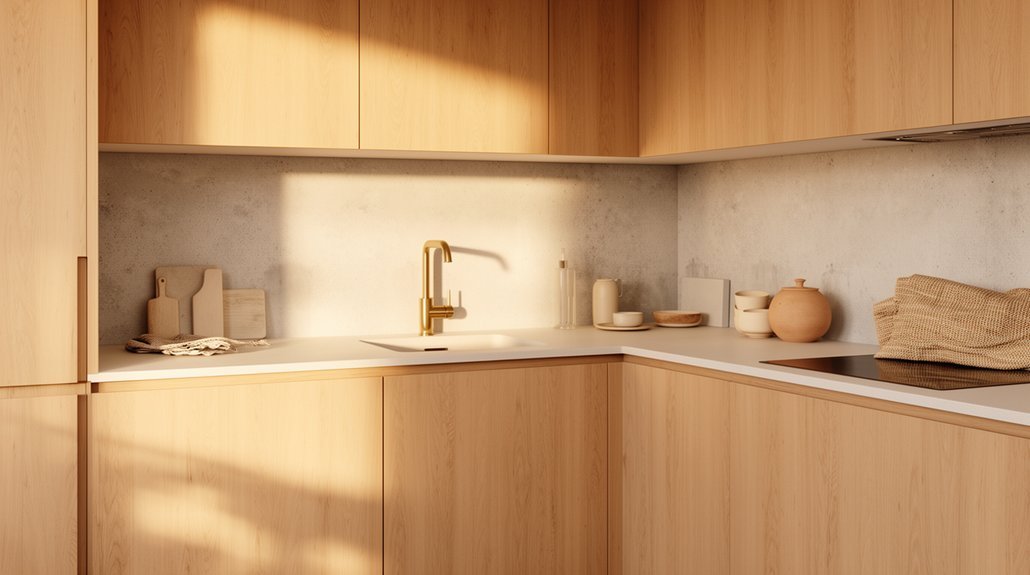
To achieve a warm, natural Scandi kitchen, start with a restrained palette of warm beige, cool ivory, and dusty gray, pairing visible timber cabinetry and countertops with matte ceramics, linen, and muted wool. Layer textures from wood, ceramics, linen, and leather, and use eco-friendly finishes. Implement layered lighting—ambient, task, and soft uplights—while keeping wiring hidden. Design clear work zones with a logical work triangle and ample counter space, plus concealed storage and cohesive hardware. You’ll discover more as you continue.
What Makes a Kitchen Feel Warm in Scandi Design
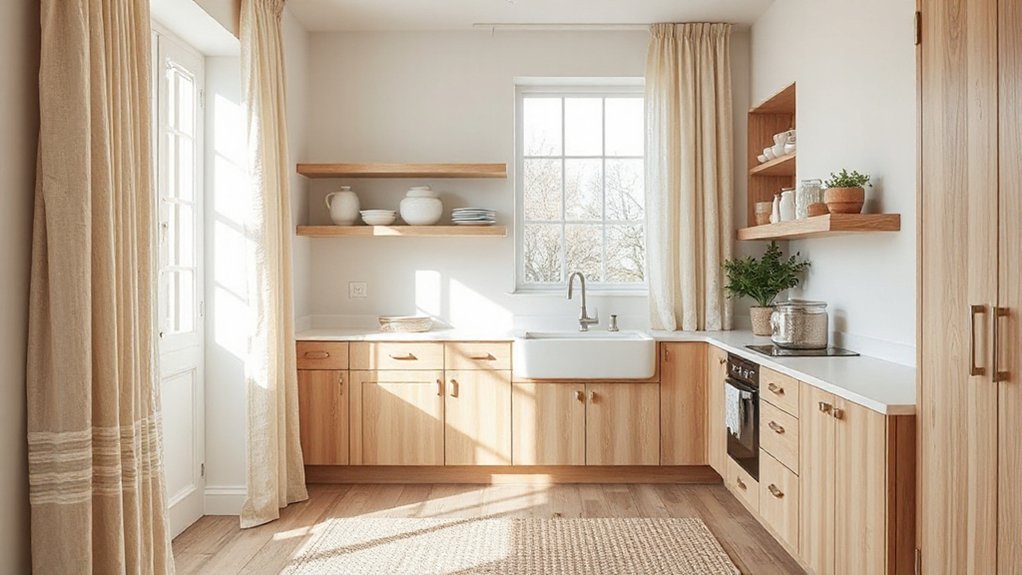
Warmth in a Scandi kitchen comes from a careful balance of light, texture, and tactile materials. You create it by pairing matte surfaces with soft edges, letting natural light saturate warm wood tones, and choosing fabrics that invite touch.
Vintage accents anchor the space, adding character without clutter, while clean lines preserve the design’s restraint. Color psychology guides your palette: earthy neutrals feel grounding, and a restrained accent color elevates mood without overpowering the room.
You laminate countertops to mirror wood warmth, install open shelving for curated display, and guarantee your seating invites lingering. Lighting should be layered—overhead, task, and ambient—to sculpt warmth after dusk.
The result is a calm, enduring atmosphere that remains functional, precise, and unmistakably Scandi.
How to Choose a Light Timber and Neutral Palette for Scandi
Choosing a light timber and neutral palette for Scandi styling hinges on restraint and intentional contrast. You’ll select timber grain as the quiet backbone, then pair it with restrained Neutral tones to preserve calm, cohesive spaces.
Start with a light, unvarnished wood for cabinetry or countertops, ensuring the grain remains visible and tactile.
Limit your palette to three key Neutral tones—warm beige, cool ivory, and dusty gray—so textures don’t overwhelm the room.
Introduce contrast through hardware, fixtures, or textiles rather than color blocks, keeping accents deliberate and sparse.
Consider matte finishes to soften reflections and emphasize warmth.
Avoid busy patterns; let simplicity speak.
Plan lighting to enhance natural tones, ensuring every element contributes to an airy, balanced, timeless Scandi environment.
How to Mix Textures for Warmth and Breathability
Texturing in Scandi styling blends warmth with breathability by layering tactile surfaces that feel both inviting and uncluttered. You achieve balance through deliberate textural contrasts that read as calm, not busy. Start with a soft base: matte ceramics, linen textiles, and a muted wool throw.
Introduce material contrast with a timber surface, a crisp ceramic, and a woven rug—each piece adds depth without crowding the sightline. Maintain propulsion with light airiness from open shelving and glass.
Allow warmth to emerge from burlap, cork, and leather accents, kept minimal. Textural layering should feel intentional, not busy. Subtle shifts in sheen differentiate materials, while consistent color echoes unify the scheme.
- Soft textiles paired with smooth surfaces
- Matte, glossy, and woven interplay
- Light timber and stone balance
- Quiet leather accents
- Open shelving for airiness
Uncluttered Storage Strategies for a Calm Scandi Kitchen
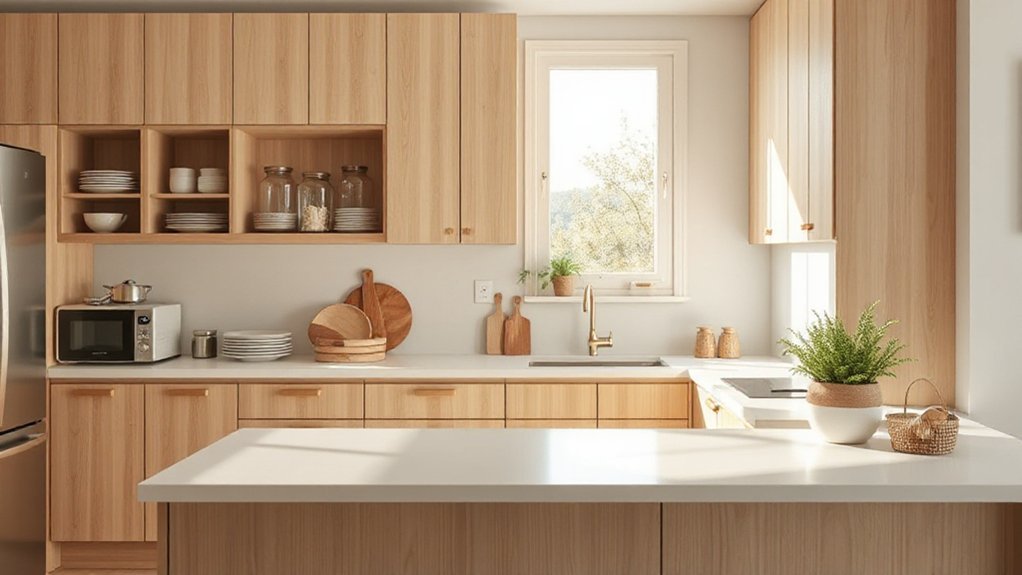
To keep a calm Scandi kitchen, start with clear cabinet essentials you can access at a glance.
Embrace hidden aesthetic storage to maintain clean lines without sacrificing function.
Prioritize simplicity and order to reinforce the uncluttered, serene feel typical of Scandi design.
Clear Cabinet Essentials
Clear cabinets keep your Scandi kitchen calm by showing what you use most while keeping surfaces free.
You’ll curate essentials with intention, pairing function and form to support daily rhythm. Minimal hardware, clean lines, and light wood tones anchor the space, while selective decor nods to vintage accents without crowding the shelves. Group items by use, not alphabet, and keep lids, blades, and bowls within easy reach.
- Everyday mugs and glassware, stacked neatly
- Core pantry staples in uniform containers
- Baking essentials in a slim, labeled tray
- Small appliances tucked behind doors
- Color blocking with a single accent hue across a few pieces
This approach preserves calm, practical elegance, letting textures and natural light define the room.
Hidden Aesthetic Storage
Use uniform containers to create calm, repeating silhouettes and reduce decision fatigue at the counter. Choose concealed organization solutions—soft-close drawers, integrated bins, and magnetic strips—so tools vanish when not in use. Labelled interiors guide quick finds without disrupting the aesthetic, supporting a clutter-free workflow.
Embrace hidden aesthetic storage as a design principle: function and form align, so your kitchen feels spacious, warm, and effortless to maintain.
Lighting That Enhances Natural Tones and Mood
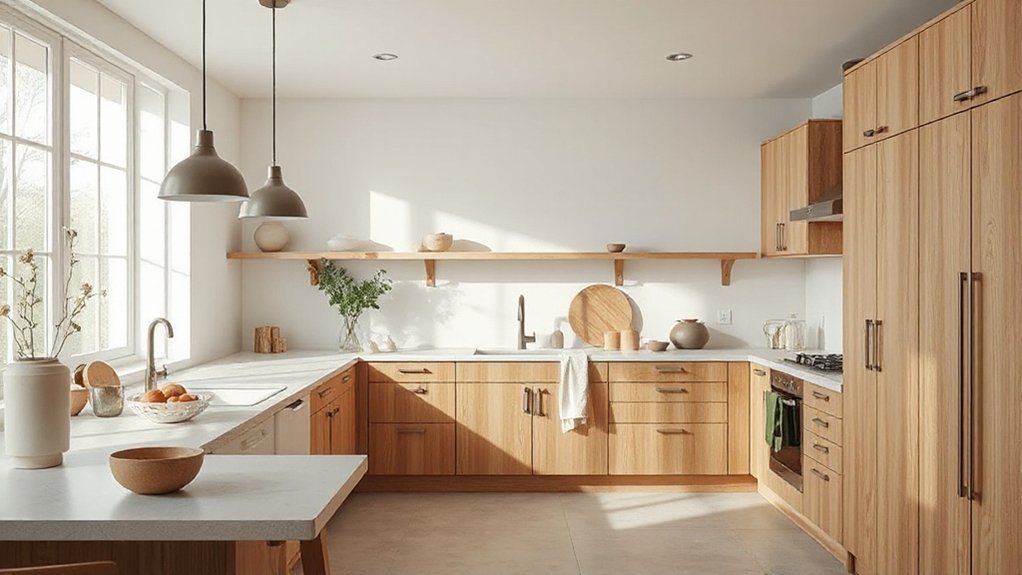
When you design lighting for a Scandi-inspired kitchen, aim to enhance natural tones and mood with simplicity and intent.
- Choose botanical lighting that mirrors daylight, blending with wood and stone textures.
- Use warm, dimmable LEDs to create mood-enhancing fixtures without glare.
- Position soft uplights to sculpt cabinetry edges and preserve an open feel.
- Combine pendant forms with matte finishes for tactile depth.
- Keep wiring invisible and fixtures uncluttered to sustain calm, airy lines.
This approach emphasizes understated elegance, core to Scandi style, while delivering functional brightness.
Prioritize consistency in color temperature and brightness so natural materials breathe. You’ll achieve a space that feels cohesive, inviting, and purposefully lit.
Cabinets and Counters for an Airy, Calm Feel
In an airy, calm kitchen, cabinets and counters should feel light, cohesive, and tactile without dominating the space. Choose flat-panel or softly framed cabinetry in pale woods or whitewashed tones to reflect Scandinavian simplicity, ensuring consistent grain direction for visual harmony.
Opt for durable, eco-friendly finishes that resist streaking and wear, such as water-based lacquers or matte-poly coatings, and avoid heavy gloss.
Counters benefit from quartz, concrete-look porcelain, or pale stone with subtle veining, kept cool and unbusy.
Introduce vintage accents sparingly—handles, a small display shelf, or a single era-appropriate appliance—to add character without clutter.
Maintain a restrained palette, letting natural light and texture define the room, while ensuring joints and edges are clean, precise, and understated.
Soft Furnishings That Add Tactility Without Clutter
Soft furnishings in a Scandi-inspired kitchen should feel tangible yet restrained, adding warmth and texture without clutter. To achieve this, focus on textile layering that stays calm and cohesive, avoiding visual noise while elevating tactility.
Choose natural fibers with subtle surface interest, like linen, cotton, and wool, and keep color to a restrained palette. Prioritize tactile accessories that serve a purpose—think soft, durable throws draped over a chair, a knit pouf, or a felted placemat set.
Maintain clean lines and avoid excessive pattern mixing; repetition is your ally. The result is a curated sense of depth rather than busy ornamentation.
Use these restrained textures to invite touch and dwell time without overwhelming the kitchen’s simplicity.
- textile layering
- soft throws
- knit pouf
- felted placemats
- tactile accessories
Incorporating Woven Accents and Natural Materials
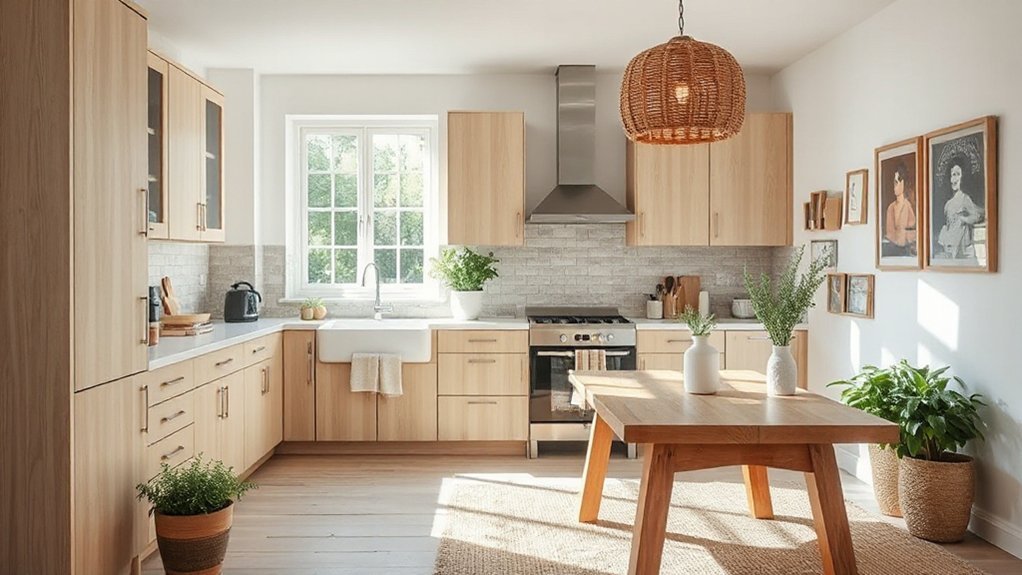
Woven accents bring tactile depth to a Scandi-inspired kitchen while keeping the space calm and cohesive. You elevate this calm through strategically chosen pieces that emphasize texture over noise.
Start with a light, open-weave basket for countertop storage, then layer woven textiles—dish towels, runners, and a sisal rug—to create subtle rhythm without visual clutter.
Incorporate natural materials prominently: a butcher-block peninsula, stone countertops, and oak or ash cabinetry with a matte finish. Let sunlight illuminate these elements to enhance warmth and grain.
Keep color restrained—creamy whites, ash, and warm greige—so woven accents read as organic notes rather than focal points.
Finally, balance materials to avoid competing textures; the result is cohesive, functional, and elegantly understated.
Practical Layout Tips for Flow and Function
Start with a layout that prioritizes flow, ensuring work zones—prep, cook, clean—form a clear, uninterrupted path.
Put function first: place the sink, stove, and fridge in a practical triangle, and keep storage within arm’s reach of each zone.
Use open sightlines and ample clearance to link prep surfaces to dining or seating areas, so movement feels effortless.
Layout for Flow
Great flow in a kitchen hinges on practical layout choices. You’ll optimize clearance, zoning, and sightlines to support quick meals and relaxed gathering. Prioritize a clear work triangle, with prep, cooking, and cleanup spaces unobstructed by clutter.
- Position the sink near prep zones for effortless rinsing and stacking
- Allow 36–42 inches of working clearance at counters and islands
- Place the fridge and pantry within two steps of the prep zone
- Create dedicated hot and cold zones to minimize cross‑traffic
- Layer vintage accessories with modern appliances for a cohesive vignette
This layout respects Scandi simplicity, balancing warmth and efficiency. You gain intuitive movement, reduced bottlenecks, and a calm, reliable routine. Avoid overloading pathways; embrace restraint to preserve clean lines and natural light.
Function-First Kitchen Design
Function-first design centers on how you move through the space, not just how it looks. Start by mapping zones: prep, cook, clean, and store so each task flows unimpeded.
Place the sink between prep and cleanup, and ensure the oven, fridge, and pantry form a logical triangle for efficient movement. Prioritize counter space near the stove for plating and limited clutter.
Choose eco-friendly appliances that deliver performance with minimal energy use, and select sustainable materials with durable finishes to reduce replacement cycles.
Implement concealed storage, pull-out inserts, and drawers that keep frequently used items within arm’s reach.
End every layout decision with sightlines and lighting that support safety, efficiency, and calm, Scandi-inspired harmony.
Finishing Touches to Create Rhythm and Cohesion
Finishing touches tie the room together by balancing texture, color, and scale so you feel a cohesive, inviting kitchen at a glance. You establish rhythm by repeating motifs and layering materials, aligning hardware, textiles, and greenery with intentional restraint. Seasonal decor and color psychology guide your choices, ensuring mood supports function without distraction.
- Repeated natural textures (wood grain, linen, wool) create continuity
- Subtle color echoes across accessories for visual harmony
- Varied but balanced scale between large and small focal points
- High-contrast accents used sparingly to define zones
- Thoughtful greenery and seasonal accents to refresh without clutter
Maintaining Warmth in Busy Kitchens
In busy kitchens, warmth isn’t a luxury—it’s a necessity you maintain through thoughtful choices in heat, texture, and light. You prioritize stable, radiant heat sources and responsive controls, so idle moments never feel cold or sterile.
Choose eco friendly finishes that resist wear while keeping surfaces tactile and inviting, avoiding glare that drains atmosphere. Layer material warmth with soft textiles, cork, and wood tones to create a cohesive hum of comfort.
Maintain lighting that shifts from task to ambient, ensuring rooms feel intimate without sacrificing clarity.
Introduce vintage accents—timeworn handles, brass fixtures, and warm patinas—that age gracefully with daily use. These elements fuse function with personality, sustaining warmth amid high activity and steady rhythms.
Real-Life Inspiration: From Small Kitchens to Open-Plan Scandi Spaces
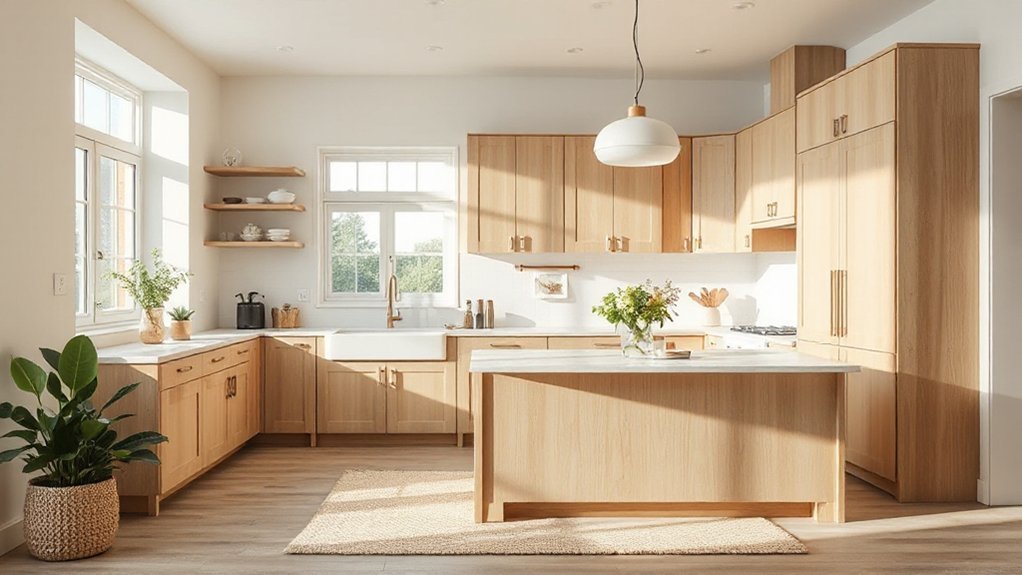
You’ll notice how Small-Space Kitchen Cues translate into clever storage, compact layouts, and uncluttered surfaces that still feel warm.
Open-Plan Flow Ideas show how zoning, furniture scale, and light rhythm create seamless shifts between cooking, dining, and living areas.
Natural Materials Impact functions as the unifying texture—soft woods, stone, and linen-toned surfaces that reinforce calm, cohesive Scandi spaces.
Small-Space Kitchen Cues
Small spaces don’t have to feel cramped; with thoughtful Scandi cues, your kitchen can read as calm, organized, and airy.
In compact kitchens, you leverage verticals, restrained colors, and multifunctional layouts to maximize breathability. You’ll focus on clean lines, accessible storage, and light-reflective surfaces that visually expand the room.
Eco friendly upgrades, thoughtfully chosen fixtures, and vintage accents provide warmth without clutter, reinforcing the serene aesthetic.
- Hidden storage that doubles as display
- Light, matte neutrals with warm timber
- Compact appliances and pull-out work zones
- Smart lighting to heighten openness
- Subtle vintage accents for character
These cues translate to everyday efficiency, where less equals more, and style reinforces calm, practical living.
Open-Plan Flow Ideas
Open-plan layouts blend kitchen, dining, and living areas into one cohesive flow. Scandi-inspired details help maintain calm boundaries while maximizing openness. You’ll create distinct zones without walls by leveraging furniture placement, light cues, and color discipline.
Use eco-friendly materials for cabinetry, islands, and shelving to reinforce a sustainable narrative that aligns with Modern Scandinavian aesthetics. Choose a restrained palette—soft whites, warm grays, and natural wood tones—to preserve airiness while defining functions.
Prioritize functional furniture with clean lines and hidden storage to reduce visual clutter. Incorporate tactile textures through textiles and throws, not ornament.
Guarantee adequate lighting with layered sources: ambient, task, and accent. Finally, keep sightlines clear and symmetry intentional to sustain a cohesive, airy flow across spaces.
Natural Materials Impact
Natural materials shape the feel and function of Scandi spaces, grounding open layouts in tactile honesty. You’ll notice how daylight plays on ash, oak, or concrete, creating a calm, cohesive backdrop for practical living.
Textures matter: warm woods soften lines, while matte stone adds subtle contrast without visual noise. Eco-friendly finishes prove durability without sacrificing purity, and sustainable sourcing guarantees stories behind every surface.
You’ll pair honest textures with clean profiles to preserve spaciousness, letting color come from nature rather than artificial accents.
- Lightweight timber veneers with soft edges
- Brushed stone countertops for resilience
- Reclaimed wood floors with a gentle patina
- Porcelain or concrete for low maintenance practicality
- Neutral linings and textiles that echo the palette
Frequently Asked Questions
How Can I Introduce Warmth Without Sacrificing Scandi Minimalism?
You can: balance minimalism with textural layering and soft lighting, then add warm woods, knitted accents, and tactile textiles. Use subtle tonal shifts and controlled decor to maintain calm, cohesive spaces while inviting coziness and personality.
What Budget-Friendly Tweaks Boost Warmth in Scandi Kitchens?
Warmth comes from contrast: you mix sleek surfaces with Vintage accessories and Textured fabrics, pairing matte whites with wood tones. You’ll add throw pillows, a woven rug, and warm lighting to keep Scandi calm yet inviting.
Which Natural Scents Suit a Warm Scandi Space?
Essential oils and herbal infusions suit a warm Scandi space. You’ll blend cedarwood or citrus essences with rosemary or lavender, using diffusers or simmering pots to fill the area with inviting, clean scents.
How Do I Balance Warmth With Easy Maintenance?
Can you balance warmth with easy maintenance by choosing textured textiles and ambient lighting that hide wear and dust? You should, using durable materials, low-maintenance finishes, and neutral tones to keep the space calm, inviting, and effortlessly polished.
Can Color Pops Still Feel Cohesive in Scandi Styling?
Yes, color pops can feel cohesive in Scandi styling when you maintain color harmony across walls, textiles, and cabinetry, then elevate with deliberate Accent accessories that repeat the hue in subtle, consistent proportions.
Conclusion
In a kitchen that breathes Scandi warmth, light timber and soft neutrals are your canvas, and texture is the brushstroke that keeps it inviting. You’ll feel the calm as daylight drapes over uncluttered surfaces, while practical layouts skim away chaos. Let rhythm come from tonal repeats and thoughtful touches that age gracefully. Stay deliberate, purposeful, and poised, so every cook-and-chat moment glows with natural warmth and quiet, enduring cohesion.
About the Author