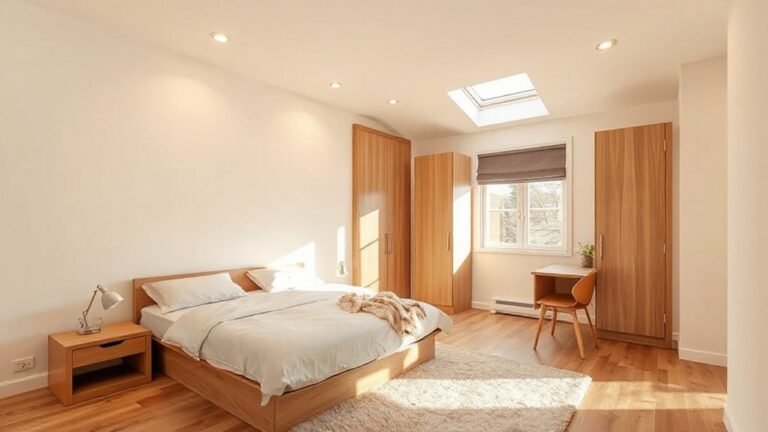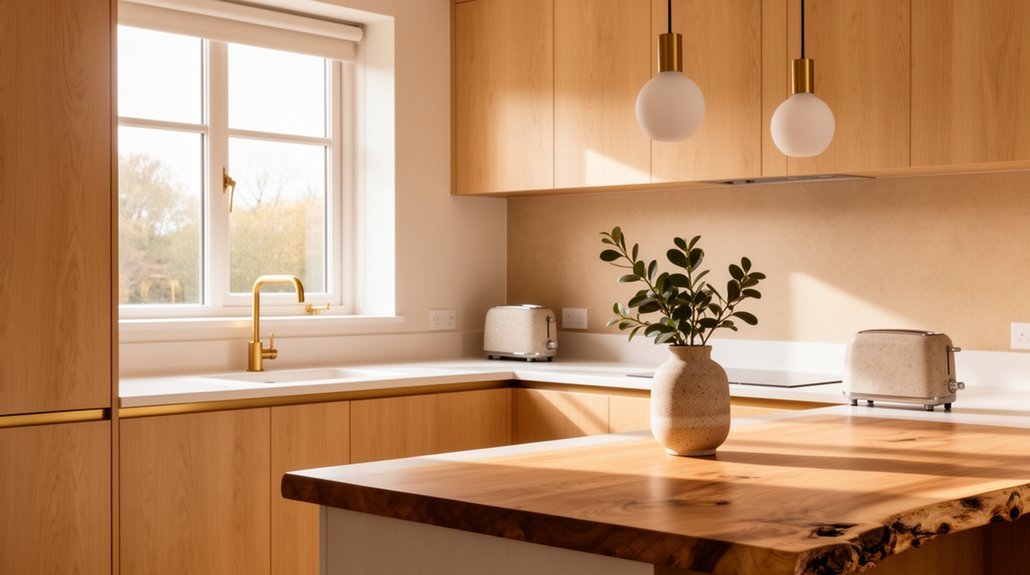
To achieve a warm, natural Scandi kitchen, focus on light, simple surfaces and materials that age gracefully, like solid wood, stone and ceramic. Create a soft palette of whites, warm woods, and gentle hues, with tactile textures and plants to add warmth. Plan open, adaptable layouts that maximize daylight, using strategic partitions and compact appliances. Balance warm wood with cool stone, layer lighting from natural to ambient, and finish with vintage accents and warm hardware for cohesion. You’ll discover more as you continue.
What Defines Scandi Kitchen Warmth: Core Principles
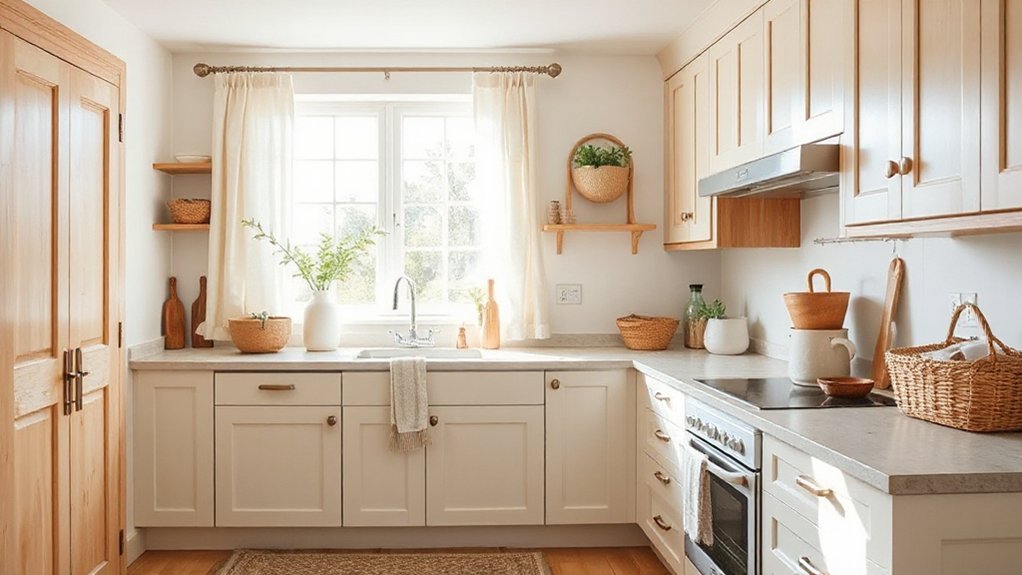
Scandinavian kitchen warmth centers on light, simplicity, and thoughtful materials. You create a calm backdrop by maximizing natural light with clean, uncluttered surfaces and pale woods.
You choose materials that age well and feel honest, like birch, ash, stone, and ceramic. You balance function with tactful aesthetics: durable countertops, streamlined cabinetry, and subtle hardware.
You integrate warmth through texture and tactile finishes, avoiding cold, glossy extremes. You layer textiles, plants, and mindful lighting to soften the space without crowding it.
You incorporate vintage accents to nod to tradition while keeping lines contemporary. Industrial influences appear as restrained metal details and exposed fixtures, used sparingly for contrast.
The result is a serene, usable kitchen that feels inviting, efficient, and enduring.
Setting Your Makeover Criteria: Space, Budget, and Schedule
Set your makeover criteria by outlining space allocation, budget scope, and schedule feasibility first.
You’ll map how much room you have for appliances and storage.
Define a clear financial ceiling.
And set a realistic timeline with milestones.
This upfront clarity guides decisions and keeps the project focused on Space, Budget, and Schedule from start to finish.
Space Allocation Basics
To determine your makeover criteria, start by mapping three essentials—space, budget, and schedule—against your lifestyle and home layout. You’ll allocate prime work zones to maximize flow: prep, cooking, cleanup, and storage, ensuring warm, natural tones guide traffic.
Prioritize adaptable layouts that accommodate guests and daily rhythms, so you’re not reconfiguring every season. Balance vintage accents with modern ergonomics to keep surfaces clutter-free and visually calm.
When sizing elements, match cabinet depth and island clearance to your chopping pace and appliance footprint, avoiding bottlenecks. Use color psychology to inform mood—soft whites, warm wood, and muted greens promote focus and ease.
Document each zone’s square footage, clearance, and time targets, and revisit quarterly to stay aligned with evolving needs.
Budget Scope Boundaries
Start with space assessment, then translate needs into a budget by prioritizing essentials over luxuries.
Color psychology guides mood choices without overrunning costs; pick a cohesive palette that maximizes perceived warmth and light while staying affordable.
Furniture ergonomics matters early: choose pieces with proper height, reach, and clearance to minimize later replacements or adjustments.
Document tradeoffs when shifts occur, and require approvals before expanding scope.
Track deviations weekly, and adjust only within the preapproved margins.
This discipline keeps the makeover focused, cost-efficient, and true to your warm, natural Scandi vision.
Schedule Feasibility Check
Before you lock in the plan, verify that space, budget, and schedule align with your makeover goals. A schedule feasibility check keeps you focused on realities, not wishes.
Map critical milestones: demolition, cabinet delivery, electrical work, plumbing, and final装r finishing. Assess lead times and buffer weeks for delays, then anchor dates to your calendar.
Prioritize Kitchen accessories and Appliance placement to prevent last‑minute reshuffles that stall progress.
Confirm contractor availability, permit windows, and utility shutoffs without derailing progress.
Create a phased timeline that pairs tasks with measured durations and defined dependencies. Build contingency blocks for unexpected snags, and set clear decision triggers to keep momentum.
Document commitments, monitor progress weekly, and adjust only when you have data. Clarity now saves setbacks later.
Layered Light for a Bright, Cozy Kitchen
Layered light starts with maximizing natural light, then layering soft white illumination to fill every counter edge.
You’ll balance reflections from surfaces to keep the space bright without glare.
Consider how natural light, ambient tasks, and reflective finishes work together for a warm, cozy Scandi feel.
Natural Light Layers
Begin with window treatments that diffuse harsh sun while preserving view, then layer ambient, task, and accent lighting to suit tasks and mood. Use daylight as the baseline, supplement with evenly spaced fixtures for consistent illumination across zones.
Consider brightness temperature that stays warm enough for natural tones; avoid cool, clinical hues. Integrate reflective surfaces and light-toned cabinetry to amplify rays without overpower.
You’ll notice improved daylight perception through carefully placed mirrors and glass. When you cook, leverage practical lighting from under-cabinet strips and pendant notes for emphasis on surfaces.
Remember Kitchen accessories and Cooking techniques should remain purposeful, not decorative, to maintain clarity and function.
Soft White Illumination
Use a mix of ceiling, under-cabinet, and pendant fixtures to create depth and prevent glare. Opt for bulbs in the 2700–3000K range to preserve natural tones and not skew Swedish minimalism toward clinical.
Vintage accents—like brass detailing, glass shades, or retro-inspired sconces—introduce character without overpowering simplicity.
Industrial influences show through in clean-lined fixtures and metal finishes that resist wear while remaining adaptable.
Control is essential: dimmers, zoning, and timers keep energy use low and ambiance consistent.
Reflective Surfaces Balance
Reflective surfaces amplify light without adding clutter, balancing brightness and warmth across the kitchen. You’ll achieve this by pairing glossy and matte finishes to control glare while preserving depth.
Use reflective surfaces sparingly on focal points—backsplashes, countertops, or pendant shades—so brightness reads as intentional rather than diffuse. Balance with natural surface textures, like oiled timber or linen, to soften reflections and maintain coziness.
The trick is contrast: choose a dominant mate for light control and introduce a secondary gloss to catch the eye. Keep horizontal planes uncluttered; let a single reflective surface anchor the room.
Maintain consistent color warmth to prevent cold reflections. This approach delivers layered light without visual noise, delivering a bright, inviting kitchen that still feels calm and balanced.
Choosing Natural Materials for a Warm Core
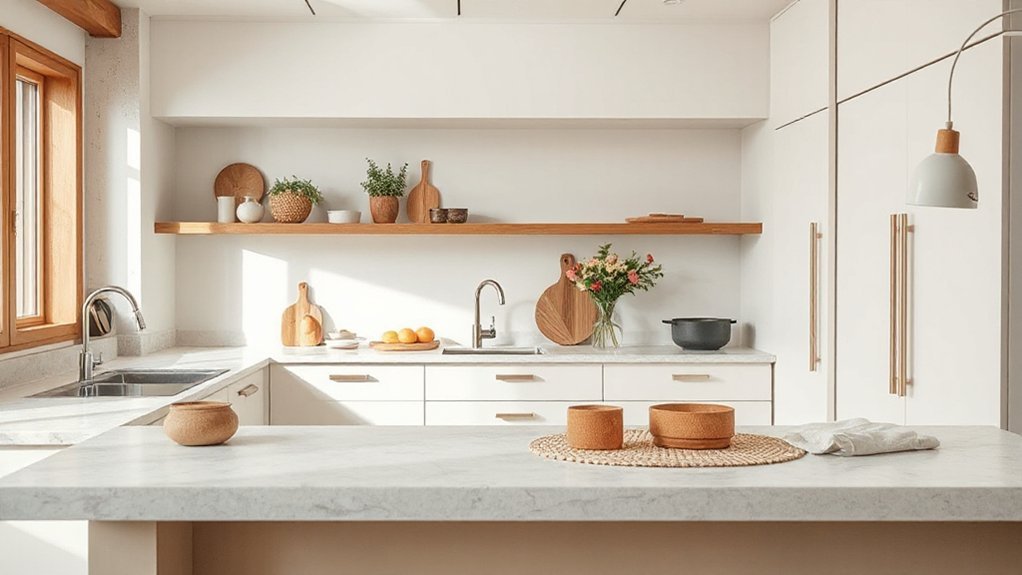
To readers embracing a warm, Scandi-inspired kitchen, choosing natural materials is a quick way to add character and coziness. You’ll align surfaces and textures with a tactile honesty that underpins the look.
Prioritize materials that weather gracefully: solid wood cabinets, stone countertops, cork or wool textiles, and ceramic or glass accents. Favor finishes that celebrate grain, patina, and subtle irregularities over flawless perfection.
Consider how cultural influences shape texture choices, blending Nordic clarity with regional craft for depth. In practice, that means pairing warm wood with cool stone for balance and using natural fibers to soften echoes of hard surfaces.
Be intentional about color psychology: choose materials that evoke calm, warmth, and grounded stability to reinforce a welcoming core.
Palette Foundations: Soft Whites, Warm Woods, and Gentle Hues
Soft white foundations set the tone, while gentle wood tones add warmth without clutter. You’ll balance these hues to keep spaces bright yet tactile, using clean lines and natural textures.
Start by pairing soft whites with light woods, then introduce subtle color accents to complete the palette.
Soft White Foundations
- Vintage accessories introduce character without clutter, pulling warmth from history.
- Industrial accents deliver structure and emphasis without overpowering soft whites.
- Subtle textures—matte ceramic, linen, or wool—add depth that mirrors natural light.
- Controlled contrast, like black hardware or timber legs, sharpens focus without breaking harmony.
Your goal: refine gaps between shelves, counters, and cabinets until the palette breathes quietly and purposefully.
Gentle Wood Tones
Use Eco friendly materials for panels, cabinetry, and shelving to reinforce sustainability without sacrificing texture. Introduce warm woods in frames, stools, or inset details, ensuring their depth supports rather than dominates.
Vintage accents—patinated hardware, a retro stool, or a brass lamp—provide history without visual clutter. Control grain visibility with matte finishes and minimal staining, preserving a serene palette.
Balance is key: woods should complement Soft Whites and gentle hues, not compete, preserving Scandi calm.
Layouts That Maximize Light and Flow
Natural light should guide every layout choice, so you’ll prioritize open sightlines, minimal walls, and strategic window placement to keep spaces bright and airy.
Embrace color psychology to influence mood through soft neutrals and warm accents, while optimizing furniture arrangement for flow. Your layouts should support social cooking and easy movement, with zones that balance task, dining, and prep.
- Align the sink, stove, and fridge in a triangle to minimize steps and maximize efficiency.
- Place seating where daylight folds in, creating inviting gathering points without blocking windows.
- Choose low-profile furniture to preserve sightlines and enhance openness.
- Use strategic partitions or arches instead of full walls to delineate spaces without confinement.
Cabinets That Feel Quiet and Inviting
To achieve cabinets that feel quiet and inviting, opt for softer profiles, warm finishes, and cohesive hardware that blends with the room rather than shouting for attention. You’ll create calm surfaces by using flat-panel or shaker-inspired doors with gentle edges, avoiding high-contrast trims.
Choose finishes like low-sheen whites, creams, or warm greiges to reflect light without glare. Keep hardware streamlined—bar pulls or concealed knobs in brushed brass or matte nickel—to reinforce cohesion.
Incorporate vintage accents sparingly, such as a single retro hinge detail or a small antique knob, to add character without noise.
For color blocking, separate upper and lower tones subtly, using a lighter shade above and a slightly deeper one below, ensuring gradual change remains seamless and balanced.
The result: serene, inviting cabinetry that anchors the space.
Countertops That Read Natural and Durable
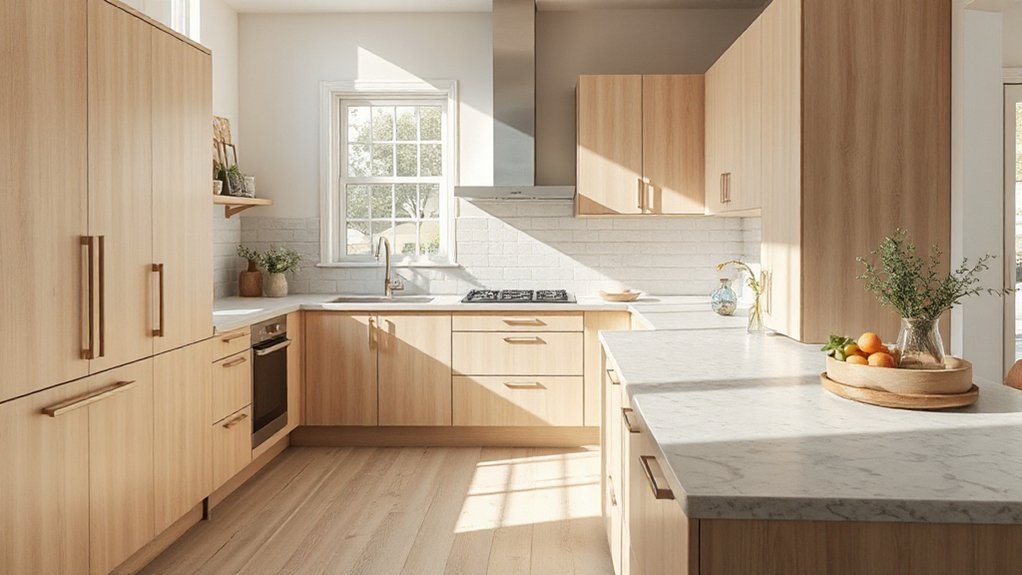
You’ll notice countertops that read natural through stone options that blend warmth with clean lines. They bring durability and wear-resistance into daily use.
While offering textures and veining that elevate the Scandi look. With smart maintenance tips, you’ll keep the beauty of natural stone without adding fluff or fuss.
Natural Stone Aesthetics
If you’re aiming for a kitchen that feels authentic and built to last, natural stone countertops deliver. You’ll notice texture, variation, and depth that read as nature’s own design language, not engineered sameness. Here are the defining notes you’ll appreciate:
- Timeless appeal with subtle veining that complements vintage accents
- Durable, heat-resistant surfaces that stand up to daily use
- Easy-to-clean finishes that keep countertops looking pristine
- Eco friendly materials and responsible sourcing that align with smarter Scandi choices
Lean into the tactile quality without sacrificing polish, and you’ll achieve a calm, functional centerpiece. Pair with matte sinks and light timber for a cohesive, modern rustic vibe. Natural stone anchors warmth while remaining visually restrained.
Durability and Wear-Resistance
Durability stays at the core of countertops that read natural and durable, so you’ll want materials that resist scratches, heat, and daily wear without sacrificing their organic look. In a Scandi kitchen, choose surfaces engineered for longevity and low maintenance, not just beauty.
Look for non-porous, dense compositions that shrug off spills and impact while maintaining a soft, light aesthetic. Eco-friendly materials prove you don’t have to trade sustainability for resilience; many options blend recycled content with durable resin or composite bases.
Pair with minimalist profiles and understated seams to preserve clean lines. For character, integrate vintage accents through reclaimed edges or warm-toned details that age gracefully.
Finish with a matte or satin seal to dot the space with subtle texture without glare.
Maintenance and Care Tips
Maintaining a natural, durable countertop is straightforward when you follow simple daily habits and smart upkeep. You’ll preserve its warmth, integrity, and eco-friendly materials appeal with focused care and clear routines that resist wear.
- Wipe spills immediately to prevent staining and etching, especially with acidic drinks.
- Use a soft cloth and mild soap for routine cleaning, avoiding harsh chemicals that dull finish.
- Apply a gentle sealer when recommended, rechecking intervals to keep surface water-repellent.
- Protect with trivets and cutting boards, and incorporate vintage accents to harmonize texture with cabinetry.
Keep it dry, clean, and protected to extend life and beauty. Regular maintenance reinforces durability and supports a timeless, Scandinavian-inspired vibe.
Flooring Options for Nordic Warmth
Glossy or matte, light or dark, Nordic flooring sets the tone for a warm, Scandi kitchen. Choose engineered wood for stability and warmth, or wide-plank vinyl for durability with a real-wood look.
Light shades brighten spaces; ash, birch, or pale oak suit pale cabinetry and white walls. Dark tones add contrast but can shrink perception of space, so balance with ample daylight.
Consider pale-stained finishes to emphasize grain without overpowering fixtures. For a cohesive feel, pair flooring with vintage accents that echo natural textures and soft metals.
If you prefer a bolder route, introduce color accents through rugs or accessories rather than floors. Prioritize moisture resistance in kitchens, and guarantee seamless shifts between zones for a calm, integrated domain.
Textures That Add Comfort Without Clutter
Textures that feel warm without clutter start with tactful layering: choose tactile materials like brushed wood, soft textiles, and matte stone to add coziness without visual chaos. You create depth by varying textures, not quantity, so every piece earns its place.
Eco-friendly materials reinforce a calm, ethical kitchen, while vintage accents bring character without crowding surfaces.
- Select a single, statement textile—linen or cotton in a muted tone—for cushions or curtains.
- Pair matte stone counters with warm wood veering toward honey hues to balance cool and warm.
- Limit metal to one unobtrusive finish to maintain serenity.
- Introduce subtle vintage accents—ossified jars, a worn cutting board—instead of cluttering display shelves.
Furniture and Seating for Gatherings
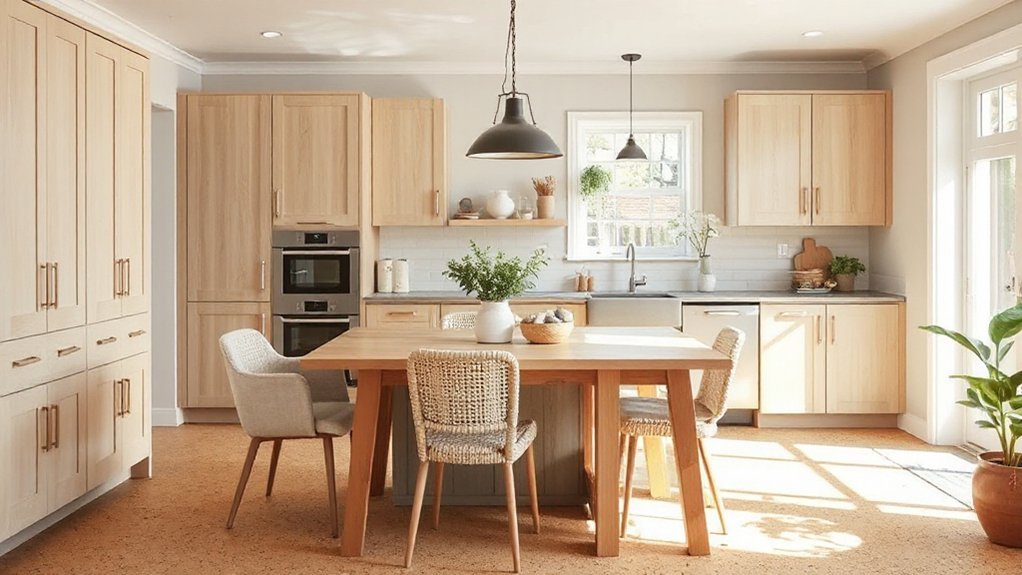
A well-designed kitchen for gatherings centers on seating that invites conversation and remains uncluttered. You pick furniture that blends comfort with clean lines, prioritizing modular pieces that adapt to the group.
Choose a substantial dining table in light wood or a pale, matte finish, paired with chairs that offer ergonomic support without bulk. Vintage accents—think a retro bench, heirloom stools, or a sporadic antique side chair—anchor warmth without overpowering Scandinavian minimalism.
For flexibility, include a few low-profile armless options and a compact settee near a conversational triangle.
Add statement lighting above the table: a sculptural pendant or a slim linear fixture to focalize meals without glare.
Keep surfaces clear; let wood tones and texture do the talking.
Small-Bathroom and Utility Spaces in a Scandi Kitchen
- Prioritize wall-mounted storage to free floor space and enhance accessibility.
- Select compact appliances with seamless fronts for cohesive lines.
- Use light, matte finishes to reflect natural light and enlarge perceived space.
- Add a single vintage accessory or a minimal statement lighting fixture for character.
This approach delivers efficiency, serenity, and a touch of personality without clutter.
Greenery and Biophilic Touches for Calm
Start with greenery that thrives in a bright, cooking-focused space, integrating plants that suit your light and airflow.
Choose biophilic accent elements—textures, natural materials, and simple forms—that reinforce calm without clutter.
Place calming plants intentionally, aligning their height, proximity to work zones, and routine care to support steady, mindful meals.
Greenery in Design
- Curate a slim herb wall near the stove for immediacy and aroma.
- Pair ceramic pots with natural jute hangers for warmth.
- Mix small ferns with slate or concrete planters for contrast.
- Integrate industrial accents like metal brackets to frame greenery.
Biophilic Accent Elements
Biophilic accents bring calm to a Scandi kitchen by weaving greenery into everyday routines. You blend living elements with simple hardware, creating tangible texture without clutter.
Start with compact planters on open shelves and a single herb cluster near the prep zone to reinforce fresh-air cues. Choose pots in muted neutrals that echo wood tones, then layer subtle contrasts through color blocking—two or three hues arranged in blocks that guide movement and focus.
Vintage accents subtly punctuate the palette, offering character without competing with minimal lines. Use breathable materials and natural finishes to sustain a soft, warm atmosphere.
Keep placement intentional: group greens in one zone, then let negative space read as calm, coherent design.
Calming Plant Placement
Strategically place greenery where it’s most impactful: near prep zones, sink corners, and entry points, so you cue calm as you move through the kitchen. Plant placement guides rhythm and focus, reducing visual clutter while enhancing function. Calming decor stems from deliberate greenery that feels integrated, not decorative.
You’ll achieve a serene workflow by choosing low-maintenance species and grouping them in cohesive clusters.
- Position compact plants at the countertop edges to keep surfaces clear.
- Create a vertical green wall near the prep area for quick visual resets.
- Use trailing varieties along open shelves to soften hard lines.
- Place a single statement plant by the kitchen door to greet you.
This approach reinforces plant placement as a core calming decor strategy within Scandi design.
Storage Solutions That Look Clean and Accessible
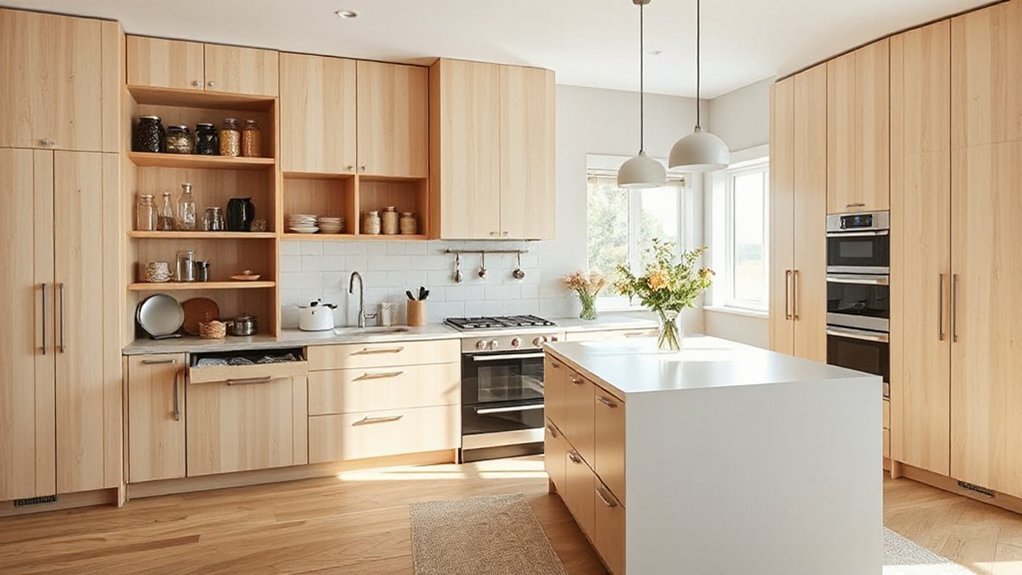
Clean, accessible storage is the backbone of a tidy Scandi kitchen. You streamline with open, shallow shelves near prep zones for quick grabs, and keep cabinets with soft-close hardware to reduce noise.
Use uniform containers, labels, and single-color interiors to visually expand spaces, then add high-contrast fronts for depth. Integrate vertical organizers and pull-out trays to maximize every inch without clutter.
Choose calm, natural woods or matte whites to reflect light, balancing practicality with warmth. Vintage accents, like aged handles or a small butcher’s block, add personality without overpowering simplicity.
Color contrasts should be deliberate: a dark base cabinet against light uppers creates focus, while glass-front doors break monotony and reveal orderly interiors.
Appliances: Streamlined, Energy-Efficient, Quiet
Appliances should be streamlined, energy‑efficient, and quiet, so your kitchen stays calm while you cook. You’ll notice how smart technology fits seamlessly into a minimal aesthetic, giving you controls without clutter. Vintage influences sneak in via brass accents, soft curves, and retro-inspired dials that feel familiar yet modern.
When you choose appliances with efficient motors and insulated panels, you cut noise and heat, keeping the workflow serene.
- Prioritize quiet operation to preserve focus
- Opt for energy‑saving modes that reduce monthly bills
- Favor compact, integrated designs for a cohesive look
- Include smart tech for remote monitoring and precise timing
This approach delivers reliability, efficiency, and a timeless, Scandi calm in your kitchen.
White Daylight vs Amber Evening Ambience
White daylight and amber evening create distinct kitchen moods. You harness this by pairing bright, white light with cool whites to highlight clean, Nordic lines, then switch to amber tones as you wind down.
In daylight, color psychology suggests cooler hues enhance focus and task accuracy, supporting prep work and recipe accuracy.
Amber lighting, meanwhile, softens edges and adds coziness, encouraging lingering meals and conversation.
You’ll notice mood enhancement when accents reflect warm wood tones and creamy surfaces under dusk lighting, inviting relaxation after a busy day.
Use dimmable fixtures to shift intensity smoothly, avoiding harsh contrasts.
Precision in lighting placement matters: under-cabinet wash for visibility; pendant clusters for focal warmth.
Balance keeps clarity without sacrificing atmosphere.
Paint and Finish Choices That Hold Their Warmth
Warm, light-reflective paints and durable finishes win over long-term warmth in a Scandi kitchen. You’ll choose hues that bounce daylight while aging gracefully, preventing flatness as seasons shift. Look for low-sheen sheens that resist fingerprints yet feel tactile, pairing them with sealants that guard against humidity. This approach keeps your space feeling airy, welcoming, and enduring.
- Select warm whites with subtle undertones to harmonize vintage textiles and new surfaces.
- Opt matte or satin finishes for cabinets to reduce glare without sacrificing depth.
- Use durable topcoats on benchtops to preserve warmth and texture under daily use.
- Integrate Industrial fixtures as focal accents to anchor the palette and elevate warmth.
These choices create cohesion, comfort, and a lasting, tactile glow.
Finishing Details: Hardware, Handles, and Grains
Hardware, handles, and grain details define the kitchen’s character as surely as color does. You select hardware that complements wood tones and door styles, balancing function with feel.
Opt for slim, rounded pulls in brushed nickel for a clean Scandinavian edge, or matte black for contrast and depth. Grain orientation matters; align drawers and cabinets for a cohesive rhythm that reads as calm and crafted.
Consider decorative accents sparingly—subtle inlays, a chalked label, or a micro-slat trim to emphasize natural textures without clutter. Color contrast should be deliberate: light cabinetry with warm timber may gain definition through darker knobs or a leather-wrapped drawer pull.
Finishing details should feel deliberate, not decorative ornament, reinforcing a serene, functional kitchen personality.
Budget Scenarios: Affordable Makeovers That Feel Luxe
Budget-friendly makeovers can look luxe without breaking the bank by focusing on strategic upgrades, smart finishes, and well-timed refinements. You’ll uncover affordable routes that deliver warmth and sophistication without overhauling cabinets or wiring.
Embrace vintage charm in accessorizing and textures, pairing it with clean lines for balance. Bold accents help anchor the palette and elevate perceived value.
- Prioritize room-wide surface refreshes, like bench tops or backsplashes, using high-contrast materials.
- Swap limited, budget hardware for statement pulls or vintage-inspired handles to transform cupboards instantly.
- Layer lighting with warm, dimmable options to create depth and ambiance.
- Use textiles and decor to introduce vintage charm and bold accents without heavy investments.
Step-by-Step Makeover Plan You Can Follow
Start with a clear plan: outline a step-by-step makeover that stays within budget while delivering a polished, Scandi-inspired look. First, declutter and strip excess gloss, choosing simple, natural materials.
Next, set a neutral palette: whites, warm beiges, and soft grays as the base. Introduce texture through wool, jute, and light wood; avoid heavy finishes.
Update lighting with slim, industrial fixtures to add character without clutter, then balance with vintage accents—pots, bowls, or a clock—that echo the era without shouting.
Replace cabinet hardware with matte metal pulls for a cohesive, modern edge.
Optimize storage using open shelving sparingly, keeping surfaces clean.
Finally, finish with a focused, high-functioning layout: work zones, clear paths, and accessible essentials for everyday efficiency.
Frequently Asked Questions
How Can I Balance Warmth With Scandinavian Minimalism?
Yes—balance warmth with minimalism by layering textures and warm woods, then introduce color contrast through textiles and accents. Keep furniture styling simple and cohesive; add soft lighting and tactile materials to create inviting, calm, functional spaces.
Can Small Kitchens Achieve a Cozy, Warm Vibe?
Yes, small kitchens can feel cozy. You choose color schemes that warm the space and optimize furniture placement to improve flow, lighting, and texture, creating intimacy without clutter. Focus on warm neutrals, wood accents, and strategic shelving.
What Lighting Enhances Scandi Warmth Without Glare?
Ambient glow aids apps: softly suited, you should secure warm lighting. You’ll use ambient glow and task illumination, avoiding glare, while crafting a cohesive, cozy kitchen vibe that feels calm, clear, and confidently controlled for everyday tasks.
Are Budget-Friendly Materials Durable Enough for Longevity?
Budget materials can be durable, but you’ll face durability concerns over time. You should inspect, choose sealed, quality options, and factor wear-test ratings to guarantee longevity, despite budget constraints. Regular maintenance and smart finishes help address Durability concerns.
How to Maintain Natural Textures in High-Traffic Kitchens?
Maintain natural textures in high-traffic kitchens by choosing durable natural finishes and integrating Textural accents like woven mats and matte stone. You’ll preserve warmth, reduce wear, and keep surfaces resilient without sacrificing style or serenity.
Conclusion
In embracing a Scandi kitchen, you’ll create warmth from simplicity: soft whites, gentle woods, and tactile textures that invite you to linger. It’s more than looks; it’s a mindset—light, calm, uncluttered, with purposeful details. When you plan, budget, and layer materials with intention, you’ll feel a quiet confidence bloom every time you cook, gather, or clean. Like a well-loved room, the design reveals what truly nourishes you: less noise, more warmth, and everyday ease. Metaphor: warmth grows where restraint remains.
About the Author