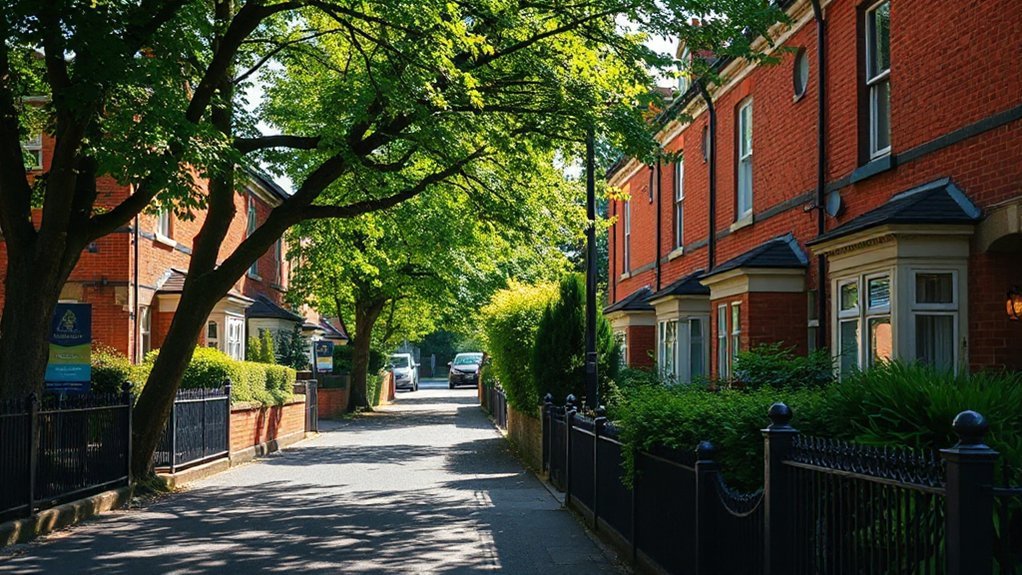
Like a quiet barometer, Sheffield’s best school catchments signal where families cluster and property values hold steady. You’ll find that areas near high‑performing primary and secondary schools, with stable Ofsted standings and strong community engagement, consistently attract long‑term investment. But where exactly do these zones lie, how do travel times fit into the picture, and which mappings help you verify boundaries before you commit? Start with the data, then map your options.
What Makes a Strong Sheffield School Catchment: Key Criteria
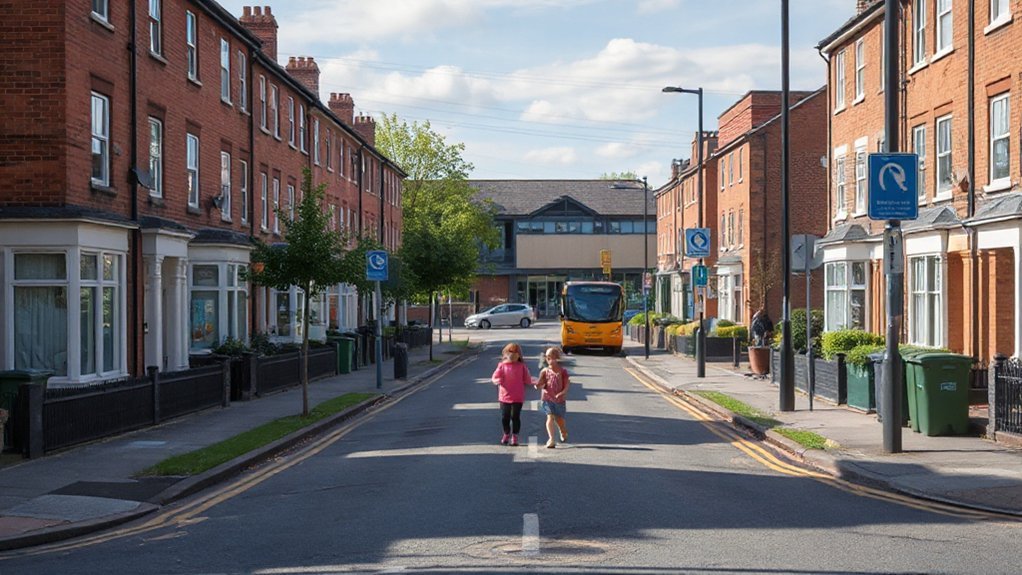
A strong Sheffield school catchment hinges on a few clear, data-backed factors. You assess proximity to high-performing schools, reliable transit links, and consistent OFSTED trajectories to forecast stability.
Population demographics inform demand pressure, while housing turnover signals long-term viability of a catchment. You weigh school capacity against projected enrollments, ensuring class sizes stay conducive to learning.
Community engagement shapes accountability, with parental involvement correlating to attendance and support networks. Extracurricular opportunities matter, as diverse programs broaden access for all pupils and reflect local needs.
You also track funding allocations, safeguarding measures, and teacher retention rates, recognizing their impact on sustained performance.
Top Sheffield Primary Catchments by Consistent Scores
Among Sheffield primary catchments, the standout performers show consistent scores year after year, underscoring stability in both attainment and progress metrics. You’ll notice top catchments maintain high average KS2 results alongside steady year-on-year progress, signaling durable performance rather than one-off spikes.
Data shows minimal fluctuation in Ofsted-related indicators and sustained achievement gaps narrowing across cohorts, with consistent attainment patterns across key subjects. In these areas, school clusters deliver reliable outcomes, reinforced by strong local PLCs and continuity in leadership.
Community engagement remains a hallmark, aligning parent networks with school calendars to support attendance and home learning routines. Extracurricular opportunities are embedded, expanding enrichment without sacrificing core academics.
These factors collectively define the most reliable primary catchments for families prioritizing predictability and long-term progress.
Where Sheffield Secondary Catchments Stand Out
You’ll notice stronger secondary catchment boundaries around high-performing local schools that guide family choices.
The data show steady neighborhood catchment trends, with margins widening where schools consistently score at the top.
This pattern helps you compare areas by performance and accessibility, shaping how you evaluate Sheffield’s secondary options.
Stronger Secondary Boundaries
Stricter secondary catchment boundaries in Sheffield are shaping where families send their teens, and the impact is clear in the latest school performance data. You’ll see tighter geographic definitions driving pupil flow toward core neighborhoods with stable intake profiles, which correlates with measured improvements in key indicators.
Boundary expansion in adjacent areas has limited effect on overall attainment when schools maintain consistent capacity and selective alignment with feeder primaries. You’ll also notice catchment flexibility in practice, where some schools adjust catchment lines to balance cohorts, reducing overcrowding while preserving access to high-performing programs.
Data show enrolment patterns tightening around known catchment zones, reinforcing locality as a predictor of school outcomes. For families evaluating options, target neighbourhood clusters offer reliable, transparent destinations within established boundaries.
High-Performing Local Schools
High-performing local secondary schools in Sheffield reveal clear patterns in catchment performance. You’ll notice concentrations of high attainment around established hubs where resources align with student needs, and nearby buffers reduce spillover effects into adjacent catchments.
Data show GCSE results cluster in central and northern zones, with sustained progress measures year over year. Beyond raw scores, you’ll see schools that translate performance into opportunity, supported by robust community engagement and partnerships with feeder primary schools.
Extracurricular opportunities correlate with higher attendance and well-being, reinforcing positive catchment dynamics. In practice, families benefit from transparent boundary maps, consistent admission policies, and local accountability reporting.
When evaluating neighborhoods, prioritize institutions with demonstrated collaboration, long-term planning, and targeted interventions that sustain high performance across cohorts.
Neighborhood Catchment Trends
Across Sheffield, secondary catchments show distinct shifts that illuminate how neighborhoods shape access to higher-performing schools. You’ll see patterns emerge when you map overlap between house prices, travel times, and GCSE outcomes, revealing where demand concentrates and where supply lags.
In core districts, catchments tighten around top options, boosting competition and driving temporary spillovers into adjacent wards. Suburban pockets exhibit broader boundaries, reflecting varied school choice and commuting tradeoffs.
Data indicates recent gains in areas with targeted community engagement, amplifying parent-led advocacy and clearer feeder routes to desirable academies. Extracurricular opportunities increasingly factor into value assessments, drawing families toward schools with robust outreach.
Balancing Travel Time With School Boundaries

Transportation challenges emerge where bus timetables, roadworks, or peak-hour congestion create delays that push families toward farther options, even when a closer school is within boundary reach.
You’ll also note consistent patterns in travel times by mode, with cycling and walking showing better predictability near dense neighborhoods.
Community engagement data reveal parent priorities, highlighting the value of transparent boundary explanations and flexible placement where feasible.
When planning, align boundary choices with measurable outcomes, not assumptions, to optimize both time and educational access.
Trustworthy Mapping Tools for Sheffield Schools
You’ll want to rely on trusted mapping sources as the backbone for Sheffield school catchments, ensuring you’re using data that reflects recent changes in neighborhoods.
With clear data accuracy standards, you can compare tools confidently and spot discrepancies that affect school access.
Start with a concise user guide that explains how to interpret results and verify each map’s provenance for local stakeholders.
Trusted Mapping Sources
Trusted mapping tools are the backbone of identifying Sheffield’s strongest school catchments. You’ll rely on trusted sources that combine official datasets with local context to map catchment realities accurately.
When you cross-check demographics, floor plans, and school performance indicators, you gain a clear view of where families live and learn. This approach emphasizes community engagement, ensuring residents influence decisions and outcomes.
You’ll notice how comparable data from local authorities, Ofsted-style reviews, and pupil age distributions converge to show patterns in access and performance. Use these sources to benchmark routes, transit times, and neighbourhood buffers, keeping transparency front and centre.
The result is a defensible, data-driven picture that guides smarter school choices for Sheffield families.
- Official local authority GIS layers informing boundaries
- School performance dashboards with recent attainment trends
- Local community consultation outcomes and feedback logs
- Transit and walking route analyses linked to catchments
- Independent validation studies from regional educational bodies
Data Accuracy Standards
Data accuracy is non-negotiable when mapping Sheffield school catchments, and you should expect clear standards that translate into trustworthy results. You rely on documented processes that ensure reproducibility and auditability, from data ingestion to final outputs.
Data validation is central: automated checks flag inconsistencies, verify coordinate integrity, and confirm attribute concordance with authoritative sources.
Boundary accuracy matters most when delineating catchment extents, so you’ll see explicit criteria for edge alignment, snapping tolerance, and gap minimization between adjacent areas.
Metadata accompanies each layer, detailing source, date, and confidence levels to inform interpretation.
Consistent versioning tracks changes over time, enabling back-casting and comparisons across datasets.
User Guide Tools
When it comes to mapping Sheffield school catchments, reliable tools matter as much as solid data. You’ll rely on transparent interfaces, source-trusted boundaries, and reproducible results to compare neighbourhoods accurately.
Our guide highlights tools that integrate pupil data, school locations, and catchment rules, keeping updates frequent and visible. You’ll see how to verify changes, assess edge cases, and document assumptions for community review.
Emphasizing locality, we tie maps to real outcomes—attendance patterns, school performance, and access equity—so you can plan with confidence. We also call out community involvement and extracurricular activities as factors that influence school choice dynamics.
Use these tools to support informed decisions and constructive dialogue with residents, schools, and local authorities.
- Clear basemaps that reflect Sheffield’s streets and districts
- Proven sources with citation-ready provenance
- Change logs and update timestamps for transparency
- Annotation features to note local considerations
- Accessibility and export options for community discussions
Leafy Sheffield Suburbs With Rising Catchments
Leafy Sheffield suburbs are seeing rising school catchments as housing demand grows and local planning prioritizes catchment-adjacent expansions. You’ll notice data showing larger catchments around crucial neighborhood clusters, aligned with new housing development and improved transport links.
In recent planning cycles, authorities have mapped catchment shifts that prioritize accessible, walkable routes to schools, reducing travel times for many families.
Urban greenery becomes a measurable factor, with tree canopy and green corridors correlated to longer-term demand stability and perceived livability.
Community engagement rounds out the picture, as resident input shapes boundary adjustments and school siting.
Local authorities publish quarterly analytics on pupil distribution, catchment redraws, and enrollment trends, enabling you to forecast where rising catchments may steady or expand over the next two to five years.
Housing Within Prime Catchments Without Breaking the Bank

You’ll find affordable homes still clustered near strong catchments, with data showing steady price-to-school-rank stability in prime zones.
Local trends point to practical compromises: modestly priced properties within walking reach of top-rated schools, supported by recent sales metrics and rent-to-income ratios.
We’ll keep refining which streets and developments balance cost with proximity to high-performing catchments, so you can target prime options without overspending.
Affordable Catchment Homes
- Tree-lined streets and quiet cul-de-sacs that promote walkability
- Local nurseries and after-school hubs within easy reach
- Proximity to libraries, clubs, and volunteer groups
- Consistent school data supporting steady catchment integrity
- Transparent price histories and staged enrollment windows
Prime School Zones Now
Prime school zones are within reach for many Sheffield buyers who want strong catchment performance without overpaying. In today’s market, you can target homes inside defined School zoning and catchment boundaries that historically outperform peers.
Data shows notable gains where schools consistently meet Ofsted benchmarks and admission policies favor nearby applicants, reducing commute and risk. Look for properties within walkable distance to primary and secondary options with rising progression rates and stable pupil cohorts.
Focus on postcodes with documented catchment stability over the past five years, and verify any changes to catchment boundaries announced for upcoming admission rounds. Mortgage guidance favors modest premiums for prime zones when tied to long-term resale value.
Prioritize transparent school data, neighborhood amenities, and proven catchment performance to optimize your Sheffield purchase.
Real Families’ Journeys: Navigating Sheffield Catchments
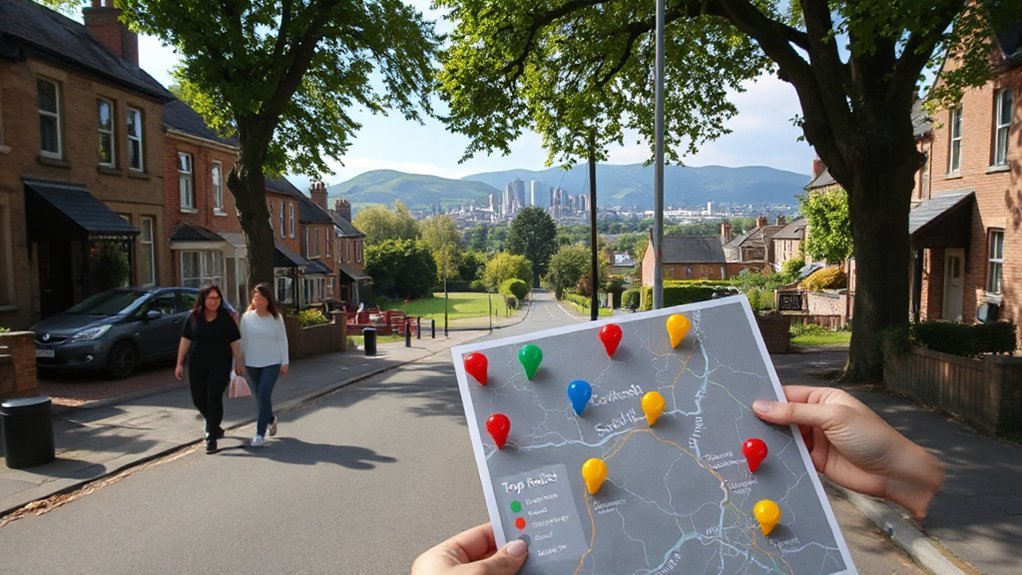
For families, the journey to the right Sheffield catchment begins with a clear map of where top-rated schools sit and how bus routes, walk times, and local demographics align with those boundaries. You’ll lean on objective data to compare outcomes, travel burdens, and school district performance, then translate that into practical choices.
Boundary maps become your compass, showing where one school’s footprint ends and another begins, and where transport options intersect with daily routines. You assess walkability, bus reliability, and local density to gauge feasibility, then weigh trade-offs between proximity and program variety.
This is about informed decision-making, not guesswork, grounded in current district statistics and real-world accessibility.
- Clear map of school locations and catchment edges
- Bus routes and walk times mapped to homes
- Local demographics informing likelihood of peers
- School district performance metrics at a glance
- Accessibility and commute considerations in practice
How to Verify Catchment Boundaries Before You Buy
To verify catchment boundaries before you buy, start with official maps from your target council and the local academy trust. Then cross-check with school-specific admission policies. You’ll compare current boundary lines against recent council updates and any announced Boundary adjustments, noting how district changes affect eligibility.
Use precise postcode data and recent housing developments to forecast shifting zones and vacancy pressures. Check published admission criteria, tie-breakers, and sibling rules, then verify if maps reflect planned housing growth or school expansions.
Seek community feedback from local forums or resident associations to identify practical nuances not yet reflected in formal documents. Document discrepancies and request formal explanations from the council where needed, ensuring your decision rests on transparent, up-to-date information.
Build Your Personal Sheffield Catchment Plan
A practical Sheffield catchment plan starts with mapping your target schools’ current boundaries, then layering in recent council updates, academy trust policies, and housing growth projections to forecast where lines may shift.
You’ll translate data into a personal map, anchoring decisions to measurable trends and published catchment zoning guidance. Track school boundary changes, note planned expansions, and compare adjacent zones to foresee overlap or gaps affecting choices.
Prioritize schools with strong performance signals and stable zoning histories to reduce risk. Update quarterly as council reports land, ensuring your plan stays actionable and current.
Your aim is a clear, defendable strategy that aligns housing plans with educational outcomes.
- Visualize boundary shifts on a single map
- Weigh council projections against school performance
- Highlight catchment zoning hotspots
- Flag imminent school boundary changes
- Build contingencies for housing growth
Frequently Asked Questions
How Often Do Catchment Boundaries Change in Sheffield?
Boundary stability varies, but changes are infrequent and methodical. You’ll see sporadic zoning adjustments tied to population shifts or BEC updates, with official reviews every few years. You’ll rely on data-driven maps reflecting boundary stability and zoning adjustments.
Do Private Schools Influence Council Catchment Boundaries in Practice?
Private school influence does shape some decisions, but you’ll see catchment boundary adjustments driven mainly by pupil numbers and council planning, not private schools alone. You data-checks show limited direct impact beyond broader enrollment trends influencing maps.
Can Catchment Data Predict Future School Performance Reliably?
You can’t rely on catchment data alone to predict future school performance with high reliability. However, School performance trends and Catchment prediction models offer you useful, locality-focused insights when combined with broader demographic and funding indicators.
Which Sources Verify Catchment Accuracy Beyond Official Maps?
Yes—surveys, independent auditing bodies, and local authorities verify catchment data beyond official maps. Community engagement reports and geographic accuracy assessments underpin reliability, so you can trust results as you analyze school access and planning implications.
Do Siblings Affect Eligibility Within Shared Sheffield Catchment Zones?
Yes, siblings can affect eligibility within shared zone dynamics. You’ll see priority shifts or waitlist effects, with joint applications often balancing. Sibling influence matters, and data shows clear patterns in shared zone dynamics across Sheffield catchment areas.
Conclusion
You want clarity, you want certainty, you want credible data. The strongest Sheffield catchments pair performance with proximity, performance with accessibility, performance with affordability. Prioritize schools with consistent OFSTED scores, reliable transport links, and stable demand. Map boundaries, verify with multiple tools, and compare travel times against your family’s needs. Plan early, review updates, and adjust as catchments shift. In Sheffield, strong catchments translate to smarter decisions, steadier investments, and safer, more connected communities.
About the Author