Discover The Best Places to Live in the Lake District in 2026
Living in the Lake District is a fantasy for a great many people in Britain — the dramatic fells, the mirror-still lakes, the stone-built villages, the particular quality of light on an autumn morning over Derwentwater. What is less commonly discussed is the reality of making it work as a primary residence: the planning restrictions that govern what can be built and changed within the National Park, the property market that combines low supply with persistent demand from second-home buyers and retirees, the employment landscape that requires either remote working or acceptance of the local economy’s seasonal character, and the genuine practical challenges of living in one of England’s most celebrated tourism destinations.
For the right buyer, in the right location, with the right circumstances, the Lake District and its immediate surroundings offer a quality of life that is essentially incomparable. This guide covers five of the most sought-after residential destinations in and around the Lake District — from the National Park towns at the heart of the landscape to the gateway towns and market settlements on its edges that offer a more practical entry point to the Lake District lifestyle without the full premium that National Park addresses command.
1. Keswick
Keswick is, by most measures, the Lake District’s most complete residential town — a place that combines genuine urban functionality with the extraordinary landscape setting that draws people to the National Park in the first place. Sitting at the northern end of Derwentwater, with Skiddaw rising directly behind the town and the full panorama of the northern fells visible from its streets, Keswick has a visual drama that most English towns of comparable size cannot begin to approach.
A Town That Works Year-Round
The great advantage of Keswick as a residential choice, compared with smaller Lake District settlements, is that it functions as a proper town rather than simply a visitor destination. The market, which operates on Saturdays and Thursdays, serves the local population as much as it serves tourists. The shops — a mix of the inevitable outdoor gear retailers and a range of independent businesses — provide sufficient daily utility for residents. The schools, health services, and community infrastructure support a year-round population of approximately 5,000 people who have chosen to make their primary lives here rather than simply visiting.
The Outdoor Life
For residents who have specifically chosen Keswick for its landscape access, the town delivers comprehensively. The Derwentwater lakeside is minutes from the town centre; the ascent of Skiddaw from the town’s northern edge is one of the most accessible Lakeland mountain routes; and the network of paths, bridleways, and fell tracks radiating from Keswick provides essentially infinite variety for walkers, runners, cyclists, and climbers. For buyers whose primary motivation is proximity to the Lake District’s outdoor environment, Keswick is difficult to surpass as a residential base.
Property and Planning
Property in Keswick is subject to the Lake District National Park Authority’s planning restrictions, which limit both new development and changes to existing buildings in ways that protect the townscape but constrain supply. The result is a market characterised by low transaction volumes and prices that have risen significantly as second-home buyers, remote workers, and retirees compete for limited stock alongside local buyers. Stone-built terraced houses in the town centre typically achieve £300,000–£450,000; semis and detached properties range from £400,000 to well above £600,000 for the finest positions. The second-home premium in Keswick is real and significant — buyers purchasing as a primary residence are competing with a cohort of purchasers for whom price is a secondary consideration.
2. Ambleside
Ambleside sits at the head of Lake Windermere, in the very heart of the Lake District National Park, and is probably the most intensively visited of all the Lake District towns — a place where the streets are busy with walkers, cyclists, and tourists throughout the season in a way that is, for some residents, the precise attraction and for others the principal reservation. The town has a genuinely international character that is unusual for a settlement of its size, drawn by its position as the gateway to some of the most celebrated fell-walking in England.
A Small Town With an Outsize Offer
What is consistently surprising about Ambleside is how much it packs into a relatively compact town centre. The independent shops — outdoor specialists alongside more unexpected boutiques and galleries — give the high street a character that many similar-sized towns lack. The restaurants and pubs serve a clientele that, between visitors and residents, is sufficiently discerning to sustain genuine quality. The Zeffirelli’s cinema and arts complex — a beloved Ambleside institution — provides cultural life that is frankly extraordinary for a town of approximately 3,000 residents, and reflects the broader truth that Ambleside punches well above its weight.
Living in the Heart of the Park
For buyers who want to live within the Lake District National Park with immediate access to the most celebrated landscape in England, Ambleside is one of the most compelling choices. Walks to the Langdales, Coniston, and the central fells start from the town’s outskirts; Windermere and Grasmere are within minutes by car. The trade-off is the price — Ambleside’s property market is among the most expensive in Cumbria, with significant pressure from second-home buyers — and the seasonality of daily life, which requires an acceptance that the town’s character changes markedly between summer and winter. For buyers who have genuinely reckoned with both sides of this equation, Ambleside offers what the Lake District promises at its most immediate.
3. Kendal
Kendal occupies a pivotal position in the geography of the Lake District — the “Gateway to the Lakes” as it is traditionally known, sitting at the point where the M6 and West Coast Main Line approach the National Park boundary from the south. This position has defined Kendal’s character: it is a proper market town of approximately 28,000 people with a full complement of urban services and amenities, but one that sits close enough to the National Park to offer genuine landscape access without the planning restrictions, limited supply, and price premiums that come with a National Park address.
A Town With Genuine Substance
Kendal is a place that rewards those who engage with it properly rather than passing through on the way to Windermere. The historic architecture — the distinctive grey limestone that gives the town its particular character — ranges from medieval yards and alleyways to handsome Georgian buildings and the remains of Kendal Castle, whose ruined walls look out over the town from the east. The Brewery Arts Centre is one of the best regional arts venues in the north-west, hosting theatre, music, film, and visual arts at a level that justifies Kendal’s cultural ambitions. The twice-weekly market maintains the working market-town function that gives Kendal its practical centre of gravity.
The Practical Case for Kendal
For buyers who want Lake District proximity without the full National Park premium, Kendal is often the answer. Property prices in Kendal are substantially below those in Ambleside or Keswick — three-bedroom terraced houses in good residential areas are available from £200,000–£300,000, and four-bedroom detached family homes typically achieve £350,000–£500,000. The transport connections — the A591 to Windermere, the West Coast Main Line to London Euston (under two and a half hours from Oxenholme, the local station), and the M6 — make Kendal viable for occasional London commuters and those with wider professional networks. For families who want excellent landscape access, a functioning market town, and property prices that leave room for a life beyond housing costs, Kendal makes an extremely strong case.
4. Ulverston
Ulverston is the Lake District’s best-kept secret — a market town on the southern Cumbrian coast, technically outside the National Park boundary but within easy reach of both the Lake District and the Furness Peninsula’s remarkable coastline, that combines genuine historic character with a community vitality and creative energy that attracts an increasing number of buyers who might previously have looked only at the National Park towns.
A Town Unlike Any Other
Ulverston’s character is shaped by its history as a canal town and market centre, and the physical legacy of that history gives the town its distinctive atmosphere. The cobbled streets, the market cross, the narrow yards opening off the main thoroughfares, and the pattern of independent shops and specialist businesses create a town centre that feels genuinely earned rather than curated for tourism. The market, held on Thursdays and Saturdays, is one of the oldest in Cumbria and one of the most authentic — a place where local producers and long-established traders create a genuine weekly rhythm for the town.
Ulverston is also, unexpectedly, the birthplace of Stan Laurel — a fact that has spawned the Laurel and Hardy Museum, one of the most charming and enthusiastically maintained specialist museums in England, and that contributes to the broader sense of a town that is comfortable with its own identity and curious rather than defensive about what makes it unusual.
Value and Connectivity
Property prices in Ulverston are among the most accessible in this guide, reflecting both its distance from the most celebrated Lake District destinations and the fact that it remains less known to buyers from outside the region. Three-bedroom houses in good residential areas can be found from £175,000–£280,000; four-bedroom detacheds from £280,000–£450,000. The rail connection — Ulverston station on the Cumbrian Coast line — provides services to Lancaster and onward to the national network, and the A590 links the town to the M6 at Kendal. For buyers who want Cumbrian living at the most accessible price point, with a market town of genuine character and the Lake District within easy reach, Ulverston is a discovery worth making.
5. Living Within the Lake District National Park: A Note on Greenside and the Wider Park
The brief mentions Greenside as a specific example of National Park living — a barn conversion with land within the park boundary — and this deserves a broader discussion, because for many buyers the aspiration of Lake District living is specifically of this type: not a market town house but a converted barn, a farmhouse, or a rural property set in the landscape itself.
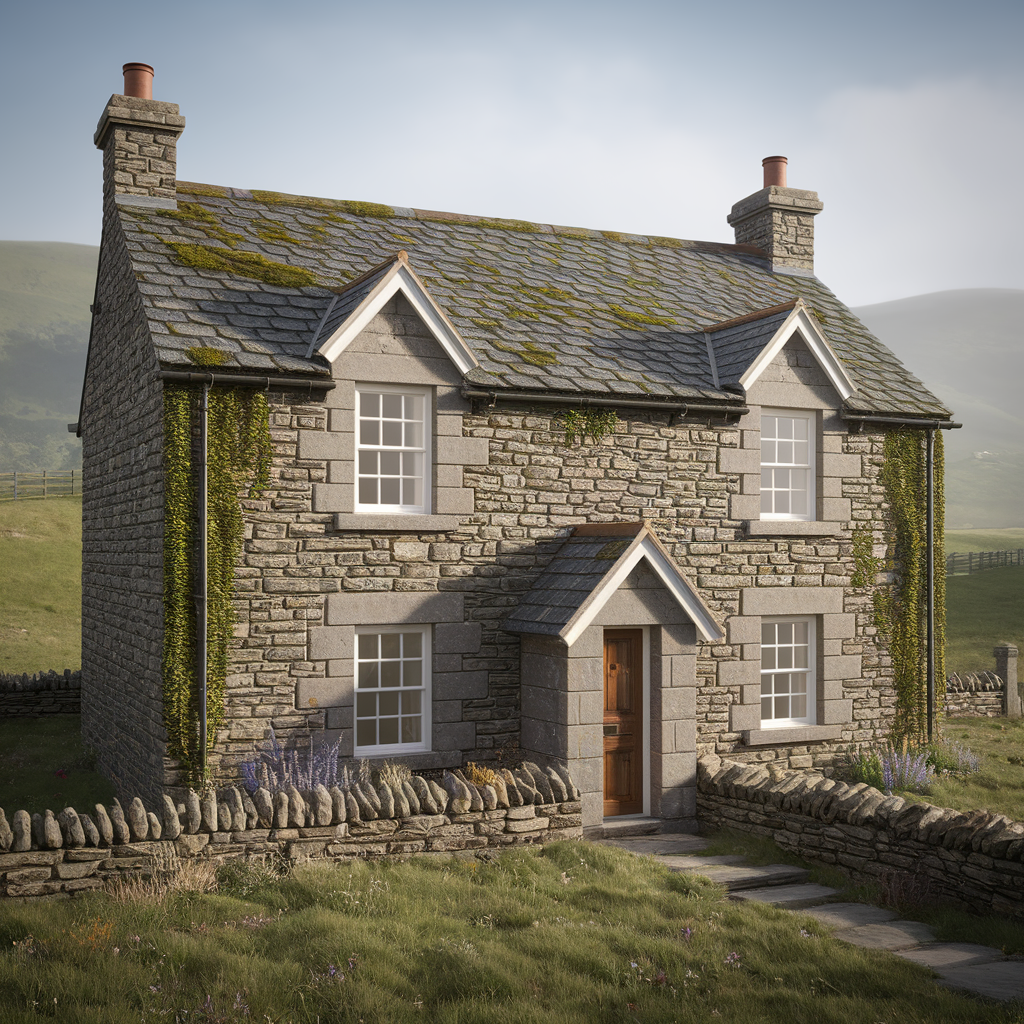
This type of property exists, and it can be exceptional. Old farmhouses, mill conversions, and barn developments in the valleys and on the fell sides offer an experience of the Lake District that town living — however beautiful the town — simply cannot replicate. Waking to fell views, having your own land, managing a garden that extends into the upland landscape — these are realities for a small number of people who have made their primary home within the National Park in this way.

The practical considerations are significant. National Park planning restrictions limit what can be altered, extended, or built on converted agricultural properties, and permitted development rights are more restricted than in the rest of England. Maintenance of stone buildings in an upland climate is a genuine commitment. Connectivity — broadband, mobile signal, road access — varies enormously even over short distances within the park. And the market for this type of property is highly competitive, with rural properties within the National Park regularly attracting buyers from across the UK and internationally.
For buyers genuinely considering a rural Lake District property as a primary home, the due diligence required is substantial — on planning history, on permitted development restrictions specific to the site, on connectivity, and on the realistic cost of maintenance over the long term. The reward, for those who complete that due diligence carefully and find the right property, is genuinely among the finest residential experiences that England can offer.
The Lake District in 2026: A Market of Exceptional Character and Specific Challenges
The Lake District property market in 2026 is one of the most distinctive in England — shaped by low supply, persistent demand, National Park planning restrictions, and the particular mix of full-time residents, second-home owners, and holiday-let investors that creates a market dynamic quite different from conventional residential markets elsewhere.
For buyers approaching this market with clarity about their circumstances — their budget, their connectivity requirements, their relationship to the tourism economy, and their genuine commitment to year-round Lake District living — the rewards are real and lasting. For buyers approaching it with romantic expectations that have not been tested against practical reality, the experience can be sobering.
The five destinations in this guide — from the National Park heart of Ambleside and Keswick to the gateway positioning of Kendal, the distinctive character of Ulverston, and the broader category of National Park rural property — represent the genuine spectrum of Lake District residential living. Each has its own demands, its own trade-offs, and its own irreplaceable rewards.
About the Author