Transform your Highland cottage in Inverness into a luxury retreat by marrying rugged moorland silhouette with timber, stone, and moorland light. Prioritize durable, low-maintenance finishes, precise joinery, and climate-aware detailing that respect heritage while embracing modern efficiency. Craft intimate scales, varied ceilings, and interior–exterior porosity to frame views and daylight. Integrate a chef’s kitchen, hidden storage, and tactile textiles with local craftsmanship, folklore motifs, and sustainable tech. You’ll uncover how these choices elevate value, ambiance, and lasting appeal.
What Defines a Highland Luxury Cottage
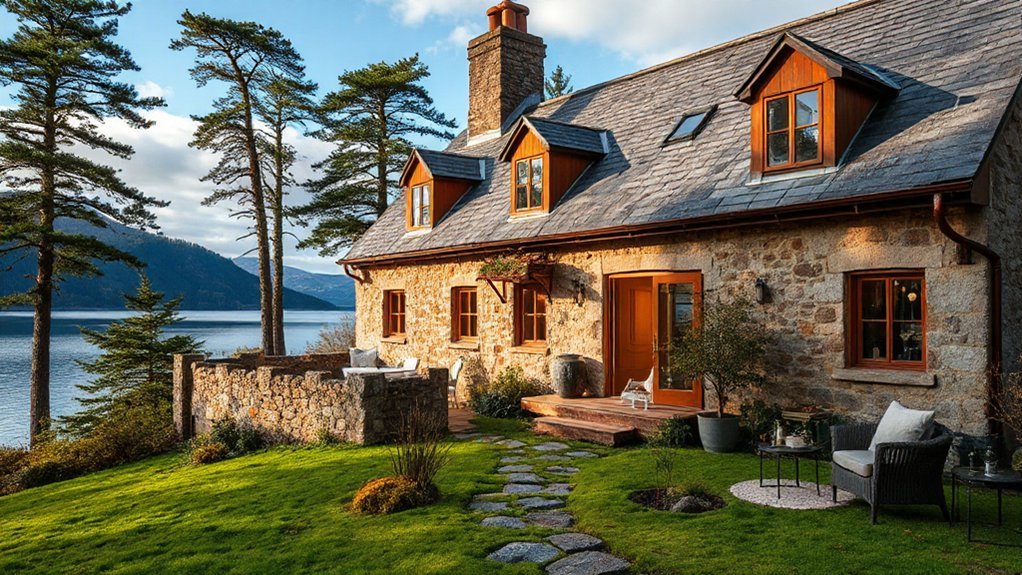
A Highland luxury cottage blends rugged landscape with refined comfort, where materials and design decisions prioritize tactile quality and lasting durability. You define a Highland luxury cottage by deliberate material selection, performance criteria, and a refined restraint that honors place.
Structural integrity guides timber, stone, and insulation choices, ensuring stability in wind and rain while preserving thermal efficiency. Finishes emphasize texture, patina, and low maintenance, with joinery that remains precise over time.
Spatial logic favors intimate scales, varied ceiling lines, and porosity between interior and exterior spaces. Acoustics, lighting, and climate control align with comfort without ostentation.
You’ll notice references to Wildflower blooms and Highland folklore in detailing cues, yet not through cliché—through purposeful, authentic design cues that root the retreat in its landscape.
Setting the Vision: Inverness as the Canvas
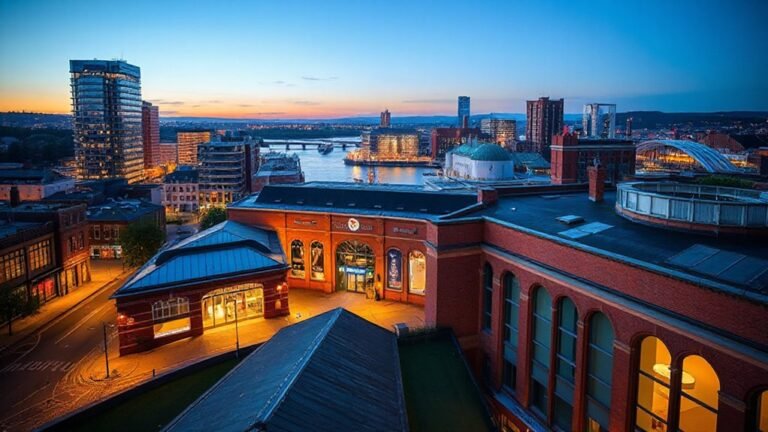
Inverness grounds the vision with a palpable sense of place, where river sound and hill profiles inform materiality, scale, and silhouette. You set the canvas by aligning architecture with landscape gradients, guaranteeing restraint in form to honor atmosphere over spectacle.
The setting guides decisions on material palette, edge treatment, and view corridors, balancing visibility with privacy. You prioritize ecological sensitivity, integrating passive cooling, natural ventilation, and low-embodied-energy systems to minimize footprint.
Wildlife conservation remains a guiding constraint, shaping landscape strategy, corridor design, and habitant diversity for flora and fauna. Highland folklore subtly informs motifs, textures, and color stories, grounding luxury in region-specific identity without cliché.
This framework ensures a cohesive project brief that translates Inverness’s character into a refined, resilient retreat.
Defining Spatial Language: Timber, Stone, and Moorland Light
Timber, stone, and moorland light define the tangible grammar of the retreat, shaping how spaces breathe, shift, and relate to their surrounding landscape. You’ll use materials and luminance deliberately to control scale, texture, and acoustics, ensuring each zone communicates purpose without ceremony.
Spatial language anchors function in a Highland context, supporting wildlife conservation goals and respectful interaction with local ecosystems. You’ll curate contrasts—warm timber against cool stone, diffuse natural light against focused task lighting—to guide movement and perception.
Highland folklore informs detailing and color palette, tying heritage to modern comfort. The result is precise, immersive stillness that remains responsive to weather, season, and use.
- Material orchestration for ecological balance
- Light strategies that reveal topography
- Narrative forms rooted in folklore and habitat awareness
Architectural Transitions: Cottage to Highland Retreat
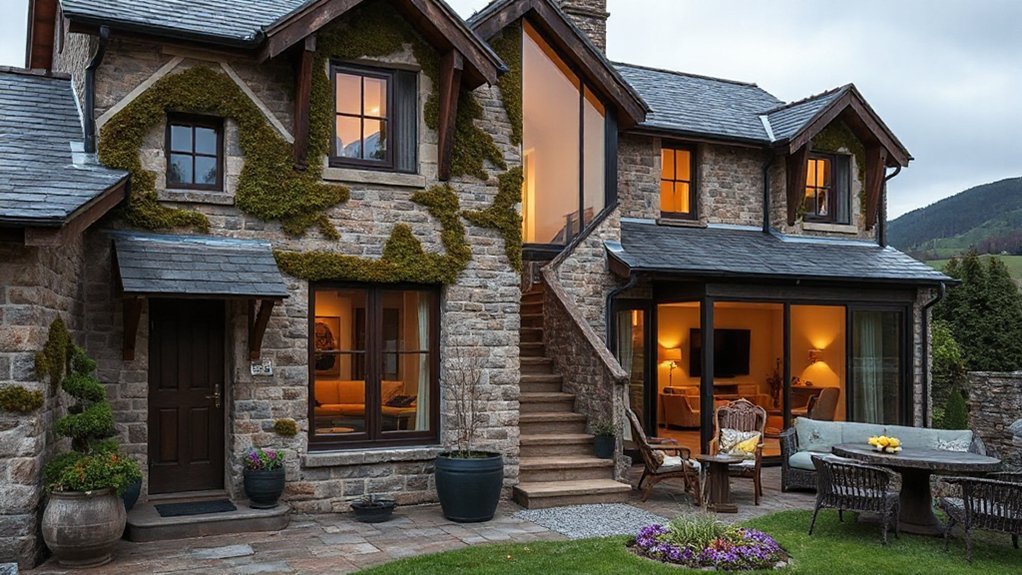
How can a cottage evolve into a Highland retreat without losing its essential character? You navigate architectural progressions by honoring proportion, massing, and material honesty. Begin with measurably deliberate interventions: add kiln-dried timber and lime-rich stone accents that echo existing textures, while inserting glulam beams for structural clarity.
Prioritize conservation-minded layouts that reveal views, frame daylight, and reduce thermal bridges, ensuring comfort without overmodernization. Integrate rooflines and fenestration that read as a coherent development, not a replacement, preserving the building’s silhouette against moorland light.
Plan for wildlife conservation through discreet, noninvasive drafting and exterior lighting controls. Weave in local folklore via carefully placed detailing—finial cues, charred timber patination, and storytelling mosaics—so the retreat remains intrinsically Scottish, timeless, and responsive to place.
Designing a Chef’s Kitchen for a Highland Home
You optimize the layout and flow to support efficient, restaurant-grade prep and service in a Highland setting.
You select appliances and tools that balance performance with energy efficiency, layout, and ease of use for a smaller footprint.
You specify materials and details that resist dampness and cold, while delivering durable aesthetics and precise calibration for a chef’s workflow.
Layout And Flow
To design a chef’s kitchen for a Highland home, prioritize a logical layout that supports efficient workflow from storage to prep to plating. You optimize spatial zones, ensuring smooth progressions and minimal waste movement, with sightlines that reduce backtracking.
Consider a compact island footprint that supports prep, staging, and quick access to cleaning zones, while shielding heat and noise from dining spaces. Incorporate storage that scales with seasonal demands, including dry, refrigerated, and utensil systems aligned to task sequences.
Integrate ergonomic heights and accessible routes around workstations, and use durable, low-maintenance finishes suitable for Highland dampness. Wildlife conservation and local festivals inform accent choices, materials, and display items that respect landscape and community rhythms.
- Zoned workflow with clear task adjacency
- Durable, easy-clean finishes and practical storage
- Subtle regional references that honor landscape access
Appliances And Tools
Plan for two zones: induction heat for precise control and a robust gas backup for winter contingencies. A compact, high-capacity cooling system preserves botanically inspired ingredients and wine pairings at ideal temperatures, while a humidity-controlled drawer protects delicate greens.
In the workspace, align a convection oven, steam oven, and modular prep station to reduce movement and cross-contamination. Invest in smart timing devices, calibrated thermometers, and silent range hoods to maintain atmosphere without distraction.
Finishing touches reflect botanical inspirations through finishes and subtle hardware accents.
Materials And Details
Begin with robust, weather-resistant surfaces and ergonomic layouts that support precise workflows; select materials that resist dampness, temperature fluctuations, and wear while maintaining a refined aesthetic. In this kitchen, you balance durability with quiet luxury, selecting finishes that endure Highland conditions and echo the surrounding landscape.
Prioritize seamless integration of ventilation, lighting, and workflow zones, ensuring safe handling of heat and moisture. The detailing emphasizes precision joints, low-maintenance coatings, and tactile satisfaction, so every touch feels deliberate.
Incorporate wildlife-friendly materials where possible and honor Highland folklore through subtle, nature-inspired textures.
- Timber accents with rot resistance and kiln-dried stability
- Stainless finishes that resist corrosion and patina
- Porcelain surfaces with staggered seams for moisture control
Spa-Grade Bathrooms With Local Materials
Spa-grade bathrooms leverage local materials to create a tranquil, spa-like environment without sacrificing performance. You design spaces that prioritize precise moisture management, durable finishes, and ease of maintenance, ensuring longevity in Highland conditions.
Select quarried stone or fired-clay tiles that resist thermal cycling, paired with heat-recovery ventilation for consistent air quality. Use locally sourced timber accents with low-VOC finishes to reduce emissions while imparting warmth.
Benchmark fixtures for water efficiency, integrated with radiant floors and timed shower controls to balance comfort and consumption. Incorporate stone basins or porcelain alternatives that emulate granite or slate, preserving rugged charm without compromising hygiene.
The outcome: spa bathrooms that reflect place, deliver reliability, and align with responsible sourcing through thoughtful detailing of local materials. Spa bathrooms, local materials.
Layering Comfort: Textiles, Color, and Texture
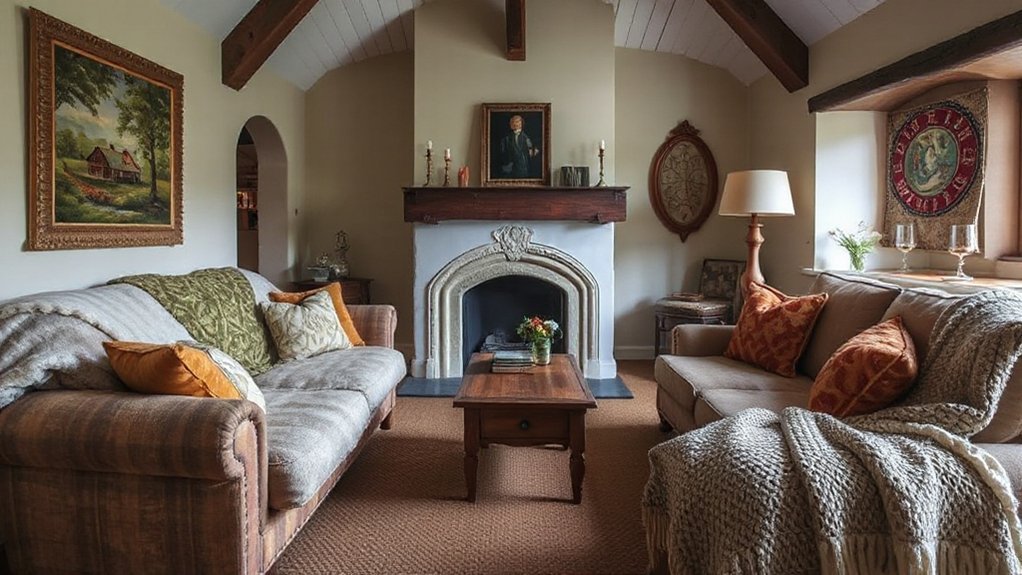
Layering comfort in a Highland retreat hinges on textiles, color, and texture that weave warmth with durability. You optimize performance by selecting fiber blends, weave structures, and finishes that resist wear while preserving tactile luxury.
Textile layering builds depth, layering wool, linen, and cotton with performance synthetics to manage moisture, loft, and resilience.
Color coordination anchors the palette, balancing cool heather tones with earthy neutrals to enhance architectural light and shadow.
Texture variety adds tactile interest without clutter, from brushed surfaces to crisp weaves and subtle sheen.
This approach supports a coherent, durable scheme across rooms, aligning fabric choices with lighting and upholstery.
- Textile layering: combine blends for warmth, durability, and care
- Color coordination: harmonize neutrals, accents, and natural light
- Texture variety: contrast sheens, weaves, and finishes for depth
From Garden to Table: Outdoor Foodie Spaces
Imagine an outdoor kitchen that blends seamlessly with the landscape: a functional work zone, a dining perch, and a prep area that weather-resists. You design this hub to support efficient harvest-to-table workflows, with durable materials, integrated drainage, and accessible power.
The layout prioritizes flow: herbs at knee height for quick snips, a grill island with smart ignition, and a sink blanketed by a weatherproof roof. Seating is proportioned for social oversight and culinary demonstration, not just dining.
Lighting is adaptive, minimizing glare while maximizing safety. You center wildlife conservation by selecting native plants and minimizing chemical use, then channel produce to the counter via a prep zone that reduces waste.
Highland folklore informs decorative anchors, grounding the space in culture without clutter.
Cozy Living Rooms for Quiet Highland Evenings
When the Highland landscape settles into dusk, a cozy living room becomes a sanctuary of warmth, light, and quiet focus. You curate a composition that supports reflection, with form and function aligned to comfort.
Fireplace ambiance anchors the space, balancing glow with measured heat to invite lingering conversation.
Thoughtful window treatments control daylight, frame the view, and reduce glare without sacrificing texture.
You emphasize acoustics, selecting soft carpets and upholstered seating to dampen sound.
Materials favor natural fibers and refined finishes, creating cohesion between architecture and landscape.
- Strategic seating zones for intimate gatherings
- Insulation-aware textiles and drapery pairings
- Subtle lighting layers that adapt to mood and season
Lighting Setup for Daylight and After Dark
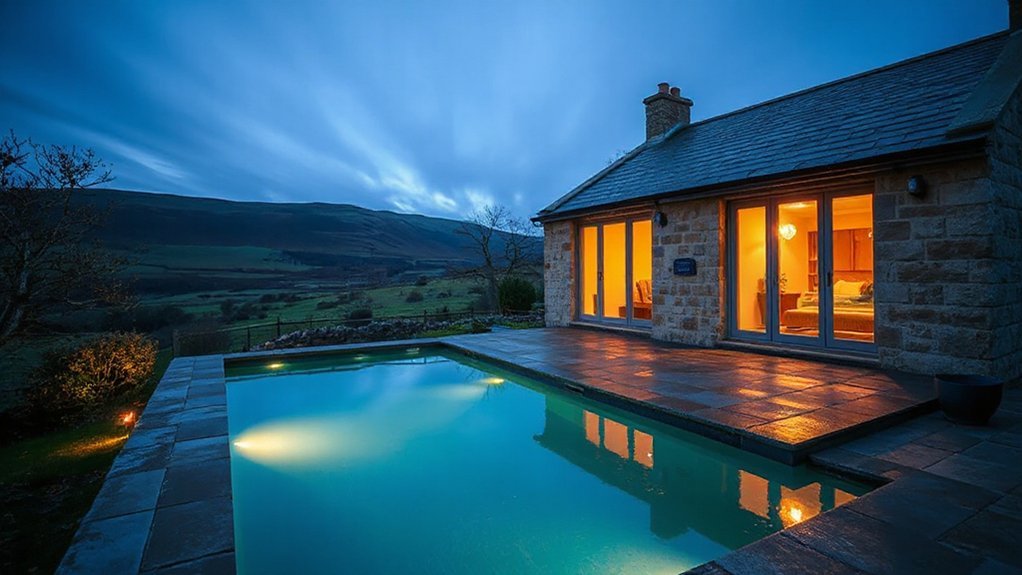
To optimize the Highland cottage for both daylight and after-dark use, implement a layered lighting strategy that balances task, ambient, and accent illumination. You’ll pair high-CRI fixtures with dimmable controls to maintain color accuracy as natural light shifts.
In daylight, maximize windows with minimal glare—use light shelves and calibrated blinds.
For after dark, deploy zones: task-focused LEDs at counters, ambient coves for warmth, and accent spots to highlight architectural details.
Choose warm-to-neutral color temperatures (2700–3500K) to suit changing moods while preserving garden design context.
Integrate smart scenes that respond to sunrise presets and occupancy.
Waterproof, exterior luminaires should emphasize local flora without overpowering the garden.
Plan maintenance access during daylight tasks, and guarantee cable routing avoids soil disturbance around mature plantings.
Sound Design for Rural Serenity
Sound design here centers on acoustic layering techniques that tailor ambience to a rural setting, balancing interior quiet with the surrounding countryside. You’ll implement precise spatial filtering, selective absorption, and calibrated reverberation to sculpt soundfields that feel natural yet controlled.
Acoustic Layering Techniques
Acoustic layering in a rural retreat relies on deliberate, measurable strategies to craft a calm, immersive soundscape. You implement precise stage-by-stage layering, aligning sources with absorption, diffusion, and isolation to sculpt tonal balance.
Start with base room modes tuned via material selection, then add mid-frequency diffusion to soften reflections without dulling clarity. You couple targeted soundproofing techniques with controlled noise floors, ensuring external rumble stays outside the critical band.
Spatially distribute sources to prevent masking, preserving perceptual quiet without deadness. Monitor through objective SPL measurements and subjective listening, iterating until the profile remains stable across environments.
- Define absorber-diffuser ratios for each space
- Calibrate seals, thresholds, and ventilation paths
- Validate consistency with reference playback and live voices
Rural Soundscape Integration
How can you weave a rural landscape into a retreat’s sonic identity without compromising quietude? You tailor a Rural Soundscape Integration plan that foregrounds ambient textures rather than peaks. Map wildlife corridors to anticipate seasonal textures—birdsong, rustling grasses, distant streams—and calibrate micro-dynamics to avoid abrupt transients.
Employ directional, low-output speakers for permissive coverage, paired with passive acoustic materials that absorb extraneous noise without erasing landscape cues. Integrate field recordings with controlled synthesis to reproduce authentic, time-variant layers, ensuring transitions align with circadian rhythms.
Embed storytelling through sound by referencing local folklore in subtle sonic motifs, enriching provenance without sentimentality. Document impact using objective metrics, adjusting for occupancy, weather, and wind. Prioritize perceptual fidelity, resilience, and adaptability within the Highland retreat’s acoustic framework.
Outdoor Living: Patios, Loch Views, and Fire Features
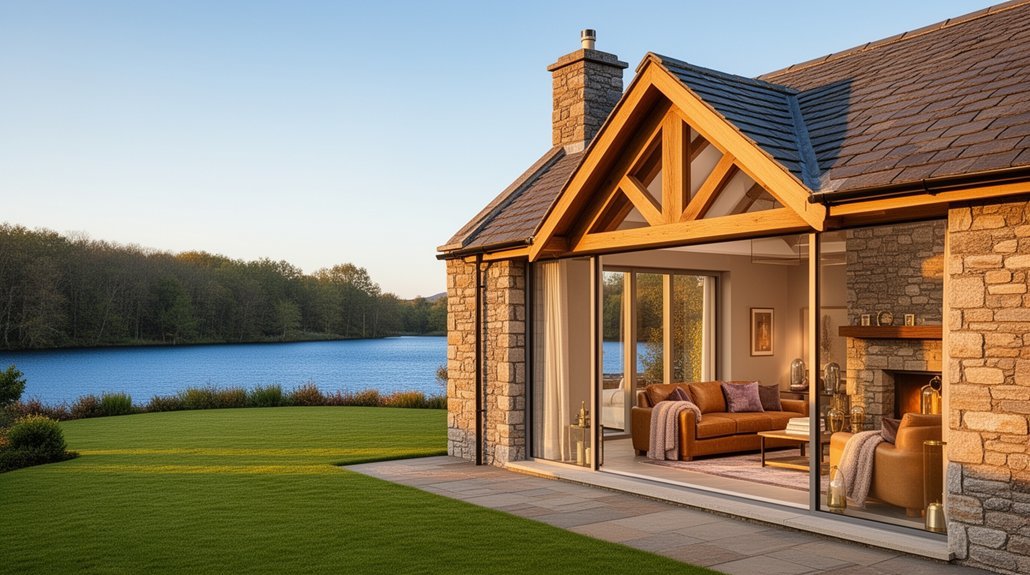
A well-designed outdoor living space extends the cottage’s comfort into the surrounding landscape, pairing durable materials with optimised sightlines to the loch. You’ll experience coordinated patios, controlled sun exposure, and fire features that radiate warmth without overpowering the scenery.
Thoughtful seating arrangements organize sightlines toward wildlife photography opportunities and serene water reflections, while discreet lighting maintains atmosphere after dusk. Materials resist Highland weather and require minimal maintenance, ensuring longevity and discipline in design.
You’ll appreciate how fire features create focal points for gatherings, balancing heat, safety, and wind protection. The space supports social dining and quiet contemplation, rooted in local culinary traditions.
- Durable, weather-tolerant materials
- Subtle lighting, panoramic loch views
- Controlled heat, safe fire features
Sustainable Luxury: Materials and Systems
Sustainable luxury hinges on selecting materials and systems that balance performance, durability, and minimal environmental impact without compromising aesthetics. You align specification with lifecycle analysis, prioritizing low embodied energy, recyclability, and local availability.
Choose high-efficiency insulation, airtight building envelope, and multi-functional assemblies that reduce heating loads while maintaining comfort. Opt for eco-friendly finishes that resist wear, avoid volatile compounds, and age gracefully within the cottage’s character.
Integrate renewable energy systems—solar arrays, heat pumps, and storage—that decouple operation from fossil fuel dependence and provide resilient performance during Inverness winters.
Material choices emphasize durability and low maintenance, ensuring long-term value. Document performance metrics and maintenance plans to sustain efficiency, indoor air quality, and thermal comfort, preserving the project’s refined, timeless appeal.
Local Craftsmanship: Timber, Stone, and Artisan Details
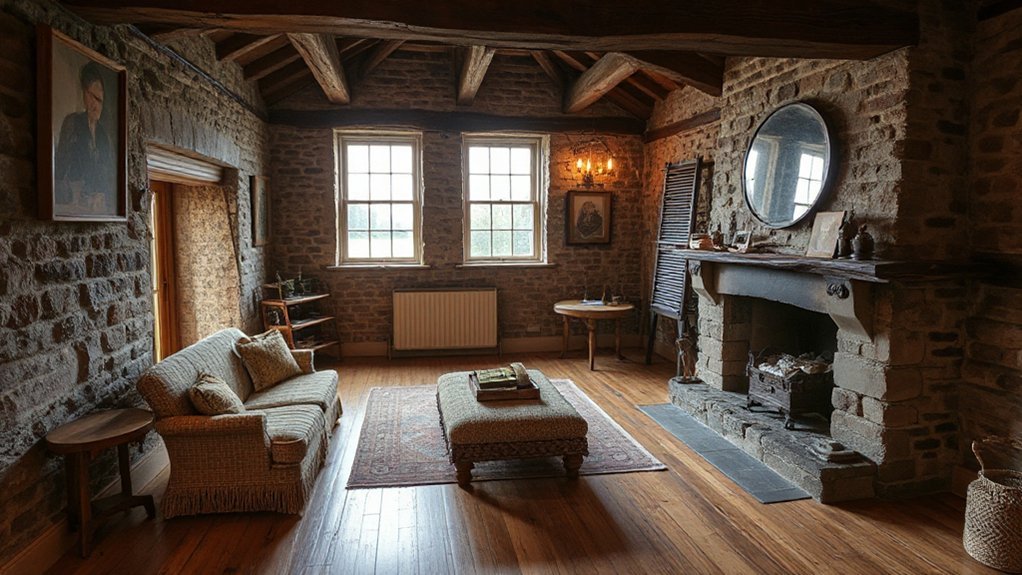
Local craftsmanship grounds the cottage’s luxury in tangible expression, pairing timber, stone, and artisan details to honor its Highland context while elevating performance. You experience how carefully selected timber joins, quarter-sawn surfaces, and heated lime plaster celebrate provenance and longevity, delivering tactile warmth without compromising structure.
Stonework showcases dry-stack elegance and behind-the-scenes insulation, ensuring durability and low maintenance. Artisan details—including handcrafted iron, chamfered moldings, and hand-fitted slate—signal meticulous construction, refined texture, and lasting value.
You appreciate how local craftsmanship informs detailing, aligning aesthetic intent with functional efficiency. The result is a harmonious material language that reinforces place, improves durability, and elevates perception of luxury through precise craft and thoughtful execution.
- Local craftsmanship
- Artisan details
- Precision detailing
Weatherproofing Without Compromise
Could weatherproofing coexist with refinement? Yes, and you’ll implement it without sacrificing aesthetics or comfort. Start with breathable envelopes that manage moisture while preserving interior warmth, using materials that align with historical preservation sensibilities.
You align seam progressions, flashing, and window heads to minimize cold bridges, ensuring airtight performance without visible bulk. Insulation follows rigorous standards, selected for high R-values while fitting discreetly behind traditional cladding.
Sealants and membranes are chosen for longevity and low environmental impact, not cosmetic compromise. You evaluate local folklore surrounding construction methods to inform finish choices that respect regional identity.
The result is resilient protection against Inverness weather while maintaining a refined, cohesive interior narrative.
Smart Home Touches for Cozy Highland Living
Elevate your space with Cozy Highland Smart Living, pairing tactile comfort with intuitive automation. Ambient Auto-Comfort touches—lighting, climate, and audio—respond seamlessly to your routines, enhancing warmth without distraction.
This discussion begins with how precise sensor-driven controls create a serene, luxurious atmosphere in a cottage setting.
Cozy Highland Smart Living
Smart tech enhances the charm of a Highland cottage without compromising its timeless warmth. This section details practical, high-performance touches that create a seamless living environment. You’ll integrate reliable sensors, energy dashboards, and intuitive controls to sustain comfort while preserving character.
Low-profile zoned lighting, programmable scenes, and rapid-response heating ensure warmth aligns with daily rhythms, not schedules alone. Robust wireless networking supports remote monitoring without intrusion, while secure access keeps your retreat safe.
- High-efficiency heat pump with weather-compensated controls for consistent warmth
- Voice-activated, scene-based lighting aligned to Highland folklore-inspired moments
- Durable, low-profile sensors tied to seasonal activities and energy dashboards
This approach remains precise, avoids fluff, and emphasizes enduring performance and aesthetics.
Ambient Auto-Comfort Touches
Proximity-triggered warm tones greet you at dusk, while automated blinds optimize solar gain without compromising views of the valley. In use, you’ll enjoy simplified routines: a single touch adjusts scene presets, and adaptive learning refines sleep and wake cycles for peak rest.
The system portably integrates wildlife conservation data, ensuring exterior lighting minimizes disturbance to nocturnal fauna. It also preserves Highland folklore cues—lighting hues and auditory motifs drift with seasonal celebrations, weaving modern comfort into a culturally aware, future-ready retreat.
Invisible Storage Solutions for Calm Interiors
Hidden storage maximizes calm by reclaiming surface clutter and keeping essentials out of sight. You’ll implement invisible storage that blends with timber and plaster, preserving lines while enhancing function. Prioritize modular solutions: perforated panels, pull-out bins, and lift-lid ottomans concealment with tactile elegance.
This approach supports decluttering essentials without sacrificing accessibility, ensuring you retain a sense of spaciousness in every room. By choosing flush cabinetry and integrated hardware, you maintain a seamless, technical aesthetic while improving daily efficiency.
- Concealed drawers within built-ins for small goods
- Hidden compartments in benches and coffee tables
- Integrated pull-out trays behind panelled surfaces
This method aligns with a disciplined interior logic, delivering calm through disciplined organization and refined invisible storage.
Art, Antiques, and a Highland Palette
You investigate antique restoration opportunities, prioritizing authentic finishes, joinery integrity, and documented provenance to preserve value. Where possible, you pair local artists with site-specific commissions to reinforce place-based identity.
You incorporate art therapy considerations, designing momentary alcoves and seating that invite calm, reflection, and tactile engagement. The palette remains restrained—peat greens, slate grays, and warm timber—to maintain cohesion throughout the retreat.
Budget to Value: Pricing the Transformation
You’ll align budget allocation with measurable outcomes, establishing a clear framework for where value is created.
By prioritizing value-driven material choices, you’ll balance long-term durability and aesthetic impact against upfront costs.
A concise cost-benefit timeline then guides decisions, ensuring you optimize both performance and perceived luxury throughout the transformation.
Budget Allocation Insights
Budget allocation drives the transformation’s value, mapping spend to measurable outcomes across structure, interiors, and systems. You assess cost drivers, benchmark local labor rates, and allocate contingency to cover unforeseen intricacies.
By prioritizing structural integrity, you safeguard long-term performance while optimizing spatial flow and access. Interior decisions balance tactile quality with energy efficiency, selecting materials that endure Inverness weather without compromising aesthetics.
Systems investments emphasize durability, fluid maintenance, and smart controls to reduce operating costs over time.
- Allocate a modest contingency for regulatory approvals and unforeseen site constraints
- Invest in high-performance insulation, airtightness, and efficient HVAC to lower ongoing costs
- Integrate wildlife-friendly detailing and low-impact materials to honor wildlife conservation and Highland folklore traditions
Value-Driven Material Choices
Opt for natural, locally sourced options that echo Culinary traditions while delivering expected performance and sensory quality. For finishes, select low-VOC, sustainably harvested alternatives that resist wear and weather exposure, reducing replacement cycles.
Structural elements should favor dimensionally stable, thermally efficient assemblies, enhancing comfort with predictable energy use. You weigh finish qualities, repairability, and availability—critical for Inverness conditions—before committing.
Consider Highland folklore-inspired detailing as a design metric, aligning cultural narrative with material integrity. The result is a cohesive, cost-conscious transformation that sustains value across time.
Cost-Benefit Timeline
A cost-benefit timeline translates the transformation plan into a measurable path from upfront expenditures to realized value, aligning design intents with financial reality. You quantify capital outlays, operating costs, and potential incentives, then map them to value drivers like comfort, energy efficiency, and guest demand.
The timeline informs prioritization, risk appraisal, and cadence for milestones, enabling disciplined expenditure control while preserving design integrity. You integrate Wildlife conservation considerations and local festivals as qualitative value streams, evaluating reputational and experiential gains alongside cash flows.
This approach supports transparent decision-making, stakeholder alignment, and benchmarking against target returns.
- Upfront capital vs. projected operating savings, with sensitivity to seasonal occupancy
- Intangible value: wildlife conservation impact and community event alignment
- Risk-adjusted timing to maximize return on investment and guest appeal
Running a Highland Luxury Retreat: Guest Experience Blueprint
Managing a Highland luxury retreat hinges on a seamless guest journey from arrival to departure, engineered to anticipate needs, exceed expectations, and protect privacy. You design a guest experience blueprint that translates service standards into measurable outcomes.
Begin with a pre-stay orientation, then align on arrival rituals, room-setup preferences, and dietary requirements, ensuring data privacy at every touchpoint.
Operationally, automate check-ins, curate personalized itineraries, and source artisan amenities that reflect Highland folklore without cliché.
Train staff to read subtle cues, delivering proactive assistance while preserving discretion.
Integrate experiences with sustainability—local festivals, seasonal foraging, and curated tastings—so guests feel authentic connection, not spectacle.
Continuously measure satisfaction, iterate on service scripts, and maintain rigorous safety and cleanliness protocols to sustain a luxury standard.
Frequently Asked Questions
How Long Does the Renovation Timeline Typically Take?
Typically, a renovation spans 4–6 months, depending on scope and permitting. You’ll prioritize interior lighting upgrades and eco friendly materials, coordinating phased work, inspections, and delivery timelines to minimize disruption while preserving high-end, sustainable craftsmanship throughout.
What Budget Range Is Realistic for This Retreat?
You’ll likely budget between 200k and 1.2M, depending on finishes. An interesting stat: upgrades in climate-controlled interiors save 15–20% annually. You should optimize architectural styles and interior decor to balance luxury with durability and airflow.
Which Local Craftsmen Handle Timber and Stone Work?
Local craftsmanship in your area centers on Highland artisans who handle timber and stone with precision. You’ll want to consult established stonemasons and timber-framers, and verify credentials, portfolios, and references before commissioning these skilled Highland artisans for your project.
How Is Guest Privacy Balanced With Social Spaces?
To avoid intrusions, you balance guest privacy with social spaces by design: discreet acoustics, private nooks, and staggered gatherings. You create flexible social areas that feel intimate, while clearly defined zones protect guest privacy and preserve serene flow.
What Permits Are Required for Inverness Adaptations?
You’ll need to check local zoning and building regulations, then obtain planning permission and any necessary building warrants from the council, ensuring designs meet fire safety, accessibility, and structural standards before commencing Inverness adaptations.
Conclusion
You can see the theory bear itself in the measurable, tangible results: a Highland cottage isn’t merely polished; it’s redefined as a retreat where craft meets function. In Inverness, you’ll test how timber warmth and stone restraint cohere with moorland light, and you’ll observe how invisible storage quiets space while a chef’s kitchen elevates hospitality. The truth emerges: value isn’t spent—it’s engineered, calibrated, and felt in every layer of guest experience.
About the Author