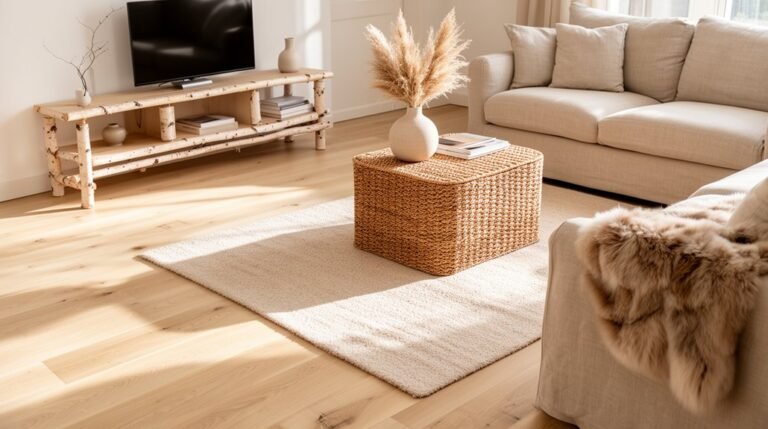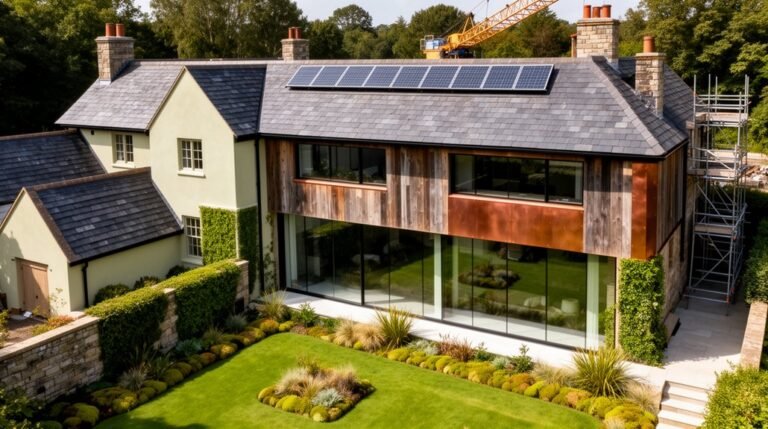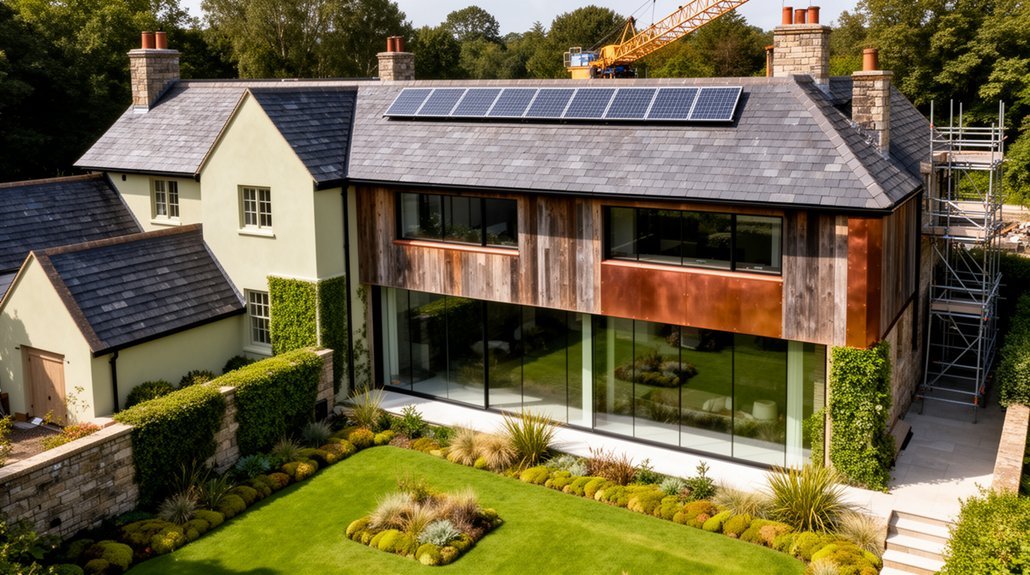
Transforming a Surrey mansion with high‑end sustainable materials means you start with a thorough sustainability baseline—audits, envelope and systems checks, and a dashboard of high‑impact upgrades. Set luxury targets, quantify lifecycle costs, and plan phased investments that maximize incentives. Prioritize airtight assemblies with continuous insulation, low‑VOC finishes, and local craftsmanship. Align ethical sourcing and provenance with performance goals, and balance maintenance with timeless design. If you keep exploring, you’ll see how to implement these strategies step by step.
How to Start: Assess a Surrey Mansion’s Sustainability Baseline
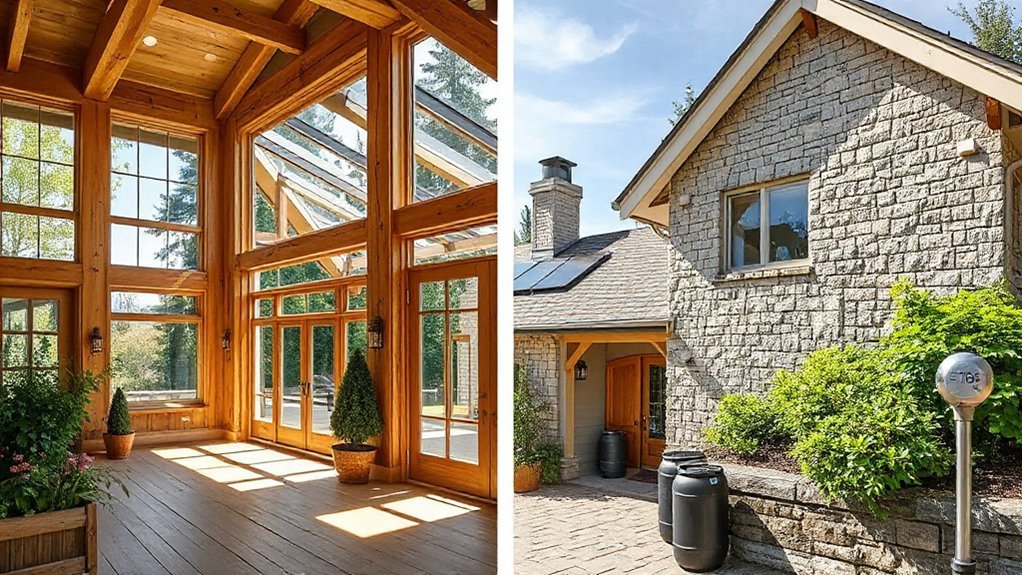
To assess a Surrey mansion’s sustainability baseline, begin with a thorough audit of energy, water, and materials performance. You’ll map current consumption patterns across heating, cooling, lights, and appliances, identifying peaks and anomalies.
Collect utility data, device inventories, and envelope assessments to establish a baseline thermal performance and potential heat loss.
Inspect Garden landscaping for shading, permeability, and irrigation efficiency, noting how outdoor design influences microclimates and energy demand.
Evaluate interior lighting to determine lumen output, controls, and daylight integration, prioritizing systems with dimming and occupancy sensing.
Compile results into a concise dashboard, flagging high-impact improvements such as insulation upgrades, efficient heat recovery, and water-smart fixtures.
This baseline informs target setting, prioritization, and cost-effective scheduling during the renovation process.
Setting Targets: What a Luxury Renovation Must Achieve
You establish luxury benchmarks alongside clear, measurable targets for your renovation. You’ll define targeted sustainability metrics that align with performance goals and material choices.
This framework keeps decisions focused, quantify progress, and guarantee the project meets both opulence and stewardship standards.
Define Luxury Benchmarks
Establish clear performance targets across materials, systems, and finishes that align with the project’s sustainability goals, expected lifespan, and ongoing maintenance. You define benchmark metrics for aesthetics, durability, and lifecycle cost, ensuring alignment with Luxury branding and material innovation.
You’ll quantify expectations for environmental impact, indoor air quality, and energy efficiency while preserving timeless Surrey mansion character. Benchmarks must inform selection criteria, testing protocols, and supplier due diligence, enabling transparent decision making.
Translation into construction specs should be precise, trackable, and auditable, avoiding ambiguity in finish grades, material provenance, and sustainability certifications. Your targets drive value, risk management, and post-occupancy performance, ensuring the renovation sustains luxury standards without compromising stewardship of resources.
- Clear material provenance requirements
- Quantified durability and maintenance benchmarks
- Lifecycle cost targets with refresh cycles
- Certification and data transparency criteria
- Alignment with branding and material innovation metrics
Targeted Sustainability Metrics
Translate goals into quantifiable thresholds, such as minimum recycled content, maximum VOC levels, and validated lifecycle assessments. You’ll monitor procurement, fabrication, and installation to ensure conformance with standards, audits, and third-party certifications.
Define pass/fail criteria for commissioning, test results, and post-occupancy performance. Prioritize Eco friendly finishes and Renewable materials where feasible, documenting supply chain transparency and end-of-life recyclability.
Regularly review metrics with stakeholders, adjusting specifications to preserve luxury quality while delivering verifiable sustainability outcomes. This disciplined approach bridges ambition and verifiable practice throughout the renovation.
Sourcing Ethically: Timber, Stone, and Finishes That Tell a Story
You’ll examine Ethically Sourced Timber, tracing its origin from forest to finished element to guarantee accountability at each stage.
We assess Transparent Material Journeys for supply-chain clarity, verification, and reduced environmental impact.
Finally, you’ll profile Storytelling Finishes & Stones, aligning aesthetics with provenance to reinforce integrity throughout the project.
Ethically Sourced Timber
- Certified sourcing and chain‑of‑custody
- Species choice aligned with forest management practices
- Low‑impact milling and finishing
- Waste reduction and reuse strategies
- Documented material storytelling through traceability
Transparent Material Journeys
By mapping processing steps, you verify energy use, waste recovery, and emissions controls, then align results with project goals. You assess material innovation across composites, engineered products, and finishing techniques, noting performance, durability, and lifecycle impacts.
You document supplier transparency benefits—clear declarations, audit trails, and responsible harvesting plans—that empower decision-makers and clients. You balance aesthetics with accountability, prioritizing durable, low-impact choices.
This disciplined approach strengthens sustainability claims, while providing measurable benchmarks for ongoing stewardship within the Surrey mansion transformation.
Storytelling Finishes & Stones
Storytelling finishes and stones blend ethics with aesthetics, guiding you to source timber, stone, and finishing materials that illuminate provenance without compromising performance. You assess each material’s origin, ensuring traceability, third‑party certifications, and low‑impact processing align with project goals.
Timber selections emphasize durability, non‑endangered species, and responsible harvesting to sustain forest ecosystems. Stone sourcing prioritizes quarries with transparent supply chains and reduced carbon footprint, complemented by finishes that endure wear while aging gracefully.
In garden design, you’ll weave vintage charm with contemporary performance, selecting textures and tones that echo historic palettes without sacrificing modern resilience. This approach preserves character while meeting standards for indoor air quality, lifecycle cost, and environmental stewardship.
- Ethical sourcing as a design driver
- Transparent provenance for each material
- Vintage charm integrated with durability
- Finishes that age gracefully in outdoor contexts
- Garden design cohesion and material longevity
Achieving Airtight Luxury: Insulation Strategies for Big Homes
Achieving airtight luxury in a large home begins with meticulous insulation planning that targets both thermal comfort and energy efficiency. You’ll select high-performance assemblies that minimize thermal bridges, prioritizing continuous coverage across roofs, walls, and foundations.
Use advanced sealants and detailing around penetrations to prevent drafts without sacrificing ease of service. Consider multi-layer approaches: dense-packed or spray-applied insulation for cavities, complemented by continuous exterior rigid insulation to curb heat loss.
Install high‑performance air barriers and a controlled ventilation strategy to maintain indoor air quality without compromising tightness. Pair insulation with thoughtful system integration, coordinating with radiant or hydro‑loop heating for rapid response and reduced load.
Eco friendly finishes and Renewable energy options align with the home’s envelope goals, ensuring durable, efficient performance.
Low-VOC Interiors That Feel Right at Home
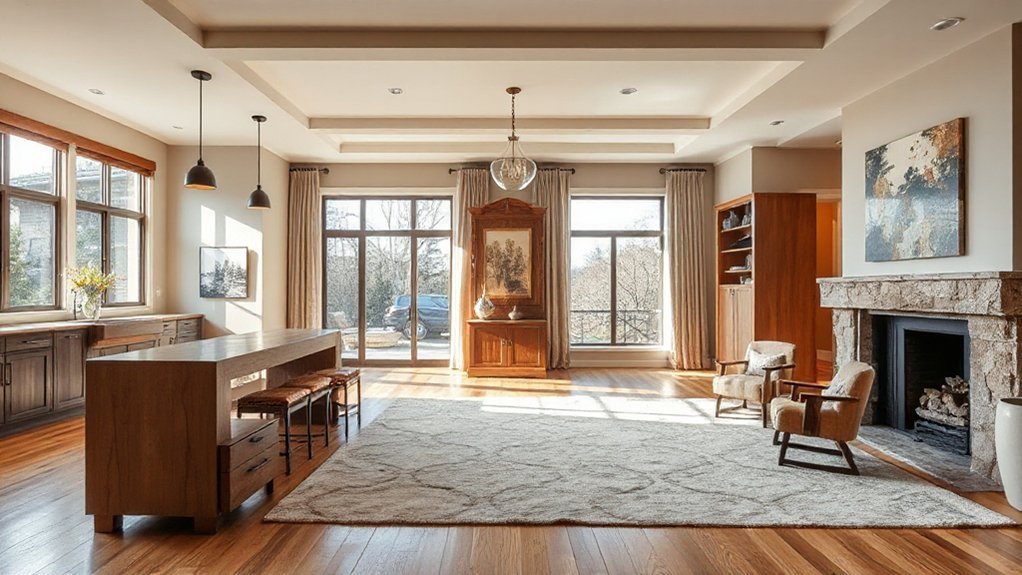
Low-VOC interiors aren’t a trend; they’re a design and health imperative in high-end homes. You prioritize indoor air quality without compromising luxury, selecting finishes and products that minimize emissions while maximizing durability and aesthetics. Every choice—paints, sealants, adhesives, and coatings—meets strict VOC thresholds, ensuring a calm, neutral light that complements refined materials.
You’ll rely on third-party certifications and transparent data to validate performance, then integrate eco-friendly furnishings to align style with sustainability. The result is a coherent atmosphere that supports well-being, plus long-term resilience through proper detailing and maintenance.
Renewable energy solutions can dovetail with interior choices, reducing lifecycle impacts and reinforcing a holistic, responsible approach to mansion-scale living.
- Prioritize low-emission products with verified certifications
- Select durable, solvent-free finishes that minimize off-gassing
- Integrate eco-friendly furnishings for cohesive design
- Use low-VOC adhesives in critical assemblies
- Align interior materials with renewable energy strategies
Matching Energy Systems to Mansion Scale
You’ll align energy systems with mansion scale by prioritizing scale-appropriate matching and mansion-sized system design from the outset.
This load-driven sizing approach guarantees you don’t over- or under-provision, delivering efficiency without compromising comfort.
Start with precise load data and iterate toward a balanced, integrated solution that supports ongoing performance.
Scale-Appropriate Energy Matching
To match a mansion’s energy load, scale-appropriate systems must be selected and integrated from the outset. You’ll align generation, storage, and distribution to the edifice’s envelope, occupancy, and programmatic pulses, ensuring efficiency without overprovisioning. Precision sizing minimizes losses, enables demand shaving, and supports long-term reliability.
You’ll balance heating, cooling, hot water, and electrical loads with modular, high‑efficiency technologies that can adapt to seasonal and occupancy shifts. Integrate controls that optimize performance for garden landscaping cycles and interior decor events, preserving comfort while reducing draw.
Design a high‑fidelity energy model to validate capabilities before installation, preventing mismatches and ensuring resilient operation under climate variability. This approach stabilizes costs and enhances sustainability across the mansion’s lifecycle.
- Align generation, storage, and distribution with envelope and programmatic loads
- Use modular, high‑efficiency technologies with adaptive controls
- Validate with a detailed energy model prior to installation
- Plan for garden landscaping and interior decor impact on load
- Prioritize reliability, scalability, and lifecycle cost efficiency
Mansion-Sized System Design
Scale-appropriate energy systems must be sized and integrated to the mansion’s unique footprint, envelope, and programmatic rhythms. You design at the mansion scale, selecting technologies that harmonize with grand volumes, variable occupancy, and critical zones.
The system topology prioritizes modularity, allowing centralized generation for core loads while distributing ancillary equipment to minimize distribution losses. You optimize for peak-day flexibility, leveraging high-efficiency heat pumps, radiant systems, and on-site storage to balance seasonal demand without compromising occupancy comfort.
Control strategies emphasize real-time monitoring, fault tolerance, and passive heat gains, ensuring dependable performance under variable weather. Innovative aesthetics meet performance as equipment siting minimizes visual impact, blending with architectural lines.
Artistic craftsmanship informs finishes and concealment, preserving elegance while delivering rigorous, low-carbon operation.
Load-Driven System Sizing
How should you tailor system capacity to a mansion’s distinctive load profile? Load-driven sizing begins with precise metering of peak and baseload demands, then aligns energy systems to that spectrum without overprovisioning.
You’ll pair high-efficiency components with scalable controls, ensuring progressions across occupancy, weather, and event-driven loads. Prioritize material durability in critical subsystems to sustain performance, while preserving aesthetic appeal in visible installations.
This balance reduces lifecycle costs and supports seamless integration with luxury finishes. Use modular sizing, dynamic storage, and demand-side management to match capacity to actual usage patterns.
Validate with scenario testing for extreme days, then document commissioning outcomes for future upgrades.
- Precisely map load envelopes for each season
- Favor modular, scalable hardware
- Emphasize durable, low-maintenance materials
- Align storage and generation to peak events
- Verify performance against aesthetic constraints
Passive Design Ideas That Enhance Comfort Year-Round
Passive design strategies keep your Surrey mansion comfortable year-round by reducing energy use while maintaining indoor quality. You optimize envelope performance with high‑performance glazing and continuous insulation to minimize heat flux and seasonal drafts.
Orientation analysis guides sun exposure, enabling strategic shading and passive solar gain when appropriate.
Thermal mass, in timber and stone, moderates extremes, stabilizing temperatures between day and night.
Ventilation employs heat recovery and controllable ducts, preserving Indoor air quality while limiting energy penalties.
Zoning lets you tailor comfort to occupancy patterns, reducing unnecessary conditioning.
Renewable energy integration supports demand shaping, drawing on photovoltaics or small wind where feasible.
Combine airtight, breathable assemblies with sensors that monitor humidity and temperature, ensuring consistent comfort and reliable long‑term performance.
Local Craft and Provenance: Selecting Surrey-Based Makers
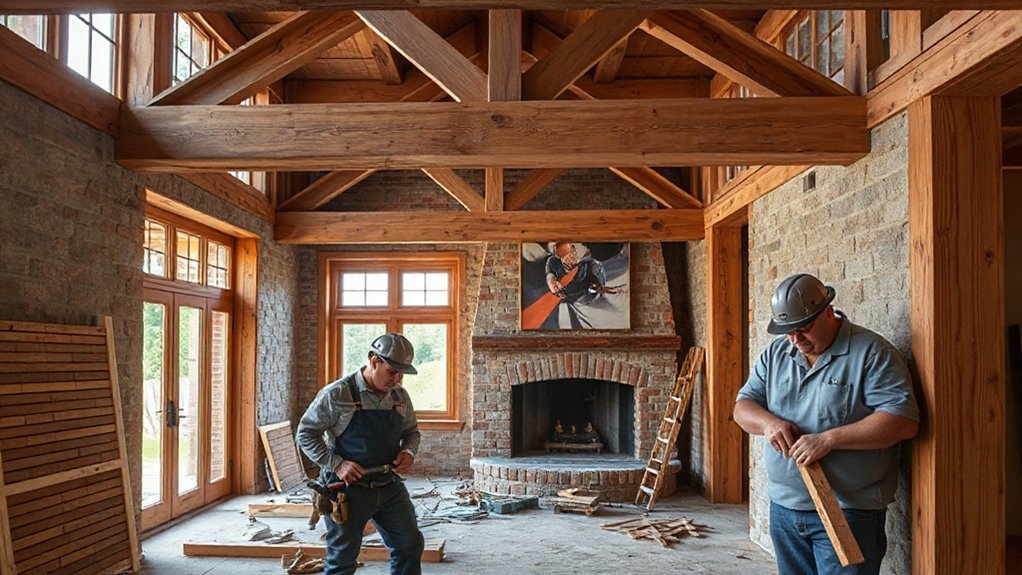
Local craft and provenance play a pivotal role in a Surrey mansion project, where selecting Surrey-based makers guarantees material traceability, shorter supply chains, and superior workmanship. You’ll benefit from transparent sourcing, calibrated quality control, and alignment with local standards.
Embrace artisan collaborations to tailor finishes, textures, and detailing that resonate with the estate’s character, while preserving archival methods and ethics. Local craftsmanship ensures rigorous consistency across components, reduces lead times, and supports resilient supply networks.
You gain measurable value from documented provenance, facilitating maintenance and resale. This approach balances design intent with sustainability, delivering performance you can verify at every stage.
Partner with makers who demonstrate accountability, skill, and a shared commitment to exceptional, low‑impact results.
- Emphasis on artisan collaborations and local craftsmanship
- Transparent sourcing and traceability
- Customization aligned with estate character
- Reduced lead times and reliable delivery
- Long‑term maintenance and provenance documentation
Real-World Examples: Sustainable Luxury Renovations in Surrey Estates
Sustainable luxury renovations in Surrey estates showcase how high‑end materials and meticulous detailing translate into durable performance and enduring value. You observe real-world projects where durable timber, low‑VOC finishes, and recycled‑content aggregates meet exacting standards for longevity.
You’ll notice garden landscaping integrated with building systems, aligning drainage, soil health, and microclimates to reduce maintenance while elevating aesthetics. Historic preservation informs material choices, with reclaimed oak, lime plaster, and breathable membranes balancing heritage appearance with modern performance.
You experience airtight assemblies combined with high‑efficiency glazing, delivering both comfort and reduced energy demand. Craftsmanship remains explicit in joints, progression, and hand‑fitted stonework, reflecting meticulous specification.
These case studies demonstrate measurable outcomes: superior indoor air quality, improved thermal stability, and enduring value grounded in sustainable, context‑appropriate design.
Budget to Value: Planning Costs and Long-Term Savings
Careful planning shifts the focus from design ambition to measurable value when budgeting for high-end sustainable renovations. You’ll quantify upfront costs against long-term savings, prioritizing elements that deliver the fastest payback without compromising aesthetics. A disciplined cost model helps you balance garden landscaping and interior decor investments with energy efficiency gains, lifecycle maintenance, and material durability.
By forecasting utility reductions, tax incentives, and potential resale value, you align project scope with financial reality. Modular, recyclable finishes can reduce renovation disruption and future upgrades. You’ll also reserve contingency for design refinement and testing, ensuring performance targets are met.
This approach funding-wise sustains momentum from Concept to Construction, creating measurable value across living spaces and outdoor environments.
- Link garden landscaping choices to energy performance and irrigation efficiency
- Tie interior decor selections to material longevity and maintenance costs
- Include lifecycle cost analyses for all high-end materials
- Schedule phased investments to capture incentives and cash flow benefits
- Document value metrics to guide decision-making
Maintenance for Longevity: Sustaining Performance and Character
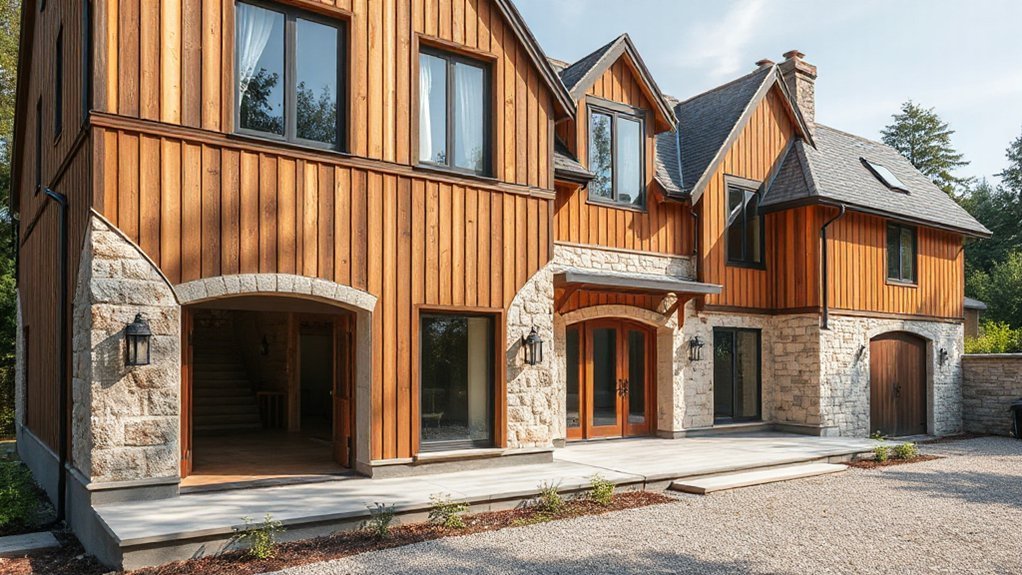
To keep a Surrey mansion performing at peak levels, implement a proactive maintenance regime that targets both structural integrity and aesthetic continuity. You’ll schedule routine inspections of framing, foundations, and moisture barriers, prioritizing high‑risk assemblies and those upgraded with sustainable materials.
Document performance metrics for thermal envelopes, adaptive joints, and finishes to track degradation trends and guide timely interventions. Establish a data‑driven cadence for HVAC efficiency, air and water leakage tests, and pigment stability in coatings, ensuring longevity without compromising appearance.
Pair upkeep with architectural symbolism considerations, preserving lineage while enabling modern performance. Align maintenance with historical preservation goals by limiting invasive treatments and selecting compatible materials.
Emphasize vendor qualification, quality control, and record keeping to sustain character, reduce lifecycle costs, and uphold regulatory compliance.
Frequently Asked Questions
How Long Does a Surrey Retrofit Typically Take From Start to Finish?
A Surrey retrofit typically takes several months to a year from start to finish. You’ll assess scope, secure permits, and schedule trades. Vintage restoration and material durability drive milestones, with phased approvals, weather windows, and quality-control checkpoints guiding progress.
What’s the Best ROI for Sustainable Luxury Upgrades?
Like a well-tuned engine, you maximize ROI by selecting Eco friendly materials with proven Investment benefits; the best returns come from durable, premium upgrades, energy efficiency, and resilient systems that attract premium buyers and reduce operating costs.
Can I Retrofit Without Disrupting Existing Historic Features?
Yes, you can retrofit without disrupting historic features, if you prioritize cautious planning and precise execution. Guarantee Historic preservation guidelines are followed and verify Material compatibility, using non-invasive methods and compatible finishes to protect architectural integrity.
Are There Government Incentives for High-End Green Renovations?
Yes, you can access government rebates and tax credits for high-end green renovations. You’ll qualify by meeting energy efficiency standards and sustainable material criteria, ensuring compliance with program requirements, documentation, and timelines to maximize your financial incentives.
How Do Maintenance Costs Compare to Conventional Renovations?
Maintenance costs are typically lower long‑term with high‑end sustainable materials, due to lower energy use and fewer replacements; energy savings accumulate, while material durability reduces upkeep across decades. You’ll experience predictable budgeting and improved asset resilience.
Conclusion
As you begin this Surrey mansion renovation, you’ll transform luxury into lasting sustainability. You’ll align targets with measurable gains, source ethically, and embrace airtight design that doesn’t compromise comfort. By prioritizing low‑VOC interiors and local craftsmanship, you’ll preserve character while cutting environmental impact. Think of your project as a well‑sited symphony: every material, detail, and decision harmonizes toward durability, performance, and provenance. The result isn’t just a home—it’s a responsible legacy.
About the Author