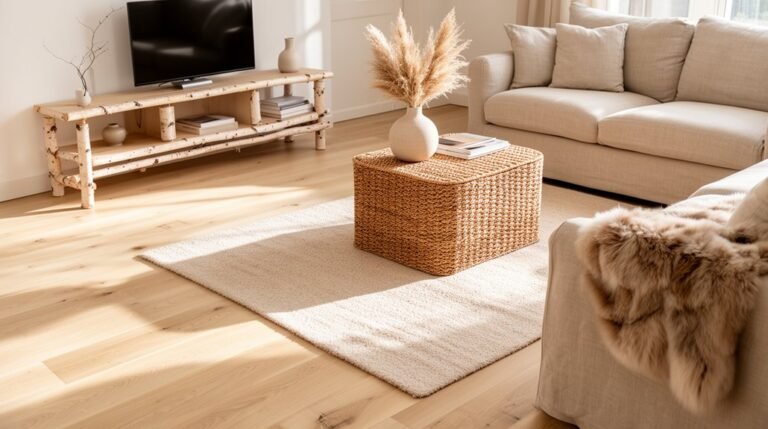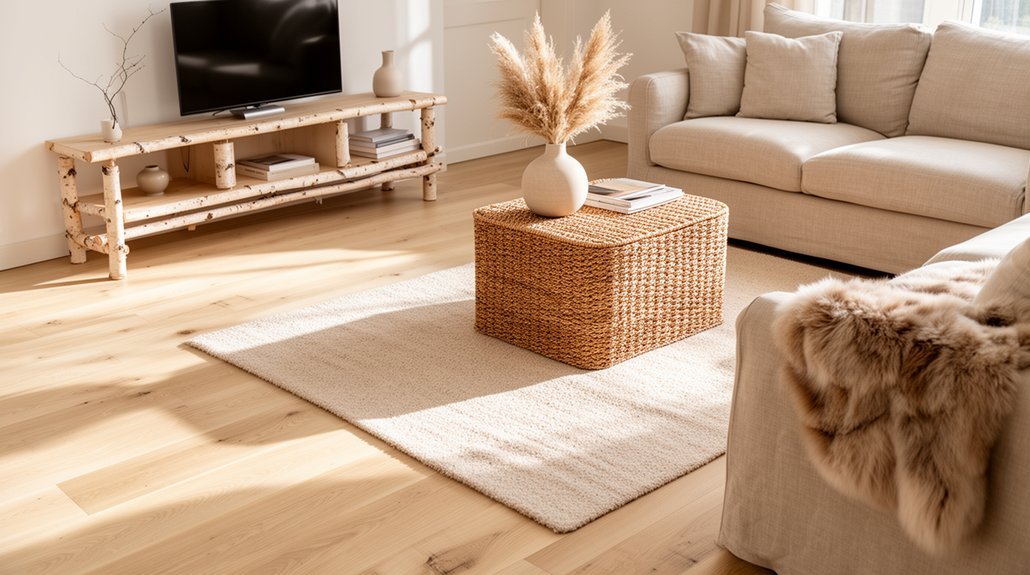
Scandi-inspired living rooms shine when you pair natural textures with a soft, neutral palette. Ground the space with wood, stone, wool, linen, and rattan, using honest finishes that age gracefully. Layer surfaces for depth—light ash or birch, charcoal accents, and matte ceramics—while keeping lines restrained. Favor low-profile furniture, calm layouts, and subtle textures like wool throws or linen drapes. Maximize light with layered fabrics and open shelving. If you keep going, you’ll uncover practical steps to master this look.
Define Scandi Texture: What Natural Materials Do for Your Space
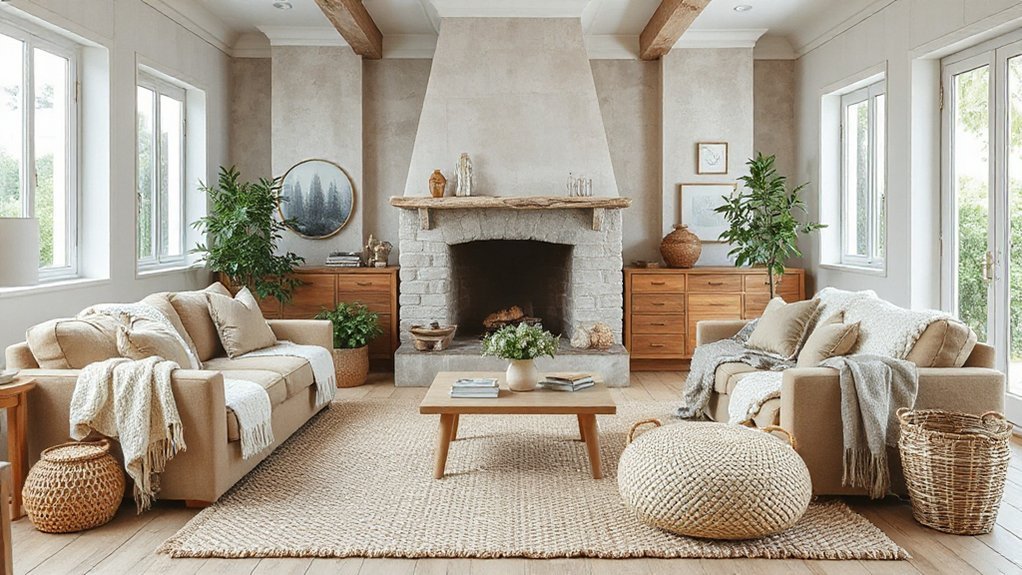
Natural materials ground a Scandi-inspired space with warmth and honesty. You’ll feel the discipline of true texture shift the room from bare to purposeful.
Define Scandi texture by focusing on material truth: wood, stone, leather, wool, linen. Each element brings tactility that readers can sense, not merely see. You should aim for restrained surfaces and honest finishes that age gracefully.
Textural layering becomes your guide—pair smooth and rough, matte and subtle sheen, to create depth without clutter. Material contrast matters: light ash or birch, charcoal granite, or ceramic with a soft glaze establish rhythm while preserving calm.
Let natural fibers sing under light, and guarantee joints stay clean and precise. Your choices reinforce a cohesive, durable, modern aesthetic.
Choosing a Soothing Scandi Neutral Palette
Start with a neutral base that feels approachable and timeless, using light grays, warm whites, and soft beiges to set the foundation.
Then introduce gentle contrast moments—think a charcoal accent or muted wood tone—to add depth without compromising calm.
Neutral Base Harmony
A soothing Scandi neutral palette rests on a calm base of soft whites, warm beiges, and gentle greys. Color is introduced through texture rather than bold paint.
You build harmony by selecting understated foundations and layering tactile surfaces. Prioritize even tonal ranges to prevent jarring shifts; subtle contrast between warm and cool neutrals anchors the room.
Introduce texture through woven fabrics, matte stones, and natural wood grain to keep the palette lively without loud color. Abstract art and indoor plants act as careful accelerators of interest, delivering focal points without overpowering the base.
Keep finishes low-sheen and trim minimal to maintain calm continuity. Guarantee lighting emphasizes warmth, preventing flat visuals while supporting the palette’s serene rhythm.
This disciplined approach yields a timeless, breathable Scandi interior.
Gentle Contrast Moments
Implement restrained contrast through texture, not color, prioritizing matte surfaces, natural fibers, and clean lines. Your goal is a soothing palette that still reads refined, so choose creams and pale stone as the base and allow subdued accents to appear where you pause the eye.
Incorporate handmade accents sparingly to emphasize tactility without overwhelming airiness. Botanical arrangements should feel deliberate yet effortless, reinforcing calm with vertical greens and airy plant silhouettes.
Maintain balance by repeating motifs across rooms—woven textures, wooden tones, and soft shadows—to sustain a cohesive, peaceful mood throughout the space.
Linen, Wool, and Cotton: Textures to Embrace
Linen’s light texture adds airiness without weight, making your seating feel poised yet relaxed.
Wool brings cozy depth, grounding schemes with tactile warmth that withstands seasonal shifts.
Cotton offers breathable versatility, ensuring comfort across both living spaces and layers of use.
Linen’s Light Texture
Linen brings a breezy, tactile light to Scandinavian spaces, and its texture pairs effortlessly with wool and cotton to create a layered yet uncluttered ambiance. You’ll notice linen’s light weave reads as breathable air, giving surfaces and upholstery a calm, tactile shimmer.
Use linen for curtains, throw pillows, and slipcovers to establish quiet texture contrast against timber frames and stone accents. Its matte, soft-luster surface won’t compete with bolder elements, letting natural light bounce evenly through rooms.
Choose fabrics with tight weaves for upholstery where durability matters, and reserve looser weaves for drapery to enhance movement without sacrificing structure. Linen’s fabric durability remains strong when properly finished; treat with gentle cleaning methods to preserve fiber integrity and tone.
This approach sustains a serene, contemporary equilibrium.
Wool’s Cozy Depth
Wool adds a grounded, tactile warmth that anchors Scandinavian rooms without heaviness. You leverage its depth to create inviting contrast against pale woods and linen textures, while keeping interiors modern and uncluttered. Embrace wool as a primary fabric for upholstery, rugs, and throws, and pair it with minimalist silhouettes for balanced contrast. The material’s natural crimp and density deliver sound absorption and insulation that feel purposeful, not decorative.
- Use wool insulation in walls for a sustainable warmth that preserves airflow and reduces drafts.
- Layer wool textiles—throws, cushions, and rugs—for tonal richness without visual overload.
- Integrate wool fashion accessories as subtle accents: scarves, slippers, or corporate throws.
- Choose neutral, earthy tones to highlight texture and ensure cohesive harmony.
Cotton Breathable Appeal
Cotton’s breathable appeal shines when layered with linen and wool to create textures that stay airy yet tactile. You’ll prioritize cotton for its moisture management and versatility, pairing it with natural fibers to build depth without heaviness.
In spaces where daylight hugs surfaces, cotton’s matte finish reads as calm and contemporary, while subtle weaves add dimension. You select sustainable fibers to reduce footprint, ensuring each textile choice aligns with a balanced palette and durable performance.
Employ careful dye techniques to maintain softness and color integrity, avoiding overly saturated tones that compromise breathability. For upholstery and drapery, opt for loose looms and cotton blends that enhance air flow.
Finish with minimal hardware and tactile accents to emphasize the material’s honest, resilient nature.
Warm Timber and Rattan: Natural Material Pairings
Natural timber tones and woven rattan form a balanced, tactile palette that anchors Scandi-inspired spaces. You pair warm woods with perforated textures to create depth without visual clutter. Opt for Eco friendly finishes that protect grain while preserving a soft, matte sheen.
Choose rattan for seating accents or light screens, keeping scale restrained to avoid heaviness. Emphasize Sustainable sourcing, verifying certifications and traceability to support responsible forestry practices. Your composition should feel approachable, not rustic, with clean lines and practical surfaces that age gracefully.
- Pair a light oak coffee table with a rattan chair for contrast.
- Use a timber veneer cabinet with woven fronts as a focal anchor.
- Layer textiles in wool or linen to soften edges.
- Maintain a neutral, cohesive palette to sustain calm.
Maximize Light: Layering for Bright, Airy Rooms
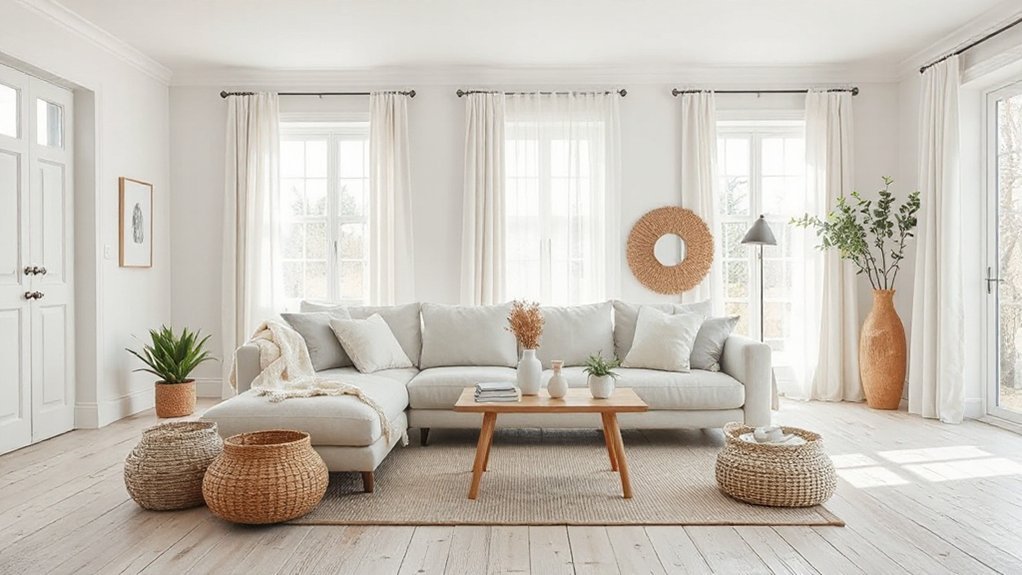
Maximizing light in a Scandi-inspired space hinges on layering brightness through thoughtful texture, color, and placement. You’ll optimize naturally diffused daylight by choosing pale bases, then introducing controlled contrasts.
Start with a crisp white canvas and keep ceilings light to reflect more glow. Layer textiles, rugs, and throws in subtly varying neutrals to build depth without crowding. Use open shelving and glass wherever possible to prevent visual weight.
Integrate color blocking with strategic accents—soft blues, warm taupes, or sage—on small panels or furniture accents to guide the eye without overpowering the room. Accent walls can anchor a seating zone, but keep saturation restrained and balanced with lighter neighboring surfaces.
Maintain consistent tonal harmony to preserve airiness and function.
Seasonal Textile Swaps for Cozy Comfort
Seasonal textile swaps are your quick path to year-round coziness without overhauling your styling. You’ll prioritize weight, texture, and color temperature to maintain Scandi calm while shifting with the calendar.
Start with a concise rotation of throws, pillows, and blankets that reinforce comfort. Then layer in performance fabrics for durability.
Seasonal Textile Swaps
- Replace wool throws with cotton or linen equivalents, maintaining muted tonal balance.
- Swap velvet cushions for textured linen or boucle to preserve depth without heaviness.
- Introduce season-appropriate drapery—lighter weaves in spring, thicker textures for winter.
- Refresh rugs with low-pile, neutral fibers to anchor furniture without overpowering simplicity.
Cozy Comfort Essentials
As you refine your cozy comfort, start by swapping in textiles that soften the room without overpowering it. You’ll choose seasonally appropriate fabrics that balance warmth and breathability, focusing on weight, texture, and color restraint. Think midweight knit throws, brushed cotton throws, and subtle boucle cushions in natural tones to layer without visual noise.
Prioritize eco-friendly finishes that preserve tactile integrity while reducing chemical impact, and opt for fabrics sourced from mills with transparent, sustainable sourcing practices. Pair textures like wool blends and linen with clean, Scandinavian silhouettes to maintain airiness.
Switch to low-contrast palettes and curated accents that amplify warmth rather than dominate. This approach delivers durable coziness, aligns with design precision, and sustains environmental responsibility.
Furniture Proportions and Placement for Calm Spaces
Calm spaces hinge on thoughtful furniture proportions and placement that promote flow and ease. You’ll balance scale with function, ensuring seating faces focal points without crowding pathways. Use lower profile pieces to preserve sightlines and invite air movement, while taller elements anchor zones without dominating the room.
Align seating with traffic patterns, leaving clear routes from entry to seating and work zones. Avoid clutter by choosing pieces with clean lines and minimal ornament. Integrate artificial finishes and natural textures to reflect light and soften edges, preserving calm.
Embrace modern technology—conceal cables, integrate charging hubs, and select wireless solutions for a clutter-free surface.
- Establish focal point alignment and accessible sightlines
- Prioritize low-profile seating with proportional spacing
- Conceal cables; use wireless tech and hidden outlets
- Layer scale via strategic rug and coffee-table sizing
Softening Modern Lines With Textural Accents
Texture is your ally for softening the clean, modern lines that define Scandi-inspired spaces. You achieve this through deliberate textural layering that adds warmth without clutter.
Begin with textiles: a wool throw, linen drapes, and a neutral rug create tactile depth and visual interest. Textural contrasts—pair smooth surfaces with ribbed fabrics or brushed wood to prevent flatness and guide the eye gracefully across the room.
Choose materials with a tactile spectrum, from velvet cushions to matte ceramic accents, ensuring each piece supports the overall palette.
Material sustainability remains a practical criterion; prefer responsibly sourced woods, low-VOC finishes, and durable textiles designed for longevity.
In short, let texture anchor calm, modern interiors while communicating thoughtful, durable choices.
Minimal, Thoughtful Decor: Accessorizing for Calm
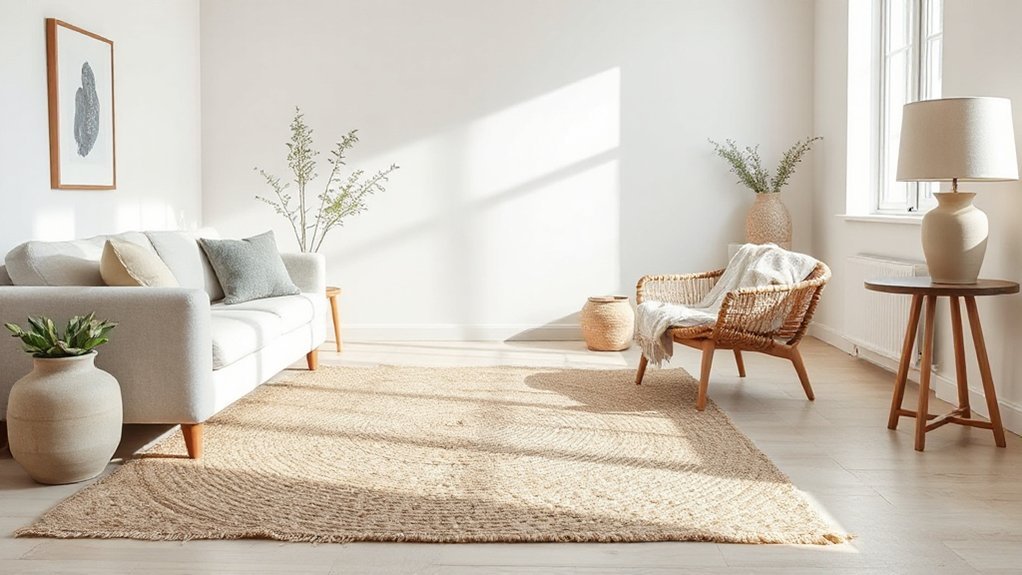
With fewer pieces, you’ll let each accessory count. In minimal, thoughtful decor, select items that reinforce calm through deliberate choice, not abundance.
Emphasize restraint, clean lines, and tactful placement to maintain visual serenity. Color psychology guides accent decisions, favoring muted tones and gentle contrasts that soothe nerves while preserving warmth.
Prefer eco-friendly materials to align aesthetics with sustainability, ensuring tactile quality without clutter. Keep surfaces uncluttered by concealing cords and opting for hidden storage solutions.
Each piece should serve a purpose, contributing texture, light, or memory. Prioritize quality over quantity, and rotate elements seasonally to refresh the scene without adding bulk.
Consistency in material and finish sustains a cohesive, calm atmosphere.
- Purposeful accents
- Muted color palette
- Eco-friendly materials
- Hidden storage
Budget-Friendly Ways to Achieve Natural Textures
Natural textures can elevate a Scandi-inspired space without breaking the bank, and you don’t need store-bought upgrades to nail the look. You get the most impact by prioritizing material honesty: reclaimed wood, matte ceramic, and linen textiles form a cohesive base.
Choose affordable, high-contrast contrasts—light woods with charcoal accents—to preserve airiness. Elevate texture with handwoven throws and rattan accents that read as natural without pricey investments.
Abstract art offers a focal point that complements the palette without overpowering calm, so select pieces with muted tones and tactile finishes.
Indoor plants bring depth and visual warmth; vary heights and leaf shapes to create layered texture. Plan placement for balance, minimize clutter, and let natural light showcase the materials you’ve chosen.
Maintenance Habits to Keep Textures Fresh
Maintaining the fresh look of textured surfaces requires a deliberate routine: clean, protect, and rejuvenate materials before wear shows. You’ll extend Textural layering by implementing disciplined care that guards against dirt buildup, oils, and fading. Focus on regular maintenance windows, not once-in-a-while fixes, to sustain Material longevity.
- Vacuum and dust weekly with gentle suction; use a microfiber cloth on high-risk fibers to prevent embedment.
- Spot-clean spills immediately using manufacturer-approved solutions to avoid permanent staining.
- Rotate textiles seasonally and apply protective finishes where appropriate to reduce abrasion.
- Schedule quarterly inspections for wear patterns, resealing, and gentle rejuvenation of surface textures.
Real-World Makeovers: Before and After Inspirations
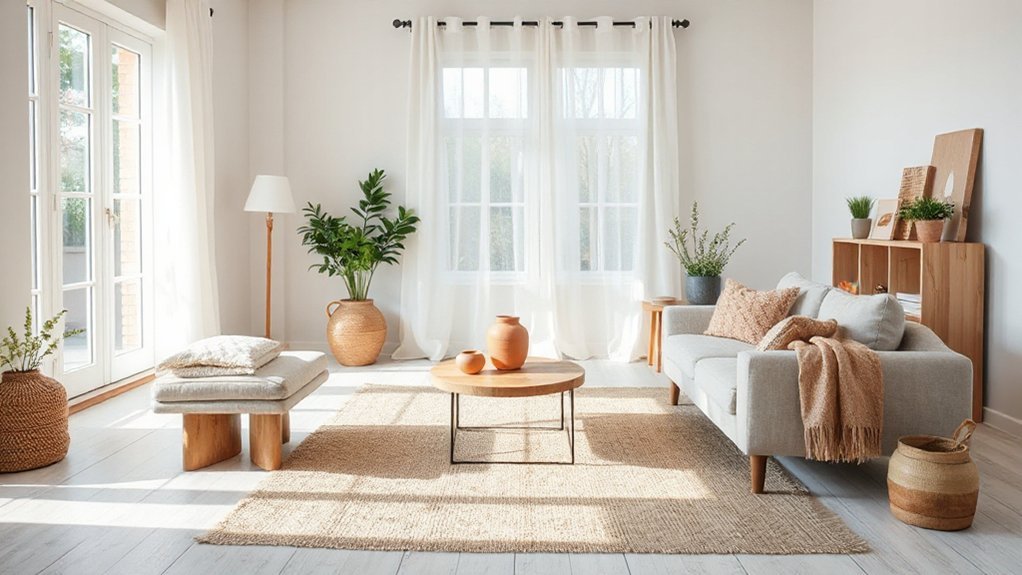
Real-world makeovers prove that thoughtful scale and contrast elevate Scandi-inspired spaces. You’ll see how rooms transform when you balance oversized furniture with crisp, low-profile pieces, preserving breathing room without sacrificing function.
Before-and-after shots reveal how Scandinavian art accents punctuate a restrained palette, creating focal points that feel intentional rather than decorative. You’ll notice that minimalist design thrives on provenance: natural textures, matte finishes, and careful lighting shape mood more than color saturation does.
Key moves include introducing tactile neutrals, aligning rug scale with seating, and using wood tones to anchor contrast against white walls. The after-state should read as calm, cohesive, and livable, proving restraint yields impact while maintaining authenticity and timeless appeal.
Frequently Asked Questions
How to Mix Textures Without Cluttering the Space?
You can mix textures without clutter by layering patterns thoughtfully and balancing proportions. Focus on a cohesive color base, limit accents, and vary scales to keep rhythm strong while maintaining a calm, deliberate, industry‑savvy aesthetic.
Which Natural Materials Age Best in High-Traffic Rooms?
Natural materials that age best in high-traffic rooms include solid hardwood, stone, and high-quality leather, due to superior aging process and material durability. You’ll appreciate their endurance, easier maintenance, and refined patina as traffic reveals character and resilience.
Can Budget Textures Look Premium or Require DIY?
Yes—budget textures can look premium; a case study shows you can achieve luxury with affordable upgrades. You’ll apply DIY texture tips, savoring subtle depth, and prioritize quality over quantity for durable, polished, industry-savvy results.
What Lighting Enhances Natural Textures at Night?
Ambient glow and accent lighting heighten natural textures at night, you’ll want warm, dimmable fixtures aimed to sculpt shadows and reveal tactile surfaces; use wall washers sparingly, and mix lamps for balanced, industry-savvy ambience.
How to Maintain White Textiles Without Yellowing?
To prevent yellowing, you should follow white textile cleaning best practices and treat stains promptly. Use cool water, mild detergents, and don’t overload. Protect fibers from sun exposure; when drying, prefer shade. Consider Natural textile dyes for longevity.
Conclusion
In your space, textures become the quiet heartbeat of Scandi living. You’re stacking light, not clutter; weaving linen, wool, and cotton into calm, tactile notes that breathe. Timber and rattan anchor warmth, while careful layering and natural palettes keep the room airy, focused, and intentional. With each deliberate choice, you reveal a serene, durable aesthetic that’s easy to refresh—and easy to live in. Embrace the textures, and let your home tell a simple, confident story.
About the Author